Most homeowners who start researching flat roofing York Region options are dealing with one of two situations: a low slope section over a rear addition, sunroom or garage that has started to leak, or a newer detached home where a large share of the roof area is a membrane assembly rather than asphalt shingles. Both are common across Markham, Vaughan and Richmond Hill, and both behave very differently from a steep slope roof. Water does not run off a flat roof, it sits, drains slowly and finds every weak seam, so the material choice, the slope built into the deck and the quality of the flashing details matter far more than they do on a shingled surface.
This guide covers what flat roofing in York Region actually involves in 2026: the membrane systems that hold up in Ontario’s freeze thaw climate, realistic installed costs, permit expectations, the warning signs that separate a repair from a replacement, and the questions worth asking before you sign anything. Flat Roofs Toronto is based in the Toronto area and works throughout York Region, so the numbers and timelines below reflect what crews are quoting on real GTA projects rather than national averages.
What Flat Roofing in York Region Involves
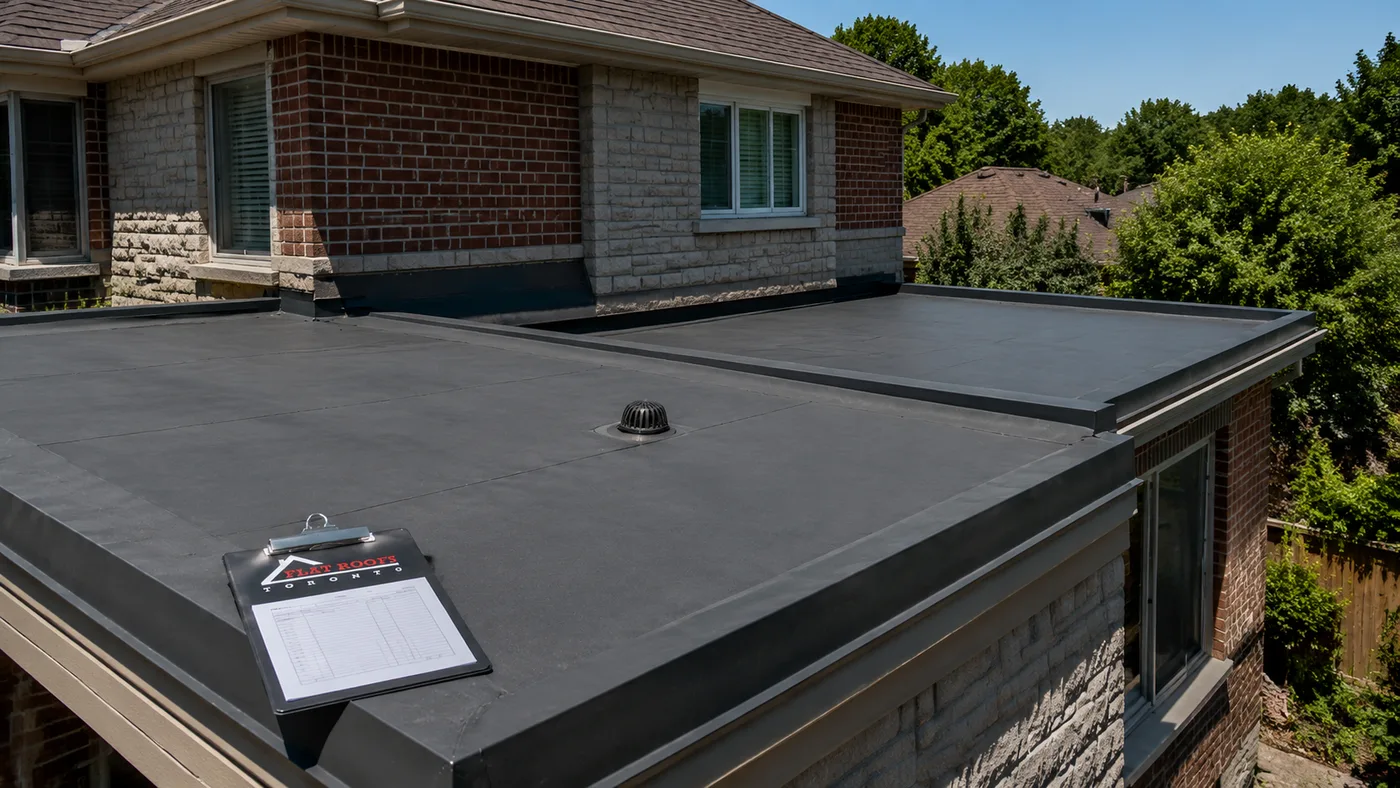
A flat roof is never truly flat. Ontario practice calls for a minimum slope of roughly two per cent, about one quarter inch of fall per foot, so water moves toward drains or scuppers instead of pooling. Much of the flat roofing York Region homeowners inherit was built before that expectation was consistently enforced, which is why so many older additions hold standing water for days after a storm. Ponding is not simply cosmetic. Standing water adds weight, accelerates membrane breakdown under ultraviolet exposure and turns any small seam defect into a persistent leak.
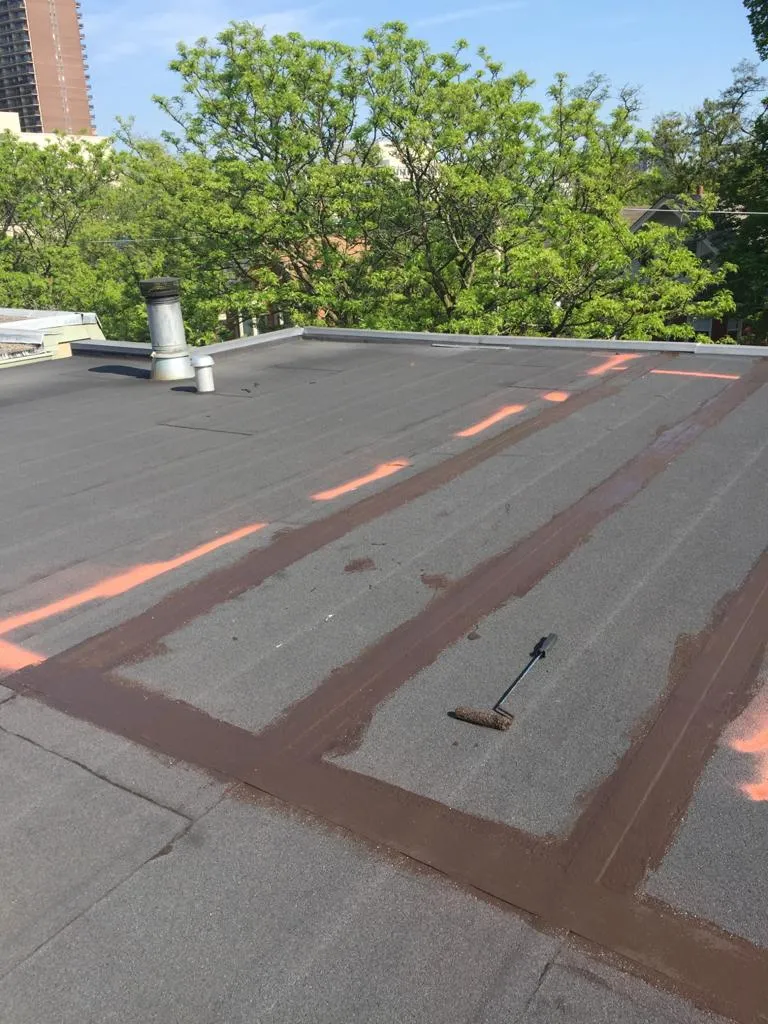
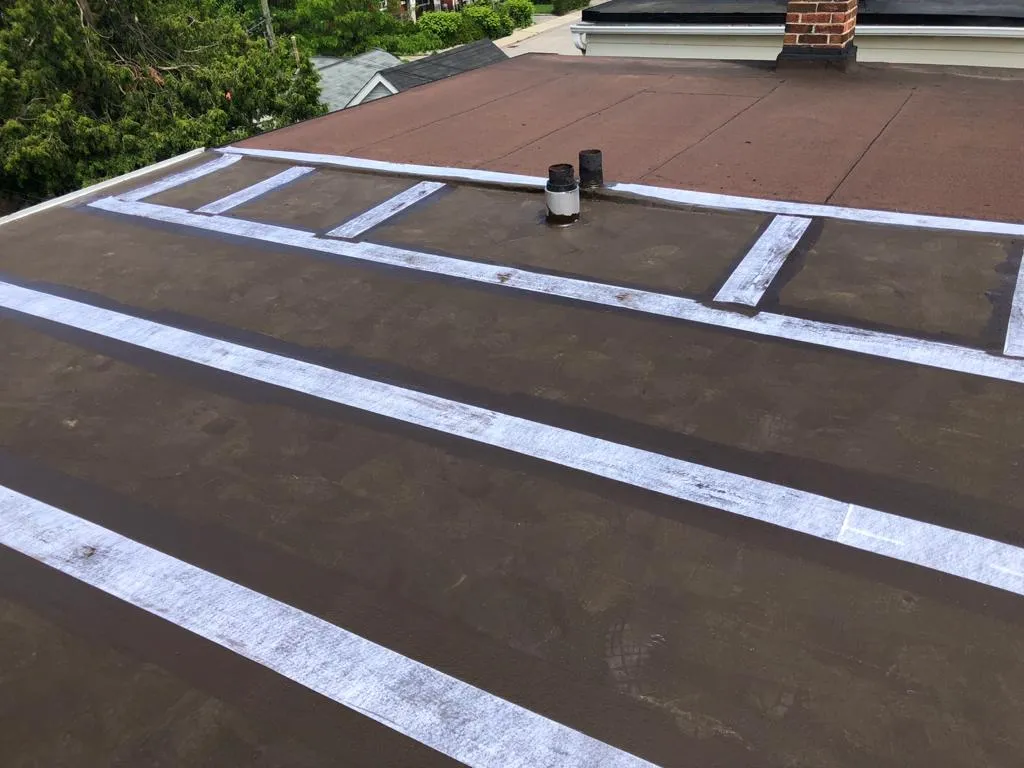
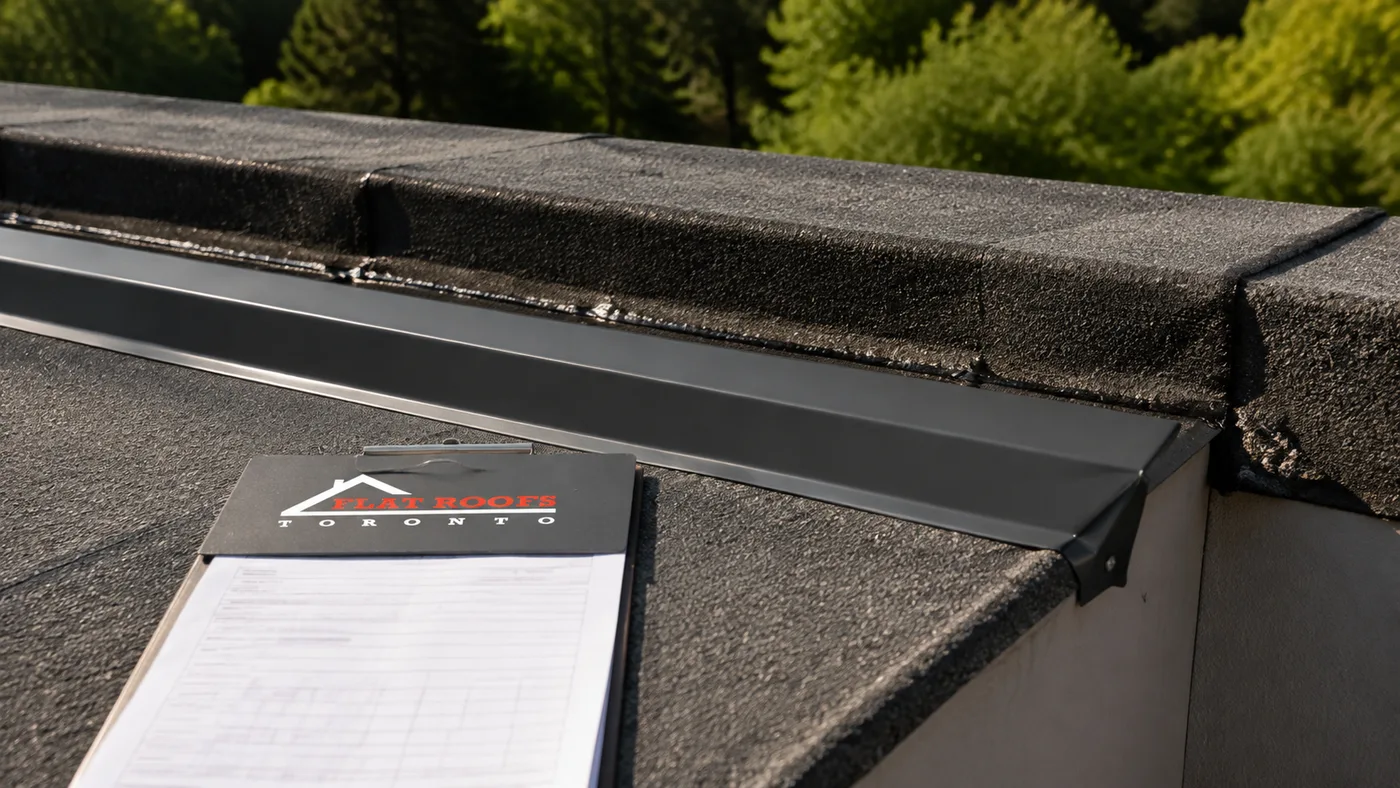
The second difference is the assembly. A shingle roof sheds water through overlapping layers. A flat roof relies on one continuous waterproof plane, which means every penetration, every parapet wall, every skylight curb and every edge termination becomes a potential failure point. In practice, the vast majority of flat roof leaks we see across York Region begin at a detail rather than in the open field of the membrane. That is why any crew doing flat roofing in York Region should spend a disproportionate share of the installation day on flashings, corners and terminations.
The third difference is insulation. On a low slope assembly the insulation usually sits above the deck, under the membrane, in a compact roof design. Get that layer wrong and you create condensation problems inside the assembly that no amount of surface patching will solve. Homeowners who are already upgrading their attic and roof insulation levels are in a good position to address both at once, since the roof is open anyway.
Housing Character Across Markham, Vaughan and Richmond Hill
York Region is not one housing type, and the right flat roofing approach depends heavily on what you own. Older parts of Markham, Richmond Hill and Thornhill contain postwar bungalows and mid century brick homes, many of which received rear additions, carports or enclosed porches over the following decades. Those additions almost always carry a low slope roof, frequently the smallest and oldest roofing component on the property, and they are the single most common source of flat roofing York Region service calls we see.
Newer subdivisions built through Vaughan, Maple, Aurora and Markham’s eastern edge tend to combine steep asphalt slopes with flat sections above garages, front porticos and second storey bump outs. These are modest in area but heavy in detail work, with sidewall flashing where the flat section meets a brick or stone wall above. Estate lots in Richmond Hill, King and parts of Vaughan sometimes carry substantial modern architecture with genuinely large membrane roofs, occasionally with roof terraces or extensive glazing, and those projects need a different level of planning entirely.
Finally, the region has a large stock of low rise commercial and mixed use buildings along its arterial corridors, plazas, industrial units and multi tenant offices where the entire roof is membrane. If you are responsible for one of those buildings, the process and material expectations differ from residential work, and commercial flat roof installation follows its own scheduling, access and warranty requirements.
Membrane Systems That Perform in Ontario’s Climate
The GTA puts flat roofs through a demanding annual cycle: roughly a hundred freeze thaw transitions, summer surface temperatures that can exceed sixty degrees Celsius on a dark membrane, ice damming at the edges in February and heavy rain events in spring and autumn. Not every system marketed in North America is a sensible choice for flat roofing in York Region conditions.
Two ply modified bitumen, usually SBS, remains the workhorse for residential low slope roofs in the GTA. It offers redundancy through two layers, tolerates foot traffic, and repairs cleanly years later. Single ply systems such as TPO and PVC are heat welded, extremely fast to install over large open areas and highly reflective, which reduces summer heat gain. EPDM rubber is durable and economical but relies on adhesives at the seams, so workmanship matters. Cold applied and self adhered SBS avoids open flame entirely, which is often the right answer over an occupied space or next to combustible siding.
| Membrane system | Typical service life | Installed cost per square foot (2026) | Best suited to |
|---|---|---|---|
| Two ply SBS modified bitumen (torch applied) | 25 to 35 years | $12 to $19 | Additions, garages and full residential flat roofs |
| Self adhered or cold applied SBS | 20 to 30 years | $13 to $20 | Occupied spaces, tight sites, no open flame permitted |
| TPO single ply (mechanically fastened) | 20 to 30 years | $11 to $17 | Larger open areas, reflective white surface |
| EPDM rubber (fully adhered) | 20 to 30 years | $10 to $16 | Simple rectangular roofs with few penetrations |
| PVC single ply | 25 to 35 years | $14 to $21 | Roofs with chemical or grease exposure, commercial units |
Costs above assume tear off of one existing layer, new insulation to current practice, and standard flashing details. Steep access, multiple levels, parapet reconstruction or the removal of two or more existing roof layers push the figure upward. Every reputable quote should state the number of existing layers being removed, because that assumption drives both price and disposal costs.
What Flat Roofing Costs in York Region in 2026
Homeowners understandably want a single number, but flat roofing in York Region is priced by complexity, and the details on a roof matter far more than its raw area. A 400 square foot addition with a chimney, a skylight, a sidewall flashing and an existing drain can easily take as long as a simple 900 square foot rectangle. The table below reflects typical total project ranges rather than square foot rates.
| Project type | Typical area | Total cost range (2026) | Typical on site duration |
|---|---|---|---|
| Garage, portico or enclosed porch roof | 150 to 300 sq ft | $2,800 to $6,000 | 1 day |
| Rear addition or sunroom roof | 300 to 550 sq ft | $5,000 to $10,500 | 1 to 2 days |
| Flat sections on a newer detached home | 600 to 1,100 sq ft | $9,000 to $20,000 | 2 to 3 days |
| Roof over living space with insulation upgrade | 400 to 700 sq ft | $9,500 to $19,000 | 2 to 4 days |
| Large estate or multi section membrane roof | 1,500 to 2,500 sq ft | $22,000 to $45,000 | 4 to 8 days |
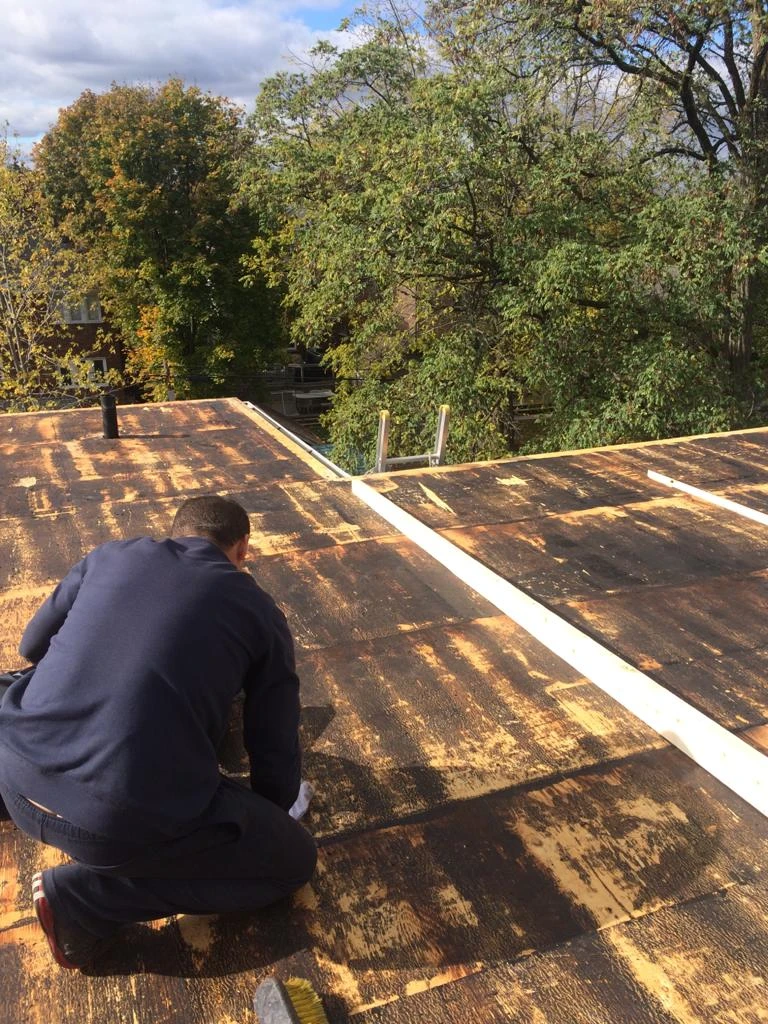
Two cost drivers surprise people most often. The first is deck condition. Once the old membrane comes off, soft or rotted plywood has to be replaced, and that is normally billed as a per sheet extra because nobody can see it beforehand. Budgeting a contingency of five to ten per cent for deck repair on any roof older than twenty five years is realistic. The second is drainage correction. If your roof has ponded for years, tapered insulation or a rebuilt slope may be needed, which adds material and labour but prevents the same failure from repeating.
Permits, the Ontario Building Code and Municipal Requirements
For a straightforward like for like membrane replacement where nothing structural changes, most York Region municipalities do not require a building permit. That said, permit thresholds are set locally and do change, so the safe practice is to confirm with the building department in Markham, Vaughan, Richmond Hill, Aurora, Newmarket or whichever municipality you fall under before work begins. A contractor who handles flat roofing in York Region regularly will tell you upfront which category your project falls into.
Permits are commonly required when the work goes beyond re roofing: changing the structure or framing, adding a roof deck or walkable terrace, altering the roofline, converting an unheated space below into living space, or increasing loads on the existing deck. Insulation upgrades are worth discussing as well. Ontario’s energy efficiency provisions push roof assemblies in this climate zone toward substantially higher effective R values than the assemblies built in the 1960s and 1970s, and when you strip a roof to the deck you have the one practical opportunity to bring it closer to current expectations.
Two other code driven points matter on residential flat roofs. Guard requirements apply if the surface becomes accessible, so a roof used as a terrace is a different project from a roof that is never walked on. And torch applied work near combustible materials carries fire watch obligations, which is a legitimate reason a contractor may recommend a self adhered system on a tight site instead.
Warning Signs: Repair, Recover or Replace
Not every leak means a new roof, and a fair share of flat roofing York Region service calls end in a targeted repair rather than a replacement. The practical question is whether the membrane still has usable life and whether the insulation below it is dry. Wet insulation cannot be dried in place, and covering it with a new membrane traps the moisture, so a roof with widespread saturation needs a full tear off regardless of how the surface looks.
| What you observe | Likely cause | Typical response | Urgency |
|---|---|---|---|
| Water stain on the ceiling below a flat roof section | Failed seam, flashing or penetration detail | Targeted repair after leak tracing | Within days |
| Standing water still present 48 hours after rain | Insufficient slope, blocked drain or crushed insulation | Drain clearing or tapered insulation correction | This season |
| Blisters, ridges or bubbles across the surface | Trapped moisture or vapour under the membrane | Core sample to check insulation, then repair or replace | Within months |
| Cracking, alligatoring or exposed granule loss | Ultraviolet degradation near end of service life | Plan replacement, interim repairs only | Within 1 to 2 years |
| Membrane pulling away at parapet or sidewall | Failed termination bar, sealant or counterflashing | Rebuild the termination detail | Within weeks |
| Sagging or spongy feel underfoot | Deteriorated deck or saturated insulation | Full tear off with deck repair | Immediate assessment |
Active interior leaking during a storm is a different category. Water tracking along framing can reach drywall, insulation and electrical boxes well away from the entry point, and the sensible move is emergency roof repair to stabilise the situation, followed by a proper assessment once conditions allow. Temporary measures are exactly that, and they should never be presented as a permanent fix.
How a Flat Roof Replacement Actually Runs
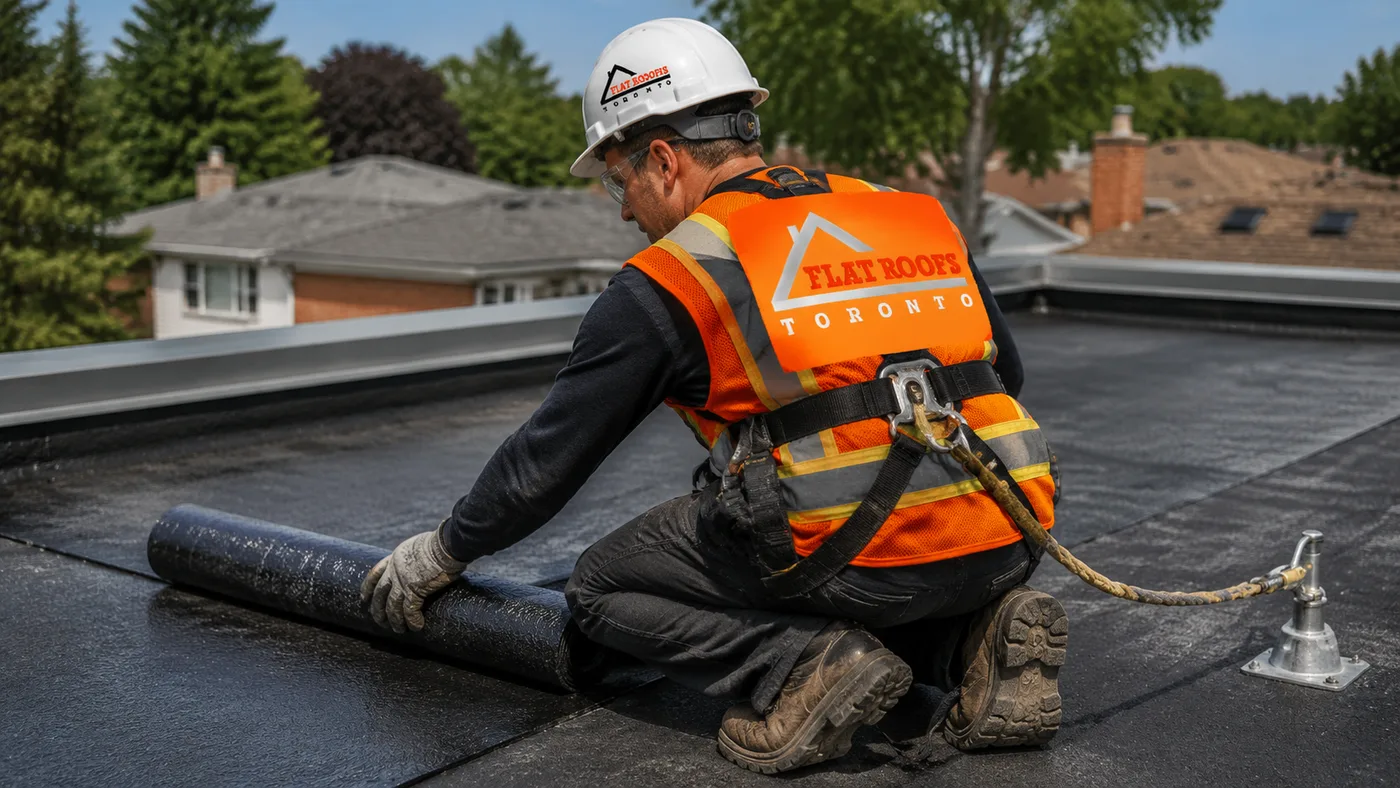
A residential flat roofing York Region replacement follows a predictable sequence. The crew protects the grounds and sets up disposal, then strips the existing membrane and insulation down to the deck. The deck is inspected and repaired where needed, the new insulation is laid with attention to slope, and the base sheet goes down. Flashings, curbs and terminations are built before the cap layer is completed, and the final walk through checks drains, edges and every penetration.
Most single section residential projects finish within one to three working days, weather permitting. Flat roofing in York Region is weather dependent because membrane work needs a dry deck and reasonable temperatures, so summer and early autumn are the most predictable windows in the GTA. Late spring through September is when the majority of residential flat roof installation work happens across the region, and booking earlier in that window generally gives you more schedule flexibility than waiting for October.
If your flat section includes glazing, plan it into the same job. Replacing a membrane around an aging skylight and then replacing the skylight two years later means opening the new roof again and voiding the detail you just paid for. Coordinating the membrane with residential skylight replacement at the same time produces a single continuous flashing detail and one point of accountability.
Choosing a Contractor for Flat Roofing in York Region
Flat roof work is unforgiving of shortcuts, and the difference between a twenty five year roof and a five year roof is often invisible from the ground. Before hiring for flat roofing in York Region, ask for specifics rather than general reassurance.
- Written scope stating the membrane system by manufacturer and number of plies, insulation type and thickness, and how many existing layers are being removed.
- Drainage plan explaining how water will leave the roof and whether tapered insulation is included.
- Deck repair terms with a stated per sheet rate so surprise costs are agreed in advance.
- WSIB coverage and liability insurance confirmed in writing, not verbally.
- Warranty structure separating the manufacturer material warranty from the contractor’s workmanship warranty, with the term of each stated clearly.
- Local reference work you can actually look at, since photographs of finished details tell you more than a brochure.
It is also fair to ask how often a company works on low slope roofs specifically. Many general roofers install shingles competently and treat flat sections as an afterthought. Reviewing a contractor’s completed project photo gallery is a quick way to gauge whether membrane work is a core competency or an occasional sideline. Homeowners comparing providers of flat roofing services across York Region should weigh detail quality and warranty terms at least as heavily as headline price.
Maintenance That Extends Membrane Life
A flat roof rewards modest, consistent attention, and maintenance is the cheapest part of owning flat roofing in York Region. Twice yearly inspections, ideally in spring after the freeze thaw season and again in late autumn once the leaves are down, catch the small problems that become expensive ones. Clear drains and scuppers, since a single blocked drain can hold hundreds of kilograms of water on a residential roof. Check sealant at penetrations, because sealant is the shortest lived component on any roof and is cheap to renew.
Keep traffic off the membrane unless walk pads are installed, and never place heavy items on a residential low slope roof without confirming the structure can carry them. Trim overhanging branches so wind does not abrade the surface and so debris has less opportunity to accumulate. After any significant hail or windstorm, a visual check is worthwhile even if nothing is leaking, because membrane damage frequently shows up as a leak only weeks later. With this level of care, most flat roofing York Region installations reach or exceed the upper end of their expected service life.
How long does a flat roof last in York Region?
What does flat roofing in York Region cost in 2026?
Do I need a permit to replace a flat roof?
Can a new membrane be installed over the existing roof?
What is the best time of year for flat roof work in the GTA?
Why does my flat roof keep leaking after repairs?
Book Your Flat Roofing York Region Consultation
Whether you are dealing with a leaking addition in Markham, a membrane section above a garage in Vaughan or a full low slope roof in Richmond Hill, an accurate assessment comes first. Flat Roofs Toronto inspects the assembly, identifies whether the insulation below is dry, and gives you a written scope that states the system, the insulation and the flashing work rather than a single lump sum.
Call us today at (647) 333-3528 or request a free consultation to have your flat roof assessed by a crew that works on low slope assemblies every week.
Flat Roofs Toronto serves York Region, including Markham, Vaughan, Richmond Hill, Aurora and Newmarket, along with Toronto and the wider GTA.