

Home / Attic Insulation & Ventilation
Residential
Attic Insulation and Ventilation for Flat Roof Attics in Toronto
The shallow cavity above your top-floor ceiling decides how warm the house is and how long the roof lasts. We insulate it, air seal it and vent it properly, and we do it from the roof side where that is the only sensible route.
What you get from Flat Roofs Toronto
Roof-Side Access
We can open the deck and close it back up watertight.
Free No-Obligation Quotes
R-value target and cost, in writing.
Residential & Commercial
Houses, additions, garages and low rises.
24/7 Emergency Response
Wet insulation is a roof problem first.
A Flat Roof Attic Is Not a Normal Attic
In a house with a pitched roof, the attic is a room. You can stand up in it, you can get a person and a hose up there, and there is a metre of air above the insulation doing the ventilating. A flat roof does not give you any of that. What you have is a cavity a few inches deep between the ceiling drywall and the roof deck, often with no hatch, no walkway and no easy way in.
That changes everything about how the work is done. There is frequently no route in from inside the house at all, which means the honest answer is to open the roof, do the work from above and close the deck back up watertight. Because we are roofers first, that is a normal day for us rather than a problem to hand off. It is also the reason we handle insulation and ventilation as part of the roofing trade rather than as a separate contract.
It also changes the physics. In a shallow cavity there is very little room for air to move, so ventilation has to be deliberately designed rather than assumed. Get it wrong and the moisture your house produces every day condenses on the underside of a cold roof deck, soaks the insulation, and rots the sheathing from the inside out while the membrane on top looks perfectly fine.
What the work usually involves
- Inspection of existing insulation depth and condition
- Removal of wet, compacted or contaminated material
- Air sealing at penetrations, top plates and hatches
- Continuous vapour control on the warm side
- New insulation to a target R-value
- Baffles to keep intake air channels open
- Intake and exhaust venting sized for the cavity
Signs the Cavity Above Your Ceiling Needs Work
Most of these look like heating problems. Several of them are roofing problems wearing a disguise.
- Heating and cooling bills climbing with no change in habits
- The top floor never comfortable while the rest of the house is fine
- Cold spots, draughts or a cold ceiling to the touch in winter
- Ice building at the roof edge, gutter or scupper
- Snow melting off one part of the roof much faster than the rest
- Damp patches, staining or a musty smell at the ceiling
- Any sign of pests having been in the cavity
- Insulation that is more than 20 years old or has never been checked
Insulation Types We Use in Flat Roof Cavities
Which one is right depends on how much depth you have, whether the cavity can be vented, and how the assembly is going to manage moisture.
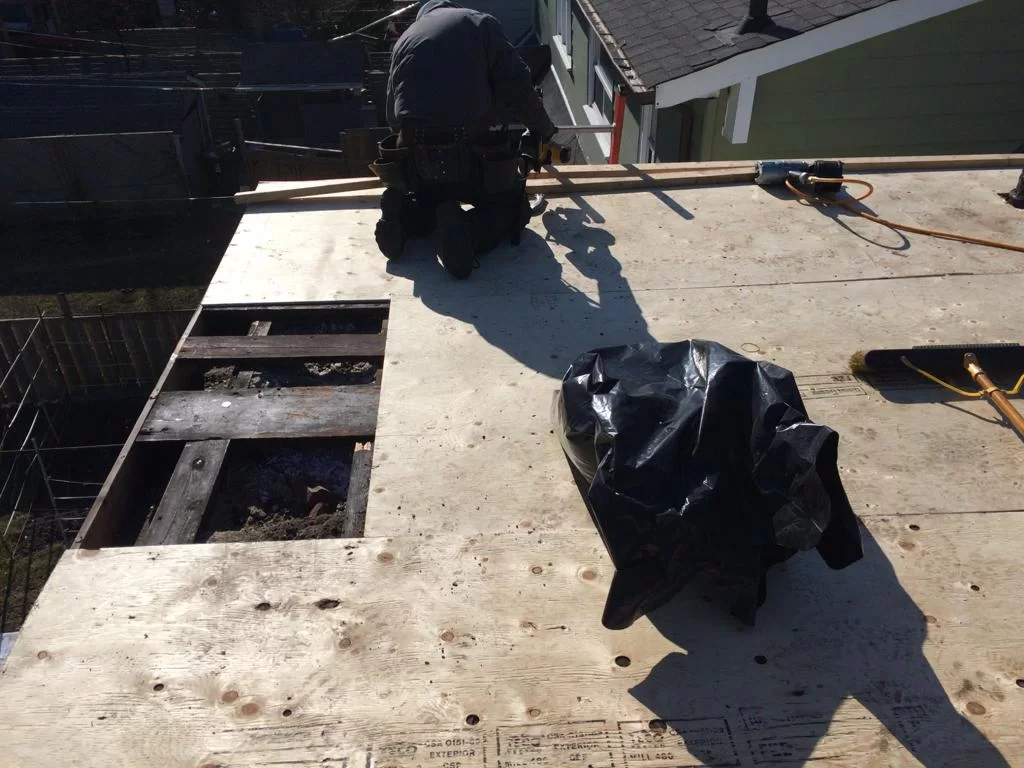
Loose Fill
Blown-In Cellulose or Fibreglass
Blown through a hose so it fills awkward bays and flows around wiring and pipework, which matters in a cavity nobody can crawl into. Cellulose gives slightly more R-value per inch; fibreglass resists settling better over time. Both need a proper air barrier underneath to work as advertised.
- Fills bays no one can reach
- Good value per R-value
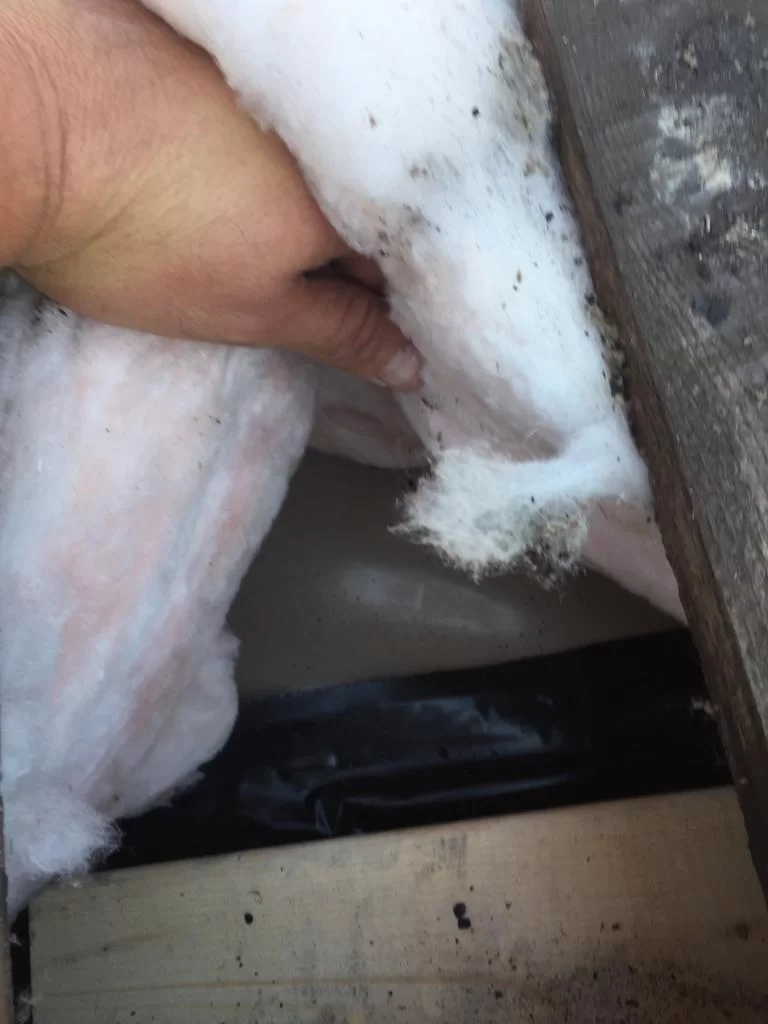
Batts
Mineral Wool or Fibreglass Batt
Cut and fitted between joists where the cavity is open and regularly spaced. Straightforward and cost-effective when the deck is already off for a roof replacement. The whole performance depends on the fit: a batt with gaps at the edges loses a surprising share of its rated value.
- Best when the deck is already open
- Mineral wool adds fire resistance
Highest R Per Inch
Closed-Cell Spray Foam
Sprayed as a liquid that expands and cures rigid. It is the answer when the cavity is too shallow to reach target R-value any other way, because it packs the most performance into the least depth and acts as its own air and vapour control. It also permanently bonds to the deck, so it has to be specified with the whole assembly in mind.
- Most R-value in the least depth
- Air and vapour control in one
Above the Deck
Rigid Board Over the Deck
Sometimes the right move is not to insulate the cavity at all but to put rigid board above the roof deck during a replacement, so the whole structure sits inside the warm envelope. It removes the condensation risk in the cavity entirely and it can be tapered at the same time to fix a drainage problem.
- No condensation risk in the cavity
- Can be tapered to correct slope
How Much Insulation, and Why Ventilation Decides Whether It Works
The R-value target
For attic spaces in the Toronto climate the commonly recommended target is around R-50 to R-60. That is straightforward to hit in a pitched attic where you can pile up sixteen inches of loose fill. In a flat roof cavity you are often working with six or eight inches of joist depth, so getting there means either a higher performance material per inch, or adding insulation above the deck while the roof is off, or accepting a realistic number and being honest with you about it.
Depth is not the whole story either. R-value is a measure of resistance to heat flow, and it assumes the insulation is installed at its rated density, in full contact with the surfaces around it, with no gaps and no air moving through it. Compressed, settled or wet insulation performs a long way below its label.
Air sealing comes first
Insulation slows heat moving through materials. It does nothing about heat moving with air. Every pot light, plumbing stack, bathroom fan duct and gap at the top of an interior wall is a hole between your heated house and a cold cavity, and warm moist air will use those holes whether or not there is insulation above them. Sealing them before insulating is what turns a paper R-value into a real one.
Ventilation and the cold roof
A vented flat roof assembly needs a continuous air channel between the top of the insulation and the underside of the deck, with intake at one edge and exhaust at another, so any moisture that does get up there is carried away rather than condensing. Baffles hold that channel open where blown insulation would otherwise fill it. In shallow cavities where that channel simply cannot be maintained, the correct approach is an unvented assembly with the insulation placed so the deck never gets cold enough to condense on. What is not acceptable is a cavity that is neither properly vented nor properly sealed, which is what a great many older Toronto flat roofs actually have.
Why this is a roofing conversation
Wet insulation is nearly always a symptom. Either water is coming in through the roof, or humid indoor air is condensing under a cold deck. Replacing the insulation without answering which of those it is means doing the job twice. If the membrane is near the end of its life anyway, doing the roof replacement and the insulation upgrade as one job is both cheaper and better, because the deck is open once instead of twice. Which membrane goes back on top is a separate decision, set out in our flat roofing systems guide, and the rest of what Flat Roofs Toronto does sits on the home page.
How an Attic Insulation Job Runs
Four steps, and the first one is the one most people skip.
1
Inspection and Assessment
We check existing depth, condition and moisture, look for the air leaks and work out whether the cavity can realistically be vented.
2
Written Recommendation
Target R-value, the material that suits your cavity depth, and what it costs. Free and with no obligation.
3
Removal, Air Sealing and Repair
Wet or contaminated material comes out, penetrations get sealed and any damaged deck or framing is repaired first.
4
Insulate, Vent and Close Up
New insulation to target, baffles and venting set, and the roof closed back up watertight before we leave.
Attic and Cavity Work on Our Own Sites
Inspection and insulation in real Toronto flat roof cavities.
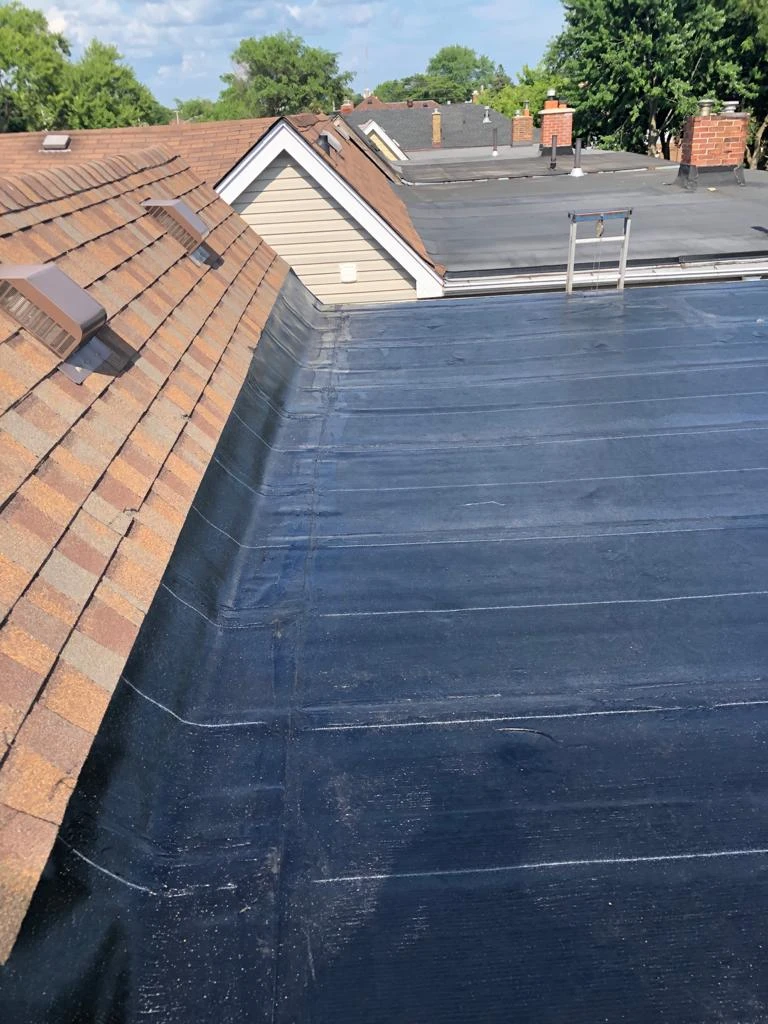
Lumbered Slope Build and Two-Ply System, Toronto
A lumbered slope framed over a flat roof deck to move water toward the drains, with a two-ply system installed over it.
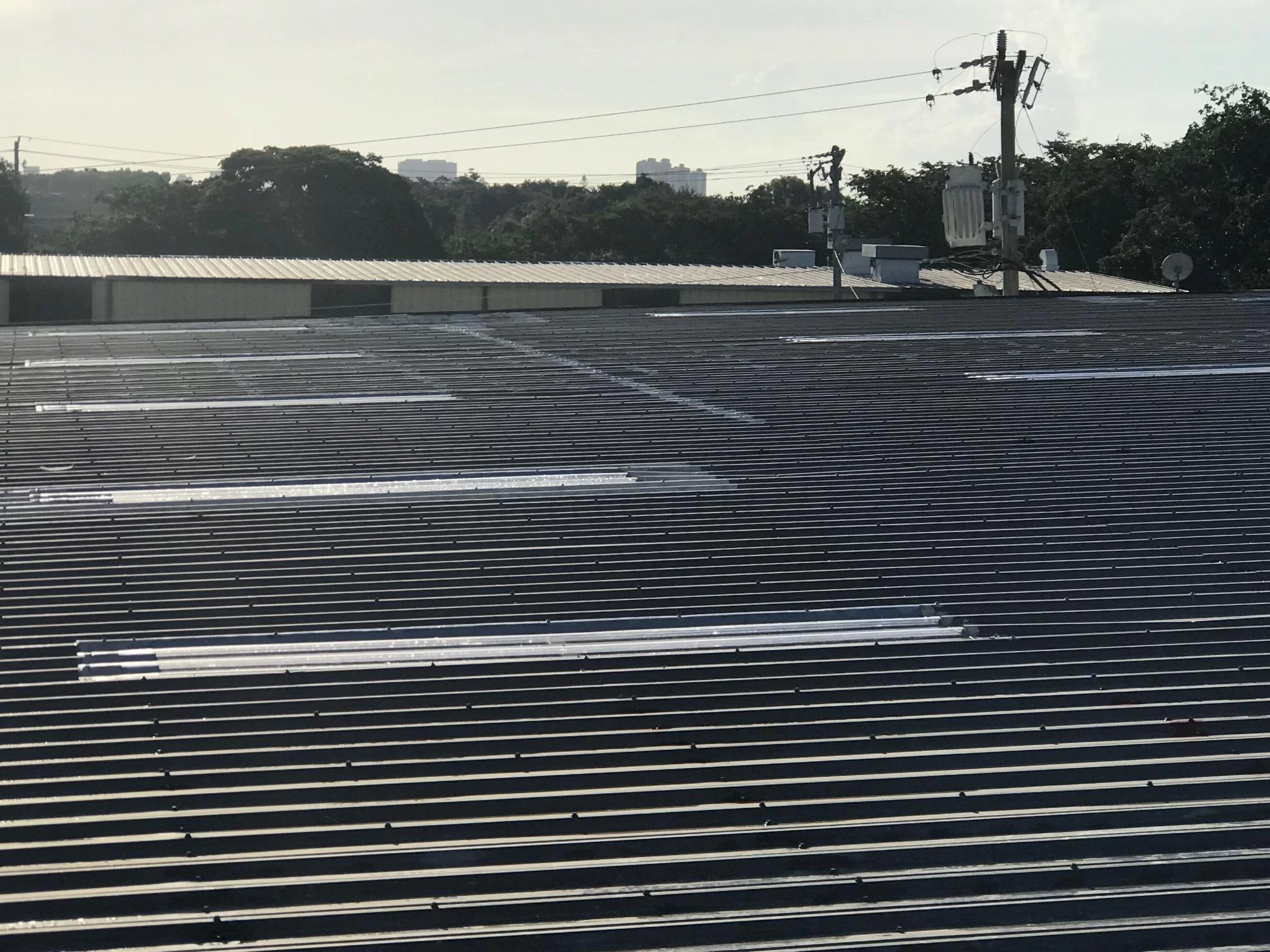
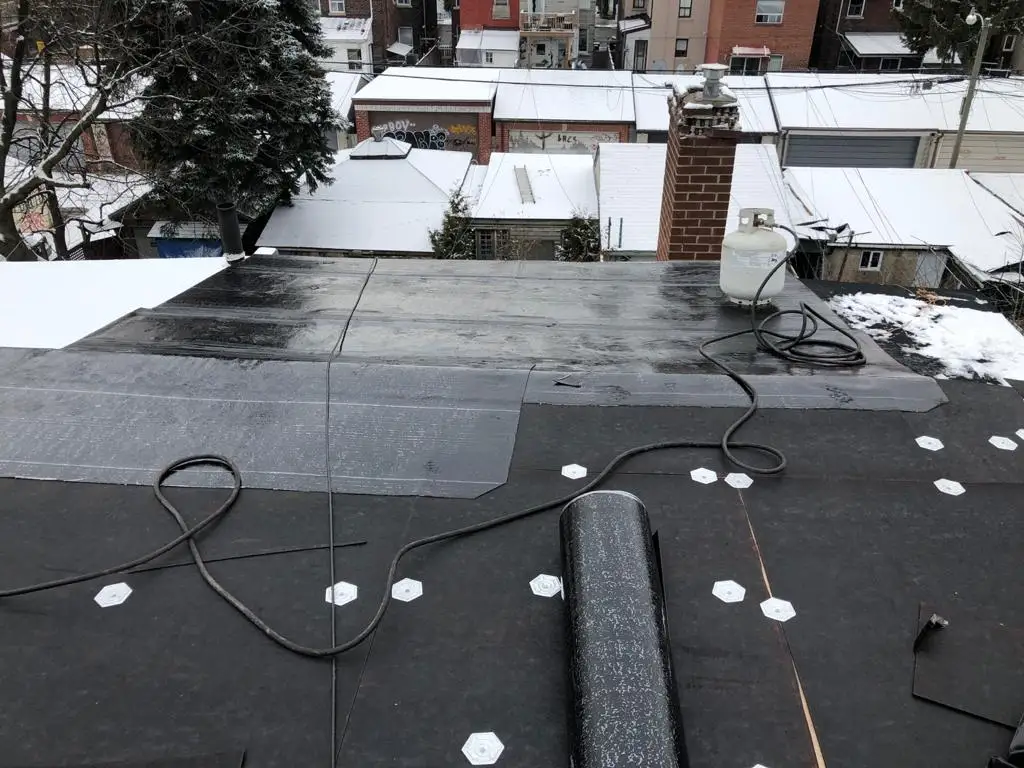
Flat Roof Application Detail, Toronto
A detail from a flat roof membrane application, showing the finished surface of the system.
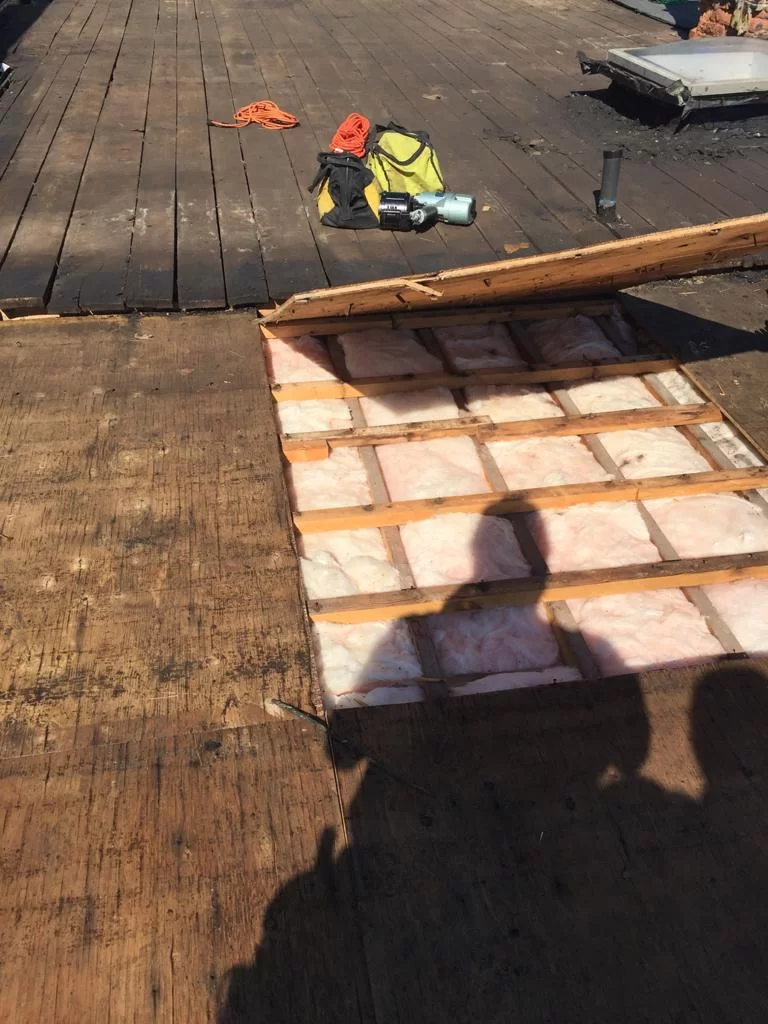
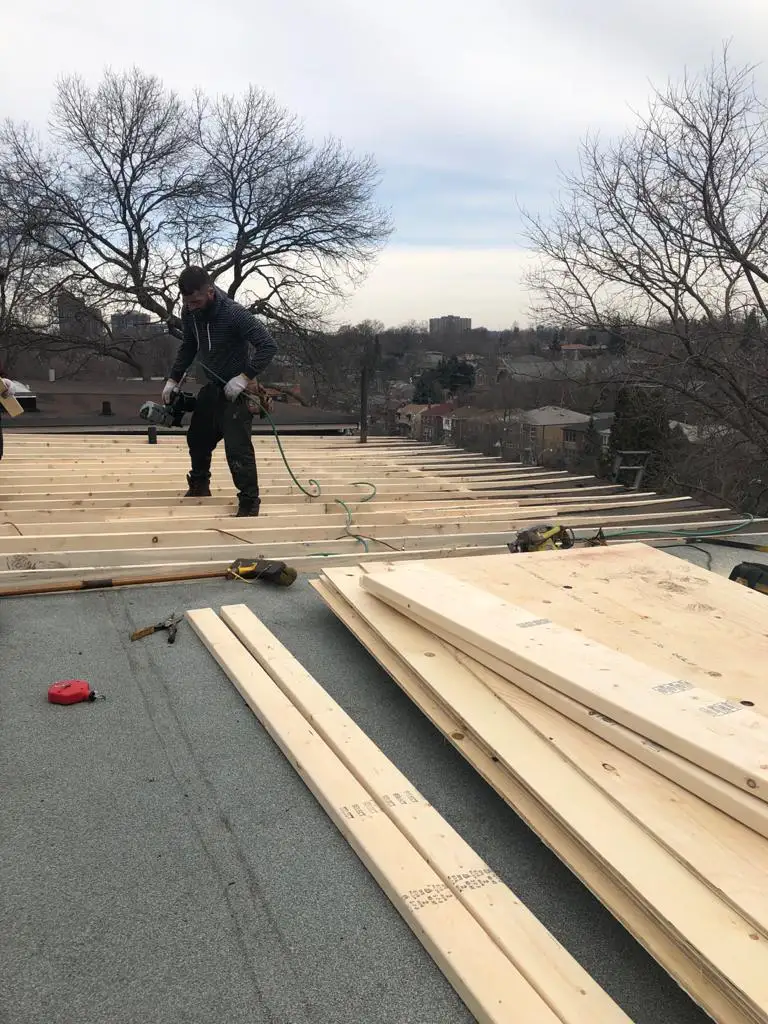
Attic Inspection and Blown-In Insulation, Toronto
Inspection of a flat roof attic space followed by blown-in insulation. The cavity is checked before any insulation is added.
What Drives the Cost of Insulating a Flat Roof Cavity
There is no useful per-square-foot number for this work, because the access is what you are really paying for and access varies wildly from house to house. We quote it free and in writing after we have looked. These are the things that move it.
- Access. An open cavity during a roof replacement is the cheapest case by a wide margin. A sealed cavity that has to be opened from the roof and closed back up is the most expensive.
- Removal. Wet, compacted or pest-contaminated material has to come out and be disposed of before anything new goes in.
- Material choice. Blown loose fill, batts and closed-cell spray foam sit at very different price points per square foot of ceiling.
- Cavity depth and target. Reaching a high R-value in a shallow cavity costs more per square foot than reaching the same number in a deep one.
- Air sealing and repairs. Sealing penetrations is quick. Repairing deck or joists that have been quietly rotting is not, and we find out only once it is open.
- Ventilation work. Adding intake and exhaust venting, and fitting baffles to keep the channel clear, is separate work from the insulation itself.
If your roof is within a few years of needing replacement anyway, ask us to price both together. Doing the insulation while the deck is already open is the single biggest saving available on this kind of work.
Attic Insulation and Ventilation Questions
What Toronto homeowners ask about the space they cannot get into.
How much insulation should a Toronto attic have?
The commonly recommended target for this climate is roughly R-50 to R-60. In a flat roof cavity, hitting that with joist depth alone is often not possible, so we either use a material with more R-value per inch or add rigid insulation above the deck during a roof replacement. We will tell you what is realistically achievable in your cavity before you spend anything.
Can you insulate a flat roof attic without removing the roof?
Sometimes. If there is an accessible hatch and enough headroom to work, we can get in from inside. In a lot of Toronto houses there is no hatch and only a few inches of clearance, and the honest answer is that the practical route is from above. We open a section of deck, do the work, and close it back up watertight the same day.
Is my flat roof attic supposed to be vented?
It depends on how the assembly was built. A vented cold-roof assembly needs a continuous air channel above the insulation with intake and exhaust at opposite edges. An unvented warm-roof assembly puts the insulation where the deck never gets cold enough to condense on and is deliberately sealed. Both work. The failure mode is a cavity that is half of each, which is unfortunately very common in older housing stock.
Why do I get icicles at the roof edge?
Heat escaping from the house is melting snow on the roof, and the meltwater is refreezing when it reaches the colder edge. It is a symptom of heat loss and ventilation, not of the weather. Fixing the insulation and the air sealing is what makes it stop; chipping the ice off only deals with today's version.
What happens if the insulation gets wet?
It loses most of its effective R-value, it stays wet because there is very little airflow in a shallow cavity, and it holds moisture against the deck and the joists. That is how sheathing rots from the inside while the membrane above it looks fine. Wet insulation is removed rather than dried in place, and we work out where the water came from before putting anything new in.
Do you handle the roof work at the same time?
Yes, and it is usually the right way to do it. We are a flat roofing company, so opening a deck, working underneath and closing it back up properly is our own trade. If the membrane is near the end of its life, combining this with a flat roof replacement saves you the cost of opening the same roof twice.
Areas We Cover
Toronto and out through the GTA. Open the plan to find your area, or call and ask about somewhere we have not named.
Select a region on the plan
Free, No Obligation
Request a Free Quote
Tell us what the roof is doing and we will come and look at it. No charge, and no obligation to proceed.
Call Us
Office Hours
Open 7 days a week: 7:00am to 11:30pm
Emergencies
The line above is answered 24/7 for anything that cannot wait, including weekends and statutory holidays.
Related Flat Roofing Services
Three more places our crews spend their time. Every one of them touches the same roof.
Google Reviews
Attic Insulation and Ventilation Reviews
These come straight from our Google Business Profile. We cannot edit them, reorder them or take one down, and the rating in the header is whatever Google is showing today.



Free, No Obligation
Find Out What Is Actually Above Your Ceiling
We will inspect the cavity, tell you what is up there and put a realistic R-value target and a price in writing. Free, and with no obligation.