Markham sits far enough inland from Lake Ontario that its winters run a little colder and its snow sits a little longer than it does in Toronto’s downtown core, and low-slope roofs feel every degree of that difference. Whether you own a postwar bungalow with a flat-roofed rear addition, a newer subdivision home with a flat porch canopy over the entry, or an estate-lot property with a large low-slope section spanning the garage wing, flat roofing Markham work has to be planned around freeze-thaw cycling, wet snow loads and drainage that has nowhere to go except a handful of drains and scuppers. This guide covers the materials that hold up here, realistic 2026 pricing, permit and Ontario Building Code considerations, project timelines and the maintenance that decides whether a roof reaches year twelve or year twenty-five.
The goal is simple: give you enough technical grounding to judge quotes on substance rather than on whoever sounds most confident at your kitchen table. Flat roofs are unforgiving of shortcuts, which is why flat roofing Markham projects live or die on detailing. A sloped shingle roof can survive a mediocre installation for years because gravity does most of the work. A flat roof cannot. Every seam, every termination, every transition to a wall or curb has to be right, because water on a low-slope surface will find any weakness and sit on it.
Why Flat Roofing Markham Conditions Differ From the Toronto Core
People often assume the whole Greater Toronto Area shares one climate. In practice, the difference between a lakeside Toronto property and a home in northern Markham shows up clearly on a roof. Markham typically sees more seasonal snow accumulation and more nights below freezing than the waterfront, and it lacks the lake’s moderating effect during the shoulder seasons. That means more freeze-thaw cycles, and freeze-thaw is what destroys flat roofing assemblies.
The mechanism is straightforward. Water pools in a low spot or works its way into a hairline seam. Overnight it freezes and expands by roughly nine percent. During the day it thaws. Repeat that fifty or sixty times over a winter and a pinhole becomes a crack, a crack becomes a split, and a split becomes an interior stain on your ceiling in March. Any honest conversation about flat roofing Markham repairs starts with this cycle, because it explains why membranes that perform well in milder climates underperform here.
Wind is the second factor. Newer Markham subdivisions are built on former farmland with limited mature tree cover, which leaves roofs exposed to sustained wind and drifting snow. Older established areas such as Thornhill and parts of Unionville have the opposite problem: mature tree canopy that drops leaves, seed pods and small branches onto roof surfaces every autumn, clogging drains and holding moisture against the membrane. Neither condition is a defect. Both simply need to be designed for.
The third factor is snow load. Low-slope roofs do not shed snow the way pitched roofs do. Snow accumulates, compacts, partially melts against a warm roof deck, refreezes at the cold edges and builds ice at drains and parapets. A properly insulated, properly drained assembly manages this. A poorly insulated one turns into an ice-making machine.
Where Flat Roofs Actually Appear on Markham Homes
Markham’s housing stock is unusually varied for a single municipality, and flat roofing shows up in different forms depending on which era of construction you are dealing with. Most flat roofing Markham enquiries come from one of the five categories below.
- Postwar and mid-century bungalows. Older parts of Markham have a large stock of one-storey homes, many of which received rear additions, sunrooms or carport conversions in later decades. These additions are almost always low-slope, and many are now on their second or third membrane.
- Nineteen-seventies and eighties two-storey homes. Flat sections over garages, bay projections and covered entries are common. These are small in area but high in leak frequency because they involve multiple wall transitions.
- Newer subdivision homes. Builders often use flat roofing over front porticos, second-floor balconies and small dormer decks. The membrane area may be modest, but the detailing around doors and railings is demanding.
- Estate lots and custom builds. Larger properties frequently have substantial low-slope areas over garage wings, breezeways and rear pavilions, sometimes several hundred square feet at a time.
- Contemporary infill and rebuilds. Modern architecture has brought fully flat primary roofs to a growing number of Markham lots, often combined with roof drains rather than perimeter scuppers.
If you are researching flat roofing services for Markham homes, the first thing worth establishing is which of these categories your roof falls into, because it drives everything else: material choice, access requirements, cost and how long the crew will be on site.
Flat Roofing Materials That Perform in Markham’s Climate
There are four membrane families in regular residential use across the GTA, plus one older system that still appears on homes built before the nineteen-nineties. Each has a legitimate place in flat roofing Markham applications, and each has conditions where it is the wrong choice.
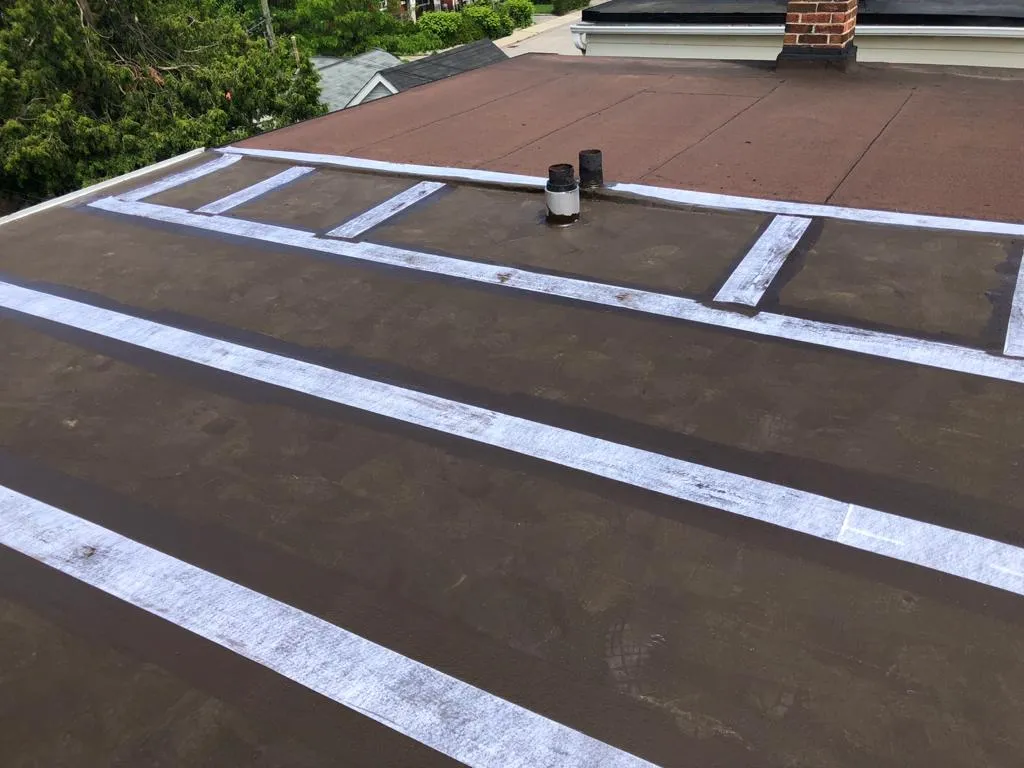
Two-ply modified bitumen (SBS) remains the workhorse for residential flat roofing Markham projects. It consists of a base sheet mechanically fastened or adhered to the deck, then a granulated cap sheet torch-applied or self-adhered on top. The two layers give redundancy, the granular surface resists foot traffic and ultraviolet exposure, and the material stays flexible in cold weather because of the styrene-butadiene-styrene modifier. It is also easy to repair years later, which matters more than most homeowners realise.
TPO (thermoplastic polyolefin) is a single-ply sheet, heat-welded at the seams, usually white or light grey. The reflectivity reduces summer heat gain, and welded seams are strong when done correctly. TPO is more common on commercial buildings, though it is increasingly used on larger residential flat areas. Its weakness is that the whole system depends on seam quality and on the sheet not being punctured, since there is no second ply beneath it.
EPDM rubber is a synthetic rubber membrane, typically black, adhered or mechanically fastened, with seams joined by adhesive tape. It handles cold well and is forgiving of building movement. The dark surface absorbs heat, which is a modest benefit in a Markham winter and a modest penalty in July.
PVC is a single-ply thermoplastic with heat-welded seams and excellent chemical resistance. It is the usual choice where a roof is exposed to kitchen exhaust grease or where a very long service life is the priority, and it carries the highest material cost of the group.
Built-up roofing (BUR), the traditional tar-and-gravel assembly, is still found on older Markham additions. It is rarely installed new on residential work today, but understanding it matters because removing it is heavier, slower and more expensive than removing a modern membrane.
| Membrane system | Typical service life in the GTA | Installed cost per square foot (2026) | Best suited to |
|---|---|---|---|
| Two-ply modified bitumen (SBS) | 20 to 30 years | $11 to $17 | Most residential additions, garages, sunrooms, roofs with foot traffic |
| TPO single-ply | 18 to 28 years | $10 to $16 | Larger uninterrupted areas where summer heat gain is a concern |
| EPDM rubber | 18 to 30 years | $9 to $15 | Simple rectangular roofs with few penetrations, cold-weather flexibility |
| PVC single-ply | 22 to 32 years | $13 to $20 | Roofs near kitchen exhaust, long-horizon installations |
| Built-up (tar and gravel) | 15 to 25 years | $12 to $19 | Rarely specified new; usually encountered during tear-off |
Ranges in flat roofing Markham quotes are wide for a reason. Access, deck condition, insulation thickness, number of penetrations and the amount of flashing detail move the number more than the membrane brand does. Two identical-sized roofs on the same Markham street can differ by forty percent in price because one has a chimney, three vents and a skylight while the other is a clean rectangle.
What Flat Roofing Markham Projects Cost in 2026
Most residential flat roofing Markham quotes fall into a predictable structure: tear-off and disposal, deck repair if needed, insulation, membrane, flashings and metal edge, then cleanup. Beware of any quote that gives you one lump sum with no breakdown, because it makes comparison impossible and it hides whether insulation is included at all.
| Roof area | Typical application | Full tear-off and replacement (2026) | Time on site |
|---|---|---|---|
| Under 300 sq ft | Portico, bay projection, small dormer deck | $3,500 to $6,000 | 1 day |
| 300 to 700 sq ft | Rear addition, sunroom, single garage | $6,000 to $12,000 | 1 to 2 days |
| 700 to 1,200 sq ft | Large addition or double garage wing | $11,000 to $19,000 | 2 to 3 days |
| 1,200 to 2,000 sq ft | Estate-lot garage wing, large rear pavilion | $18,000 to $31,000 | 3 to 5 days |
| Over 2,000 sq ft | Contemporary home with primary flat roof | $28,000 and up | 5 days and up |
Several items commonly sit outside the base price. Deck replacement is the big one: if the plywood or plank deck below the old membrane has rotted, it has to be replaced, and no contractor can quote that accurately before tear-off. A fair approach is a stated per-sheet allowance in the contract, so you know the rate in advance instead of negotiating on day two. Expect roughly $95 to $170 per sheet of replacement plywood installed, depending on access and thickness.
Other cost drivers include added insulation to meet current thermal targets, new metal edge and drip flashing, replacement of roof drains or scuppers, chimney and wall counter-flashing, and skylight curb rebuilds. If you are considering adding daylight while the roof is open, that is the moment to do it, because integrating a skylight into a new flat roof membrane costs far less than cutting into a finished one later.
Repairs are a different calculation. A localised seam repair or flashing rebuild on a small area typically runs $450 to $1,400. That is worthwhile on a roof with ten good years left. It is money poorly spent on a roof at year twenty-two with widespread surface cracking, where the same $1,400 is better applied toward replacement.
Drainage, Slope and Ponding Water
Nothing determines the lifespan of a flat roof more than where the water goes, and drainage is the single most common failure point in flat roofing Markham assessments. Despite the name, a flat roof should never be truly flat. Ontario practice calls for a minimum slope of roughly two percent, which is about one quarter inch of fall per foot of run, directing water to drains, scuppers or a gutter edge.
Many older Markham additions were framed dead level, or have settled over the decades into a slight reverse slope. The result is ponding: standing water that remains more than forty-eight hours after rain. Ponding accelerates membrane breakdown, magnifies ultraviolet damage, adds live load and, in winter, becomes a block of ice that flexes seams every time the temperature swings.
There are three practical remedies. The first is tapered insulation, where rigid polyisocyanurate boards are cut to a slope and laid to create fall toward the drainage points. This is the cleanest solution and adds thermal performance at the same time. The second is adding or relocating drainage, such as installing a scupper at the low corner or adding a second roof drain. The third, on badly framed roofs, is sistering or shimming the joists to rebuild the slope structurally, which is more invasive and more expensive but sometimes unavoidable.
Drainage capacity matters too. A single small drain on a several-hundred-square-foot roof will back up during a summer downpour, and it will freeze shut in February. Overflow provisions, whether a secondary drain or a scupper set slightly above the primary, are cheap insurance against a blocked outlet turning into a ceiling collapse.
Permits, Ontario Building Code and Insulation Requirements
Straightforward membrane replacement on an existing flat roof generally does not require a building permit in Markham, because you are replacing a roof covering rather than altering structure. Permits are typically required when the work involves structural changes: replacing or reframing the deck, altering joists to build slope, adding a new roof opening for a skylight or hatch, converting a roof into a walkable deck, or building a new addition. The City of Markham building department is the authority on this, and any competent contractor will tell you plainly which category your job falls into rather than guessing.
Insulation is where the Ontario Building Code has the biggest effect on flat roofing Markham upgrades. Flat and cathedral roof assemblies have no attic space, so the insulation lives directly in or above the roof deck. Supplementary Standard SB-12 sets effective thermal resistance targets for these assemblies that are considerably higher than what was normal when most older Markham additions were built. In practice, meeting current expectations on a low-slope residential roof usually means several inches of rigid polyisocyanurate above the deck, not a thin layer of batt squeezed between joists.
| Assembly element | Common condition on older Markham flat roofs | What current work generally targets | Why it matters |
|---|---|---|---|
| Roof insulation | R-12 to R-20 batt between joists, often compressed | Effective R-30 and above, largely rigid board above deck | Reduces heat loss, ice buildup and condensation at the deck |
| Air and vapour control | Polyethylene sheet, frequently discontinuous | Continuous membrane or sealed board joints on the warm side | Stops interior moisture from condensing inside the assembly |
| Slope to drainage | Level framing or reverse slope from settlement | Approximately 2 percent, roughly 1/4 inch per foot | Prevents ponding, the leading cause of premature failure |
| Parapet and wall flashing | Membrane turned up 100 mm or less, no counter-flashing | Turned up roughly 200 mm with metal counter-flashing | Keeps wind-driven rain and drifted snow out of the wall |
| Perimeter metal edge | Original edge, often loose or corroded | New continuous drip edge or gravel stop, mechanically fastened | Protects the membrane edge and controls water at the fascia |
Adding rigid insulation above the deck also raises the finished roof height, which affects door thresholds, window sills and the height of parapet flashing. This should be discussed before the contract is signed, not discovered on day two. On homes where headroom is genuinely constrained, improving the connected attic and ceiling insulation in adjacent sloped areas can offset part of the shortfall.
How a Flat Roof Replacement Runs, Day by Day
A typical residential flat roof installation on a Markham home follows a predictable sequence. Knowing it makes it much easier to tell whether a crew is working methodically or cutting corners.
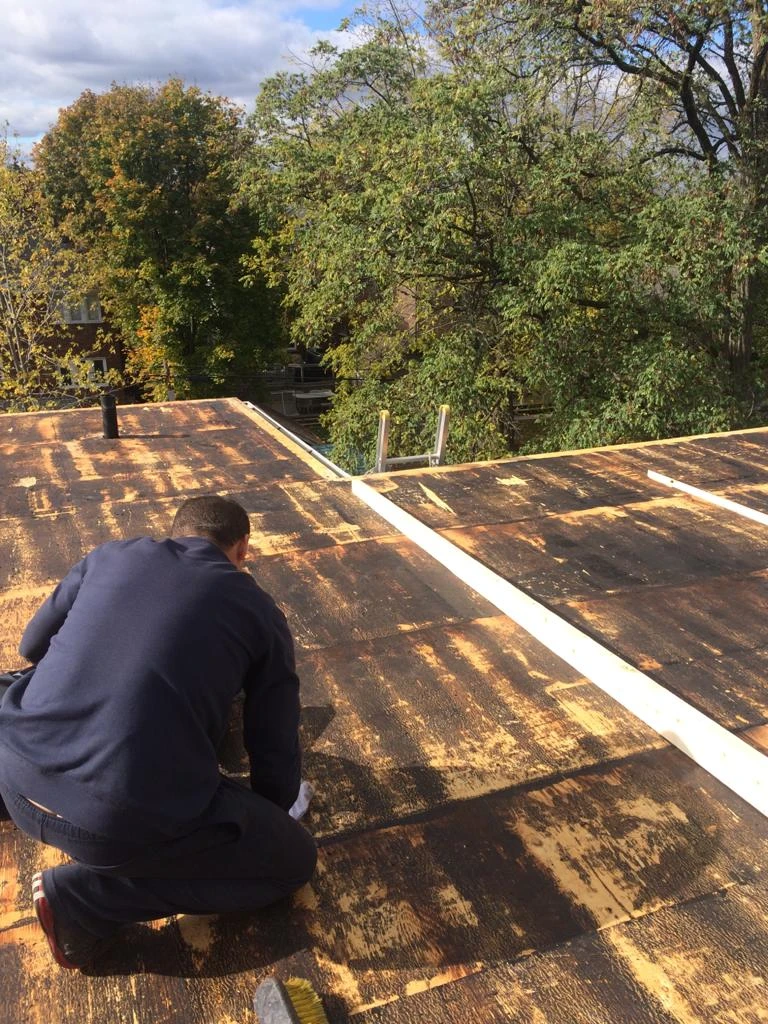
- Day one, morning: protection and tear-off. Landscaping, walkways and any adjacent surfaces are covered. The old membrane and any wet insulation come off down to the deck. Debris goes straight into a bin rather than accumulating on the roof.
- Day one, midday: deck inspection. With the deck exposed, soft, delaminated or rotted sheathing is identified and replaced. This is the point where a homeowner should be shown the condition directly, ideally with photographs.
- Day one, afternoon: vapour control and insulation. The air and vapour control layer goes down, followed by rigid insulation boards, including tapered boards where slope needs correcting. Boards are staggered and fastened or adhered to the specified pattern.
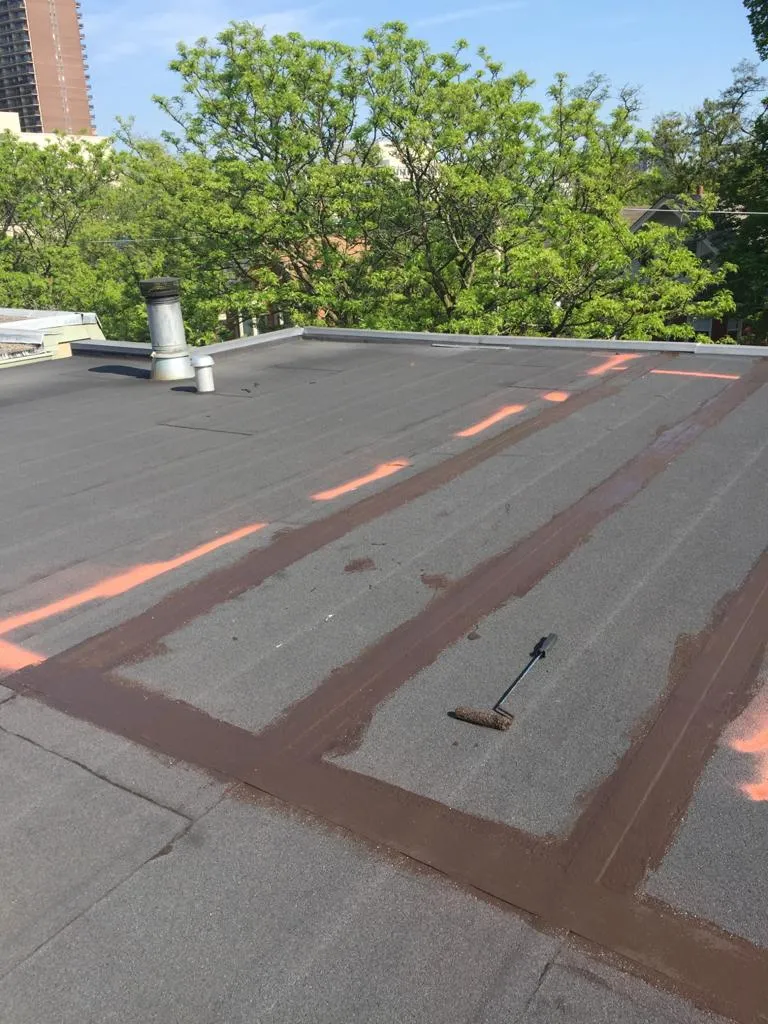
- Day two: base sheet and detailing. The base ply is installed across the field. Curbs, drains, vents and wall transitions are detailed with reinforcing plies, because these are where the majority of leaks originate.
- Day two or three: cap sheet and metal. The granulated cap sheet or single-ply membrane is installed and seamed. New drip edge, counter-flashing and drain assemblies are set and sealed.
- Final: water test and cleanup. Drains are flooded and observed, the site is magnet-swept for fasteners, and the bin is removed. You should receive photographs of the completed assembly and a written warranty covering both material and workmanship.
Weather governs the schedule. Torch-applied and self-adhered membranes both need a dry, reasonably warm deck, so summer and early autumn are the most efficient windows for flat roofing Markham work. Cold-weather installation is possible with adjusted materials and methods, but it is slower and the scheduling risk is higher.
Maintenance, Inspection and Early Warning Signs
Flat roofs reward attention and punish neglect faster than sloped roofs do, so a maintenance routine is part of any sensible flat roofing Markham plan. Two inspections a year, one in spring after the thaw and one in late autumn before snow, catch nearly everything that matters while it is still a cheap fix.
During an inspection, the items worth checking are drains and scuppers for debris, seams and laps for lifting or splitting, flashings at walls and curbs for separation, the membrane surface for blistering, cracking or granule loss, and the roof edge metal for looseness or corrosion. Inside the house, look for staining at ceiling perimeters, at the junction between an addition and the main house, and around any skylight curb.
Several symptoms deserve a same-week call rather than a wait-and-see approach:
- A ceiling stain that grows after rain, or reappears after being painted over
- Water standing on the roof more than two days after a storm
- Visible splits, open seams or membrane pulling away from a wall
- Soft or spongy areas underfoot, which usually indicate a saturated deck
- Blistering across a wide area, a sign of trapped moisture in the assembly
An active leak in the middle of a February thaw is not a maintenance item. It is an urgent one, and emergency flat roof repair exists precisely to stop the water while a permanent plan is arranged. Temporary stabilisation is far cheaper than replacing insulation, drywall and flooring.
How to Compare Flat Roofing Markham Contractors
Low-slope roofing is a specialist trade, and not every general roofer does flat roofing Markham work regularly. Plenty of capable shingle roofers are not experienced with torch-applied membranes, heat welding or tapered insulation design, and the difference shows up at the details rather than in the middle of the field.
When you collect quotes, look for these specifics in writing:
- The exact membrane system, manufacturer and number of plies, not just “modified bitumen”
- Insulation type and thickness, with the resulting effective R-value stated
- Whether tear-off is full or a recover over the existing membrane, and why
- A per-sheet allowance for deck replacement so surprises have a known price
- How slope and drainage will be corrected if ponding currently exists
- Flashing details at every wall, curb, chimney and penetration
- Warranty terms separated into manufacturer material coverage and contractor workmanship coverage
- Proof of WSIB coverage and liability insurance, provided without being asked twice
Look at completed work as well. A contractor’s project gallery tells you whether their finished edges, drain details and wall terminations look deliberate. If a quote is dramatically lower than the others, the usual explanations are that insulation was omitted, a recover was substituted for a tear-off, or the flashing scope is thinner than it appears. Ask directly, and compare the answers rather than the totals.
Finally, ask who is actually on the roof. Some companies sell the job and subcontract the labour without disclosure. That is not automatically a problem, but you are entitled to know who holds the workmanship warranty and who will return in year four if a seam lifts.
How much does a flat roof replacement cost in Markham in 2026?
How long does a flat roof last in the Markham climate?
Do I need a permit for flat roofing Markham work on my home?
Can a new membrane be installed over the old one?
What is the best time of year to replace a flat roof?
Why does water sit on my flat roof after it rains?
Book Your Flat Roofing Markham Consultation Today
Flat Roofs Toronto is a Toronto-area low-slope roofing specialist handling flat roofing Markham projects for homeowners throughout the city, from postwar bungalow additions in the older established areas to large low-slope sections on estate lots and contemporary rebuilds. Every assessment starts on the roof, with photographs of the deck, drainage and flashing conditions, followed by a written scope that states the membrane system, insulation value and flashing details so you can compare quotes on equal terms.
Call us today at (647) 333-3528 or request a free consultation. Whether you need a seam repaired before winter or a full replacement with corrected slope and upgraded insulation, we will tell you plainly which one your roof actually needs.
Flat Roofs Toronto serves Markham and communities across the Greater Toronto Area with residential and commercial low-slope roofing, repairs and emergency service.