Home / Flat Roofing Systems
Systems Guide
Flat Roofing Systems: How the Six Compare
Modified bitumen, cold-ply, TPO, EPDM, PVC and built-up. What each one is, where it belongs, what it costs relative to the others, and which one we would actually put on your building.
What you get from Flat Roofs Toronto
Every System, Not One
We are not tied to a single manufacturer.
Specified for the Building
Deck, exposure and use decide it.
Free No-Obligation Quotes
Including the reasoning, not just the price.
Manufacturer & Workmanship Warranties
On every system we install.
There Is No Best Flat Roof System, Only a Best Fit
Anyone who tells you one membrane is simply better than the others is selling that membrane. All six systems on this page are installed on Toronto buildings every week, all six can give you twenty years or more, and all six will fail early if they are put on the wrong building or installed badly.
What separates them is fit. A torch-applied system is a fine choice on a detached house with clearance around it and a poor choice against a dry party wall. A white reflective membrane earns its keep across forty thousand square feet of conditioned warehouse and is largely irrelevant over an unheated garage. PVC costs more than TPO and is worth it over a restaurant kitchen and not worth it over an office.
So this page does not crown a winner. It tells you what each system actually is, how the seams are made, what it survives, what it does not, and the specific circumstances in which we would recommend it. Then we walk your roof and tell you which one fits.
What we consider before recommending
- Deck type, age and moisture condition
- Whether open flame is safe on the building
- Exposure: sun, wind uplift, neighbouring structures
- Foot traffic and rooftop equipment
- Grease, exhaust or chemical fallout
- Existing slope and drainage performance
- Budget, and how long you will hold the building
The Six Systems Side by Side
Lifespans assume competent installation and a roof that drains. Cost tier is relative to the others here, not an absolute price.
| System | Typical Lifespan | Seam Method | Fire & Heat | Cost Tier | Best For |
|---|---|---|---|---|---|
| 2-Ply Modified Bitumen (Torch-Down)Multi-Ply, Torch Applied | 20 to 25 years | Torch-welded laps | Good, with a fire-rated cap | $$ | Residential roofs, foot traffic, complex details |
| Cold-Ply with Ceramic GranulesMulti-Ply, Adhesive Applied | 20 to 25 years | Adhesive-bonded laps | No open flame at all | $$ | Row houses, semis, dry timber decks, tight sites |
| TPO Single-PlySingle-Ply, Hot-Air Welded | 20 to 30 years | Hot-air welded | Good, no flame in the process | $$ | Warehouses, big-box, large simple commercial roofs |
| EPDM RubberSingle-Ply, Synthetic Rubber | 20 to 30 years | Seam tape or adhesive | Fair, ballast or coating helps | $$ | Large simple roofs, garages, additions, freeze-thaw exposure |
| PVC Single-PlySingle-Ply, Hot-Air Welded | 20 to 30 years | Hot-air welded | Very good, inherently flame resistant | $$$ | Restaurant and industrial exhaust, chemical exposure |
| Built-Up Roofing (Tar and Gravel)Multi-Ply, Ballasted | 20 to 30 years | Bonded bitumen plies | Very good, gravel is non-combustible | $$$ | Existing BUR structures, high-UV exposure, heavy ballast decks |
Tap or scroll the table sideways on a phone. Every system name links to its full section below.
Multi-Ply, Torch Applied
2-Ply Modified Bitumen (Torch-Down)
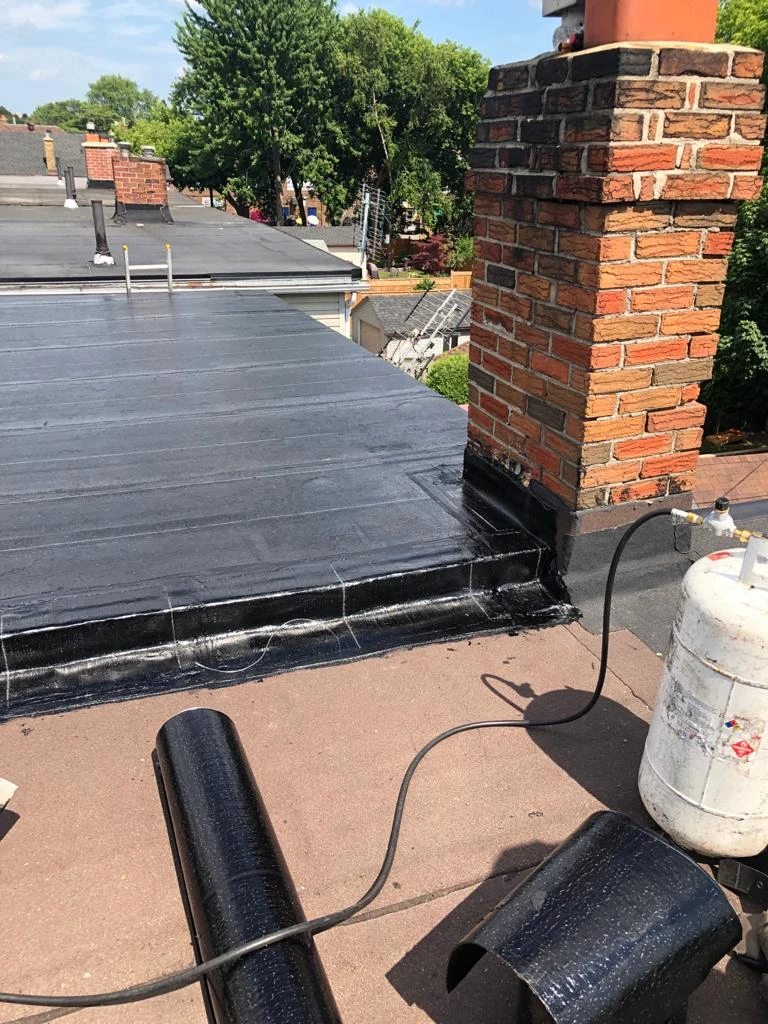
A reinforced base sheet is mechanically fastened or torched to the substrate, then a granule-surfaced cap sheet is torch applied over it, and the two fuse into a single continuous waterproofing layer. The point of two plies is redundancy: if something compromises the cap, there is still a full membrane underneath it.
It is the most common system on Toronto residential flat roofs, and it deserves that position. It takes foot traffic well, it can be detailed around any awkward corner a row house produces, and the material has decades of field history in this freeze-thaw climate.
Strengths
- Two full waterproofing plies, not one
- Handles rooftop foot traffic better than most single-ply
- Detailing around curbs, parapets and stacks is straightforward
- Granule cap resists UV without a separate coating
Trade-offs
- Open flame on the roof, which rules it out in some situations
- Heavier than single-ply systems
- Seam quality is entirely down to the installer's torch work
When we recommend it
When the roof is residential or lightly trafficked commercial, the deck is sound, and there is safe clearance from combustible structures and neighbouring walls.
When we recommend it
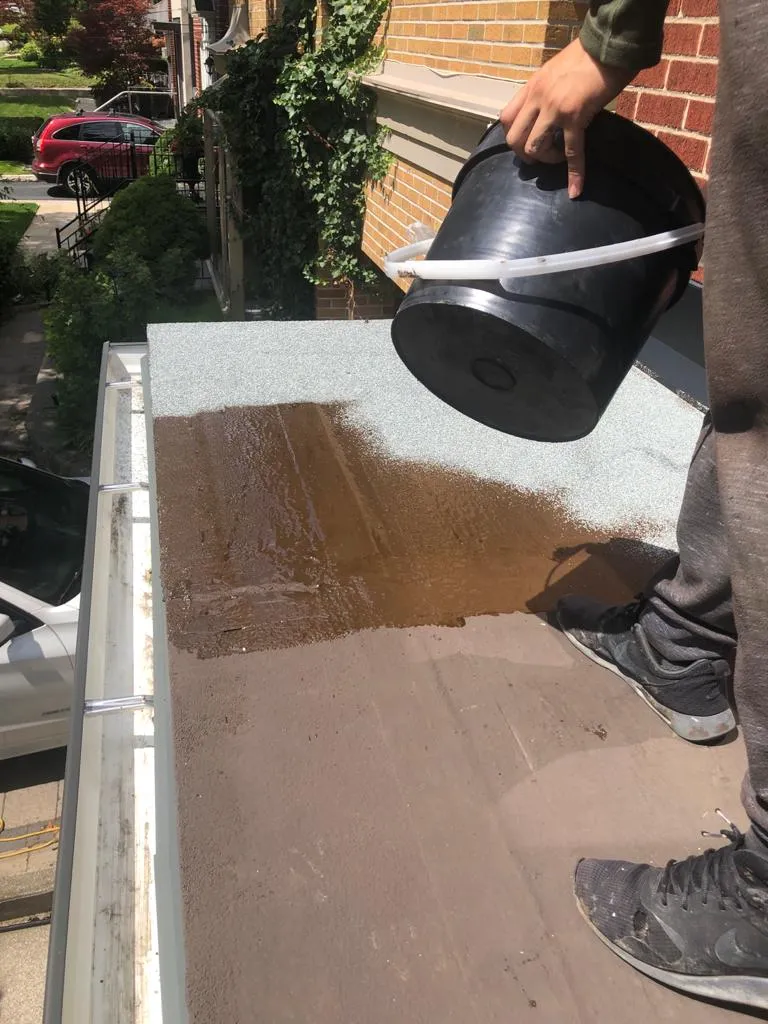
When there is any doubt about open flame: shared party walls, dry aged decking, tight urban sites, or a client who simply does not want a torch on the building.
Multi-Ply, Adhesive Applied
Cold-Ply with Ceramic Granules
The same multi-ply thinking as torch-down, bonded with a cold-applied adhesive instead of heat. Plies are rolled into wet adhesive and finished with a ceramic granule cap. No flame is ever lit on the roof.
On a Toronto semi or row house where the neighbour's wall is two feet away and the deck is a century of dry lumber, that is not a minor detail. It is often the difference between a system we are comfortable specifying and one we are not.
Strengths
- No open flame anywhere on the deck
- Safe over dry timber and against close neighbouring structures
- Multi-ply redundancy, same as torch-down
- Granule finish gives good UV resistance
Trade-offs
- Cure time depends on temperature, so cold snaps slow the job
- Adhesive coverage has to be right or the bond is not
- Material cost typically sits above torch-applied equivalents
Single-Ply, Hot-Air Welded
TPO Single-Ply
A thermoplastic polyolefin sheet, almost always white, whose seams are joined by hot air rather than adhesive. A correctly run weld makes the joint effectively as strong as the sheet itself, which is why welded systems dominate large commercial roofs.
The reflective white surface is the other half of the argument. Across a large roof over a conditioned space, throwing summer sun back off the building instead of absorbing it measurably reduces cooling load.
Strengths
- Reflective surface cuts summer cooling load
- Welded seams, mechanically verifiable with a probe
- Light, which matters on a structure near its load limit
- No open flame in the installation process
Trade-offs
- Punctures and mechanical damage need prompt attention
- Weld quality depends on getting temperature and speed right
- Formulations have changed over the years, so field history varies by product
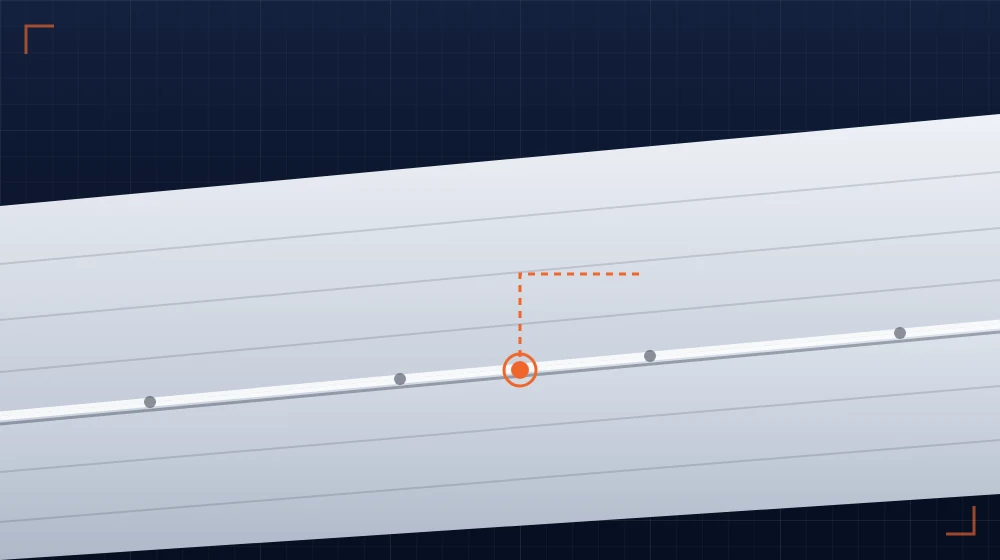
When we recommend it
On large, relatively simple commercial roofs over conditioned space, especially where summer cooling load is a real operating cost.
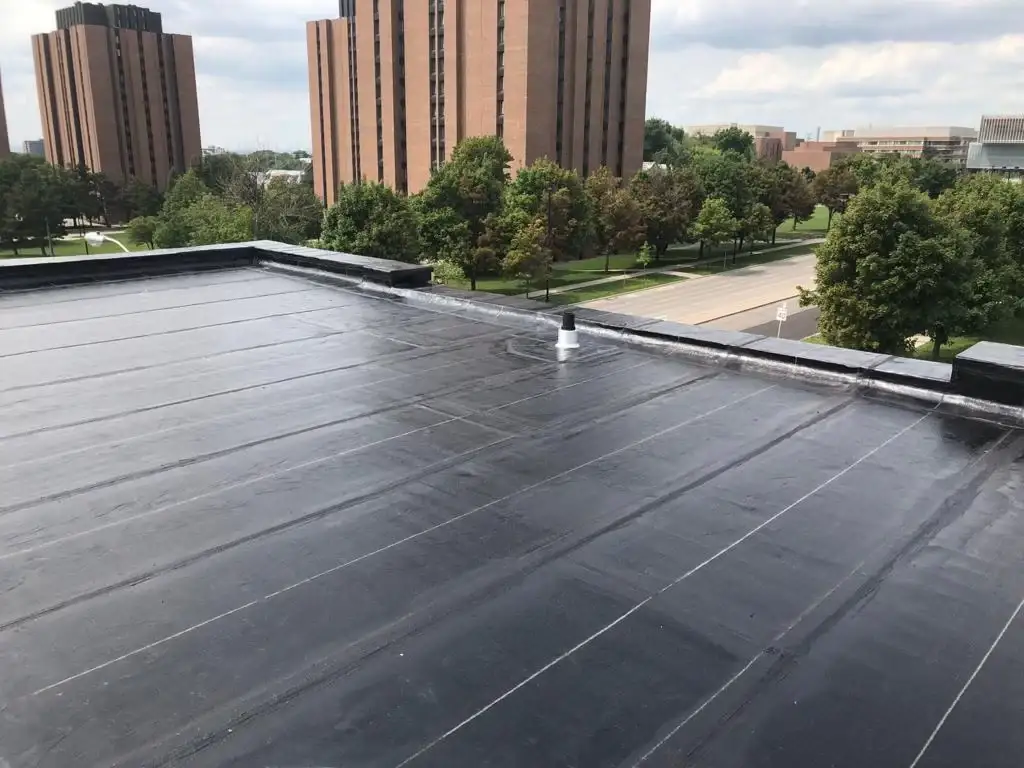
When we recommend it
On large simple roofs where seam count matters, on garage and addition roofs, and wherever long-term patchability is worth more than summer reflectivity.
Single-Ply, Synthetic Rubber
EPDM Rubber
Ethylene propylene diene monomer: synthetic rubber, supplied in very large sheets. On a big rectangular roof that means remarkably few seams, and seams are where roofs leak. It stays flexible at low temperature, which is exactly the property Toronto winters test hardest.
It is also the easiest system on this list to patch cleanly a decade later, which matters more than people expect over a thirty-year service life.
Strengths
- Very few seams on large simple roofs
- Stays flexible through hard freeze-thaw cycling
- Patches cleanly and predictably years later
- Long, well documented field history in this climate
Trade-offs
- Black membrane absorbs heat in summer
- Seams are adhered or taped rather than welded
- Shrinkage over long service life pulls at terminations
Single-Ply, Hot-Air Welded
PVC Single-Ply
Polyvinyl chloride, also hot-air welded, with markedly better resistance to grease, oils and chemical exhaust than TPO. That single property decides most PVC specifications.
If a roof lives downwind of a commercial kitchen extract, a food processing plant or an industrial exhaust stack, the grease that lands on it will degrade other membranes long before their rated life. PVC is the answer to that specific problem, and it stays weldable for repairs further into its service life than most alternatives.
Strengths
- Best chemical and grease resistance of the six
- Welded seams with high seam strength
- Inherently flame resistant
- Remains weldable for repair late in its life
Trade-offs
- Highest material cost tier here
- Plasticiser migration can stiffen very old membranes
- Not compatible with direct contact with some other materials
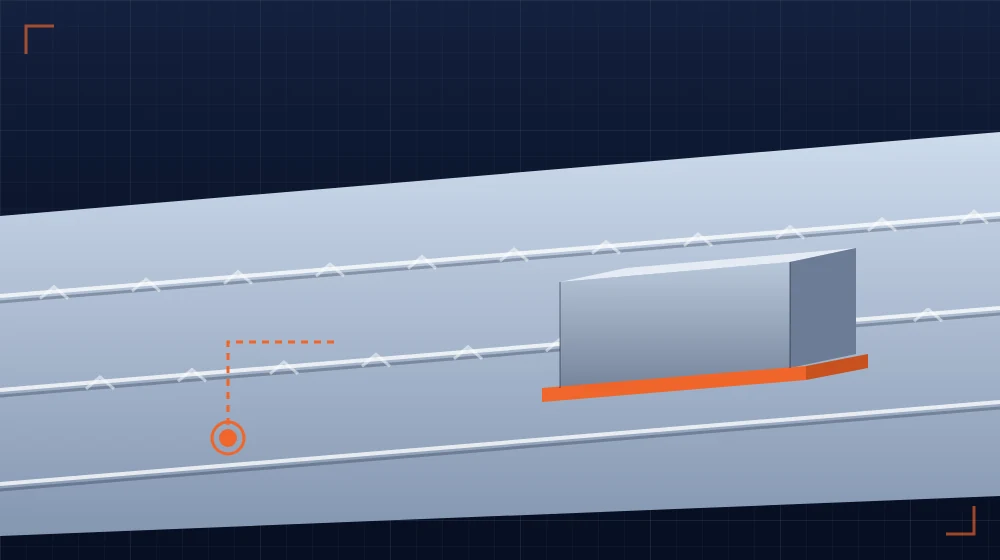
When we recommend it
Over kitchens, food processing and industrial exhaust, and anywhere a roof will routinely receive grease, oils or chemical fallout.
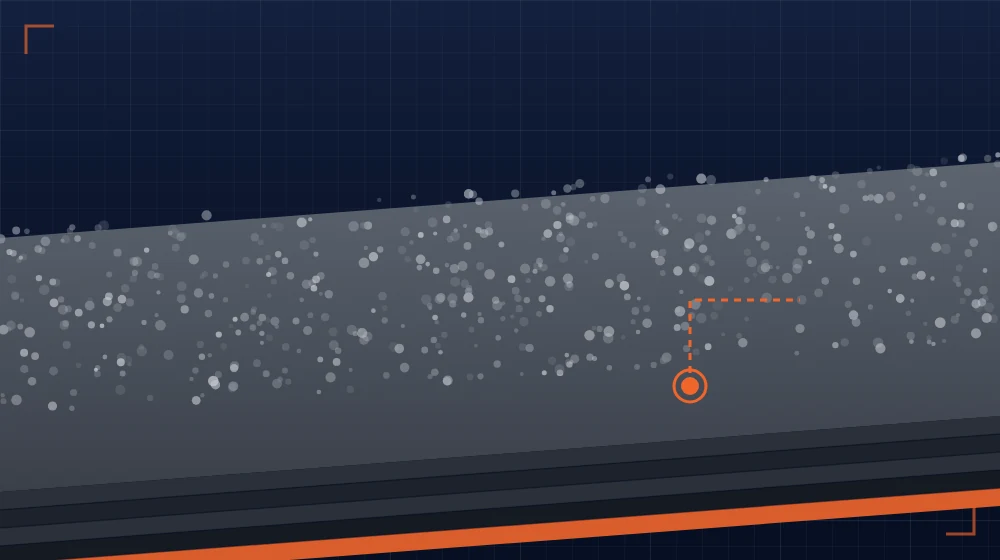
When we recommend it
On buildings already carrying a built-up assembly whose structure suits it, and where ballast weight and UV protection are genuine advantages rather than a legacy problem.
Multi-Ply, Ballasted
Built-Up Roofing (Tar and Gravel)
The oldest system on this list and still, occasionally, the right one. Multiple plies of felt are bonded in bitumen and finished with gravel ballast. Redundancy is built in by design: there are four or five waterproofing layers, not one.
The gravel does real work. It shields the bitumen from UV, adds mass against wind uplift and gives a non-combustible surface. It also makes leak tracing genuinely difficult and adds significant dead load, which is why it is now mostly specified where a structure was designed for it in the first place.
Strengths
- Four or five bonded waterproofing layers
- Ballast protects the membrane from UV
- Non-combustible surface, good fire performance
- Very long proven track record
Trade-offs
- Heavy, so the structure has to be designed for the load
- Leaks are hard to trace under gravel
- Messy, slow installation compared with modern systems
- Tear-off and disposal costs are the highest of the six
Two Things That Matter More Than Which Membrane You Pick
Drainage
The best membrane in the world, laid on a roof that ponds, will not reach its rated life. Standing water accelerates the ageing of every system on this page, adds real dead load and finds any weak point in a seam or a flashing. If your roof holds water 48 hours after rain, correcting that with tapered insulation during the replacement will do more for the roof's lifespan than upgrading the membrane.
Detailing
Roofs do not usually fail in the middle of the field. They fail where the membrane has to turn up a parapet, wrap a skylight curb, seal around a vent stack or terminate at an edge. Those details are the same amount of work whichever membrane sits on top of them, and they are almost entirely a function of who installed the roof rather than what they installed. Spend your money on the installer before you spend it on the membrane. Everything Flat Roofs Toronto installs and repairs is listed on the home page.
Where These Systems End Up
The same six systems, applied to the four things people actually call us about.
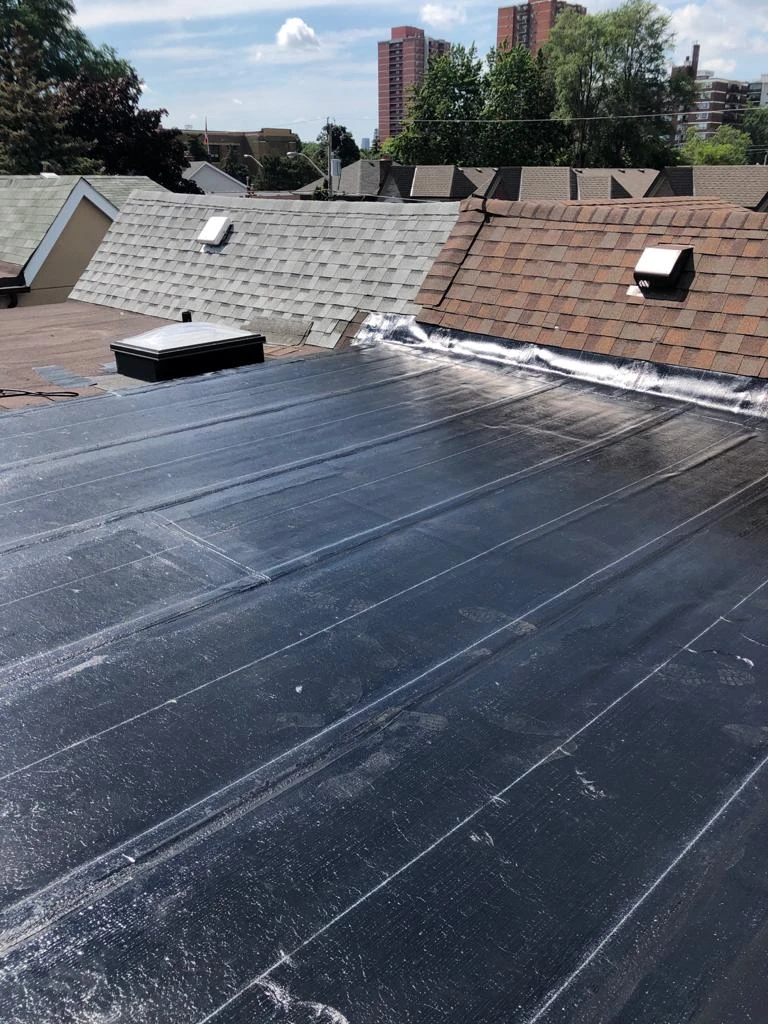
Residential
Homes and Row Houses
Two-ply modified bitumen and cold-ply do most of this work, with EPDM on simple garage and addition roofs. Residential flat roofing.
Commercial
Warehouses and Plazas
TPO, PVC and EPDM cover most large commercial roofs, phased so the building keeps operating. Commercial flat roofing.
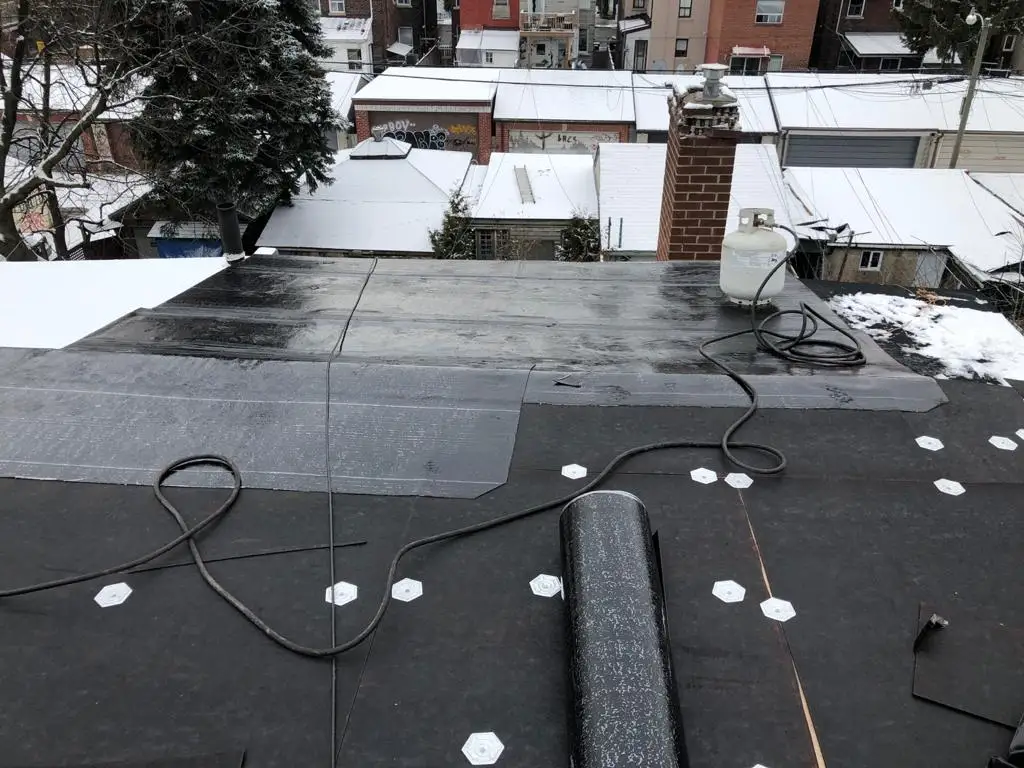
Replacement
Re-Roof and Recover
Which system goes on next depends on what came off and what is underneath. Flat roof replacement.
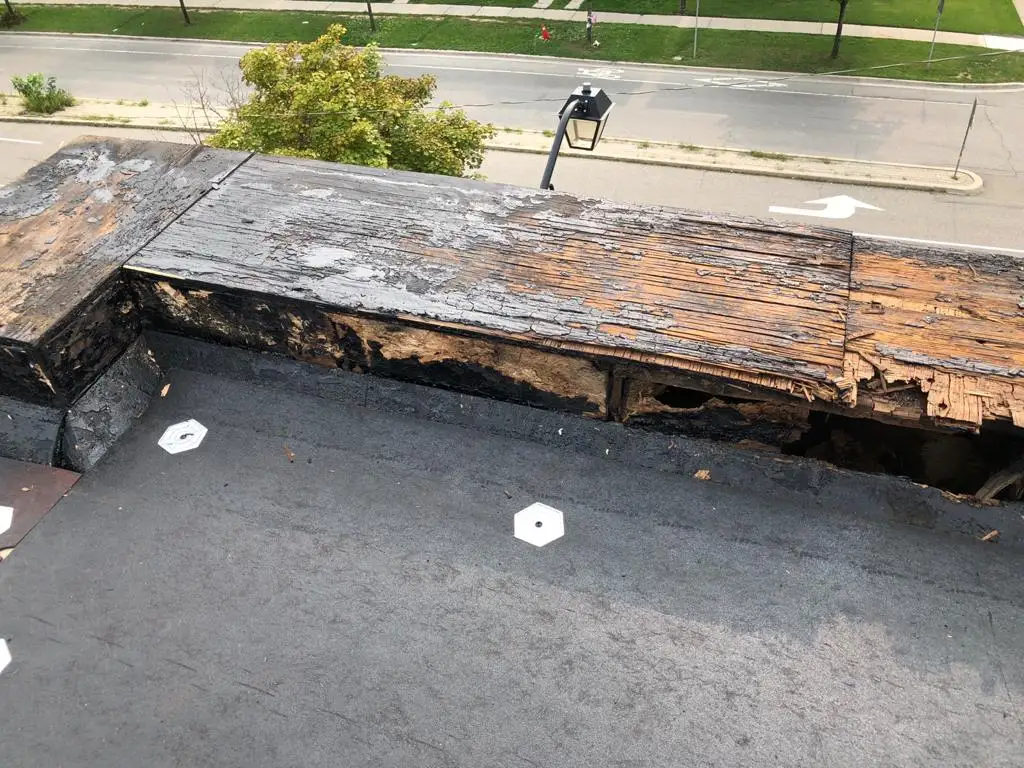
Emergency
Repairs and Call-Outs
Every system patches differently, which is why we ask what is up there before we arrive. 24/7 emergency repair.
Flat Roofing System Questions
The comparisons people ask us to make once they have read the table.
Which flat roof system lasts the longest?
On paper, the single-ply systems and built-up roofing reach the top of the range at around 30 years, with modified bitumen and cold-ply typically in the 20 to 25 band. In practice the spread within any one system, caused by drainage and installation quality, is much wider than the spread between systems. A well installed, well drained modified bitumen roof will comfortably outlive a badly installed TPO roof that ponds.
Is TPO or EPDM better for a Toronto building?
They win on different things. TPO is white and reflective, which cuts summer cooling load over conditioned space, and its seams are hot-air welded. EPDM comes in bigger sheets, which means fewer seams on a large simple roof, stays very flexible in deep cold and patches beautifully years later. Over a heated warehouse we usually lean TPO. Over a simple unconditioned structure or where long-term repairability matters most, EPDM.
What is the difference between torch-down and cold-ply?
The plies and the finished result are broadly similar. The bonding method is not. Torch-down uses an open flame to melt the bitumen and fuse the layers. Cold-ply uses an adhesive and never lights anything on the roof. On a detached house with clearance, either works. On a Toronto row house with a shared party wall and a century-old timber deck, cold-ply is the responsible specification.
Can you install a single-ply membrane over an old built-up roof?
Sometimes, and it saves the very substantial cost of removing gravel and multiple plies. It requires that the existing assembly is dry, which we confirm with core samples, that the deck is sound, that the structure takes the added load and that there is a suitable separation or cover board between the old bitumen and the new membrane. If the insulation under the built-up roof is wet, the answer is no, regardless of what it would save.
Why is PVC more expensive than TPO if they install the same way?
Raw material cost, mainly. They are welded the same way and they look similar on a roof, but PVC's chemical and grease resistance comes from a fundamentally more expensive polymer. If your roof will never see kitchen or industrial exhaust, that premium buys you very little. If it will, TPO will degrade where PVC will not, and the premium pays for itself long before the warranty runs out.
Does the system I choose change the warranty?
Yes. Manufacturer warranties vary by system, by product line and sometimes by who installed it, and the terms differ on what they actually cover. Our workmanship warranty covers the installation regardless of system. We set out both, in writing, in the quote, so you can compare like with like before deciding.
Free, No Obligation
Request a Free Quote
Tell us what the roof is doing and we will come and look at it. No charge, and no obligation to proceed.
Call Us
Office Hours
Open 7 days a week: 7:00am to 11:30pm
Emergencies
The line above is answered 24/7 for anything that cannot wait, including weekends and statutory holidays.
Google Reviews
Reviews of the Systems We Install
These come straight from our Google Business Profile. We cannot edit them, reorder them or take one down, and the rating in the header is whatever Google is showing today.



Free, No Obligation
Not Sure Which System Your Roof Needs?
We will walk it, look at the deck, the drainage and what runs on top, and put a recommendation in writing with the reasoning attached. Free and with no obligation.