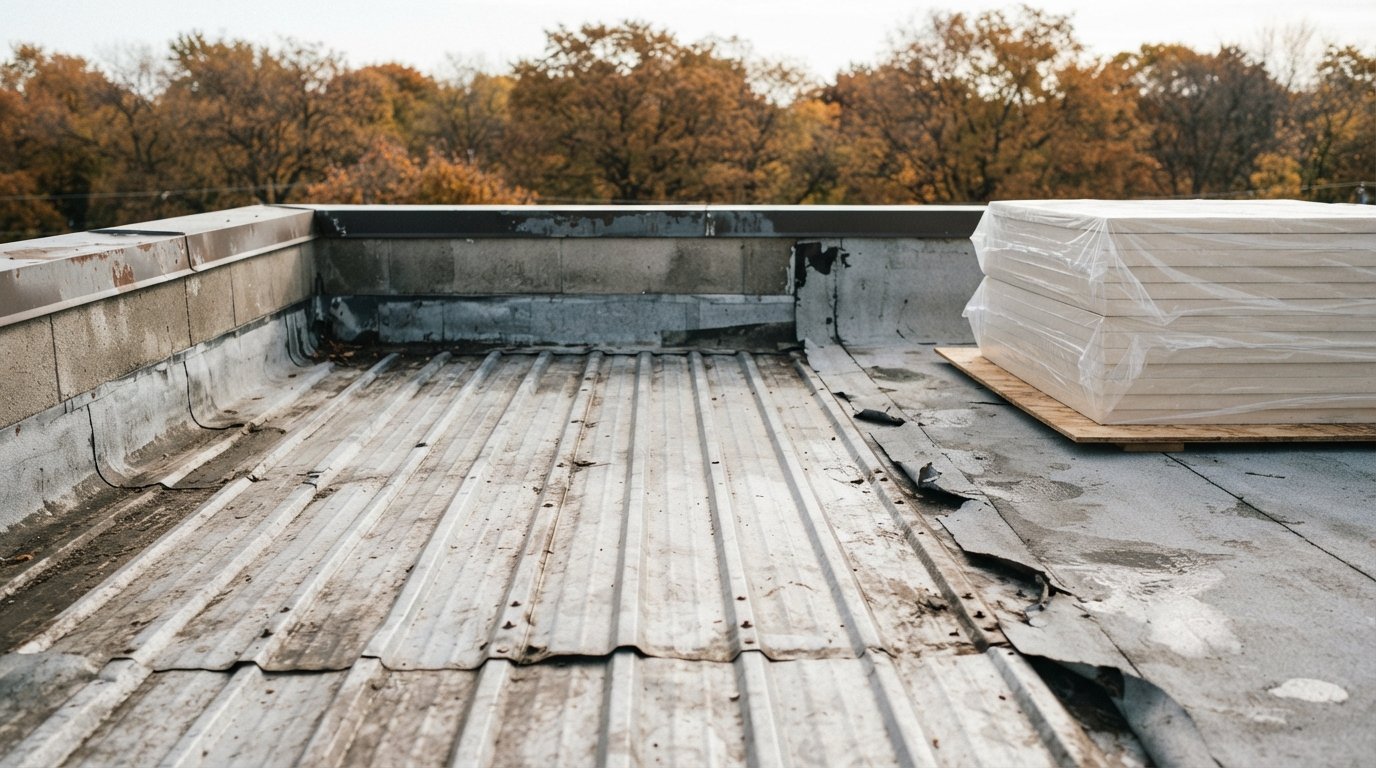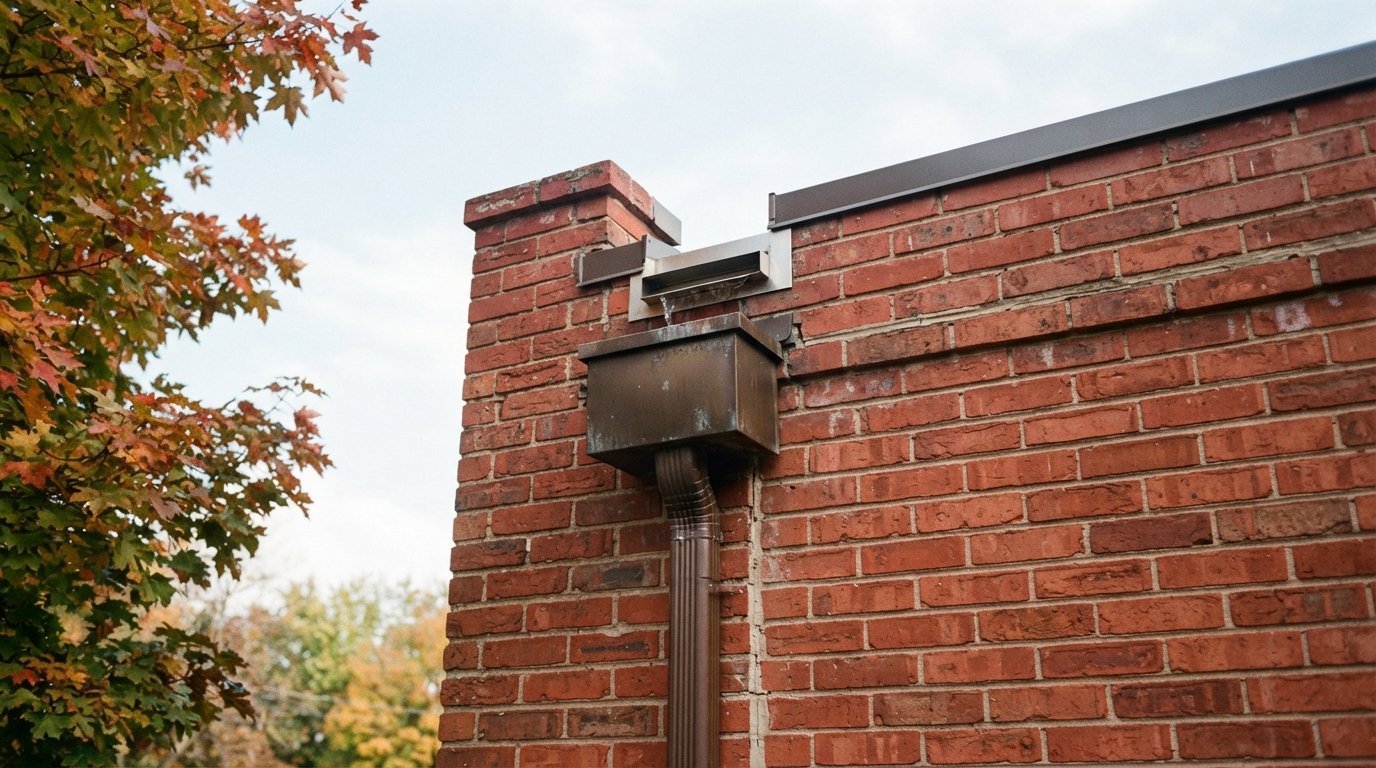

Installing solar panels flat roof Toronto homeowners are increasingly considering is one of the smartest energy moves you can make in 2026, but only if the racking, ballast and membrane protection are engineered correctly. A low-slope roof gives you a clean, unobstructed canvas for a photovoltaic (PV) array, yet it also introduces risks that pitched-roof installs never face: standing water around mounts, ballast point-loading on a single-ply membrane, and warranty-voiding penetrations through TPO, EPDM, PVC or modified bitumen. Get the interface between the panels and the roof wrong and you trade a 30-year roof for a decade of leaks. This guide walks through how a solar array should meet a flat roof in the GTA, what it costs, and how to protect the membrane that protects your home.
At Flat Roofs Toronto, we are called in constantly to repair flat roofs damaged by solar installers who treated a single-ply membrane like asphalt shingles. The roof and the array are a single system. The decisions below should be made before a single panel is ordered.
Why Solar Panels Flat Roof Toronto Installs Differ From Pitched Roofs
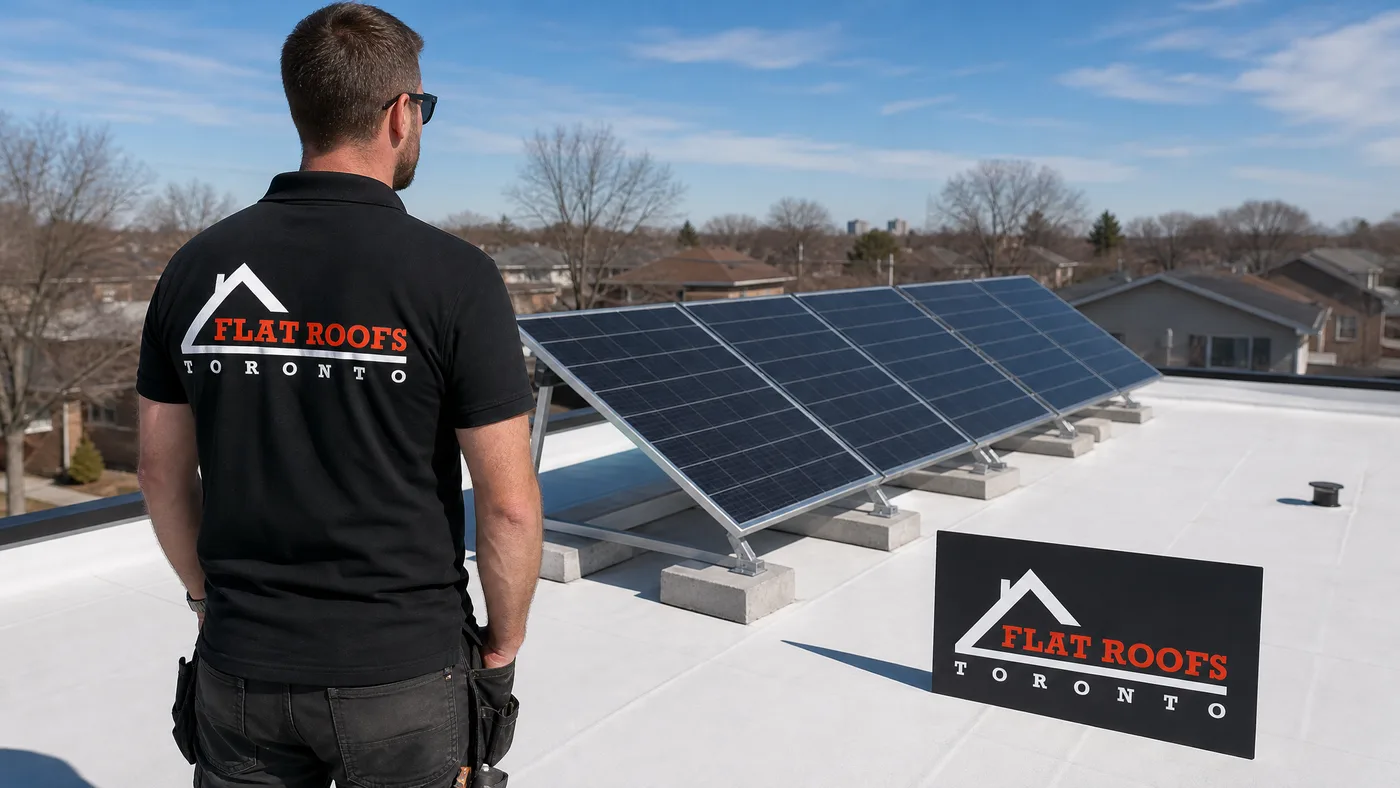
On a sloped shingle roof, solar racking bolts into the rafters and gravity sheds water down the slope. A flat roof behaves nothing like this. First, the membrane is the waterproofing layer, not the structural deck, so every penetration is a deliberate hole through your only barrier against water. Second, water does not run off quickly on a low slope (typically 1/4 inch per foot or less in the GTA), so anything that interrupts drainage creates ponding. Third, the panels themselves can be tilted on a flat roof to capture far more winter sun, which is a major advantage in Ontario but introduces significant wind uplift.
That wind uplift is the central engineering challenge. A tilted panel acts like a sail. In a Toronto windstorm with gusts exceeding 90 km/h, an under-secured array can lift, shift, or tear free, dragging racking across the membrane. This is why flat-roof solar uses one of three mounting strategies, each with a different relationship to the membrane below. Choosing among them depends on your roof structure, membrane type, and the building code load limits for your area.
| Mounting Method | Membrane Penetration | Added Roof Load | Best For |
|---|---|---|---|
| Ballasted (non-penetrating) | None | 4–6 lbs/sq ft | Strong decks, large arrays, TPO/PVC |
| Penetrating (mechanically attached) | Flashed bolts into deck | 1–2 lbs/sq ft | Lightweight decks, high-wind zones |
| Hybrid (ballast + few anchors) | Minimal flashed points | 2–4 lbs/sq ft | Most GTA residential flat roofs |
| Adhered standoff (membrane-bonded) | None (welded base) | 3–5 lbs/sq ft | PVC/TPO with manufacturer bases |
Ballasted Mounting: The Membrane-Friendly Standard
Ballasted racking is the default for flat-roof solar because it never punctures the membrane. Instead, the array sits in metal or polymer trays weighed down with concrete blocks (the ballast) that resist wind uplift through sheer mass. For a Toronto residential flat roof with a strong wood or steel deck, this is usually the cleanest solution. The trade-off is weight: a fully ballasted 8 kW array can add 4 to 6 pounds per square foot across the footprint, plus concentrated point loads under each ballast tray.
That weight is the make-or-break factor. Before any ballasted system goes on, the roof structure must be assessed by a structural engineer to confirm the deck and joists can carry the dead load plus snow load. Toronto’s design snow load is significant, and a 2026 winter can stack 30 to 50 pounds per square foot of snow on top of the array. If the engineer flags the structure as marginal, a lighter penetrating or hybrid system becomes the answer. Pairing a solar assessment with an attic insulation and structural review is something we routinely coordinate, because the same access work overlaps.
Critically, ballast trays must never sit directly on the membrane. Concrete and metal abrade single-ply membranes under thermal cycling and wind vibration, eventually wearing through them. Proper installs use protective slip sheets or pads of compatible material beneath every contact point. On a TPO or PVC roof, these are often welded-down protection layers; on EPDM, they are bonded pads.
| Membrane Type | Ballast Compatibility | Required Protection | Typical Lifespan |
|---|---|---|---|
| TPO (single-ply) | Excellent | Welded slip sheets / pads | 20–30 years |
| PVC (single-ply) | Excellent | Welded protection layer | 25–30 years |
| EPDM (rubber) | Good | Bonded walkway pads | 20–25 years |
| Modified bitumen | Good | Slip sheet + granule cap | 15–20 years |
Penetrating Mounts and Membrane Protection Done Right
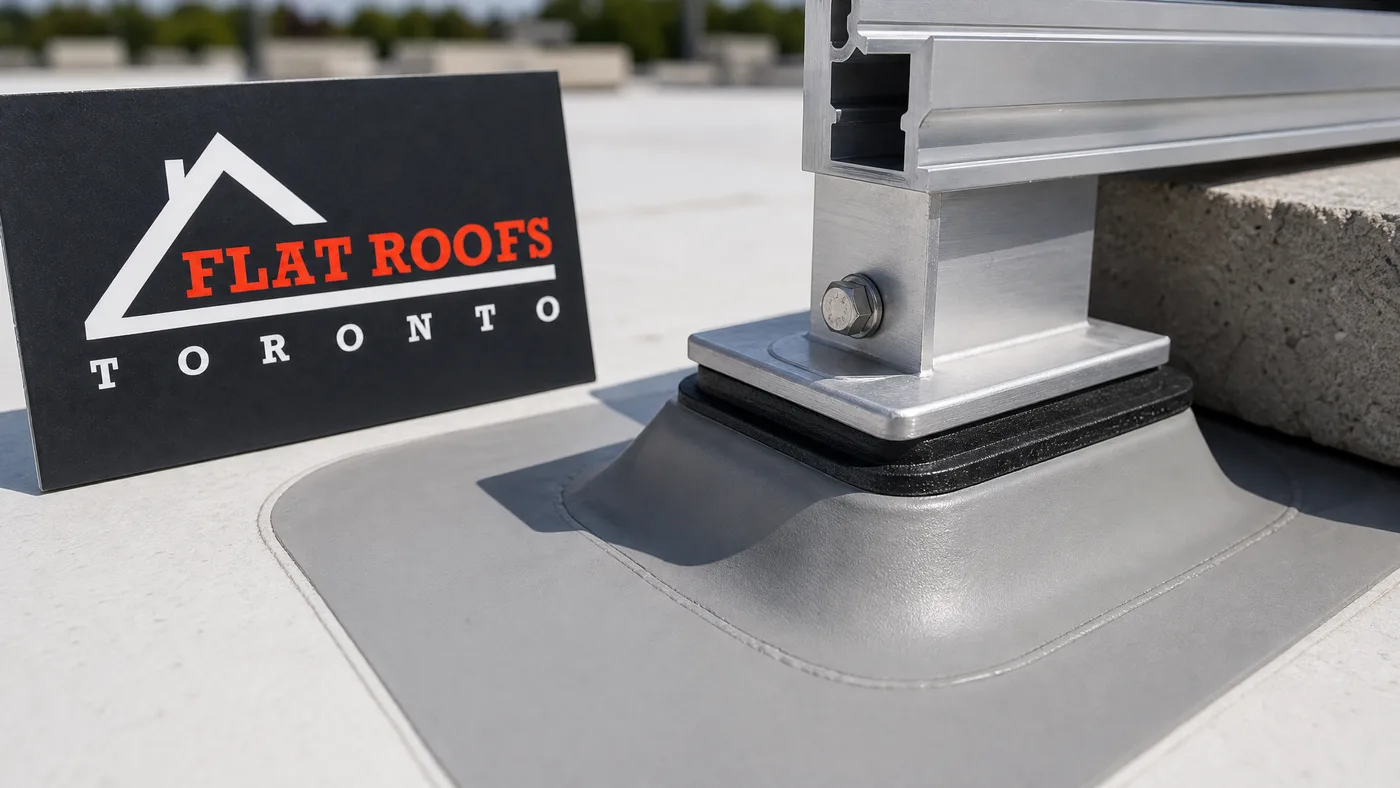
When the roof structure cannot carry ballast, or wind exposure is severe (think upper floors of a tall Mississauga or Vaughan building), penetrating mounts are the answer. These bolt directly into the structural deck, transferring uplift loads into the building frame rather than relying on weight. The catch is obvious: every bolt is a hole through the membrane, and each one must be flashed to the same standard as a roof drain or vent.
The right detail uses a manufacturer-approved flashing base that is welded (TPO/PVC) or bonded (EPDM) to the field membrane, creating a watertight curb around the standoff. A pitch pan filled with sealant is a shortcut that fails within a few seasons and is not acceptable on a quality install. We see far too many leaks that trace back to unflashed or poorly flashed solar standoffs, and these almost always require emergency roof repair once water reaches the interior. If you are choosing a solar contractor, ask specifically who flashes the penetrations and whether your roofing manufacturer’s warranty remains intact afterward.
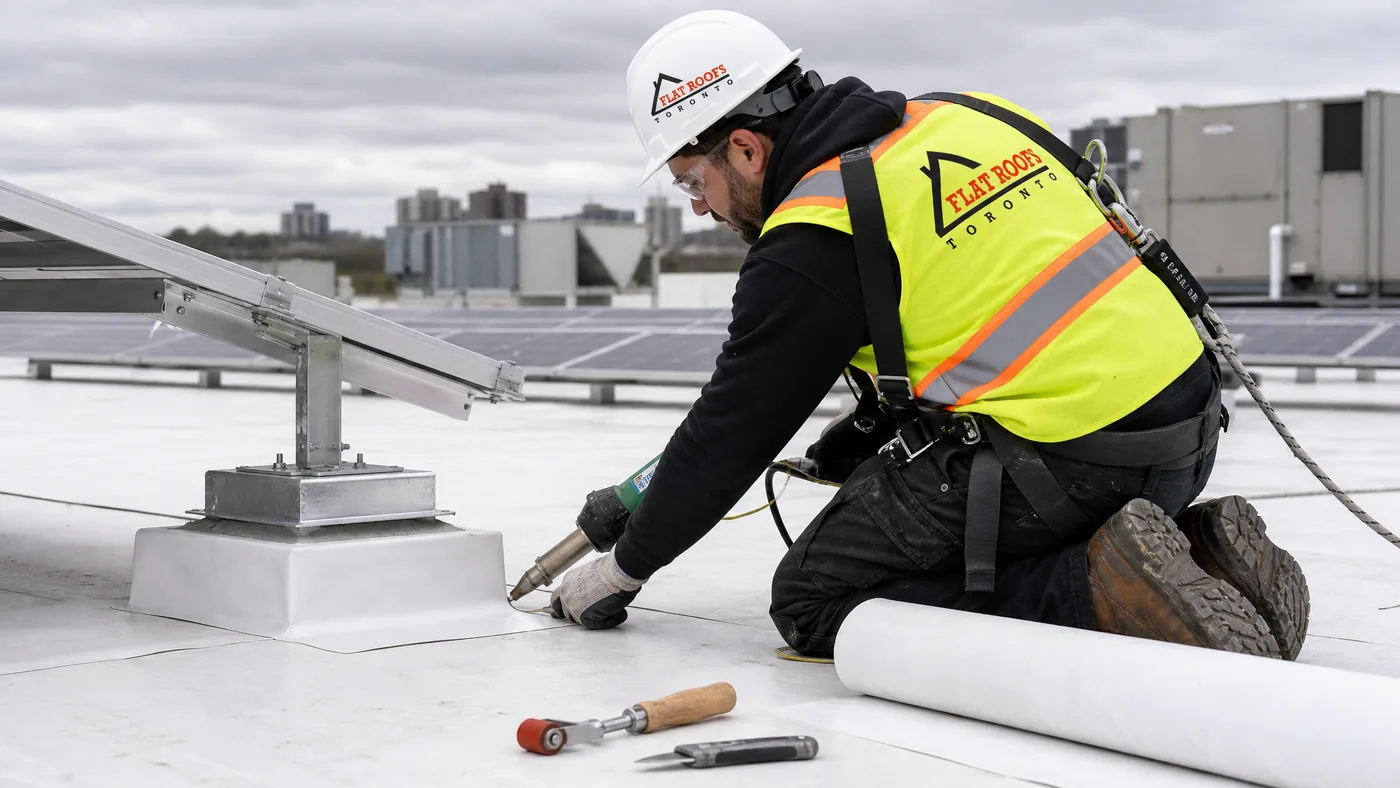
This is why the order of operations matters so much. The ideal sequence is to install or recover the flat roof first, then mount the solar array, with the roofing contractor and solar installer coordinating the flashing details together. Putting panels on a roof that has only five years of life left means tearing the whole array off to do a residential flat roof installation in a few short years, an expensive and avoidable mistake. If your membrane is aging, replace it before you go solar.
Drainage, Ponding and Slope Considerations
A flat roof drains through carefully planned slopes toward drains or scuppers. A solar array can disrupt that flow if racking blocks the path of water or if ballast trays create dams. On a low-slope GTA roof, even a small obstruction creates ponding water, which accelerates membrane breakdown, encourages algae, and adds dead-weight load during rain events.
Good design keeps racking and ballast clear of drainage channels and elevates the array so water flows freely beneath the panels. Drains and scuppers must remain fully accessible for maintenance, because debris (leaves, shingle granules, bird nests) collects under arrays and clogs outlets. We recommend a maintenance access plan be drawn before installation so a roofer can reach every drain and seam without dismantling the array. Buildings that combine arrays with residential skylights need especially careful layout so neither system shades nor obstructs the other.
| Drainage Factor | Risk If Ignored | Design Solution | Inspection Interval |
|---|---|---|---|
| Ponding under array | Accelerated membrane failure | Keep racking off drainage paths | Twice yearly |
| Clogged drains | Standing water, added load | Clearance for maintenance access | Spring and fall |
| Debris accumulation | Algae, blocked scuppers | Elevated panels, open perimeter | Quarterly in autumn |
| Ice damming at trays | Freeze-thaw membrane stress | Proper insulation, tray spacing | Post-winter |
Toronto Costs, Incentives and Timeline for 2026
Flat-roof solar in the GTA costs more per watt than a simple pitched install because of the engineering, racking, ballast and protective detailing involved. A typical residential system in Toronto for 2026 runs roughly the figures below, before any rebates or net-metering credits. Ontario’s net-metering program lets you bank excess generation as credits, and federal interest-free loan programs continue to support residential solar in 2026, which materially shortens payback.
| System Size | Installed Cost (2026, before incentives) | Annual Output (GTA) | Typical Payback |
|---|---|---|---|
| 5 kW (small home) | $14,000–$18,000 | ~5,800 kWh | 9–12 years |
| 8 kW (average home) | $22,000–$28,000 | ~9,300 kWh | 8–11 years |
| 10 kW (large home) | $28,000–$35,000 | ~11,600 kWh | 8–10 years |
| 15 kW (small commercial) | $40,000–$52,000 | ~17,400 kWh | 7–9 years |
The project timeline usually spans four to eight weeks from contract to commissioning. The structural assessment and electrical permit take the longest, followed by the Toronto Hydro or local utility net-metering connection approval. The physical install of a residential array typically takes two to four days once materials are on site. For commercial buildings exploring rooftop solar at scale, the same principles apply but the structural and commercial flat roof installation review becomes even more critical given the larger loads and longer drainage runs.
Protecting Your Membrane and Roof Warranty
The single biggest mistake we see is solar installers working on a roof without the membrane manufacturer’s approval, which silently voids the roof warranty. Most major TPO, PVC and EPDM manufacturers require that penetrations and attachments be made by certified applicators using approved details. If a general solar crew bolts standoffs through your membrane, the manufacturer can deny a future leak claim, leaving you to pay for repairs out of pocket.
Protecting the warranty means coordinating roofing and solar from day one. The flashing, slip sheets and any membrane work should be performed or supervised by a qualified flat-roofing contractor, with documentation kept for the manufacturer. We also strongly recommend a post-installation inspection of every penetration and ballast contact point, plus annual checks thereafter. You can see examples of properly detailed flat roofs in our project gallery. For commercial properties, the same warranty discipline applies to commercial skylights and any other rooftop equipment competing for space with the array.
Finally, plan for the roof outliving the panels in some cases and the reverse in others. Panels last 25 to 30 years; a quality membrane lasts 20 to 30. Aligning their lifecycles, or at least planning for one removal/reinstall cycle, prevents nasty surprises. The smartest GTA homeowners replace an aging flat roof, then add solar to a fresh membrane, getting decades of coordinated, leak-free service from both systems.
Will solar panels on my flat roof void my roofing warranty?
Is a ballasted or penetrating mount better for solar panels flat roof Toronto homes?
How much does flat-roof solar cost in the GTA in 2026?
Do ballast blocks damage the flat roof membrane?
Should I replace my flat roof before adding solar panels?
How do solar panels affect drainage on a low-slope roof?
Get Expert Solar Panels Flat Roof Toronto Roofing Support Today
Solar is only as reliable as the roof beneath it. Before you commit to an array, have your membrane, structure and drainage assessed by a flat-roofing specialist who understands how PV systems load and penetrate low-slope roofs. Flat Roofs Toronto coordinates membrane work, flashing details and warranty protection alongside your solar installer so the two systems work as one.
Call us today at (647) 333-3528 or request a free flat roof quote to find out whether your roof is solar-ready and how to protect your membrane for the long haul.
Flat Roofs Toronto proudly serves Toronto, Mississauga, Markham, Vaughan and the GTA with expert flat roofing, membrane protection and solar-ready roofing solutions.