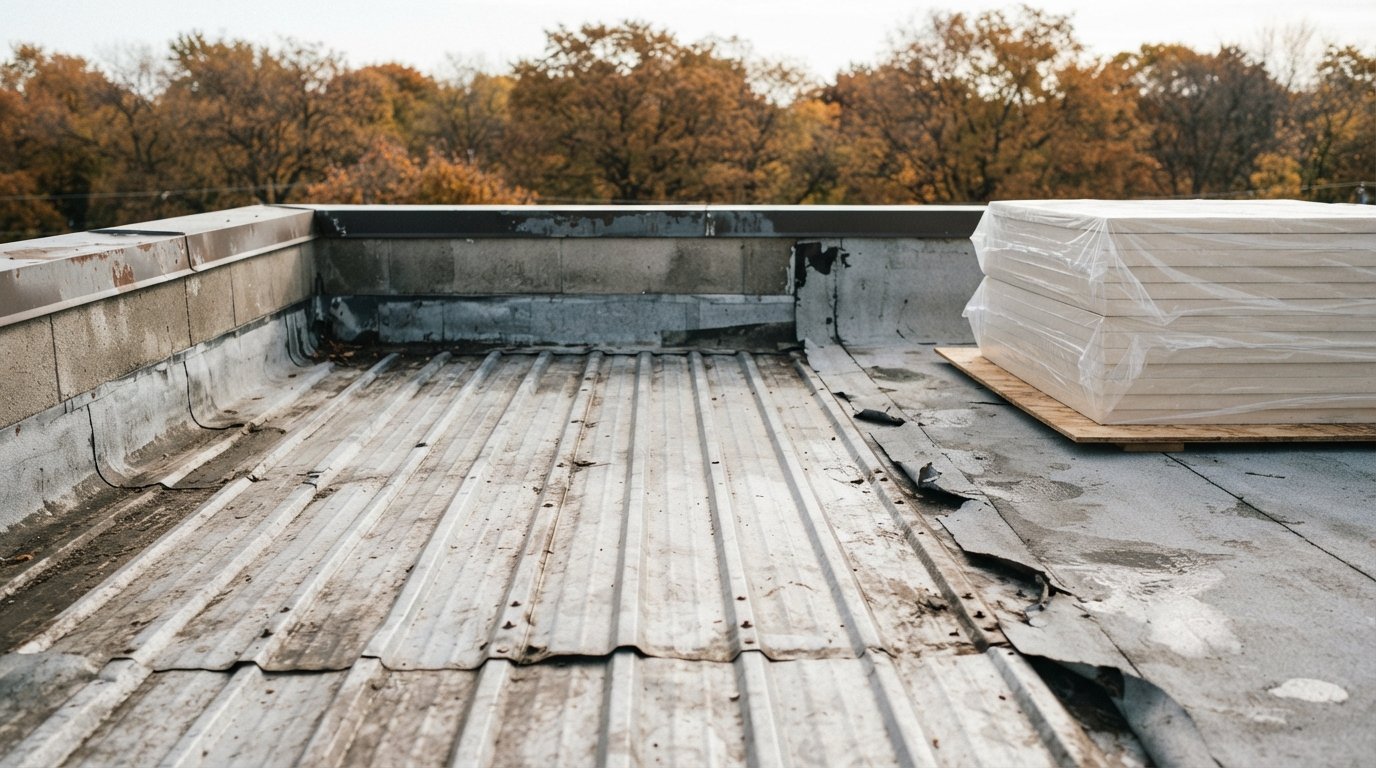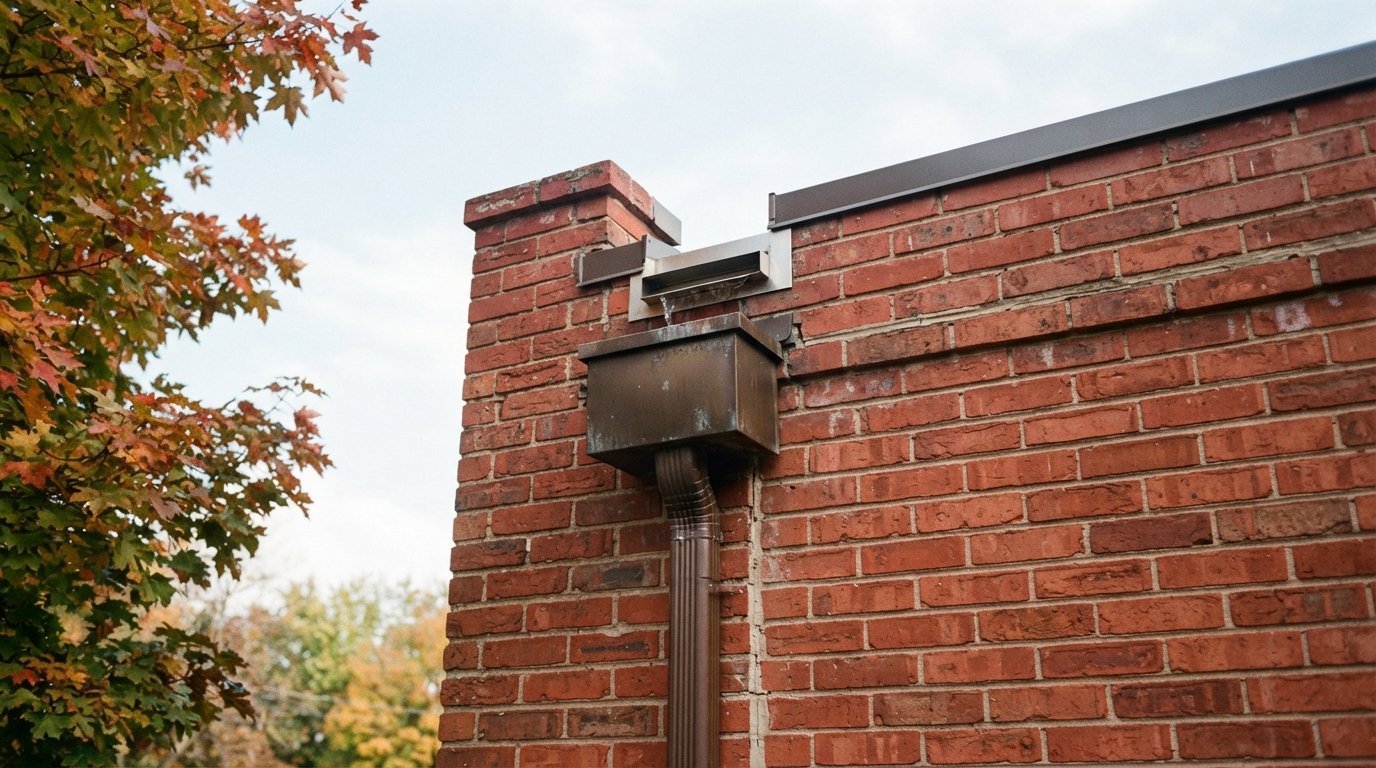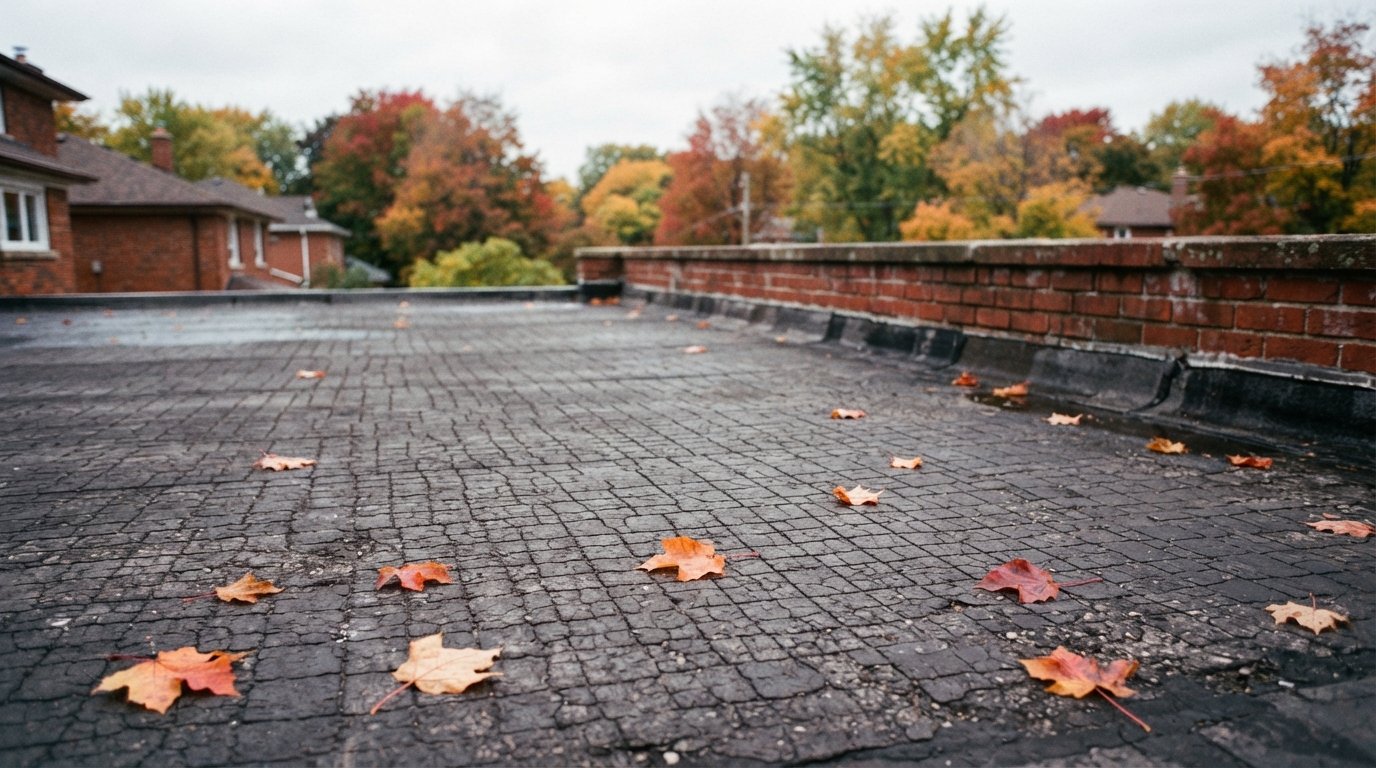

Every winter, Toronto homeowners with flat roofs face the same anxiety: how much snow is too much? Unlike pitched roofs that shed snow naturally through gravity, flat roofs accumulate snow load continuously throughout the winter, and that accumulating weight can approach or exceed structural limits during heavy snowfall events. Understanding flat roof snow load toronto limits, recognizing warning signs of overloading, and knowing when and how to remove snow safely are critical knowledge for every flat roof owner in the GTA.
How Much Snow Can a Flat Roof Hold?
The Ontario Building Code specifies minimum structural design loads for roofs based on geographic location. For Toronto (Climate Zone 2), the ground snow load used for structural design is approximately 1.0 kPa (kiloPascals), which translates to approximately 20 pounds per square foot (psf) of roof area after applying the appropriate roof snow load factors. This means a flat roof built to code in Toronto is engineered to safely support at least 20 psf of combined snow and rain load, but this is the minimum design standard, and most roofs are built with a safety factor that provides additional capacity beyond this minimum.
Snow Weight by Type
| Snow Type | Weight per Cubic Foot | Depth to Reach 20 psf Limit |
|---|---|---|
| Fresh light powder snow | 3-5 lbs | 48-80 inches (4-7 feet) |
| Settled/compacted snow | 10-15 lbs | 16-24 inches (1.3-2 feet) |
| Wind-packed or crusted snow | 15-20 lbs | 12-16 inches (1-1.3 feet) |
| Ice | 57 lbs | 4 inches |
| Slush (water-saturated snow) | 40-50 lbs | 5-6 inches |
The critical insight: snow type matters far more than snow depth. Four feet of fresh powder weighs the same as 16 inches of compacted old snow. The most dangerous scenario is a rain-on-snow event, when rain falls on an existing snow layer, saturating it with water and dramatically increasing its weight. A 12-inch snow layer that weighed 10 psf as dry snow can jump to 30+ psf within hours after a freezing rain event, potentially exceeding the structural design capacity of the roof.
Warning Signs of Overloaded Flat Roof
- Visible sagging or deflection: If the ceiling below the flat roof shows any downward bowing, bulging, or new cracks, the roof structure may be overloaded, evacuate the area immediately and call a structural engineer
- Doors or windows sticking: Structural deflection can shift door and window frames, causing them to bind or not close properly
- Cracking or popping sounds: Unusual noises from the roof structure during heavy snow loading may indicate structural members under excessive stress
- Ponding water inside: Water appearing at ceiling joints or around light fixtures during snow loading suggests the roof deck is deflecting enough to pool meltwater at structural low points
- Excessive ice dam formation: Large ice dams at roof edges indicate heat loss is melting snow from below, the resulting ice buildup adds concentrated load at the roof perimeter
When to Remove Snow from a Flat Roof
| Condition | Action |
|---|---|
| Less than 12 inches of light snow | No removal needed, well within design limits |
| 12-24 inches of settled/compacted snow | Monitor closely, consider removal if rain forecast |
| More than 24 inches of any snow type | Remove excess to reduce load below 50% of design capacity |
| Any depth of ice or saturated snow | Professional assessment recommended, extreme weight per inch |
| Rain-on-snow event forecast | Remove snow before rain arrives to prevent saturation |
| Any visible deflection or structural warning signs | Emergency, evacuate below and call immediately |
How to Safely Remove Snow from a Flat Roof
Flat roof snow removal must be done carefully to avoid damaging the waterproof membrane underneath. Never use metal shovels, ice picks, or sharp tools directly on a flat roof surface, a single puncture in the membrane creates a leak that will not be discovered until spring thaw. Use plastic shovels or roof rakes designed for membrane roofs. Leave 2-3 inches of snow on the roof surface as a protective cushion between the shovel and the membrane, do not attempt to scrape down to bare membrane. Work in systematic strips from the roof edge inward, pushing snow off the roof edge rather than piling it in the center. Never pile removed snow against parapet walls, the concentrated load can damage the parapet and flashing.
Professional Snow Removal
For commercial buildings, multi-storey structures, or any situation where safe roof access is a concern, professional snow removal is strongly recommended. Flat Roofs Toronto provides emergency flat roof snow removal services with crews trained in membrane-safe techniques and proper fall protection for winter roof work. Our technicians use membrane-safe plastic tools and know exactly how much snow to leave as a protective cushion to prevent membrane damage during removal.
Ice Dams on Flat Roofs
Ice dams form on flat roofs when heat escaping through the roof deck melts the bottom layer of snow, which then flows to the colder roof edges and refreezes into a solid ice barrier. This ice dam traps subsequent meltwater behind it, creating a growing pool of standing water on the roof surface. On a flat roof, this ponding meltwater can be particularly destructive because the low slope prevents drainage, the water sits on the membrane, eventually finding or creating a path through any weakness in the waterproofing system. Proper attic insulation and ventilation are the long-term solutions to ice dam prevention on flat roofs, combined with adequate drainage maintenance to ensure water can escape through drains and scuppers even during partial freeze conditions.
How much snow can a flat roof hold in Toronto?
When should I remove snow from my flat roof?
Can I shovel snow off my flat roof myself?
Protect Your Flat Roof This Winter, Call Flat Roofs Toronto
Don’t wait for structural warning signs. Flat Roofs Toronto provides emergency snow removal, ice dam mitigation, and winter flat roof services across Toronto and the GTA.
Call us at (416) 661-7663 or request service online.