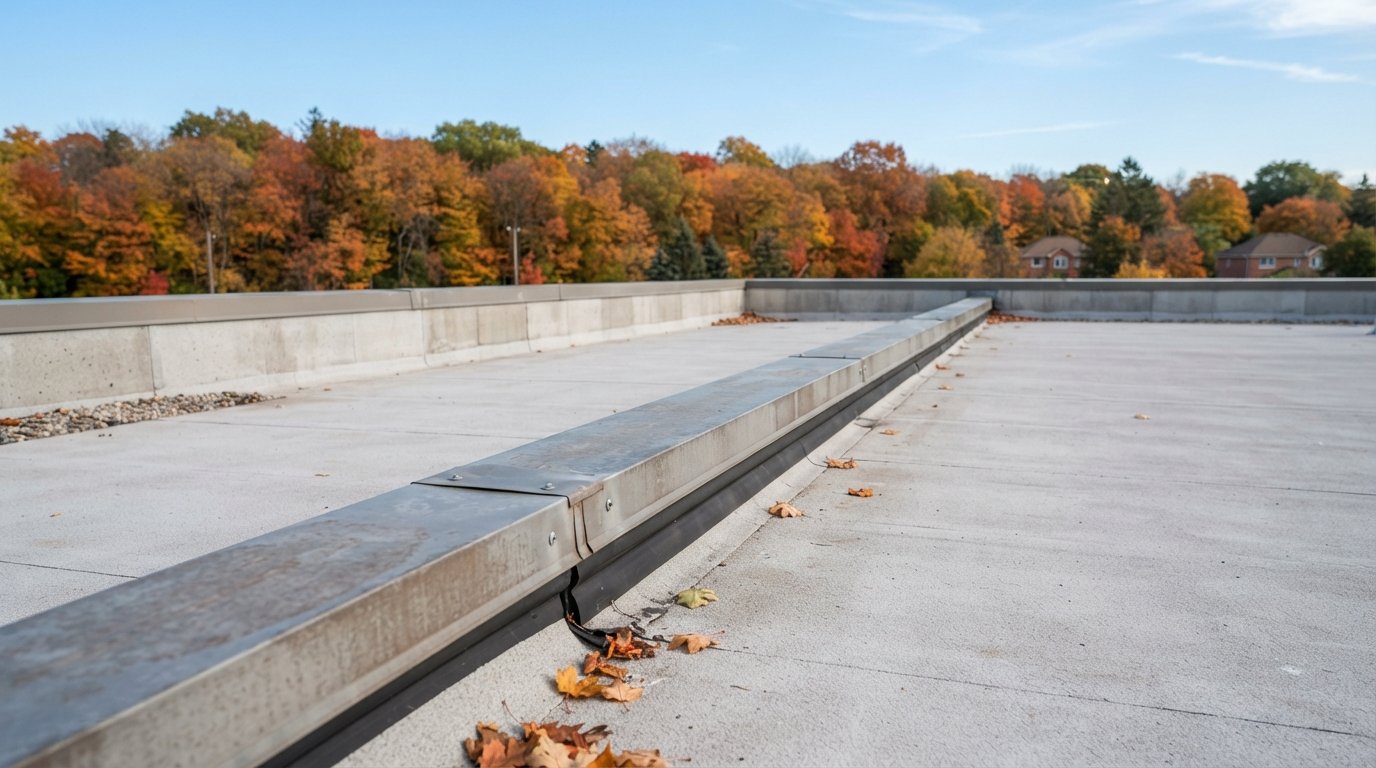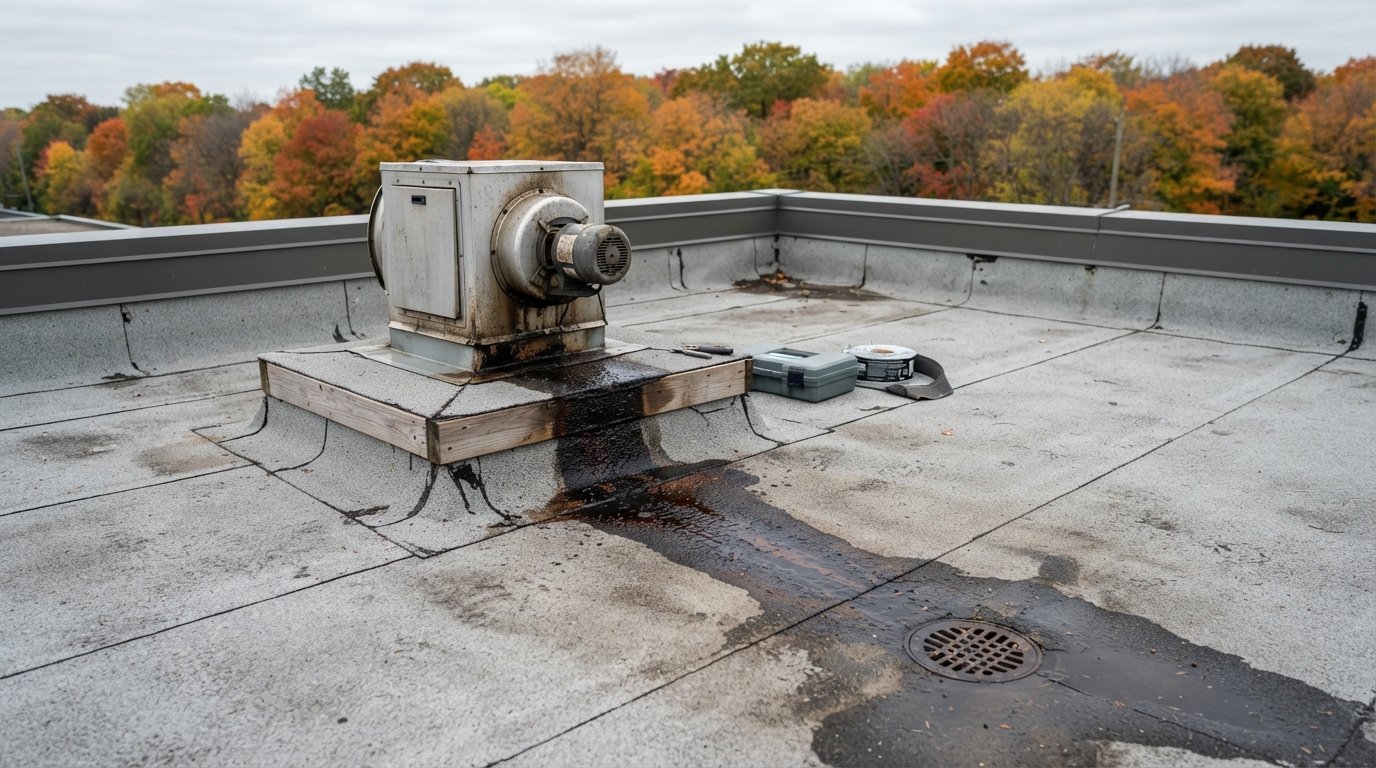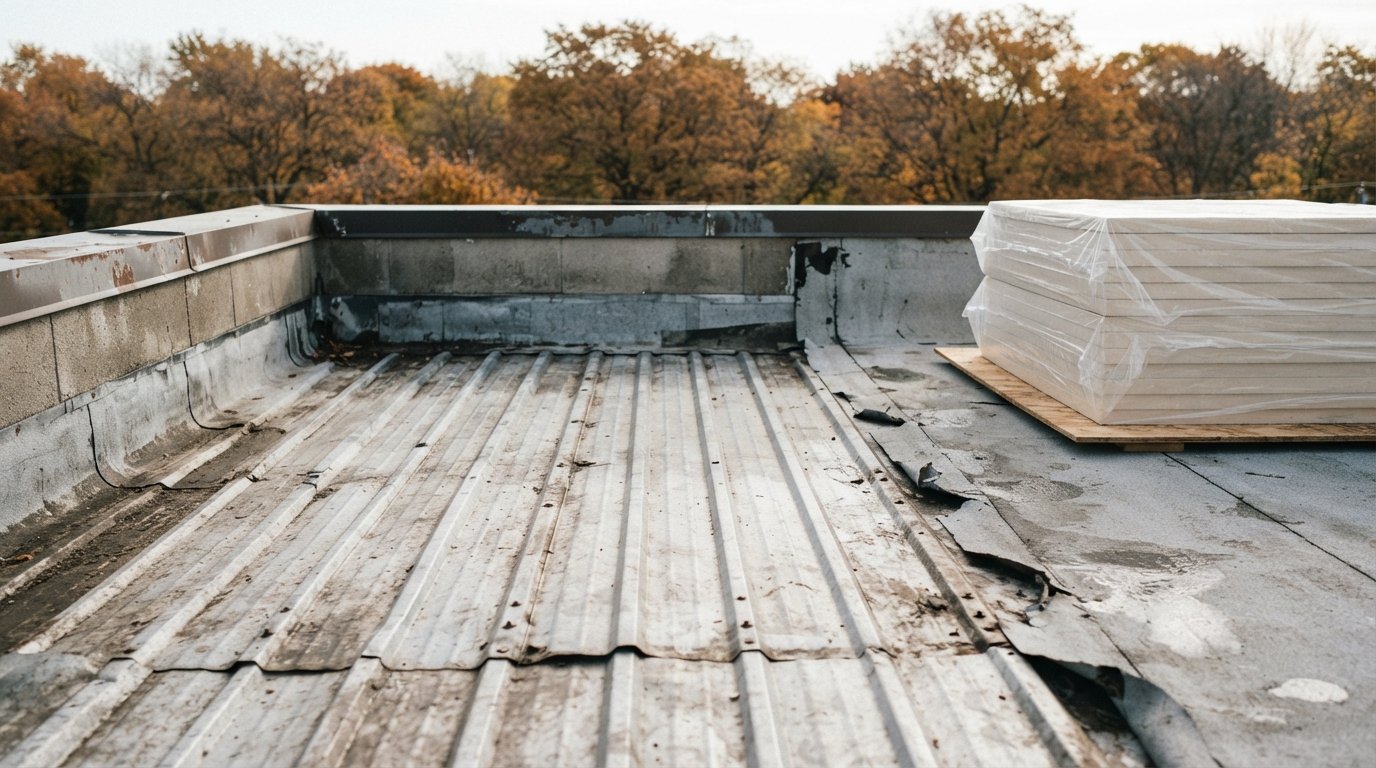

Buying a house with a flat roof is very common in Toronto. Semis and row houses with flat or low-slope main roofs, rear kitchen additions, garages, coach houses and modern infill homes all rely on a membrane that you usually cannot see from the sidewalk. That is the problem: a shingled roof shows its age to anyone standing on the lawn, while a flat roof can look fine in listing photos and still be close to the end of its life.
What follows is a pre-closing checklist: how to identify the membrane and estimate its age, which records to ask for, why a roofer’s inspection with a moisture scan is worth arranging, how shared roofs on row houses complicate things, and how to budget for what you find.
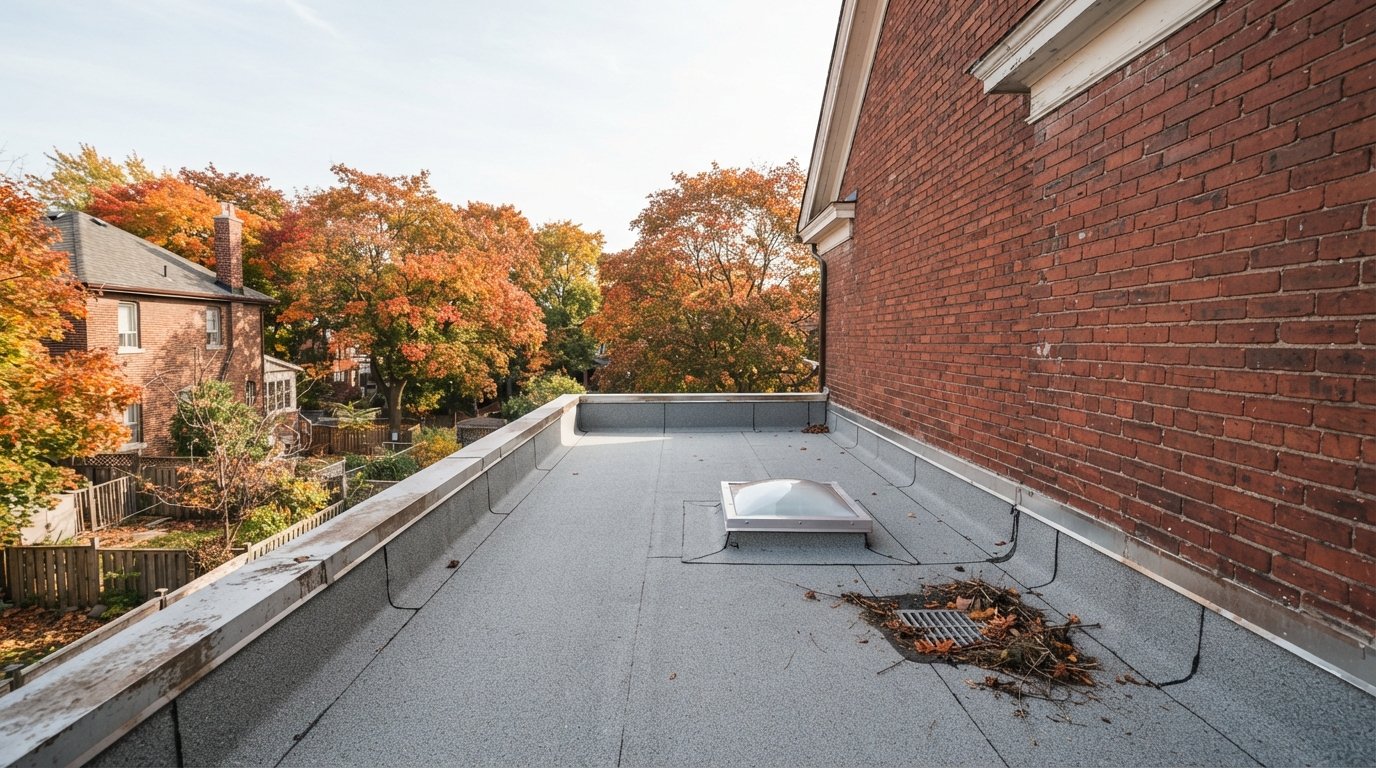
Why Buying A House With A Flat Roof Needs Its Own Checklist
A standard home inspection is valuable, but many general inspectors will only view a flat roof from a ladder or a window, especially when the roof is high, wet or has no safe access. Even when they do walk it, they rarely carry moisture scanning equipment, and they are not usually in a position to say how many years a specific membrane has left.
Flat roofs fail differently from sloped roofs. Water does not run off quickly; it moves slowly toward drains or scuppers and finds any weakness in seams, flashings and penetrations. Leaks can travel well away from their source before they show on a ceiling, and wet insulation inside the roof can stay hidden for years. That is why buying a house with a flat roof calls for a few extra steps, and why it makes sense to bring in a residential flat roofing contractor while the offer is still conditional.
Identify The Membrane And Estimate Its Age
When buying a house with a flat roof, the type of membrane tells you a lot about expected lifespan, repairability and replacement cost. You do not need to climb up to identify it; photos from the seller, a window that overlooks the roof, or the roofer’s inspection will show it.
| Membrane | How to recognize it | Signs of age to look for | Notes for buyers |
|---|---|---|---|
| Modified bitumen (two-ply) | Rolls with granulated surface, overlapping seams every metre or so, often torched or self-adhered | Bare patches where granules are gone, open lap edges, cracked flashings at walls | One of the most widely used residential systems in the GTA; repairs are usually straightforward |
| Built-up roof (tar and gravel) | Layer of gravel embedded in black asphalt | Bare spots without gravel, cracked or alligatored asphalt, blisters, soft areas | Often older; check whether there are multiple layers under it, which raises tear-off cost |
| EPDM rubber | Black rubber sheet, smooth, with taped or glued seams | Seams lifting, membrane pulling away from walls, brittle patches | Can last a long time when installed well; shrinkage at edges is a common age sign |
| TPO or PVC | White or light grey sheet with heat-welded seams | Surface crazing, seam separation, punctures from foot traffic | Less common on houses; ask who installed it and whether they used manufacturer details |
| Coated roof | Silver, white or grey painted finish over an older membrane | Peeling or cracked coating, rust stains, ponding marks | A coating can hide an aging roof underneath; ask what is below it and when it was applied |
Age is harder. The best evidence is a dated invoice. Without one, a roofer can make an educated estimate from the condition of seams, granules, flashings and the materials used, but it is still an estimate. Be cautious about phrases like “newer roof” in a listing without paperwork to back it up. A roof replaced several years ago by a careful installer can be in better shape than one replaced last year with poor details.
Also note what else is on the roof: skylights, a rooftop deck, mechanical units, satellite mounts, plumbing vents, and old abandoned penetrations. Each one is a detail that can leak, and a deck sitting on the membrane will have to come off when the roof is replaced. If you want to understand the systems in more depth, our page on flat roofing systems explains how each one is built.
The Paper Trail: Records, Permits And Warranty Transfer
If you are buying a house with a flat roof, ask your agent to request roofing records early, ideally before you write the offer. The documents below are not always available, but their absence is itself useful information.
| Document | Why it matters | What to look for |
|---|---|---|
| Roofing invoice or contract | Confirms the date, contractor and scope of the last replacement | Membrane type, number of plies, whether old layers were removed, insulation added, flashings replaced |
| Contractor workmanship warranty | Covers installation defects for a set period | Length, whether it transfers to a new owner, and whether the contractor is still in business |
| Manufacturer warranty | Covers the membrane material, sometimes more | Whether it was registered, whether transfer requires notice or a fee, and any maintenance conditions |
| Repair records | Shows where the roof has leaked before | Repeated repairs in the same area, which often point to a detail or drainage problem |
| Permits and drawings | Relevant for decks, additions, skylights or structural changes | Ask your municipality what permits apply to work done on the house; requirements vary |
| Seller disclosures | Some sellers complete a property information statement | Any known leaks or repairs; treat it as a starting point, not a substitute for inspection |
Warranty transfer deserves attention. Workmanship warranties from contractors often end at sale unless they say otherwise, and manufacturer warranties often have specific transfer steps and time limits. The only way to know is to read the actual documents and, if needed, contact the contractor or manufacturer. Do not rely on a verbal “it has a warranty” during negotiations. If the warranty matters to your decision, raise it with your real estate lawyer.
Why A Roofer’s Inspection With A Moisture Scan Is Worth It
When you are buying a house with a flat roof, the most valuable thing you can learn is whether the inside of the roof is dry. A membrane can look tidy on top while the insulation or wood deck below is wet from a slow leak. Wet insulation stops insulating, adds weight, and can lead to rot and mould in the roof cavity. Fixing it usually means opening the roof, which is the same scope as a replacement.
A roofing contractor can usually check this in one of two ways:
- Non-destructive moisture scanning. Capacitance or impedance scanners read through the membrane to find areas with higher moisture. Infrared thermography can show wet areas because they hold heat differently, but it depends on the right weather conditions, typically a clear day followed by a cool evening.
- Test cuts or cores. A small sample cut through the roof shows the layers, the insulation and whether they are wet. It must be patched properly afterward, and because it is invasive it needs the seller’s written permission.
Please do not climb onto a seller’s roof yourself. Flat roofs are often accessed by tall ladders or through windows, edges may have no parapet, wet leaves make membranes slippery in autumn, and walking on an older, brittle membrane can damage it. Let the roofer do the walk.
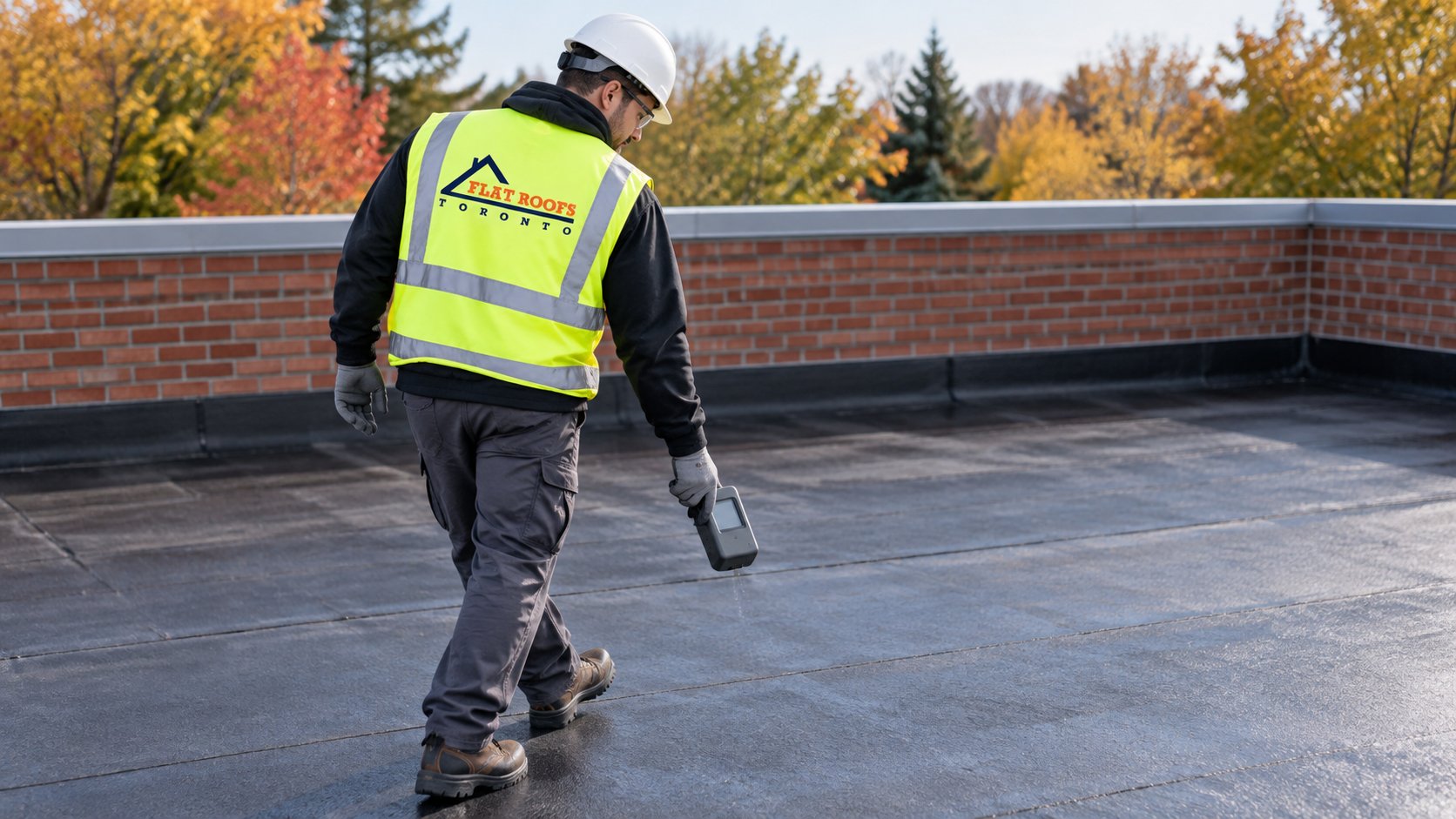
What the roofer should look at
- Seams and laps across the field of the roof, especially near drains
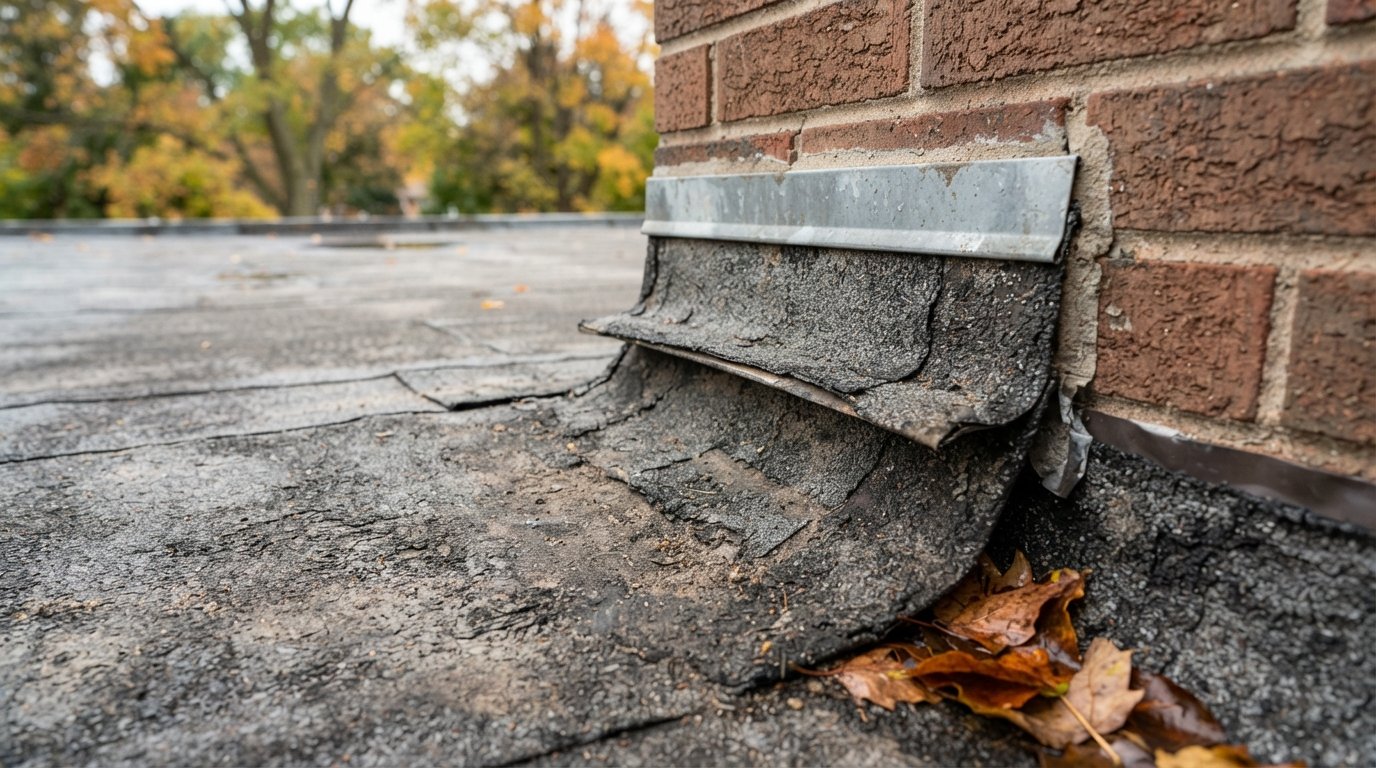
- Wall and parapet flashings, metal cap flashing and counterflashing
- Drains, scuppers, gutters and downspouts, and evidence of ponding
- Skylights, vents, chimneys and other penetrations
- Soft spots underfoot, blisters, splits and patched areas
- Inside: ceiling stains, fresh paint patches, attic or roof cavity access if any, and signs of condensation
Ask for a written report with photos. It should say what the membrane is, its general condition, what repairs are needed now, and a realistic view of remaining life. Autumn rain can actually help: active leaks show up on ceilings, and drainage problems are easier to spot after a wet week.
Shared Roofs On Row Houses And Semis
Many older Toronto row houses and semis share one continuous flat roof divided only by an invisible property line over the party wall. Buying a house with a flat roof in an attached row raises questions a detached house never does.
- Water does not respect property lines. A failing section next door can leak into your side, and ponding often collects where two roofs meet.
- Tie-ins matter. When one owner replaces their section, the new membrane has to be joined to the neighbour’s older roof. That joint is a common leak point if it is not detailed well.
- Coordination saves money. Neighbours who replace at the same time can often share mobilization and avoid a mismatched tie-in, but timing depends on cooperation.
- Freehold, condo or common elements. In a condominium townhouse the roof may be the corporation’s responsibility, and the status certificate and reserve fund study can show planned roof work. In a freehold row, each owner is usually responsible for their own section. Your lawyer can confirm what applies to the property you are buying.
Ask the roofer to look at the neighbouring sections from your side and comment on their condition and on the joint. If the house next door has an obviously failing roof, factor that in.
Budgeting For What The Inspection Finds
Most findings when buying a house with a flat roof fall into a few categories: minor maintenance, specific repairs, or a roof that needs replacing within a few years. The ranges below are broad estimates for typical GTA residential work; they vary with roof size, access, layers to remove, insulation, flashings and decks.
| Finding | Typical work | Typical cost range (estimate only) | Timing |
|---|---|---|---|
| Minor maintenance | Clear drains, reseal a few laps, touch up flashings | Often a few hundred dollars to around $1,000 | Before winter |
| Localized repairs | Repair a failed seam, rebuild a flashing, fix around a skylight | Commonly $800 to $3,000 depending on scope | Soon after closing |
| Small roof replacement | Rear addition or garage roof, tear-off and new membrane | Often in the range of $4,000 to $10,000 | Plan within the next year or two if near end of life |
| Main roof replacement | Full tear-off, deck repairs, insulation, new membrane and flashings | Commonly $12,000 to $30,000 or more for a typical house | Budget ahead if the roof is near end of life |
| Wet insulation found | Remove wet areas, replace insulation and membrane | Usually similar to replacement cost for the affected area | Sooner rather than later |
If the roof is near the end of its life, that is not necessarily a reason to walk away. It is a reason to know the cost before you commit. Some buyers negotiate on price; others simply plan the work into their first year. Your agent can advise on what is realistic in your market. What a full flat roof replacement includes, from tear-off to new flashings, is worth understanding before you negotiate.
Think about insulation at the same time
Many older flat roofs in Toronto have little insulation. If you are buying a house with a flat roof that will need replacing soon, that replacement is often the most cost-effective moment to add insulation above the deck, which can make the rooms under it more comfortable. Ask the roofer whether insulation upgrades make sense and how they affect roof height at walls and doors. Our insulation page covers the options in more detail.
Fitting The Roof Into Your Offer Timeline
Competitive markets often squeeze inspection windows, which is why people buying a house with a flat roof sometimes skip the roof itself. A few approaches help:
- Ask for records before the offer. Invoices and warranty documents take minutes to send if the seller has them.
- Book a roofer for the inspection window. A roof inspection can often be arranged within a few days, especially if access is easy.
- Consider a pre-offer inspection if the seller allows it, particularly in multiple-offer situations.
- Be cautious with a seller’s own roof report. It can be useful, but it was commissioned for the seller. Your own inspection is independent.
- Talk to your lawyer and agent about how inspection conditions and any agreed repairs should be written into the agreement.
Red Flags That Deserve A Closer Look
Some findings do not mean “do not buy,” but they do mean you need answers before you close:
- Fresh paint on a ceiling directly under the flat roof, especially in a single patch
- Several layers of coating or patches in one area
- Large areas of standing water that stay several days after rain
- Soft or spongy areas reported by the roofer
- A rooftop deck built directly on the membrane with no access to the roof surface
- No records at all and a roof that appears to have multiple layers
Common questions about inspections, materials and timing are answered on our FAQ page.
Is a regular home inspection enough for a flat roof?
How long do flat roofs last?
Will the roof warranty transfer to me?
What is a moisture scan and why does it matter?
Should I walk away if the roof needs replacing?
What if my row house shares a roof with the neighbours?
Get A Roof Inspection Before Buying A House With A Flat Roof
The roof is one of the few big costs in a home that you can often price before you buy. Flat Roofs Toronto can inspect the roof during your conditional period, identify the membrane, check for trapped moisture, and give you a clear written report so you know what you are taking on.
Call us today at (647) 333-3528 or request a free estimate.
Helping buyers and homeowners across Toronto and the GTA understand their flat roofs.