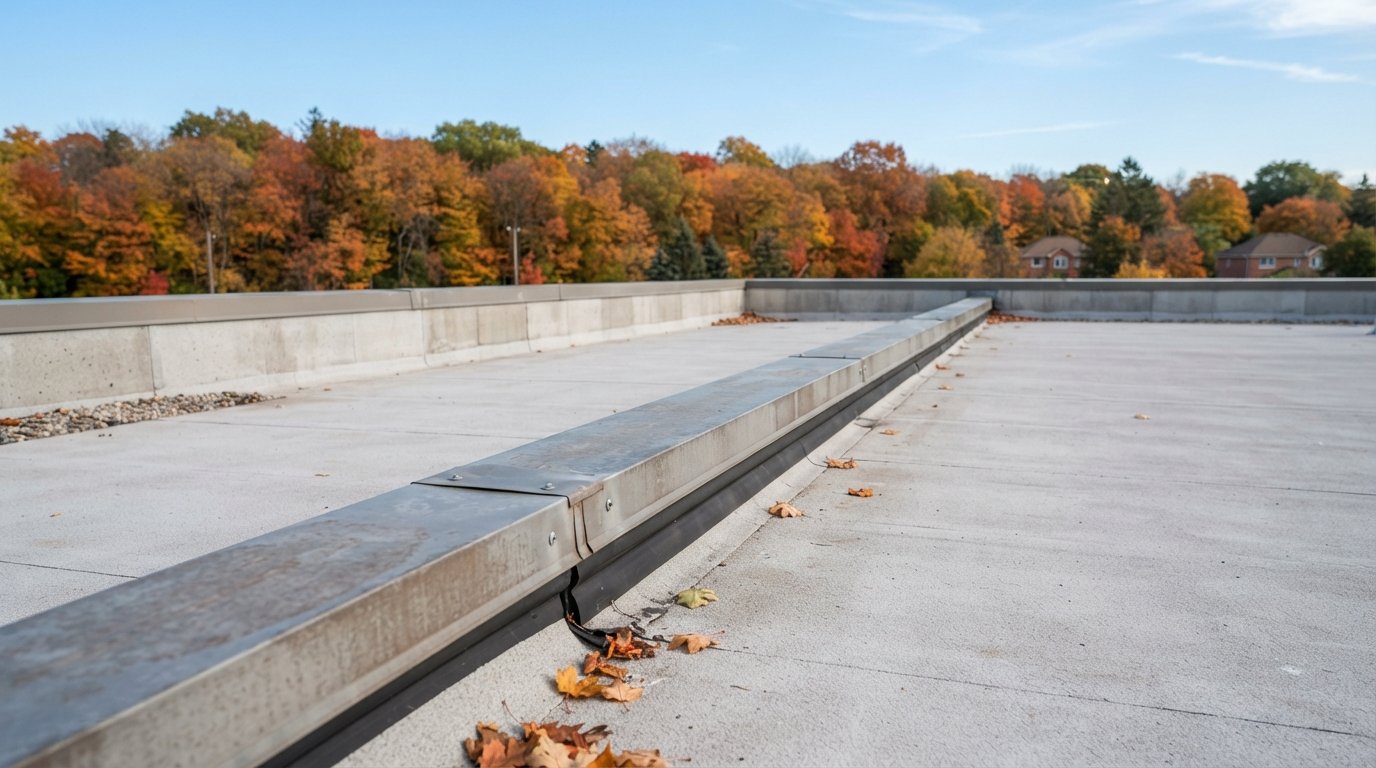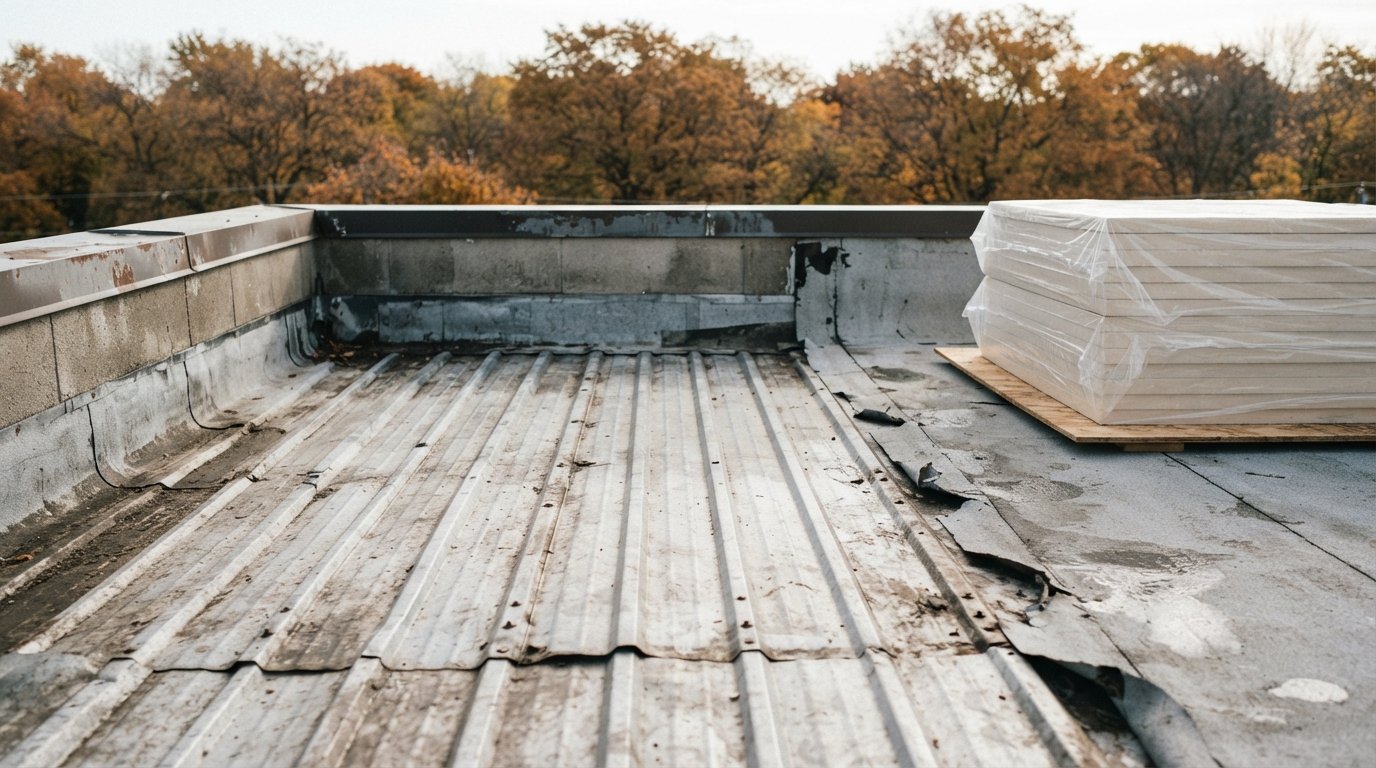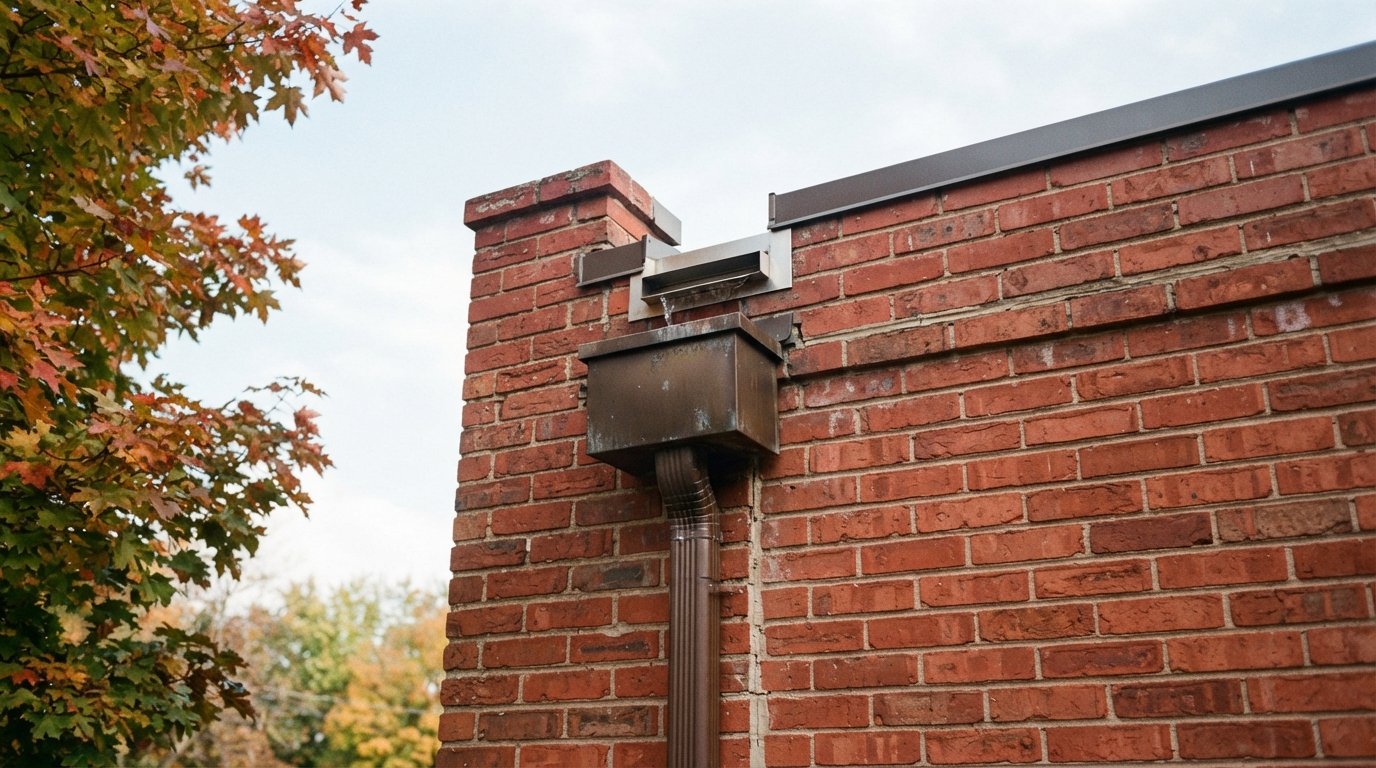

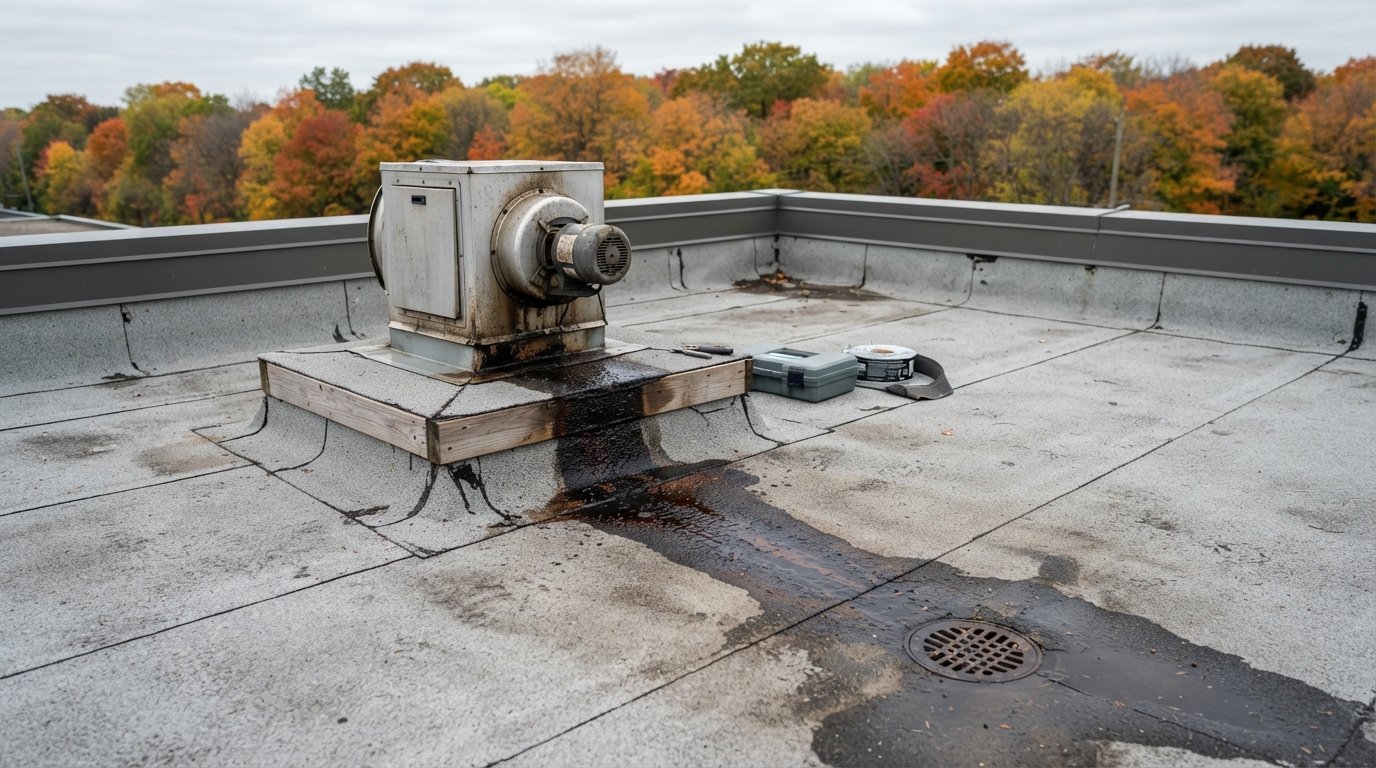
Restaurant roof grease is a common, and very preventable, cause of early membrane failure on GTA plazas. Every commercial kitchen hood pulls grease-laden vapour up a duct to an exhaust fan on the roof. Some of that grease condenses inside the duct and fan, and some is thrown out of the fan as droplets or runs out of the fan housing and down the curb. Once it lands on the roof, it starts working on the membrane, and on many common roof types it softens and breaks down the material long before the rest of the roof is worn.
It is written for plaza owners, property managers and restaurant operators, and it covers which membranes cope with grease and which do not, how containment works, how cleaning and inspections should be scheduled, and how damaged areas are repaired.
How Restaurant Roof Grease Damages A Membrane
Kitchen exhaust grease is mostly animal fats and vegetable oils. On the roof it behaves very differently from rainwater:
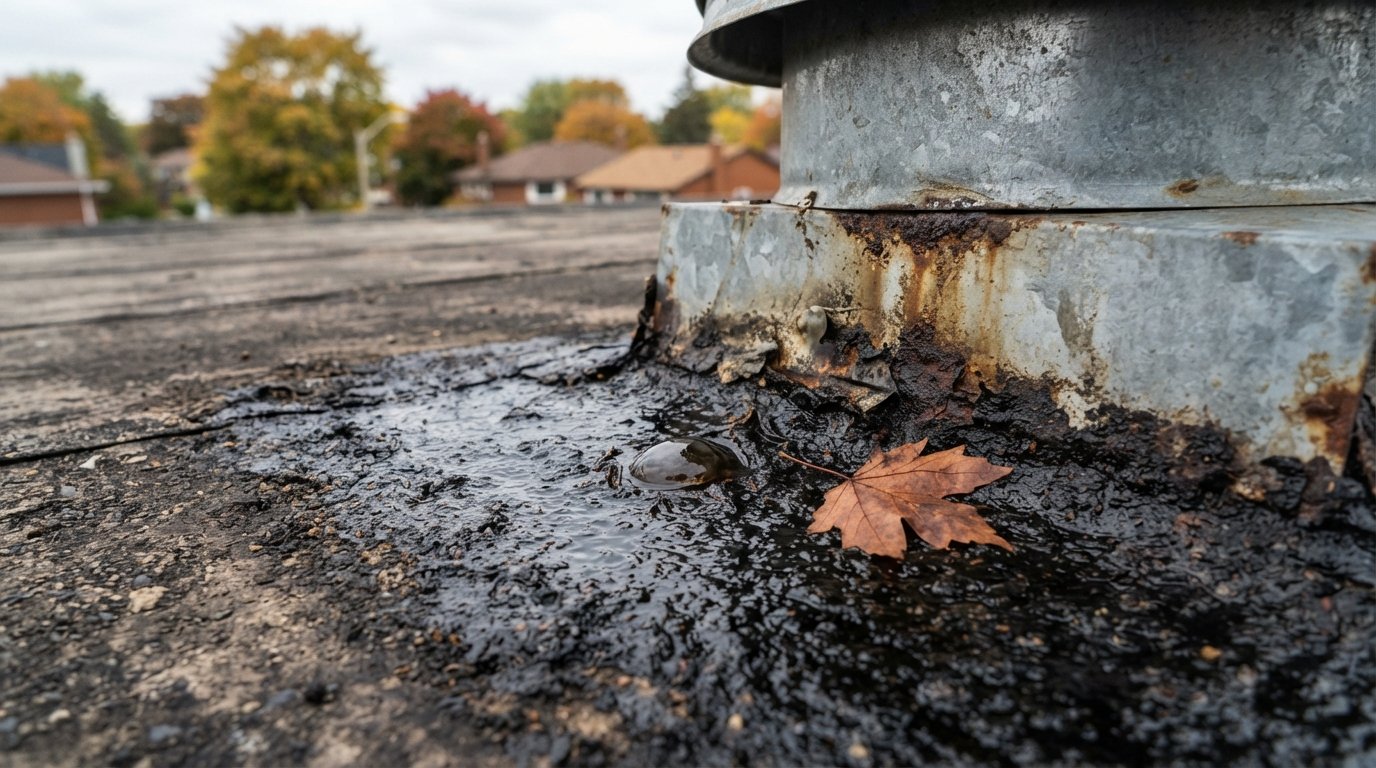
- It softens bitumen. Asphalt-based roofs, including built-up and modified bitumen, are vulnerable to fats and oils. The bitumen softens, swells and loses its strength, granules release, and the membrane can turn soft and sticky around the fan.
- It degrades some rubber and plastic membranes. Membranes that are not formulated for grease exposure can swell, lose flexibility or crack after long contact.
- It defeats repairs. Patches, primers and adhesives do not bond to a greasy surface, so repairs around the fan fail repeatedly unless the contaminated material is removed.
- It holds dirt and water. A grease layer traps debris and keeps the surface wet, which speeds up wear and encourages growth.
- It is a fire and slip hazard. Grease build-up around an exhaust fan can feed a fire that starts in the duct, and a greasy roof surface is slippery for anyone servicing equipment.
The damage concentrates in a ring around each kitchen fan, often spreading downslope toward the nearest drain, where grease can also coat the strainer and begin to clog the leader. It is a familiar pattern on plaza roofs with food tenants, and for our commercial flat roofing clients the rule is simple: the earlier it is caught, the smaller the repair.
Which Membranes Resist Restaurant Roof Grease Better
Membrane resistance to grease is a matter of formulation, so the details depend on the specific product. In general terms:
| Membrane type | General grease resistance | Notes for restaurant roofs |
|---|---|---|
| Built-up roof (asphalt and felts) | Poor | Bitumen softens with fats and oils; needs containment and frequent checks |
| Modified bitumen (SBS or APP) | Poor to fair | Still asphalt-based; granulated cap offers little protection once grease soaks in |
| EPDM | Poor | Can swell and degrade with oil exposure; generally not suited to exposed grease areas |
| Standard TPO | Fair, varies by product | Some products are better than others; check the manufacturer’s chemical resistance data |
| PVC, including grease-resistant formulations | Good to very good for products designed for it | Some PVC membranes are sold specifically for grease exposure and are often used around kitchen fans |
Two cautions. First, manufacturer warranties for many roofing systems treat grease damage specially, sometimes excluding it unless a grease-resistant membrane or containment is installed. Read the current warranty documents for your system rather than assuming you are covered. Second, PVC and asphalt products are not directly compatible, so adding a PVC section around a fan on a bitumen roof needs a proper separation or transition detail designed by the roofer, not an improvised patch.
Grease Containment Around Exhaust Fans
Containment catches restaurant roof grease before it reaches the membrane. It is far cheaper than repairing roof areas, and on a busy kitchen it is the single most effective step an owner can take.
| Containment option | How it works | Maintenance needs |
|---|---|---|
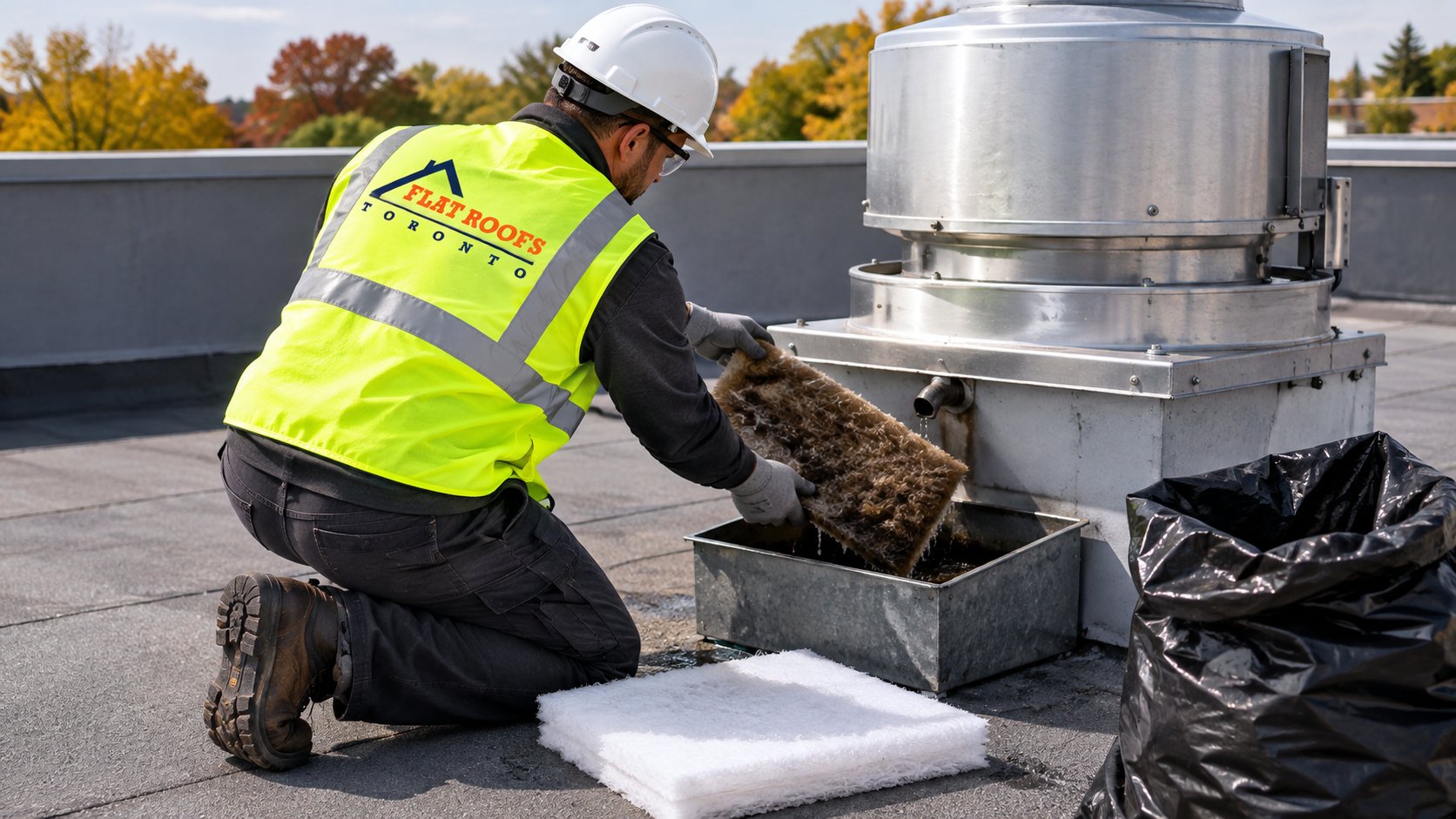
| Grease containment box or trap | A box under the fan’s grease drain spout holds filter media that absorbs grease and lets rainwater pass | Replace filter media on a schedule matched to cooking volume |
| Absorbent pillows or socks | Grease-absorbing material placed around the curb or under the spout | Swap out when saturated; dispose of properly |
| Full curb containment systems | Filter panels or a frame surrounding the curb, catching discharge from all sides | Regular media changes and inspection after hood cleaning |
| Sacrificial or grease-resistant pad | A replaceable layer or grease-resistant membrane section around the curb | Inspect and replace when worn or saturated |
| Fan discharge improvements | Hinge kits, correctly sized fans and well-maintained drain spouts reduce spills | Coordinate with the exhaust and hood cleaning contractor |
Containment only works if it is maintained. A saturated filter overflows and puts the grease right back on the roof. Many operators combine a containment box under the spout with a grease-resistant pad under and around the fan, so anything the box misses lands on material designed for it.
Hinge kits on upblast exhaust fans let the fan tilt open for cleaning without dragging it across the roof, and standards for commercial kitchen exhaust commonly call for them. Your exhaust or hood cleaning contractor can confirm what applies to your system.
Cleaning Schedules: Duct, Fan And Roof Surface
Three separate cleaning tasks affect the roof, and they are often handled by different people.
Hood, duct and fan cleaning
Commercial kitchen exhaust systems are required to be inspected and cleaned at intervals that depend on cooking volume and type, under the standards that apply to commercial kitchens in Ontario. High-volume, charbroiling or wok cooking needs cleaning far more often than a low-volume kitchen. Confirm the right interval with your qualified hood cleaning company and, if in doubt, your local fire department. A clean duct and fan throw less restaurant roof grease onto the roof.
Protecting the roof during hood cleaning
Hood cleaning uses hot water, degreasers and scraping, and the runoff can do more damage to a membrane than months of normal discharge. Ask your hood cleaning company how they protect the roof: tarps or containment around the fan, collecting wash water rather than letting it run across the membrane, and leaving no chemical residue behind. A roof check after each cleaning visit catches problems while they are fresh.
Roof surface cleaning
Restaurant roof grease on the membrane can sometimes be cleaned, but harsh solvents and some strong degreasers can damage roofing just as grease does. Use only cleaning methods approved by the membrane manufacturer, avoid high-pressure washing near seams and flashings, and never wash grease into roof drains. Grease clogs leaders, and municipal sewer rules restrict discharge of fats, oils and grease.
Inspections That Catch Grease Damage Early
Restaurant roof grease damage develops quietly. The first leak often appears well after the membrane around the fan has softened. A simple routine helps:
| Task | Typical frequency | Who usually does it |
|---|---|---|
| Check containment boxes and filter media | Monthly for busy kitchens, more often where cooking volume is high | Restaurant staff or maintenance contractor with safe roof access |
| Inspect roof around each fan after hood cleaning | After every cleaning visit | Property manager or roofer |
| Professional roof inspection | At least spring and autumn | Roofing contractor |
| Check drains downslope of kitchen fans | At each inspection and after heavy rain | Roofing contractor or maintenance staff |
| Review hood cleaning records | Annually or at lease review | Property manager |
During an inspection, a roofer looks for soft or spongy membrane near the fan, dark staining that spreads downslope, granule loss, blisters, flashing at the fan curb pulling away, and grease reaching the nearest drain. Pressing on the membrane around the curb often tells you more than looking at it: grease-softened bitumen feels distinctly soft compared with the roof a few metres away.
Autumn is a sensible time for a thorough check. Leaves trapped against greasy curbs hold the grease in place, and fixing a damaged area before freezing weather avoids repeated winter leaks into the kitchen or dining room below.
Repairing Grease-Damaged Roof Areas
Patching over restaurant roof grease damage rarely lasts, because nothing bonds well to contaminated material. A durable repair generally follows these steps:
- Stop the source. Arrange duct and fan cleaning and install or restore containment first, otherwise the new roof area will be contaminated again.
- Remove contaminated material. Cut out the softened membrane back to clean, sound roofing. Grease often soaks deeper than it appears, so the cut-out is usually wider than the stain.
- Check insulation and deck. Grease and water that have penetrated may have saturated the insulation, which then has to be replaced.
- Install a suitable membrane. Rebuild the area with a grease-resistant membrane where appropriate, with a proper transition to the surrounding roof.
- Reflash the fan curb. The curb flashing is usually damaged too, and the curb height should allow a proper flashing upturn.
- Add a walkway or protection pad where servicing traffic reaches the fan, so technicians do not damage the new area.
Costs vary with the size of the damaged area and the roof system. As rough estimates, a containment box with media is often in the range of a few hundred to around two thousand dollars per fan installed, while cutting out and rebuilding a grease-damaged area around a curb commonly runs from the low thousands upward, depending on how far the damage has spread. When grease damage is widespread on an older roof, it can make more sense to plan a flat roof replacement with grease-resistant zones designed in from the start.
Planning A Roof For A New Or Expanding Kitchen
The best time to deal with restaurant roof grease is before the first fan starts running. When a unit is being fitted out for a restaurant, or an existing kitchen adds a hood, a few decisions on the roof make years of difference.
- Size the grease-resistant zone generously. Grease spreads beyond the curb, carried by wind and by rain running downslope. A grease-resistant membrane area that extends well past the curb on all sides, and further on the downslope side, covers where the grease actually goes.
- Think about the water path. Look at where rain from the fan area flows. If it crosses a large stretch of asphalt-based roof on its way to the drain, it will carry grease the whole way. Extending the protected zone along that path, or adjusting slope during re-roofing, limits the spread.
- Get curb height right. A curb tall enough for a proper flashing upturn above the roof surface, and above any containment, makes the curb detail far more durable.
- Provide a clear route to the fan. Walkway pads from the roof hatch to each fan keep hood cleaners and service technicians off the membrane and make it easier to carry containment media and cleaning equipment.
- Plan containment from day one. Install the containment box and media before opening, and set the replacement schedule with the tenant and the hood cleaning company.
On plazas with several food tenants, it is worth mapping every kitchen fan on a roof plan, noting each one’s membrane zone, containment type and cleaning schedule. That single sheet makes inspections faster and helps when a tenant changes.
Leases, Tenants And Who Pays
On multi-tenant plazas, the restaurant tenant usually controls the kitchen and the hood cleaning schedule, while the landlord often owns the roof. That split is where disputes start. Practical steps for owners:
- Make sure the lease is clear about who maintains exhaust fans, containment and the roof area around them, and who pays for grease damage. Have a lawyer review the wording.
- Ask tenants for hood cleaning records and confirm containment is in place and maintained.
- Photograph the roof around kitchen fans at the start of a tenancy and at each inspection, so changes can be documented.
- When a new restaurant moves in, plan containment and a grease-resistant pad before the kitchen opens, not after the first leak.
Clear expectations protect both sides. The tenant avoids a large bill at lease end, and the owner avoids premature roof replacement. You can see examples of commercial roof work on our projects page.
Why is grease so damaging to flat roofs?
Which roofing membrane is best for a restaurant?
What is a rooftop grease containment system?
Can grease damage be patched?
How often should the roof around kitchen fans be inspected?
Who is responsible for grease damage on a plaza roof?
Get Ahead Of Restaurant Roof Grease Before It Reaches The Kitchen Ceiling
Containment, regular checks and the right membrane around kitchen fans cost far less than repeated repairs or early replacement. Flat Roofs Toronto inspects plaza and restaurant roofs, installs grease-resistant membrane zones and containment, and repairs grease-damaged areas properly so patches are not failing again by spring.
Call us today at (647) 333-3528 or request a free estimate.
Working with plaza owners and restaurant operators on grease-damaged roofs across Toronto and the GTA.