When water comes through the ceiling of a leased store, office or warehouse unit, two questions arrive at the same time: how do we stop it, and who is responsible? Stopping the water is a roofing job. Responsibility is a roof leak commercial lease question, and the answer turns on the wording of your particular lease, which varies a great deal from one property to the next. What follows covers how leases commonly approach roof repairs in general terms, how to report a leak, what records to keep, what an emergency response looks like and how maintenance plans and warranties fit in.
One important point before we start: this is general information from a roofing contractor, not legal advice. Read your lease carefully and speak to a lawyer about how it applies to your situation.
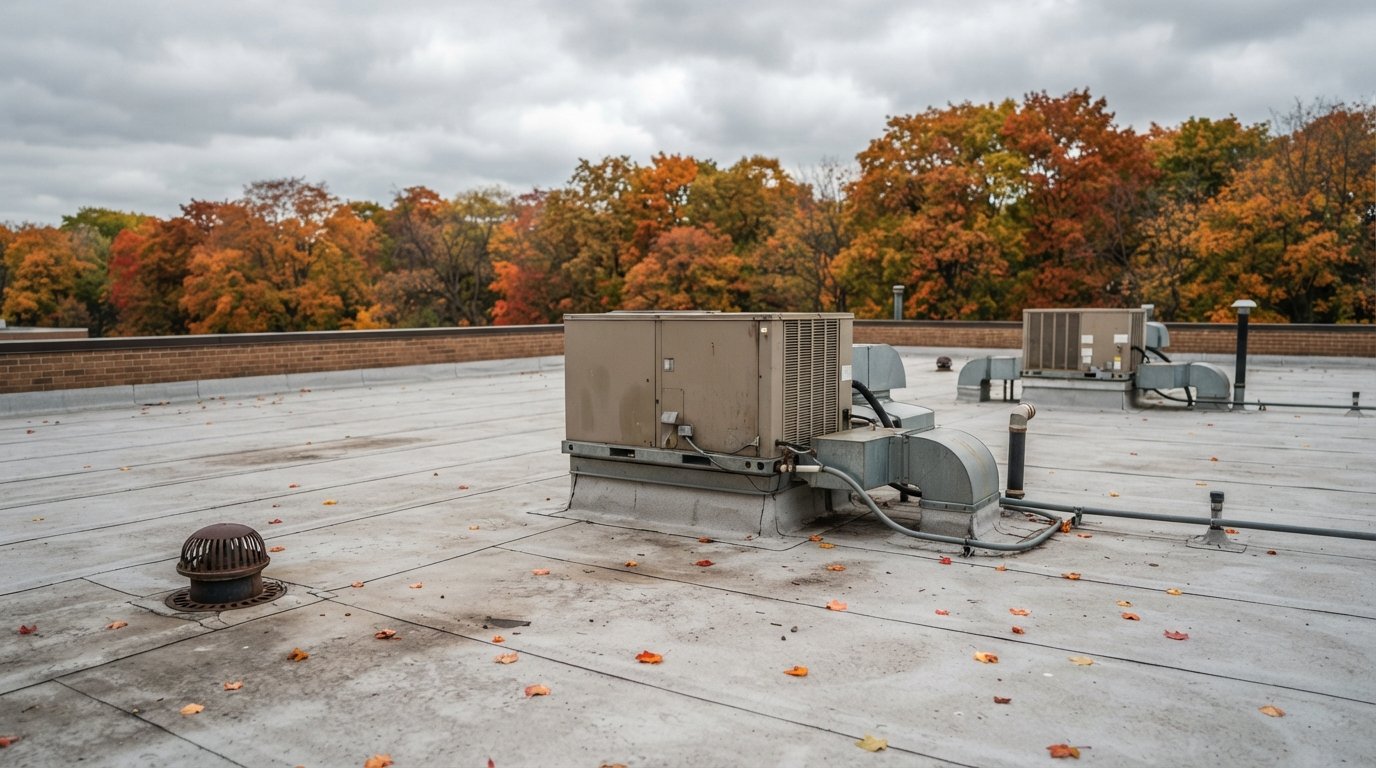
Roof Leak Commercial Lease Basics: How Leases Commonly Handle Repairs
There is no single rule for who fixes a roof in leased space. Each lease sets out its own allocation, and the details matter. That said, certain patterns come up again and again in the leases owners and tenants share with us when a roof-leak commercial lease question comes up.
| Common lease approach | Who often arranges roof repairs | How costs are often handled | What to check in your lease |
|---|---|---|---|
| Multi-tenant net lease (plazas, office buildings) | Landlord or property manager | Repair and maintenance costs may be shared among tenants through operating cost or common area charges | How the lease treats repairs versus replacement, and whether capital costs can be recovered |
| Single-tenant net lease | Can be the tenant or the landlord, depending on wording | Tenant may pay directly or reimburse the landlord | Who performs roof work, who approves contractors, and how structural items are treated |
| Gross or semi-gross lease | Usually the landlord | Often included in rent, with possible exceptions | Any exclusions for damage caused by the tenant or tenant equipment |
| Tenant-owned rooftop equipment | Often the tenant for their equipment | Tenant may be responsible for damage caused by their units or contractors | Alterations clauses, approved contractor requirements and roof access rules |
These are only general patterns. Some leases separate routine repairs from replacement. Some treat the roof as a structural element that remains with the landlord. Some make the tenant responsible for damage caused by their own rooftop units, signs or contractors. Insurance clauses may also affect who bears what. Read the actual lease, and if there is any doubt, get legal advice before you spend money or withhold anything.
Our commercial flat roofing team works with both landlords and tenants. In most cases the most useful thing we can do is find the cause quickly and document it clearly, so the people responsible under the lease can make decisions based on facts.
Reporting A Leak The Right Way
How a leak is reported can matter as much as when. Many leases set out a notice procedure, such as notice in writing to a specific address or contact. Following it protects both sides, because a notice sent to the wrong person or in the wrong form can turn into an argument of its own later.
For tenants
- Call first in an emergency. If water is actively coming in, phone the property manager or landlord right away, then follow up in writing as the lease requires.
- Put it in writing. Describe where the leak is, when it started, what is affected and what you have done to protect the space.
- Do not send your own contractor onto the roof without permission. Many leases restrict roof access, and an unapproved repair can affect roof warranties. Check what your lease allows.
- Protect your space. Move stock and equipment, put down buckets and plastic, and keep people away from wet floors and sagging ceiling tiles.
For landlords and property managers
- Acknowledge and act. Confirm receipt and arrange an inspection promptly.
- Use your roofing contractor. Send the roofer who knows the roof or holds the warranty, if possible.
- Share findings. Tenants generally want to know what was found and what will be done.
- Check warranty notice requirements. Manufacturer warranties often require leaks to be reported within a set period, so check the documents.
Documentation: The Records That Matter Later
When questions arise about cost, responsibility or insurance, good records help everyone. A roof-leak commercial lease dispute is far easier to settle when there is a clear timeline, photos and a written roofing report.
| Record | Who usually keeps it | Why it matters |
|---|---|---|
| Leak log with dates, times and weather | Tenant and property manager | Shows patterns, such as leaks only in wind-driven rain or during thaws |
| Photos and video of interior damage | Tenant | Supports insurance claims and helps the roofer locate the source |
| Written notices and replies | Both parties | Shows when the leak was reported and how it was handled |
| Roofer’s inspection report with photos | Landlord or property manager, shared with tenant | Identifies the cause and recommended repairs |
| Roof maintenance history | Landlord or property manager | Shows inspections, repairs and drain cleaning over time |
| Warranty documents | Landlord | Sets out coverage, notice requirements and authorized contractors |
| Rooftop work by other trades | Property manager | Shows when HVAC, sign or telecom work was done near the leak |
A floor plan marked with each leak location is also useful. Over time it can show whether leaks cluster around a drain, a skylight or a specific rooftop unit, which points to the real cause.
Emergency Response: The First Hours And Days
A leak into occupied commercial space can affect inventory, equipment, customers and staff. A practical sequence looks like this:
- Make the area safe. Keep people away from wet floors and sagging ceiling tiles. If water is near electrical equipment or fixtures, keep clear and call a licensed electrician.
- Contain the water. Buckets, tarps and plastic sheeting protect stock and equipment.
- Notify. Call the property manager or landlord, then follow up in writing as the lease requires.
- Temporary roof repair. A roofer can clear blocked drains and make a temporary repair to stop the water while a permanent fix is planned.
- Dry out. Wet ceiling tiles, insulation and drywall need prompt drying or removal to reduce the risk of mould. A restoration company may be needed for larger areas.
- Insurance. Tenants and landlords should each contact their insurer or broker about their own coverage.
- Permanent repair. Once the cause is confirmed, repairs are scheduled and documented.
For an active leak, emergency flat roof repair covers the temporary fix and a written report with photos for the property file.
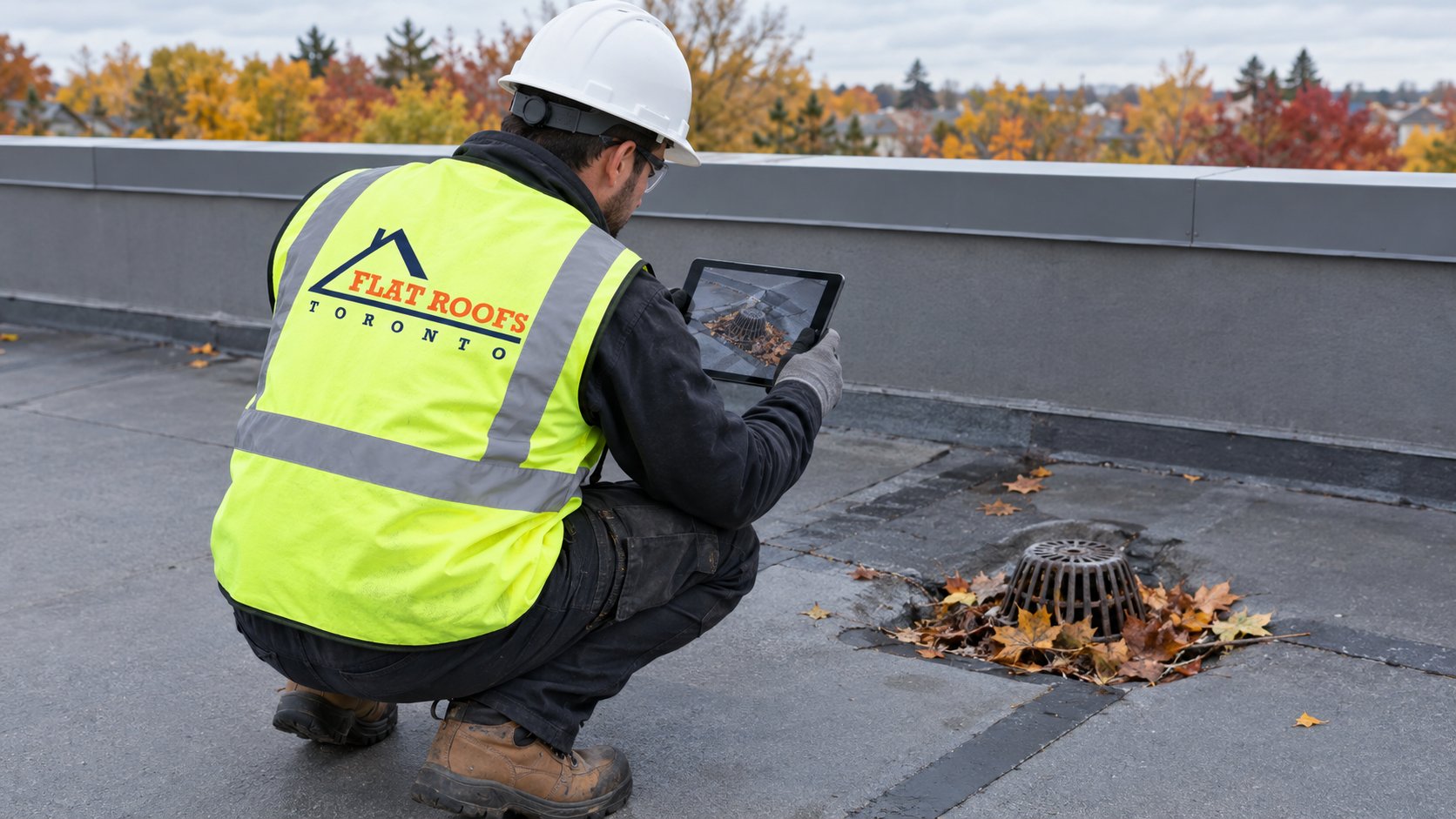
Why autumn leaks need quick decisions
Leaks reported in October and November deserve extra urgency. Falling leaves block drains quickly, autumn rain can last for days, and the first cold snaps narrow the window for permanent membrane work. A temporary repair that is meant to last a few weeks can end up carrying the building through the winter if decisions stall. Where a roof-leak commercial lease question is holding up approval, it often makes sense for the parties to agree on a temporary repair first, with costs sorted out under the lease afterward, so the space is protected while responsibility is discussed. Whether that approach suits your situation is something to confirm with your lawyer.
Common leak sources on leased buildings
- Blocked drains. Autumn leaves and debris back water up over flashings.
- Rooftop unit curbs. HVAC units installed or replaced without proper re-flashing.
- Tenant penetrations. Signs, exhaust fans, telecom equipment and conduit added through the roof.
- Skylights. Aging skylight curbs and seals; see our commercial skylights page for more.
- Aging membrane. Open seams, worn flashings and wet insulation on roofs near the end of their service life.
When The Leak Comes From Tenant Equipment Or Alterations
Many leases treat damage from a tenant’s own rooftop equipment or alterations differently from general roof wear, and this is where many roof-leak commercial lease disagreements begin. A roofer’s job is to identify the physical cause accurately; deciding what that means under the lease is for the parties and their lawyers.
| Rooftop item | How it typically causes leaks | What the roofer checks | Who else may need to be involved |
|---|---|---|---|
| HVAC units and curbs | Curb flashings not rebuilt after a unit swap, condensate draining onto the roof, panels left open | Curb height, flashing condition, condensate routing, service damage | The mechanical contractor who services the unit |
| Restaurant exhaust fans | Grease discharged onto the roof can soften and degrade many membranes over time | Membrane condition around the fan, grease containment | The tenant’s kitchen exhaust service company |
| Signs and sign wiring | Brackets, raceways and conduit fastened through the roof or parapet without flashing | Penetrations, parapet cap and wall fasteners | Sign contractor and a licensed electrician |
| Telecom and satellite equipment | Mounts bolted through the membrane or ballast placed directly on it | Mount bases, protection pads, cable penetrations | The equipment owner or installer |
| Interior alterations | New vents, plumbing stacks or skylights cut through the roof during a fit-out | Flashing quality at new penetrations, whether approval was obtained | Landlord, the fit-out contractor and the roof warranty holder |
When we find a cause like this, we describe it factually in the report with photos, note when the equipment appears to have been installed or serviced if that is evident, and recommend the repair. We do not decide who should pay. That keeps the report useful to everyone, whichever side of the lease they are on.
What A Useful Roofing Report Should Contain
A short, clear report is one of the most valuable documents in a roof-leak commercial lease file. When you ask a roofer to inspect a leak in leased space, ask for a report that includes:
- The location of the interior leak and the location of the source on the roof, ideally marked on a roof plan
- The cause as found, stated factually, such as an open seam, a blocked drain or an unflashed penetration
- Photos of the source, the surrounding roof and any temporary repair
- What was done on the visit, and whether it is temporary or permanent
- Recommended repairs with priorities, separating urgent items from planned work
- General roof condition, including signs that the roof is nearing the end of its service life
Reports like this help property managers explain decisions to tenants, help tenants understand what is being done, and help insurers and lawyers if they become involved. They also build a history that makes the next leak easier to diagnose.
Maintenance Plans That Prevent Repeat Leaks
A planned maintenance program is the most effective way to reduce leaks in leased space. It also produces the records that help when questions arise. Who pays for maintenance is a lease question, but the work itself is fairly standard.
- Two inspections a year. Spring and autumn, with written reports and photos.
- Drain cleaning. Especially after the autumn leaf drop and before freezing weather.
- Roof access control. A log of who goes on the roof and why, with rules for HVAC, sign and telecom contractors.
- Walkway pads. Protect the membrane along the routes contractors use to reach rooftop units.
- Small repairs promptly. Open laps and failed sealant fixed before they become interior leaks.
- Long-term planning. An honest estimate of remaining roof life, so a flat roof replacement can be budgeted and scheduled instead of forced by a leak.
For tenants with rooftop equipment, coordinating your HVAC service with the landlord’s roof maintenance can prevent many leaks. Ask your mechanical contractor to report any membrane damage they see.
Roof Warranties In Leased Buildings
Roof warranties add a third set of rules on top of the lease and the insurance policies, and they can shape roof-leak commercial lease decisions as much as either. Manufacturer warranties on commercial roofs commonly come with conditions, which may include:
- Reporting leaks within a set period after they are discovered
- Using authorized contractors for repairs
- Getting approval before adding penetrations or rooftop equipment
- Carrying out regular maintenance and keeping records
The exact terms vary by manufacturer and warranty type, so read the current documents. Contractor workmanship warranties are separate and have their own terms. For tenants, the practical point is simple: before any contractor cuts into the roof to install equipment, check with the landlord so the work does not affect warranty coverage. For landlords, keep warranty documents where the property manager can find them quickly.
Questions To Settle Before The Next Leak
The best time to understand your roof-leak commercial lease obligations is before water comes through the ceiling. Some questions to raise with your lawyer, landlord or tenant:
- Who is responsible for roof repairs, and who for replacement?
- How does the lease handle damage caused by tenant equipment or contractors?
- What notice procedure does the lease require, and to whom?
- Who may access the roof, and which contractors are approved?
- Is there a roof warranty, and what does it require?
- How are maintenance costs shared, if at all?
- What insurance does each party carry, and does it cover water damage from the roof?
Questions about how inspections and repair visits work are covered on our FAQ page.
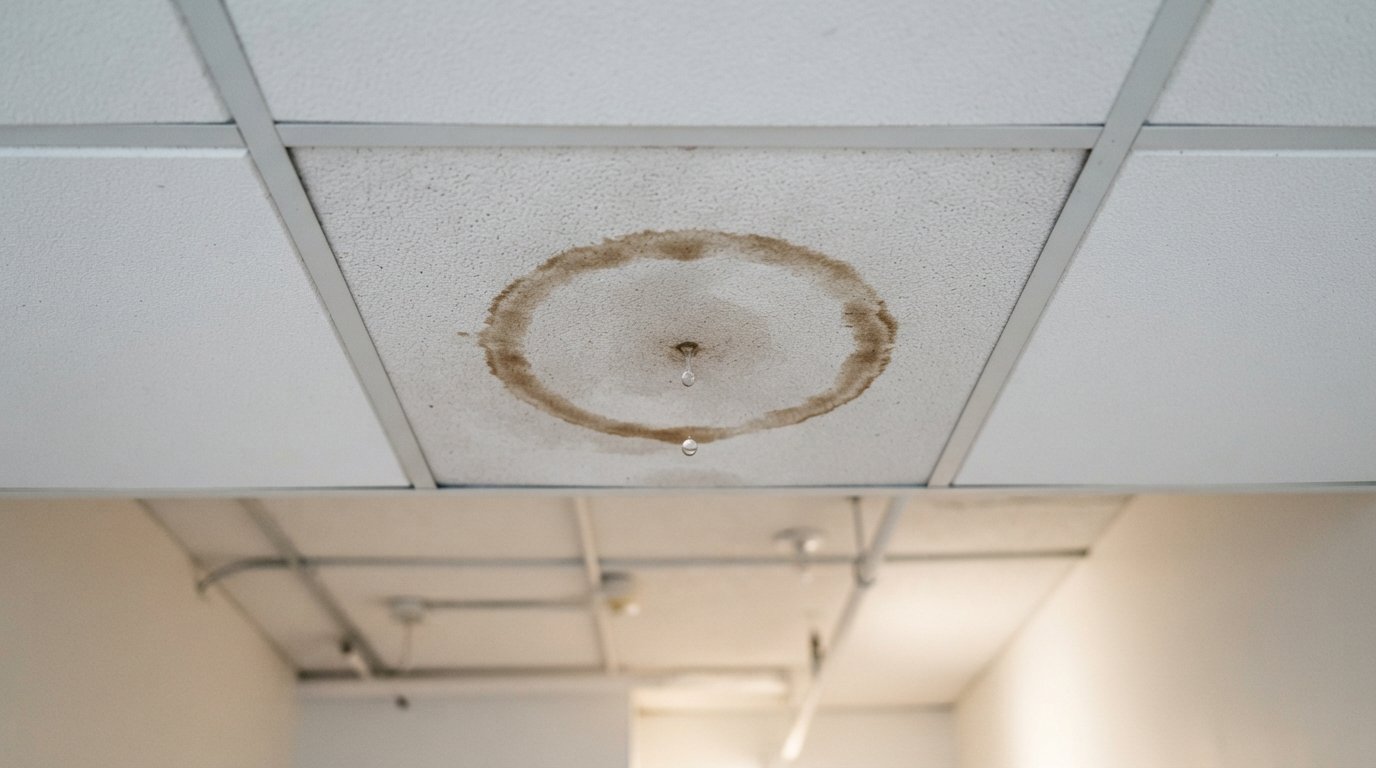
Who pays for a roof leak in a leased commercial space?
Can a tenant hire their own roofer?
What should a tenant do first when the roof leaks?
What records help in a roof leak commercial lease dispute?
Can tenant rooftop equipment affect the roof warranty?
What inspection schedule suits a leased building?
Roof Leak Commercial Lease Help For Landlords And Tenants
Whether you are a landlord, property manager or tenant, a fast response and a clear report make every next step easier. Flat Roofs Toronto can respond to leaks in leased commercial buildings, make temporary and permanent repairs, and provide documented reports for your records.
Call us today at (647) 333-3528 or request a free estimate.
Working with landlords, property managers and commercial tenants in Toronto and throughout the GTA.