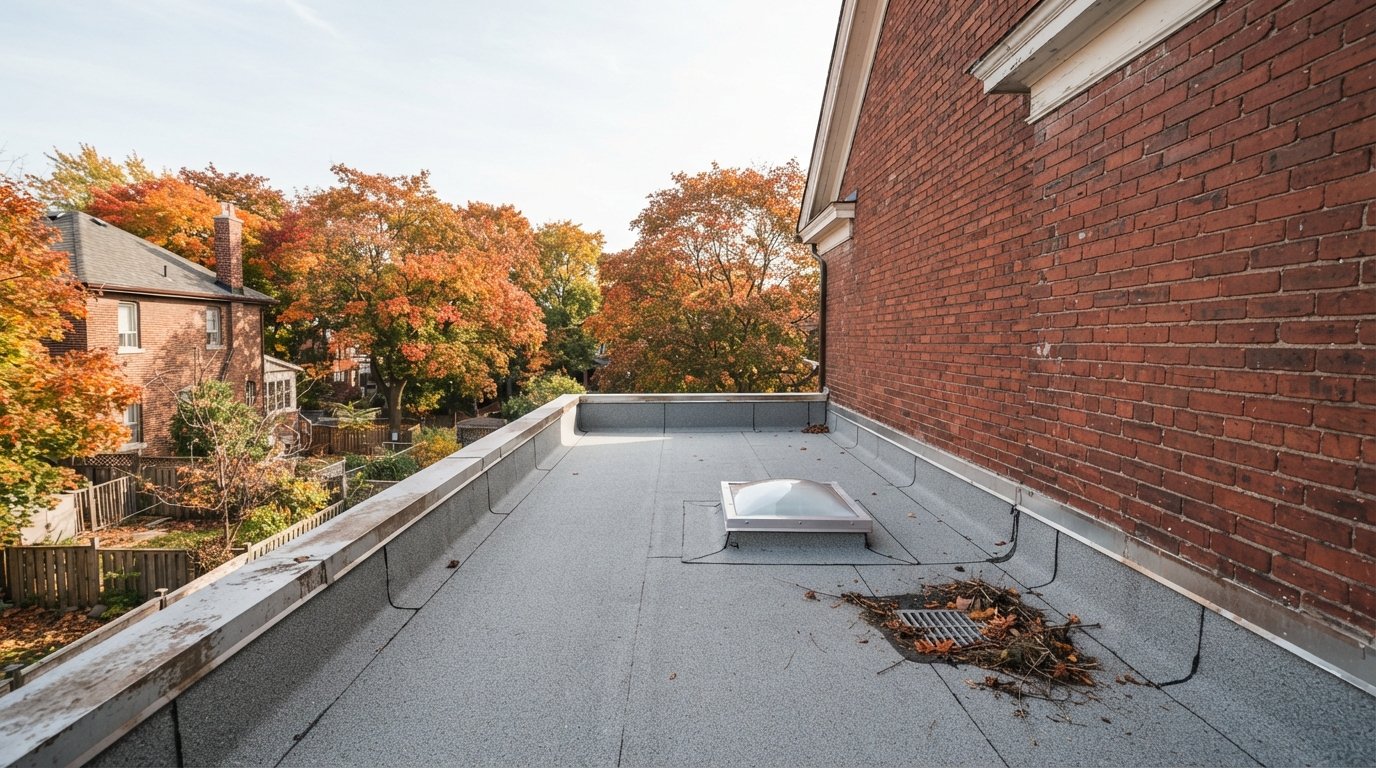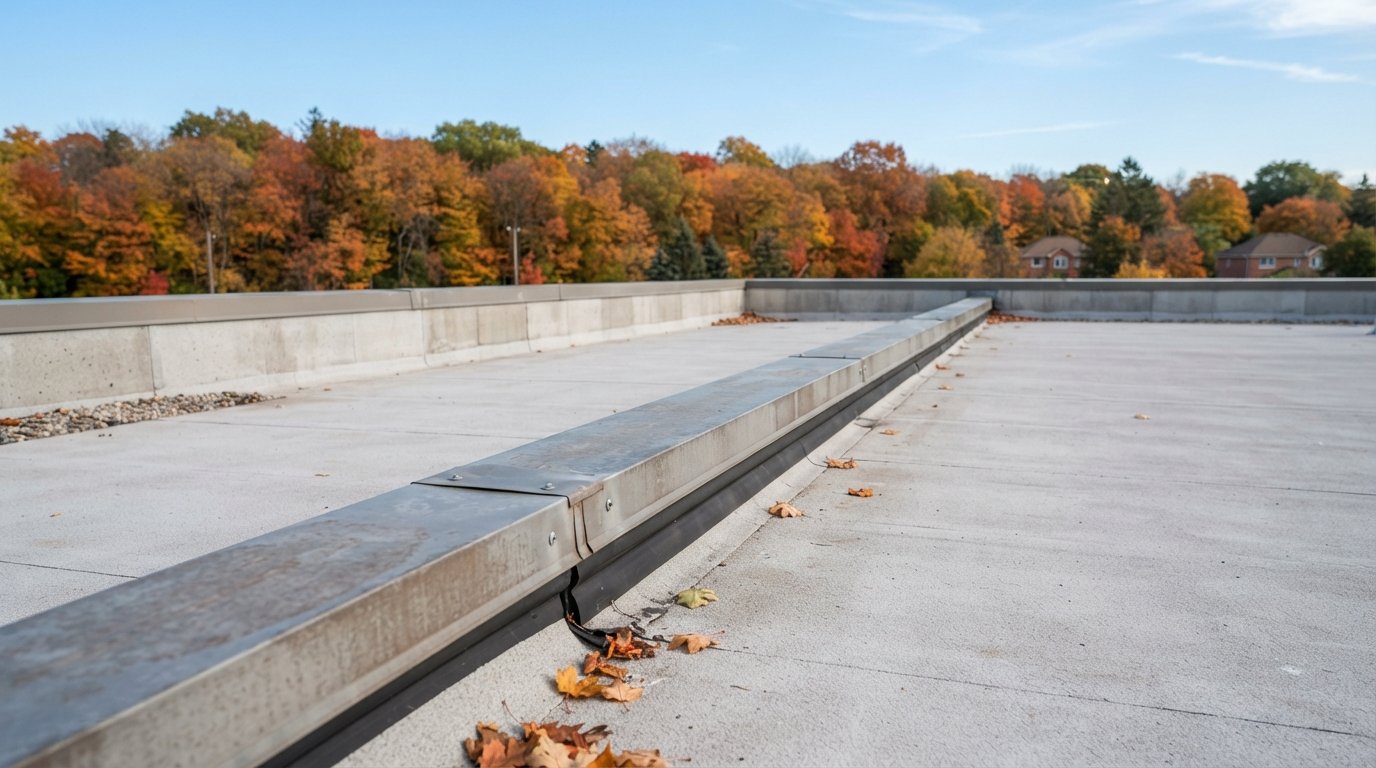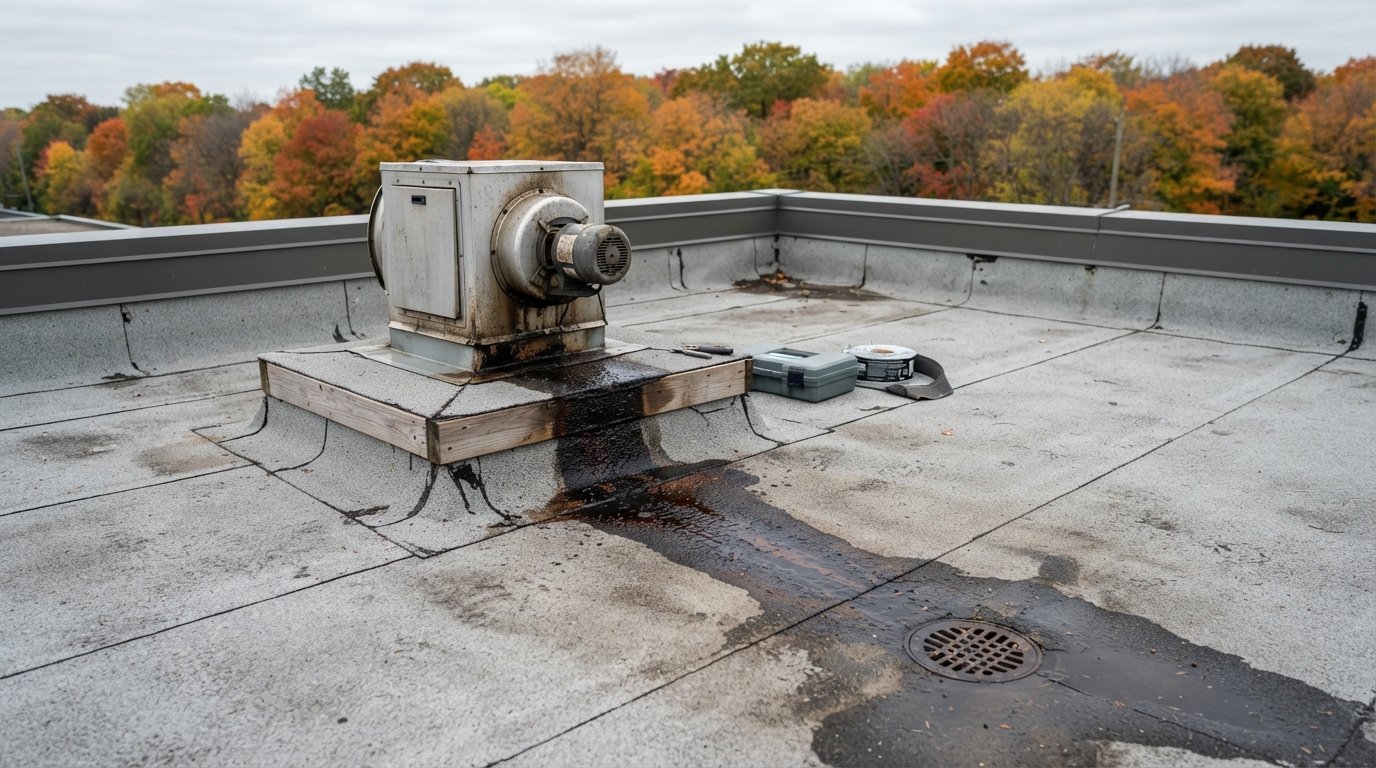

Anyone who manages a plaza, warehouse, school or low-rise apartment near the lake knows the sound of seagulls on roofs every spring. Wide, open flat roofs look a lot like the gravel bars and islands gulls naturally nest on, and in the GTA some colonies return to the same buildings year after year. By late summer the birds have moved on, leaving behind blocked drains, droppings, nesting debris and, sometimes, damaged membrane.
Autumn is the right time to deal with all of it. The nesting season is over, the roof is quiet, and there are still a few months before the birds return. The rest of this article sets out what gulls do to a flat roof, what the federal rules generally mean for owners, how to plan repairs, and which deterrents work without creating new leaks.
Why Seagulls On Roofs Are A Commercial Roofing Problem In Toronto
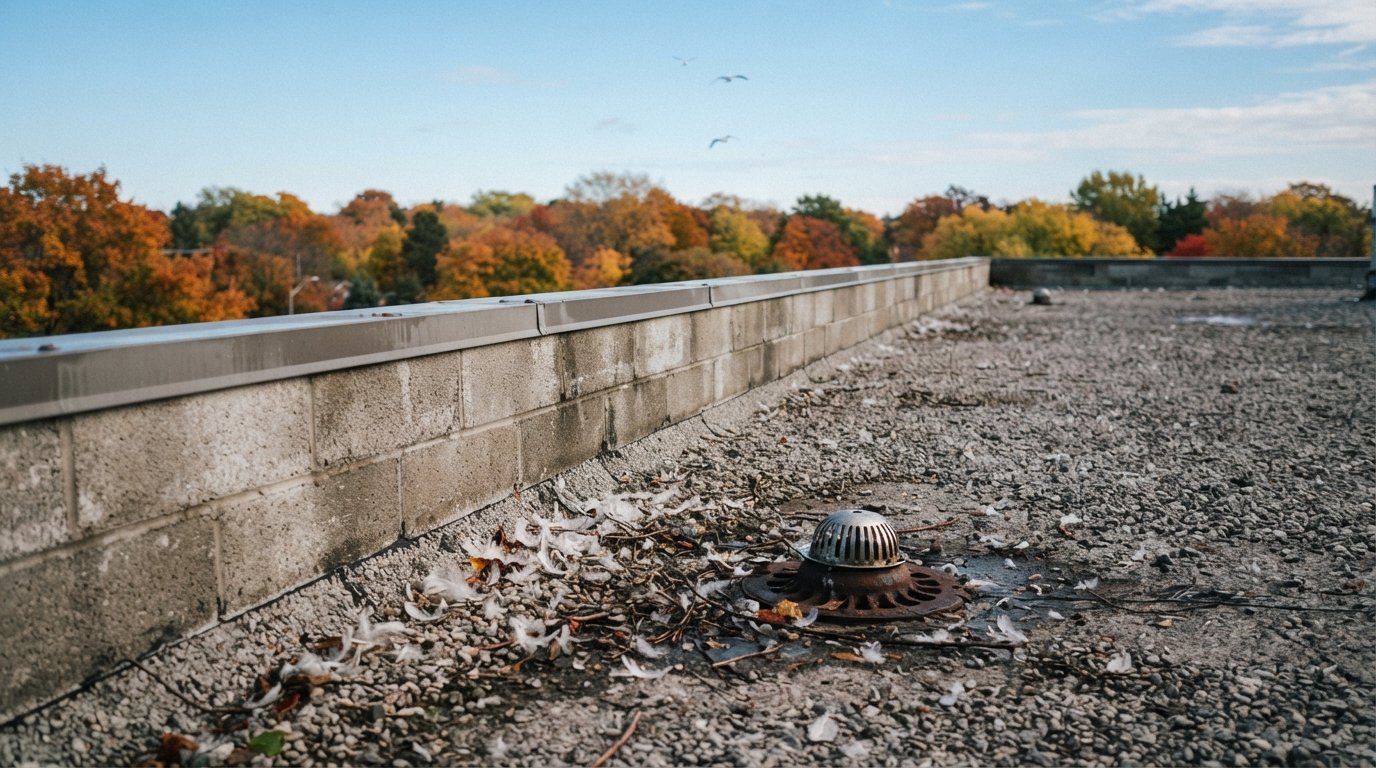
The gulls most owners in the GTA will see on rooftops are ring-billed gulls, with herring gulls also present. Both like large, flat, open areas with a clear view, a short flight to water or food, and few predators. Big commercial roofs tick every box. Gravel-ballasted and tar and gravel roofs are especially attractive because the birds can scrape shallow nests in the stone, but smooth membranes are used too.
Once a colony establishes itself, the birds tend to come back. A few pairs one season can become many more over the following years. That is why property managers who treat the issue as a minor nuisance often end up with a bigger problem: more birds, more debris, and repairs that keep getting pushed back because nobody can work on the roof safely during nesting season. Plazas, warehouses and industrial units are the usual candidates, which is why gull damage comes up so often in commercial flat roofing maintenance plans.
Houses are affected less often, but low-rise apartments, mixed-use buildings and homes with large flat roofs near the waterfront can attract seagulls on roof decks and parapets too.
The Rules: Gulls, Nests And Federal Protection
This is the part that catches many owners by surprise. Gulls in Canada are generally protected as migratory birds under federal legislation, the Migratory Birds Convention Act and its regulations, which Environment and Climate Change Canada administers. In general terms, that means you should not harm or kill the birds, and you should not disturb, move or destroy active nests or eggs without the proper authorization.
What that means in practice for a roof:
- Do not remove active nests, eggs or chicks. If birds are nesting, routine roof work near the nests usually has to wait, and repairs that cannot wait need advice from a qualified wildlife professional.
- Plan deterrents before nesting starts. Preventing birds from settling is generally the accepted approach, as opposed to removing them once they are nesting.
- Confirm before clearing old nest material. Rules can depend on the species and on whether a nest is still considered active. Check current guidance from Environment and Climate Change Canada before clearing nests, even in autumn.
- Use licensed specialists for wildlife work. A licensed wildlife control company can advise on what is allowed and, where needed, on permits.
We are roofers, not wildlife officials, and rules and guidance change. Treat this section as a general overview, and confirm the current requirements with Environment and Climate Change Canada and a licensed wildlife company before you act.
What Gulls Actually Do To A Flat Roof
The damage from seagulls on roofs is usually slow and cumulative rather than dramatic. Most of it comes from four things: debris, droppings, physical picking at materials, and the fact that nobody can maintain the roof while the colony is there.
| What you see | What causes it | Why it matters | Usual fix |
|---|---|---|---|
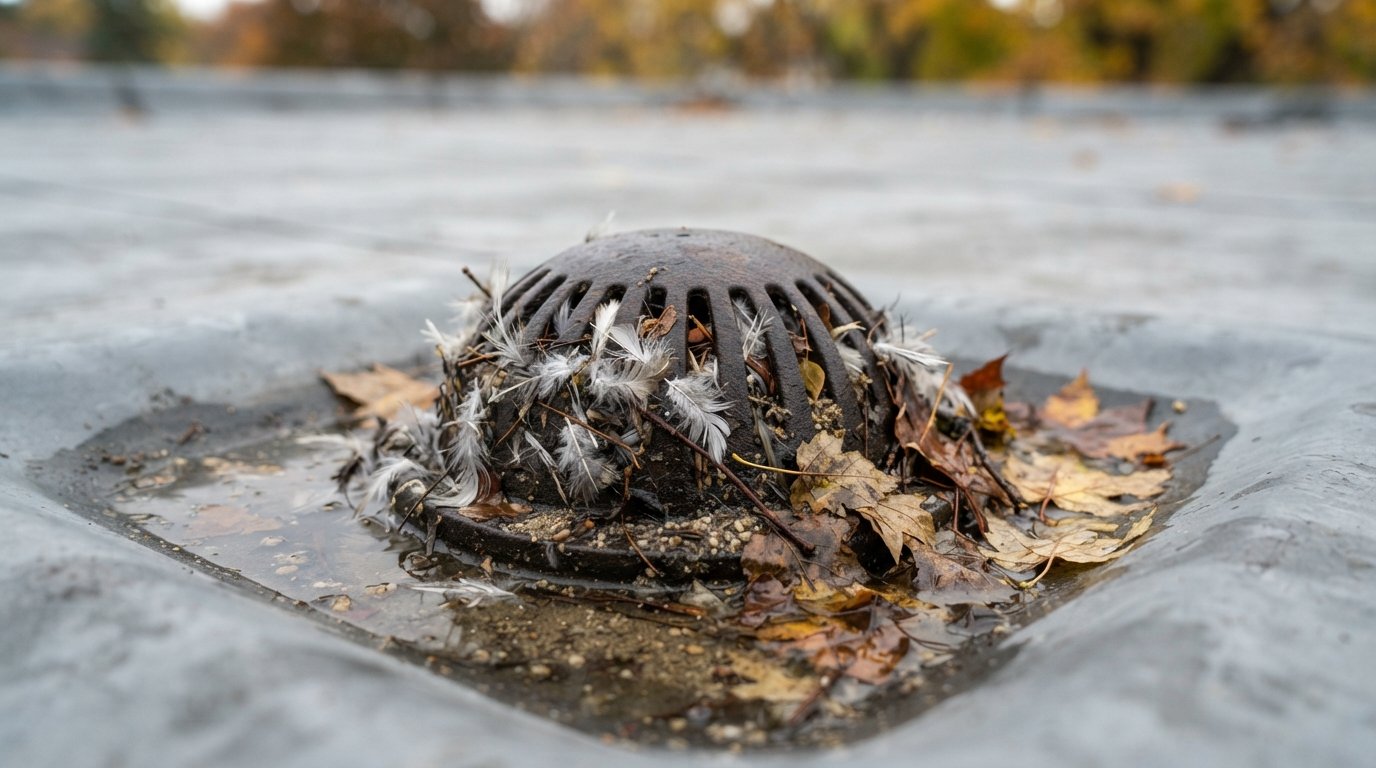
| Feathers, twigs and nest material around drains | Nesting debris washed toward low points by rain | Blocks drains and scuppers, causing ponding and overflow | Clear drains, install or replace strainers, check drain leaders |
| Heavy droppings on the membrane and parapets | Birds roosting and nesting in the same areas for months | Can soil and, over time, may degrade some membrane surfaces and coatings; makes the roof slippery | Careful cleaning with methods compatible with the membrane |
| Gravel pushed into piles with bare spots | Birds scraping nest hollows in ballast or BUR aggregate | Exposes the membrane or flood coat to UV; uneven ballast loads | Redistribute aggregate, repair exposed areas, re-gravel |
| Pecked sealant, torn lap edges or damaged foam | Birds picking at loose or soft materials | Opens seams and flashings to water | Repair seams and flashings; protect vulnerable details |
| Food waste and shells | Birds bringing food from nearby sources | Attracts more birds and adds organic debris to drains | Clean up and reduce nearby food sources |
Clogged drains are the biggest risk
Of everything on that list, drains are what lead to the most serious problems. Commercial flat roofs depend on a few drains or scuppers to carry water off a large area. When nesting material and feathers block a strainer, water ponds, adds weight, and starts finding seams and flashings that would normally stay dry. Combine that with autumn leaves and you have a roof that can hold water for days after a storm. When water is already overflowing the parapet or coming inside, treat it as emergency flat roof repair: clear the drains first, then find where the water got in.
Droppings and the membrane
Gull droppings are messy and acidic, and when they build up thickly over a season they may affect some coatings and membrane surfaces. They also hide the membrane, which makes inspection harder. Cleaning should use methods the membrane manufacturer accepts. Aggressive pressure washing can damage granules, seams and coatings. Workers should wear gloves and eye protection and avoid stirring up dried droppings into dust.
Why Autumn Is The Time For Repairs And Deterrents
In the GTA, gulls generally settle on roofs in early spring and raise their young through the late spring and summer. During that period, work near the nests is restricted and the birds can be aggressive toward anyone on the roof, swooping at heads and calling loudly. By autumn the colony has dispersed, which gives you a clear window.
| Period | What is happening on the roof | What to do |
|---|---|---|
| Late summer to early autumn | Young birds fledge and the colony leaves | Confirm with a wildlife professional that nests are inactive |
| Mid to late autumn | Roof is quiet; leaves begin to fall | Clean debris, clear drains, inspect and repair the membrane |
| Late autumn into early winter | Weather tightens; first cold snaps | Install deterrents while the roof is clear and before snow cover |
| Late winter | Birds begin scouting for nest sites | Check deterrents are intact and secure; adjust if needed |
| Spring nesting season | Birds attempt to settle | Monitor; do not disturb any active nests that form |
The goal is to have the roof repaired and the deterrents installed well before the birds arrive. Once they are nesting, the window closes for another year.
How We Sequence The Work
Here is a typical order of work once seagulls on roofs have used a building for a season or more:
- Confirm the nests are not active. Work with a licensed wildlife company and follow current federal guidance.
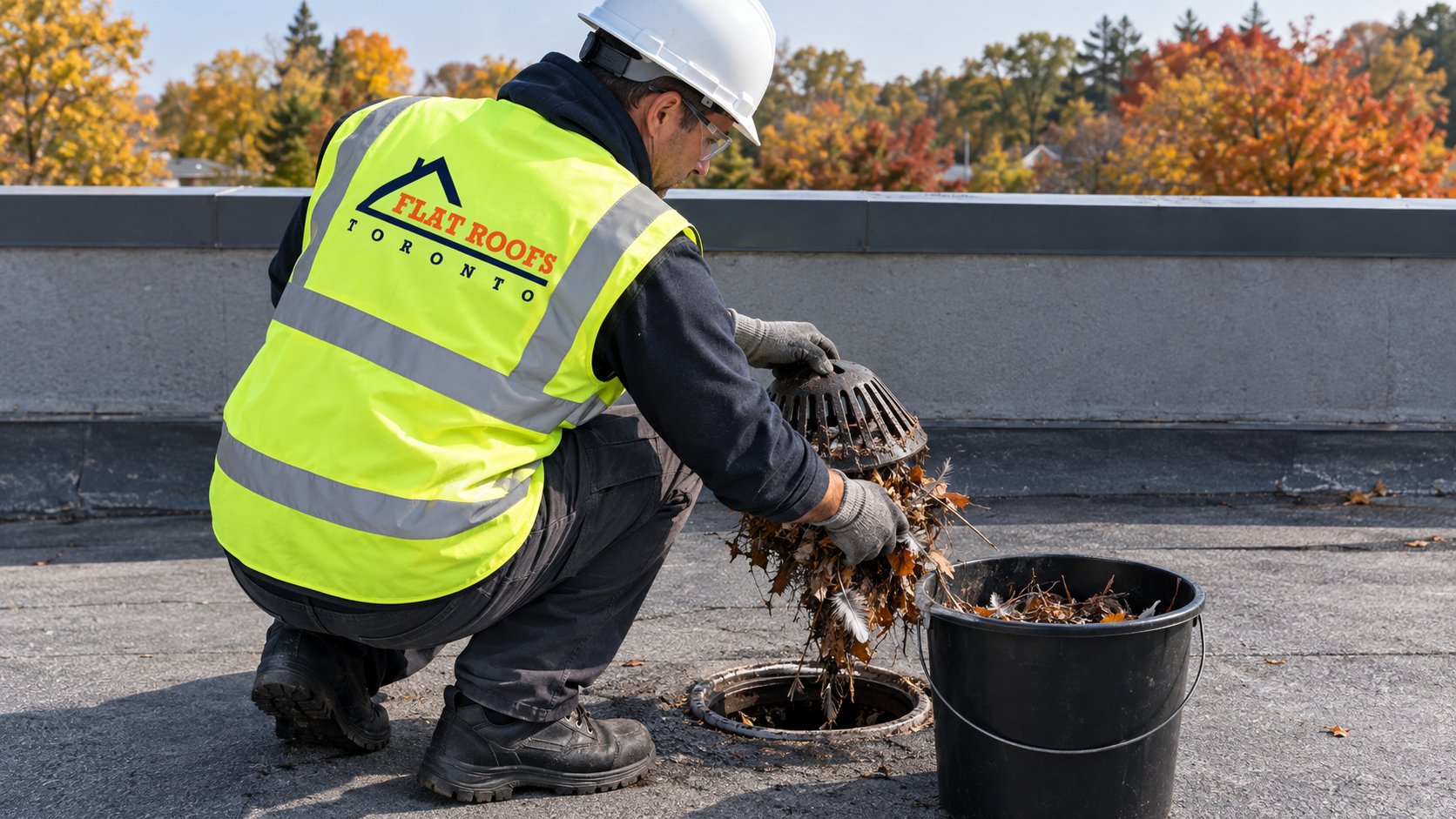
- Clean the roof. Remove debris, food waste and nest material where that is allowed, and clean heavy droppings using methods suited to the membrane.
- Clear and protect drains. Clear strainers, check drain leaders for blockages, and replace missing or broken strainers.
- Inspect the membrane. Look for pecked seams, damaged flashings, exposed areas where gravel has been moved, and ponding marks.
- Repair. Fix seams, flashings and exposed areas. Redistribute gravel and restore UV protection.
- Install deterrents. Choose and install systems that do not compromise the membrane.
- Plan follow-up. Schedule a late-winter check and a post-season inspection the following autumn.
Deterrents That Protect The Roof
No single deterrent for seagulls on roofs works everywhere. The right choice depends on how many birds there are, where they nest, the roof type and how the deterrent is attached. The roofing side of the question is just as important as the wildlife side: any system that is screwed through the membrane, or that rubs against it, can cause leaks that cost more than the bird problem.
| Deterrent | How it works | Roofing considerations | Best suited to |
|---|---|---|---|
| Overhead wire or line grid | Lines stretched over the roof prevent gulls from landing comfortably | Posts should use membrane-compatible bases, parapet mounts or approved attachment details | Large open roofs with established colonies |
| Netting | Physically blocks access to an area | Must be supported so it does not rest on and abrade the membrane; needs maintenance | Smaller areas, courtyards, mechanical wells |
| Spikes or edge deterrents | Stop birds from perching on parapets and ledges | Usually mounted on parapet caps; avoid fasteners that leak into the wall | Parapets, signs and ledges used for roosting |
| Visual and sound deterrents | Scare devices, decoys or noise | Little roof impact, but birds often get used to them | Short-term use or combined with other methods |
| Professional bird management | Licensed specialists use approved methods to discourage settling | Coordinate roof access and schedules | Persistent colonies and larger properties |
Protect the membrane when deterrents go in
Before any deterrent is installed, ask how it attaches. Good practice includes using bases that sit on protective pads or are adhered with methods the membrane manufacturer accepts, keeping posts away from seams and drains, and avoiding fasteners through the field of the roof. If the roof is under a manufacturer warranty, check the manufacturer’s current requirements for rooftop attachments, because unapproved penetrations may affect coverage. We are happy to work with the wildlife company so the deterrent goes in with proper roofing details.
Reduce what attracts the birds
Deterrents work better when the roof is less attractive. Keep drains clear so there is no standing water to drink and bathe in, manage nearby garbage bins and food waste, and avoid leaving loose materials on the roof that can become nesting material. Some owners with gravel roofs consider a different surface during a future replacement, which is a conversation worth having when the roof reaches the end of its life. It is a question to raise early when planning a flat roof replacement.
Building Gull Control Into Your Roof Maintenance Plan
On buildings with a history of seagulls on roofs, the birds should be part of the written maintenance plan rather than an annual surprise. A plan that works for most commercial properties looks something like this:
- Two scheduled roof visits a year. One in autumn after the colony leaves, for cleaning, drains and repairs, and one in late winter to check deterrents and clear any debris before birds start scouting.
- A photo record. Photos of where nests formed, which drains clogged and where gravel was moved make it easier to target deterrents and to show a manufacturer or insurer that the roof has been maintained.
- A named wildlife contact. Keep the licensed wildlife company’s details with the roof records so that if birds begin nesting despite the deterrents, someone qualified can advise quickly.
- Tenant communication. In plazas with restaurants or food tenants, overflowing bins and grease storage near the building attract gulls. A short note to tenants each spring about lids and waste handling helps.
- Controlled access in nesting season. Limit roof visits in spring and early summer to what is essential, and warn contractors servicing rooftop units that birds may be nesting and defensive.
Rooftop mechanical contractors deserve a mention here. HVAC technicians often visit during the nesting months, and seagulls on roofs near units can make those visits difficult. Where possible, schedule filter changes and inspections for before nesting begins or after it ends, and agree a walking route to the units that keeps clear of nesting areas. Walkway pads along that route also protect the membrane from foot traffic year round.
Finally, keep an eye on the roof’s overall age. A roof that is already near the end of its service life and has hosted a colony for several years often has hidden seam and flashing wear. In that case it may make more sense to put deterrent money toward a replacement with a surface and drain layout that is easier to keep clear.
Questions To Ask Before You Book The Work
- Has a licensed wildlife company confirmed the nests are inactive and the work is allowed?
- How will droppings be cleaned without damaging the membrane?
- Are drain leaders being checked, or only the strainers on the roof?
- How will deterrents attach, and is that method acceptable to the membrane manufacturer?
- Who will maintain the deterrents, and when will they be checked before nesting season?
- What repairs were found, and are any of them signs the roof needs a larger plan?
General questions about inspections and maintenance visits are answered on our FAQ page.
Can I remove a gull nest from my roof?
Do seagulls on roofs actually damage the membrane?
When is the best time to install deterrents?
Will deterrents void my roof warranty?
Why do seagulls on roofs keep coming back to the same building?
Is it safe for staff to clean droppings?
Plan Your Repairs After Seagulls On Roofs Leave This Autumn
A roof that has hosted a colony needs cleaning, drain work and repairs before winter, and the right deterrents before spring. Flat Roofs Toronto cleans up after the colony, clears drains, repairs seams and redistributes gravel, then works alongside your wildlife company so deterrents go in without damaging the membrane.
Call us today at (647) 333-3528 or request a free estimate.
Post-nesting roof repairs and membrane-safe deterrent work for buildings in Toronto and across the GTA.