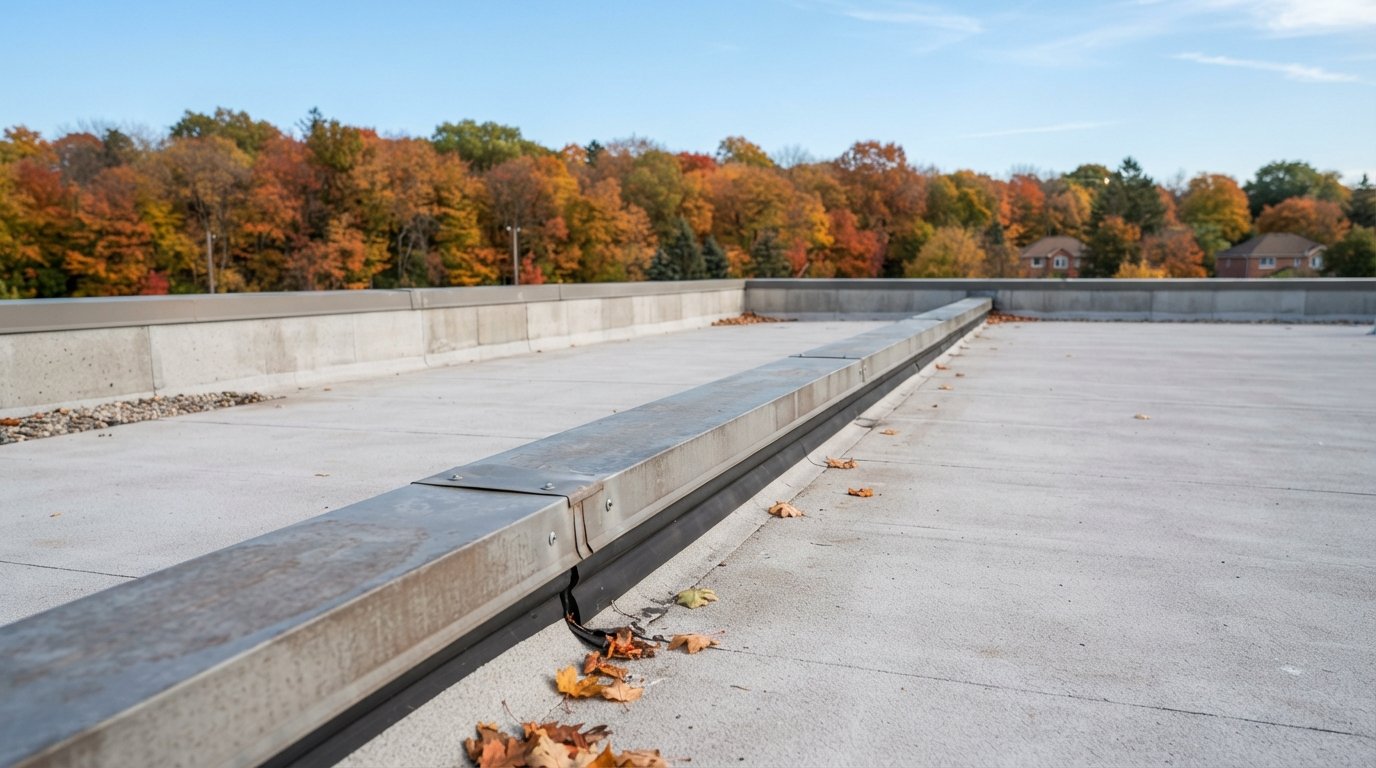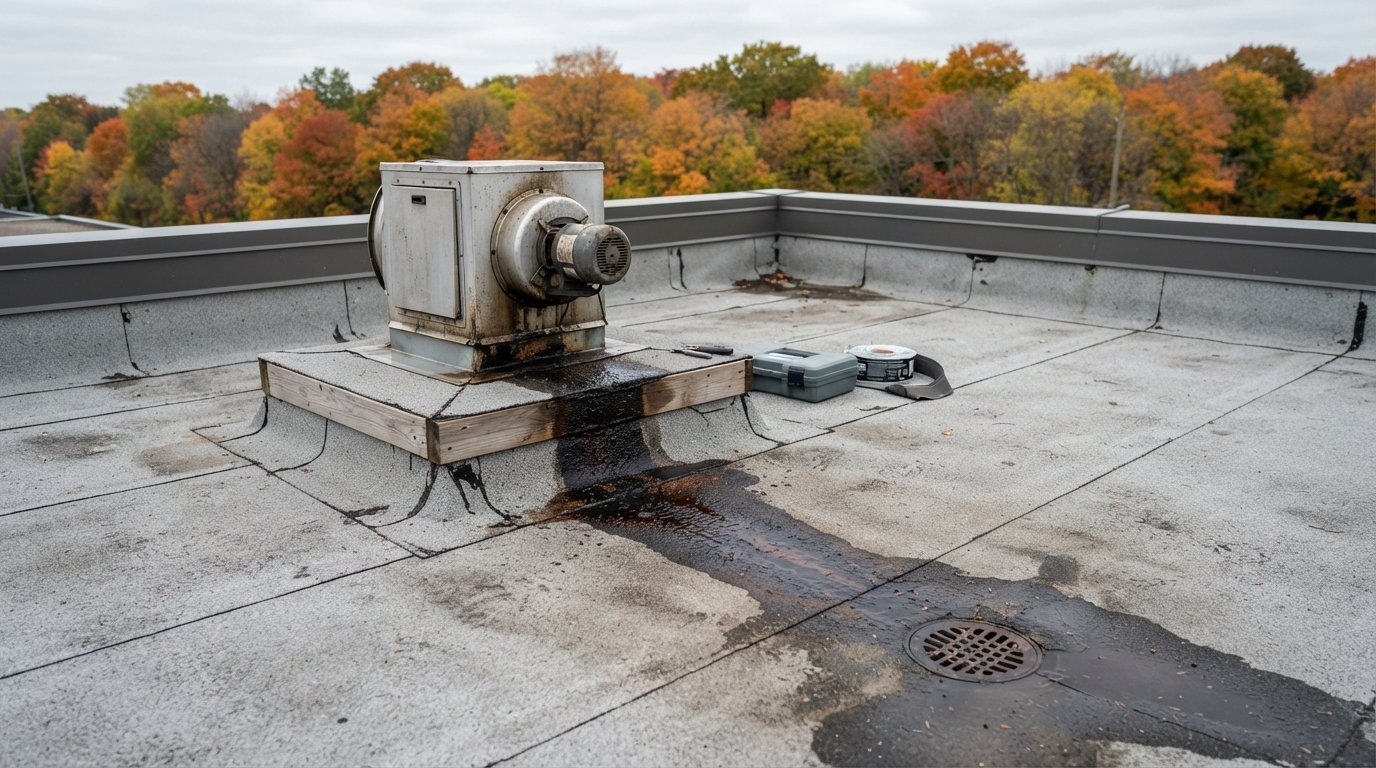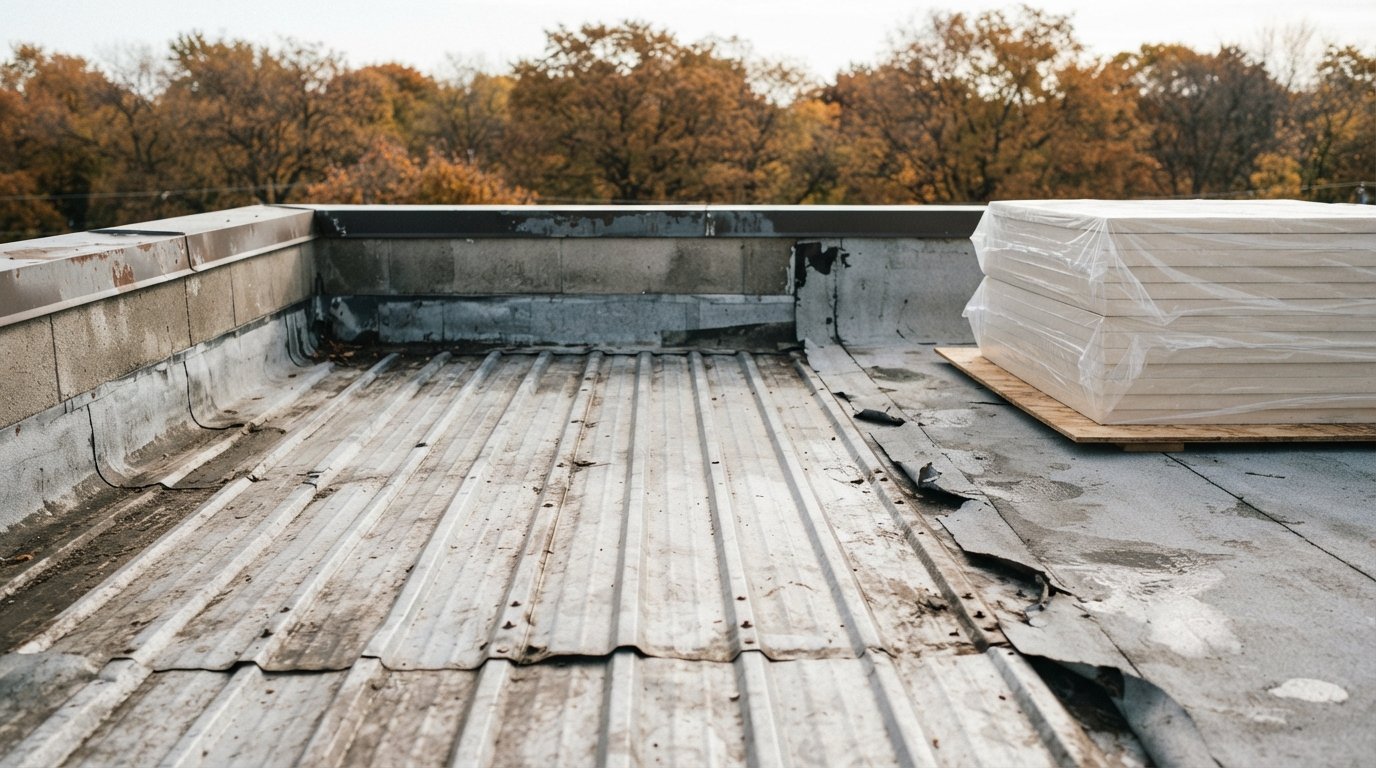

Choosing the right waterproof membrane for roof systems is the single most important decision a Toronto property owner makes when installing or replacing a low-slope roof. Unlike steep-sloped shingle roofs that shed water quickly, flat and low-slope roofs rely almost entirely on a continuous, seamless barrier to keep water out. In the Greater Toronto Area, where summer thunderstorms can dump 30 to 50 millimetres of rain in an afternoon and July humidity pushes rooftop surface temperatures past 70 degrees Celsius, the quality of your waterproof membrane for roof protection directly determines whether your building stays dry for two decades or springs a leak within a few seasons. At Flat Roofs Toronto, we install and service every major membrane category, and this guide explains the types, costs, lifespans, and selection criteria that matter most for GTA homes and commercial buildings.
Why the Right Waterproof Membrane for Roof Systems Matters in Toronto
A flat roof is never truly flat. It is built with a slight slope, usually a quarter inch per foot, so that water drains toward internal drains or scuppers. But even a well-designed slope cannot prevent ponding entirely, and any spot where water lingers becomes a test of your membrane. The waterproof membrane for roof assemblies is the layer that turns a structural deck into a sealed envelope. When it is chosen correctly, installed by trained crews, and detailed properly at penetrations, it can carry a building through 20, 25, or even 30 years of Toronto weather.
Toronto’s climate is uniquely demanding on rooftop waterproofing. Summer brings intense ultraviolet exposure and thermal cycling, where a dark roof surface can swing 40 degrees or more between a cool morning and a blazing afternoon. That expansion and contraction stresses seams, fasteners, and adhesives every single day. Add the region’s heavy convective downpours, rooftop mechanical units, and the sheer number of penetrations on a typical commercial roof, and it becomes clear why membrane selection is not a place to cut corners. A poorly matched or poorly installed waterproof membrane for roof protection will telegraph its weaknesses within a few years, while the right system quietly does its job.
The stakes extend beyond the roof itself. Water that breaches a membrane travels along the deck, soaks insulation, corrodes fasteners, stains ceilings, and can eventually reach electrical and structural elements. Replacing wet insulation and repairing interior damage often costs more than the roof itself. Investing in a quality waterproof membrane for roof coverage is, in effect, insurance for everything beneath it.
The Main Types of Waterproof Membrane for Roof Systems
Flat roof waterproofing falls into a handful of well-established families, each with its own installation method, strengths, and ideal use cases. Understanding the differences helps you have an informed conversation with your contractor rather than simply accepting whatever a crew happens to stock.
Thermoplastic single-ply membranes (TPO and PVC) are among the most popular choices for both residential and commercial low-slope roofs in Toronto today. TPO (thermoplastic polyolefin) is prized for its reflective white surface, which bounces summer heat away and reduces cooling loads. PVC (polyvinyl chloride) is chemically welded at the seams and offers outstanding resistance to grease, chemicals, and ponding water, making it a favourite for restaurants and buildings with rooftop kitchen exhaust. Both are hot-air welded into a single continuous sheet, so there are no adhesives at the seams to fail.
EPDM rubber membranes are a synthetic rubber (ethylene propylene diene monomer) that has been protecting flat roofs for over half a century. EPDM is exceptionally durable, flexible even in cold temperatures, and forgiving of building movement. It is typically black, which suits buildings that benefit from solar gain, though white EPDM exists. Seams are joined with tape or adhesive rather than heat welding.
Modified bitumen membranes evolved from traditional built-up roofing. They combine asphalt with polymer modifiers (APP or SBS) for added flexibility and are applied in two or more plies, either torched, mopped in hot asphalt, or self-adhered. Modified bitumen offers excellent puncture resistance and a redundant multi-layer barrier, which appeals to owners who want a robust, walkable surface.
Liquid-applied membranes are fluid coatings, often polyurethane or acrylic based, that cure into a seamless rubbery skin. Because they are applied as a liquid, they conform perfectly around complex penetrations, parapets, and irregular details where sheet goods are hard to fit. They are frequently used for restorations and for roofs with many obstructions.
| Membrane Type | Material | Seam Method | Best Application |
|---|---|---|---|
| TPO | Thermoplastic polyolefin | Hot-air welded | Reflective commercial and residential roofs |
| PVC | Polyvinyl chloride | Hot-air welded | Restaurants, chemical exposure, ponding areas |
| EPDM | Synthetic rubber | Tape or adhesive | Durable, movement-tolerant roofs |
| Modified Bitumen | Polymer-modified asphalt | Torch, mop, or self-adhered | High-traffic, puncture-prone roofs |
| Liquid-Applied | Polyurethane or acrylic | Seamless monolithic | Complex details and restorations |
Comparing Cost and Lifespan of Each Waterproof Membrane for Roof Option
Budget is always part of the conversation, but the smartest way to evaluate a waterproof membrane for roof investment is to look at cost per year of expected service rather than the sticker price alone. A cheaper membrane that lasts 12 years can cost more over time than a premium system that lasts 25. The figures below reflect typical installed pricing in the Toronto and GTA market for standard residential and light commercial roofs, including tear-off of a single existing layer, new insulation, and the membrane itself. Complex roofs, extensive penetrations, and premium insulation upgrades push costs higher.
It is worth noting that installation quality often matters more than the membrane brand. Two crews can install the identical TPO product and produce dramatically different results depending on how they detail flashings, terminate edges, and weld seams. This is why we encourage owners to weigh a contractor’s workmanship and warranty as heavily as the material spec sheet when selecting a waterproof membrane for roof protection.
| Membrane Type | Typical Cost (per sq ft installed) | Expected Lifespan | Relative Maintenance |
|---|---|---|---|
| TPO | $8.50 to $12.50 | 20 to 25 years | Low |
| PVC | $10.00 to $14.00 | 20 to 30 years | Low |
| EPDM | $7.50 to $11.50 | 20 to 30 years | Low to moderate |
| Modified Bitumen | $8.00 to $13.00 | 15 to 20 years | Moderate |
| Liquid-Applied | $6.00 to $11.00 (over sound substrate) | 10 to 20 years | Moderate, recoat periodically |
For residential low-slope sections, many Toronto homeowners find that a mid-range TPO or EPDM system delivers the best balance of upfront cost and longevity. For larger commercial buildings, the calculus shifts toward reflective PVC or TPO, where energy savings from a cool roof surface can offset the higher material cost within several summers. Our team walks every client through these trade-offs during a residential flat roof installation or commercial flat roof installation assessment so the chosen waterproof membrane for roof coverage matches both the building and the budget.
How a Waterproof Membrane for Roof Assembly Is Installed
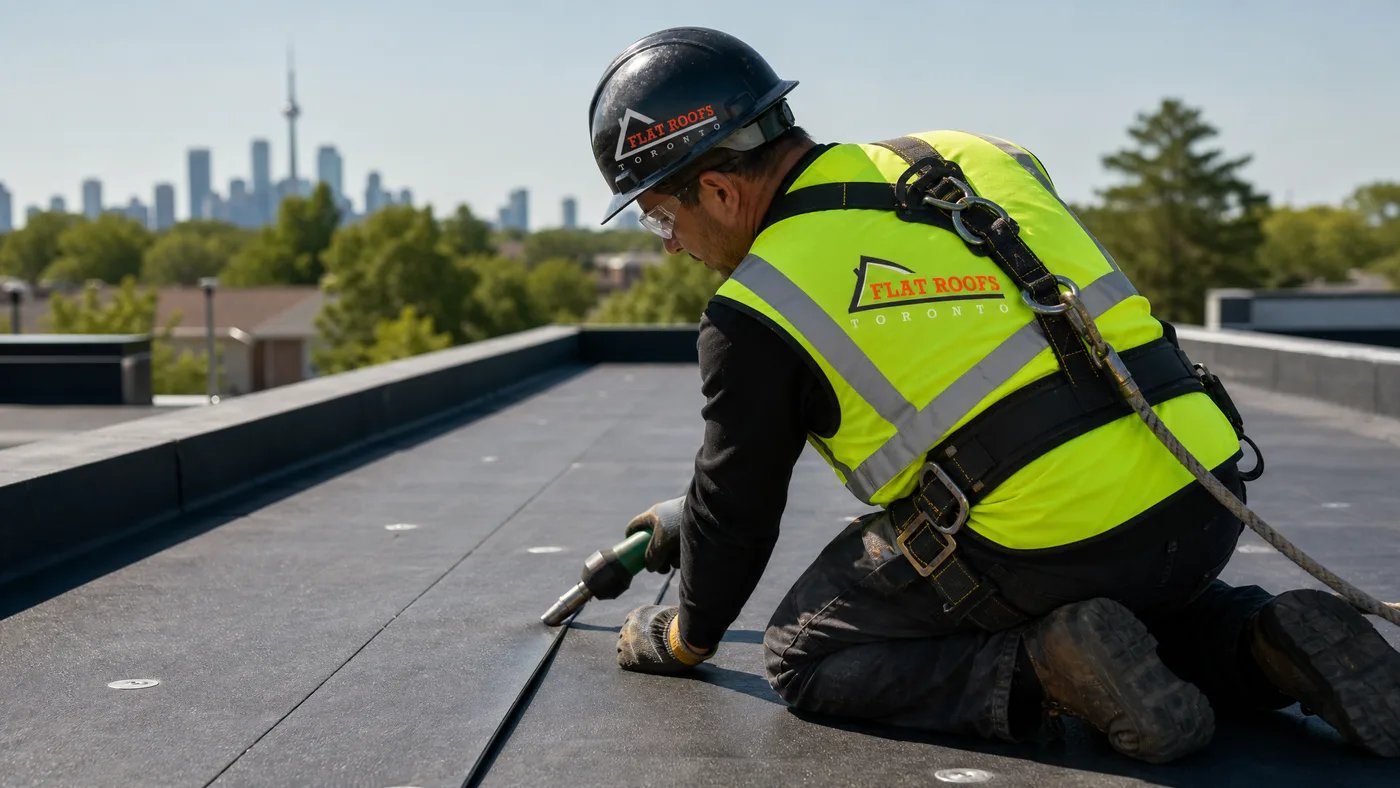
A durable flat roof is a system, not just a top sheet. Understanding the layers helps owners appreciate where problems begin and why professional installation matters so much. From the structural deck up, a typical modern assembly includes the deck, a vapour retarder where required, rigid insulation, a cover board, and finally the waterproof membrane for roof itself, secured mechanically, with adhesive, or ballasted.
The process starts with a thorough inspection and, in most replacements, a tear-off of the failed roofing down to a sound substrate. Wet or crushed insulation is removed, because leaving compromised insulation beneath a new membrane traps moisture and shortens the life of everything above it. Once the deck is clean and dry, crews install insulation to the target R-value and a cover board that gives the membrane a firm, uniform surface to bond to.
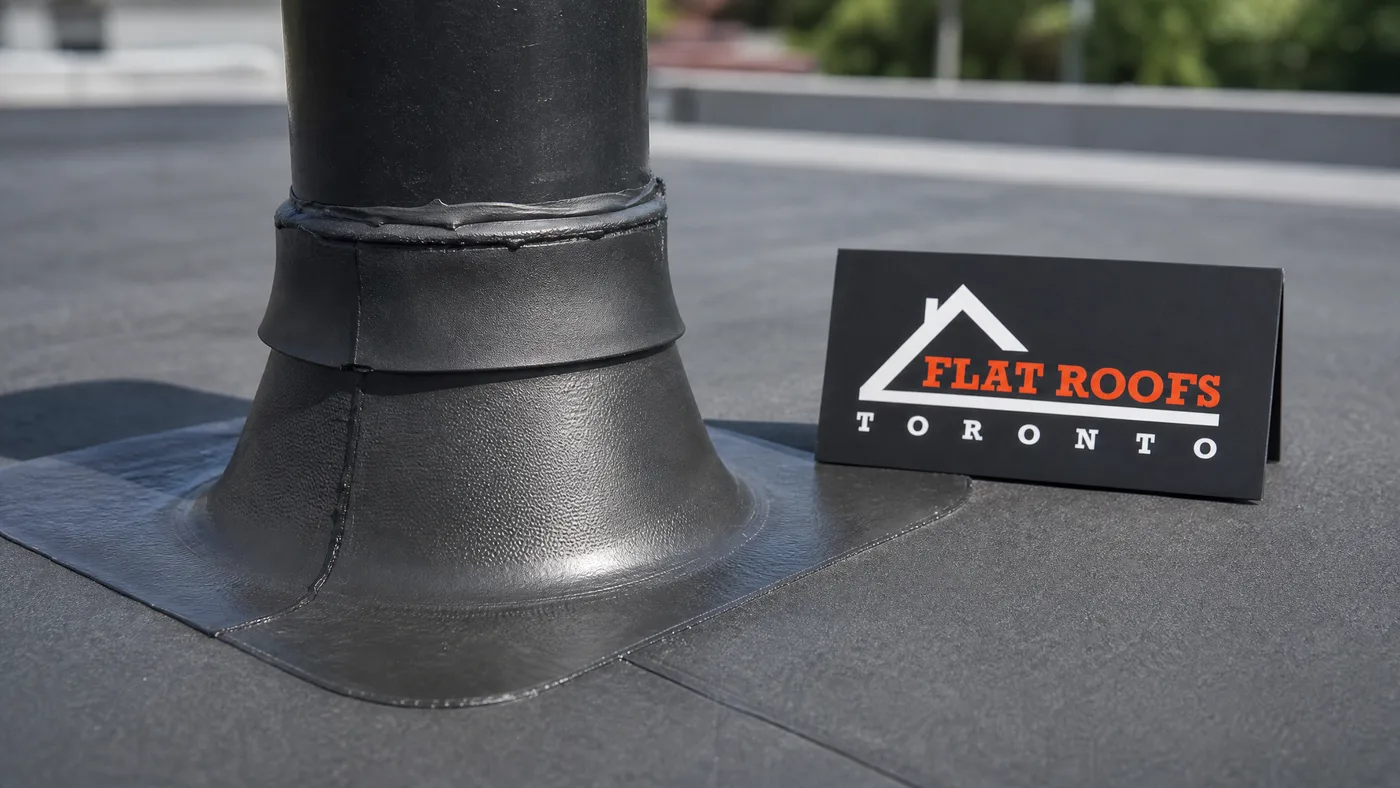
The membrane is then rolled out, positioned, and attached. Single-ply sheets are overlapped and either hot-air welded (TPO, PVC) or seam-taped (EPDM). The most critical work happens at the details: parapet walls, drains, vents, curbs, and any rooftop penetration. These transitions are where the overwhelming majority of flat roof leaks originate, so experienced crews reinforce them with additional membrane, pre-formed corners, and sealant. Edge metal and terminations lock the perimeter down against wind uplift. A quality waterproof membrane for roof installation lives or dies on these details, which is why we never rush them.
Proper drainage is verified before the crew leaves. Drains are cleared, scuppers are checked, and any low spots are addressed so summer rain moves off the roof instead of pooling. Water that cannot escape will find the one weak point in any membrane, given enough time.
Signs Your Existing Waterproof Membrane for Roof Is Failing
Even the best membrane eventually reaches the end of its service life, and catching the warning signs early can mean the difference between a minor repair and a full tear-off. Toronto property owners should walk their roof, or have it inspected, at least twice a year and after major summer storms. Look for the indicators below, and if you spot active water intrusion, treat it as urgent.
- Blisters and bubbles in the membrane, where trapped moisture or air has separated layers.
- Open or split seams, especially on older adhesive-jointed EPDM or aged modified bitumen.
- Ponding water that remains more than 48 hours after rain, accelerating membrane breakdown.
- Cracking, alligatoring, or chalking of the surface from years of ultraviolet exposure.
- Interior stains on ceilings or the tops of walls, indicating water has already breached the barrier.
- Loose or lifted flashing at parapets, curbs, and penetrations.
When a leak is already active, do not wait. Water spreads laterally under the membrane and can damage insulation far from the visible drip. Our emergency roof repair team responds quickly across the GTA to stop intrusion, dry the assembly, and assess whether a targeted repair or a full waterproof membrane for roof replacement is the right call.
| Warning Sign | Likely Cause | Recommended Action |
|---|---|---|
| Surface blisters | Trapped moisture or poor adhesion | Professional inspection and cut-and-patch repair |
| Split or open seams | Aged adhesive or thermal movement | Re-weld, re-seam, or plan replacement |
| Persistent ponding | Inadequate slope or clogged drains | Clear drains, add tapered insulation |
| Interior ceiling stains | Membrane breach and water travel | Locate leak, dry assembly, repair or replace |
| Cracked, chalky surface | Ultraviolet degradation over time | Recoat or replace membrane |
Choosing the Best Waterproof Membrane for Roof Protection for Your Building
There is no single best membrane for every roof. The right choice depends on your building type, rooftop traffic, sun exposure, drainage, budget, and how long you plan to own the property. A homeowner replacing a small rear addition roof has very different priorities than a property manager overseeing a 40,000 square foot commercial deck covered in mechanical units.
Start with the building’s use. If the roof carries heavy foot traffic for maintenance, a puncture-resistant modified bitumen or a thick PVC may outperform a thinner sheet. If energy efficiency is a priority, a reflective white TPO or PVC surface reduces summer cooling costs and pairs well with upgraded attic insulation below. If the roof has many complex penetrations or an unusual shape, a liquid-applied waterproof membrane for roof coating can seal details that sheet goods struggle with.
Consider your rooftop features too. If you have or want residential skylights or commercial skylights, the membrane must integrate flawlessly with the skylight curbs and flashing, because these openings are common leak points. Coordinating the membrane and skylight work under one experienced contractor prevents the finger-pointing that happens when separate trades meet at a detail. You can see examples of integrated flat roof and skylight projects in our gallery.
Finally, weigh warranty and installer reputation. A 20-year manufacturer material warranty means little if the workmanship warranty is thin or the installer is unlikely to be around to honour it. The most reliable waterproof membrane for roof outcome comes from pairing a proven material with a crew that details it correctly and stands behind the work.
Maintaining Your Waterproof Membrane for Roof Over the Long Term
Installing a quality membrane is only half the equation. Simple, consistent maintenance can add years to any flat roof and protect your warranty. Most manufacturers actually require periodic professional inspection to keep material warranties valid, so routine care is both practical and contractual.
Keep drains, scuppers, and gutters clear so summer rain moves off the roof promptly. Standing water is the enemy of every waterproof membrane for roof system, gradually breaking down adhesives, seams, and surfacing. Remove debris, leaves, and any items that could puncture the surface. Trim overhanging branches that scrape the membrane in the wind. After significant storms, check for wind-lifted flashing or displaced edge metal.
Schedule a professional inspection at least once a year, ideally in late spring before the heaviest storm season and again in early autumn. A trained eye catches small seam separations, minor blisters, and worn flashings while they are inexpensive repairs rather than major failures. Address small issues immediately; a two-inch seam separation is a quick fix, but the water damage it causes if ignored is not. With attentive maintenance, a well-installed waterproof membrane for roof will reliably reach and often exceed its rated lifespan.
What is the best waterproof membrane for roof use in Toronto?
How long does a waterproof membrane for roof last?
How much does it cost to install a waterproof membrane for roof?
Can a waterproof membrane for roof be installed over an existing roof?
Why do flat roof membranes usually leak?
Does a reflective waterproof membrane for roof really lower cooling costs?
Get Expert Help Choosing Your Waterproof Membrane for Roof Today
Selecting and installing the right flat roof system is too important to leave to guesswork. Whether you are planning a new build, replacing a failing roof, or simply want an honest assessment of your options, Flat Roofs Toronto brings decades of combined experience to every waterproof membrane for roof project across the GTA. We match the membrane to your building, detail it meticulously, and stand behind our workmanship.
Call us today at (647) 333-3528 or request a free inspection to get started.
Flat Roofs Toronto proudly serves Toronto, Mississauga, Markham, Vaughan, Brampton, Oakville, and Burlington.