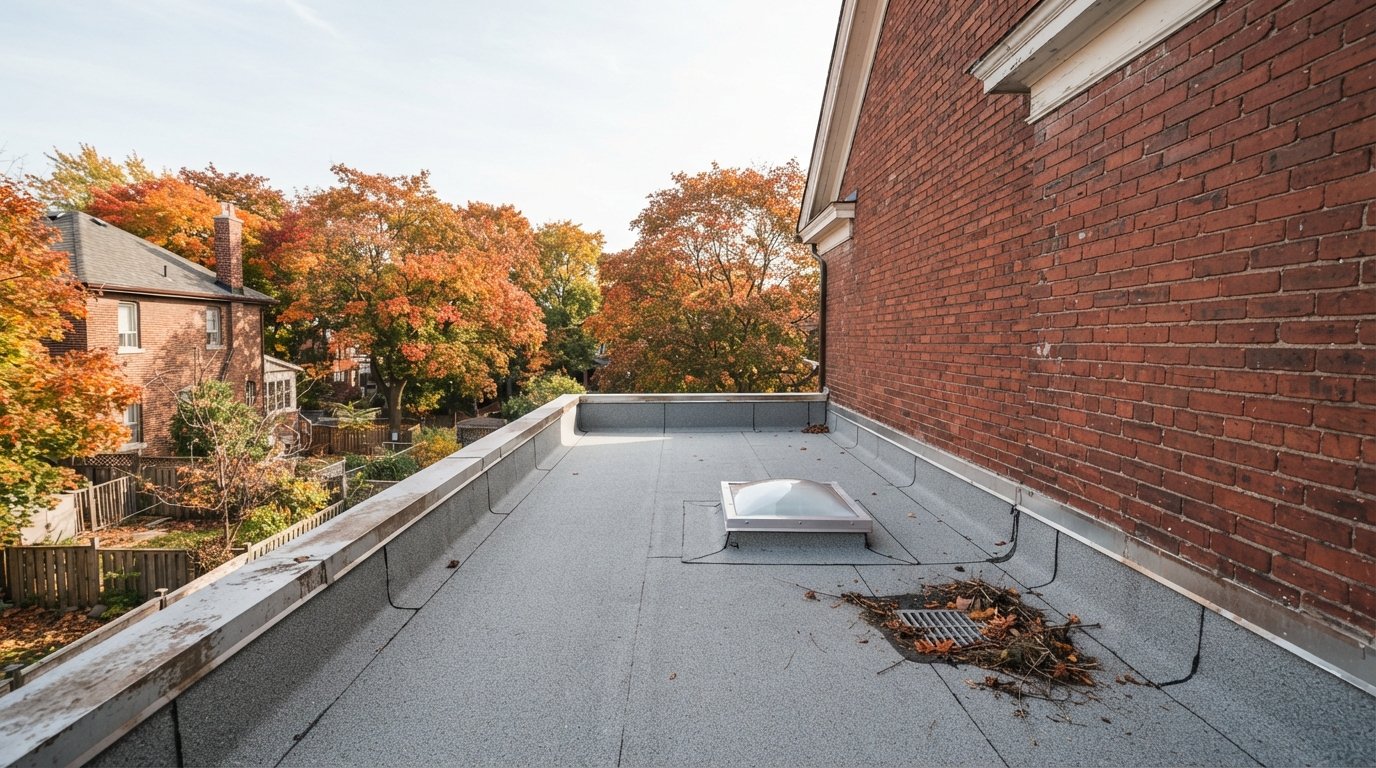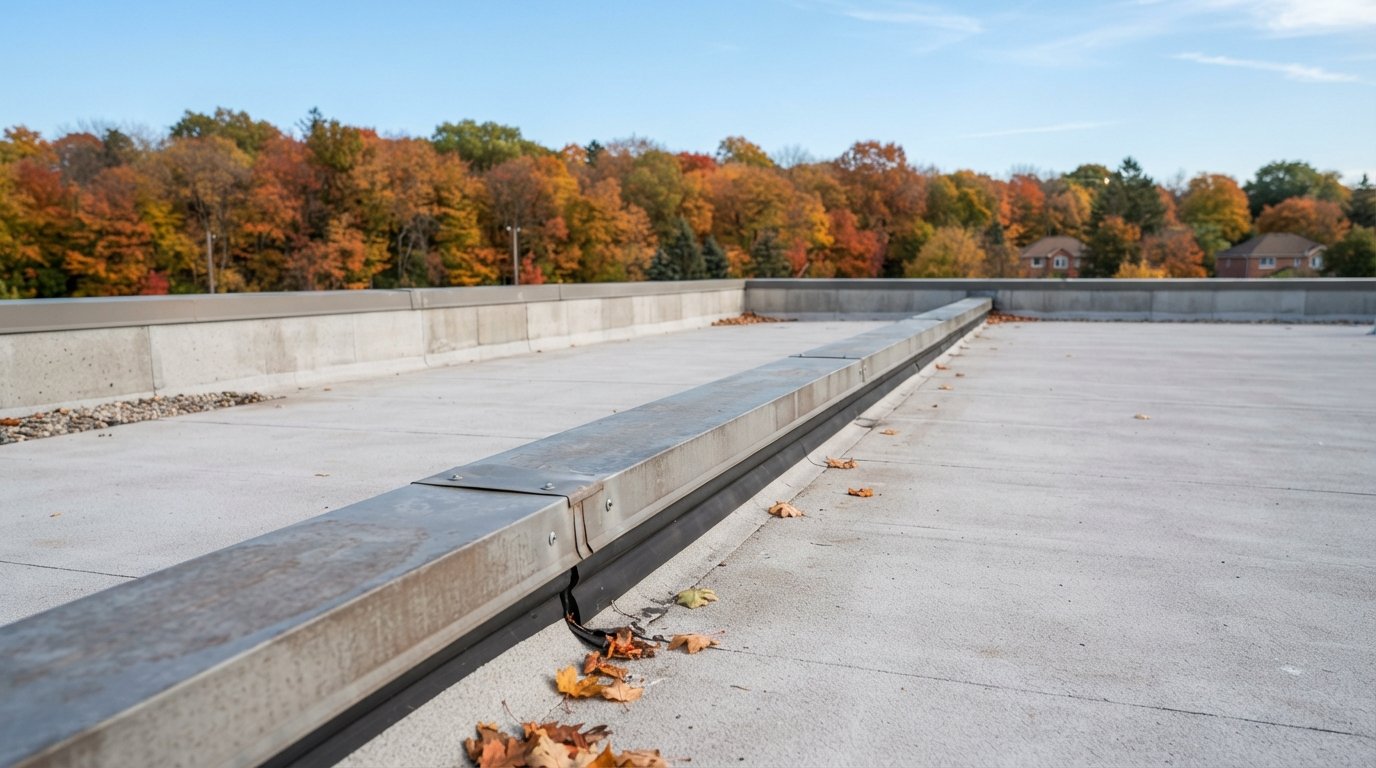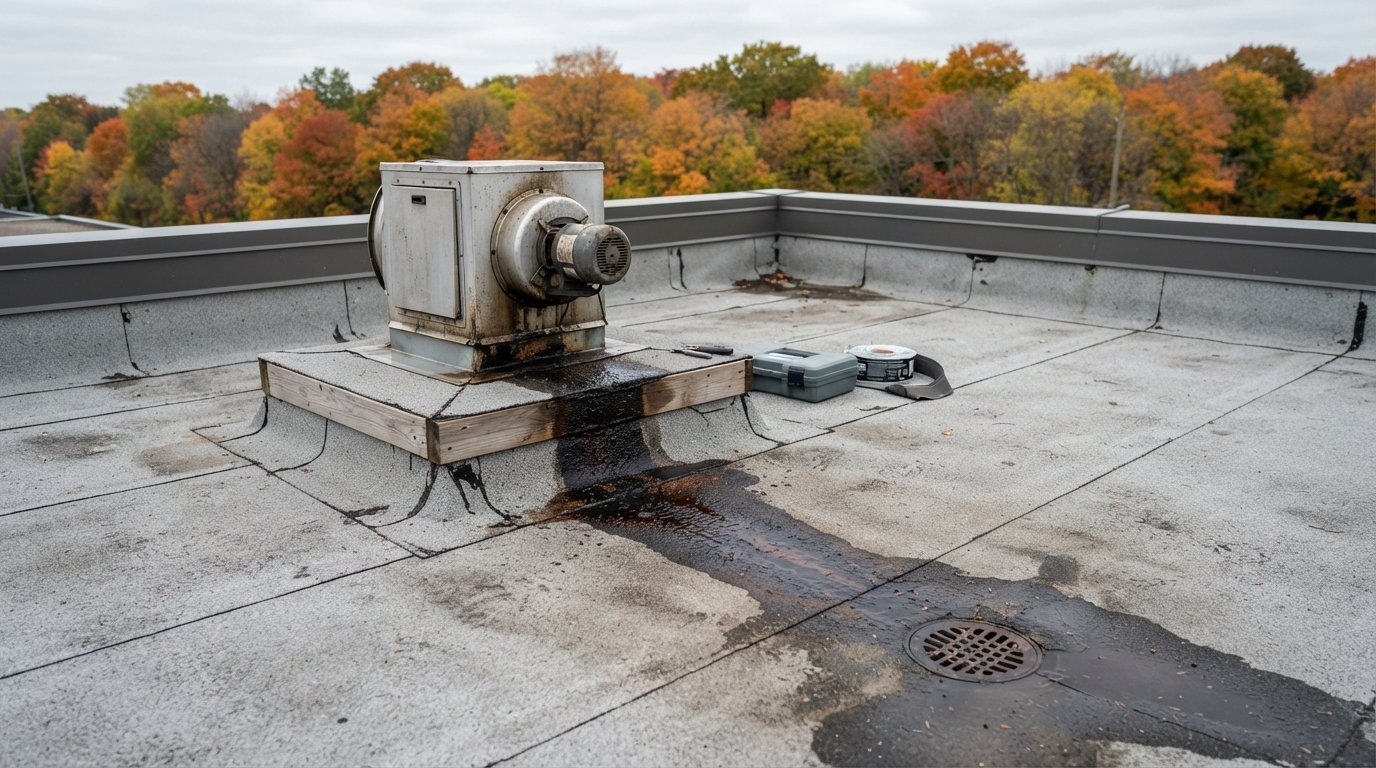
When Toronto property owners ask which flat roofing system offers the best combination of longevity, water resistance, and repairability, the answer very often comes back to torch-on roof membrane. This two-ply modified bitumen system has protected homes and commercial buildings across the Greater Toronto Area for decades, and a properly installed torch on roof membrane can deliver 20 to 30 years of dependable service on a low-slope roof. At Flat Roofs Toronto, we install and repair torch on roof membrane systems every week across the city, and this guide explains exactly how the material works, why it lasts, and what a quality installation should look like on your building.
Flat and low-slope roofs behave nothing like the steep shingle roofs most homeowners picture. Water does not shed quickly, so the roofing surface has to form a continuous, fully sealed barrier that can handle standing water, foot traffic, and the punishing swing of Toronto temperatures. Torch-on membrane was engineered specifically for this challenge, and understanding its construction helps you judge quotes, spot shortcuts, and get decades of value from your investment.
What Is Torch-On Roof Membrane and How Does It Work?
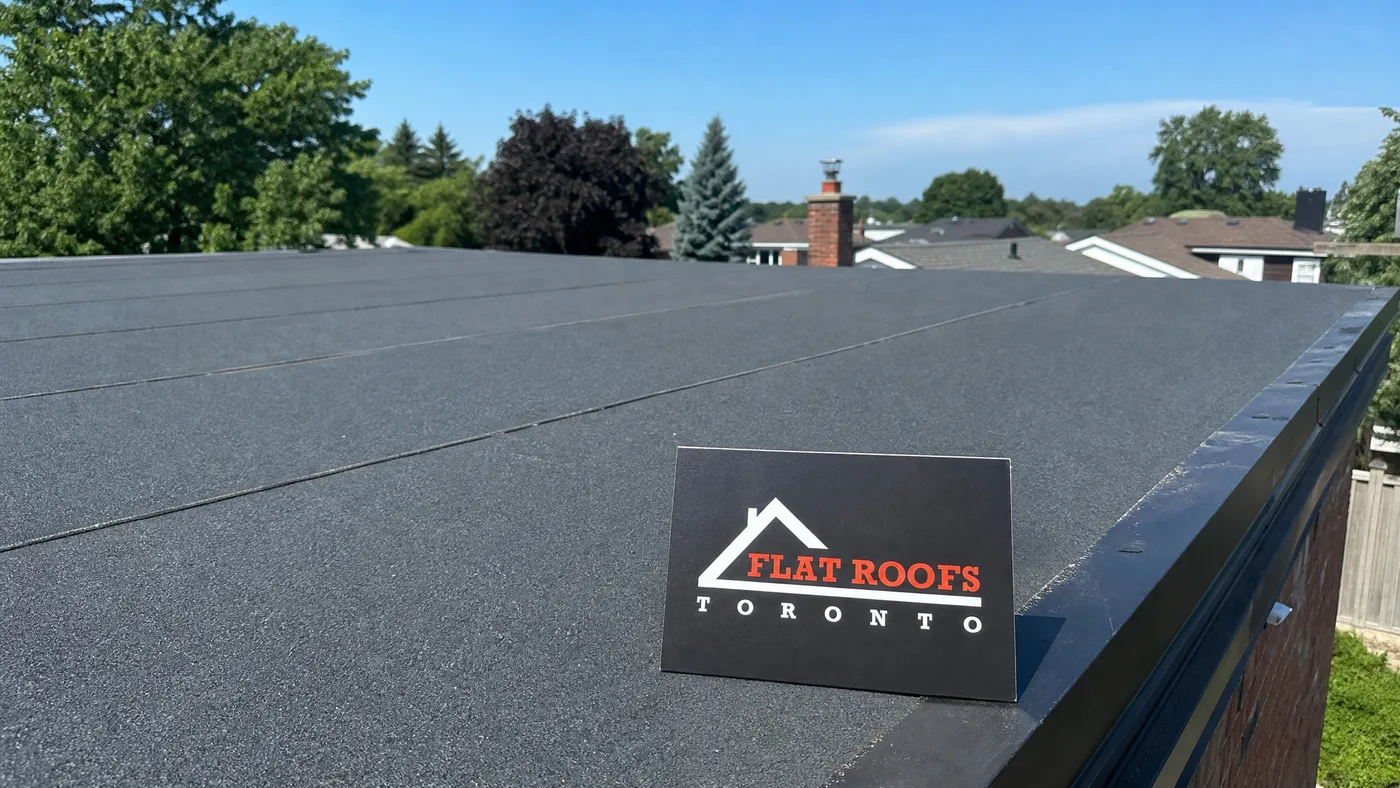
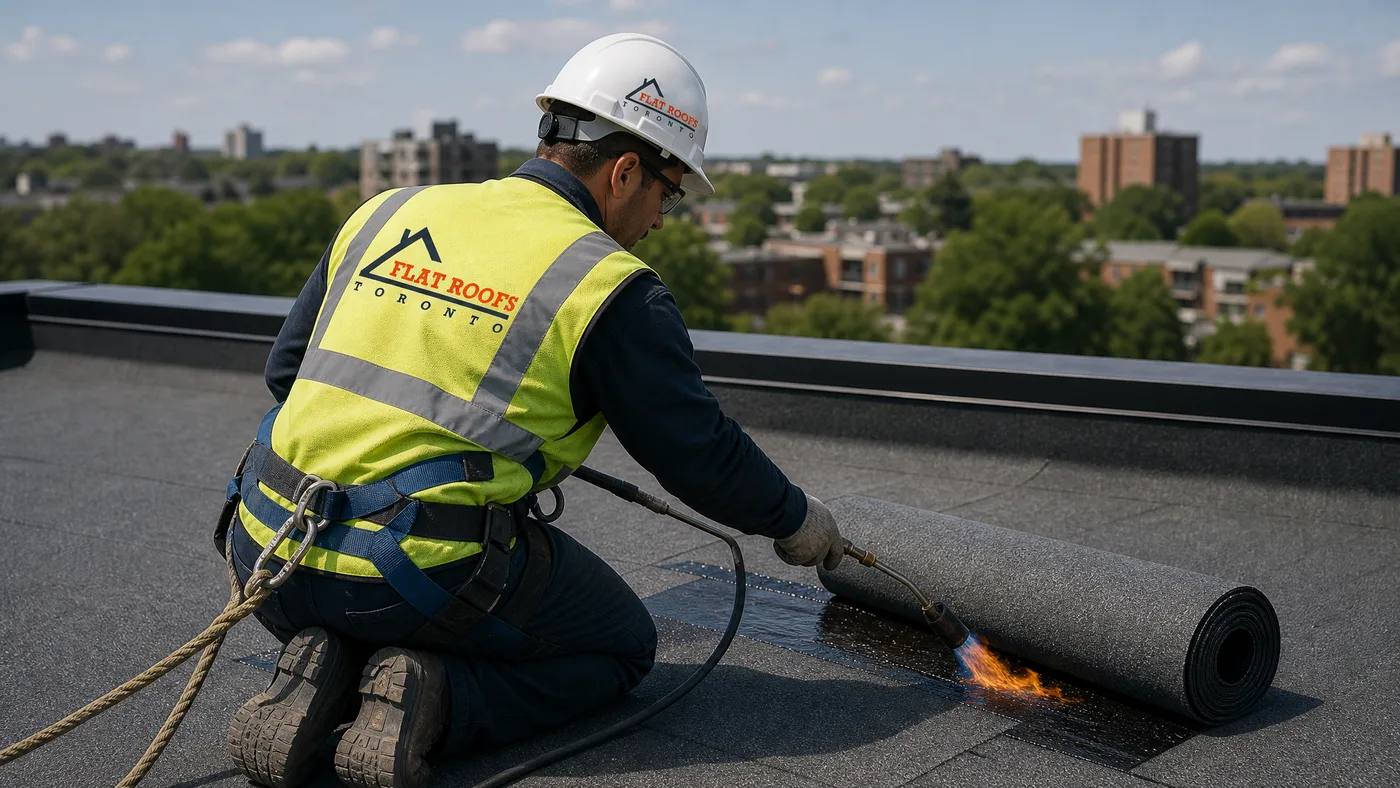
Torch on roof membrane, sometimes called torch-down or modified bitumen roofing, is a multi-layer waterproofing system built from rolls of asphalt-based membrane reinforced with polyester or fibreglass. The word “torch” refers to the installation method: an open-flame propane torch heats the underside of each roll, melting a factory-applied bitumen layer until it becomes fluid, and the installer then rolls the membrane onto the surface so it fuses into a continuous, monolithic bond. As the melted bitumen cools, it hardens into a seamless waterproof sheet with no glued seams that can peel apart.
The reinforcement inside the membrane is what gives torch on roof membrane its strength. Polyester carriers add flexibility and puncture resistance, while fibreglass carriers add dimensional stability. Modifiers blended into the bitumen, either APP (atactic polypropylene) or SBS (styrene-butadiene-styrene), determine how the finished roof performs. APP membranes are more rigid and heat-tolerant, while SBS membranes stay flexible and elastic, which matters a great deal in a climate like Toronto’s where the roof expands and contracts with every hot summer afternoon and cool night.
A complete torch-on assembly is not a single layer. It typically combines a base sheet and a cap sheet, sometimes over a rigid insulation board and a fire-rated substrate. The cap sheet carries mineral granules that shield the bitumen from ultraviolet light, which is the single biggest enemy of any asphalt roof. This layered design is why a two-ply torch on roof membrane consistently outperforms single-ply systems on demanding low-slope roofs.
The Layers of a Two-Ply Torch-On System
Every reliable torch-down roof is built up in stages, and skipping any of them shortens the roof’s life. Below is the standard build-up we use on residential and commercial projects, from the deck upward.
| Layer | Purpose | Typical Material |
|---|---|---|
| Roof deck | Structural substrate supporting the entire assembly | Plywood, OSB, or concrete |
| Vapour barrier / insulation | Controls heat loss and interior moisture movement | Polyiso or fibreboard |
| Fire-rated cover board | Protects insulation from torch flame and adds rigidity | Gypsum or high-density board |
| Base sheet | First waterproofing ply, mechanically fastened or torched | SBS or APP base membrane |
| Cap sheet | Top waterproofing ply with UV-resistant granules | Granulated SBS/APP cap membrane |
The base sheet and cap sheet are staggered so their seams never line up, which eliminates continuous weak points where water could track through. On our residential flat roof installation projects, we pay particular attention to the fire-rated cover board because it lets us torch safely over insulation without scorching it. For larger buildings, our commercial flat roof installation crews often add extra insulation thickness to hit modern energy targets while keeping the torch on roof membrane assembly within code.
Why Torch-On Roof Membrane Lasts So Long in Toronto
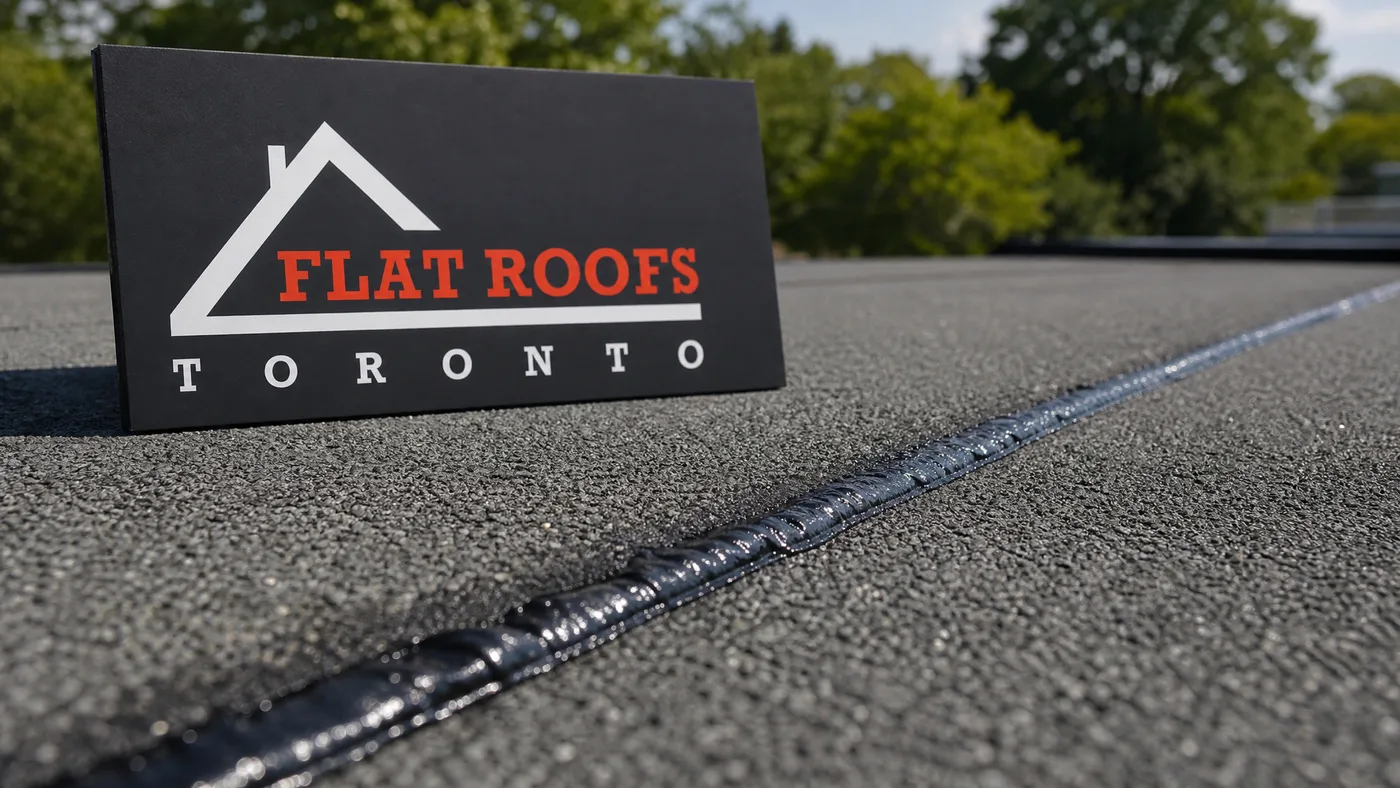
Longevity is the reason torch on roof membrane remains one of the most requested flat roofing systems in the GTA. Three factors drive that durability. First, the heat-welded bond creates a truly seamless surface, there are no adhesive strips or cold-applied laps that can fail as the roof ages. Second, the two-ply thickness gives the roof real physical mass, so it resists punctures from hail, dropped tools, and foot traffic far better than a thin single-ply sheet. Third, the granular cap sheet blocks ultraviolet degradation, keeping the bitumen supple for decades instead of letting it dry out and crack.
Toronto’s climate demands all three of these strengths. Our summers push rooftop surface temperatures well above the air temperature, and a torch on roof membrane made with SBS modifiers flexes with that thermal movement instead of splitting. The elasticity of SBS is a genuine advantage here, a roof that can stretch and recover will always outlast one that goes brittle. Because the seams are welded rather than glued, wind uplift also has far less opportunity to peel back an edge, which is why torch-down remains a favourite on exposed rooftops.
The Torch-On Installation Process Step by Step
A quality installation follows a disciplined sequence, and rushing any stage is where problems begin. Here is how a professional torch on roof membrane installation unfolds on a typical GTA property.
1. Tear-off and inspection. The old roofing is removed down to a sound deck. We inspect for rot, soft spots, and inadequate slope, replacing any compromised sheathing before a single roll goes down. A roof is only as good as the deck beneath it.
2. Substrate and insulation. A vapour control layer and rigid insulation are installed, followed by a fire-rated cover board. This step is critical because it protects the insulation from the torch and gives the membrane a stable, level surface to bond to.
3. Base sheet application. The first ply is either mechanically fastened or torch-applied depending on the deck type. Getting the base ply flat and fully adhered sets the foundation for the waterproofing above.
4. Cap sheet torching. The granulated cap sheet is unrolled, then the installer heats the underside with a propane torch until a small bead of melted bitumen appears at the leading edge, the visual signal that a proper bond is forming. The roll is pressed down and the seams are lapped a minimum of 75 to 100 millimetres.
5. Detailing and flashing. Parapet walls, drains, vents, and skylight curbs are wrapped with additional membrane. These transitions are where most leaks eventually start, so we reinforce every penetration. If your roof includes glazing, our residential skylights team ensures the curb flashing integrates flawlessly with the torch on roof membrane.
6. Final inspection. Every seam is probed, every flashing is checked, and the drainage path is confirmed. A completed torch-down roof should present one continuous, watertight surface with no fishmouths, voids, or exposed bitumen.
Torch-On vs. Other Flat Roofing Systems
Torch on roof membrane is not the only option for a low-slope roof, and choosing well means understanding how it compares to the alternatives Toronto property owners are quoted most often. The table below summarizes the practical differences.
| System | Typical Lifespan | Seam Method | Best Suited For |
|---|---|---|---|
| Torch-on (2-ply modified bitumen) | 20 to 30 years | Heat-welded, seamless | Homes and buildings needing rugged, repairable roofing |
| EPDM (rubber) | 15 to 25 years | Glued or taped seams | Large open roofs with few penetrations |
| TPO (single-ply) | 15 to 20 years | Hot-air welded | Reflective commercial rooftops |
| Built-up roof (tar and gravel) | 15 to 25 years | Hot-mopped layers | Traditional commercial low-slope roofs |
The standout advantages of torch-down are its heat-welded seams and its two-ply thickness, which together make it both extremely watertight and easy to patch. When a single-ply membrane is damaged, repairs can be finicky; when a torch on roof membrane is punctured, a roofer simply heats a patch of matching cap sheet and welds it seamlessly into the existing surface. That repairability is a quiet but enormous long-term benefit, and it is one reason our emergency roof repair crews can restore a torch-down roof quickly after storm damage.
Maintenance That Extends Your Torch-On Roof’s Life
Even the best torch on roof membrane rewards a little routine attention. Toronto’s summer brings intense sun, heavy downpours, and airborne debris, all of which can shorten a roof’s life if neglected. The good news is that torch-down maintenance is simple and inexpensive compared to the cost of premature replacement.
We recommend a professional inspection at least once a year, ideally in late spring or early summer, so any minor issue is caught before it becomes a leak. During an inspection, a roofer confirms that drains and scuppers are clear, checks that flashing is still tightly bonded, looks for granule loss on the cap sheet, and probes seams for any lifting. Keeping the surface free of leaves and standing debris prevents ponding water, which is the slow, silent killer of any flat roof. Pairing a healthy roof with proper attic insulation also reduces heat stress on the membrane from below, helping it stay flexible for longer.
| Maintenance Task | Recommended Frequency | Why It Matters |
|---|---|---|
| Professional roof inspection | Once per year | Catches small defects before they leak |
| Clear drains and debris | Twice per year | Prevents ponding water and rot |
| Check flashing and seams | Annually and after storms | Stops leaks at vulnerable transitions |
| Assess granule coverage | Every few years | Confirms UV protection is intact |
| Reseal penetrations as needed | As identified | Maintains a fully watertight surface |
Property owners who follow a simple maintenance rhythm routinely get the full 25 to 30 years out of their roof, and often more. You can see examples of long-serving installations in our gallery, where many of the torch-down roofs have been protecting GTA buildings for well over a decade.
Common Torch-On Problems and How Professionals Prevent Them
Most torch-down failures trace back to installation shortcuts rather than the material itself. Under-heating a roll leaves voids where the membrane never bonded, and those voids trap moisture that eventually works its way inside. Over-heating scorches the bitumen and strips it of the very oils that keep it flexible. Poorly lapped seams, inadequate flashing at penetrations, and skipping the fire-rated cover board are the other repeat offenders we encounter when inspecting roofs installed by less experienced crews.
Preventing these problems comes down to craftsmanship and fire safety. A skilled installer watches for the telltale bitumen bead at the leading edge of every roll, maintains consistent torch distance and speed, and never leaves a work area without a mandatory fire watch, hot-work on any torch on roof membrane requires monitoring the roof for hours after the torches are shut off. On commercial buildings with skylights and rooftop equipment, our commercial skylights and roofing teams coordinate closely so that every curb, drain, and penetration is detailed correctly the first time.
How long does a torch on roof membrane last in Toronto?
Is a torch on roof membrane safe to install?
Can a torch on roof membrane be repaired if it leaks?
What is the difference between APP and SBS torch-down membranes?
Why choose torch-on over a single-ply flat roof?
How much does a torch on roof membrane cost to install?
Get a Long-Lasting Torch on Roof Membrane Installed Today
A torch on roof membrane is one of the smartest investments you can make in a flat or low-slope roof, delivering decades of seamless waterproofing when it is installed by a crew that respects every step of the process. Flat Roofs Toronto brings that craftsmanship to every residential and commercial project across the Greater Toronto Area, from careful tear-offs and fire-safe torching to meticulous flashing and honest maintenance advice.
Call us today at (647) 333-3528 or request a free inspection to get started.
Flat Roofs Toronto proudly serves Toronto, Mississauga, Markham, Vaughan, Brampton, Oakville, and Burlington.