
Choosing the right low slope roof membrane is one of the most important decisions a Toronto building owner can make. Across the Greater Toronto Area, flat and low-slope roofs dominate the skyline on everything from downtown condominiums and warehouses to mid-century bungalows in Scarborough and modern additions in the Annex. Because water does not shed quickly from these surfaces, the low slope roof membrane is the single layer that keeps rain out, protects insulation, and determines how long your roof will last. At Flat Roofs Toronto, we install and repair every major low-slope system used in the GTA, and this guide explains how each one performs in our climate so you can invest with confidence.
Unlike a steep-slope shingle roof that relies on overlapping courses and gravity, a low-slope roof depends on a continuous, watertight membrane sealed at every seam, penetration, and edge. The difference between a roof that lasts twelve years and one that lasts thirty often comes down to which membrane was chosen, how it was detailed, and who installed it. Below we break down the leading membrane systems, their real-world costs in Toronto, and the questions you should ask before signing a contract.
What Makes a Low Slope Roof Membrane Different
A low slope roof membrane is engineered for surfaces with a pitch below 3:12, where standing water and slow drainage are constant concerns. On a steep roof, water runs off in seconds. On a flat or low-slope roof, water may sit for minutes or hours, so the membrane must be genuinely waterproof rather than merely water-shedding. This is why Toronto flat roofs use sheet membranes, built-up systems, or fluid-applied coatings rather than shingles.
The membrane is only part of a larger assembly. Beneath it sits insulation, a cover board, a vapour control layer, and the structural deck. Each component must work together, but the membrane is the visible, weather-facing layer that takes the abuse of ultraviolet exposure, foot traffic, thermal cycling, and ponding water. In our GTA summers, a dark membrane surface can reach 70 degrees Celsius, so heat resistance and reflectivity matter enormously for both durability and energy costs.
When we assess a roof, we evaluate the deck type, the existing insulation, drainage patterns, and how the building is used. A restaurant with heavy rooftop equipment needs a different membrane strategy than a quiet residential addition. Getting these details right is what separates a professional commercial flat roof installation from a quick patch job that fails within a few seasons.
The Main Low Slope Roof Membrane Options in Toronto
There are four membrane families that account for nearly every low-slope roof in the GTA: thermoplastic single-ply (TPO and PVC), thermoset single-ply (EPDM), modified bitumen, and built-up roofing. Each has distinct strengths, and the right choice depends on your building, budget, and how long you plan to own the property.
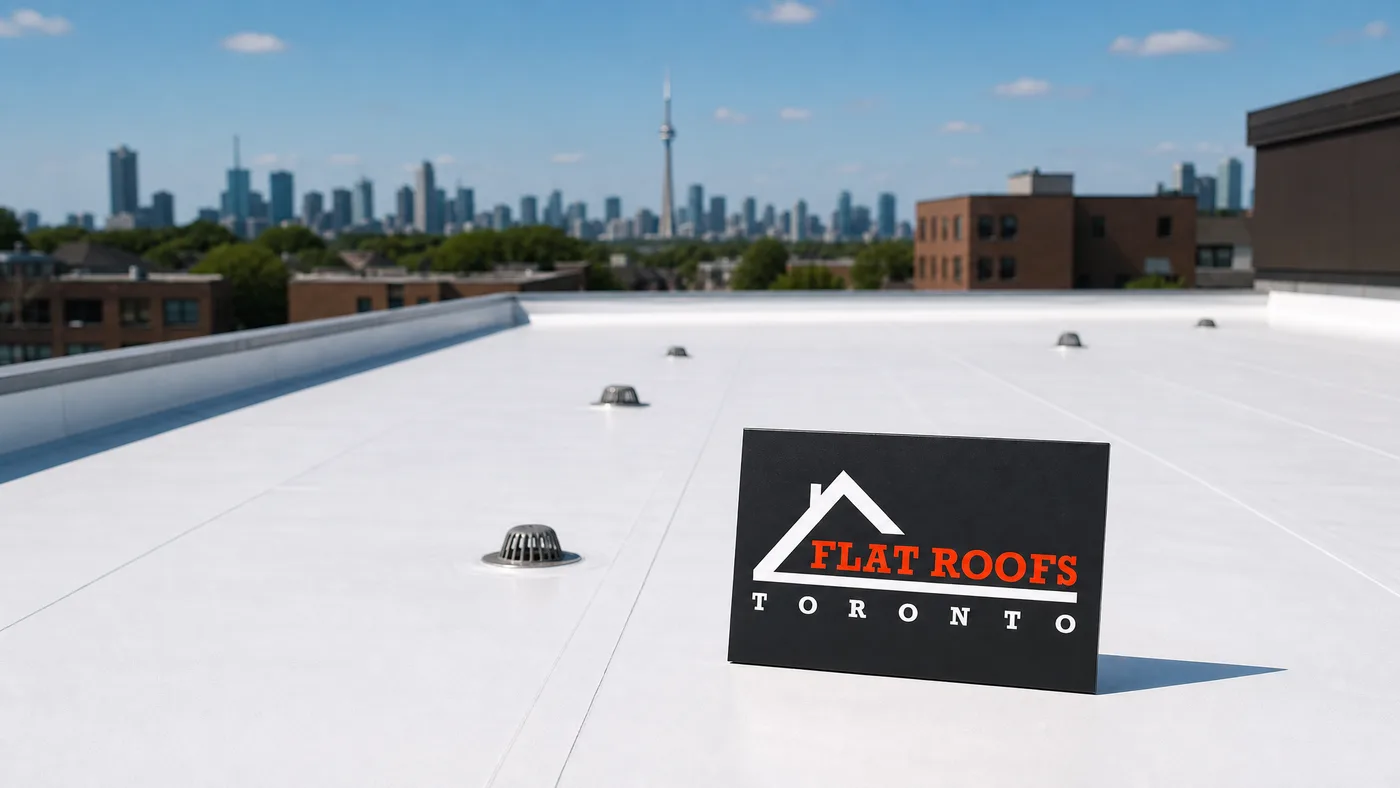
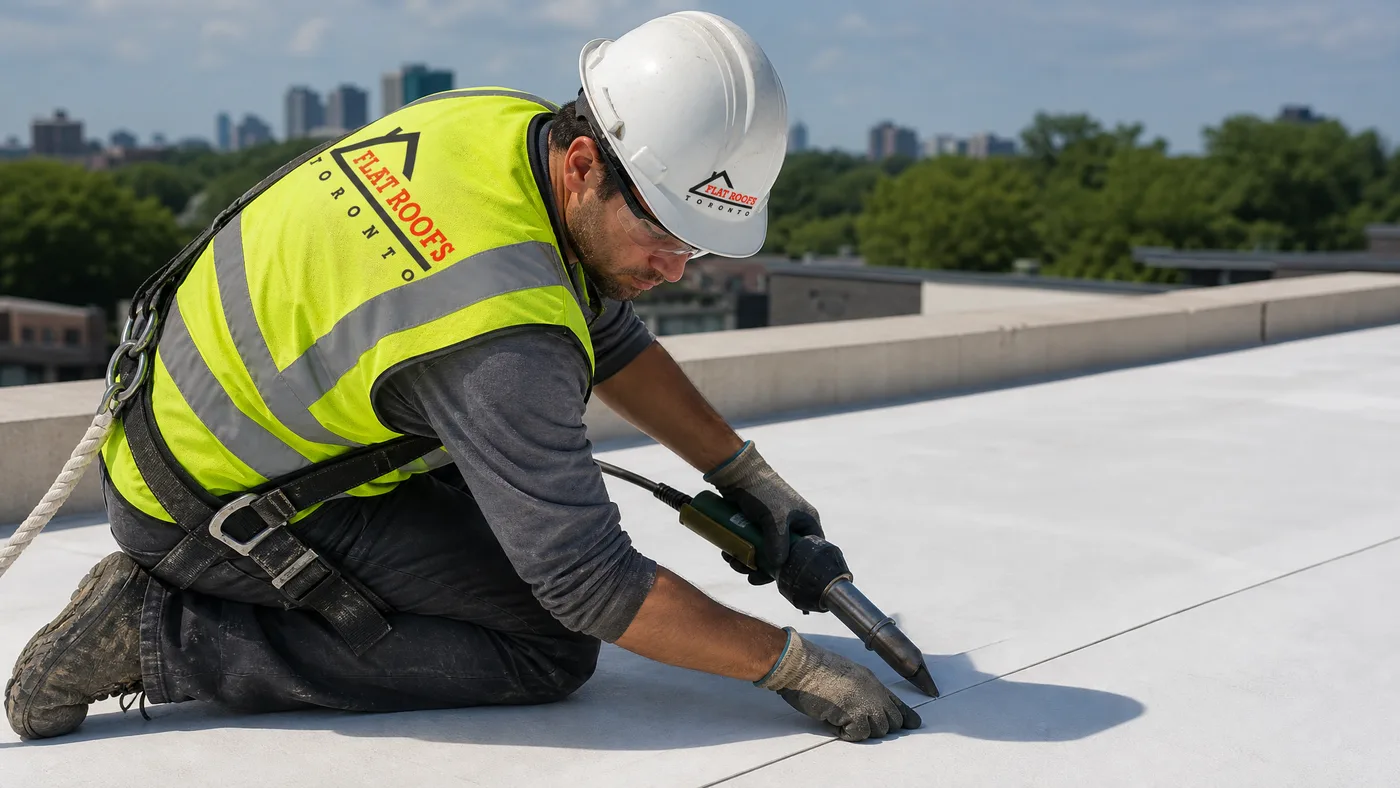
TPO (Thermoplastic Polyolefin) has become the most requested single-ply membrane in Toronto. It is a bright white sheet that reflects sunlight, keeps interiors cooler, and is heat-welded at the seams to create a monolithic, watertight surface. TPO offers an excellent balance of price, energy performance, and longevity, which is why it dominates new commercial work across the region.
PVC (Polyvinyl Chloride) is a premium thermoplastic membrane that shares TPO’s welded-seam advantage but adds superior resistance to grease, chemicals, and ponding water. Restaurants, industrial kitchens, and buildings with heavy rooftop exhaust benefit from PVC’s chemical resistance. It costs more than TPO but delivers exceptional service life.
EPDM (Ethylene Propylene Diene Monomer) is a black synthetic rubber membrane known for outstanding flexibility and long track record. It handles temperature swings well and is often chosen for larger simple roofs. Its seams are typically joined with tape or adhesive rather than heat welding, so detailing quality is critical.
Modified bitumen is an asphalt-based membrane reinforced with polyester or fibreglass, applied in two or more plies. It is rugged, resists foot traffic well, and remains a popular choice for residential low-slope roofs and additions where durability under regular access is valued. Our residential flat roof installation team frequently recommends modified bitumen for GTA homes with rooftop patios or frequent maintenance access.
Comparing Low Slope Roof Membrane Systems
The table below summarizes how the leading membrane systems compare across the factors Toronto owners care about most: expected lifespan, reflectivity, seam method, and typical use. These figures reflect what we see on real GTA projects, not manufacturer best-case laboratory numbers.
| Membrane System | Typical Lifespan | Seam Method | Best Suited For |
|---|---|---|---|
| TPO single-ply | 20 to 30 years | Hot-air welded | Commercial and residential, energy savings |
| PVC single-ply | 25 to 35 years | Hot-air welded | Restaurants, grease and chemical exposure |
| EPDM rubber | 20 to 30 years | Tape or adhesive | Large simple roofs, flexibility |
| Modified bitumen | 15 to 25 years | Torch or self-adhered | Residential, rooftop foot traffic |
| Built-up (BUR) | 15 to 30 years | Layered plies and asphalt | Heavy-duty, high-traffic decks |
No single low slope roof membrane wins on every measure. TPO leads on value and reflectivity, PVC leads on chemical resistance, EPDM leads on flexibility, and modified bitumen leads on impact resistance. The best system is the one matched to your specific building conditions, which is exactly what our assessment determines before we ever quote a price.
What Drives Low Slope Roof Membrane Costs in the GTA
Toronto building owners often ask why two quotes for the same roof can differ by thousands of dollars. The answer usually lies in what is included beneath the membrane. A quote that only covers the membrane sheet, while ignoring insulation upgrades, cover board, or proper flashing, is not a fair comparison. A durable low slope roof membrane installation is a complete assembly, and cutting corners on the hidden layers guarantees early failure.
Attachment method also affects cost. Membranes can be mechanically fastened, fully adhered with adhesive, or ballasted with stone. Fully adhered systems cost more but deliver a smoother surface and better wind resistance, which matters on exposed Toronto rooftops. The size and complexity of the roof, the number of penetrations, and access difficulty all factor into the final number.
The table below gives realistic installed price ranges for the GTA in current dollars. These are complete-assembly figures, not membrane-only pricing, and they assume professional installation with proper detailing.
| Membrane System | Installed Cost per Square Foot | Relative Energy Efficiency | Maintenance Level |
|---|---|---|---|
| TPO | $8 to $13 | High (reflective white) | Low |
| PVC | $10 to $16 | High (reflective white) | Low |
| EPDM | $7 to $12 | Moderate (dark surface) | Low to moderate |
| Modified bitumen | $8 to $14 | Moderate to low | Moderate |
Remember that the cheapest low slope roof membrane rarely delivers the lowest lifetime cost. A system that lasts thirty years with minimal maintenance almost always beats one that needs replacement in fifteen. When you factor in cooling savings from a reflective membrane and the avoided cost of interior water damage, the premium options frequently pay for themselves. If a leak has already appeared, our emergency roof repair team can stabilize the situation before you commit to a full replacement.
Reflectivity, Energy Savings, and Toronto Summers
During a GTA July, rooftop temperatures on a dark membrane can soar well above the ambient air, pushing heat into the building and forcing air conditioning to work harder. This is where reflective, or cool-roof, low slope roof membrane systems shine. A white TPO or PVC membrane reflects the majority of incoming solar energy, keeping the roof surface dramatically cooler and reducing cooling loads on the floors below.
For Toronto commercial buildings with large flat expanses, the energy savings from a reflective membrane can be substantial over a cooling season. Beyond utility bills, a cooler roof surface experiences less thermal stress, which slows membrane ageing and extends service life. The membrane and the insulation work as a team here, so pairing a reflective membrane with upgraded attic insulation or roof insulation delivers the best comfort and efficiency results.
Reflectivity is not just a summer benefit. A stable roof temperature year-round means fewer expansion and contraction cycles, which protects seams and fasteners from fatigue. When we specify a membrane, we consider how the entire assembly will manage heat, moisture, and movement so the roof performs reliably decade after decade.
Detailing, Drainage, and Skylight Integration
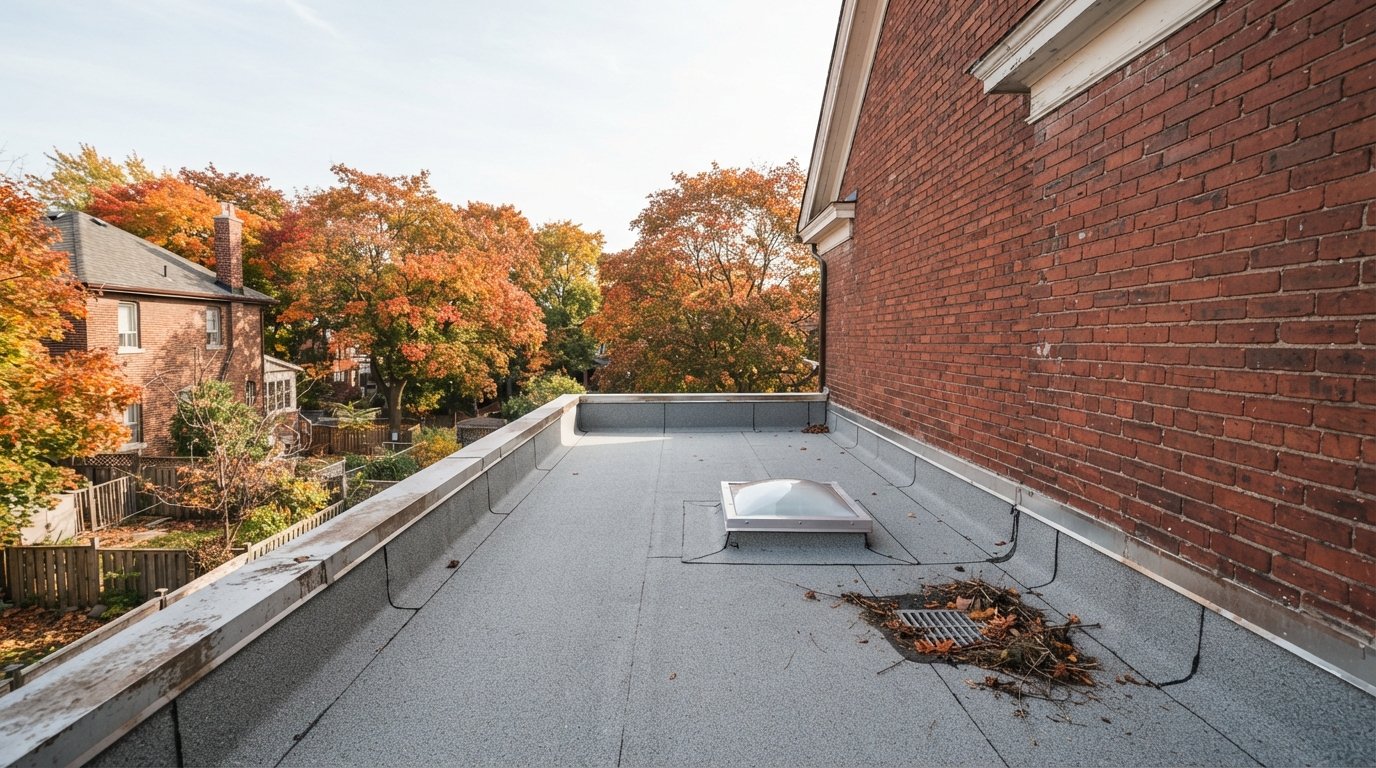
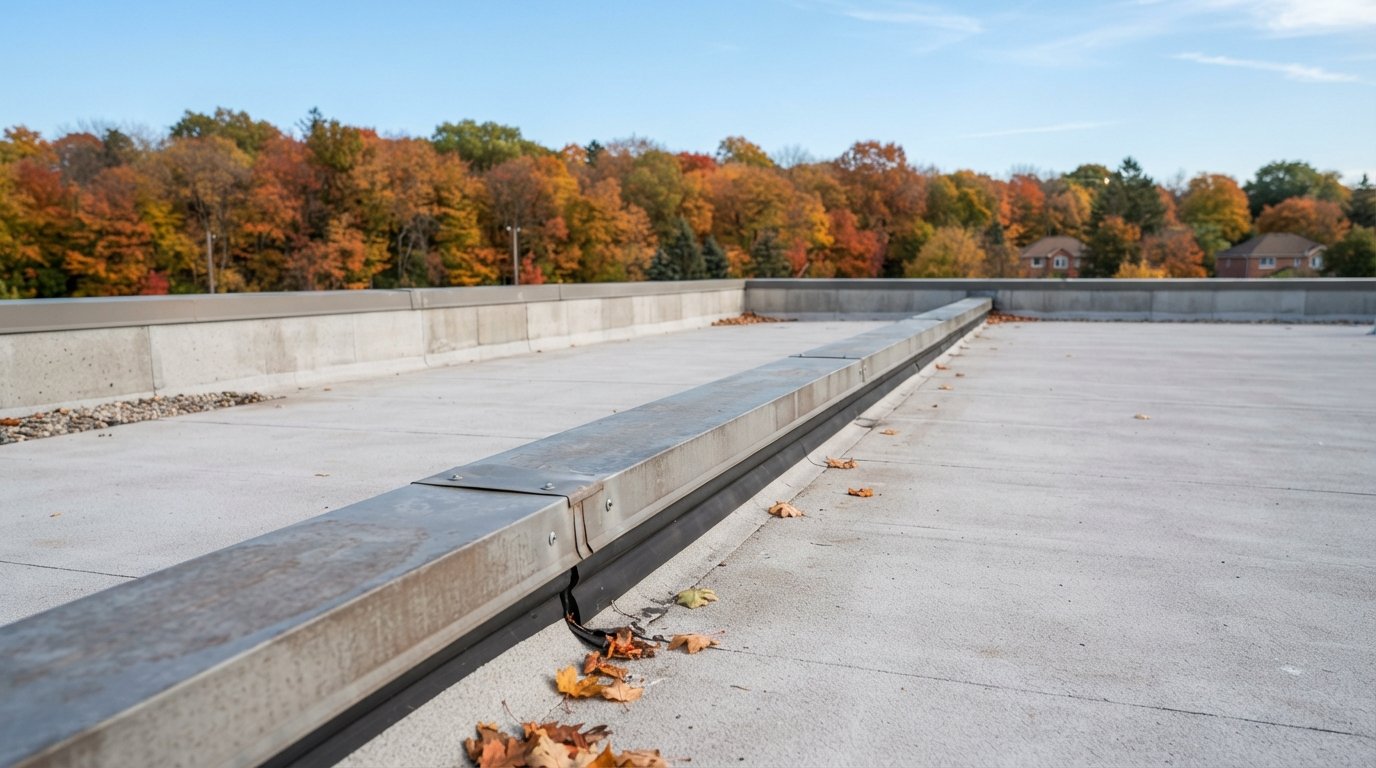
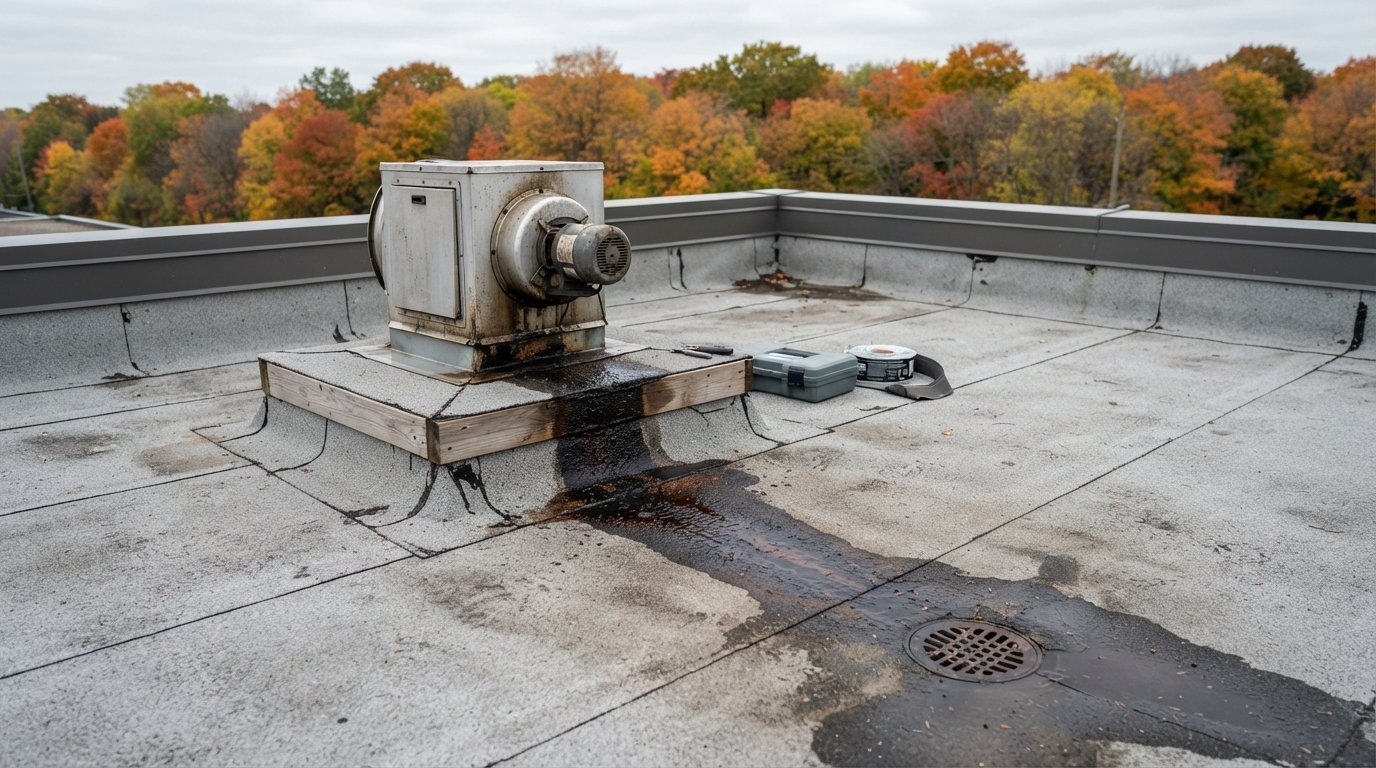
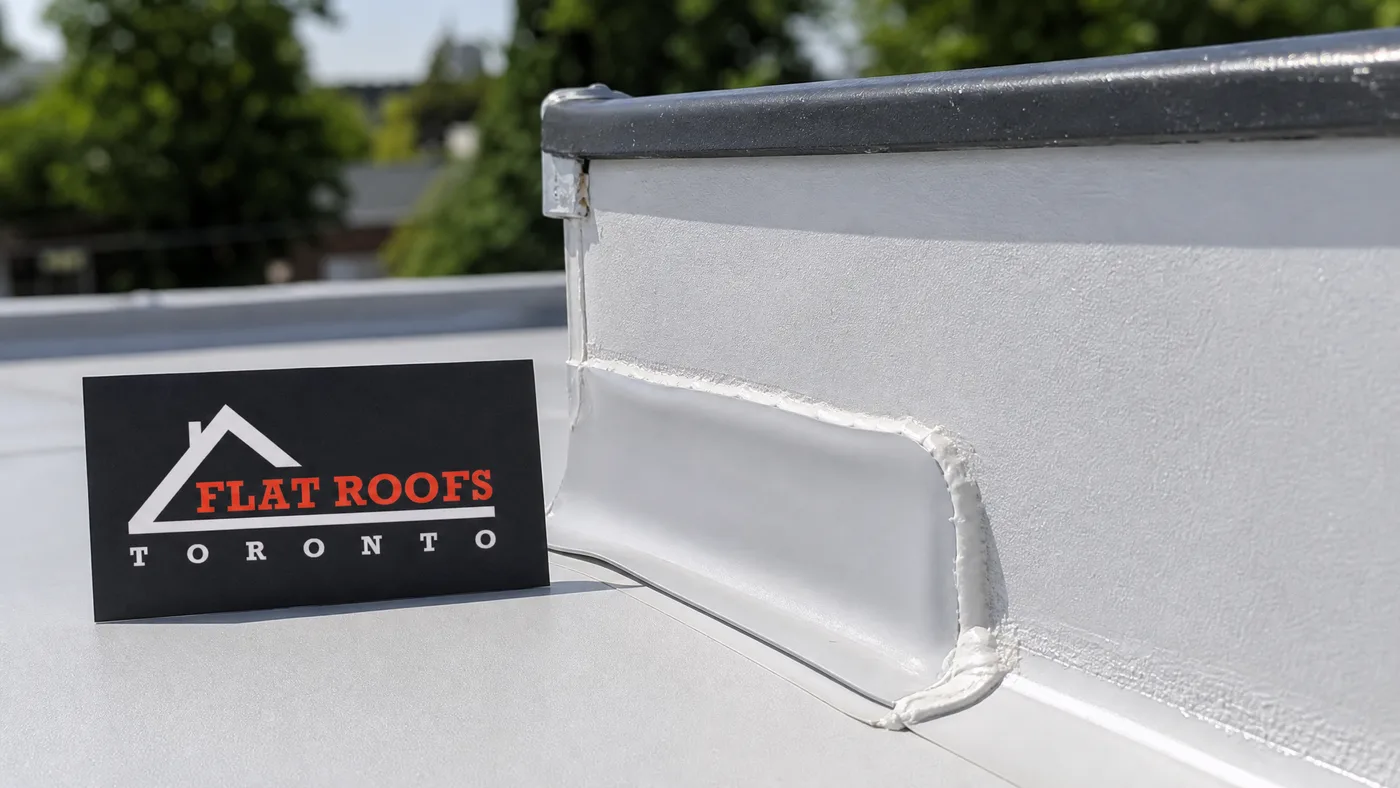
Even the finest low slope roof membrane will leak if the details are wrong. The vast majority of flat-roof failures happen not in the open field of the membrane but at transitions: parapet walls, drains, vents, curbs, and skylight openings. These are the points where water finds a way in, and where craftsmanship truly matters. A membrane is only as watertight as its weakest seam.
Proper drainage is equally critical. Low-slope roofs are designed with a slight pitch toward drains or scuppers, and any low spots that trap standing water accelerate membrane wear. During installation we verify slope, confirm drains are clear and correctly flashed, and eliminate ponding wherever possible. Standing water is the enemy of every flat roof, and addressing it protects your investment.
Skylights are a common feature on GTA flat roofs, and they demand meticulous membrane integration. A skylight curb must be flashed and sealed into the membrane so that water is directed away from the opening. Whether you are adding residential skylights to brighten a living space or specifying commercial skylights for a workplace, the membrane-to-curb detail is what keeps the interior dry. You can see examples of our completed installations in our project gallery.
How to Choose the Right Membrane for Your Building
With so many options, the decision can feel overwhelming, but it comes down to a handful of practical questions. First, how is the roof used? A roof with regular foot traffic or heavy equipment favours a rugged membrane such as modified bitumen or PVC. Second, is chemical or grease exposure a factor? Restaurants and industrial buildings should lean toward PVC. Third, how important are energy savings? Reflective TPO and PVC deliver the strongest cooling benefits in Toronto summers.
Fourth, how long do you plan to own the building? If you intend to hold the property for decades, investing in a premium low slope roof membrane with a longer lifespan makes financial sense. If a sale is near, a cost-effective system that meets code and looks clean may be the smarter play. Finally, what is the condition of the existing assembly? Sometimes the insulation and deck are sound and only the membrane needs replacing; other times a full tear-off is the responsible choice.
The table below offers a quick decision guide based on the most common Toronto building scenarios we encounter, matching building type to the membrane systems that typically perform best.
| Building Scenario | Recommended Membrane | Key Reason | Priority Consideration |
|---|---|---|---|
| Downtown office or retail | TPO | Value plus energy savings | Reflectivity |
| Restaurant or commercial kitchen | PVC | Grease and chemical resistance | Durability |
| Large warehouse or industrial | TPO or EPDM | Cost-effective at scale | Coverage area |
| Residential addition or bungalow | Modified bitumen | Toughness under foot traffic | Accessibility |
| Rooftop patio or deck area | PVC or modified bitumen | Traffic and puncture resistance | Wear resistance |
These recommendations are starting points, not final answers. The only way to know which low slope roof membrane truly suits your property is a professional on-site assessment that accounts for your deck, drainage, budget, and goals. That is precisely what our team provides before any work begins.
Why Professional Installation Protects Your Investment
A premium membrane installed poorly will fail faster than a modest membrane installed correctly. Manufacturer warranties on single-ply systems typically require certified installation, and improper seam welding, inadequate fastening, or sloppy flashing can void that coverage entirely. This is why choosing an experienced GTA contractor matters as much as choosing the membrane itself.
At Flat Roofs Toronto, our crews are trained in the specific welding, adhesion, and detailing techniques each membrane demands. We follow manufacturer specifications precisely so your warranty stays valid, and we stand behind our own workmanship. From the first inspection to the final walkthrough, we treat your low slope roof membrane as the long-term protective system it is meant to be, not a commodity to install as quickly as possible.
We also document our work and maintain clear communication throughout the project, so you always understand what is happening on your roof and why. A roof is a major investment, and you deserve a contractor who explains the options honestly and installs the chosen system to the highest standard.
What is the longest-lasting low slope roof membrane for Toronto buildings?
How much does a low slope roof membrane cost to install in the GTA?
Which low slope roof membrane is best for energy savings in summer?
Can a new membrane be installed over my existing flat roof?
What causes low slope roof membrane leaks most often?
How do I know which membrane suits my building?
Get Expert Low Slope Roof Membrane Advice Today
Choosing and installing the right membrane is too important to leave to guesswork. The team at Flat Roofs Toronto brings years of hands-on GTA experience to every project, matching the ideal low slope roof membrane to your building and installing it to manufacturer and warranty standards. Whether you own a downtown commercial property, an industrial warehouse, or a residential home with a flat roof, we help you invest wisely and protect your building for decades.
Call us today at (647) 333-3528 or request a free inspection to get started.
Flat Roofs Toronto proudly serves Toronto, Mississauga, Markham, Vaughan, Brampton, Oakville, and Burlington.