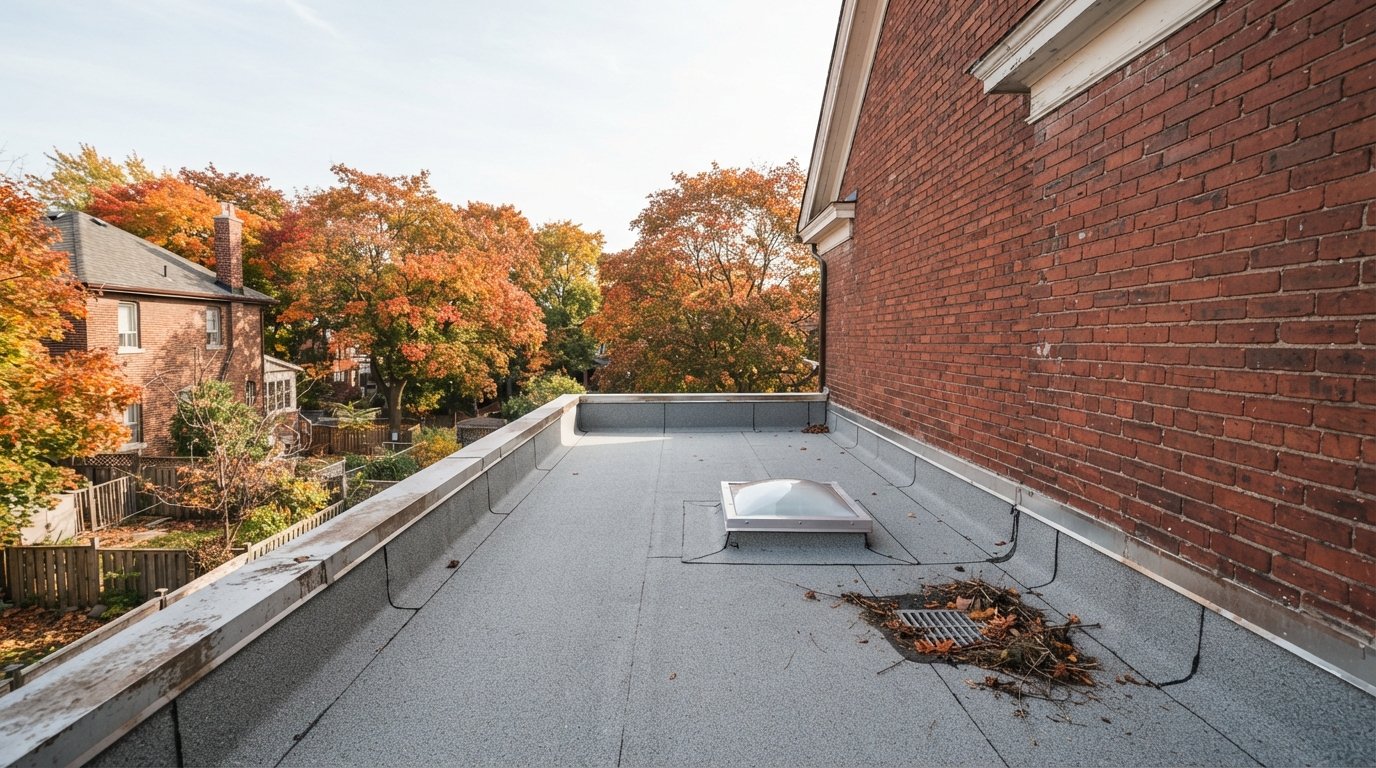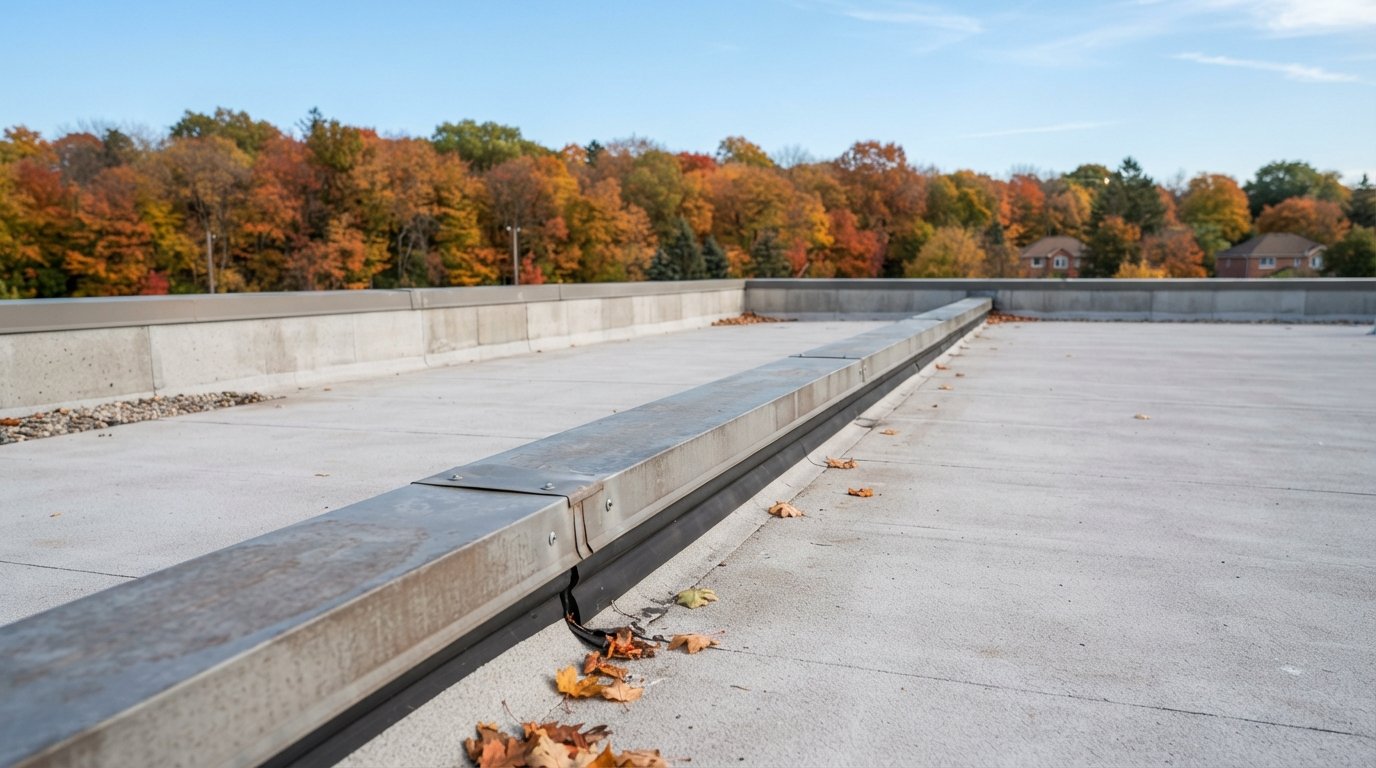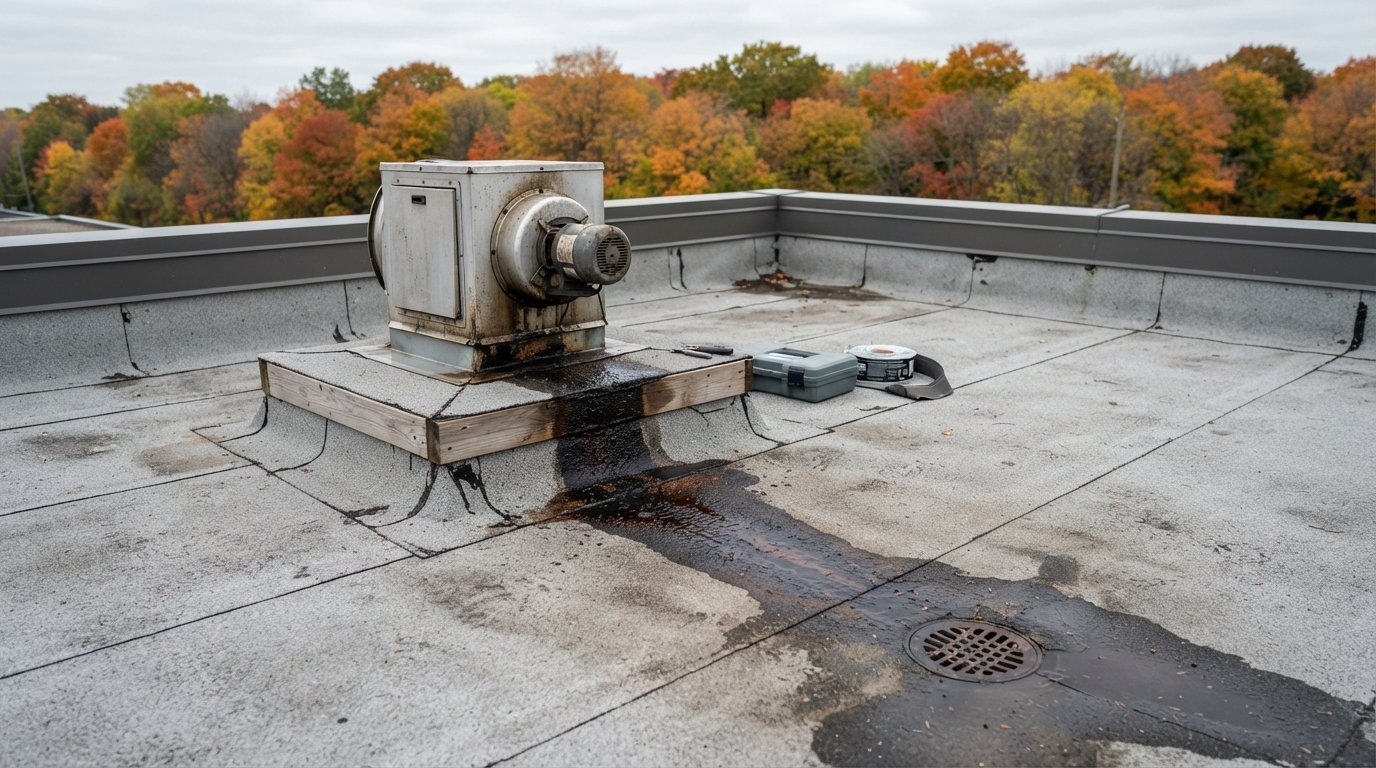

When Toronto homeowners and property managers start researching long-lasting low-slope roofing, one option keeps rising to the top of the list: the sbs roof membrane. SBS modified bitumen has become a workhorse of flat and low-slope roofing across the GTA because it blends the proven waterproofing of traditional asphalt with the flexibility of modern polymers. If you own a home, duplex, or commercial building with a flat roof, understanding how an sbs roof membrane is built, installed, and maintained will help you make a confident, long-term decision. At Flat Roofs Toronto, we install these systems on residential and commercial buildings throughout the city, and this guide walks you through the full process and realistic lifespan you can expect.
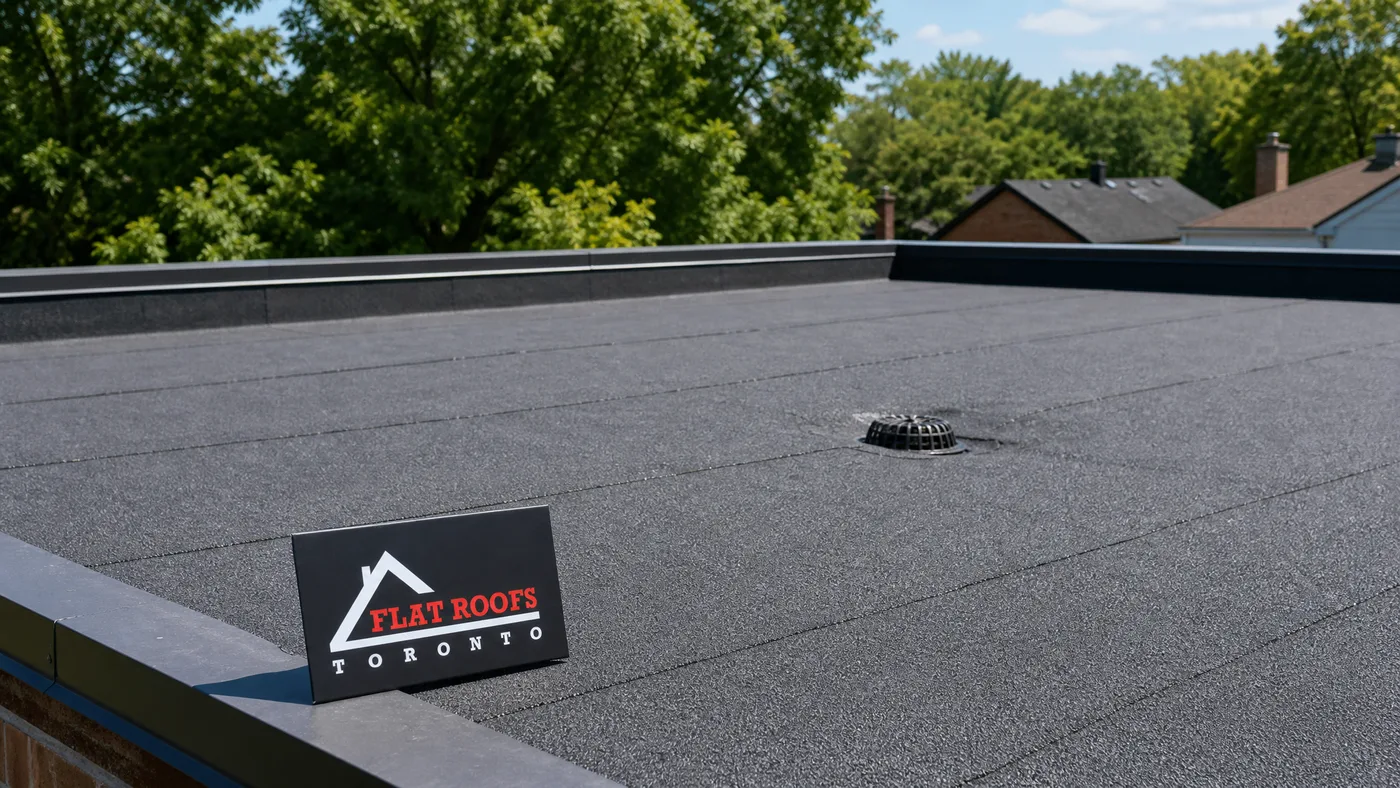
What Is an SBS Roof Membrane?
An sbs roof membrane is a multi-ply waterproofing system made from asphalt that has been modified with SBS, or styrene-butadiene-styrene, a rubber-like polymer. This modification is what separates a modern sbs roof membrane from the old-fashioned built-up tar-and-gravel roofs many older Toronto buildings still carry. Adding SBS polymers to the bitumen gives the finished sheet elasticity, allowing it to stretch and recover as the roof deck expands and contracts through Toronto’s wide temperature swings, from cool spring mornings to hot, humid July afternoons.
The membrane is manufactured in rolls with a reinforcing core, usually a polyester mat or a fibreglass mat, sandwiched between layers of modified asphalt. A typical assembly uses two plies: a base sheet mechanically fastened or torched to the substrate, and a cap sheet on top that carries a coloured mineral surface for UV protection. Because it is installed in overlapping layers with fully sealed seams, an SBS system creates a continuous, monolithic barrier that resists standing water far better than a single-ply system with mechanically seamed joints. That redundancy is a major reason property owners across the GTA choose this approach for their residential flat roof installation projects.
How SBS Modified Bitumen Compares to Other Flat Roof Systems
Toronto’s flat-roof market offers several proven options, and each has strengths. SBS modified bitumen is often chosen when durability, walkability, and repairability matter most. Single-ply membranes such as TPO and EPDM install quickly and reflect heat well, but they rely on a single layer and heat-welded or taped seams. A two-ply sbs roof membrane, by contrast, gives you a built-in second line of defence, which is reassuring on a roof that may host foot traffic, mechanical units, or a rooftop patio.
The table below compares the most common low-slope systems we install and service so you can see where SBS fits.
| System | Layers | Typical Lifespan | Best Suited For |
|---|---|---|---|
| SBS Modified Bitumen | Two-ply (base + cap) | 25-35 years | Residential and commercial roofs needing durability and walkability |
| TPO Single-Ply | One-ply | 15-25 years | Large commercial roofs prioritizing reflectivity |
| EPDM Rubber | One-ply | 20-30 years | Simple roofs with few penetrations |
| Built-Up Roof (BUR) | Multi-ply with gravel | 20-30 years | Older buildings, heavy assemblies |
| PVC Single-Ply | One-ply | 20-30 years | Roofs exposed to grease or chemicals |
Where an sbs roof membrane pulls ahead is in its balance of qualities. It stands up to hail and dropped tools better than a thin single-ply, it can be walked on without special protection, and when a repair is ever needed it can be patched cleanly with compatible materials rather than requiring a full section replacement. For commercial buildings with rooftop equipment and regular maintenance access, our team frequently recommends it as part of a commercial flat roof installation.
The SBS Roof Membrane Installation Process Step by Step
A quality installation is what turns a good material into a roof that lasts decades. The following sequence reflects how our crews approach a typical two-ply SBS project in Toronto during the warm-weather season, when torch-applied and self-adhered methods perform at their best.
Step one: inspection and tear-off. We assess the existing roof, check for soft or rotten decking, and remove old roofing down to a sound substrate. Any wet insulation is discarded because trapping moisture under a new membrane guarantees premature failure.
Step two: deck preparation and insulation. The deck is cleaned, and rigid insulation boards are installed to meet the building’s thermal targets. Proper slope is confirmed so water drains toward roof drains and scuppers rather than pooling. This is also the stage where we coordinate with any attic insulation upgrades to improve overall energy performance.
Step three: base sheet application. The first ply of the sbs roof membrane is applied over a cover board or vapour barrier. Depending on the assembly, this base sheet is mechanically fastened, adhered, or torch-applied, with all laps overlapped and sealed to the manufacturer’s specification.
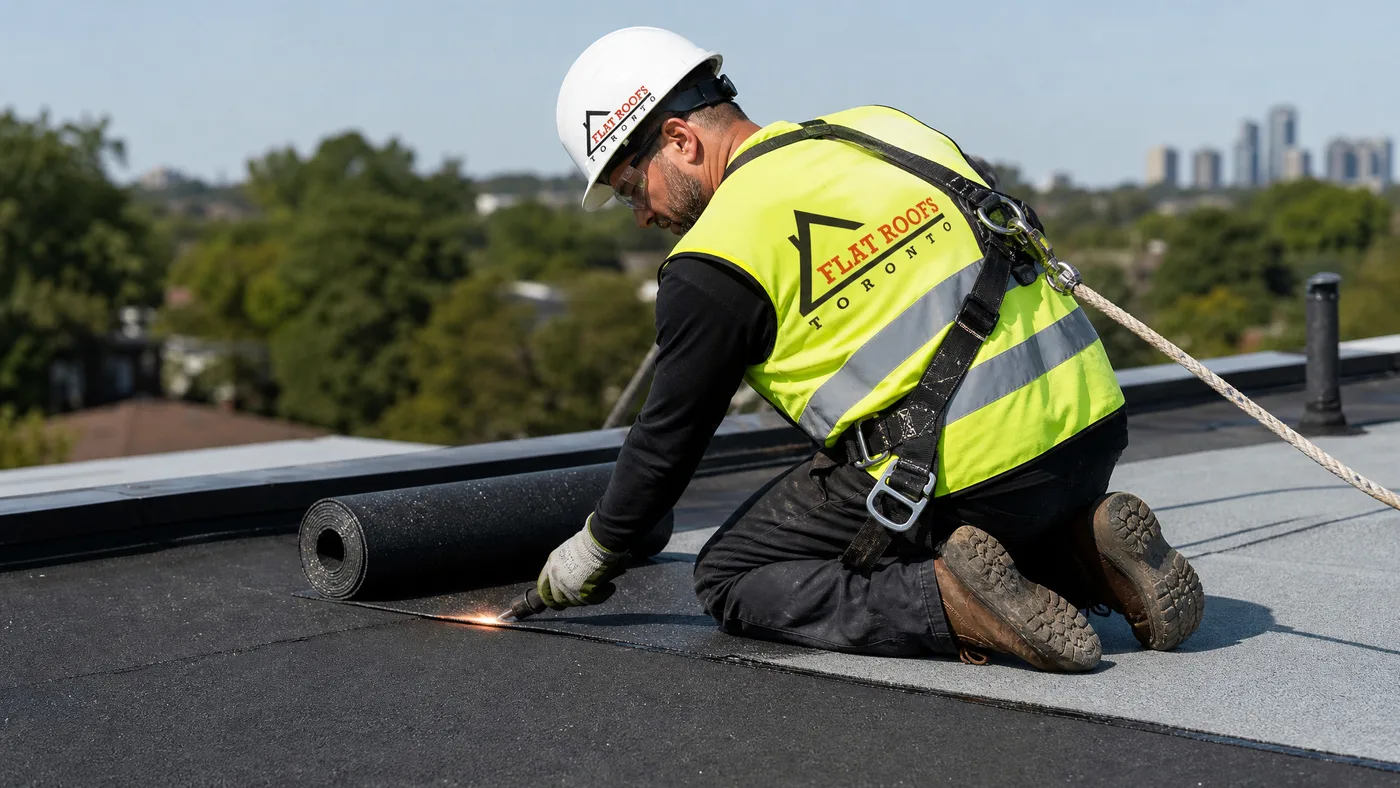
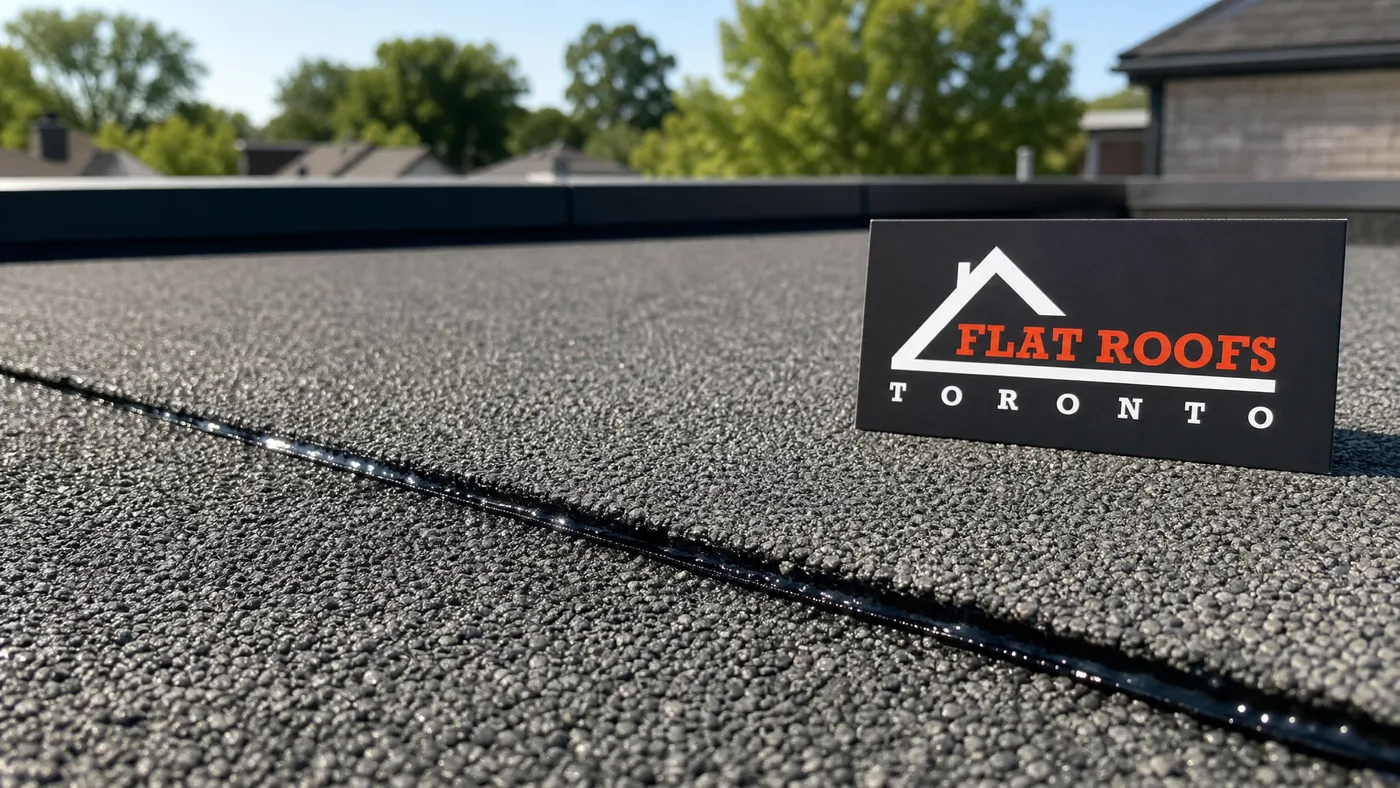
Step four: cap sheet installation. The granule-surfaced cap sheet is installed over the base, offset so seams do not stack directly on top of one another. Each roll is carefully melted or adhered so the two plies bond into a single reinforced barrier. Skilled installers keep a consistent flow of bitumen at the seam edge, a small visual cue that the bond is complete and watertight.
Step five: flashing and detailing. Roof penetrations, parapet walls, drains, and equipment curbs receive reinforced flashing built from the same modified bitumen family. These transitions are where most flat roofs fail first, so we treat them as the most important part of the job. Well-built flashings are the difference between a 30-year roof and one that leaks in year eight.
Step six: final inspection. Seams are probed, drains are checked, and the entire field is walked to confirm complete adhesion. If your project includes rooftop glazing, this is also when we integrate residential skylights or commercial skylights so the curb flashing ties seamlessly into the new membrane.
Lifespan and Durability of an SBS Roof Membrane in Toronto
One of the most common questions we hear is simply, how long will it last? A properly installed and maintained sbs roof membrane in the Toronto climate typically delivers 25 to 35 years of reliable service. The wide range reflects real variables: the quality of installation, the number of plies, the colour and quality of the cap sheet granules, drainage design, and how consistently the roof is maintained after the crew leaves.
SBS handles thermal cycling exceptionally well, which matters in a region where a roof surface can shift dozens of degrees between a cool night and a bright summer afternoon. The polymer content lets the membrane flex rather than crack as the building moves. UV exposure is the other major aging factor, and the mineral surface on the cap sheet is specifically there to shield the asphalt below from sunlight. Choosing a lighter granule colour can also lower surface temperatures and slow UV aging over the roof’s life.
| Factor | Impact on Lifespan | What Helps |
|---|---|---|
| Installation quality | Highest single factor | Experienced crew, sealed seams, proper flashings |
| Drainage and slope | Standing water shortens life | Positive slope to drains, clear scuppers |
| UV exposure | Dries and hardens asphalt over time | Quality mineral cap sheet, reflective colours |
| Maintenance frequency | Neglect accelerates failure | Annual inspections, prompt small repairs |
| Foot traffic and equipment | Abrasion at high-use areas | Walk pads, protective mats near units |
It is worth noting that lifespan is rarely limited by the field of the membrane itself. Far more often, a roof reaches the end of its service life because a neglected flashing detail or a blocked drain caused localized damage that spread. This is exactly why a modest maintenance routine returns such a large payoff on an sbs roof membrane.
Maintenance That Extends Your SBS Roof Membrane
An sbs roof membrane is low-maintenance, not no-maintenance. The good news is that keeping one in top shape is straightforward and inexpensive compared with the cost of premature replacement. We recommend a professional inspection at least once a year, ideally in late spring or summer when the surface is dry and warm and any defects are easy to see and repair.
During a maintenance visit, the priorities are clearing drains and scuppers of debris, checking every flashing and seam, confirming there is no ponding water lingering more than a day or two after rain, and looking for surface granule loss or blistering. Small issues caught early, such as a lifted seam edge or a cracked pipe boot, can be repaired in minutes. Left alone, that same defect can let water track under the membrane and quietly rot the deck. If you ever notice an active leak, our emergency roof repair team can respond quickly to protect the interior before the damage spreads. You can also review completed projects in our gallery to see the finish quality we hold every crew to.
A simple habit of walking the roof after major storms, keeping the surface free of leaves and branches, and scheduling one professional look each year is usually enough to help an sbs roof membrane reach the upper end of its expected lifespan.
Cost Considerations for SBS Roofing in the GTA
Pricing for an sbs roof membrane depends on the size of the roof, the number of penetrations, how much old material must be removed, the insulation package, and access to the roof itself. A two-ply SBS system generally sits in the mid-to-upper range of flat roofing costs, above a basic single-ply install but justified by its longer expected service life and lower repair frequency. When you divide the total cost across 25 to 35 years, SBS often delivers a strong cost-per-year value.
The table below outlines the main cost drivers we discuss with clients so there are no surprises in the quote.
| Cost Driver | Why It Matters | Typical Effect on Price |
|---|---|---|
| Roof size and shape | More area and complex shapes take longer | Larger, cut-up roofs cost more per project |
| Tear-off requirements | Removing old layers adds labour and disposal | Multiple existing layers raise cost |
| Insulation upgrade | Better R-value improves energy performance | Adds material cost, lowers energy bills |
| Penetrations and flashings | Each detail is hand-built and sealed | More units and pipes increase labour |
| Roof access | Height and hoisting affect logistics | Difficult access adds to the estimate |
Rather than choosing on sticker price alone, we encourage owners to weigh the expected lifespan and the quality of the flashing work, because those two things determine whether you get 15 years or 30 out of the same category of material. A well-detailed sbs roof membrane is one of the most dependable investments you can make in a Toronto flat-roof building.
How long does an sbs roof membrane last in Toronto?
Is an sbs roof membrane better than single-ply TPO or EPDM?
Can an sbs roof membrane be installed over my existing flat roof?
Is SBS modified bitumen safe to walk on?
What maintenance does an sbs roof membrane need?
How much does an SBS flat roof cost in the GTA?
Choose a Durable SBS Roof Membrane for Your Toronto Property
A well-built sbs roof membrane is one of the most dependable ways to protect a flat or low-slope building in the GTA, combining proven waterproofing, real durability, and decades of service. The team at Flat Roofs Toronto installs, inspects, and repairs SBS systems on homes and commercial buildings throughout the region, and we build every flashing and seam to last.
Call us today at (647) 333-3528 or request a free inspection to get started.
Flat Roofs Toronto proudly serves Toronto, Mississauga, Markham, Vaughan, Brampton, Oakville, and Burlington.