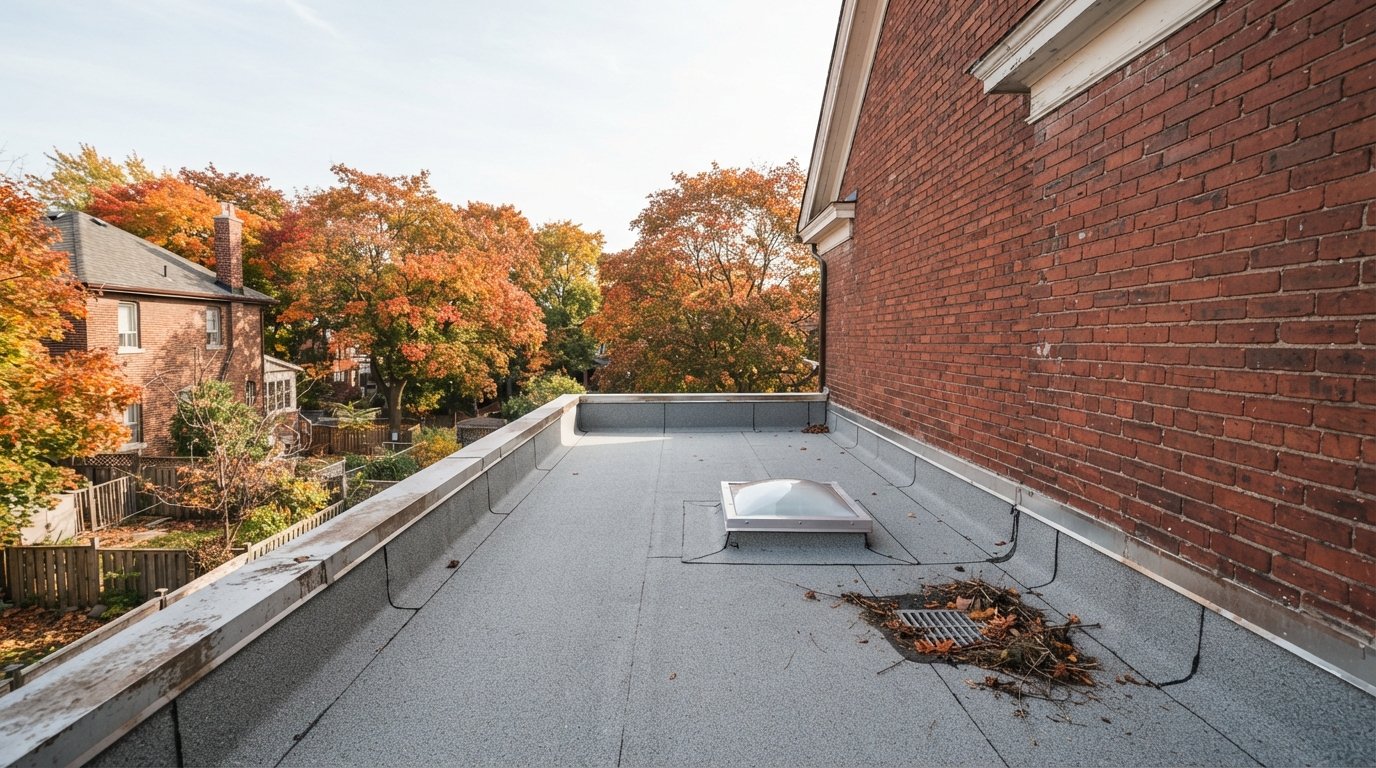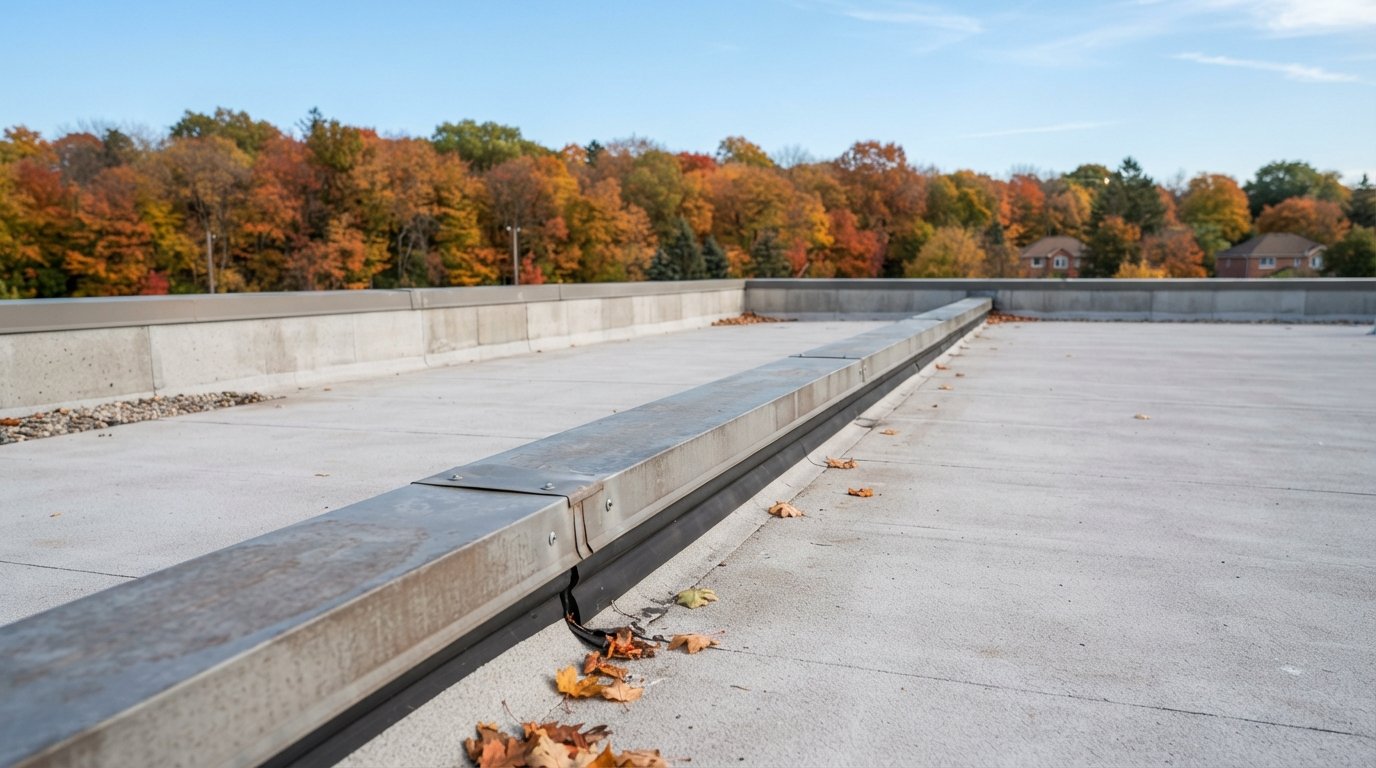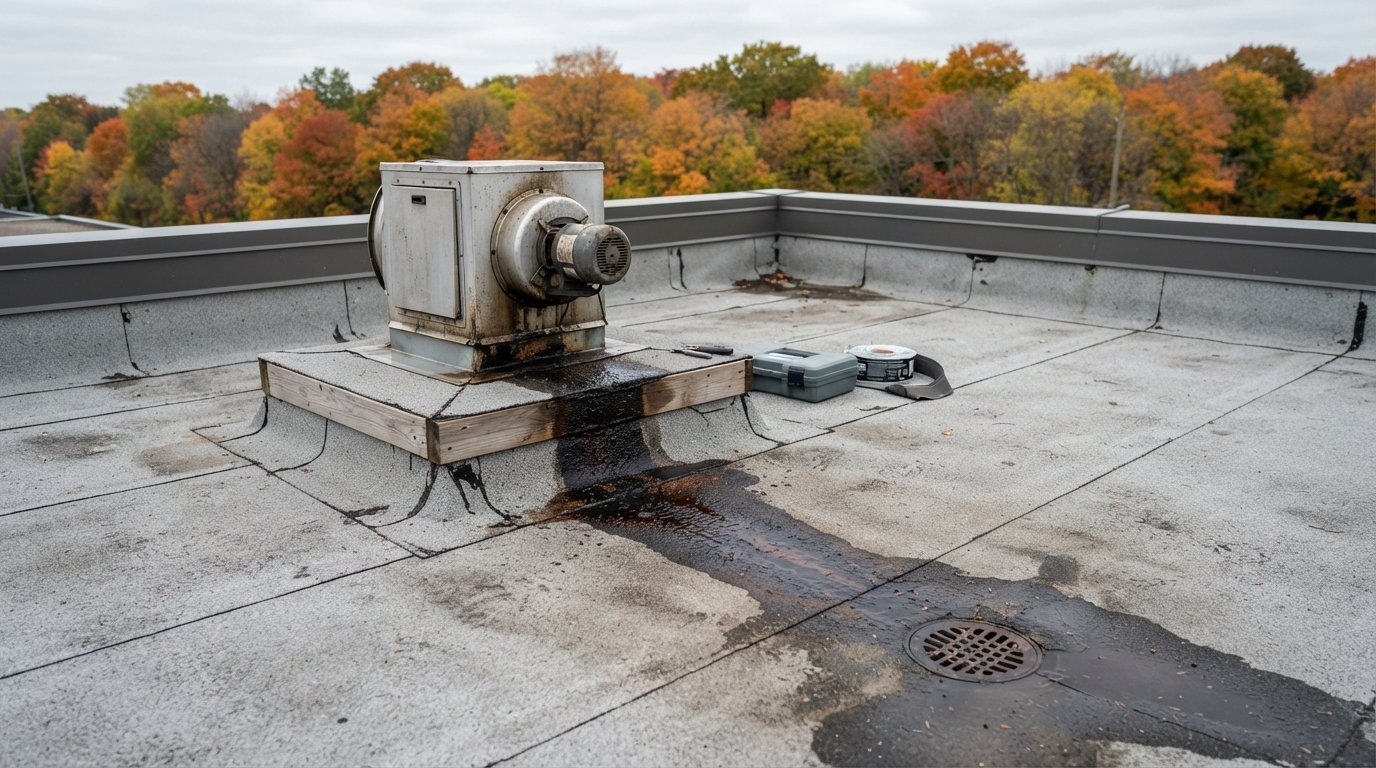
For flat and low-slope roofs across the Greater Toronto Area, few materials have earned the reputation that EPDM has. An epdm roof membrane is a single-ply synthetic rubber sheet engineered to handle everything a Toronto sky can throw at it, from blistering July heat to the freeze-and-thaw swings that arrive later in the year. If you own a home or commercial building with a flat roof and you are weighing your re-roofing options, understanding how an epdm roof membrane performs, what it costs, and how it is installed will help you make a confident, long-term decision. At Flat Roofs Toronto, EPDM is one of the systems we install and service most often, and this guide distills what we have learned installing it on hundreds of GTA rooftops.
EPDM stands for ethylene propylene diene monomer, a durable rubber compound that has protected commercial and residential flat roofs for more than five decades. What makes an epdm roof membrane so appealing is its combination of simplicity, longevity, and value. There are fewer seams than most competing systems, the material flexes with a building as it expands and contracts, and a properly maintained EPDM roof can last well past its warranty. Below, we walk through everything a Toronto property owner should know before choosing rubber roofing.
What Is an EPDM Roof Membrane?
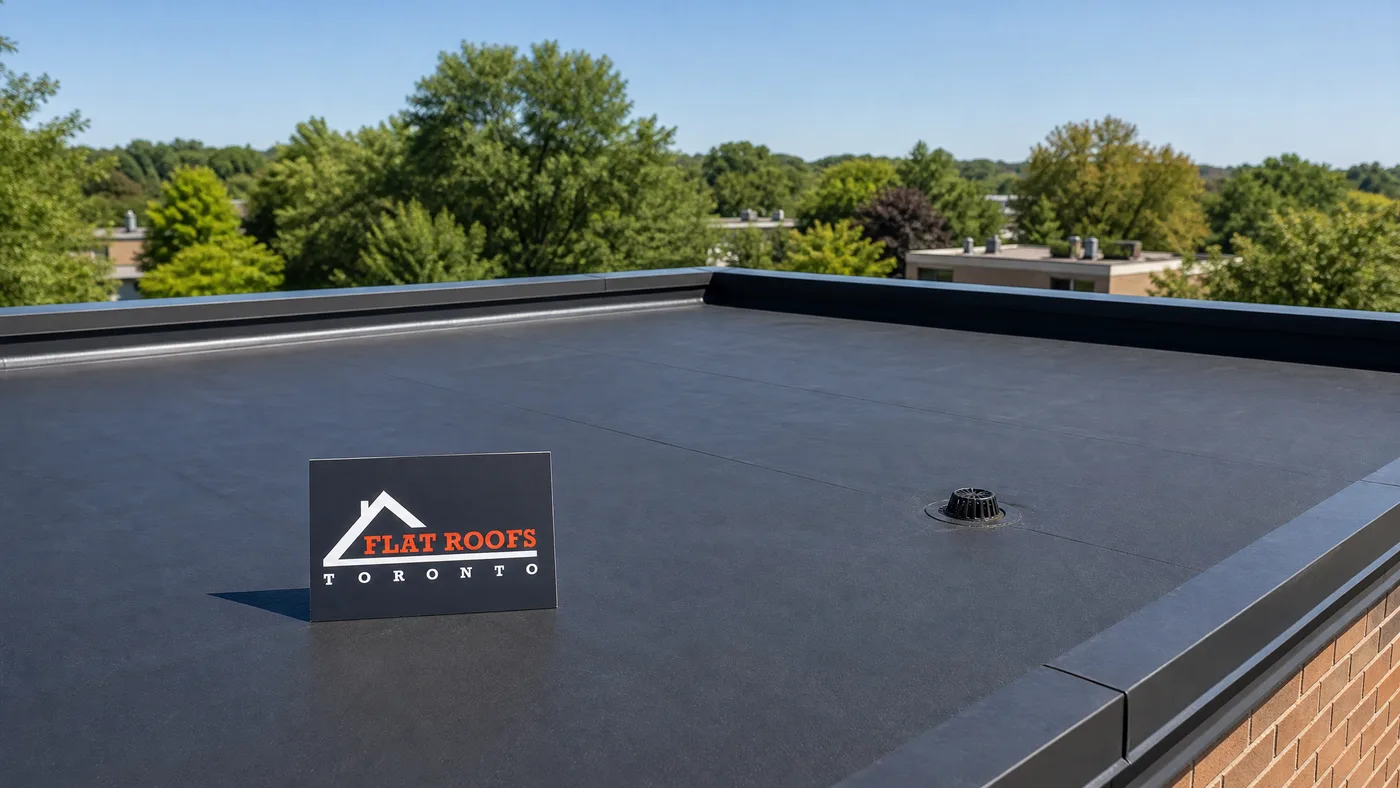
An epdm roof membrane is a single-ply rubber roofing sheet manufactured in large rolls, typically in widths from 3 metres up to 15 metres, which dramatically reduces the number of field seams compared with older built-up or modified bitumen systems. Because the sheet arrives in such large panels, an experienced crew can cover a substantial roof area with a single, continuous piece of rubber. Fewer seams means fewer potential failure points, and that is one of the biggest reasons EPDM has become a trusted choice for GTA buildings.
The membrane is available in two thicknesses that matter most to homeowners and building managers: 45 mil and 60 mil (a mil is one-thousandth of an inch). It also comes in black and white. Black EPDM is the classic, most economical option and holds up beautifully against ultraviolet exposure, while white or reflective EPDM helps reduce cooling loads on buildings that bake in direct summer sun. Each version of the epdm roof membrane can be installed in one of three ways, which we cover in detail further down.
Rubber roofing is chemically stable, meaning it resists the breakdown that petroleum-based products can suffer over time. It stays flexible across a wide temperature range, so it moves with your building rather than cracking under stress. For Toronto’s climate, where a rooftop can swing from cool spring mornings to scorching midsummer afternoons, that flexibility is a genuine advantage. Whether you are considering a residential flat roof installation or a larger commercial flat roof installation, EPDM adapts to the scale and demands of the project.
Why Toronto Property Owners Choose EPDM Rubber Roofing
Every roofing system has trade-offs, but the reasons owners keep returning to an epdm roof membrane are consistent across our GTA service area. The first is lifespan. A well-installed EPDM roof commonly serves 25 to 30 years, and many exceed that with routine care. The second is cost efficiency: EPDM typically carries one of the lowest installed prices per square metre among quality single-ply systems, which makes it attractive for large commercial fields and budget-conscious homeowners alike.
Durability is the third driver. Rubber resists hail impact, shrugs off UV degradation, and tolerates ponding water better than many alternatives. Maintenance is straightforward, and repairs, when they are eventually needed, are inexpensive and quick because the material is easy to patch. Finally, EPDM is one of the more sustainable roofing choices available, since the membrane is recyclable and its long service life reduces the frequency of tear-offs and landfill waste.
Toronto buildings also benefit from EPDM’s compatibility with rooftop penetrations. Skylights, vents, HVAC curbs, and drains all need careful flashing, and EPDM’s flexibility makes it easy to form watertight details around them. If your project includes daylighting, our teams frequently pair a new membrane with residential skylights or larger commercial skylights so the flashing and membrane are integrated as a single, leak-resistant system.
| Feature | What It Means for Your Roof | Typical Benefit |
|---|---|---|
| Service life | Expected lifespan with maintenance | 25 to 30+ years |
| Seam count | Large rolls reduce field seams | Fewer leak points |
| UV resistance | Rubber resists sun degradation | Slow, predictable ageing |
| Repairability | Simple patching of the membrane | Low lifetime cost |
| Recyclability | Material can be reclaimed | Lower environmental impact |
EPDM Compared to TPO and Modified Bitumen
To decide whether an epdm roof membrane is right for your building, it helps to see how it stacks up against the two systems Toronto owners most often compare it to: TPO (thermoplastic polyolefin) and modified bitumen. Each has a place, but they behave differently in cost, colour, seam technology, and expected performance.
TPO is a heat-welded single-ply membrane that is usually white and highly reflective, which appeals to buildings focused on summer energy savings. Its seams are hot-air welded, creating strong bonds, but the material is younger in the market than EPDM and long-term field data is still catching up. Modified bitumen is an asphalt-based system, often torch- or adhesive-applied in multiple plies, offering robust redundancy but more seams and a heavier installation. An epdm roof membrane sits between them, offering exceptional longevity, proven decades-long track record, and simple maintenance at a competitive price.
| Attribute | EPDM Rubber | TPO | Modified Bitumen |
|---|---|---|---|
| Typical lifespan | 25 to 30+ years | 15 to 25 years | 15 to 20 years |
| Standard colour | Black or white | White reflective | Dark granular |
| Seam method | Adhesive or tape | Heat welded | Torch or adhesive |
| Relative cost | Low to moderate | Moderate | Moderate |
| Repair ease | Very easy | Moderate | Moderate |
There is no single “best” flat roofing material for every situation. The right answer depends on your building’s exposure, your budget, how long you plan to own the property, and whether summer cooling costs are a priority. Our estimators walk you through these variables during a free assessment, and you can browse completed projects in our gallery to see how different systems look once installed.
How an EPDM Roof Membrane Is Installed
Installation quality determines whether an epdm roof membrane reaches its full lifespan, so it is worth understanding the three attachment methods our crews use. The right method depends on your deck type, building height, exposure to wind, and whether you are re-roofing over an existing substrate.
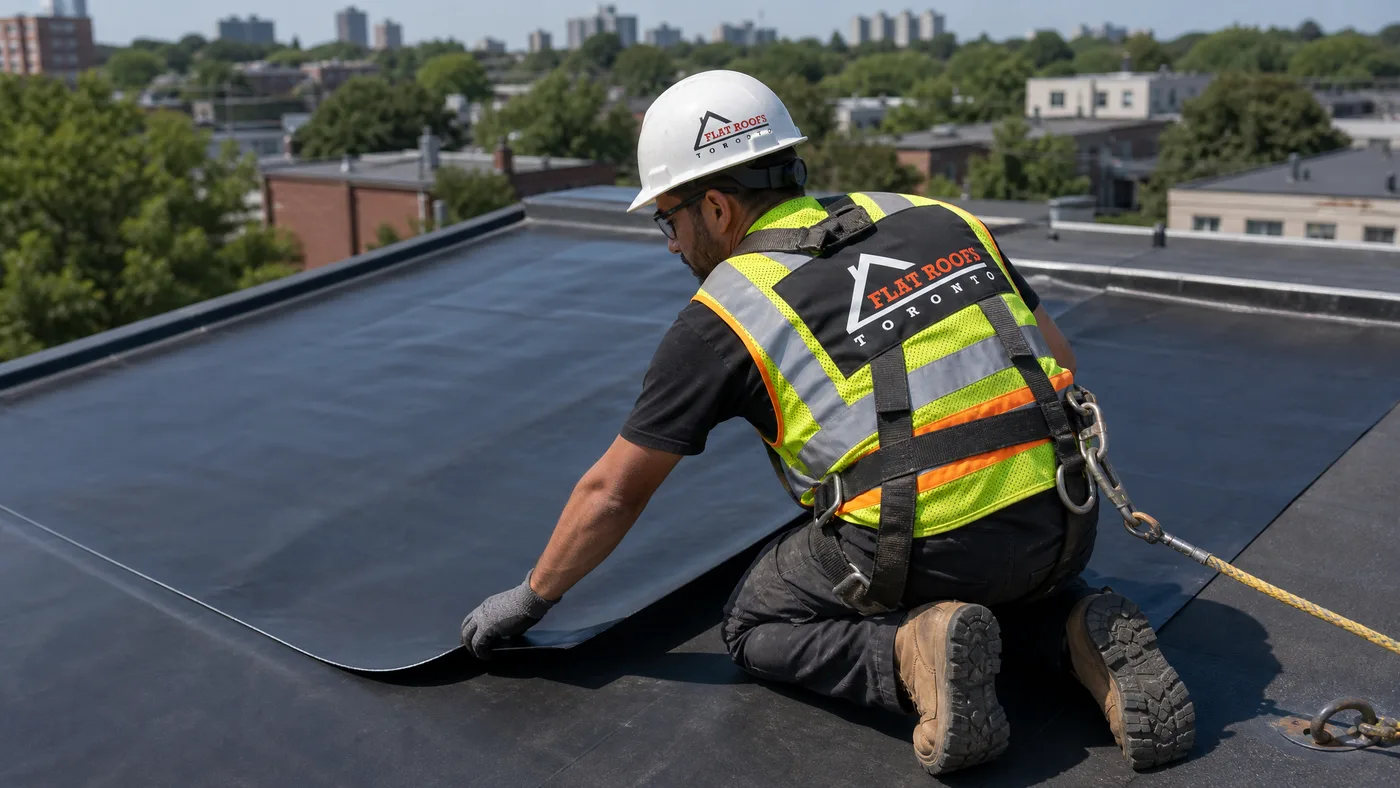
Fully adhered: The membrane is bonded to the substrate with a specialized bonding adhesive, creating a smooth, tight surface with no ballast. This method is popular on residential and visible roofs where appearance matters and where wind uplift resistance is a priority.
Mechanically fastened: The epdm roof membrane is secured with plates and fasteners along the seams, then the seams are sealed. This is a fast, economical approach favoured on many commercial decks where the membrane is covered at the overlaps.
Ballasted: The membrane is laid loose and held down with river stone or concrete pavers. This is the quickest installation, but it adds weight and is generally reserved for structures engineered to carry the extra load.
Regardless of the method, the sequence is similar: prepare and clean the deck, install insulation and a cover board where required, position the membrane and let it relax, bond or fasten it, then complete the seams, edge terminations, and flashings around every penetration. The seams are where craftsmanship shows, and a disciplined crew treats every lap and every corner as a potential water entry point that must be sealed correctly the first time.
| Installation Method | Best Suited For | Wind Resistance | Relative Speed |
|---|---|---|---|
| Fully adhered | Residential, visible roofs | High | Moderate |
| Mechanically fastened | Larger commercial decks | High | Fast |
| Ballasted | Engineered flat structures | Moderate | Fastest |
| Adhered over cover board | Re-roofs needing a smooth base | High | Moderate |
Lifespan, Maintenance, and Getting the Most From Your Membrane
An epdm roof membrane rewards owners who give it modest, consistent attention. Twice-yearly inspections, kept drains, and prompt attention to any lifted seam or damaged flashing are all it usually takes to reach and exceed the material’s rated life. Because rubber is so easy to repair, small issues stay small when they are caught early.
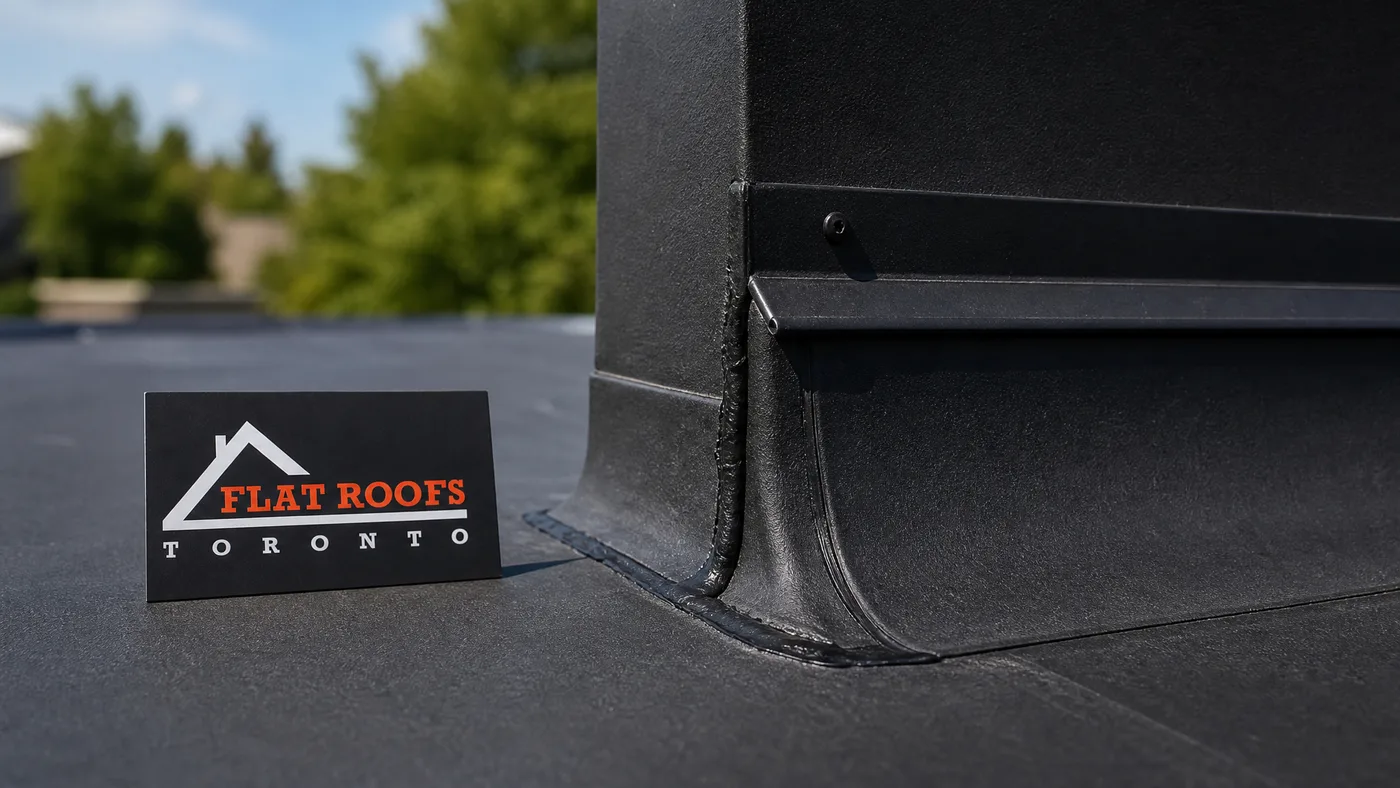
During an inspection, our technicians look at the seams, the flashings around vents and skylights, the perimeter terminations, and the drainage paths. Ponding water is common on flat roofs and EPDM tolerates it, but standing water combined with debris can accelerate wear at vulnerable details, so we clear it and correct slope problems where possible. Keeping the roof surface clean and free of sharp debris also prevents punctures. If a puncture does occur, an EPDM patch can restore watertight integrity in a single visit.
Pairing your EPDM system with proper attic insulation also improves overall roof performance by managing heat and moisture from below. And if a sudden leak ever appears between scheduled visits, our emergency roof repair team can respond quickly to protect your interior and buy time for a permanent fix. A maintenance relationship is the single most cost-effective way to protect the investment you make in a new membrane.
What Does an EPDM Roof Cost in the GTA?
Pricing for an epdm roof membrane varies with roof size, membrane thickness, insulation requirements, the complexity of penetrations, and the installation method you choose. Generally, EPDM is one of the most affordable premium single-ply options, and the value proposition improves further when you factor in its long service life and low maintenance costs. A thicker 60 mil membrane costs more upfront than 45 mil but adds puncture resistance and durability that many owners find worthwhile on high-traffic or exposed roofs.
Other cost factors include tear-off of the old roof, deck repairs discovered once the old system is removed, the number of skylights and rooftop units that require flashing, and access challenges on taller buildings. Rather than quoting a generic figure, we provide a detailed written estimate after inspecting your specific roof, so you know exactly what is included. The most expensive roof is almost always the one installed poorly and cheaply, then replaced years early, so we focus on value over the lowest possible sticker price.
Getting the Most From Your Epdm roof membrane Project
Every Epdm roof membrane project rewards planning. The homeowners who are happiest with the result are the ones who defined their scope clearly, chose materials suited to the GTA climate, and worked with an experienced crew rather than the lowest bidder. Taking the time to understand the process, ask the right questions, and confirm exactly what is and is not included in a quote consistently produces a smoother project and a longer-lasting result.
It also pays to think past the immediate work. Small decisions made during the project, from the grade of materials selected to the quality of the underlying preparation, determine how the finished result performs over the following years. Spending a little more on the parts that are hard or expensive to change later, while economizing on easily-updated finishes, is the balance that experienced contractors recommend to nearly every client.
How long does an epdm roof membrane last in Toronto?
Is an EPDM roof membrane a good choice for a flat roof?
What thickness of epdm roof membrane should I choose?
Can EPDM be installed over an existing roof?
How is an EPDM roof repaired if it leaks?
Does a black EPDM membrane make my building too hot?
Get Your Free EPDM Roof Membrane Assessment Today
Choosing the right flat roofing system is one of the most important decisions you will make for your property, and an epdm roof membrane offers a rare combination of longevity, value, and simplicity. The experienced crews at Flat Roofs Toronto install and service EPDM across the GTA, and we are happy to walk you through your options, thicknesses, colours, and installation methods so the finished roof fits your building and your budget.
Call us today at (647) 333-3528 or request a free inspection to get started.
Flat Roofs Toronto proudly serves Toronto, Mississauga, Markham, Vaughan, Brampton, Oakville, and Burlington.