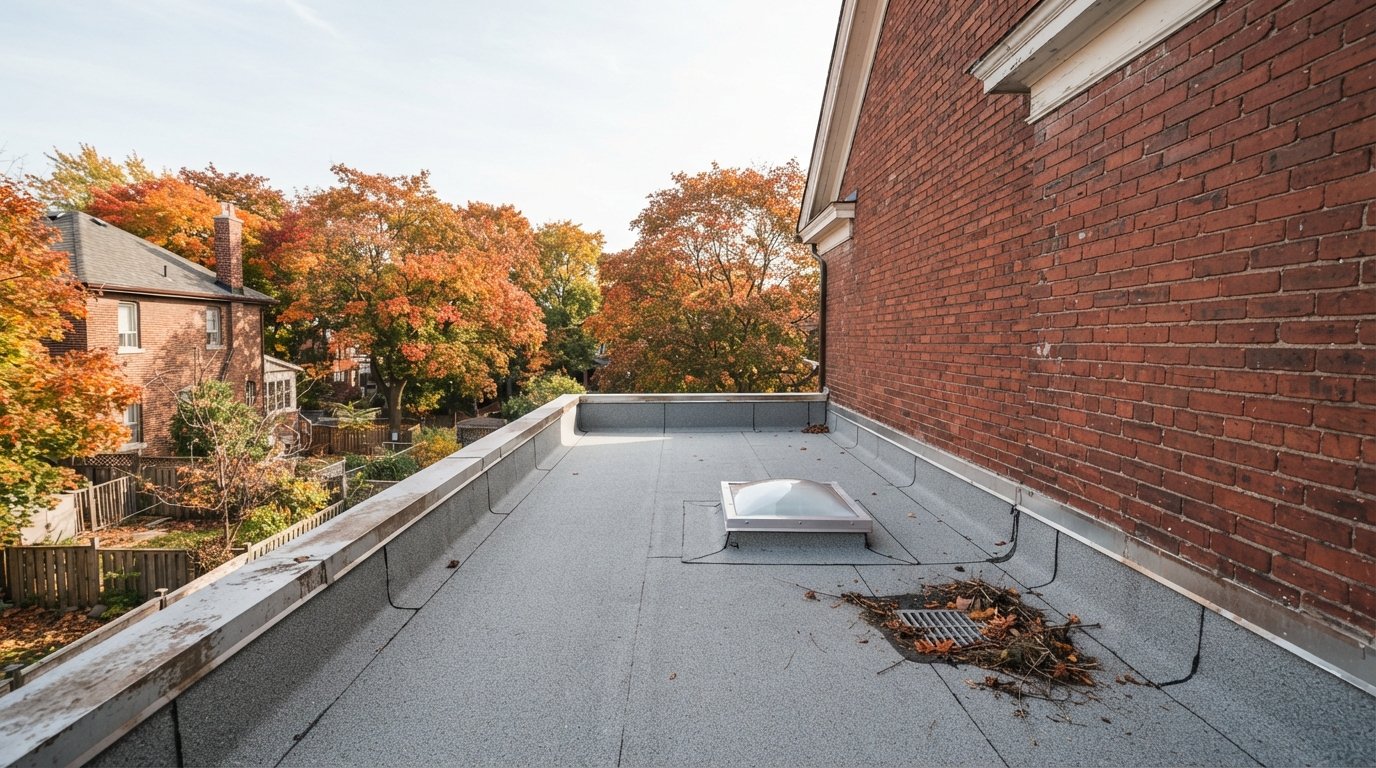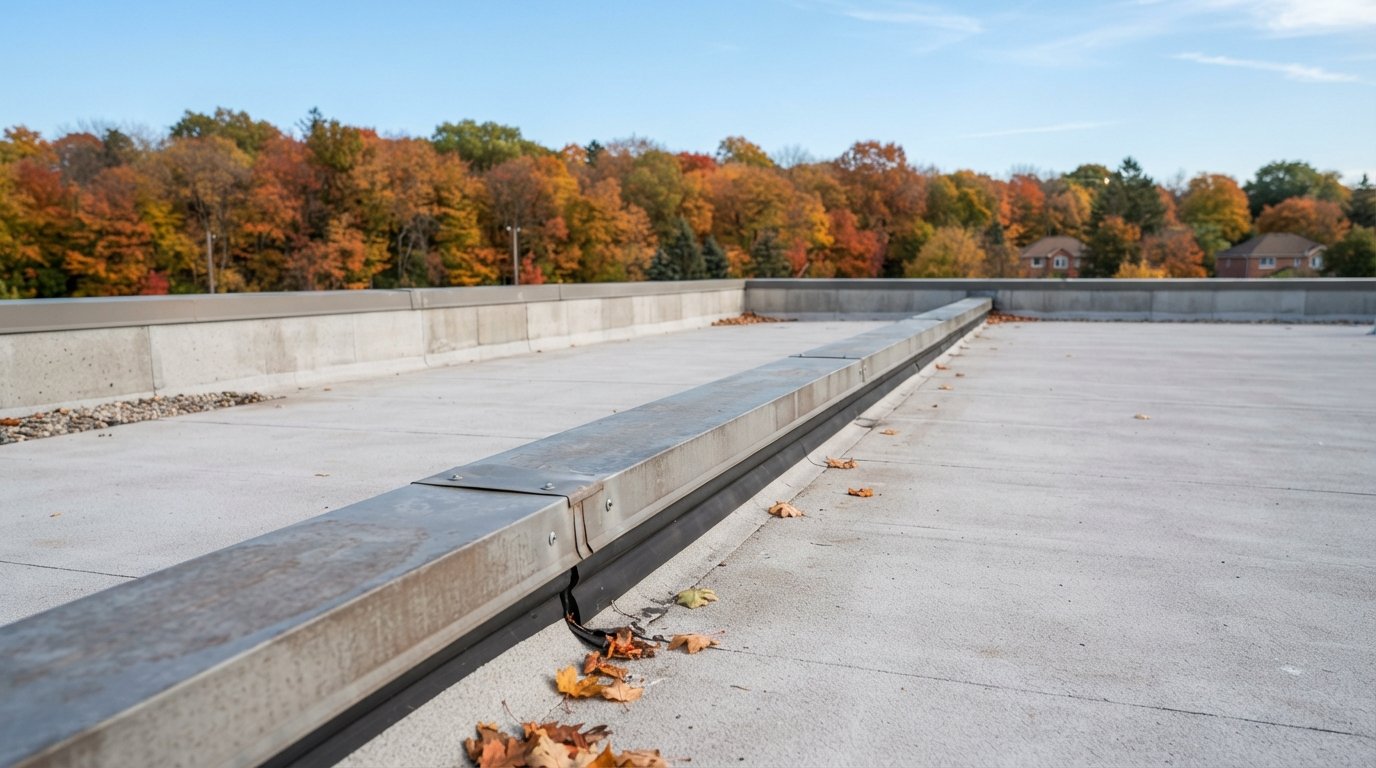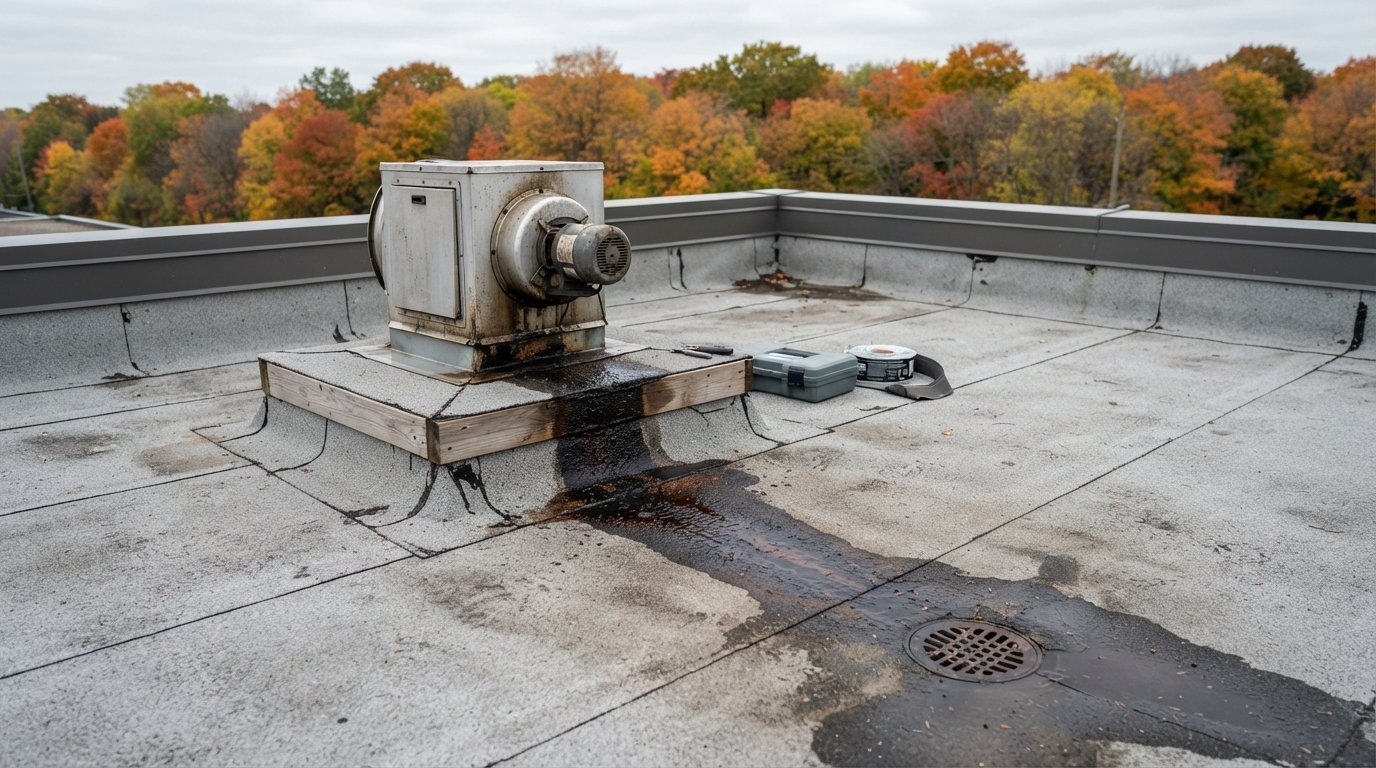

If you have ever traced a water stain back to a skylight, you already know the membrane usually is not the problem. In almost every case we investigate across the GTA, the real culprits are the flat roof skylight flashing leak points Toronto homeowners rarely think to check until the drywall is already stained. Flashing is the thin metal or membrane detail that seals the transition between the skylight curb and the surrounding roof, and it takes far more abuse than the flat field of the roof itself. Understanding exactly where these flashing leak points develop, and why, is the difference between a quick, inexpensive repair and a full interior renovation. This guide walks through the anatomy of flat roof skylight flashing, the specific leak points Toronto crews see most often, and what a properly detailed flashing system should look like on both residential and commercial buildings.
At Flat Roofs Toronto, our crews spend a significant portion of every summer diagnosing skylight leaks that homeowners assumed meant a new roof. More often, the fix is isolated to a few centimetres of failed flashing. This article breaks down the common failure zones, the materials that hold up best in our climate, and a realistic maintenance schedule so you can stay ahead of the next heavy summer downpour.
Understanding Flat Roof Skylight Flashing Before You Chase a Leak
Flashing is not a single strip of metal , it is a system of overlapping components designed to shed water away from the skylight curb in every direction. On a flat or low-slope roof, this system has to work harder than it would on a pitched roof because water does not run off quickly; it can pond, linger, and probe for the smallest gap. That is precisely why flat roof skylight flashing leak points Toronto inspectors flag tend to cluster around joints, corners, and transitions rather than the flat panels themselves.
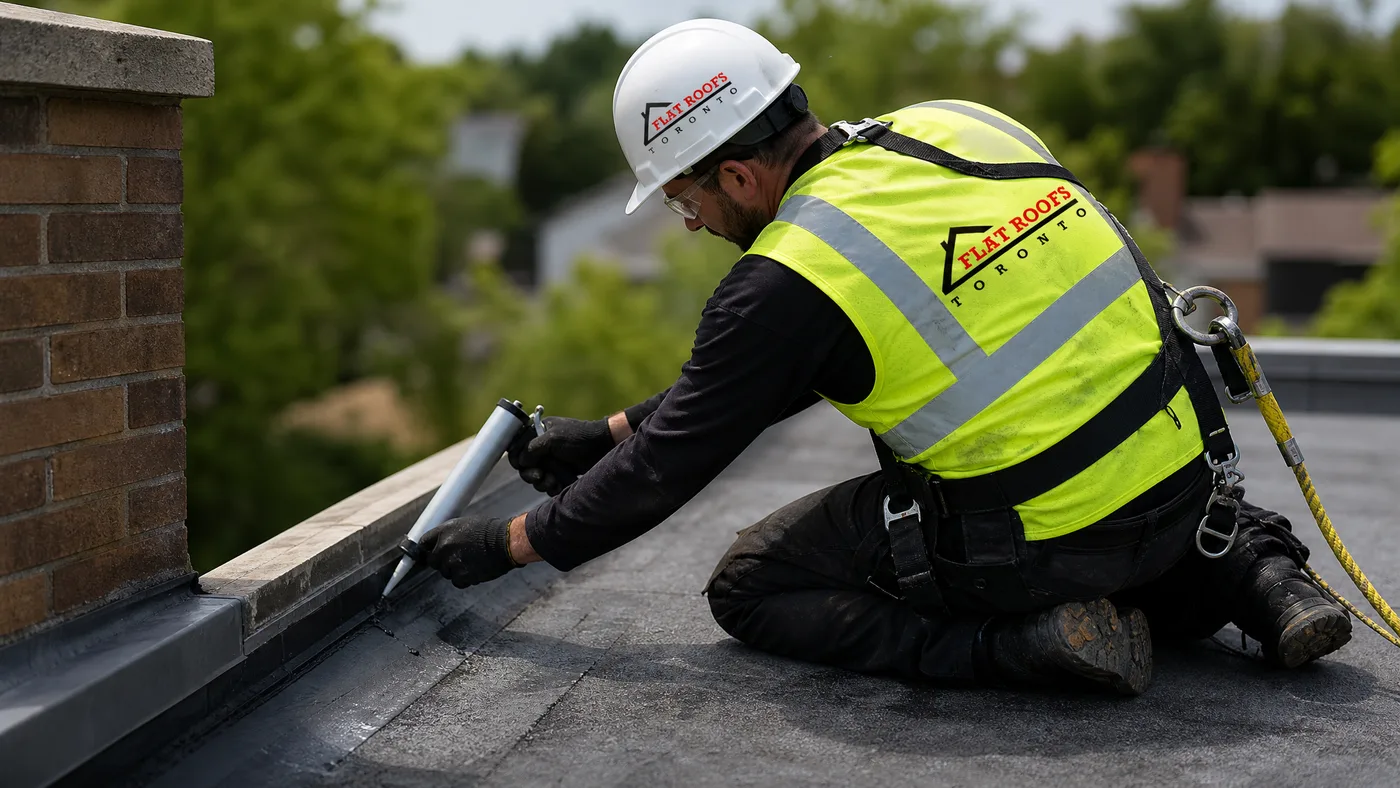
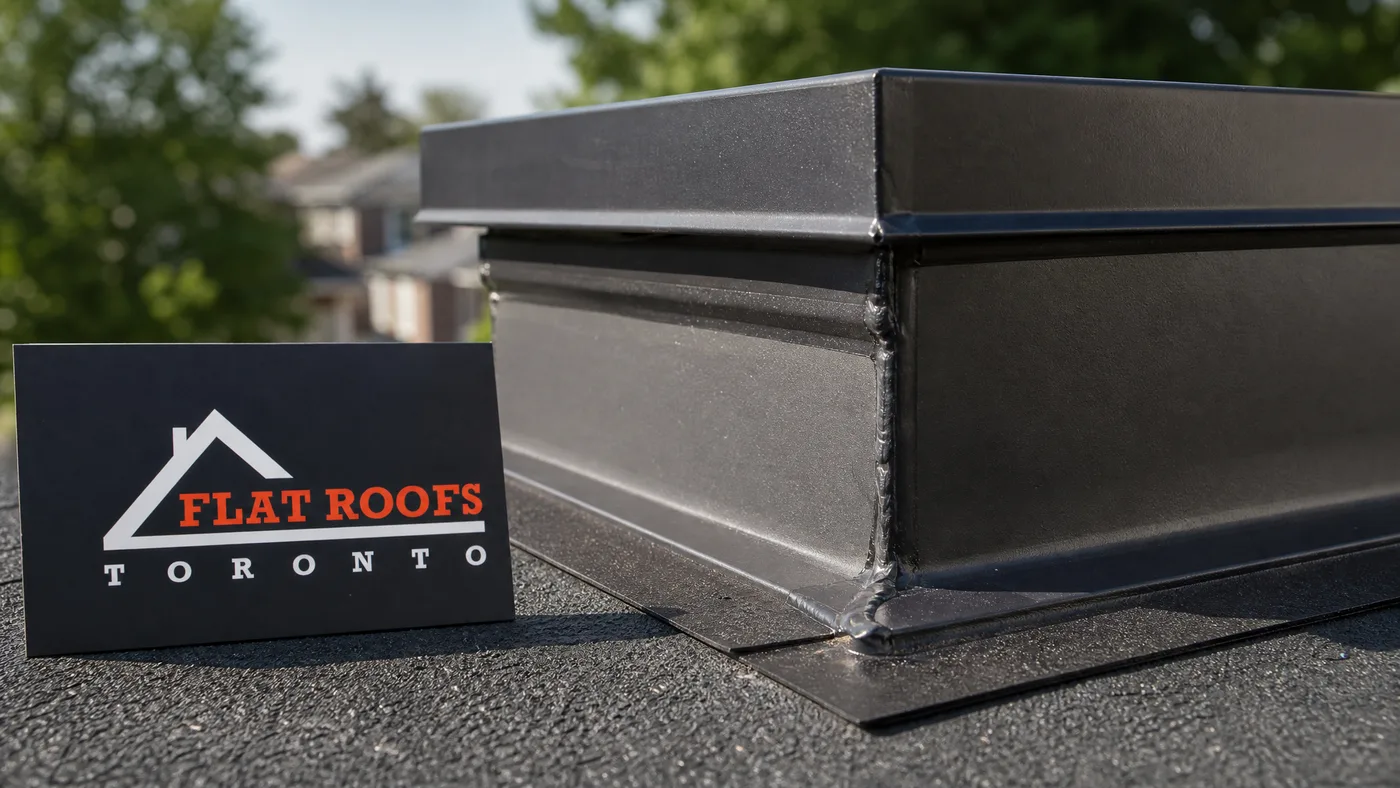
A typical flashing assembly includes a base flashing that ties into the roof membrane, counter-flashing or cap flashing that covers the top edge, corner boots or welded corner pieces, and a sealant bead as the final line of defence. Each component depends on the one before it being installed correctly. When any single piece is undersized, poorly lapped, or aged past its service life, water finds a way through, and the resulting leak often shows up metres away from where it actually enters, making diagnosis tricky without professional experience.
The Four Flat Roof Skylight Flashing Leak Points Toronto Crews See Most
After years of service calls across Toronto, Mississauga, and the surrounding GTA, four locations account for the vast majority of confirmed leaks. Recognizing these flat roof skylight flashing leak points Toronto property owners deal with can help you narrow down where to look before booking an inspection.
The first is the corner joints, where two flashing runs meet at 90 degrees. Corners are almost always hand-formed or welded on site, which means the quality of the original installation matters enormously. A rushed or poorly sealed corner is the single most common flat roof skylight flashing leak point on residential homes.
The second is the upper curb-to-membrane transition, where the base flashing ties into the surrounding roof membrane. If the membrane was not properly heat-welded or adhered to the flashing flange, wind-driven summer rain can work its way underneath.
The third is the counter-flashing reglet, the groove cut into a parapet or wall where the top of the flashing is tucked and sealed. Movement in the building structure over time can pull the flashing loose from the reglet, opening a gap that is often invisible from the ground.
The fourth is the sealant bead itself. Sealant is meant to be a backup, not the primary defence, but on older installations it is sometimes the only thing standing between dry drywall and a soaked attic. UV exposure through a long Toronto summer breaks sealant down faster than most homeowners expect.
| Leak Point | Typical Cause | Warning Sign | Repair Complexity |
|---|---|---|---|
| Corner joints | Poor field fabrication or welding | Staining directly below skylight corners | Moderate |
| Curb-to-membrane transition | Incomplete heat-weld or adhesive bond | Damp insulation near curb base | Moderate to high |
| Counter-flashing reglet | Building movement or loose fasteners | Gap visible when viewed from roof level | Low to moderate |
| Sealant bead | UV degradation and cracking | Chalky, brittle, or cracked sealant surface | Low |
How Toronto Summers Stress Flashing Faster Than You Think
Toronto’s climate is not gentle on roofing details. Long stretches of intense summer sun bake flashing and sealant, causing metal to expand and contract daily while UV rays break down protective coatings. Add in sudden, heavy summer thunderstorms that dump significant rainfall in a short window, and you have the ideal conditions to expose any weakness in a flat roof skylight flashing system. Toronto’s humid summer air also means that once water does get past a flashing joint, it lingers in the assembly rather than drying out quickly, encouraging rot in the surrounding wood curb.
This is why flat roof skylight flashing leak points Toronto buildings develop are rarely random. They follow predictable patterns tied to sun exposure, prevailing wind direction, and how much thermal movement a particular flashing detail experiences. A skylight facing west, for example, absorbs more direct afternoon heat and often shows flashing wear years before an identical skylight on a shaded, north-facing section of the same roof.
Regular inspection matters more in this climate than in drier regions. A flashing detail that might last two decades in a mild climate can show real fatigue in twelve to fifteen years here, especially if the original installation used lower-grade materials to cut costs.
Flashing Materials: What Actually Holds Up in the GTA
Not all flashing materials perform equally, and the choice made during the original skylight installation has lasting consequences for how many flat roof skylight flashing leak points a building will eventually develop. Galvanized steel is common and affordable but is prone to corrosion once its protective coating is compromised. Aluminum resists corrosion better but can be more brittle in extreme temperature swings. Membrane-based flashing, welded directly from the same material as the roof, tends to offer the most reliable long-term seal because it moves with the roof rather than against it.
| Flashing Material | Average Service Life | Best Suited For | Key Weakness |
|---|---|---|---|
| Galvanized steel | 12 to 18 years | Budget residential projects | Corrosion once coating fails |
| Aluminum | 18 to 25 years | Residential and light commercial | Can crack under extreme thermal cycling |
| Welded membrane flashing | 20 to 30 years | Residential and commercial flat roofs | Requires skilled installation to weld properly |
| Copper | 30-plus years | Premium residential applications | Higher upfront material cost |
Whenever we replace flashing that has failed prematurely, the root cause is almost always a mismatch between material choice and the specific curb design, or a shortcut taken during original installation. Choosing the right material up front is one of the most effective ways to prevent future flat roof skylight flashing leak points from developing at all.
Residential vs Commercial Flat Roof Skylight Flashing Differences
The core principles of flashing design are the same whether you own a bungalow in Etobicoke or a commercial plaza in Markham, but the scale and detailing differ. Residential skylights typically use smaller curbs and simpler flashing runs, which means fewer joints but also less redundancy if one section fails. Commercial installations often involve larger skylight arrays, more complex parapet details, and multiple penetrations close together, which multiplies the number of potential flat roof skylight flashing leak points across a single roof.
Commercial buildings also see more foot traffic on the roof for HVAC servicing, which can physically disturb flashing over time if crews are not careful. Residential roofs, by contrast, are more likely to develop issues from age and weather exposure alone, since they see far less activity.
Whether you need residential skylight flashing repaired or a full commercial skylight flashing overhaul, the diagnostic approach should always start the same way: a methodical check of every joint, transition, and reglet before assuming the membrane itself is at fault.
Inspection Timing and What a Thorough Check Should Cover
Most flat roof skylight flashing leak points Toronto buildings develop are caught early with a simple twice-yearly visual inspection. Spring and late summer are ideal windows, since spring reveals any damage from the prior winter’s thermal cycling and late summer catches wear from UV exposure and storm activity before autumn rains arrive.
| Inspection Task | Recommended Frequency | Who Should Perform It | Notes |
|---|---|---|---|
| Visual check of corner joints | Twice yearly | Property owner or contractor | Look for gaps, rust streaks, or lifted seams |
| Sealant bead inspection | Annually | Contractor | Check for cracking, chalking, or shrinkage |
| Counter-flashing reglet check | Annually | Contractor | Confirm flashing is still fully seated |
| Full flashing system audit | Every 3 to 5 years | Licensed roofing contractor | Recommended after any major storm event |
An attic insulation check is also worth pairing with a flashing inspection, since damp or compressed insulation directly beneath a skylight is often the first physical evidence of a slow leak that has not yet reached visible drywall.
Warning Signs You Should Never Ignore
Some signs of failing flashing are subtle, but a few should prompt an immediate call rather than a wait-and-see approach. Discolouration or a faint musty odour near the skylight opening, visible daylight around the frame from inside the attic, and soft or spongy roofing material near the curb are all strong indicators that one of the flat roof skylight flashing leak points has already let water into the assembly.
Do not attempt to reseal flashing yourself with a generic caulking tube. Consumer-grade sealant is not rated for the movement and UV exposure a roof-level flashing joint experiences, and it typically fails again within a single season, masking the real problem while it quietly worsens underneath. If you notice a small leak developing, our emergency roof repair team can stabilize the situation before it spreads to insulation or framing.
For homeowners considering a broader roof replacement rather than a spot repair, our residential flat roof installation and commercial flat roof installation services include properly detailed flashing from the outset, engineered specifically to reduce future flat roof skylight flashing leak points rather than simply patching around an ageing curb.
Choosing the Right Contractor for Flashing Repairs
Flashing repair looks deceptively simple from the ground, which is why so many homeowners hire whoever is cheapest rather than whoever is most qualified. A contractor experienced specifically with flat roof skylight flashing leak points Toronto weather produces will know to check the reglet depth, confirm proper membrane compatibility, and test the repair under simulated water flow before calling the job complete.
Ask any contractor bidding on flashing work how they handle corner detailing, what material they recommend for your specific curb type, and whether they warranty the flashing separately from the rest of the roof. A contractor who cannot answer these questions confidently is unlikely to solve the underlying problem, and you may find yourself calling someone else within a year or two. Browsing our project gallery is a useful way to see examples of properly completed flashing work before committing to a quote.
Frequently Asked Questions
What are the most common flat roof skylight flashing leak points Toronto homes experience?
How can I tell if my skylight leak is a flashing issue rather than a membrane issue?
Why do flat roof skylight flashing leak points get worse in summer?
Can I repair flat roof skylight flashing myself?
How often should flashing around a flat roof skylight be inspected?
What flashing material best prevents future leak points on a flat roof skylight?
Schedule a Flat Roof Skylight Flashing Inspection Today
Ignoring early warning signs is the most expensive mistake a property owner can make when it comes to flat roof skylight flashing leak points Toronto weather exposes year after year. Flat Roofs Toronto has diagnosed and repaired flashing failures across the GTA for years, and our crews know exactly where to look first on every type of skylight curb and roofing system.
Call us today at (647) 333-3528 or request a free inspection to get started.
Flat Roofs Toronto proudly serves Toronto, Mississauga, Markham, Vaughan, Brampton, Oakville, and Burlington.