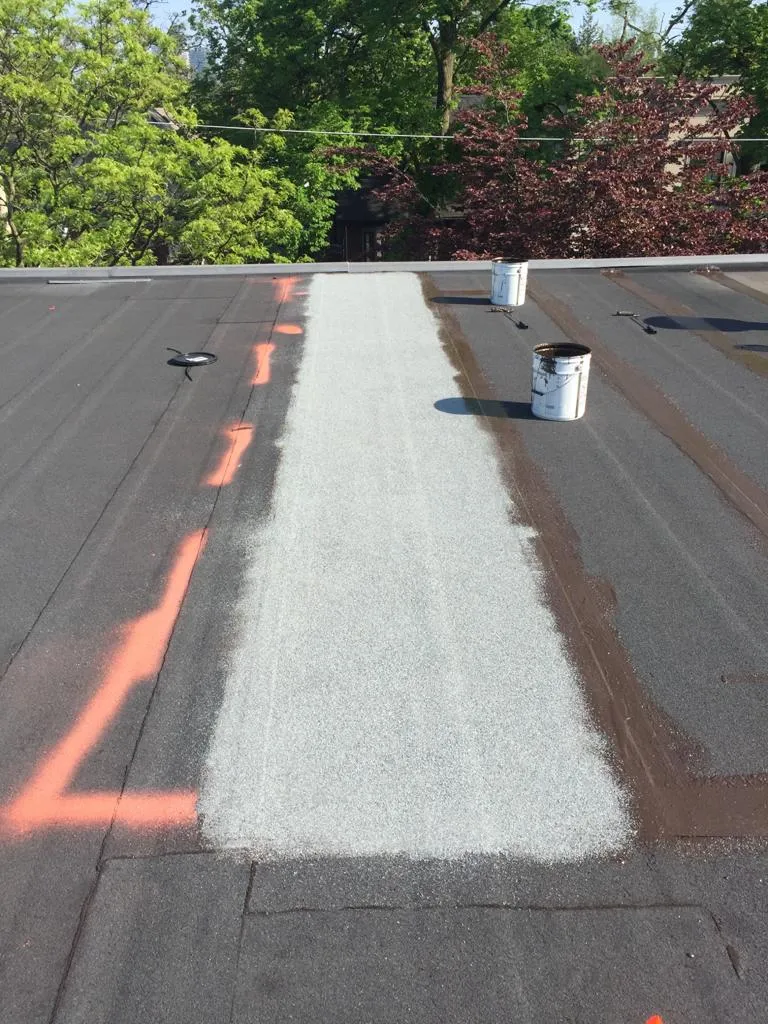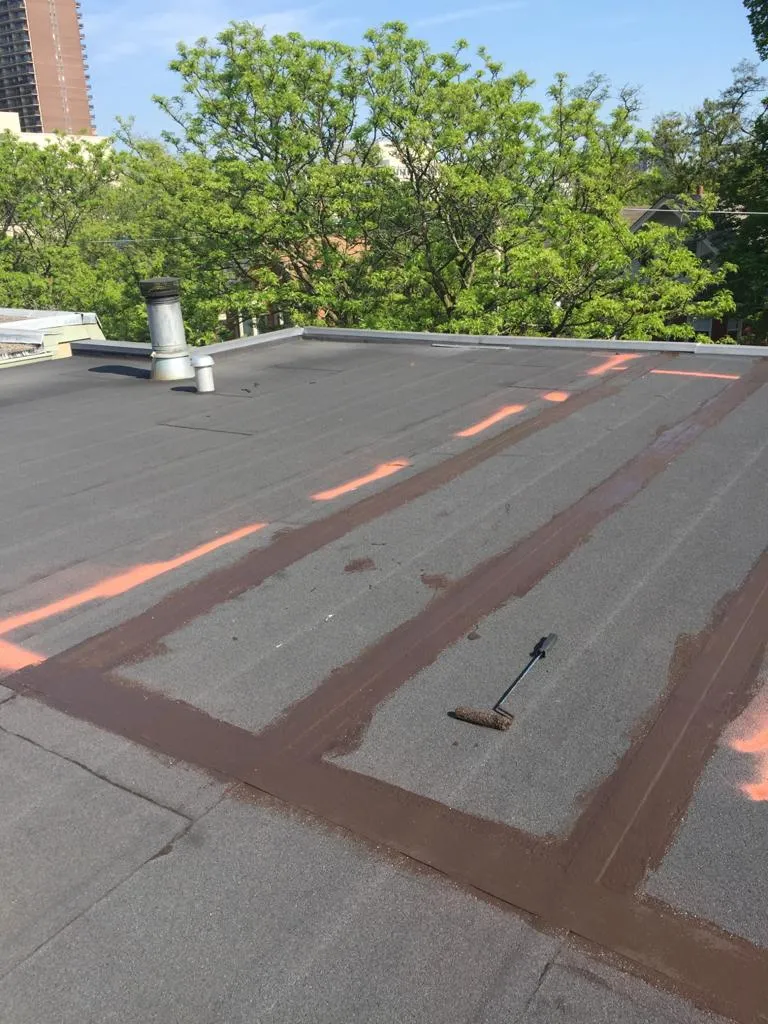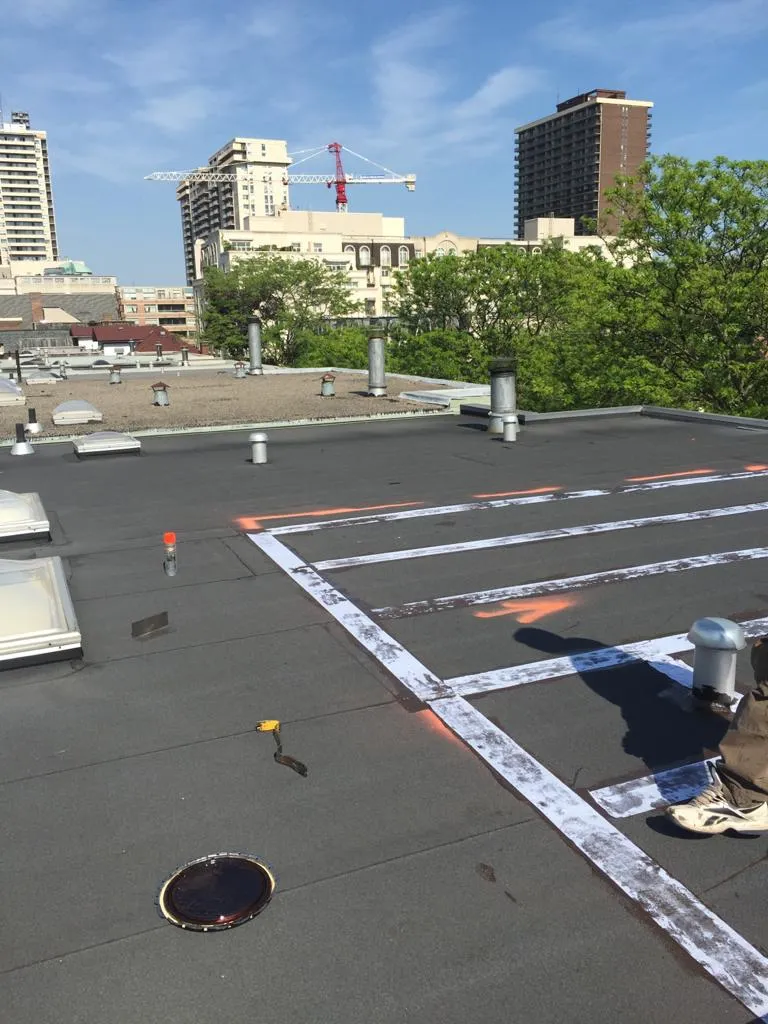

Toronto’s climate is uniquely destructive to flat roofs. The combination of extreme cold winters, hot humid summers, approximately 60-80 freeze-thaw cycles per year, heavy snow loads, ice dam formation, intense UV exposure, and wind-driven rain creates a relentless assault on every component of a flat roof system. Understanding exactly how toronto weather flat roof damage occurs, and what preventive measures are most effective, helps building owners protect their investment and maximize the service life of their flat roof.
Threat #1: Freeze-Thaw Cycling
Freeze-thaw cycling is the single most destructive weather phenomenon for Toronto flat roofs. Every time the temperature crosses the 0°C threshold, water that has infiltrated membrane seams, flashing joints, and masonry mortar expands as it freezes (water expands approximately 9% when it becomes ice), physically forcing open any gap or weakness in the waterproofing system. When the ice thaws, the gap remains slightly larger, allowing more water to enter during the next cycle. Over 60-80 cycles per year, this progressive mechanical widening transforms microscopic membrane imperfections into active leak pathways.
Threat #2: UV Degradation
Ultraviolet radiation from the sun breaks down the polymer chains in all organic roofing materials. On a flat roof, the membrane is fully exposed to direct overhead UV radiation for every hour of daylight, unlike wall surfaces that receive angled, less intense UV exposure. Toronto receives approximately 2,000 hours of sunshine annually, and the flat roof surface accumulates the maximum possible UV dose. Over time, UV degradation causes membrane surfaces to chalk, crack, lose flexibility, and eventually become brittle, at which point freeze-thaw cycling rapidly opens failures in the embrittled material.
Threat #3: Ice Dams
Ice dams form when heat escaping through the roof deck melts the bottom layer of snow on the roof surface. This meltwater flows toward the colder roof edges (which overhang unheated space) and refreezes into a solid ice barrier. Behind this ice dam, subsequent meltwater pools, creating standing water on the roof surface that can penetrate any weakness in the membrane. On flat roofs, ice dams are particularly dangerous because the minimal slope provides no natural drainage path, the ponded water sits on the membrane until it either evaporates, drains through a cleared path, or finds a leak pathway into the building.
Threat #4: Wind Damage
Toronto experiences wind events exceeding 90 km/h several times per year, and winter storms can produce gusts exceeding 120 km/h. Wind creates uplift forces on flat roof membranes, particularly at edges, corners, and around rooftop equipment where turbulence concentrates. If the membrane is not properly secured (adhered, mechanically fastened, or ballasted), wind uplift can peel the membrane from the roof surface, creating catastrophic failure. Even without full membrane peeling, wind can lift and stress membrane edges and flashings, breaking sealant bonds and opening gaps for water infiltration.
Seasonal Damage Timeline
| Season | Primary Threats | What to Watch For |
|---|---|---|
| Spring (Mar-May) | Freeze-thaw peak, ice dam melt, heavy rain | Active leaks from winter damage, ponding water, flashing separations |
| Summer (Jun-Aug) | UV degradation, thermal expansion, severe storms | Membrane blistering, seam stress, hail damage |
| Fall (Sep-Nov) | Leaf debris blocking drains, early freeze | Clogged drains, ponding, pre-winter flashing condition |
| Winter (Dec-Feb) | Snow load, ice dams, freeze-thaw | Excessive snow depth, ice at edges, ceiling moisture inside |
Prevention Strategies
- Biannual professional inspections (spring + fall) catch developing damage before it escalates
- Proper attic insulation (R-50+ recommended) reduces heat loss that causes ice dams
- Adequate ventilation keeps the roof deck cold in winter, preventing snowmelt at the membrane surface
- Drain maintenance, clear drains quarterly and after every major storm to prevent ponding
- Prompt repairs, every small repair deferred through one winter becomes a larger, more expensive repair by spring
- Reflective coatings on dark membranes reduce UV degradation and surface temperature extremes
- Proper membrane attachment, fully adhered systems resist wind uplift better than mechanically attached in high-wind zones
How does Toronto weather damage flat roofs?
How do I prevent ice dams on my flat roof?
Protect Your Flat Roof from Toronto Weather, Call Flat Roofs Toronto
Call (416) 661-7663 or schedule a seasonal inspection online.