
A flat roof leak rarely announces itself with a dramatic waterfall through the ceiling. Instead, flat roof leaks are insidious, they begin as small moisture intrusions that travel along the roof deck, migrate through insulation, and emerge as water stains or damp spots far from the actual point of failure. This disconnect between where the water appears inside and where the leak originates on the roof surface makes flat roof leak detection toronto one of the most challenging diagnostic tasks in residential and commercial roofing. This guide explains the systematic process professional roofers use to find flat roof leaks, the tools and technologies available, common leak sources specific to Toronto flat roofs, and what you can do before calling for professional help.
Why Flat Roof Leaks Are Hard to Find
On a pitched roof, water follows gravity straight down, the leak location on the ceiling usually aligns closely with the breach in the roof surface above. On a flat roof, the dynamics are completely different. Flat roofs have minimal slope (typically 1/4 inch per foot to 1/2 inch per foot), meaning water moves laterally across the roof deck before finding a path downward. A breach in the membrane at one corner of the roof can result in water damage appearing 10 or even 20 feet away at the opposite end of the building. The water travels along the top of the insulation layer, pooling in low spots in the roof deck, following seams in the vapour barrier, and eventually penetrating through the weakest point in the ceiling assembly below, which is almost never directly below the actual roof breach.
Common Flat Roof Leak Sources in Toronto
| Leak Source | Frequency | Cause | Detection Difficulty |
|---|---|---|---|
| Membrane seam failure | Very common | Age, UV degradation, poor original welding | Moderate, visible on inspection |
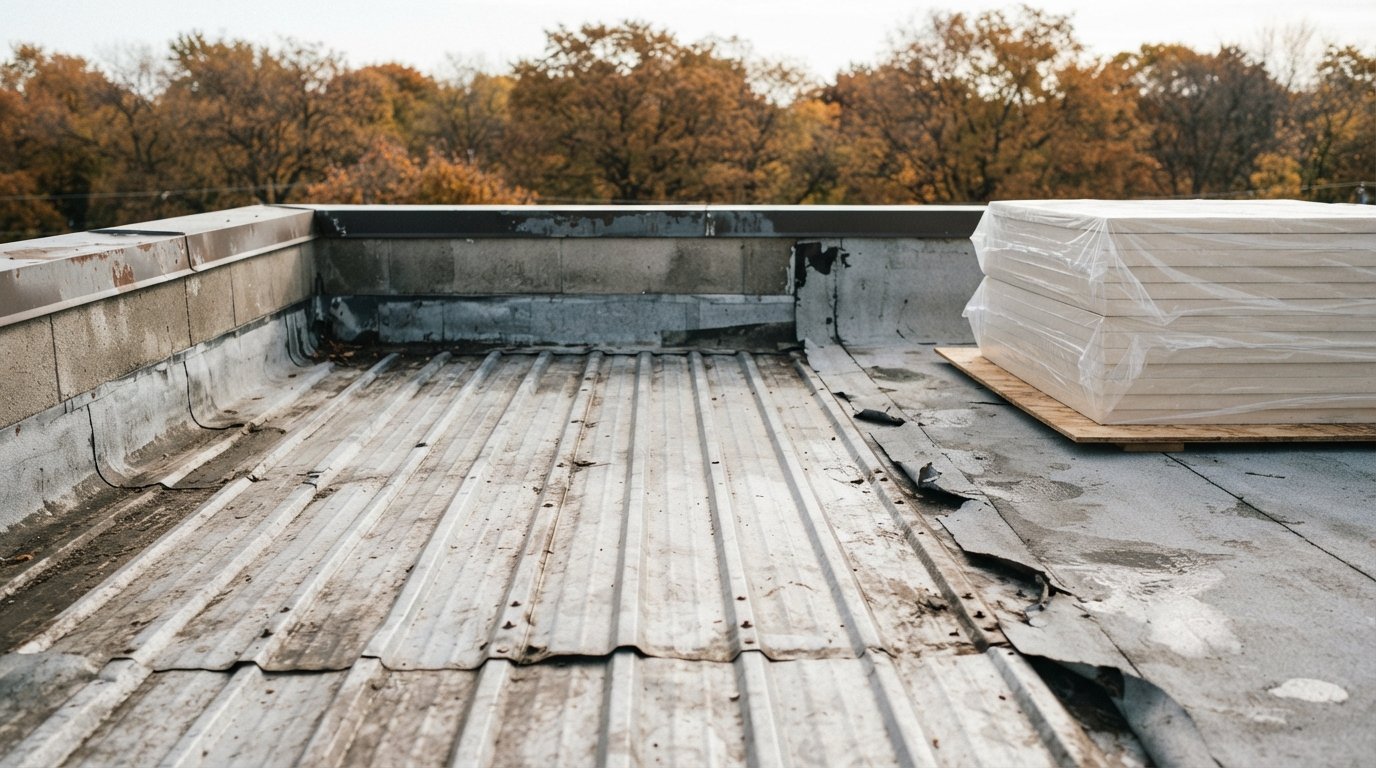
| Flashing at parapet walls | Very common | Thermal movement separates flashing from wall | Moderate, check base flashing |
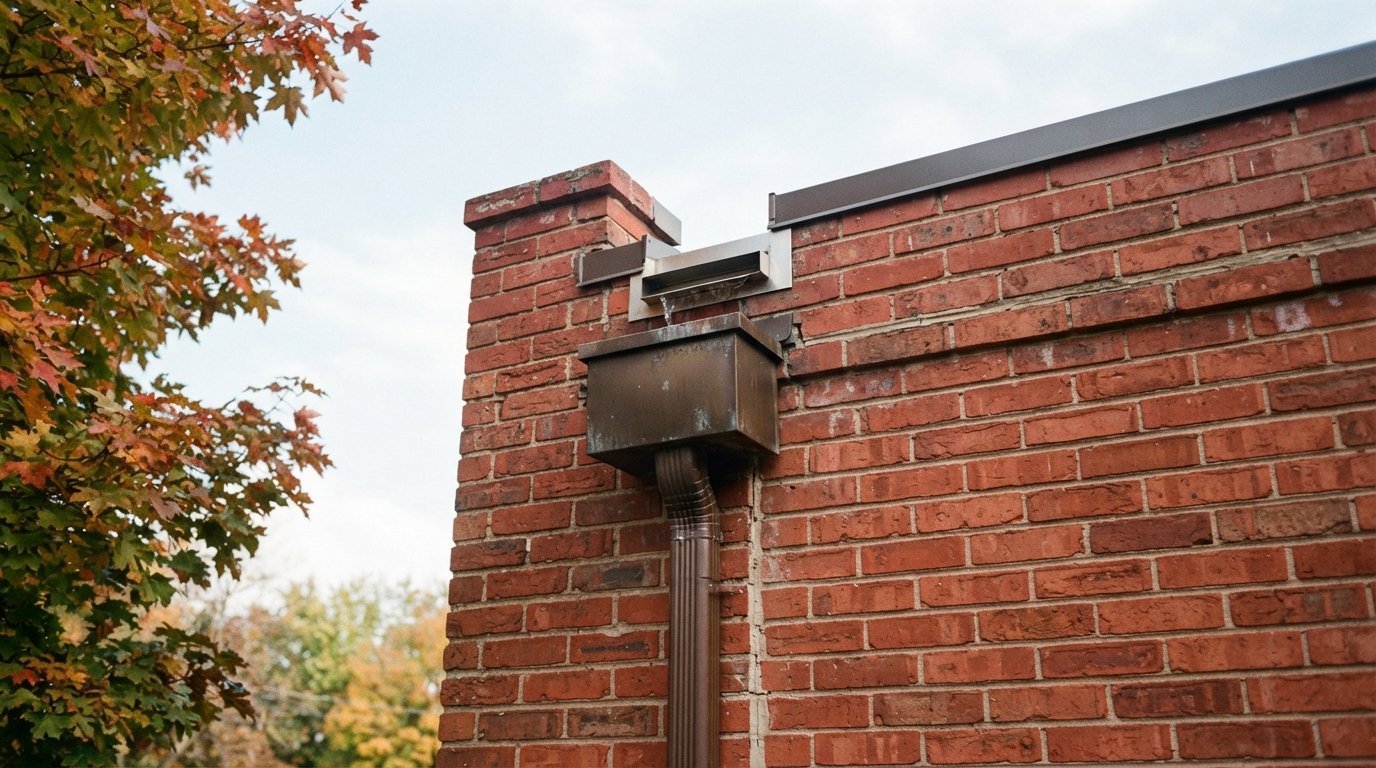
| Drain and scupper areas | Common | Debris blockage, membrane shrinkage at drain ring | Easy, visible ponding/debris |
| Pipe and vent penetrations | Common | Failed sealant, boot deterioration | Easy, inspect each penetration |
| Skylight flashing | Common | Improper integration with membrane | Moderate, check curb base |
| HVAC equipment curbs | Common (commercial) | Vibration loosens flashing, condensation damage | Moderate, check all equipment bases |
| Membrane puncture | Occasional | Foot traffic, dropped tools, animal damage | Hard, small holes invisible from above |
| Insulation saturation | Occasional | Trapped moisture from original installation or prior leak | Hard, requires infrared scan |
DIY Leak Detection: What Homeowners Can Check
Before calling a professional, Toronto homeowners can perform a basic visual inspection of their flat roof to identify obvious leak sources. Safety first, only access your flat roof if you have safe, stable ladder access and the roof surface is dry. Never walk on a flat roof during or immediately after rain, snow, or ice.
- Check drains and scuppers: Clear any debris (leaves, gravel, ice) blocking drainage. Ponding water around clogged drains is the most common cause of flat roof leaks and the easiest to fix
- Look for visible membrane damage: Walk the roof surface slowly, scanning for tears, punctures, blisters, or lifted seams. Mark any damage with chalk or tape for the repair contractor
- Inspect all penetrations: Check around every pipe, vent, skylight curb, and equipment mount for cracked sealant, separated flashing, or visible gaps
- Examine parapet walls: Look for separated base flashing, cracked counter-flashing, or deteriorated caulking where the membrane meets the vertical wall surface
- Check interior correlation: Note exactly where water appears inside the building. Measure the distance from the nearest walls. While the leak source may not be directly above, this information helps the professional roofer narrow the search area
Professional Leak Detection Methods
Visual Inspection and Core Sampling
A professional flat roof inspection begins with a systematic visual survey of the entire roof surface, with particular attention to all seams, penetrations, flashings, and drainage points. Experienced flat roof technicians can identify many leak sources through visual inspection alone based on weathering patterns, membrane discolouration, and subtle surface irregularities that indicate subsurface moisture. When visual inspection is inconclusive, core sampling involves cutting a small section of the roof assembly to examine the insulation layer for moisture saturation, wet insulation confirms active moisture infiltration in that area and narrows the search zone.
Infrared Thermographic Scanning
Infrared (IR) thermographic scanning is the most powerful non-destructive leak detection technology available for flat roofs. The technique exploits a simple physical principle: wet insulation retains heat differently than dry insulation. After sunset on a warm day, the roof surface cools rapidly, but areas where the insulation is saturated with water retain heat longer because water has a much higher thermal mass than dry insulation. An infrared camera captures this temperature differential as a thermal image, clearly showing wet areas as bright warm zones against the cooler dry background. IR scanning can identify moisture intrusion areas with remarkable precision, often pinpointing wet zones to within a few square feet, without cutting into the roof surface.
Electronic Leak Detection (ELD)
Electronic leak detection uses electrical conductivity to locate breaches in non-conductive membrane systems (TPO, PVC, EPDM). The technique works by applying a low-voltage electrical field across the membrane surface, where the membrane is intact, no current flows because the membrane is an electrical insulator. Where a breach exists (tear, puncture, failed seam), water provides a conductive path and the detection equipment registers a signal at that exact location. ELD can locate holes as small as a pinhead, far smaller than any visual inspection method can detect, making it the gold standard for locating elusive flat roof leaks that resist conventional diagnostic approaches.
Flood Testing
Flood testing involves temporarily damming sections of the flat roof and filling them with a controlled depth of water (typically 2-4 inches). The water is left in place for 24-48 hours while the interior ceiling below is monitored for any moisture appearance. By systematically flooding different sections of the roof, the leak source can be isolated to a specific zone. Flood testing is the most definitive leak detection method, if water appears inside during the test, the leak is confirmed within the flooded section. However, it requires a structurally sound roof that can support the additional water weight, dry weather, and adequate drainage control.
Leak Detection Costs in Toronto
| Detection Method | Cost Range | Best For |
|---|---|---|
| Visual inspection + report | $200 – $500 | Obvious leaks, routine assessment |
| Infrared thermographic scan | $500 – $1,500 | Hidden moisture, large roof areas |
| Electronic leak detection | $500 – $2,000 | Single-ply membranes, pinhole leaks |
| Flood testing (per section) | $300 – $800 | Definitive confirmation, warranty claims |
| Core sampling (per core) | $100 – $300 | Insulation moisture confirmation |
How do I find where my flat roof is leaking?
How much does flat roof leak detection cost in Toronto?
Why does my flat roof leak appear far from the actual hole?
Stop the Leak, Call Flat Roofs Toronto
Every day a flat roof leak goes unrepaired, it causes additional damage to insulation, decking, and interior finishes. Flat Roofs Toronto provides professional leak detection and repair services across Toronto and the GTA.
Call us today at (416) 661-7663 or request emergency leak service online.