
If you are planning a flat roof replacement or new installation this summer, a self adhered modified bitumen flat roof Toronto project is one of the smartest investments you can make in your property. Self-adhered modified bitumen membranes have evolved dramatically over the past decade, and the 2026 generation of products offers superior adhesion, impressive UV resistance, and a faster installation process that takes full advantage of Toronto’s warm summer months. Whether you own a low-slope residential home in Mississauga, a multi-unit property in Markham, or a commercial building in Vaughan, understanding how this system works, and what it genuinely costs, will help you make a confident, well-informed decision.
At Flat Roofs Toronto, we have installed hundreds of self-adhered modified bitumen systems across the Greater Toronto Area. This guide draws directly from that field experience. We will walk you through the technology, the installation sequence, 2026 pricing benchmarks, how self-adhered compares to torch-applied and cold-process alternatives, and the situations where this membrane truly excels. By the end, you will know exactly what to expect from a self adhered modified bitumen flat roof Toronto installation and how to evaluate quotes from any contractor.
What Is a Self Adhered Modified Bitumen Flat Roof Toronto Contractors Actually Install?
Modified bitumen (often abbreviated as “mod-bit”) is an asphalt-based roofing membrane that has been chemically modified with either APP (atactic polypropylene) or SBS (styrene-butadiene-styrene) polymers. APP modification makes the membrane more thermoplastic and UV-stable, while SBS modification adds rubber-like elasticity, allowing the membrane to flex through temperature swings without cracking. Both types are widely used on flat and low-slope roofs across Toronto.
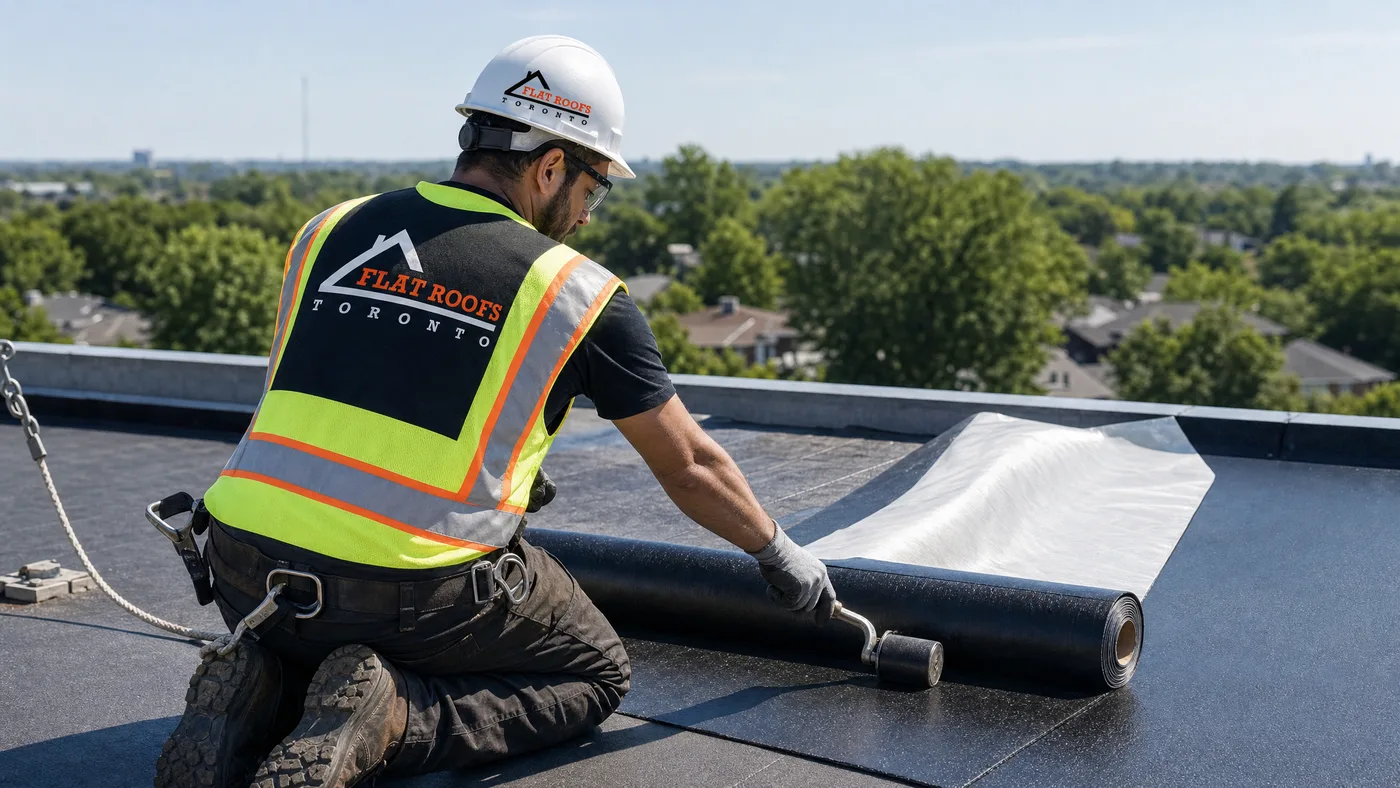
The “self-adhered” designation refers to the installation method. A factory-applied pressure-sensitive adhesive is laminated to the underside of the membrane during manufacturing. On site, the installer peels away a release liner and presses the membrane directly onto a primed substrate. No open flame, no hot tar kettles, no solvent-based cold adhesive, just clean, controlled bonding. This distinguishes self-adhered mod-bit from torch-applied systems (which use a propane torch to melt the backing) and from cold-applied systems (which use a liquid adhesive brushed or rolled onto the deck).
A complete self adhered modified bitumen flat roof Toronto installation is almost always a two-ply system. The base ply is a self-adhered or mechanically fastened base sheet that provides the initial layer of waterproofing and separates the cap sheet from the deck. The cap sheet, the visible top layer, carries a granule surface (typically ceramic or slate granules in grey, tan, or charcoal) that reflects UV radiation, provides traction for maintenance access, and adds fire resistance. Some premium cap sheets incorporate a reflective white or aluminium coating for additional solar reflectance.
In Toronto’s climate, the SBS-modified self-adhered cap sheet is the dominant choice for residential and light commercial projects. SBS membranes remain flexible even in the cold temperatures of early spring and late autumn, which matters during shoulder-season installations. During the peak summer installation window, the period we are currently in as of June 2026, both APP and SBS self-adhered products perform excellently, as the warm substrate temperatures improve adhesive activation and bond strength.
How the Installation Process Works: Step by Step
Understanding the installation sequence helps you evaluate contractor proposals and know what to look for during the job. A properly installed self adhered modified bitumen flat roof Toronto project follows a disciplined sequence that cannot be rushed.
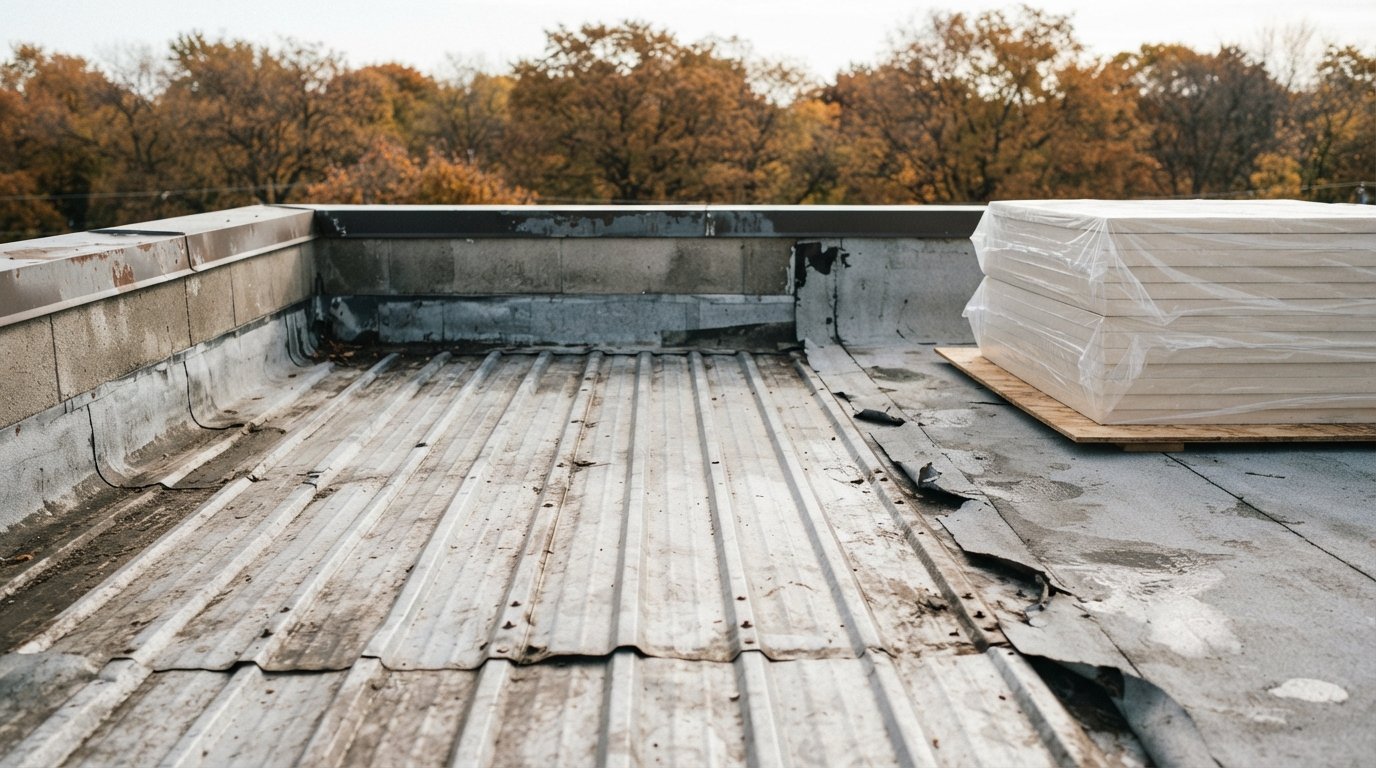
Step 1, Tear-off and deck inspection. The existing membrane is stripped back to the deck. Typically, building codes allow a maximum of two membrane layers on a roof before full tear-off is required. Any saturated insulation is removed and replaced. The deck, usually plywood, OSB, or concrete, is inspected for rot, delamination, or structural weakness. Summer is ideal for this phase because dry conditions mean the deck can be inspected and treated without concern for moisture ingress.
Step 2, Insulation and cover board. New polyisocyanurate (polyiso) insulation boards are mechanically fastened to the deck, followed by a high-density cover board (typically half-inch gypsum or wood-fibre board). The cover board provides a smooth, dimensionally stable substrate for the self-adhered membrane and protects the insulation from foot traffic and uplift forces.
Step 3, Priming. A compatible primer is applied to the cover board surface and allowed to flash off. Priming is a critical step that many budget contractors skip. A proper primer dramatically improves adhesive bond strength and is non-negotiable for warranty compliance with every major manufacturer.
Step 4, Base sheet installation. The self-adhered base sheet is unrolled, positioned, and pressed firmly onto the primed substrate. Laps are staggered, and all seams are rolled with a heavy seam roller to eliminate air pockets and activate the adhesive. Edges and penetrations receive special attention, with additional membrane strips embedded in compatible flashing cement.
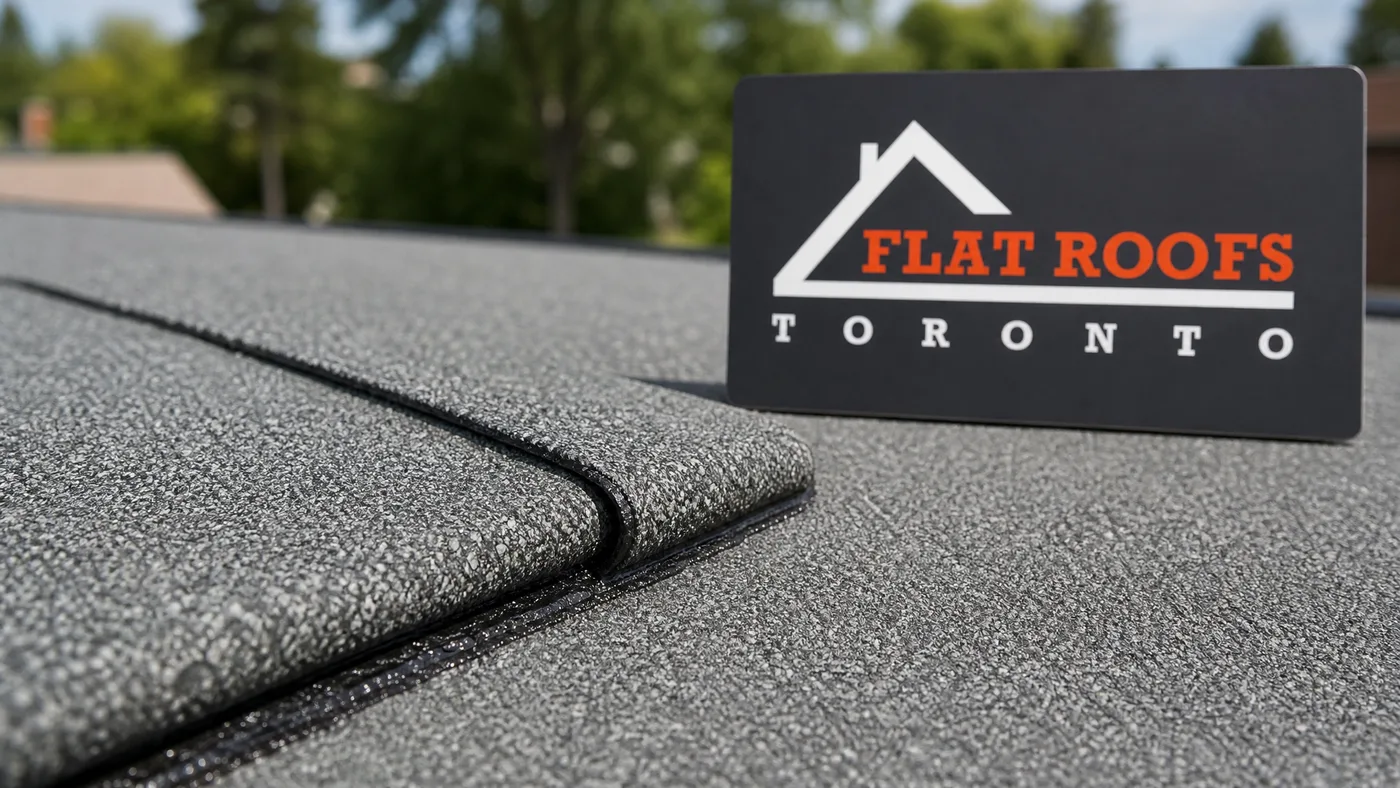
Step 5, Cap sheet installation. The granule-surfaced cap sheet is applied over the base sheet with all seams offset from the base sheet seams. This offset pattern, known as a “broken bond”, is what gives a two-ply system its exceptional redundancy. If a seam in the cap sheet ever admits moisture, the staggered base sheet seam beneath it catches the water before it reaches the deck.
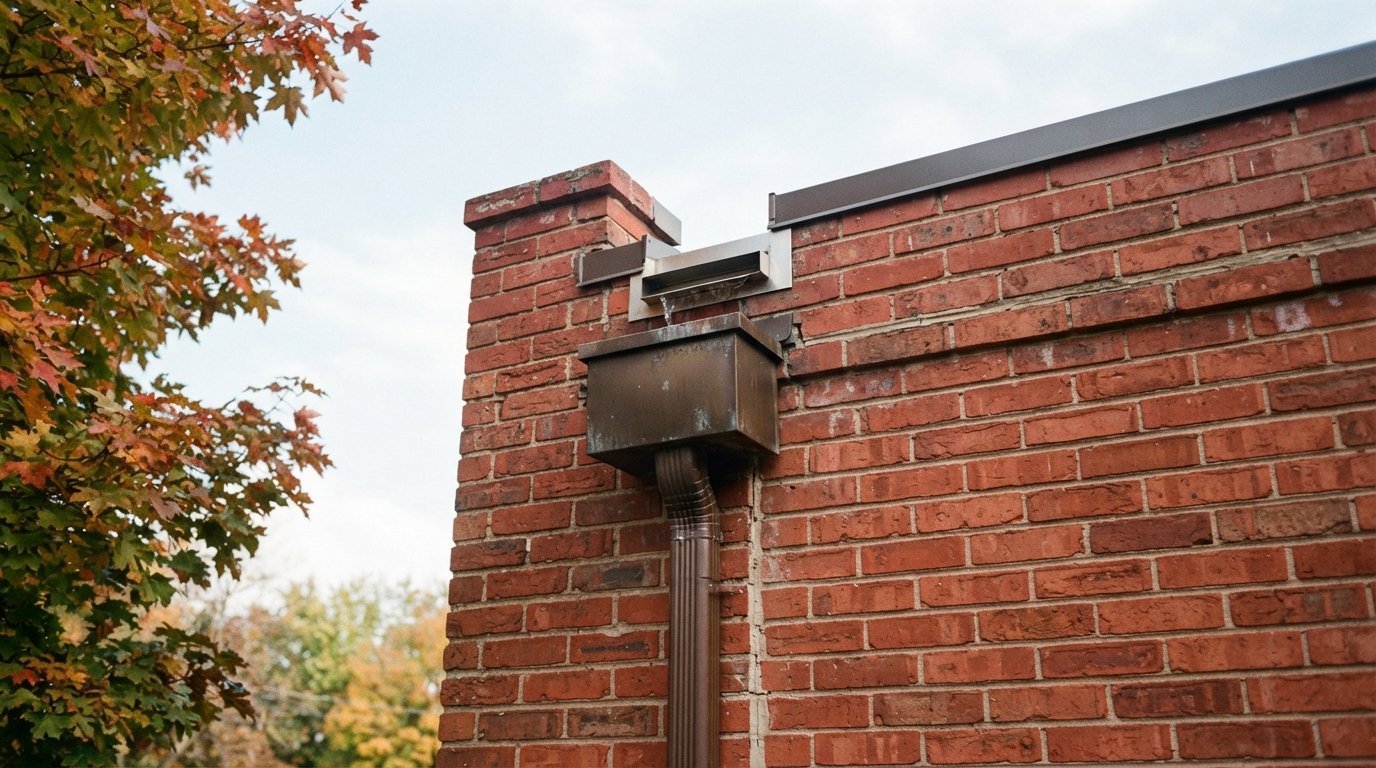
Step 6, Flashings and terminations. All penetrations (pipes, vents, skylights, HVAC curbs) receive metal flanges and membrane flashings. Perimeter edge metal is installed to direct water to drains or scuppers. This is arguably the most skill-intensive part of the job, most flat roof failures originate at flashings, not in the field of the membrane.
Step 7, Final inspection and drainage test. A properly installed self adhered modified bitumen flat roof Toronto project should pass a visual seam inspection followed by a 24-hour drainage test or an electronic leak detection scan for high-value applications.
Self-Adhered vs. Torch-Applied vs. Cold-Applied: A Direct Comparison
When you request quotes for a flat roof in Toronto, contractors will often propose different installation methods. Each has genuine advantages and limitations. The table below summarises how a self adhered modified bitumen flat roof Toronto system compares to the two main alternatives.
| Feature | Self-Adhered Mod-Bit | Torch-Applied Mod-Bit | Cold-Applied Mod-Bit |
|---|---|---|---|
| Fire risk during installation | None, no open flame | High, propane torch required | Low, solvent fumes possible |
| Permit requirements in Toronto | Standard roofing permit | Standard + fire watch may apply | Standard roofing permit |
| Speed of installation | Fast, adhesive is pre-applied | Moderate, torch control needed | Slow, adhesive cure time |
| Suitability for occupied buildings | Excellent, no fumes or flame | Poor, flame and smoke hazard | Moderate, solvent odour |
| Bond consistency | Very high, factory-controlled | Variable, operator dependent | Moderate, surface prep critical |
| Warranty availability (years) | 10 to 20 years (manufacturer) | 10 to 15 years | 10 to 12 years |
For residential properties in Toronto, Brampton, and Oakville where occupants are present during installation, the self-adhered system is almost always the preferred choice. The absence of open flame eliminates the risk of fire damage to the structure, and the lack of solvent fumes means HVAC systems can remain operational without drawing harmful chemicals into the building.
2026 Cost Guide: What to Budget for a Self Adhered Modified Bitumen Flat Roof in Toronto
Pricing for a self adhered modified bitumen flat roof Toronto installation varies based on roof size, storey height, number of penetrations, insulation thickness, and the condition of the existing deck. The table below presents typical 2026 ranges for the Greater Toronto Area based on current material and labour costs.
| Roof Size (sq. ft.) | Basic Two-Ply (supply + install) | Premium Two-Ply with Cover Board | Full System with New Insulation |
|---|---|---|---|
| 200 to 500 sq. ft. | $3,200 to $5,500 | $4,500 to $7,000 | $6,000 to $9,500 |
| 500 to 1,000 sq. ft. | $5,500 to $9,000 | $7,500 to $12,500 | $10,000 to $16,000 |
| 1,000 to 2,000 sq. ft. | $9,000 to $15,000 | $13,000 to $21,000 | $17,000 to $27,000 |
| 2,000 to 4,000 sq. ft. (commercial) | $14,000 to $24,000 | $20,000 to $33,000 | $26,000 to $44,000 |
| 4,000+ sq. ft. (commercial) | $10 to $14 per sq. ft. | $13 to $18 per sq. ft. | $17 to $24 per sq. ft. |
These figures include standard tear-off of one existing membrane layer, disposal, deck inspection, primer, two-ply membrane, standard flashings, and perimeter edge metal. They do not include structural deck repairs, skylight installation (see our residential skylights page for pricing), or attic insulation upgrades (see our attic insulation page). HST is additional.
Several factors can move your quote toward the higher end of the range. Second-storey or higher roofs require additional safety equipment, staging, and labour time. Roofs with numerous penetrations, multiple HVAC units, exhaust vents, drains, and skylights, require proportionally more flashing labour. Poor deck condition discovered during tear-off will add repair costs that cannot always be anticipated in advance. An honest contractor will quote a day-rate or unit-rate for deck repairs and walk you through the condition of the deck before closing up the roof.
Summer pricing in 2026 has seen modest increases of approximately 6 to 8% over 2025 levels, driven by material costs and high demand. If you are planning a project for this summer, booking now rather than waiting until August will both secure your preferred installation window and lock in current pricing.
Lifespan, Warranties and Long-Term Performance in Toronto’s Climate
A properly installed self adhered modified bitumen flat roof Toronto system should deliver 20 to 25 years of service life under normal GTA conditions. This assumes the system was installed correctly, the flashings were detailed to manufacturer specifications, and the roof receives basic annual maintenance. Toronto’s climate, with its freeze-thaw cycling, heavy summer rains, and occasional hail, is demanding, and the polymer modification in SBS membranes is specifically engineered to handle it.
Manufacturer warranties for self-adhered systems range from 10 years for basic products to 20 years for premium cap sheets installed by certified contractors. These are materials-only warranties unless you upgrade to a full system warranty, which covers both materials and labour. Full system warranties from manufacturers such as IKO, Soprema, and Tremco require installation by a certified roofing contractor and use of the full manufacturer’s approved system, base sheet, primer, cap sheet, and compatible flashings all from the same product family.
In addition to the manufacturer warranty, reputable Toronto contractors offer their own workmanship warranty, typically 5 to 10 years. When evaluating quotes for a self adhered modified bitumen flat roof Toronto project, ask every contractor to specify both the manufacturer warranty term and their workmanship warranty term in writing, and confirm that the contractor holds the certification required to issue the manufacturer warranty.
Summer UV exposure is the primary long-term stressor for flat roofs in the GTA. Granule-surfaced cap sheets handle this well because the ceramic or mineral granules physically block UV radiation from reaching the asphalt below. If you choose a smooth-surface cap sheet (common in two-ply systems where a reflective coating will be applied), the coating must be reapplied on a schedule, typically every 5 years, to maintain its UV protection. Granule-surfaced caps require no coating and are therefore lower maintenance over the life of the system.
When a Self-Adhered System Is the Right Choice (and When It Is Not)
Self-adhered modified bitumen is an excellent choice for the majority of flat roof projects in Toronto, but it is not universally the best option for every situation. Understanding the fit helps you have a more productive conversation with your contractor.
Best applications: Occupied residential properties where torch-applied installation poses unacceptable risk. Buildings with wood-framed decks where heat from a torch could cause smouldering. Condominiums and multi-residential properties where building management prohibits open flame. Projects where fast installation is a priority, a summer rain window can close quickly, and self-adhered membranes can be installed faster than torch-applied systems. Low-slope roofs (slopes from 0.25:12 to 2:12) on detached homes, townhouses, additions, garages, and porches in Mississauga, Markham, Burlington, and across the GTA.
Situations requiring consideration: Extremely cold installation temperatures (below +5°C) can reduce adhesive bond strength on some self-adhered products; however, this is not a concern during Toronto summers. Substrates that are damp or frost-contaminated can prevent proper adhesion, again, not a summer concern but worth noting for anyone planning an autumn installation. Very large commercial roofs (10,000+ sq. ft.) may achieve better economics with a torch-applied or TPO system depending on crew size and membrane pricing.
For commercial properties, we offer full commercial flat roof installation services and can recommend the best membrane technology for your building’s specific use case, drainage configuration, and maintenance programme. For residential properties, our residential flat roof installation team handles everything from small porch roofs to large addition roofs with the same level of care.
Summer Maintenance Tips to Maximise the Life of Your Modified Bitumen Roof
Summer is the ideal season not just for installation but also for maintenance inspections on existing self-adhered modified bitumen systems. Warm, dry conditions allow thorough visual inspection without ice or snow obscuring problem areas, and any minor repairs can be made immediately using compatible patching materials that bond well in warm temperatures.
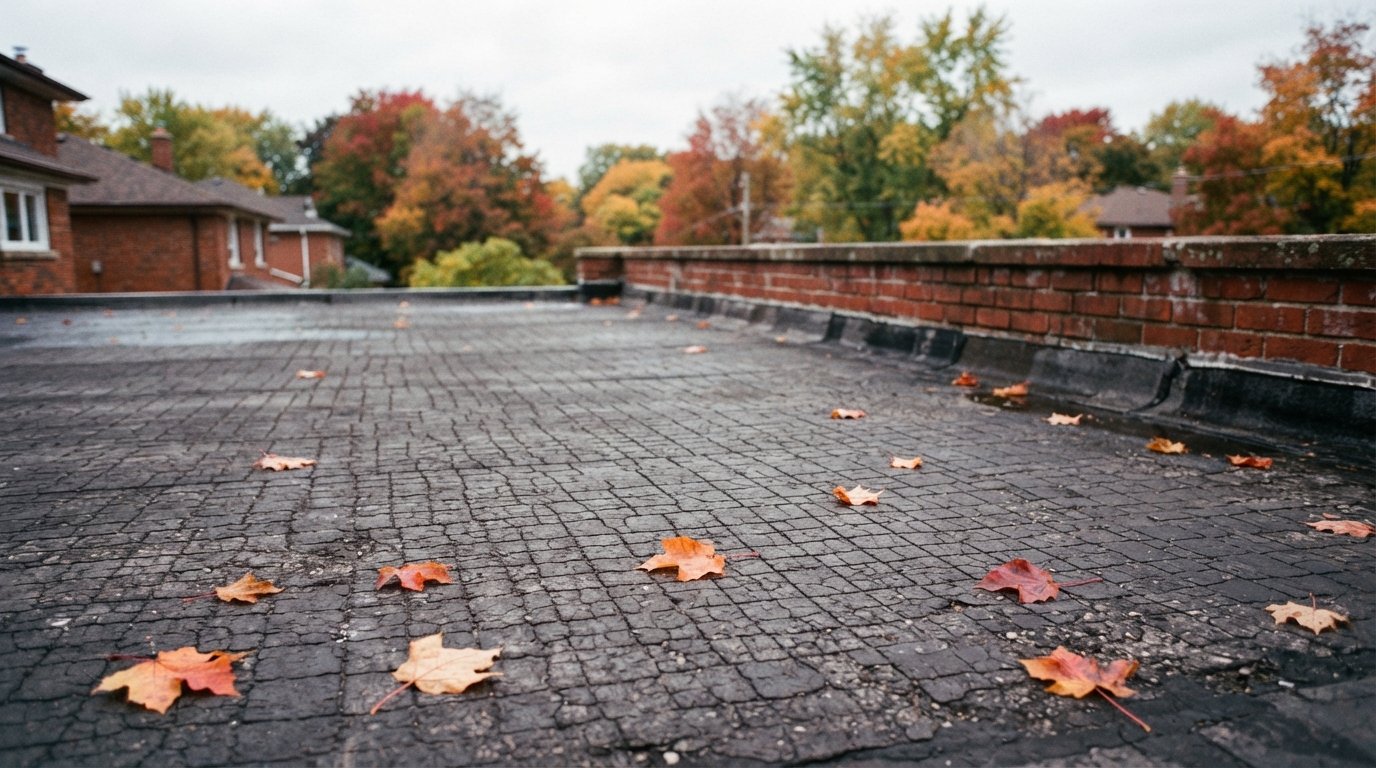
The most important maintenance tasks for a self adhered modified bitumen flat roof Toronto property owner should arrange each summer are: clearing all drains and scuppers of debris to prevent ponding water; inspecting all flashings at penetrations and perimeter edges for lifting or cracking; checking that the granule surface of the cap sheet shows no areas of granule loss (which would expose bare asphalt to UV); and looking for any blisters or ridges in the membrane that could indicate trapped moisture or inadequate adhesion. If you notice active leaks or suspect hidden moisture damage, do not delay, our emergency roof repair team is available to assess and address damage quickly before it spreads to the deck or interior.
Annual professional inspection is strongly recommended, ideally in late spring or early summer. A roofing professional can identify issues that are not visible to the untrained eye, including seam lifts, flashing gaps, and areas of membrane fatigue. Catching these issues early, before they become full leaks, dramatically extends the life of the system and protects your warranty coverage.
Frequently Asked Questions About Self Adhered Modified Bitumen Flat Roofs in Toronto
| Self-Adhered Modified Bitumen Product | SBS vs APP | Peel-and-Stick Method | Minimum Temperature | Best Application |
|---|---|---|---|---|
| Soprema Elastophene Flam SA | SBS | Full peel-and-stick | +5°C | Base sheet on residential roofs |
| IKO Torchflex SA | SBS | Self-adhered base | +5°C | Re-roofing over existing substrate |
| GAF Liberty SA Base Sheet | APP/SBS hybrid | Full peel-and-stick | +4°C | Cold-applied base layer |
| Polyglass Polystick MTS | SBS | Peel-and-stick cap sheet | +5°C | Full system cap on low-slopes |
| Henry Bakor 790-11 Blueskin | SBS | Ice and water shield-style | +2°C | Transition and detail flashing |
What makes a self adhered modified bitumen flat roof Toronto installation different from a torch-applied system?
How long does a self-adhered modified bitumen flat roof last in Toronto’s climate?
Is summer the best time to install a self adhered modified bitumen flat roof in Toronto?
What does a self-adhered modified bitumen flat roof installation cost in Toronto in 2026?
Can I install a self-adhered modified bitumen roof over my existing flat roof?
Does a self adhered modified bitumen flat roof Toronto installation require a building permit?
Schedule Your Self Adhered Modified Consultation Today
Flat Roofs Toronto installs self-adhered modified bitumen systems across the GTA, with a team that works to the manufacturer’s specification on every project. Our transparent quoting process means you will know exactly what you are paying for before a single crew member steps on your roof, and our summer installation schedule is filling quickly as demand across the region climbs.
Call us today at (647) 333-3528 or request a free consultation to get started.
Flat Roofs Toronto proudly serves Toronto, Mississauga, Markham, Vaughan, Brampton, and Oakville with expert flat roofing solutions for residential and commercial clients throughout the Greater Toronto Area.