When your flat roof starts showing its age, the question every Toronto property owner faces is the same: should you tear everything off and start fresh, or is it worth laying new membrane over the existing system? The decision around re-roof vs recover flat roof Toronto is not just about upfront cost, it shapes your maintenance bills, warranty coverage, and the structural integrity of your building for the next two decades. With summer 2026 offering an ideal installation window across the GTA, now is exactly the right time to get clear on which option makes financial sense for your property.
Understanding re-roof vs recover flat roof Toronto requires more than a price comparison. It demands an honest assessment of your current membrane’s condition, the number of existing layers already on the deck, the moisture content trapped beneath, and the long-term performance expectations for your building type. A recover can appear cheaper on day one but cost significantly more over a ten-year horizon if the substrate beneath is compromised. Conversely, a full tear-off and re-roof can look expensive upfront yet deliver decades of trouble-free performance that far outweighs the initial investment.
This guide breaks down both options in full detail so Toronto homeowners, condo boards, and commercial property managers can make an informed call with confidence, and so you can take advantage of the warm, dry summer months to get the work scheduled and completed properly.
Re-Roof vs Recover Flat Roof Toronto: What Each Option Actually Means
Before diving into costs and timelines, let us define the two paths clearly, because the terminology is frequently misused in contractor estimates and online forums alike.
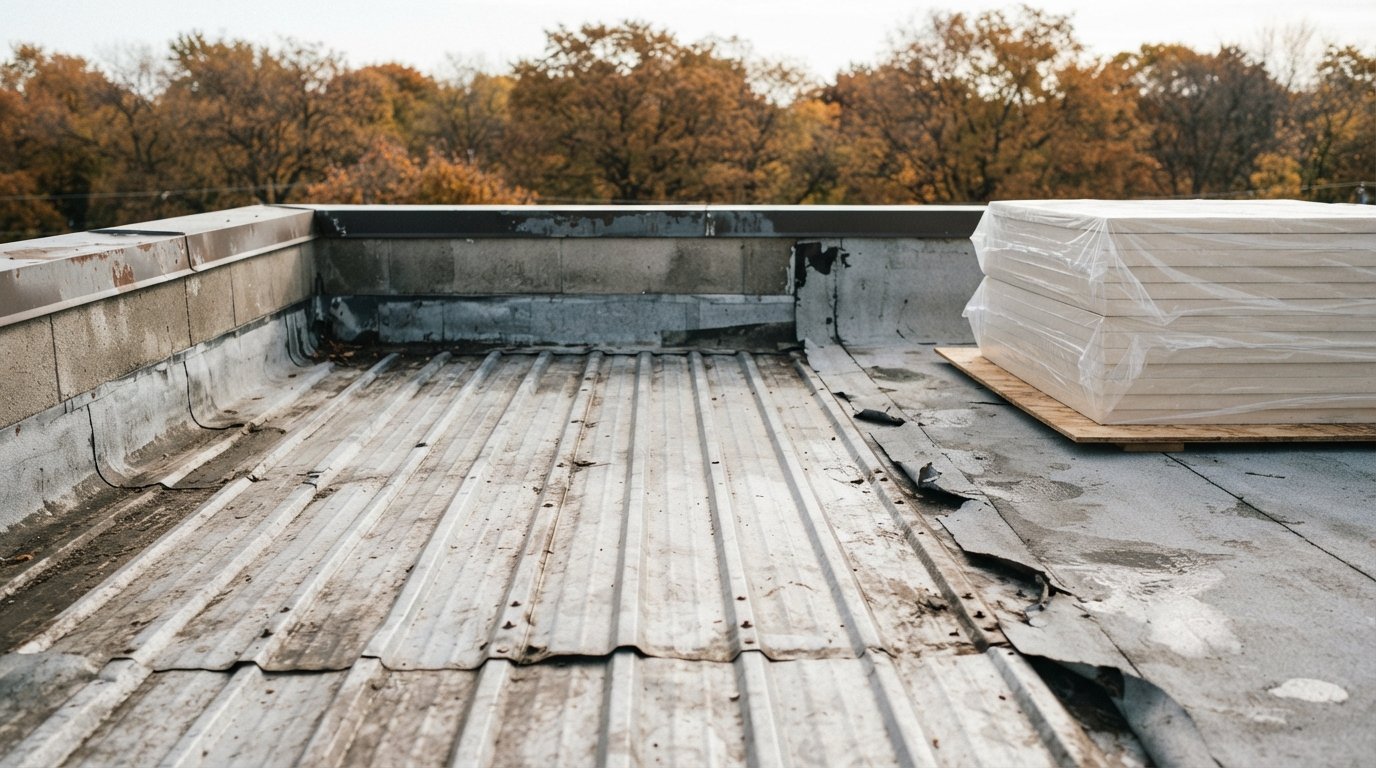
A roof recover, sometimes called an overlay, involves installing a new waterproofing membrane directly over the existing roofing system without removing what is already there. The crew cleans the surface, makes targeted repairs to any obvious failures, then adheres or mechanically fastens a fresh layer of modified bitumen, TPO, EPDM, or another approved membrane on top. The old material stays in place. This approach is only permitted in specific circumstances under the Ontario Building Code and most manufacturer warranties: no more than two total layers may exist on a residential flat roof, and the existing substrate must be structurally sound and dry.
A full re-roof means tearing off every existing layer of membrane, insulation, and often the cover board right down to the structural deck. The crew inspects the deck for rot, delamination, or structural damage, replaces any compromised sections, then installs fresh insulation to current thermal standards and applies a brand-new waterproofing system from scratch. You start with a clean slate, full manufacturer warranties, and a system designed to current code.
The re-roof vs recover flat roof Toronto decision hinges on several site-specific factors that no estimate should skip. Let us walk through each one systematically.
When a Roof Recover Is the Right Choice for Toronto Properties
A recover is a legitimate and cost-effective solution when the conditions are right. Toronto’s building inspectors and roofing manufacturers have established fairly clear criteria for when an overlay is appropriate, and responsible contractors will only recommend it when those criteria are genuinely met.
The strongest candidates for a recover are roofs that:
- Have only one existing layer of membrane (adding a second brings you to the two-layer maximum)
- Have passed an infrared moisture scan or core sample test showing dry insulation throughout
- Have a structurally sound deck with no soft spots, visible deflection, or signs of delamination
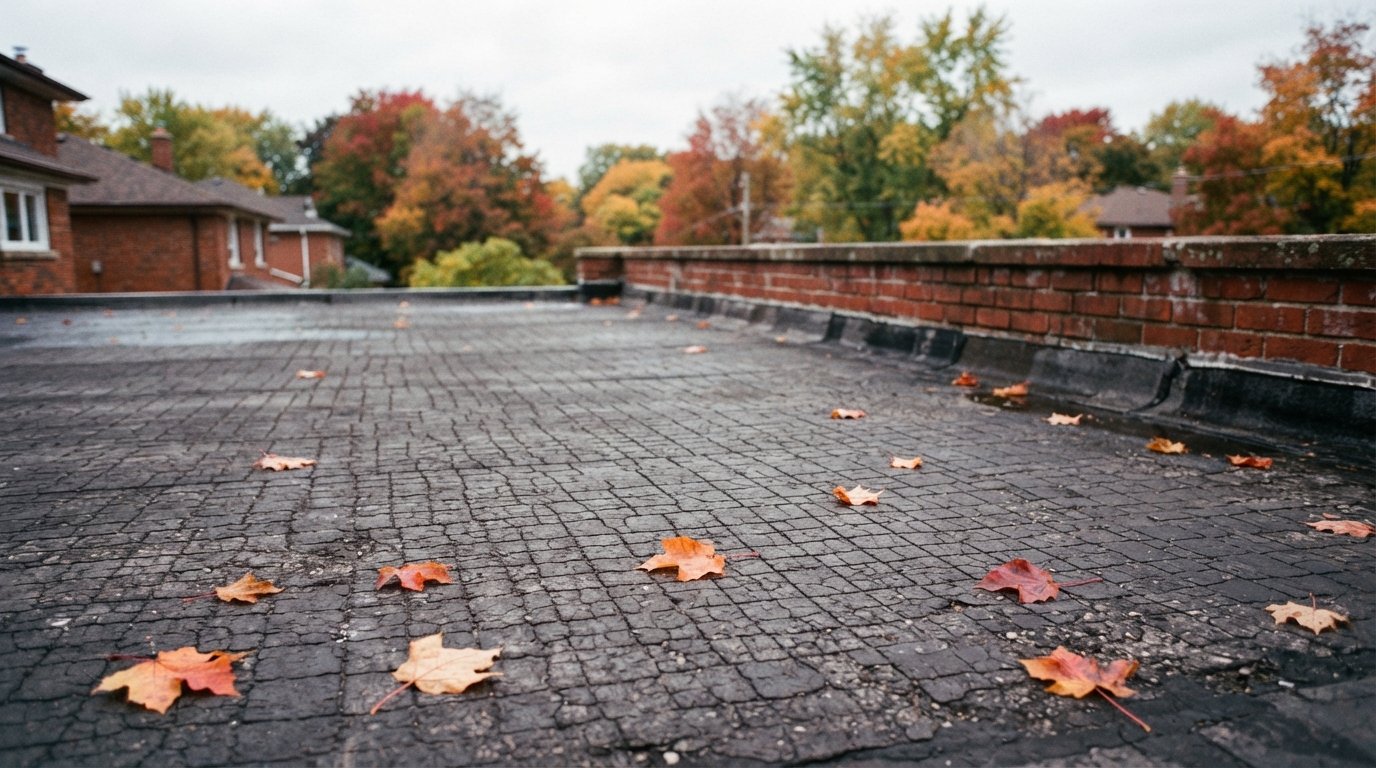
- Are experiencing surface-level cracking, minor blistering, or granule loss rather than systemic failure
- Were originally installed with a membrane type compatible with the chosen overlay system
When these conditions hold, a recover can deliver genuine value. You avoid landfill disposal costs for old materials, which in the GTA can add $800 to $2,500 to a project depending on roof area. You also reduce labour time significantly, a recover on a 1,500 square foot residential roof might take two days versus four or five for a full tear-off. The structural deck stays protected from weather exposure during installation, which matters when working through Toronto’s notoriously unpredictable June afternoons.
That said, a recover is never appropriate if moisture testing reveals wet insulation beneath the existing membrane. Trapping wet insulation under a new layer accelerates deck deterioration, voids the new membrane’s warranty, and creates a mould risk inside the building envelope. Any reputable contractor performing residential flat roof installation in Toronto will conduct moisture testing before recommending a recover, if they skip that step, walk away.
When a Full Re-Roof Is the Only Responsible Option
There are many scenarios in which a recover is simply not viable, and pushing one forward anyway would be a disservice to the property owner. A full re-roof vs recover flat roof Toronto assessment must include an honest evaluation of these deal-breakers.
A full tear-off re-roof is mandatory when:
- The roof already has two existing membrane layers (three-layer systems are not permitted under Ontario code)
- Moisture testing confirms wet or saturated insulation in any zone of the roof
- The deck shows structural rot, soft spots, or significant delamination that requires replacement
- The existing membrane has failed systemically, widespread splitting, open seams, or complete adhesion failure
- The building is undergoing a major renovation that requires upgraded insulation to meet current energy code (R-31 minimum for commercial in Ontario)
- The existing system uses materials incompatible with modern overlay membranes
A full re-roof also becomes the better long-term value proposition on any roof approaching 15 to 20 years of age, even if moisture levels are borderline acceptable. Recovering a roof that is already near end-of-life simply delays the inevitable tear-off by five to eight years at best, and by that point you have paid twice, once for the recover and once for the eventual tear-off. When you factor in the cumulative cost, the recover option often proves more expensive over a fifteen-year window than doing the full re-roof upfront.
For Toronto commercial buildings, the calculus shifts further toward re-roofing. Commercial properties often need to meet stricter thermal performance standards, and a recover rarely allows for meaningful insulation upgrades. If your building is pursuing LEED recertification, energy audit compliance, or a modernised mechanical system, a full re-roof gives you the opportunity to upgrade your insulation assembly at the same time, a combination that saves money versus returning to tackle insulation separately later. Learn more about how attic insulation works alongside your roofing system to reduce heating and cooling costs year-round.
Cost Comparison: Re-Roof vs Recover Flat Roof Toronto in 2026
Cost is understandably the first question most property owners ask, and the answer depends heavily on roof size, membrane choice, deck condition, and site access. The figures below reflect typical 2026 contractor pricing across the Toronto, Mississauga, Markham, Vaughan, Brampton, and Oakville markets. They are ranges, not fixed quotes, every project requires an individual assessment.
| Cost Category | Roof Recover (Overlay) | Full Re-Roof (Tear-Off) |
|---|---|---|
| Material cost per sq ft (TPO) | $3.50 to $5.00 | $5.50 to $8.00 |
| Labour cost per sq ft | $2.00 to $3.50 | $3.50 to $6.00 |
| Tear-off and disposal | Not applicable | $1.00 to $2.50 per sq ft |
| Deck repair allowance | Minimal (surface only) | $500 to $4,000+ depending on damage |
| Insulation upgrade (optional) | Not typically possible | $1.50 to $3.50 per sq ft added |
| Total all-in estimate (1,500 sq ft) | $8,250 to $12,750 | $15,000 to $26,250 |
| Expected system lifespan | 10 to 15 years | 20 to 30 years |
The numbers above make the recover look attractive on paper, but the lifespan column tells the more important story. A recover system on a TPO membrane typically carries a 10-year manufacturer warranty. A full re-roof with the same membrane on a clean deck earns a 20-year warranty. When you amortise the cost over the warranty period, the full re-roof often costs less per year of protected performance, particularly for commercial properties that cannot afford unplanned emergency repairs.
For property owners in Mississauga or Burlington facing a mid-life roof, we consistently find that the ten-year cost-of-ownership comparison tips decisively toward the full re-roof once you account for the recover’s shorter warranty, higher probability of mid-cycle repairs, and the eventual tear-off cost that will still need to happen in a decade.
Material Options and Their Impact on the Re-Roof vs Recover Decision
The membrane type you choose affects both the technical feasibility of a recover and the long-term performance of either option. Not all materials are compatible with one another, and some systems require specific substrates that only a clean deck can provide.
| Membrane Type | Compatible for Recover Over? | Re-Roof Lifespan | Recover Lifespan | Relative Cost (Installed) |
|---|---|---|---|---|
| TPO (Thermoplastic Polyolefin) | Yes, over clean TPO or modified bitumen | 20 to 25 years | 10 to 15 years | Medium |
| EPDM (Rubber) | Yes, over dry EPDM with primer | 20 to 30 years | 10 to 15 years | Medium-Low |
| Modified Bitumen (2-ply SBS) | Yes, over existing modified bitumen | 15 to 20 years | 8 to 12 years | Medium |
| PVC Membrane | Limited, only over specific substrates | 20 to 30 years | 12 to 18 years | High |
| Built-Up Roofing (BUR) | Not recommended as recover base | 15 to 20 years | Not applicable | High |
| Spray Polyurethane Foam (SPF) | Yes, over many clean dry surfaces | 20 to 30 years with recoat | 10 to 15 years | Medium-High |
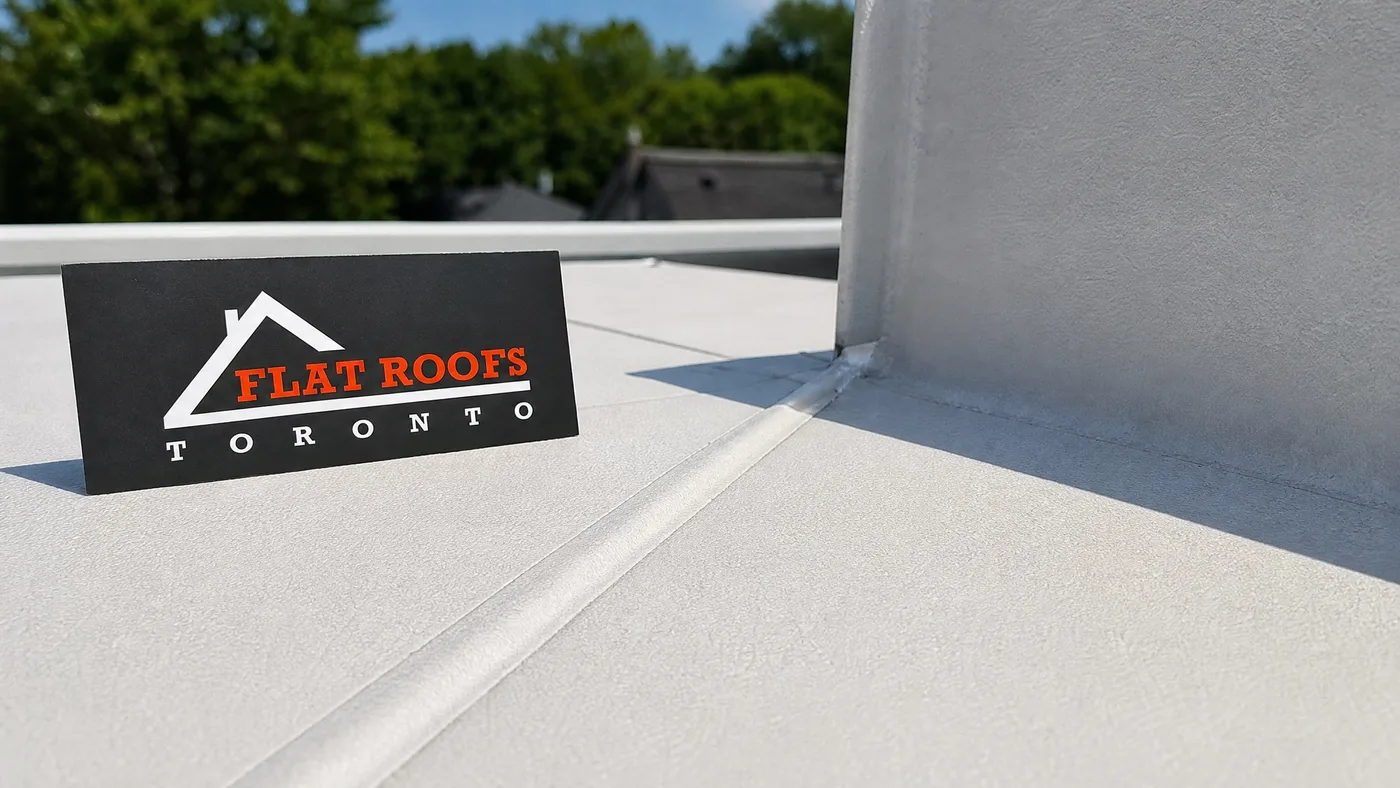
One important nuance: summer installation in Toronto is genuinely advantageous for several of these systems. TPO and PVC membranes heat-weld at seams, and warm ambient temperatures, typical of Toronto in June and July, reduce the risk of incomplete fusion that can occur when crews work in cooler conditions. Modified bitumen torch-applied systems similarly benefit from warm deck temperatures that improve adhesion at flashings and perimeters. If your roof is borderline between recover and re-roof on cost grounds, scheduling in summer and using a heat-weldable membrane gives you the best possible execution quality regardless of which path you choose.
Thinking about adding natural light while you have crews on the roof? Summer is the ideal time to bundle a residential skylight installation into the same project. You save on access and flashing costs when both trades are on site simultaneously.
How Moisture Testing Determines Which Path You Take
No credible answer to the re-roof vs recover flat roof Toronto question can be given without a moisture assessment. This single step separates responsible contractors from those who will recommend whichever option suits their schedule or profit margin.
There are three primary methods used in Toronto:
Infrared thermography is the most common and cost-effective method. Performed at dusk when the roof is releasing heat absorbed during the day, an IR scan identifies areas where wet insulation retains heat longer than dry insulation. It is non-destructive, covers the entire roof in a single pass, and produces a colour-mapped report that clearly shows wet zones. Most established flat roofing contractors in the GTA offer this as part of their inspection process.
Core sampling involves cutting small plugs through the membrane and insulation to physically examine moisture levels. It is more invasive but provides definitive evidence in areas flagged by the IR scan. Each sample hole is patched immediately after testing. Core sampling is standard practice before any recover project on a roof larger than 2,000 square feet in Toronto.
Nuclear moisture meters are less common but highly accurate for quantifying moisture content percentages in insulation boards. They are more often used on large commercial projects in Markham, Vaughan, and Brampton where the cost of a wet-insulation mistake, trapping moisture under a new membrane, would be severe.
If your current contractor is recommending a recover without mentioning moisture testing, that is a significant red flag. A recover over wet insulation will fail prematurely and void your warranty. The cost of moisture testing is trivial compared to the cost of redoing the work two years later.
Long-Term Value Analysis: The Ten-Year Cost Comparison
To make the re-roof vs recover flat roof Toronto decision purely on ten-year financial grounds, it helps to model the total cost of ownership across both scenarios. The table below uses a representative 1,500 square foot residential flat roof in Toronto with TPO membrane as the example.
| Cost Item | Recover Now (Year 0) | Full Re-Roof Now (Year 0) |
|---|---|---|
| Initial installation cost | $10,500 | $19,500 |
| Minor repairs (Year 3 to 5) | $800 to $1,500 estimated | $0 to $400 estimated |
| Mid-life re-caulk and flashing (Year 7) | $600 to $1,200 | $400 to $800 |
| Probable second recover or full re-roof (Year 12 to 15) | $18,000 to $24,000 | Not required within 20-year window |
| Heating/cooling impact (no insulation upgrade) | +$400 to $800/year vs upgraded assembly | Upgraded insulation included, savings realised |
| Total estimated 15-year cost | $30,300 to $38,000 | $20,300 to $21,700 |
| 15-year cost advantage | Saves $9,000 to $16,300 long term |
These figures make clear why the re-roof vs recover flat roof Toronto debate is not settled by the upfront price alone. The recover appears $9,000 cheaper on day one but ends up costing more across a fifteen-year horizon once you factor in the repair cycle, the energy penalty of not upgrading insulation, and the inevitable full tear-off that was only postponed, not avoided. For commercial properties in Toronto, Oakville, or Burlington where building operating costs are tracked carefully, this kind of lifecycle analysis is standard practice and consistently favours the full re-roof for any roof older than ten years.
For commercial buildings needing to manage larger roof areas, the same logic applies at scale. Commercial flat roof installation projects handled as full re-roofs also allow for code-compliant insulation upgrades, drainage re-design, and integration of rooftop mechanical equipment flashings, none of which are feasible on a simple recover.
What Toronto’s Summer Installation Window Means for Your Project
June through September represents the optimal installation window for flat roofing work across the GTA. Ambient temperatures between 15°C and 30°C are ideal for adhesive-set membranes, heat-weld quality, and proper flashing integration at parapets, drains, and penetrations. Longer daylight hours allow crews to complete full sections in a single shift, reducing the number of overnight exposures during multi-day tear-offs.
If you are weighing the re-roof vs recover flat roof Toronto decision right now, in June 2026, you are in the best possible position to get quality work done. Booking in summer also means your new system has months to fully cure and settle before any temperature cycling begins in the autumn. Seam adhesion on TPO and EPDM systems reaches peak strength after several weeks of UV exposure and thermal cycling, summer installation gives you that curing window before the roof faces its first real test.
Summer is also prime time to address related work simultaneously. If your flat roof has a drain that is slow, a parapet cap that is lifting, or flashings that are separating around HVAC curbs, bundling those repairs into the same mobilisation is far more cost-effective than scheduling separate visits. If you have an urgent situation that cannot wait for a scheduled assessment, our emergency roof repair team is available across the GTA to stop active leaks while you plan the longer-term solution.
One summer-specific caution: UV degradation on aging membranes accelerates in direct summer sun. If your roof has been developing surface cracking or chalking that you have been monitoring for the past few seasons, the heat of a Toronto summer will worsen those conditions faster than cooler months. Do not wait until September, the damage compounds quickly and increases the probability that a borderline recover candidate tips into mandatory tear-off territory.
What is the main difference when comparing re-roof vs recover flat roof Toronto options?
How do I know if my Toronto flat roof qualifies for a recover or needs a full re-roof?
Is a roof recover cheaper than a full re-roof in Toronto in 2026?
Can I add insulation when doing a re-roof vs recover flat roof Toronto project?
How long does a flat roof re-roof vs recover project take in Toronto?
Does the re-roof vs recover flat roof Toronto choice affect my warranty coverage?
Schedule Your Re-Roof vs Recover Consultation Today
Flat Roofs Toronto has helped hundreds of property owners across the GTA navigate the exact decision outlined in this guide. Our team performs thorough moisture assessments, provides honest lifecycle cost analysis, and recommends the option that genuinely serves your property’s long-term interests, not the option that is easiest to sell. Whether your roof is a strong recover candidate or clearly needs a full tear-off, we will show you the evidence and explain our reasoning in plain language before a single tool touches your roof.
Call us today at (647) 333-3528 or request a free consultation to get started.
Flat Roofs Toronto proudly serves Toronto, Mississauga, Markham, Vaughan, Brampton, and Oakville with professional flat roofing installation, recovery, and repair services.