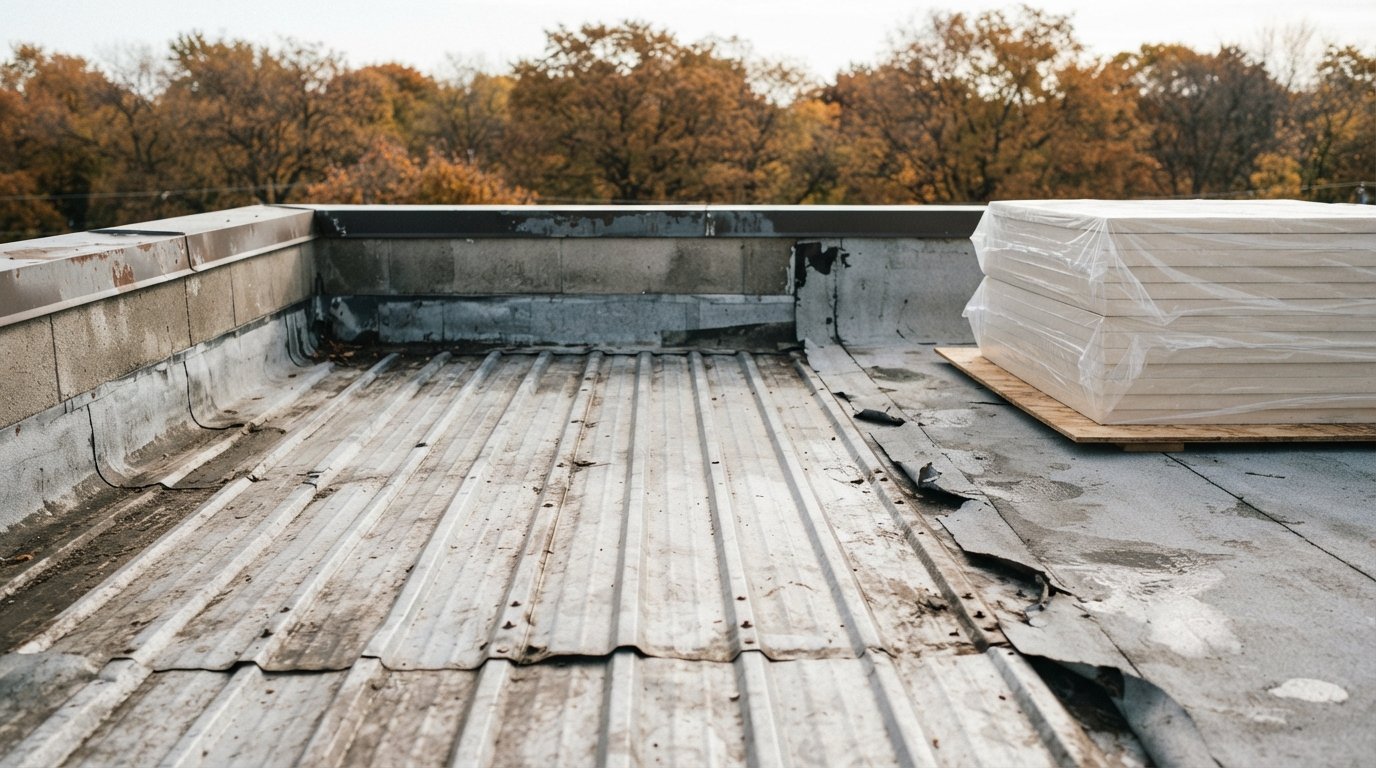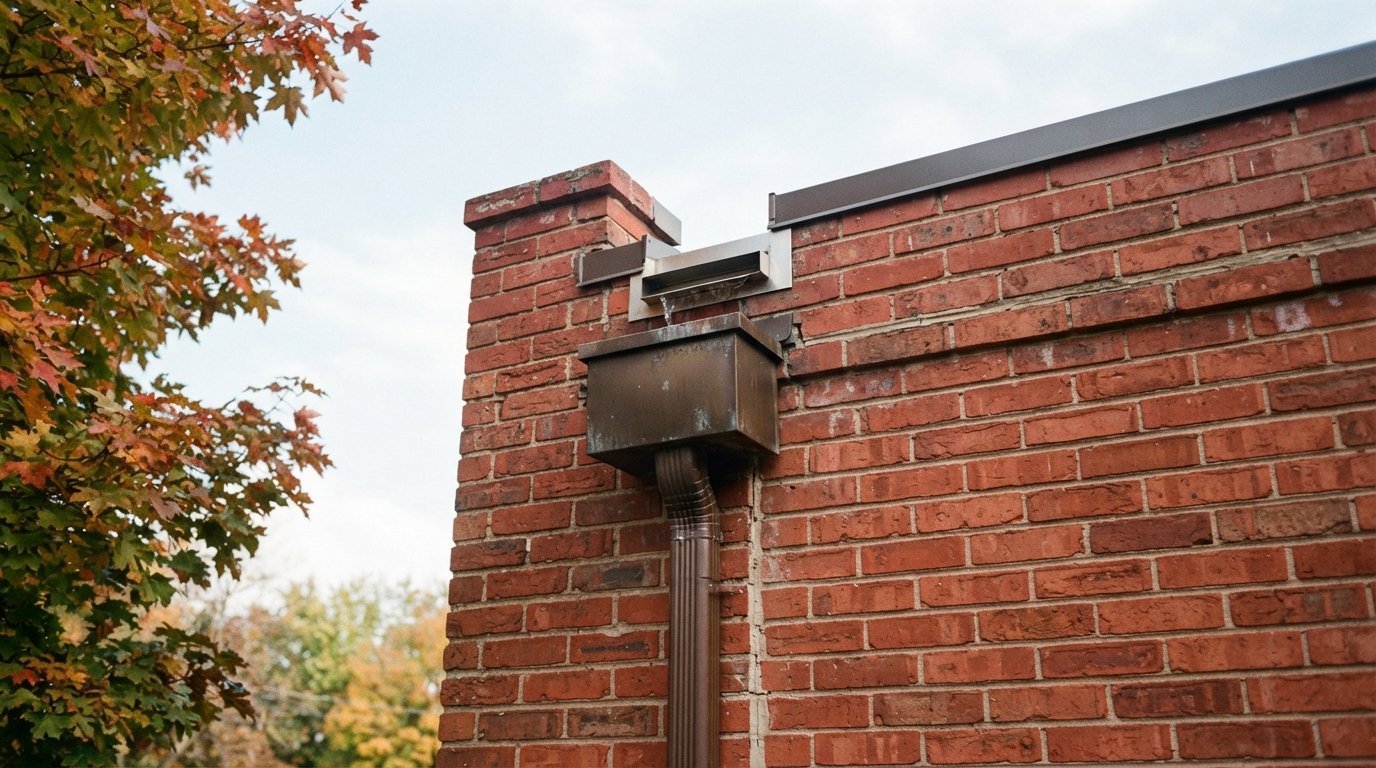

When a flat roof fails in the Greater Toronto Area, the leak almost never starts in the open field of the membrane. It starts at a penetration: a plumbing vent stack, a roof drain, a curb under a rooftop unit, or the base of a skylight. This is exactly where liquid-applied flashing flat roof systems have changed the game for Toronto homeowners and property managers. Instead of relying on cut-and-fit membrane pieces, mastic and metal counterflashing alone, a liquid-applied flashing forms a seamless, fully bonded, monolithic seal around any shape, no matter how awkward. For the odd corners and clustered penetrations that define most GTA low-slope roofs, that seamless quality is the difference between a roof that lasts 25 years and one that calls you back every spring.
In this guide we break down how liquid-applied flashing works on flat roof penetrations, what it costs in Toronto in 2026, how it compares to traditional flashing methods, and where it belongs on pipes, drains and curbs. Whether you own a downtown row house with a small back-addition roof or manage a commercial building in Mississauga or Vaughan, understanding this technology helps you ask the right questions and avoid the recurring repairs that plague poorly flashed roofs.
What Is Liquid-Applied Flashing on a Flat Roof?
A liquid-applied flashing flat roof detail is a cold-applied resin, usually polyurethane, polymethyl methacrylate (PMMA) or silicone, that is brushed or rolled onto a penetration and reinforced with a polyester or fibreglass fleece. The resin cures in place to form a continuous, elastic, fully adhered membrane that wraps the pipe, drain or curb and ties seamlessly into the surrounding roof. Because it is liquid when applied, it follows every contour, fills every void, and leaves no seams, laps or mechanical fasteners at the most vulnerable point on the roof.
Traditional flashing depends on cutting sheet membrane or metal to fit a three-dimensional shape, then sealing the joints with adhesive, heat or mastic. Every cut and lap is a potential failure point. Liquid systems remove those joints entirely. This matters enormously in Toronto, where flat roofs endure punishing freeze-thaw cycles, intense summer UV, and pooling water that finds the smallest gap. Liquid-applied flashing is compatible with most common membranes used across the GTA, including TPO, EPDM, modified bitumen and PVC, which is why it has become the go-to detail for both repairs and new installations.
The technology is not new to the commercial world, but it has become far more affordable and accessible for residential applications. Today a qualified contractor can flash a complex penetration cluster in an afternoon, with a finished result that outperforms anything achievable with sheet goods and a knife.
Why Penetrations Are the Weakest Point on Toronto Flat Roofs
Picture a typical GTA flat roof. The membrane field, where the surface is flat and uninterrupted, almost never leaks on its own. Failures cluster at the interruptions: anywhere something pokes through the roof or changes plane. These are the spots that move, vibrate, expand and contract differently from the membrane around them.
Plumbing vent stacks heat and cool with the air inside them, flexing the seal at the base. Roof drains carry the entire roof’s water load through a single point and sit lower than everything around them, so water lingers there longest. Curbs under HVAC units, hatches and skylights create vertical-to-horizontal transitions where membrane is hardest to wrap cleanly. Each of these is a stress concentration, and traditional flashing methods struggle to keep up with the constant movement.
Toronto’s climate makes it worse. Summer rooftop surface temperatures can exceed 70 degrees Celsius, then drop sharply overnight, cycling materials through expansion and contraction every single day. Add the winter freeze-thaw season and you have a recipe for joint fatigue. A seam that holds for five years eventually opens, and water enters precisely where it does the most hidden damage, travelling along the deck before it ever shows up on a ceiling. If you suspect a penetration is already leaking, prompt emergency roof repair can stop interior damage before it spreads through your insulation and drywall.
How Liquid-Applied Flashing Is Installed: The Process
A proper liquid-applied flashing flat roof installation is methodical, and the prep work matters more than the resin itself. Skipping surface preparation is the single most common cause of premature failure, so a reputable GTA contractor will never rush it.
First comes cleaning and abrasion. The substrate around the penetration is scraped free of old mastic, dirt and loose membrane, then degreased and, where needed, mechanically abraded so the resin can bond. Next, a primer is applied if the membrane or metal requires one, TPO and PVC in particular often need a specific primer for adhesion. Then the first coat of resin is brushed on and the reinforcing fleece is embedded into it while wet, worked flat to eliminate air bubbles and wrinkles. A second saturating coat fully encapsulates the fleece. After cure, the result is a seamless, monolithic flashing that bridges the membrane and the penetration as a single piece.
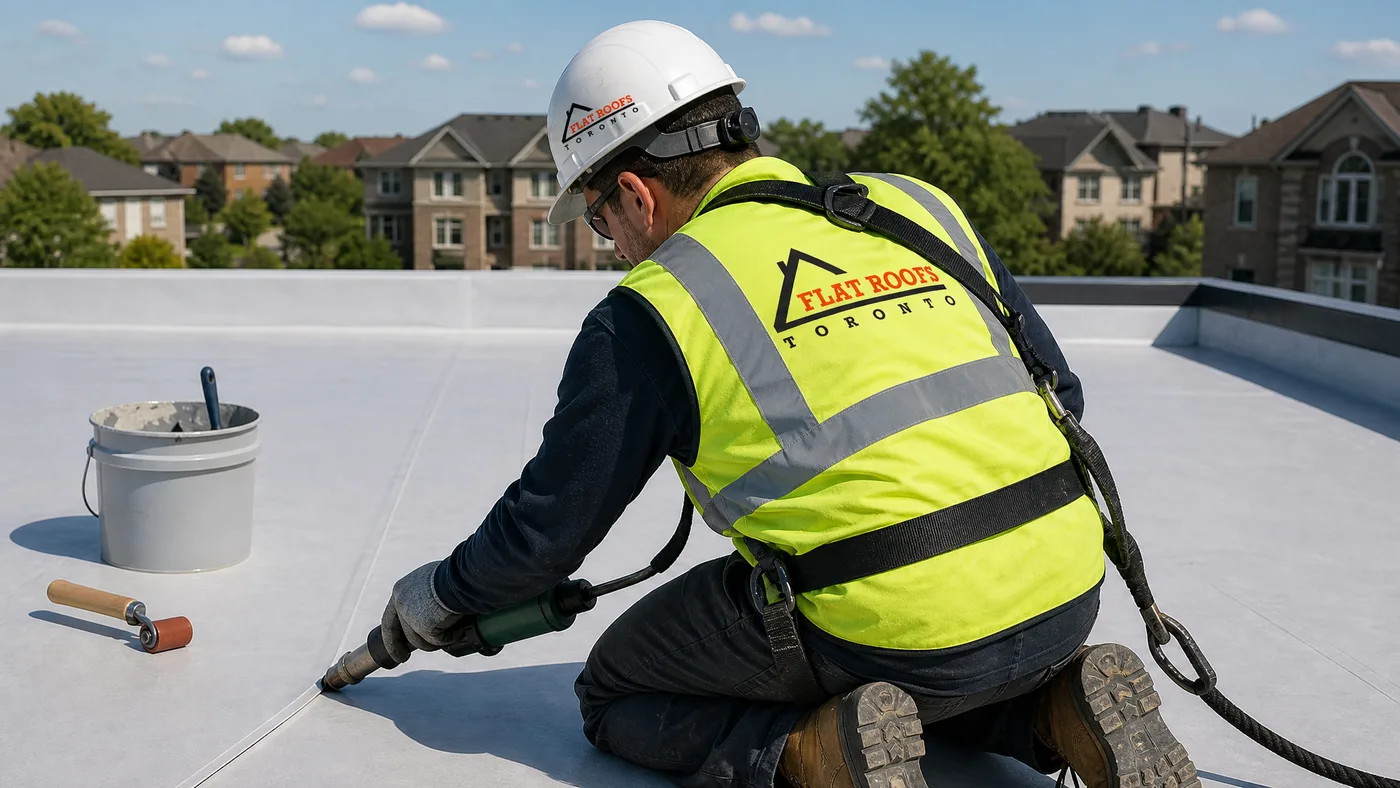
Cure times vary by chemistry. PMMA can cure in under an hour even in cool conditions, which makes it valuable for fast turnarounds and shoulder seasons. Polyurethane and silicone cure more slowly and are sensitive to humidity and dew, so summer mornings in Toronto, before the day’s heat and after the overnight moisture has burned off, are often ideal application windows. A skilled crew plans the day around weather, because applying liquid flashing onto a damp or dew-covered surface guarantees adhesion problems. This level of attention is what separates a 25-year detail from a callback, and it is built into every residential flat roof installation we complete.
Liquid-Applied Flashing Cost in Toronto, 2026
Pricing for liquid-applied flashing depends on the resin type, the number and complexity of penetrations, access to the roof, and whether the work is a standalone repair or part of a larger re-roof. The table below reflects typical 2026 GTA pricing for residential and small-commercial flat roofs.
| Penetration type | Typical scope | 2026 GTA cost range |
|---|---|---|
| Single pipe / vent stack | Clean, prime, two-coat fleece detail | $275 – $475 |
| Roof drain | Strip-in around drain bowl and clamp ring | $450 – $850 |
| Curb (HVAC / hatch) | Per linear metre of curb perimeter | $120 – $200 / metre |
| Penetration cluster (3-6 pipes) | Combined monolithic flashing area | $700 – $1,500 |
| Mobilization / minimum call | Crew, setup, safety setup | $350 – $600 |
Most homeowners are surprised that detailing a handful of penetrations costs a fraction of a full re-roof while resolving the vast majority of leak risk. When penetrations are flashed correctly during a new install, the marginal cost is low. When they are retrofitted onto a tired roof, the minimum-call and mobilization charges make bundling multiple repairs into one visit far more economical.
Liquid-Applied Flashing vs Traditional Methods
Homeowners often ask why they should choose a liquid system over the metal counterflashing or membrane boots their roof already has. The comparison below lays out the trade-offs that matter on a GTA flat roof.
| Factor | Liquid-applied flashing | Membrane / metal flashing |
|---|---|---|
| Seams at penetration | None (monolithic) | Multiple laps and joints |
| Complex shapes | Conforms to any geometry | Difficult, often relies on mastic |
| Movement tolerance | High (elastomeric) | Moderate, joints fatigue |
| Typical service life | 20-30 years | 10-20 years at detail |
| Re-coatable | Yes, easily renewed | Usually requires tear-out |
| Best use | Penetrations, transitions, repairs | Large flat field areas |
Liquid systems are not a replacement for the entire roof field; sheet membranes like TPO and EPDM remain the most cost-effective way to cover large flat areas. The smart approach pairs a quality membrane field with liquid-applied flashing at every penetration and transition, giving you the durability of sheet goods where it makes sense and the seamless reliability of liquid where it counts. This hybrid strategy is standard on well-built commercial flat roof installation projects across Toronto.
Sealing Pipes, Drains and Curbs: Detail-by-Detail
Each penetration type has its own failure pattern and its own best-practice detail. Understanding them helps you spot poor workmanship before it becomes a leak.
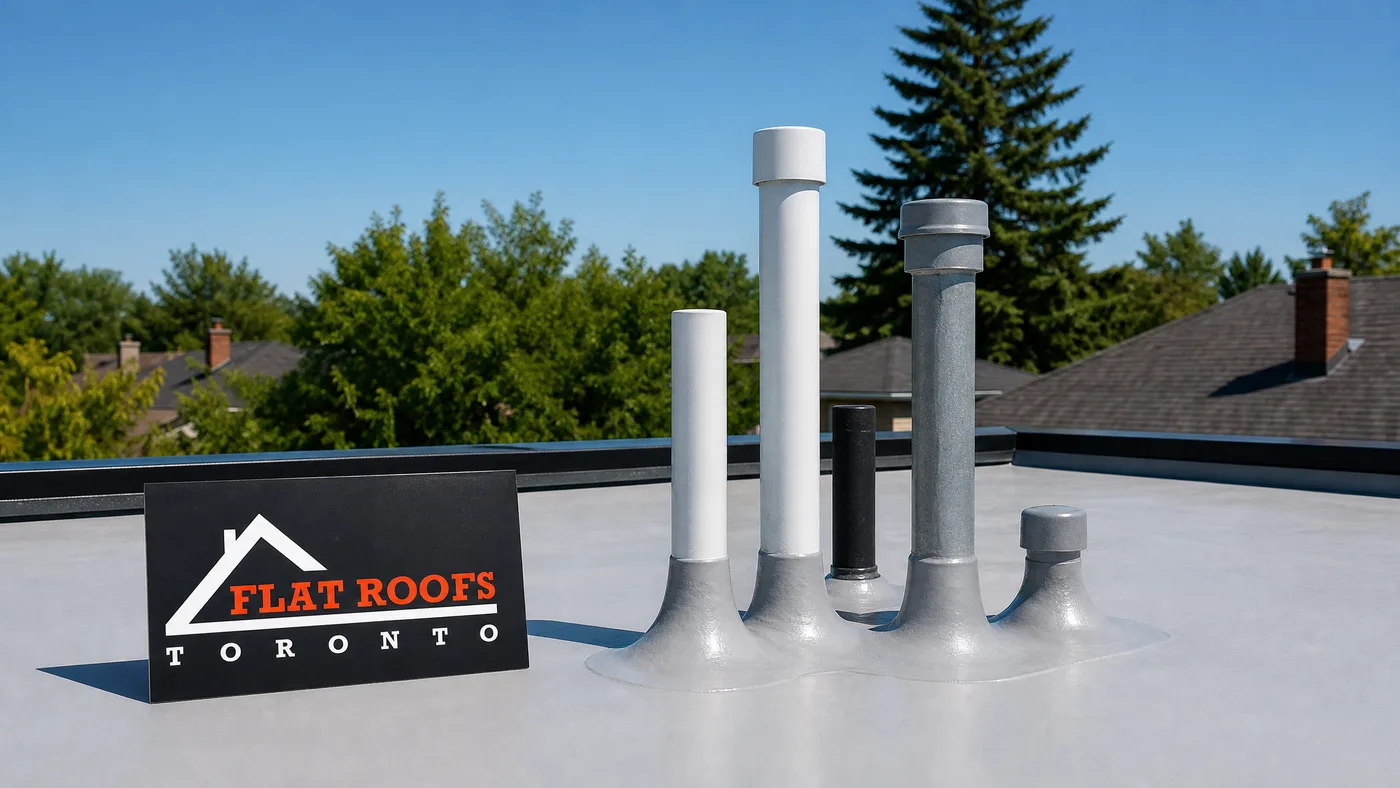
Pipes and vent stacks. The old approach was a rubber boot clamped to the pipe, which dries out, cracks and slips in Toronto’s UV and temperature swings, usually within ten years. A liquid-applied flashing wraps the pipe base and ties seamlessly into the field membrane with no boot to fail. For tightly clustered pipes, where a sheet boot simply cannot fit, liquid flashing is often the only clean solution.
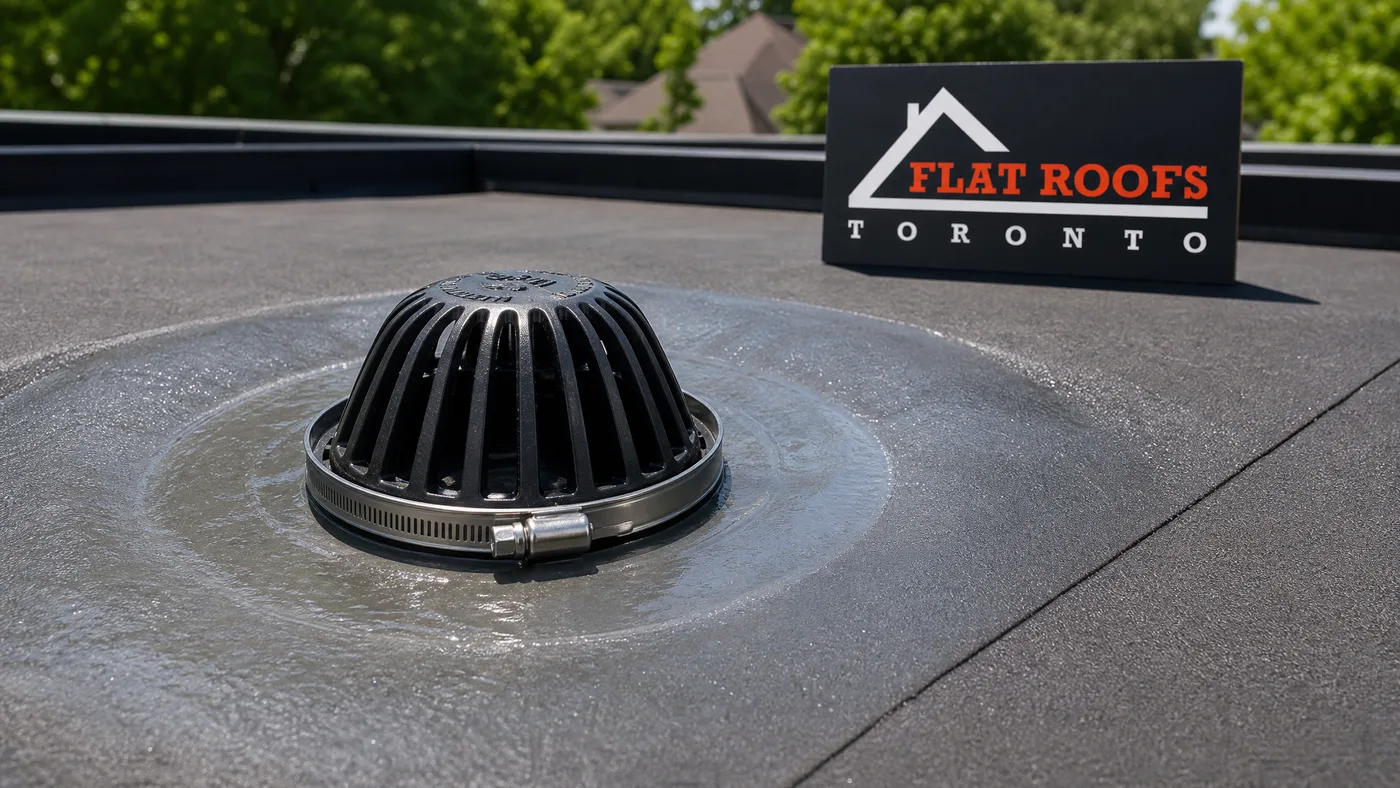
Roof drains. Drains are the lowest point on the roof and carry every litre of runoff. A liquid strip-in around the drain bowl and under the clamp ring creates a continuous seal that handles the constant water exposure far better than mastic-sealed sheet membrane. Proper drainage also protects your attic insulation from the moisture migration that ruins thermal performance.
Curbs. Curbs under rooftop units, hatches and skylights involve a vertical-to-horizontal transition that is notoriously hard to wrap with sheet membrane. Liquid flashing turns the corner seamlessly and bonds to both the curb and the deck. This is especially valuable around residential skylights, where a leak telegraphs straight into the living space below. You can see finished examples of these details in our project gallery.
Choosing the Right Resin for the GTA Climate
Not every liquid system suits every job. The resin chemistry determines cure speed, durability, UV resistance and cost, and a knowledgeable contractor matches the product to the detail and the weather. The table below summarizes the three families most used in Toronto.
| Resin type | Cure speed | Strengths | Best application |
|---|---|---|---|
| PMMA | Fast (under 1 hr) | Cures in cool/damp, very tough | Drains, fast-turnaround repairs |
| Polyurethane | Moderate (hours) | Excellent elasticity, abrasion resistance | Pipes, curbs, foot-traffic areas |
| Silicone | Moderate | UV stable, ponding-water tolerant | Drains, ponding-prone low slopes |
| Acrylic | Slow (weather dependent) | Economical, reflective | Budget coatings, dry-weather work |
For Toronto’s summer installation season, fast-curing PMMA is often favoured for drains and high-traffic details because it sets before afternoon humidity or a pop-up thunderstorm can interfere. Polyurethane is the workhorse for pipes and curbs thanks to its elasticity, and silicone shines where ponding water is unavoidable. A contractor who only ever uses one product, regardless of the detail, is a warning sign. The same care applies to commercial skylights and other large penetrations where movement and water exposure are significant.
Maintenance and Lifespan of Liquid-Applied Flashing
One of the biggest advantages of a liquid-applied flashing flat roof detail is how easy it is to maintain and renew. Because the membrane is fully bonded and seamless, there is nothing to come loose, and inspection is straightforward: you look for surface wear, chalking or any pinholes, then simply re-coat where needed without tearing anything out.
For GTA roofs, an annual summer inspection is the sweet spot. The dry, warm season makes it easy to walk the roof safely, clear debris from drains, and confirm every penetration seal is intact before the next freeze-thaw season arrives. A quick re-coat every decade or so can extend a liquid flashing detail well beyond two decades, often outlasting the surrounding membrane field. The table below outlines a sensible maintenance rhythm for Toronto homeowners.
| Interval | Action | Why it matters |
|---|---|---|
| Annually (summer) | Visual inspection, clear drains | Catches early wear, prevents ponding |
| After major storm | Check penetrations and curbs | Wind and debris stress seals |
| Every 8-12 years | Re-coat worn details | Renews membrane, extends life |
| At membrane replacement | Re-flash all penetrations | Resets the most failure-prone points |
Is liquid-applied flashing better than a rubber pipe boot on a flat roof?
How long does liquid-applied flashing last in Toronto’s climate?
Can liquid-applied flashing be used on TPO, EPDM and PVC roofs?
How much does liquid-applied flashing cost for a few penetrations?
What time of year is best to install liquid-applied flashing in Toronto?
Who should I hire for liquid-applied flashing on my flat roof?
Get Your Liquid-Applied Flashing Flat Roof Quote Today
Penetrations are where flat roofs leak, and a seamless liquid-applied flashing is the most reliable way to seal pipes, drains and curbs for decades. Whether you need a single vent detailed, a drain re-flashed, or every penetration on a tired roof renewed before the next freeze-thaw season, the right system installed by the right crew pays for itself in avoided water damage. Flat Roofs Toronto specializes in low-slope detailing across the GTA, matching the correct resin to each penetration for a result built to last.
Call us today at (647) 333-3528 or request a free flat roof quote to have your penetrations inspected and sealed by an experienced team before a small gap becomes a costly leak.
Flat Roofs Toronto proudly serves Toronto, Mississauga, Markham, Vaughan and the entire GTA with expert flat roofing, penetration detailing and leak-free liquid-applied flashing solutions.