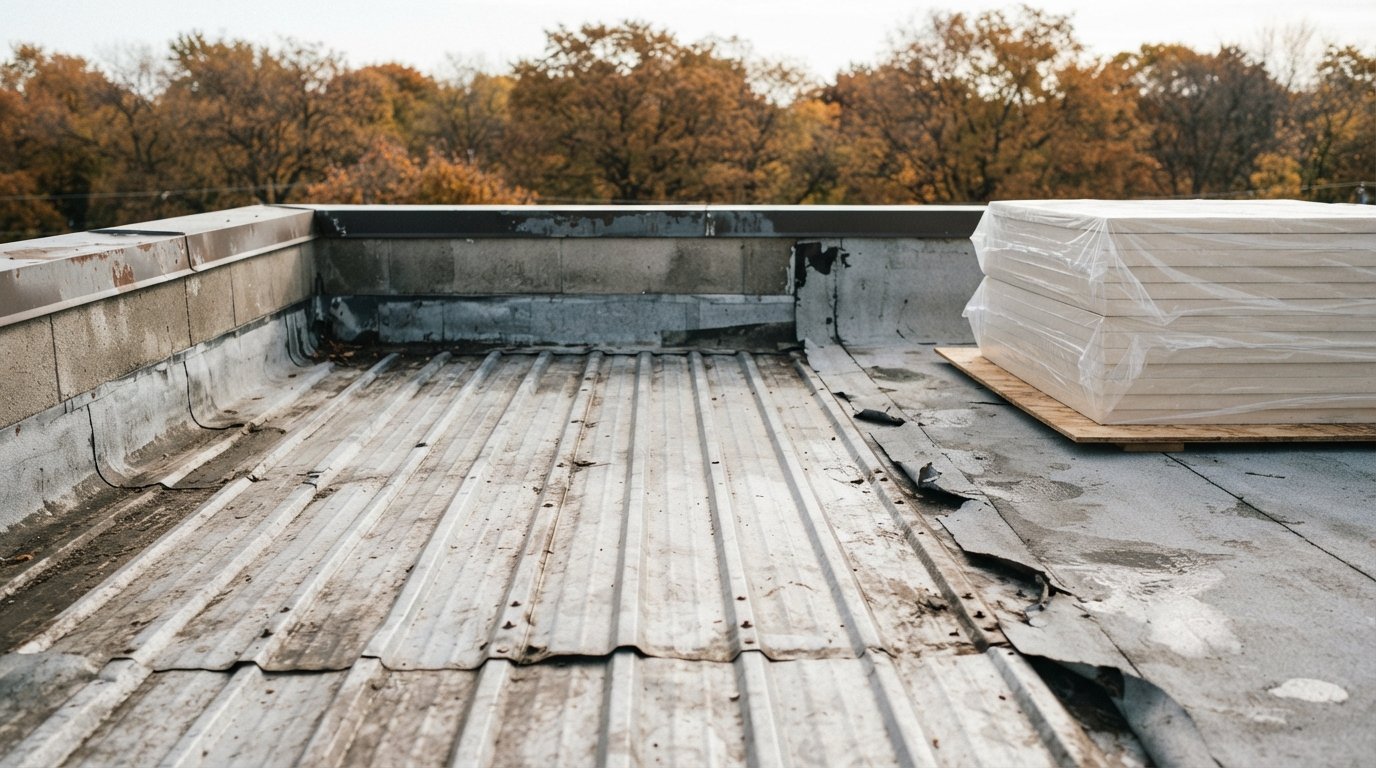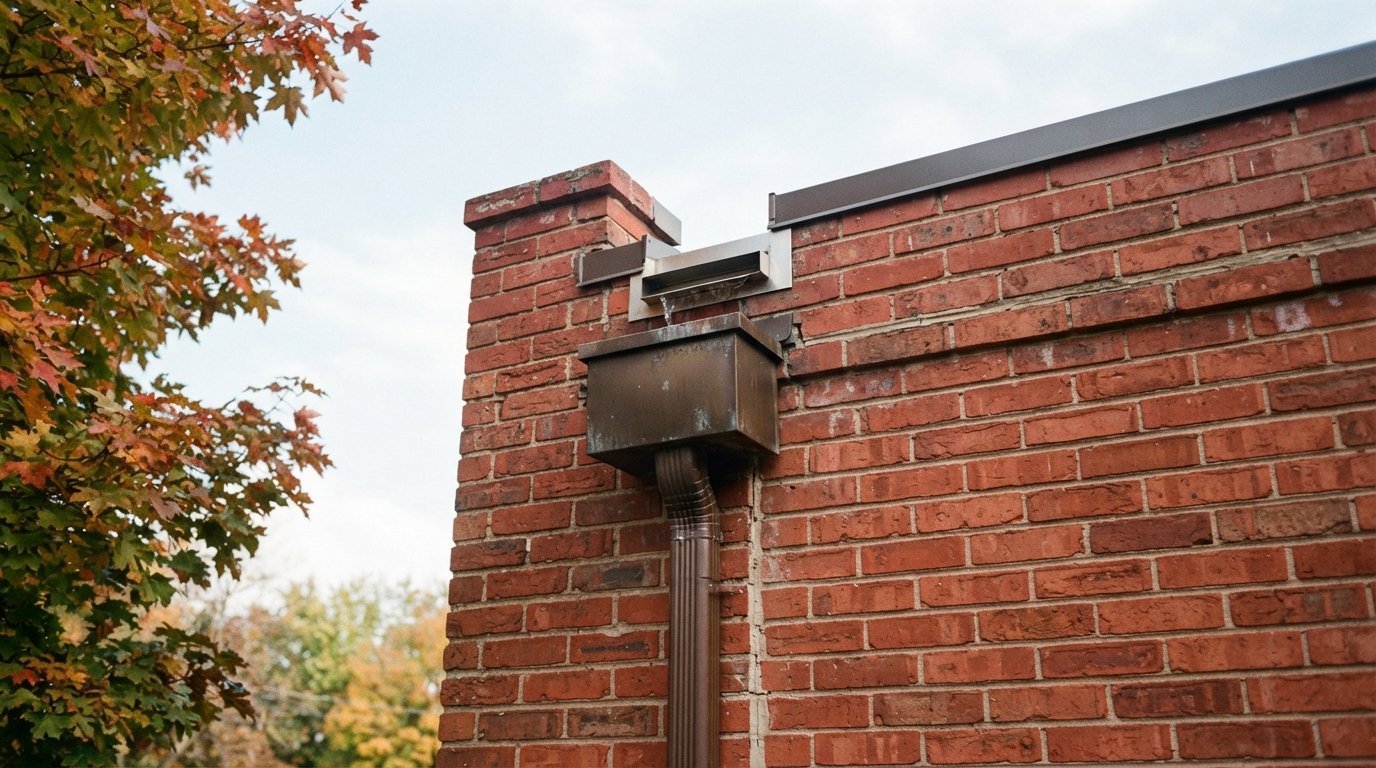

When summer temperatures climb across the Greater Toronto Area, the surface of a poorly ventilated flat roof can reach upwards of 70 degrees Celsius under direct sun. That trapped heat radiates downward into living spaces, drives up cooling bills, and slowly degrades roofing membranes from the inside out. Understanding flat roof ventilation summer heat toronto dynamics is one of the most overlooked aspects of keeping a building comfortable, energy efficient, and structurally sound during our increasingly warm Ontario summers. As we move through the 2026 cooling season, more homeowners and property managers are realising that a flat roof is not simply a barrier against rain, but an active thermal system that must breathe.
Unlike a steep-sloped roof with a generous attic cavity, a flat roof assembly offers very little natural airflow. Heat that builds up against the membrane has nowhere to go unless ventilation is intentionally designed into the system. Without it, the result is hotter interiors, overworked air conditioners, premature membrane failure, and condensation problems hidden within the roof deck. This is why proper ventilation deserves the same attention as the waterproofing layer itself.
In this guide, we explain how summer heat buildup affects flat roofs across Toronto, Mississauga, Markham, Vaughan, Brampton, Oakville, and Burlington, what ventilation strategies actually work, and how the right approach protects both your comfort and your investment. Whether you own a residential bungalow with a flat extension or manage a large commercial property, the principles of flat roof ventilation summer heat toronto performance apply to your building.
Why Flat Roof Ventilation and Summer Heat in Toronto Matters
The core challenge of flat roof ventilation summer heat toronto management comes down to physics. Dark membrane surfaces absorb solar radiation throughout the day, and because hot air rises, that heat collects directly beneath the roof deck. In a building without adequate ventilation, this superheated layer of air has no escape route. It transfers through the roof assembly into the rooms below, forcing cooling systems to run longer and harder than they should.
Toronto summers have grown noticeably warmer over the past decade, with more frequent stretches of temperatures above 30 degrees Celsius. The 2026 season has already delivered several heat advisories across the GTA. For a flat roof, every degree of additional surface temperature accelerates two problems at once: it raises the cooling load inside the building, and it speeds up the thermal ageing of the membrane. Asphalt-based and single-ply membranes both expand and contract with heat cycles, and repeated extreme expansion shortens their service life considerably.
Beyond comfort and cost, ventilation also guards against trapped moisture. When warm, humid summer air meets cooler surfaces inside the roof assembly, condensation forms. Over time this moisture can saturate insulation, rot wooden decking, and create the conditions for mould. Effective flat roof ventilation summer heat toronto design addresses heat and moisture together, because in our humid Ontario climate the two are inseparable. A roof that vents heat properly also keeps the assembly dry, which is exactly why it pays to work with experienced specialists in residential flat roof installation who understand the full system rather than just the surface.
How Summer Heat Buildup Damages Flat Roofs
Heat is one of the most aggressive enemies of any flat roofing system, and its effects compound year after year. Understanding the specific failure modes helps property owners appreciate why ventilation is not optional. When a membrane is repeatedly heated to extreme temperatures and then cooled overnight, the constant movement stresses seams, fasteners, and adhesives. This is the mechanism behind many of the leaks and blisters our crews are called to repair each summer.
Thermal shock is another concern. A sudden summer thunderstorm cooling a roof that was baking at 70 degrees Celsius minutes earlier creates rapid contraction that can crack aged membranes. Proper ventilation reduces the peak surface temperatures the membrane experiences, softening these swings. The table below summarises the main ways heat damages an under-ventilated flat roof and how good airflow mitigates each one.
| Heat-Related Problem | Cause | Impact Without Ventilation | Benefit of Proper Ventilation |
|---|---|---|---|
| Membrane blistering | Trapped vapour expanding under heat | Bubbles, splits, leaks | Vapour escapes before pressure builds |
| Seam separation | Repeated thermal expansion cycles | Open seams, water entry | Lower peak temperatures, less movement |
| Insulation saturation | Condensation from trapped humid air | Reduced R-value, rot | Dry assembly, stable insulation |
| Premature ageing | UV and heat degrading the membrane | Shortened lifespan by years | Extended membrane service life |
| Higher cooling costs | Heat radiating into living space | Rising hydro bills | Reduced cooling load and bills |
The financial consequences add up quickly. A flat roof that should last 25 to 30 years may fail in 15 to 18 years when chronic heat stress goes unaddressed. By contrast, a building with sound flat roof ventilation summer heat toronto design protects the full value of the original installation. If you are already noticing soft spots, blisters, or rising indoor temperatures, it may be time to schedule an inspection before minor damage becomes a major repair.
Ventilation Strategies That Work for Toronto Flat Roofs
There is no single solution to flat roof ventilation, because the right approach depends on the roof assembly, building use, and existing insulation. The goal in every case is the same: give heat and moisture a controlled path out of the system. Across the GTA, our crews rely on several proven methods, often in combination, to deliver reliable flat roof ventilation summer heat toronto performance.
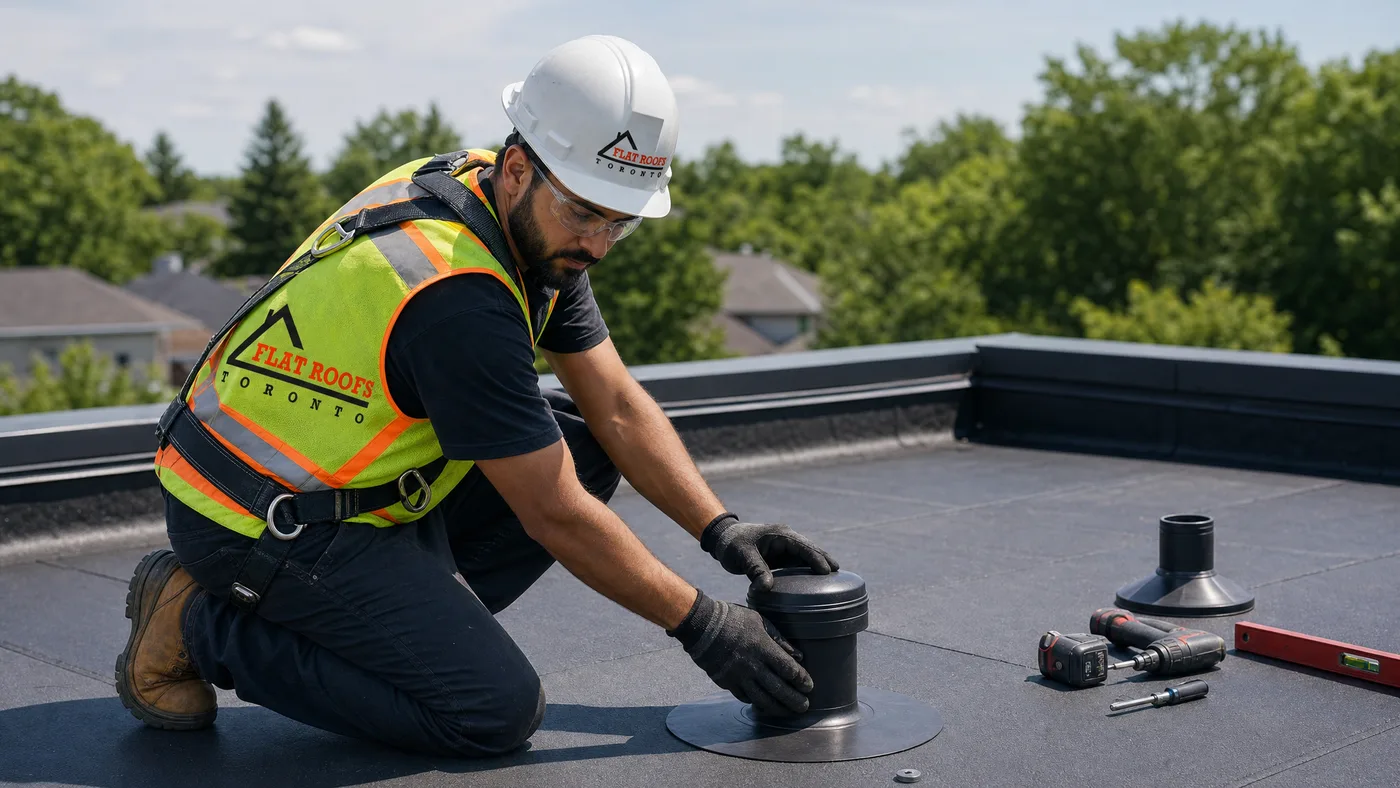
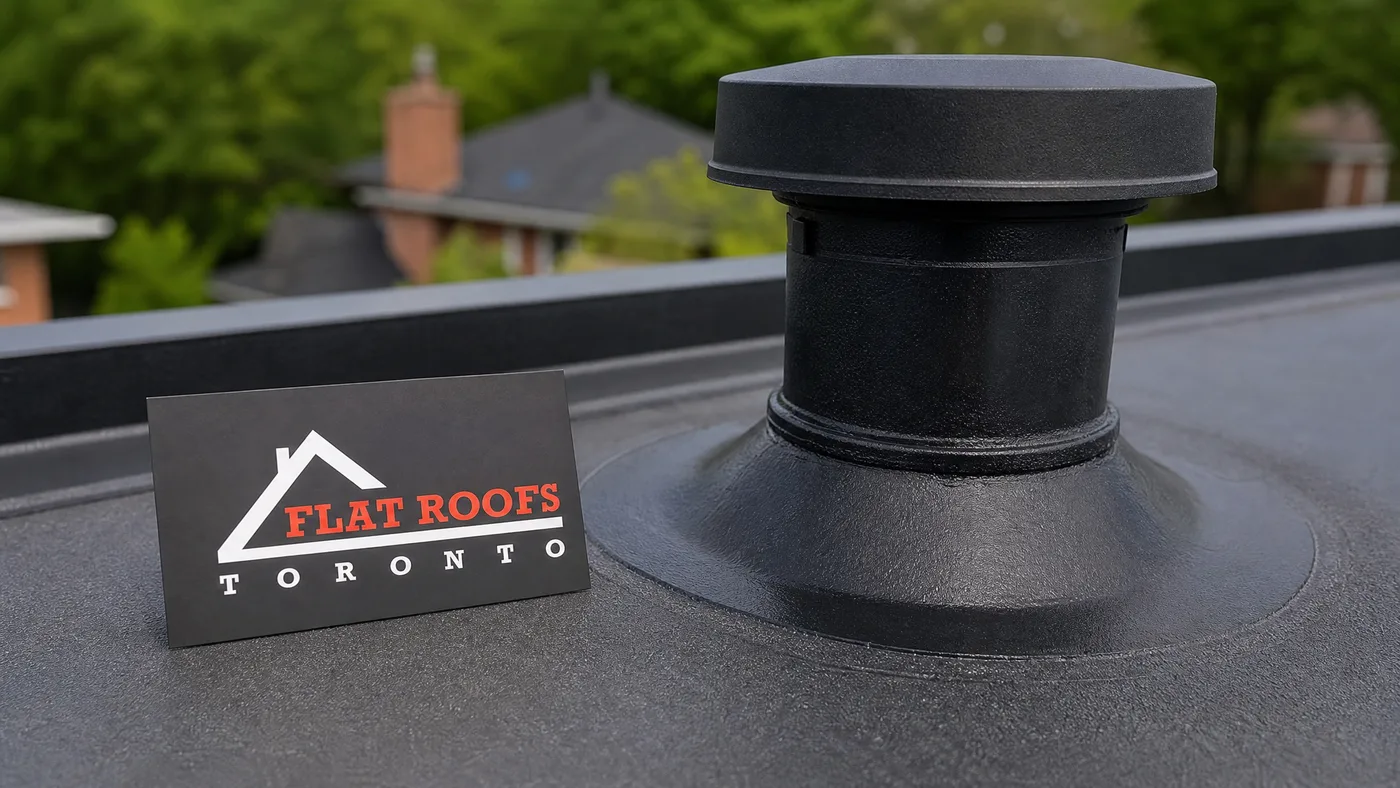
One-way breather vents, also called pressure-relief vents, are among the most common upgrades. Installed at intervals across the roof, they allow trapped vapour and hot air to escape while preventing water entry. For larger commercial assemblies, mechanical exhaust units and gravity ventilators move greater volumes of air. On residential properties, combining roof vents with improved soffit intake creates a balanced airflow path that draws cooler air in and pushes hot air out.
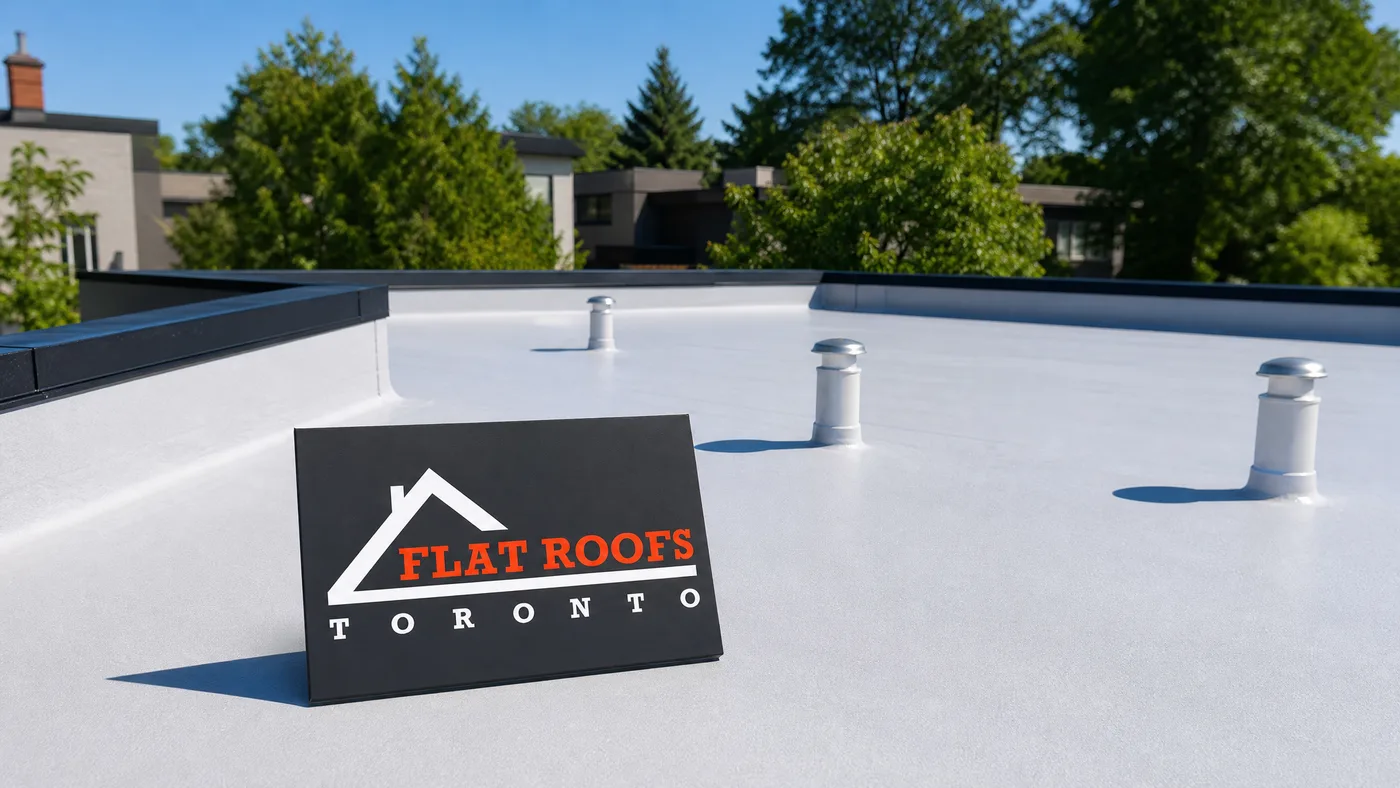
Reflective and cool-roof membranes deserve mention here as well. A light-coloured or specially coated membrane reflects far more solar radiation than a traditional dark surface, dramatically lowering peak roof temperatures. When paired with proper venting, a cool-roof membrane reduces the heat load that ventilation must manage in the first place. The combination is especially valuable for buildings in densely built areas of Toronto, Mississauga, and Markham where the urban heat island effect intensifies summer temperatures.
| Ventilation Method | Best Suited For | Approximate Cost Range (CAD) | Primary Benefit |
|---|---|---|---|
| One-way breather vents | Residential and small commercial | $80 – $200 per vent | Releases trapped vapour and heat |
| Gravity ridge/curb vents | Mid-size commercial | $300 – $700 per unit | Passive high-volume airflow |
| Powered exhaust fans | Large commercial buildings | $800 – $2,500 per unit | Active heat and moisture removal |
| Cool-roof reflective membrane | All flat roof types | $1.50 – $3.50 per sq ft premium | Lowers peak surface temperature |
| Balanced soffit intake upgrade | Residential flat extensions | $400 – $1,200 total | Creates continuous airflow path |
Choosing among these options is best done with a professional assessment. The team behind our commercial flat roof installation services routinely designs ventilation layouts tailored to each building’s footprint, occupancy, and existing membrane. Getting the design right the first time avoids the common mistake of adding vents that are too few, poorly placed, or unbalanced.
Summer Is the Ideal Window for Ventilation Upgrades
One of the practical advantages of addressing ventilation in summer is that the warm, dry weather creates ideal working conditions for installation. Membranes adhere best in moderate to warm temperatures, sealants cure properly, and crews can complete work efficiently without weather delays. For homeowners and property managers planning a flat roof ventilation summer heat toronto upgrade, the June through September window across the GTA offers the most reliable scheduling.
Summer installation also lets you feel the benefits immediately. Adding ventilation in the middle of cooling season means you notice the drop in indoor temperatures and the easing of your air conditioning workload right away, rather than waiting months to verify the improvement. It is also the perfect time to combine ventilation work with related upgrades. Many of our clients pair new venting with a fresh attic insulation assessment, since insulation and ventilation work together as a single thermal system.
Warm weather is equally well suited to inspecting and refreshing rooftop accessories. If your building has skylights, summer is an excellent time to evaluate their seals and flashing alongside ventilation work. Our residential skylights and commercial skylights teams frequently coordinate with our ventilation crews so that all rooftop penetrations are properly sealed and integrated into the airflow design. Bundling this work in a single summer visit minimises disruption and cost.
| Project Type | Typical Summer Timeline | Crew Size | Best Months in GTA |
|---|---|---|---|
| Residential vent retrofit | 1 – 2 days | 2 – 3 technicians | June – September |
| Cool-roof membrane overlay | 2 – 4 days | 3 – 4 technicians | July – August |
| Commercial ventilation system | 3 – 7 days | 4 – 6 technicians | June – September |
| Combined vent and insulation | 2 – 4 days | 3 – 4 technicians | June – August |
| Skylight and vent integration | 1 – 3 days | 2 – 4 technicians | June – September |
Booking early in the season is wise, as summer is peak demand for roofing crews across Toronto and the surrounding suburbs. Reaching out in late spring or early summer secures your preferred dates and ensures your flat roof ventilation summer heat toronto project is completed before the hottest stretches arrive.
The Energy and Cost Savings of Proper Ventilation
The most immediate benefit homeowners notice after a ventilation upgrade is a cooler, more comfortable interior. But the financial case is just as compelling. When a flat roof radiates less heat into the building, air conditioning systems run less frequently and cycle off sooner. Over a full GTA summer, that translates into meaningful savings on hydro bills, often in the range of 10 to 25 percent of cooling costs depending on the building.
There is also a longevity dividend. Because effective flat roof ventilation summer heat toronto design lowers the peak temperatures the membrane endures, the roof itself lasts longer. Extending a roof’s service life by even five years represents thousands of dollars in deferred replacement costs. Add reduced repair frequency from fewer heat-related blisters and seam failures, and the return on a modest ventilation investment becomes clear.
Energy efficiency improvements can also support a building’s overall value and comfort year-round. While our focus here is summer heat, a balanced ventilation system that keeps the roof assembly dry contributes to a healthier, more durable building in every season. Property managers in Vaughan, Brampton, Oakville, and Burlington increasingly view ventilation as a core part of responsible building stewardship rather than an optional extra. To see the kind of results we deliver across the region, browse our project gallery of completed flat roof work.
Signs Your Flat Roof Needs Better Ventilation
Many buildings suffer from inadequate ventilation without their owners realising the root cause. Recognising the warning signs early lets you act before heat damage becomes expensive. If your upper floors or rooms beneath a flat section feel noticeably hotter than the rest of the building during summer, that temperature gradient is a strong indicator that heat is accumulating against an under-ventilated roof deck.
Other telltale signs include air conditioning systems that struggle to keep up on hot days, rising summer hydro bills without a change in usage, and visible blistering or bubbling on the membrane surface. Inside the building, water staining on ceilings during humid weather can signal condensation forming within a poorly vented assembly. Any of these symptoms warrants a professional evaluation focused on flat roof ventilation summer heat toronto performance.
A thorough inspection examines the membrane, the existing vents, the insulation, and the airflow path as an integrated system. Our specialists assess whether your current ventilation is balanced, properly sized, and correctly positioned for your roof’s dimensions and orientation. From there, we recommend targeted upgrades that solve the problem efficiently rather than overbuilding. If you suspect your roof is trapping heat this summer, the simplest first step is to book a consultation with our team.
Frequently Asked Questions
Why does flat roof ventilation summer heat toronto management matter so much?
How hot can a flat roof get during a Toronto summer?
What ventilation methods work best for flat roofs?
Is summer a good time to install flat roof ventilation?
How much can ventilation save on cooling costs?
What are the warning signs of poor flat roof ventilation?
Schedule Your flat roof ventilation Consultation Today
Do not let another scorching GTA summer shorten the life of your roof or inflate your cooling bills. Proper flat roof ventilation summer heat toronto design is one of the smartest investments you can make in your building’s comfort, efficiency, and durability. The experienced team at Flat Roofs Toronto designs and installs balanced ventilation systems tailored to your roof, ensuring heat and moisture have a controlled path out while your interiors stay cool and dry.
Call us today at (647) 333-3528 or request a free consultation to get started.
Flat Roofs Toronto proudly serves Toronto, Mississauga, Markham, Vaughan, Brampton, Oakville, and Burlington.