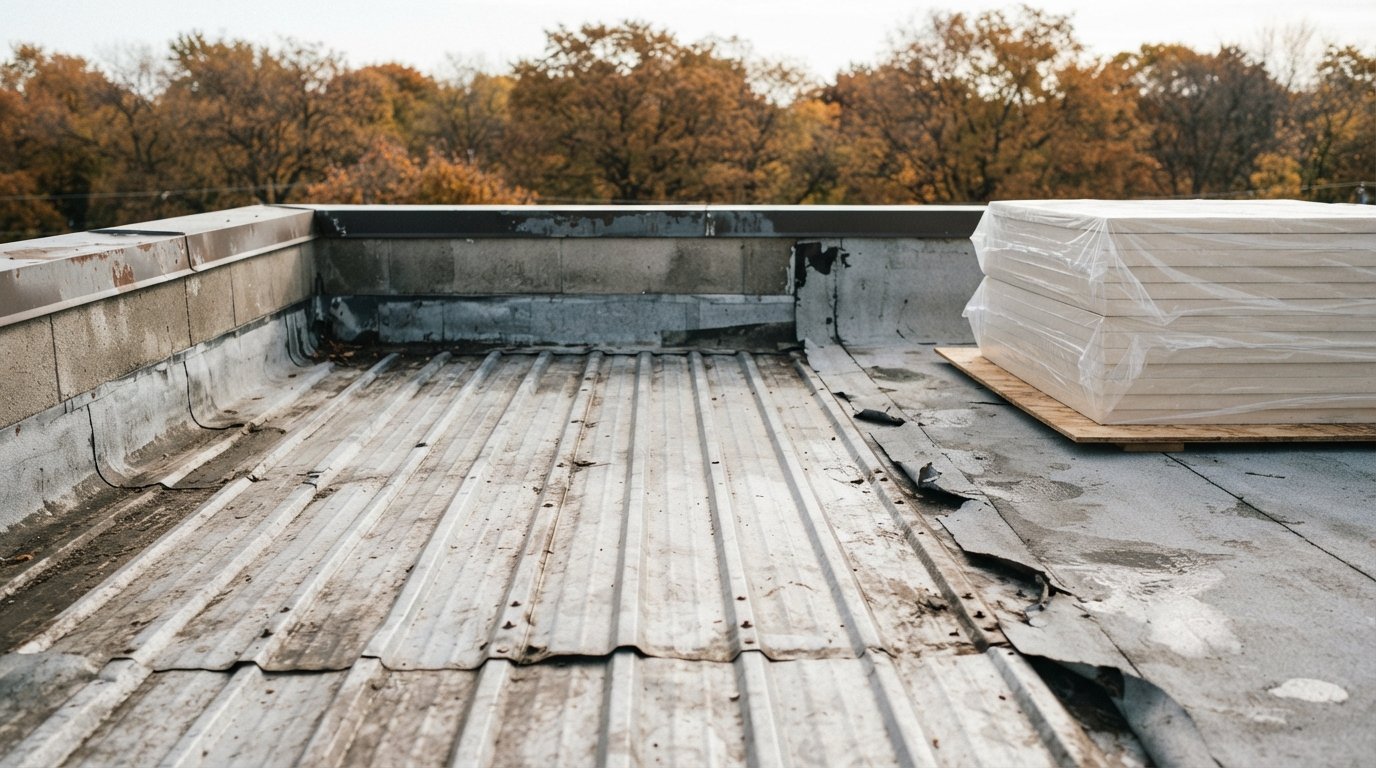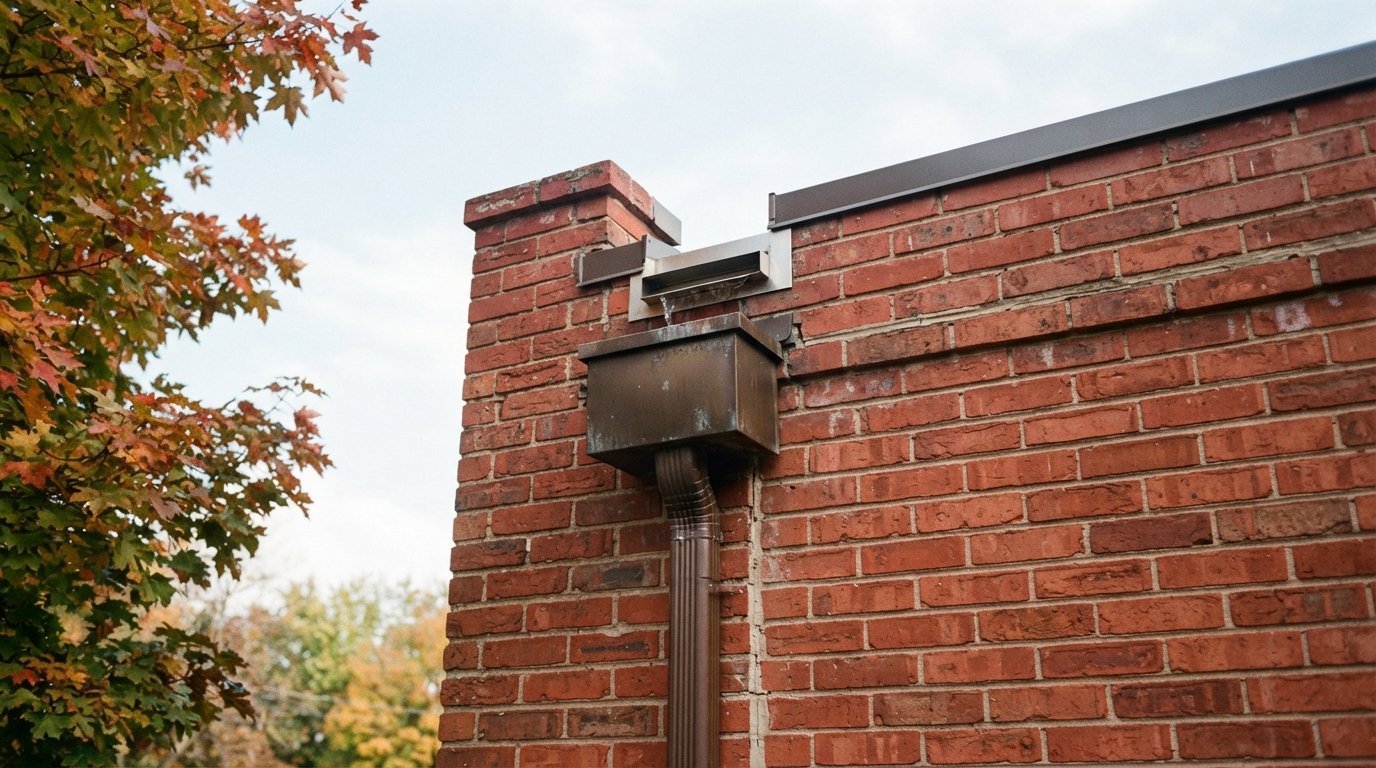

Every flat roof in the Greater Toronto Area is interrupted by something: a vent stack, an antenna mast, a gas line, an electrical conduit, an equipment support, or a guy wire anchor. Each one of those interruptions punches a hole through your waterproofing membrane, and each one needs a reliable, watertight seal to keep moisture out of the building. That seal is the job of a pitch pocket, and proper flat roof pitch pocket penetration toronto work is one of the most overlooked yet most failure-prone parts of any low-slope roofing system. When a pitch pocket dries out, cracks, or is filled with the wrong material, water finds its way in, and the resulting damage often shows up far from the actual leak.
Summer is the ideal window to inspect and reseal these vulnerable details. Warm, dry weather lets pourable sealants cure correctly, lets crews work safely without the hazards of frost, and gives you a clear stretch of dry days to complete the work before autumn rain arrives. At Flat Roofs Toronto, we treat every penetration as a potential leak point and seal it accordingly, whether it is a single plumbing stack on a Mississauga bungalow or a forest of conduit on a Markham commercial deck.
This complete 2026 guide explains what pitch pockets are, why they fail, how much proper flat roof pitch pocket penetration toronto sealing costs, the materials involved, and how to keep these details watertight for years. Whether you own a home in Vaughan or manage a building in Brampton, understanding these small but critical details will save you from large, expensive repairs down the road.
What Is Flat Roof Pitch Pocket Penetration Toronto Sealing?
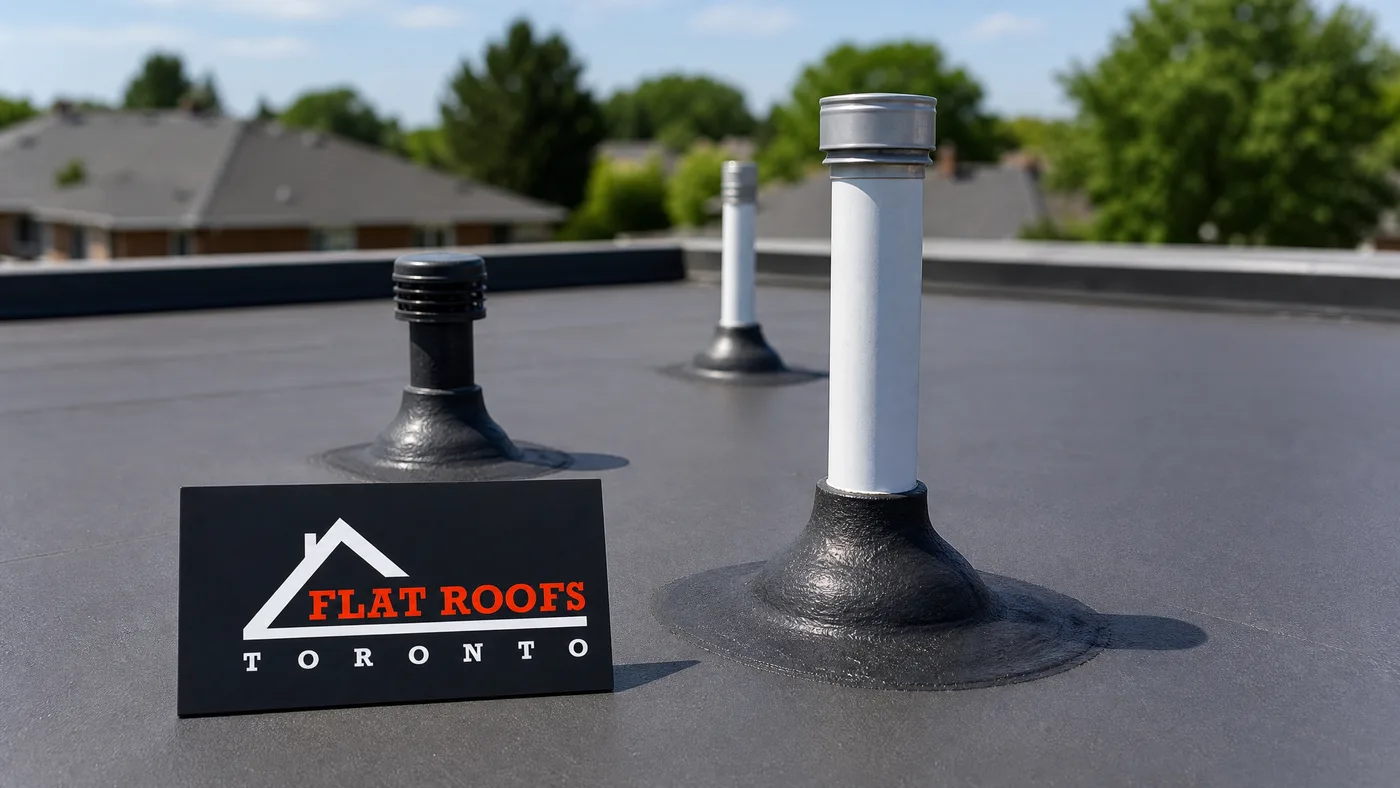
A pitch pocket, sometimes called a pitch pan, is a small metal or fabricated box that surrounds a roof penetration and is filled with a sealant to create a watertight barrier. The term comes from the days when crews literally poured hot pitch into these pans. Today, flat roof pitch pocket penetration toronto sealing relies on modern pourable elastomeric and urethane-based sealants that flex with the building, resist UV degradation, and outlast the old asphalt-based materials by years.
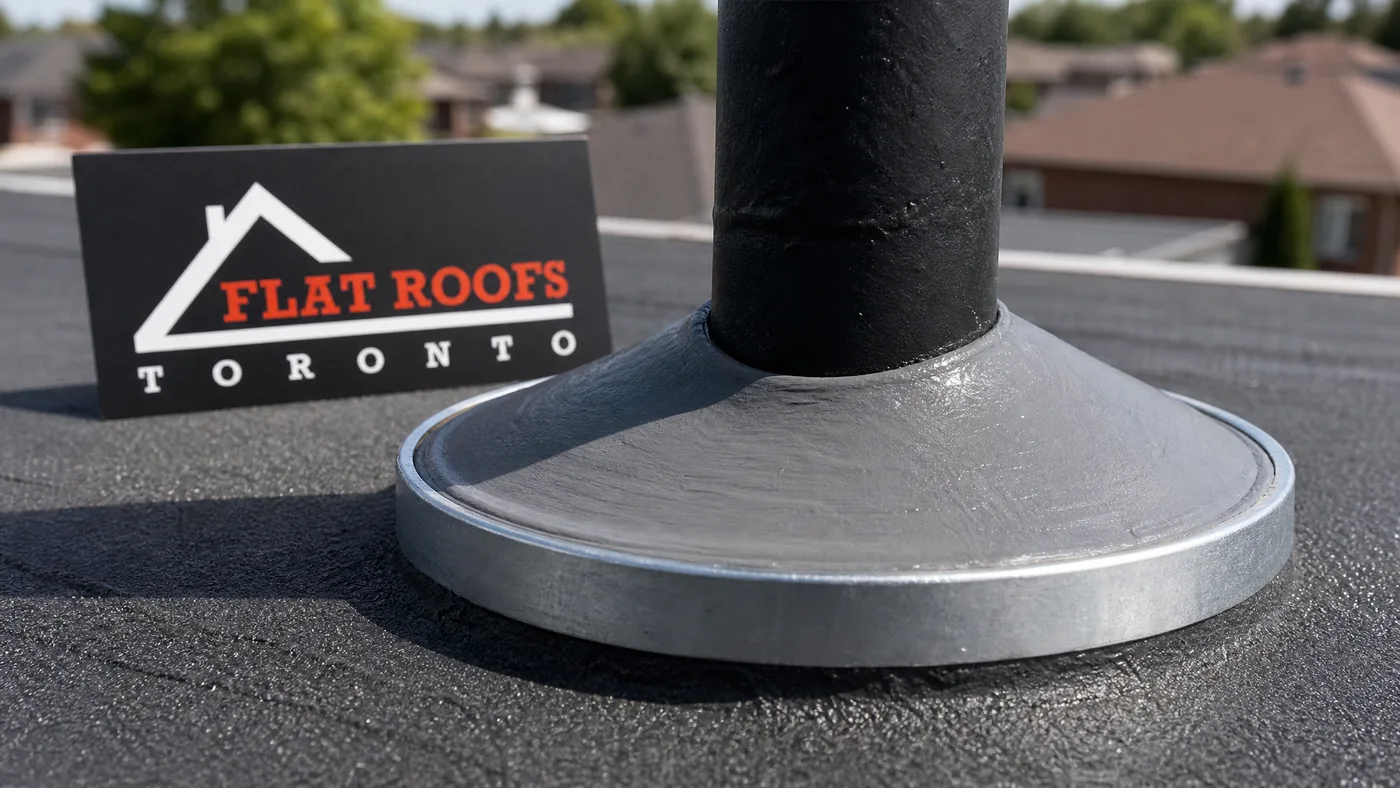
The concept is straightforward. The penetration, such as a pipe, post, or support leg, passes through the roof membrane. A metal pan is fitted around it and flashed into the membrane so water cannot get underneath. The pan is then filled with sealant that bonds to both the penetration and the pan walls, sealing the gap from above. The result is a flexible plug that keeps water out while accommodating the small movements that every roof experiences as temperatures swing between Toronto’s hot summers and cold winters.
Penetrations come in many forms. Some can be sealed with prefabricated boots or flashing collars, but irregular shapes, clustered penetrations, structural supports, and odd angles often require a pitch pocket because nothing else can conform to the geometry. This is why proper flat roof pitch pocket penetration toronto work is part craft and part engineering. A skilled crew chooses the right approach for each detail rather than forcing a single solution onto every penetration.
Because these details are small, they are frequently neglected during installation and ignored during maintenance. Yet a single failed pitch pocket can soak insulation, rot a deck, and stain interior ceilings. Treating them as critical components, not afterthoughts, is the difference between a roof that lasts and one that leaks. Our residential flat roof installation team builds these details correctly from day one.
Why Pitch Pockets and Penetrations Fail on GTA Flat Roofs
Understanding why these seals fail is the first step to preventing the failure. In our experience servicing flat roofs across Toronto, Mississauga, Vaughan, and Brampton, the same root causes appear again and again.
Sealant shrinkage and cracking is the most common culprit. Old asphalt-based pitch fillers shrink as they age and dry out, pulling away from the penetration and the pan walls. This opens a hairline channel that grows with every freeze-thaw cycle and every hot summer day. Once water gets in, it travels along the pipe and into the building.
Improper filling ruins many otherwise good installations. A pitch pocket must be slightly crowned so water sheds away from the penetration, not pooled around it. Pans filled flat or, worse, dished below the rim become little reservoirs that hold water against the seal until it fails. Correct flat roof pitch pocket penetration toronto technique always crowns the fill.
UV degradation attacks unprotected sealants relentlessly. Toronto summers deliver intense ultraviolet exposure that breaks down inferior materials within a few seasons. This is why material selection matters so much, and why summer is a smart time to inspect: the damage from the previous year’s heat is at its most visible.
Movement and fatigue happen because penetrations and roof decks expand and contract at different rates. A rigid filler that cannot flex will crack at the interface. Modern elastomeric sealants used in quality flat roof pitch pocket penetration toronto work are designed to stretch and recover through thousands of cycles.
Poor original flashing means the pan was never properly tied into the membrane. No amount of topside sealant can save a detail that leaks underneath. If we find this during inspection, the pocket must be rebuilt, not just refilled. When a failure has already let water in, our emergency roof repair team can stop the active leak before tackling the permanent rebuild.
Materials Used in Flat Roof Pitch Pocket Penetration Toronto Work
The materials chosen for a pitch pocket determine how long it will last. Cheap fillers fail fast; quality elastomerics last for years. Here is how the common options compare for GTA conditions.
| Sealant Material | Typical Lifespan | UV Resistance | Flexibility | Best Use |
|---|---|---|---|---|
| Asphalt-based pitch (legacy) | 2 to 4 years | Poor | Low | Temporary patching only |
| Single-component urethane | 8 to 12 years | Good | High | General penetration sealing |
| Two-part pourable elastomer | 12 to 20 years | Excellent | Very high | Clustered and critical penetrations |
| Silicone-based sealant | 10 to 15 years | Excellent | High | Restoration over coatings |
| Liquid-applied flashing resin | 15 to 25 years | Excellent | Very high | Irregular and complex shapes |
Beyond the fill material, the pitch pocket pan itself matters. Galvanized steel and aluminum pans are common, while stainless and lead-coated copper are used in premium applications. The pan must be deep enough to hold an adequate volume of sealant and sized correctly around the penetration. A pan that is too tight cannot hold enough sealant; one that is too large wastes material and creates a larger surface to maintain.
For complex geometries, liquid-applied flashing resins have changed the game. Rather than relying on a pan and a pour, a reinforced resin can be moulded directly around irregular penetrations to create a seamless, monolithic seal. This approach is increasingly the standard for high-quality flat roof pitch pocket penetration toronto projects where multiple pipes or odd shapes cluster together. Our crews carry the full range of these materials so we can match the right product to each detail. The same attention to material quality informs our commercial flat roof installation projects, where penetration counts can run into the dozens.
The Flat Roof Pitch Pocket Penetration Toronto Sealing Process
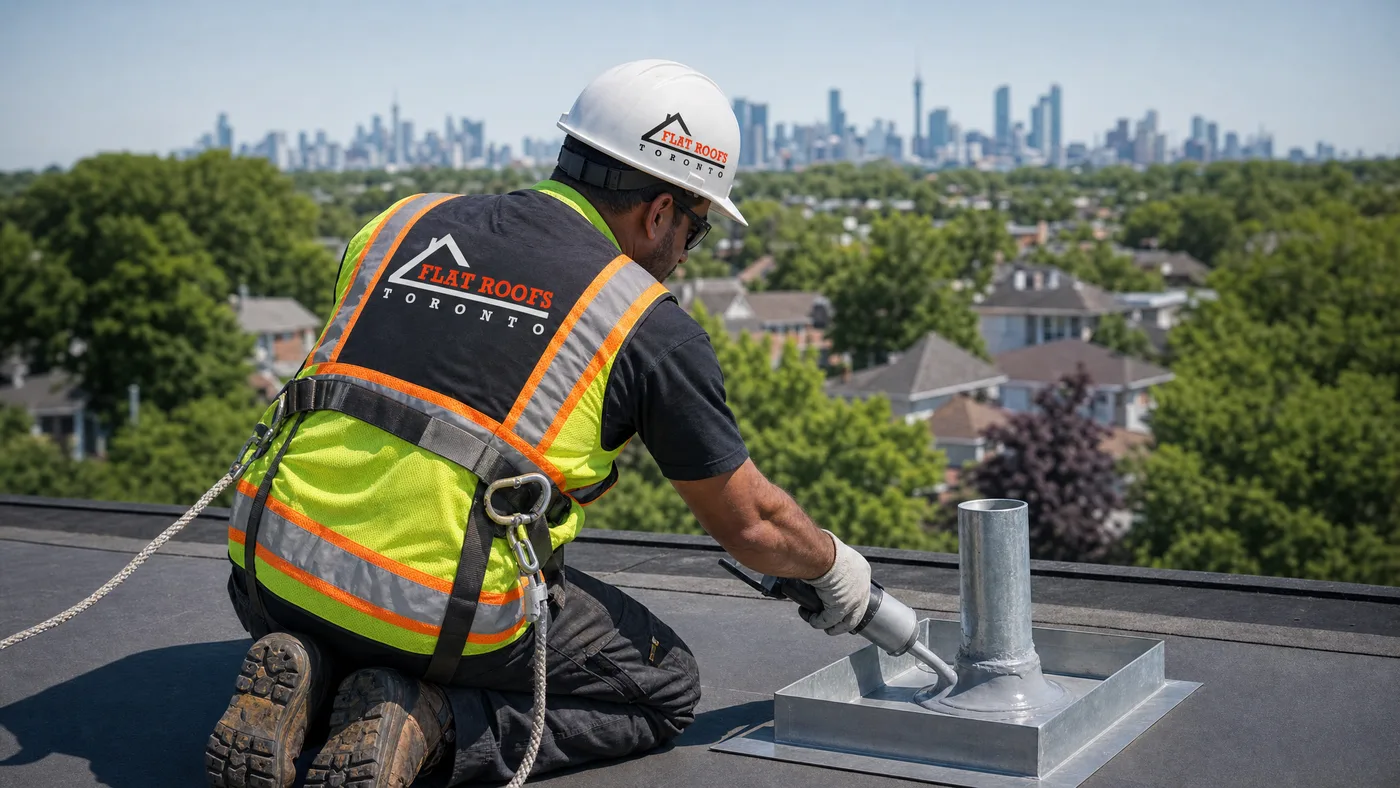
A proper reseal or rebuild follows a disciplined sequence. Skipping steps is exactly how these details fail prematurely. Here is how a quality crew approaches the work.
Step one: inspection and assessment. The crew examines each penetration, checks the existing sealant for cracks and shrinkage, probes the membrane flashing underneath, and identifies which pockets can be topped up versus which must be rebuilt. This assessment drives the scope and the quote.
Step two: cleaning and preparation. Old, failed sealant is dug out. The pan and penetration are cleaned down to a sound, dry, contaminant-free surface. Any rust on a metal pan is treated or the pan is replaced. Preparation is where most of the quality lives; sealant only bonds to clean, dry substrates, which is another reason summer’s dry conditions are ideal for flat roof pitch pocket penetration toronto work.
Step three: priming and flashing repair. If the underlying membrane flashing has failed, it is rebuilt first. A primer is applied where the chosen sealant system requires it to maximize adhesion to the pan and penetration.
Step four: filling and crowning. The sealant is poured or applied in lifts, working out air pockets, and built up so the finished surface crowns above the pan rim. This crown is essential so water sheds away rather than ponding. The crew tools the surface smooth and ensures a continuous bond all the way around the penetration.
Step five: curing and verification. The sealant is left to cure undisturbed. In warm summer weather this happens quickly and reliably. The crew returns to verify the cure, check for shrinkage, and confirm the crown is intact. Good flat roof pitch pocket penetration toronto service always includes this final verification rather than walking away the moment the pour is done.
Cost of Flat Roof Pitch Pocket Penetration Toronto Sealing in 2026
Costs vary with the number of penetrations, their complexity, the materials chosen, and whether pockets can be resealed or must be fully rebuilt. The table below gives realistic 2026 GTA ranges so you can budget with confidence.
| Service Type | Typical Price Range (CAD) | Timeline | Best For |
|---|---|---|---|
| Single pitch pocket reseal | $150 to $300 | Same day | One aging penetration |
| Single pitch pocket rebuild | $350 to $650 | Same day | Failed pan or flashing |
| Multi-penetration cluster reseal | $600 to $1,500 | 1 day | Equipment curbs, pipe banks |
| Liquid-applied flashing detail | $400 to $900 each | 1 to 2 days | Irregular or complex shapes |
| Full roof penetration audit and reseal | $1,800 to $5,000+ | 2 to 4 days | Whole-roof preventive service |
These ranges reflect typical residential and small commercial work across Toronto, Mississauga, Markham, Vaughan, Brampton, Oakville, and Burlington. Larger commercial decks with many penetrations are quoted by the project. The cost of proactive flat roof pitch pocket penetration toronto sealing is always a fraction of what you would pay to repair water-damaged insulation, decking, and interior finishes after a neglected pocket leaks for a season or two.
It is worth budgeting penetration sealing as part of routine roof maintenance rather than treating it as an emergency. A planned summer visit costs far less than a reactive call after a leak appears. For older roofs with many penetrations, bundling the work into a single visit reduces mobilization costs and gives you a clean baseline to maintain going forward.
Summer Timing and Why It Matters for Penetration Sealing
Season has a real impact on the quality and durability of pitch pocket work, and summer is the best time of year for it in the GTA. The reasons go beyond simple comfort.
Proper curing. Pourable elastomers and urethanes cure best in warm, dry conditions. Summer temperatures help the sealant reach full strength and adhesion, producing a more durable seal. Cold-weather application is possible with special products but never matches the reliability of a warm-weather pour.
Dry substrates. Sealant must bond to a dry surface. Summer’s lower humidity and longer dry spells give crews the clean, dry pans and penetrations that quality flat roof pitch pocket penetration toronto work demands. Trying to seal a damp detail traps moisture under the new sealant and guarantees early failure.
Safety and access. Dry, frost-free roof surfaces are far safer to work on. Crews can move confidently, which means faster, cleaner work and lower risk. Our technicians work in full fall-protection harnesses regardless of season, but summer conditions make the job safer and more efficient.
Beating the autumn rains. Sealing penetrations in summer means the work is fully cured and proven before the wet autumn season arrives. You head into the harder months with every penetration buttoned up. This is the single best argument for scheduling flat roof pitch pocket penetration toronto service during the warm months rather than waiting until a leak forces the issue.
Heat and UV are also worth respecting. The intense summer sun that helps sealants cure also stresses older materials, so a summer inspection catches UV-damaged pockets at their worst, exactly when they are easiest to spot and fix. Pairing penetration sealing with a check of your attic insulation ensures that any moisture that did get in has not already compromised the assembly below.
Maintaining Your Sealed Penetrations Year After Year
Even the best flat roof pitch pocket penetration toronto work needs periodic attention. Sealants are durable, not eternal, and a small top-up at the right time prevents a full rebuild later. Here is how to keep these details healthy.
Inspect twice a year. A spring and late-summer look at every penetration catches cracking, shrinkage, and crown loss early. Bring a flashlight and look closely at the bond line where the sealant meets the penetration; that interface is where failure starts.
Top up before they leak. A pocket showing minor shrinkage can often be cleaned and topped up for a fraction of a rebuild cost. The key is catching it before water gets in. This is the entire logic of preventive flat roof pitch pocket penetration toronto maintenance.
Keep the roof clean. Debris that dams water around penetrations accelerates failure. Keeping drains clear and the field free of debris reduces standing water near pockets. A clean roof is a longer-lasting roof.
Document each penetration. Keeping a simple record of where each penetration is and when it was last serviced turns maintenance into a quick, predictable task rather than a guessing game. You can see examples of our completed detailing work in our project gallery.
Penetrations near skylights deserve extra attention because the curbs and surrounding details create additional seams. If your roof includes skylights, coordinate penetration sealing with curb inspection. Our residential skylights and commercial skylights teams understand how these details interact and seal them as a system rather than in isolation.
The table below summarizes a sensible maintenance cadence for keeping penetrations watertight throughout the year.
| Maintenance Task | Frequency | What It Prevents | Typical Effort |
|---|---|---|---|
| Visual penetration inspection | Twice yearly | Hidden cracks and shrinkage | 30 to 60 minutes |
| Sealant top-up | As needed | Full pocket failure | Same day |
| Debris and drain clearing | Seasonally | Ponding near pockets | 1 to 2 hours |
| Crown and bond-line check | Annually | Water ingress at interface | 30 minutes |
| Full penetration audit | Every 3 to 5 years | Systemic membrane failure | 1 day |
What does flat roof pitch pocket penetration toronto sealing actually involve?
How often should pitch pockets be inspected on a GTA flat roof?
Why is summer the best time for flat roof pitch pocket penetration toronto work?
How much does it cost to reseal roof penetrations in Toronto?
What happens if a failed pitch pocket is left unsealed?
Can I reseal a pitch pocket myself or should I hire a professional?
Schedule Your flat roof pitch Consultation Today
Do not let a small, neglected detail turn into a major leak. The team at Flat Roofs Toronto specializes in inspecting, sealing, and rebuilding roof penetrations so your low-slope roof stays watertight through every season. Summer is the ideal time to get this work done while conditions are dry and curing is reliable, and our crews bring the right materials and proven technique to every flat roof pitch pocket penetration toronto project across the region.
Call us today at (647) 333-3528 or request a free consultation to get started.
Flat Roofs Toronto proudly serves Toronto, Mississauga, Markham, Vaughan, Brampton, Oakville, and Burlington.