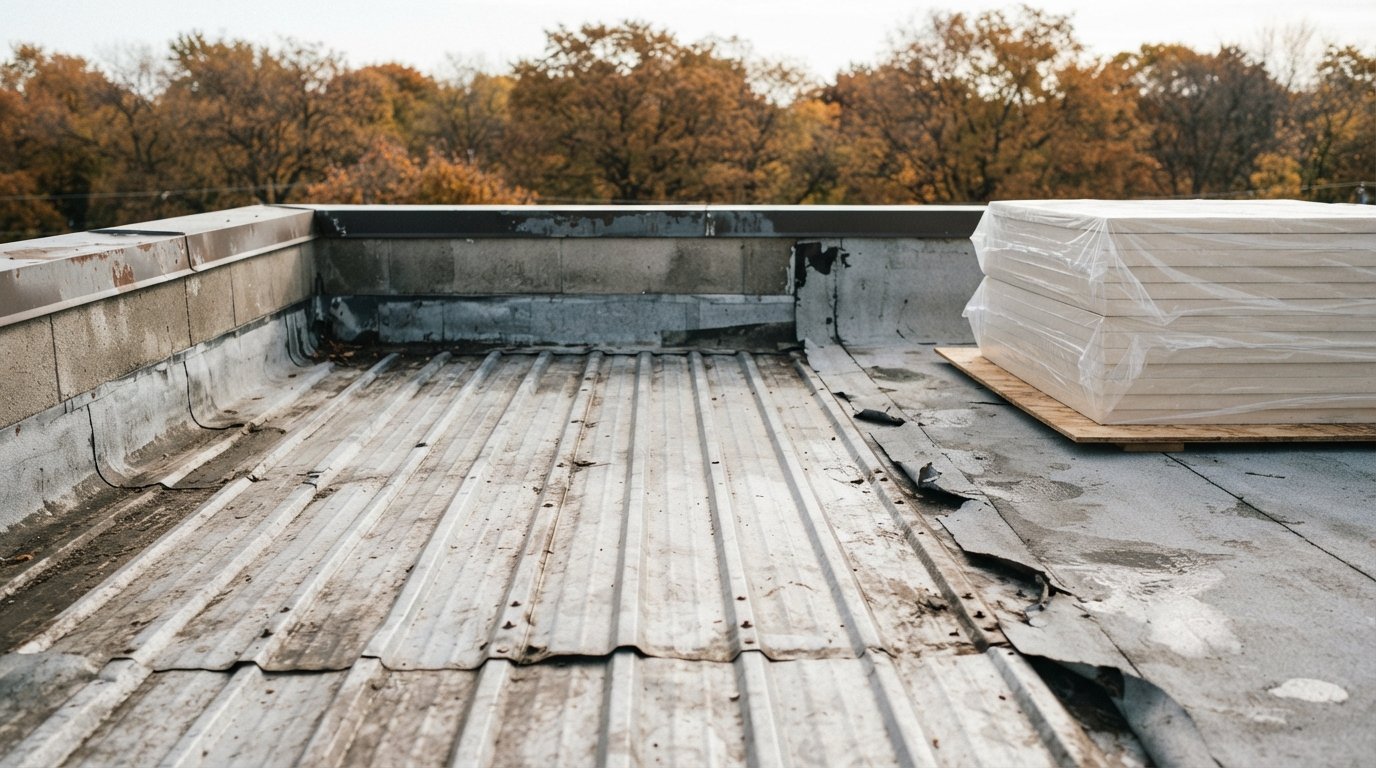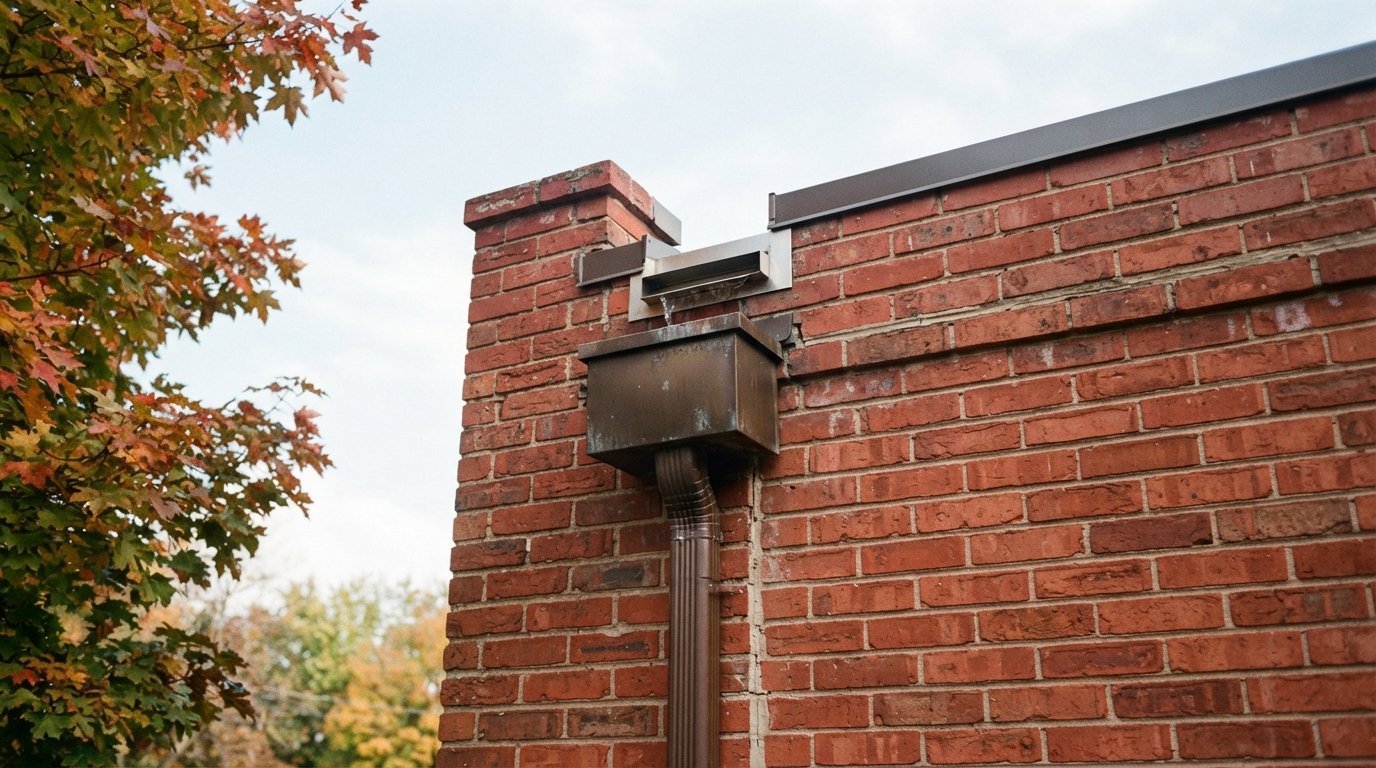
If you own a commercial building, low-slope residential property, or industrial facility in the Greater Toronto Area, understanding edge metal ES-1 wind code flat roof toronto requirements has never been more important. The FM Approvals ES-1 standard governs how edge metal systems, drip edges, fascia, coping, and gravel stops, must perform under wind uplift loads, and since the Ontario Building Code references ASCE 7 wind maps, Toronto properties are subject to specific design pressures that older installations may no longer satisfy. With summer 2026 offering optimal installation conditions, right now is the ideal time to audit your roof’s perimeter edge metal and bring it into full compliance.
At Flat Roofs Toronto, we have spent years specialising in low-slope membrane systems across the GTA, and edge metal compliance is one of the most frequently overlooked elements in roofing inspections. A membrane that is perfectly adhered at mid-field can still fail catastrophically if the perimeter fascia or coping peels away in a summer storm. This guide walks through everything property owners and facility managers need to know about the edge metal ES-1 wind code flat roof toronto framework, from the technical standard itself, to material choices, to what a compliant installation looks like on the ground in Mississauga, Markham, Vaughan, Brampton, and Oakville.
Summer is the best season to address edge metal work: long daylight hours, warm temperatures that allow sealants and adhesives to cure properly, and dry weather windows that reduce the risk of membrane contamination. Whether you are starting a new build or retrofitting an existing flat roof, the information below will help you make informed decisions and avoid the costly failures that non-compliant edge metal causes every year across Toronto.
What Is the ES-1 Wind Code and Why Does It Apply to Edge Metal on Flat Roofs in Toronto?
The FM Approvals ES-1 standard, formally titled Approval Standard for Edge Systems Used with Low Slope Roofing, establishes performance requirements for the metal components that terminate and secure the edges of flat and low-slope roof assemblies. It was developed because perimeter edge failures are one of the leading causes of progressive roof system loss during high-wind events. When an edge detail lets go, the membrane can peel back like a carpet, exposing the building to immediate water intrusion and structural damage.
For the edge metal ES-1 wind code flat roof toronto context specifically, three factors make compliance non-negotiable:
- Wind exposure zones: Toronto’s lakefront and exposed high-rise corridors are classified as Exposure Category C or D under ASCE 7. Corner zones and roof perimeters receive multiplied design pressures, sometimes two to three times the pressure applied to the field of the roof.
- Ontario Building Code (OBC) alignment: The OBC adopts NBCC provisions that align with wind pressure calculations effectively requiring edge metal to resist the same uplift as the membrane itself. For most Toronto commercial roofs, design wind pressures at the perimeter exceed 2.0 kPa.
- Insurance and FM Global requirements: Many commercial property insurers, particularly those underwriting to FM Global standards, require ES-1 rated edge metal as a condition of coverage. Failing to use rated components can void wind-uplift coverage on your policy.
ES-1 classifies edge systems by their resistance to both horizontal (blow-off) and vertical (uplift) forces. The rating system uses designations like 1-60, 1-90, 1-120, or 1-150, where the number indicates the design wind speed in miles per hour the component has been tested to withstand. For most Toronto low-rise commercial and multi-residential flat roofs, a minimum 1-90 rating is recommended; taller or more exposed buildings in Vaughan, Brampton, or the Scarborough bluffs area often require 1-120 or higher.
| ES-1 Rating | Equivalent Design Wind Speed | Typical Toronto Application | Minimum Fastener Spacing |
|---|---|---|---|
| 1-60 | 60 mph / 97 km/h | Low-rise sheltered buildings in protected urban cores | 12 inches o.c. |
| 1-90 | 90 mph / 145 km/h | Standard commercial and multi-residential flat roofs, most GTA locations | 9 inches o.c. |
| 1-120 | 120 mph / 193 km/h | Exposed rooftops, lakefront properties, taller buildings in Mississauga and Toronto | 6 inches o.c. |
| 1-150 | 150 mph / 241 km/h | High-rise corners, industrial roofs with large uninterrupted roof areas in Vaughan or Brampton | 4 inches o.c. |
| 1-180 | 180 mph / 290 km/h | Critical infrastructure, large-span warehouse roofs, buildings in Exposure Category D | 3 inches o.c. |
Types of Edge Metal Used on Toronto Flat Roofs and Their ES-1 Compliance Considerations
Edge metal is not a single product, it is a family of perimeter components, each with its own function, geometry, and ES-1 test protocol. Understanding which type applies to your roof is the starting point for any edge metal ES-1 wind code flat roof toronto compliance project.
Drip Edge (Type A): The simplest form, a drip edge terminates the membrane at the roof’s lower edge and directs water away from the fascia. It must be mechanically fastened at the correct spacing and lapped correctly at joints. Under ES-1, drip edges must resist uplift without pulling away from the substrate and must not allow water infiltration at laps.
Gravel Stop / Edge Strip (Type B): Common on built-up roofing (BUR) systems and modified bitumen roofs, gravel stops have a vertical face and a horizontal flange that is mopped or mechanically fastened to the deck. They prevent aggregate from washing off and serve as a membrane termination point. ES-1 requires that the vertical face resist outward horizontal forces without deforming or unclipping.
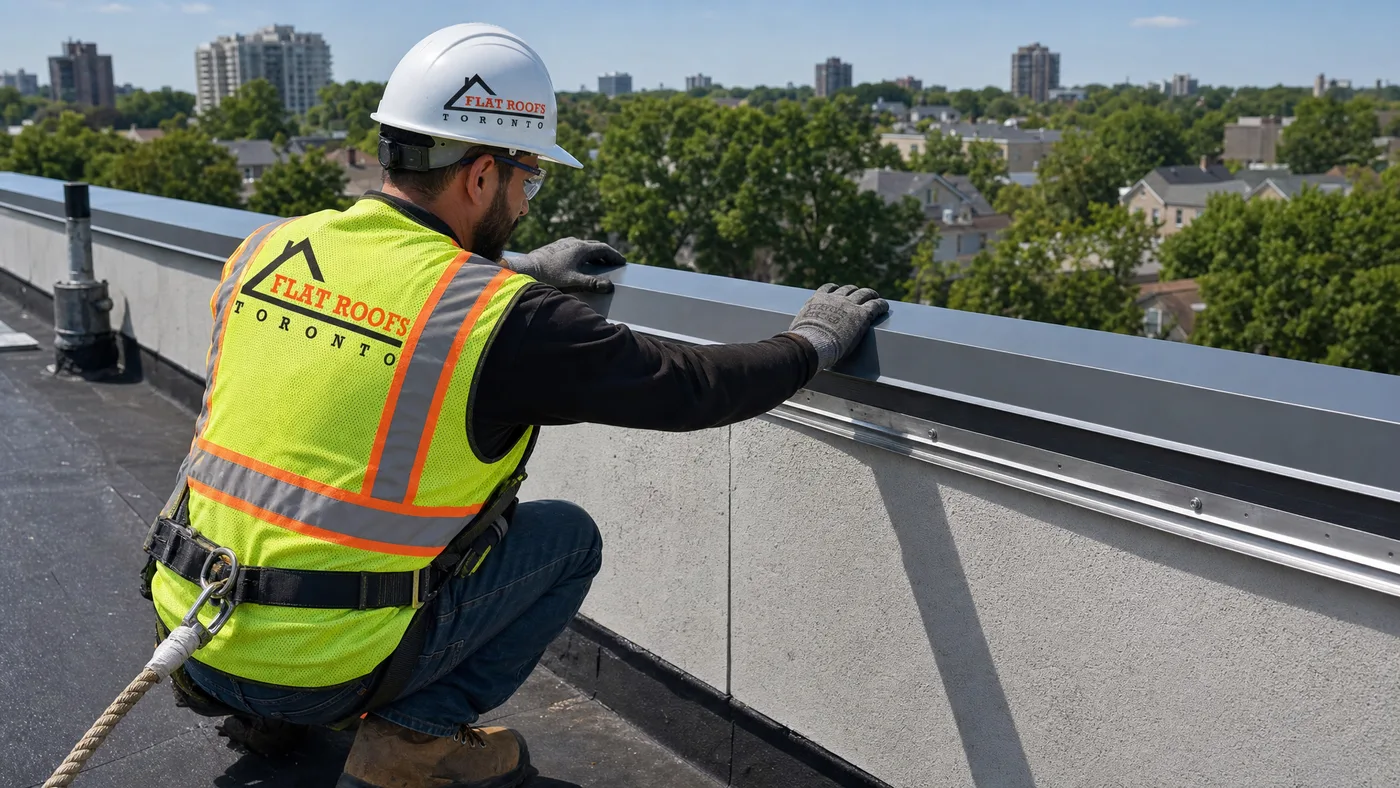
Coping Cap (Type C): Coping covers the top of a parapet wall and is the most mechanically demanding edge metal component. It must resist uplift from above and blow-off laterally. ES-1 Type C testing applies simultaneous uplift and horizontal loads, and coping must remain in place without unseating its cleat anchors. In Toronto’s summer storm season, improperly secured coping is the most common cause of perimeter failure calls we receive.
Fascia with Hook-Strip (Type D): Common on commercial roofs with exposed decorative fascia panels, these systems use a concealed hook strip to secure the face panel. ES-1 Type D tests the holding force of the hook engagement and requires that the system not release under sustained wind loads. This type is frequently specified for retail plazas in Markham and Oakville where architectural appearance is a priority.
Each of these types requires a different installation methodology, different substrate preparation, and different verification steps. When our team at Flat Roofs Toronto’s commercial flat roof installation division conducts a perimeter audit, we check not only the product’s ES-1 rating but also the actual installed fastener pattern, lap geometry, and sealant continuity, because even a rated product fails if installation deviates from the tested assembly.
Ontario Building Code Requirements and How They Intersect with ES-1
Ontario’s construction standards draw on the National Building Code of Canada (NBCC), which in turn references ASCE 7 wind pressure calculations for components and cladding. The GTA falls within a wind pressure zone that requires edge metal to handle peak gust pressures that can exceed 2.5 kPa in open or high-exposure locations. Here is how the OBC framework and ES-1 interact in practice:
The OBC does not mandate ES-1 by name, but it requires that all components of the building envelope, including roof edge terminations, be designed and installed to resist the applicable design loads. When a building permit is issued for a flat roof replacement in Toronto, Mississauga, or Brampton, the roofing contractor must demonstrate that the edge metal assembly is capable of resisting those loads. In practice, specifying ES-1 rated products and installing them per the tested assembly is the cleanest path to permit compliance, because ES-1 provides a third-party-tested load rating that inspectors can verify against the engineer’s wind load calculations.
For re-roofing projects that do not require a full building permit, typically reroofs that do not change the structural load profile, ES-1 compliance is still recommended as a matter of best practice and insurance requirements. Most commercial insurers in Ontario now include language in their property policies requiring that roofing work meet the applicable FM or UL standard, which for low-slope roofs means FM 4470 for the membrane and ES-1 for the perimeter edge metal.
Step-by-Step: How a Compliant Edge Metal ES-1 Installation Works on a Toronto Flat Roof
Understanding the installation process helps property owners evaluate contractor proposals and identify shortcuts that could compromise compliance. Here is what a fully compliant edge metal ES-1 wind code flat roof toronto installation looks like, from substrate preparation through final inspection.
Step 1, Substrate assessment: Before any new edge metal is installed, the existing nailer board, wood blocking, or concrete parapet must be assessed for rot, delamination, or inadequate fastening. ES-1 rated edge metal installed over a compromised nailer will fail regardless of the product’s rating. In summer, dried-out or heat-degraded wood nailers on older Toronto buildings are especially common and must be replaced before work proceeds.
Step 2, Nailer installation: Pressure-treated wood nailers (or proprietary composite nailers) are installed at the correct height and slope to receive the edge metal’s horizontal flange. Nailer fasteners must penetrate the structural deck, not just the insulation board. Fastener type, diameter, and spacing are dictated by the ES-1 tested assembly, deviating from the tested pattern invalidates the rating.
Step 3, Cleat or hook-strip installation: For coping and fascia systems, a continuous metal cleat or hook strip is mechanically fastened to the nailer at the tested spacing. The cleat is the primary wind resistance mechanism, it must be the correct gauge, the correct profile, and fastened with the correct screw type at the tested intervals. On longer runs, thermal expansion joints must be incorporated to prevent buckling during Toronto’s summer heat.
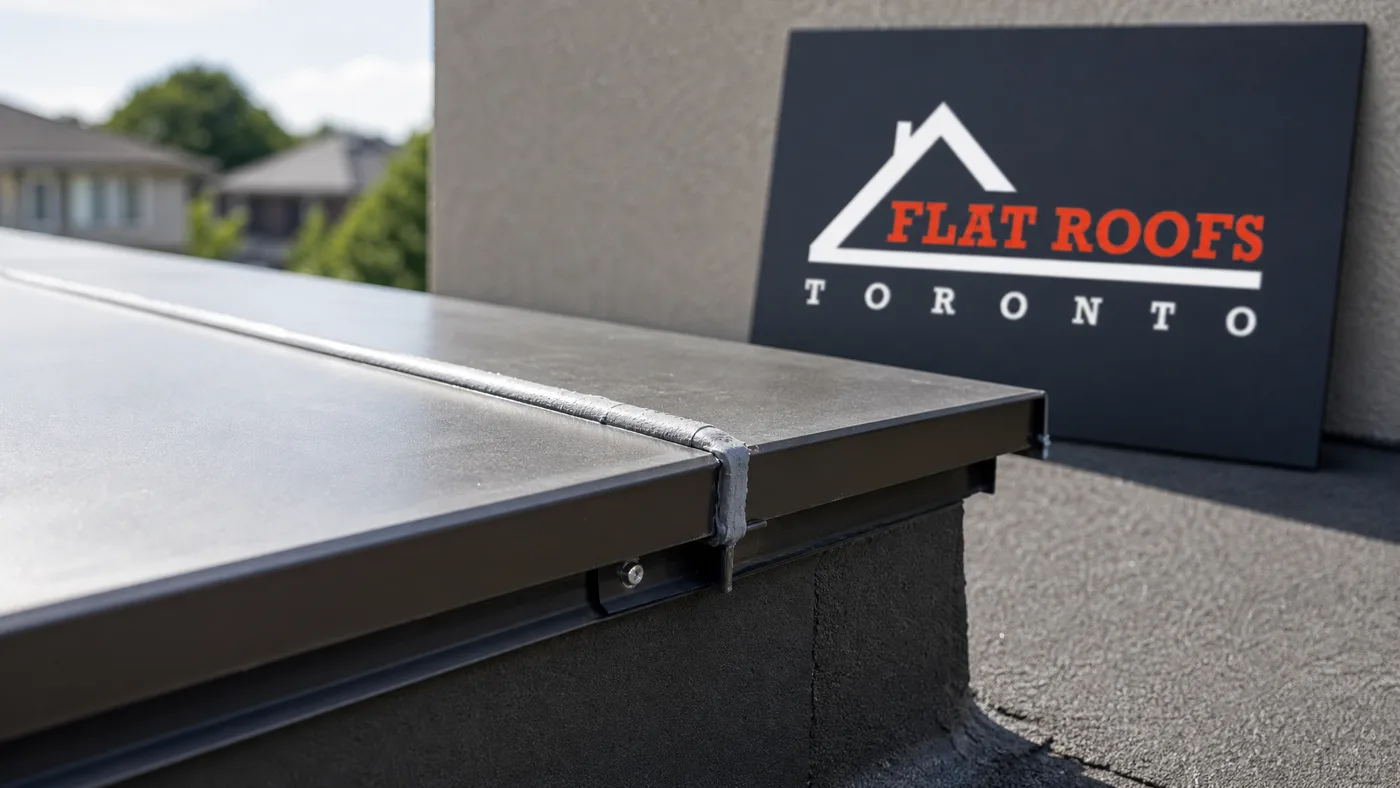
Step 4, Edge metal panel installation: Panels are set onto the cleat, lapped at joints per the tested assembly (typically a 3-inch minimum lap), and sealed with approved sealant at laps and ends. Joint sealant must be applied in a continuous bead, skipped or thin beads allow wind-driven rain infiltration even if the metal itself stays in place.
Step 5, Membrane termination: The roofing membrane is carried over the flange of the edge metal and terminated per the membrane manufacturer’s specification. The termination bar or membrane edge must be embedded in compatible sealant and fastened at the correct intervals. This connection point is where membrane uplift transfers into the edge metal system, if it is weak, the whole assembly underperforms regardless of the metal’s ES-1 rating.
Step 6, Inspection and documentation: A compliant installation should be documented with photos of the fastener pattern, cleat installation, joint laps, and sealant continuity. This documentation supports permit sign-off, insurance compliance submissions, and future roof assessments. Our team at Flat Roofs Toronto’s residential flat roof installation division provides a full installation report with every ES-1 edge metal project.
| Edge Metal Component | Common Material Options | Minimum Gauge (Steel) | ES-1 Type | Typical Cost Range (per linear metre, installed) |
|---|---|---|---|---|
| Drip Edge | Galvanized steel, aluminium, zinc-coated steel | 24 gauge | Type A | $18 to $35 |
| Gravel Stop / Edge Strip | Galvanized steel, aluminium | 22 gauge | Type B | $25 to $48 |
| Coping Cap | Galvanized steel, aluminium, stainless steel | 20 gauge | Type C | $55 to $120 |
| Fascia with Hook Strip | Aluminium, painted steel | 20 gauge | Type D | $65 to $140 |
| Through-Wall Flashing | Copper, stainless steel, lead-coated copper | 16 oz (copper) | Custom / ES-1 adjacent | $90 to $200 |
Common ES-1 Failures Seen on Toronto Flat Roofs and How to Prevent Them
Even experienced roofing crews can install non-compliant edge metal if they are not specifically trained in ES-1 requirements. Here are the most common deficiencies our inspectors find on GTA flat roofs, buildings in Mississauga, Markham, Vaughan, Brampton, and Oakville all show similar patterns.
Incorrect fastener spacing: This is the single most prevalent deficiency. A product rated at 1-90 for 9-inch fastener spacing becomes effectively unrated when screws are placed at 12 or 16 inches. We regularly see this on roofs where the crew used whatever spacing felt natural rather than following the tested assembly instructions. The fix requires either adding fasteners to achieve the correct pattern or replacing the edge metal with a system that can be properly installed in the available substrate.
Missing or improper laps: ES-1 tested assemblies specify minimum lap dimensions at joints. A 1-inch lap that was not sealant-bonded will open under wind pressure and allow water infiltration. On longer buildings in Brampton and Vaughan, we frequently find edge metal sections butted rather than lapped, which creates both a water entry point and a wind-driven separation risk.
Incompatible cleat gauge or profile: Some contractors substitute a lighter-gauge cleat to reduce cost. Moving from a 22-gauge cleat to a 24-gauge cleat changes the holding force, potentially dropping the system below its rated resistance. The cleat must match the tested assembly exactly.
Inadequate nailer fastening: Nailers fastened only into insulation board, not penetrating the deck, pull out under uplift loads. This failure mode is especially common on re-roofing projects where the original nailer is reused without verifying its fastening depth and pattern. Summer heat can cause already-marginal fastener grip to degrade further as the substrate expands and contracts.
Sealant voids at critical joints: End joints, inside and outside corner returns, and penetration points are the highest-risk locations for sealant discontinuity. A skilled inspector can identify voids by probing, but by the time a leak appears, water has often travelled laterally and caused damage far from the visible deficiency. Our emergency roof repair team responds to many summer storm calls that trace back to perimeter edge sealant failure.
Choosing the Right Edge Metal System for Your Toronto Flat Roof: Material and Specification Guide
Selecting the correct edge metal system for a Toronto flat roof involves balancing wind resistance rating, material durability, aesthetic requirements, and compatibility with the roofing membrane. Here is a structured way to think through the decision:
Galvanised steel is the most common choice for commercial flat roofs across the GTA. It is strong, available in standard profiles that match ES-1 tested assemblies, and cost-effective. The limitation is long-term corrosion resistance, in Toronto’s freeze-thaw cycle (relevant in other seasons) and summer heat, the galvanising can be attacked by aggressive membrane adhesives if incompatible products are used. Specify a compatible sealant and primer system when using galvanised steel with TPO or EPDM membranes.
Aluminium is lighter, corrosion-resistant, and easier to work with in complex geometry situations such as curved parapets or custom-profile copings. It is popular on mid-range commercial projects in Markham and Oakville where aesthetics matter. The trade-off is that aluminium is softer than steel, requiring heavier gauge to achieve equivalent strength, which affects the tested assembly specifications. Always verify that the aluminium profile being used is the one cited in the ES-1 approval, not a visually similar substitute.
Stainless steel offers the best corrosion resistance and is specified for coastal-adjacent locations (lakefront Toronto), food processing facilities, and projects with long design lives. It is significantly more expensive but delivers premium long-term performance. If you are investing in a 30-year roof system on a major commercial property, stainless steel edge metal amortises well.
Copper is used primarily in high-end architectural applications and on heritage buildings in established Toronto neighbourhoods. Copper’s main advantage is its exceptional longevity, properly installed copper coping can outlast the building structure itself. It is self-healing in the sense that patination provides ongoing corrosion protection. The cost premium is substantial and it must be isolated from dissimilar metals to prevent galvanic corrosion.
For most GTA commercial and residential flat roofs, we recommend ES-1 rated galvanised steel at 1-90 or 1-120 as the standard specification, with aluminium for architecturally-exposed applications and stainless or copper reserved for premium or long-life projects. If you would like to see examples of completed installations, visit our project gallery.
Summer 2026 Installation Timing: Why Now Is the Right Window for Edge Metal Work in the GTA
From a purely technical standpoint, summer is the optimal season for edge metal ES-1 compliance work on Toronto flat roofs. Several factors converge in June, July, and August to make the work more reliable and the results more durable:
Sealant and adhesive performance: Most ES-1 tested edge metal assemblies require butyl or polyurethane sealants that have minimum application temperatures of 5°C and optimal cure performance above 15°C. In summer, sealants cure faster, bond more reliably, and achieve full adhesion strength before any weather event tests them. Cold-weather sealant installation, common in emergency situations in other seasons, risks incomplete cure and premature adhesion failure.
Membrane compatibility: When edge metal work is integrated with membrane re-termination, summer heat softens TPO and EPDM membranes, making them more workable and ensuring better contact with the edge metal flange. Termination bars set in warm weather seat more evenly and create a more reliable seal.
Extended working hours: Toronto’s summer daylight runs from before 6 a.m. to past 9 p.m. This allows our crews to complete longer continuous runs of edge metal in a single day, minimising the number of joints and overnight exposures for partially completed work. Fewer joints mean fewer potential failure points.
Dry weather windows: GTA summer weather, while variable, typically offers multi-day dry periods that allow complete installations, from substrate prep through membrane termination, to be completed without moisture contamination. Summer storms, when they occur, are the test of the completed system rather than a threat to the installation process.
If your building in Mississauga, Markham, Vaughan, Brampton, or Oakville has not had its edge metal audited in the last five years, a summer 2026 assessment and installation project is an excellent investment. Heat and UV exposure over multiple summers degrades sealants and can cause metal fatigue at poorly-lapped joints, issues that are invisible until a storm arrives. We also offer attic insulation assessments as part of comprehensive summer roof system evaluations, since poor insulation at the roof edge can accelerate substrate degradation under edge metal.
| Project Type | Typical Duration (linear metres per crew-day) | Summer Advantage | Recommended ES-1 Rating | Estimated Project Cost (CAD) |
|---|---|---|---|---|
| Drip edge replacement, residential | 80 to 120 lm/day | Fast sealant cure, no weather delays | 1-90 | $2,500 to $6,000 |
| Coping replacement, small commercial | 40 to 60 lm/day | Membrane pliability for re-termination | 1-90 or 1-120 | $8,000 to $20,000 |
| Full perimeter edge metal, mid-size commercial | 25 to 40 lm/day (complex) | Extended daylight for continuous installation | 1-120 | $18,000 to $55,000 |
| Fascia and hook strip, retail plaza | 30 to 50 lm/day | Dry weather for adhesive bonding | 1-90 or 1-120 | $12,000 to $40,000 |
| High-rise parapet coping, commercial tower | 15 to 25 lm/day (access constraints) | Long days for rope access or swing stage rigging | 1-150 | $45,000 to $150,000+ |
How ES-1 Edge Metal Compliance Protects Your Investment and Reduces Long-Term Costs
Property owners sometimes view ES-1 compliance as a regulatory burden, an added cost with no immediate visible benefit. In reality, the return on compliant edge metal is one of the strongest in the roofing industry. Here is why:
Insurance claim prevention: The majority of catastrophic flat roof losses in Ontario involve perimeter edge failure as the initiating event. Once an edge detail releases, the membrane can delaminate across the entire roof surface within minutes of a high-wind event. Replacing a full membrane system costs dramatically more than replacing the edge metal that would have prevented the failure. FM Global’s own loss data shows that perimeter edge failures drive a disproportionate share of total roofing loss claims.
Membrane warranty protection: Most TPO, EPDM, and modified bitumen membrane warranties contain explicit requirements for the perimeter edge metal to meet ES-1 standards. Using non-rated edge metal can void the membrane warranty, leaving you with no recourse if the membrane itself fails prematurely. Given that quality membrane systems represent a significant portion of a re-roofing investment, protecting that warranty has direct financial value.
Reduced maintenance frequency: ES-1 rated systems, properly installed, require far less maintenance than non-rated alternatives. Joint sealants last longer because the tested assembly’s geometry limits joint movement. Cleat-fastened coping does not work loose the way face-fastened systems do. Property managers in Markham, Oakville, and Burlington consistently report reduced roof maintenance calls on buildings with ES-1 compliant perimeters.
Re-sale and lease value: Commercial and multi-residential properties with documented code-compliant roofing systems command better value in transactions. Buyers and tenants conducting due diligence increasingly request roofing inspection reports, and ES-1 compliance documentation is a positive differentiator. For properties in Vaughan’s growing industrial and commercial corridors, this is increasingly relevant.
Our team handles both residential flat roof installation and large-scale commercial projects, and we provide full ES-1 compliance documentation with every edge metal installation. Whether you are a homeowner in Toronto’s east end or a facilities manager overseeing a portfolio of commercial properties across the GTA, compliant edge metal is a foundational investment in the longevity of your roof system.
What does edge metal ES-1 wind code flat roof Toronto compliance actually require for my building?
How do I know if my existing flat roof edge metal in Toronto meets the ES-1 standard?
Does the Ontario Building Code require ES-1 rated edge metal on flat roofs?
What ES-1 rating do I need for a flat roof in Toronto or Mississauga?
What is the best time of year to replace edge metal on a flat roof in the GTA?
How does edge metal ES-1 wind code flat roof Toronto compliance affect my roof warranty?
Schedule Your edge metal ES-1 Consultation Today
Perimeter edge metal compliance is one of the highest-leverage investments you can make in the long-term performance of your flat roof. Flat Roofs Toronto brings deep expertise in ES-1 wind code requirements, Ontario Building Code alignment, and summer installation best practices to every edge metal project across the Greater Toronto Area. Whether you need a full coping replacement on a commercial parapet or a targeted drip edge upgrade on a residential low-slope roof, our team delivers compliant, documented installations built to last.
Call us today at (647) 333-3528 or request a free consultation to get started.
Flat Roofs Toronto proudly serves Toronto, Mississauga, Markham, Vaughan, Brampton, and Oakville with expert flat roofing and ES-1 compliant edge metal installations.