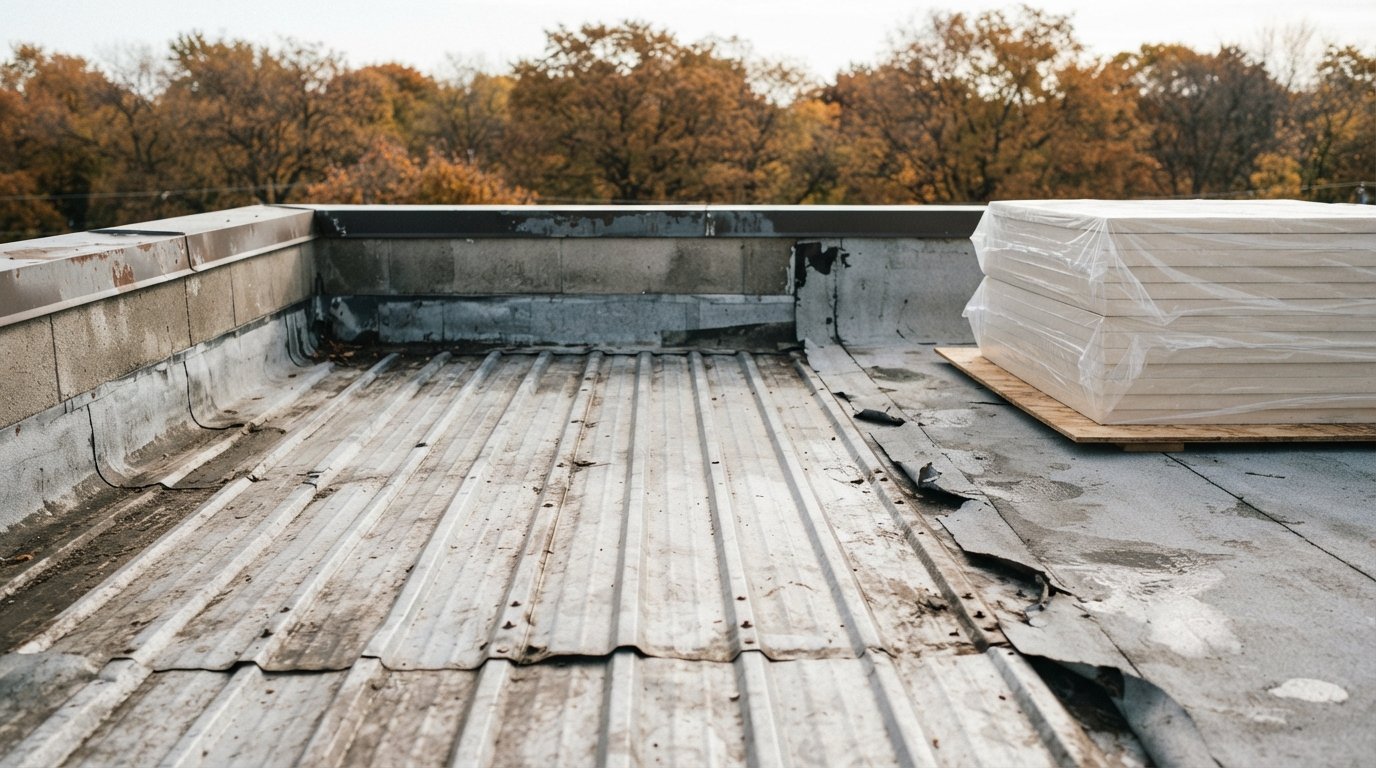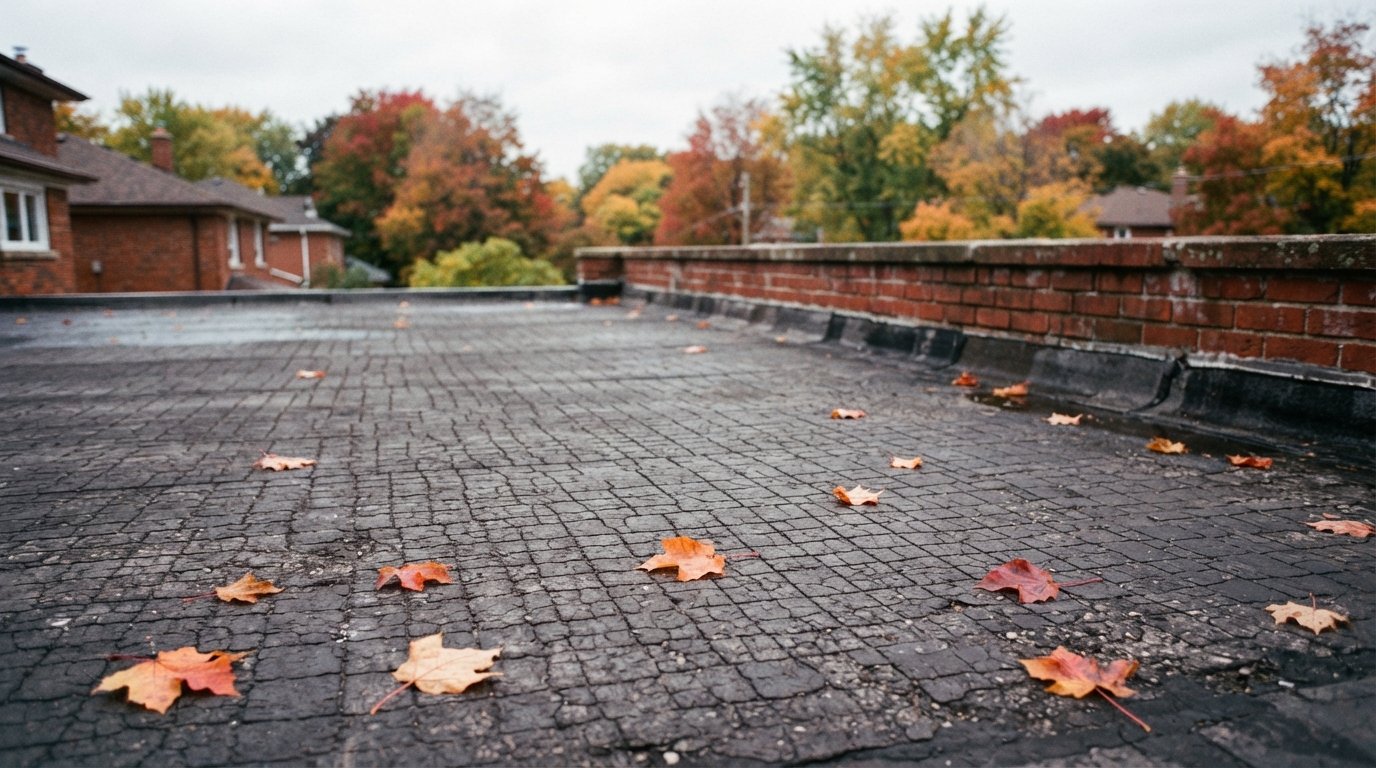

A ballasted flat roof system uses the weight of loose-laid materials, typically river-washed gravel, concrete pavers, or stone, to hold the waterproof membrane in place rather than mechanically fastening or adhering it to the roof deck. This approach has been used successfully for decades and remains a viable option for specific applications in the Toronto market. Understanding how ballasted flat roof system assemblies work, their advantages and limitations, and how they compare to adhered and mechanically attached systems helps building owners make informed decisions about the right flat roof configuration for their property.
How Ballasted Flat Roof Systems Work
In a conventional ballasted assembly, the waterproof membrane (typically EPDM rubber) is laid loosely over the roof insulation without adhesive or mechanical fasteners. The membrane sheets overlap at seams which are sealed with adhesive or tape. Then, a layer of ballast material, usually 10-15 pounds per square foot of smooth river-washed gravel (1.5 to 2.5 inch diameter), is spread uniformly over the entire membrane surface. This ballast weight holds the membrane flat against the roof deck and prevents wind uplift during storms.
Types of Ballasted Systems
| Ballast Type | Weight (psf) | Cost per sq ft | Best Application |
|---|---|---|---|
| River-washed gravel | 10-15 | $1 – $3 | Standard commercial, budget applications |
| Concrete pavers (2″ thick) | 18-22 | $5 – $12 | Walkable surfaces, maintenance paths |
| Interlocking pavers on pedestals | 12-18 | $8 – $20 | Rooftop patios, accessible areas |
| Green roof growing media | 15-35 | $10 – $30 | Vegetated/green roof applications |
Inverted Roof Membrane Assembly (IRMA)
An inverted (or “protected membrane”) roof assembly places the insulation above the waterproof membrane rather than below it. The ballast layer then sits on top of the insulation. This configuration protects the membrane from UV exposure, temperature extremes, physical damage, and freeze-thaw cycling, dramatically extending membrane lifespan. The insulation used in IRMA systems must be moisture-resistant (extruded polystyrene/XPS is standard) because it is exposed to water above the membrane. IRMA systems are particularly well-suited to Toronto’s climate because the insulation layer shields the membrane from the extreme freeze-thaw cycling that is the primary cause of membrane degradation in Canadian winters.
Advantages of Ballasted Systems
- No roof penetrations: No fasteners through the membrane means no potential leak points at fastener locations
- Membrane protection: Ballast shields membrane from UV, hail, foot traffic, and temperature extremes
- Lower installation cost: No adhesive or fastening labour reduces installation cost by 10-20%
- Thermal mass: Heavy ballast moderates roof surface temperature swings, reducing building energy costs
- Extended membrane life: Protected membranes in ballasted/IRMA systems consistently outlast exposed membranes by 10-20 years
Limitations for Toronto Applications
- Structural load: Ballast adds 10-22 psf of dead load, existing structures must be verified to support this additional weight plus snow load
- Leak detection difficulty: Finding a leak source under ballast requires removing the gravel/pavers in the suspected area, making diagnosis slower and more expensive
- Drain maintenance: Gravel can migrate into drain openings, proper drain guards and regular clearing are essential
- Wind scour: On tall buildings or exposed locations, wind can displace gravel at roof edges and corners, requiring wind-scour zones with pavers or adhered membrane at perimeters