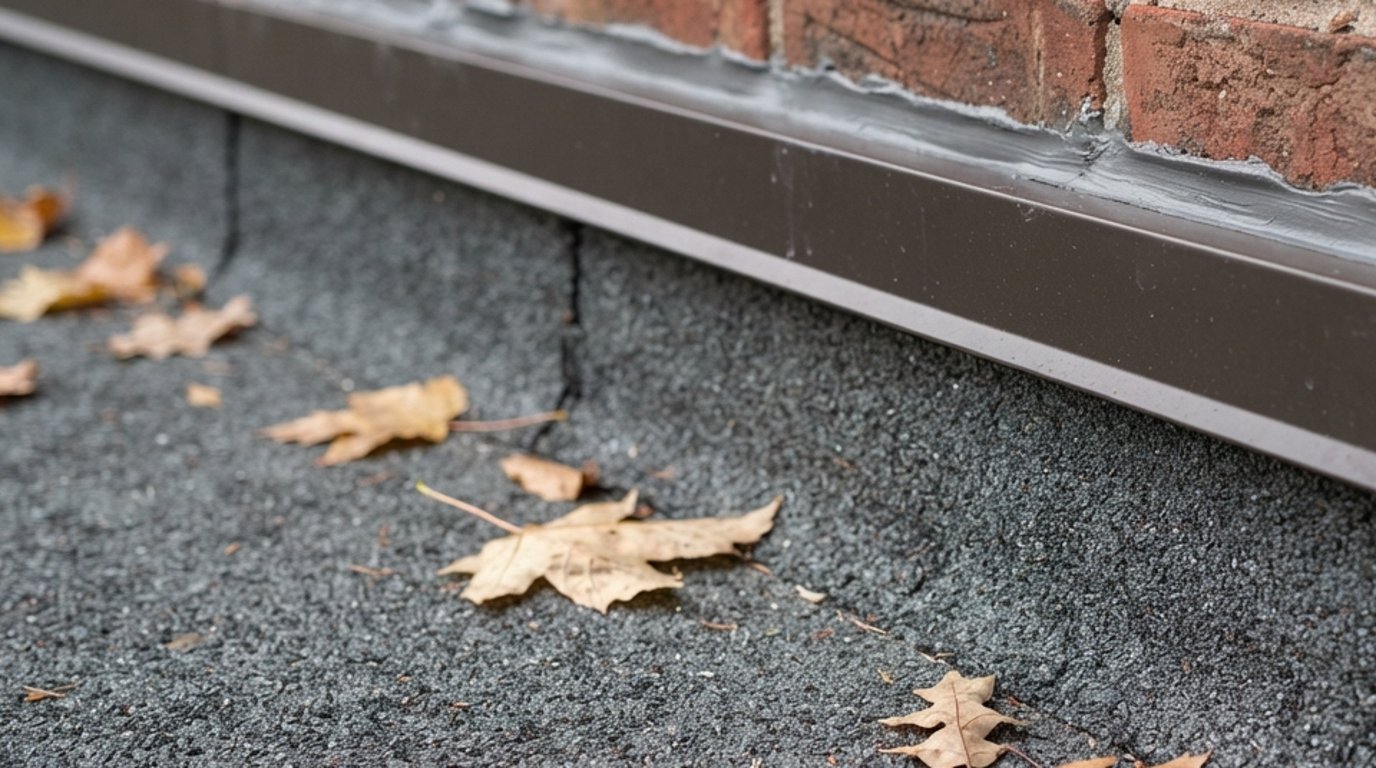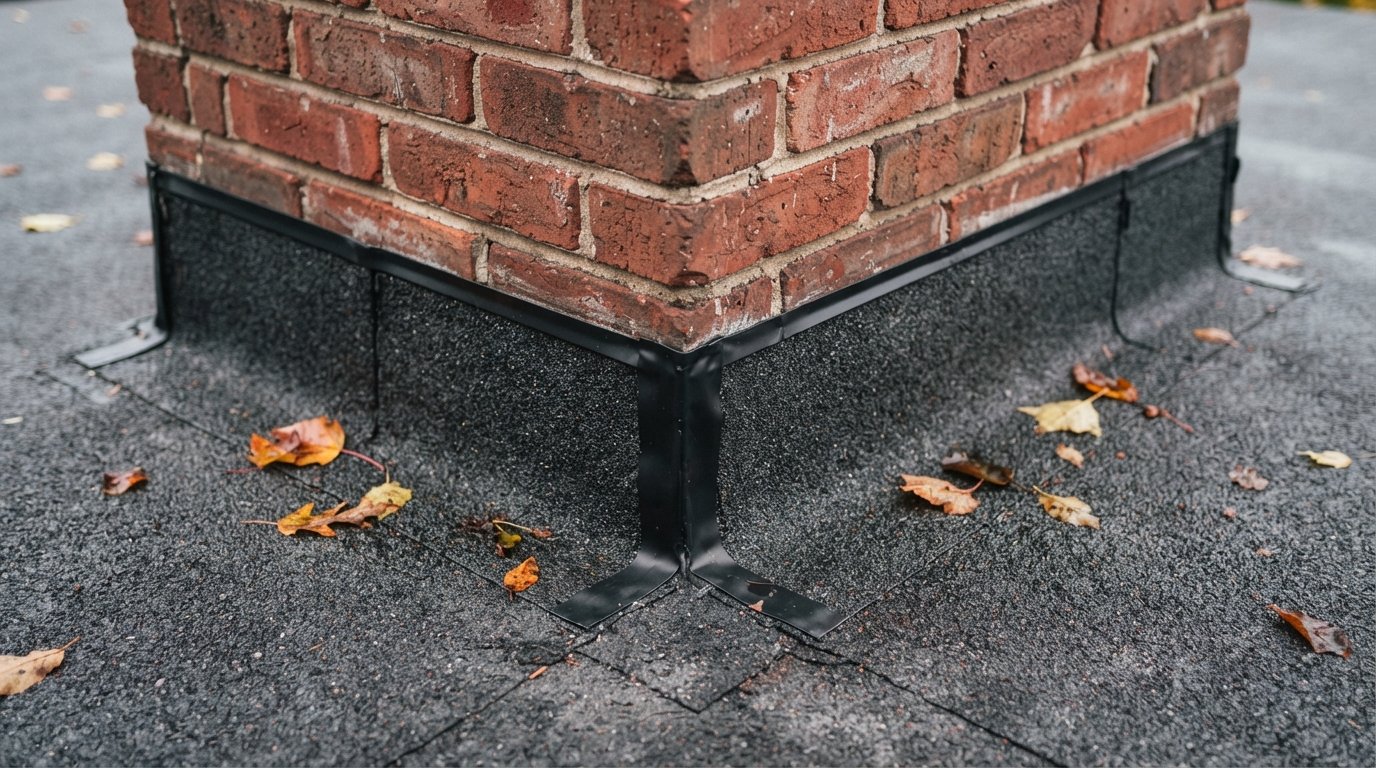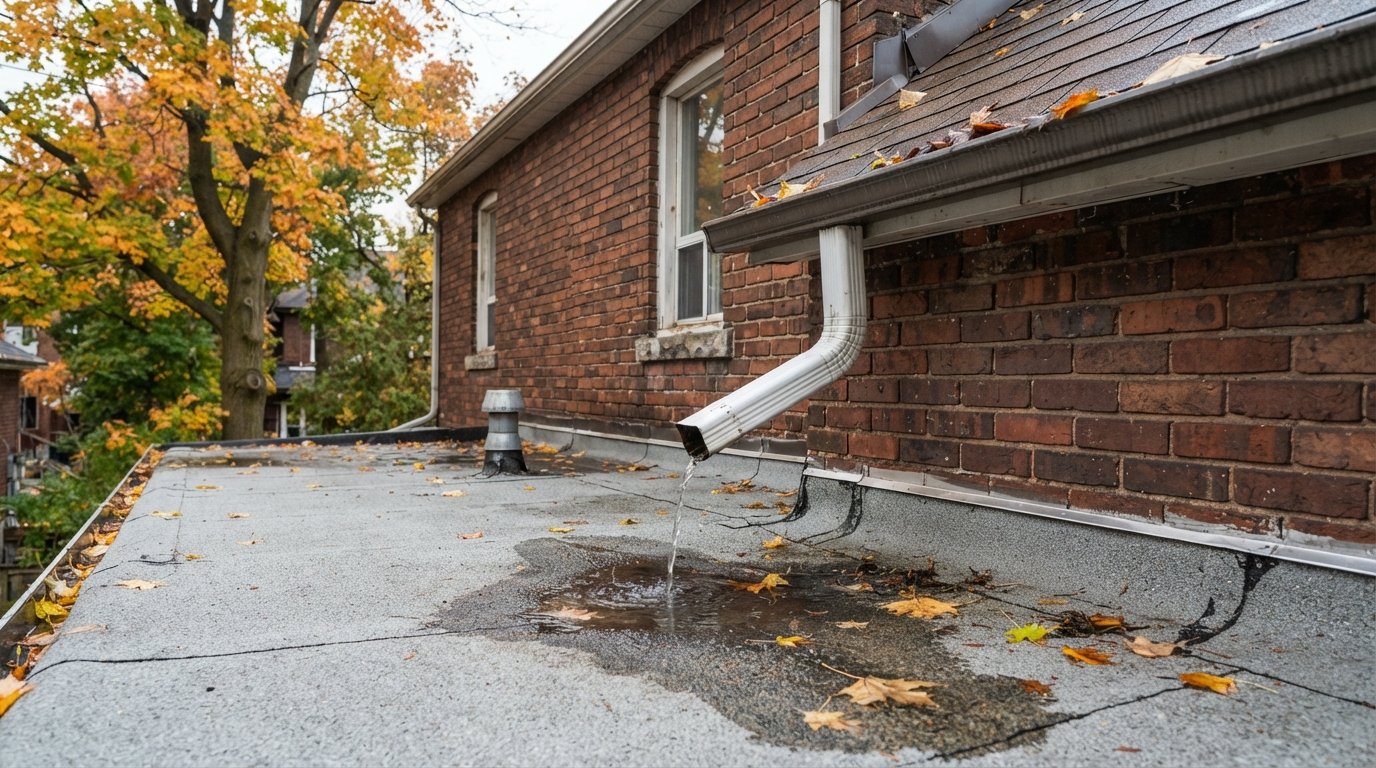

Walk across almost any commercial flat roof in the GTA and you will find gas lines and electrical conduit running from the roof edge to the rooftop units. What holds them up matters more than most owners realize. Rooftop pipe supports carry the weight of those lines, let them move as temperatures change, and keep them off the membrane. When the supports are scraps of lumber that have rotted, split or sunk, they become a frequent, and easily overlooked, cause of punctures and leaks.
Read on for the difference between old wood blocks and engineered supports, how spacing and protection pads work in general terms, what has to happen with licensed trades when lines are lifted for a re-roof, and what to look for during inspections.
Why Rooftop Pipe Supports Matter For The Membrane
A roof membrane is designed to keep water out, not to carry concentrated loads or resist constant rubbing. A gas line might look light, but along its length it carries the weight of the pipe and fittings, plus snow and ice in winter, and it moves slightly every day as it heats and cools. That movement, multiplied by years, is enough to wear through a membrane if the line rests directly on it or sits on a hard, sharp-edged block.
Rooftop pipe supports solve three problems at once. They spread the load over a wider area, they hold the line high enough for water and debris to pass underneath, and they let the pipe slide or roll as it expands and contracts without dragging on the roof. On plazas, warehouses and low-rise apartments, poor support shows up in a few predictable ways, from small punctures under blocks to long wear marks where pipes have slid back and forth for years, and it is one of the first things a commercial flat roofing inspection should look at.
Homes are affected less often, but some houses have gas lines running across a flat roof to a rooftop unit, or electrical conduit to a condenser or other equipment. The same principles apply.
Wood Blocks Versus Engineered Supports
For decades, the usual approach was to lay a block of lumber on the roof and strap the pipe to it. Some roofs still have the original blocks. They were inexpensive and quick, but they do not age well on a roof.
What goes wrong with wood blocks
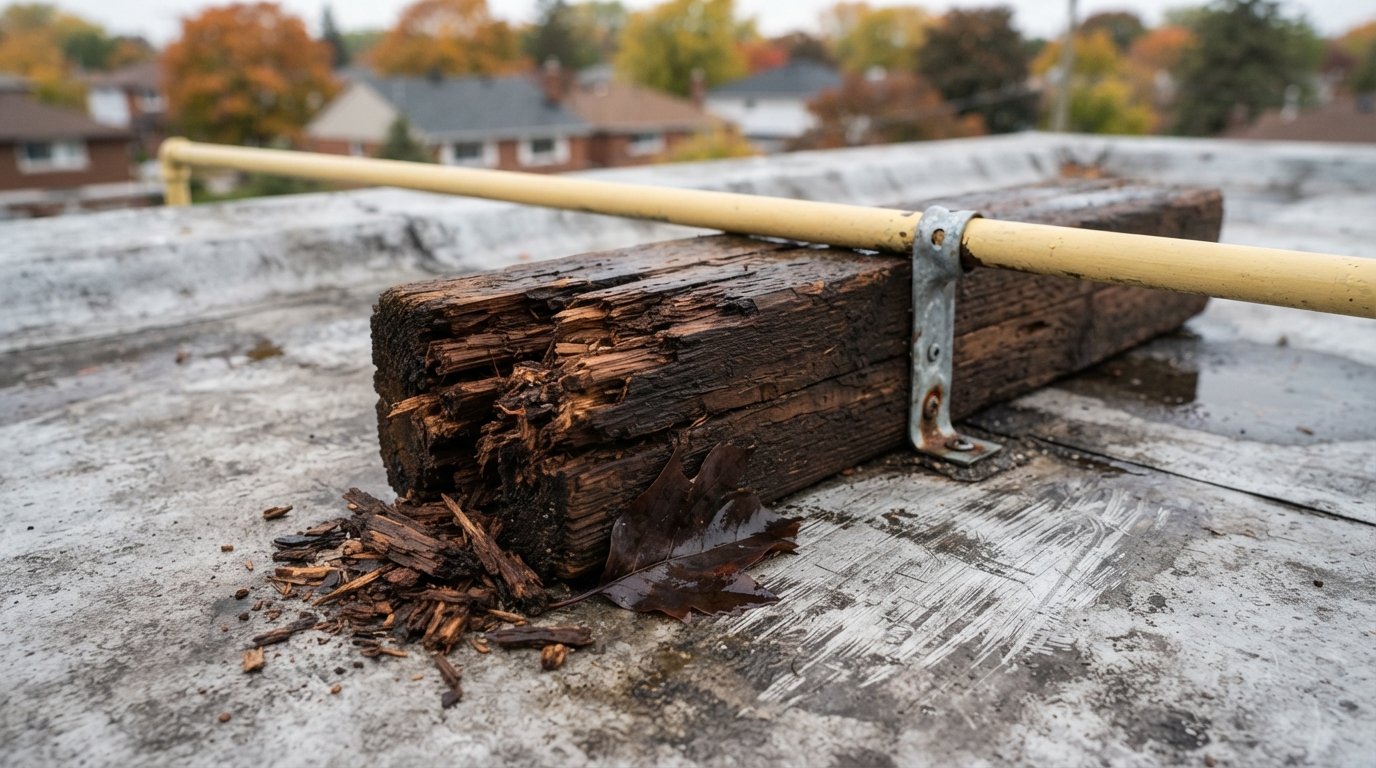
- Rot. Wood sitting on a wet membrane absorbs water, rots from the bottom up, and eventually crumbles, leaving the pipe resting on the roof.
- Splitting and sharp edges. Blocks crack and cup as they dry and wet. Split edges and protruding nails or staples can cut the membrane.
- Sinking. On roofs with soft insulation, a narrow block concentrates load and gradually presses into the roof, creating a low spot that holds water.
- Fasteners through the roof. Some blocks were screwed or nailed through the membrane to stop them moving, creating penetrations with no flashing.
- No room to move. A pipe strapped tightly to a block cannot slide, so as it expands it drags the block along the roof, scuffing the membrane.
- Displacement. Blocks get kicked, pushed by snow clearing or moved during equipment service, and are left out of position.
What engineered supports do differently
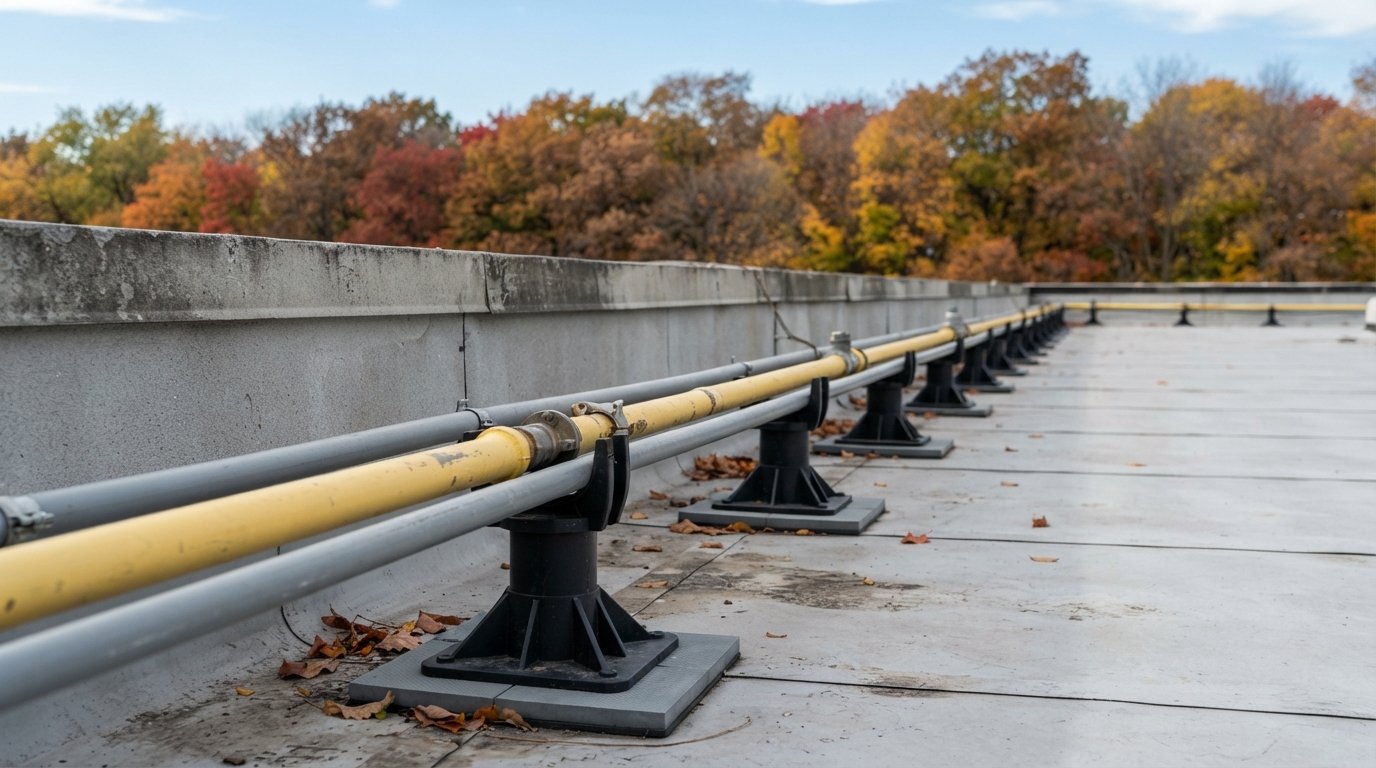
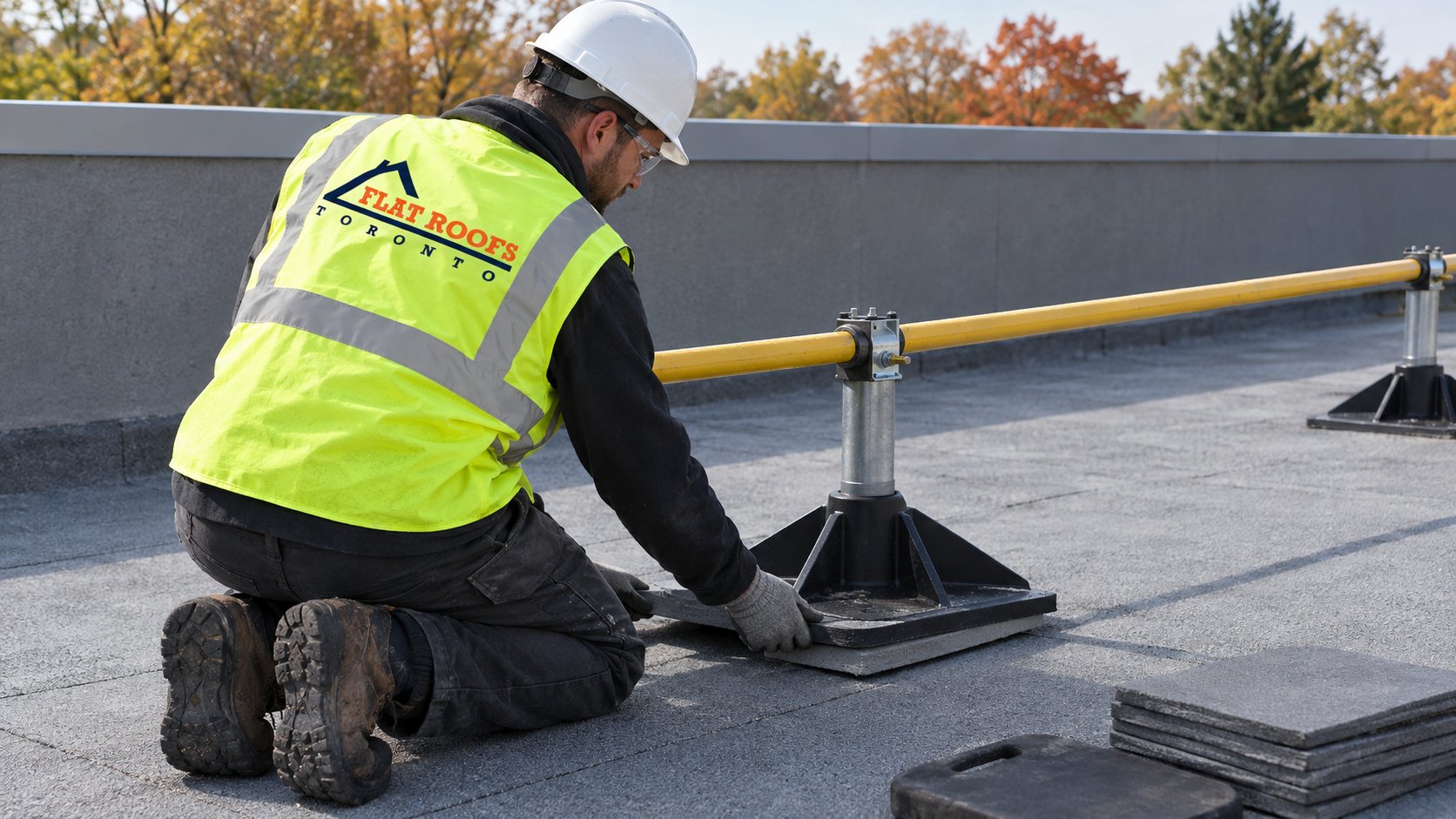
Engineered rooftop pipe supports are made for the purpose. Most have a wide base made from a UV-resistant polymer or rubber compound, a frame or cradle sized for the pipe, and in many cases an adjustable height. Some include rollers so the pipe can move freely along its length. For several lines together, a strut frame across two or more bases can carry gas, conduit and condensate lines in one assembly.
| Feature | Wood blocks | Engineered supports |
|---|---|---|
| Base material | Lumber that absorbs water and rots | UV-resistant polymer or rubber designed for rooftop exposure |
| Load spread | Narrow footprint concentrates weight | Wide base spreads load over the insulation |
| Movement | Pipe often strapped tight, drags the block | Cradles or rollers allow the pipe to move |
| Attachment | Sometimes nailed or screwed through the membrane | Typically loose-laid on a protective pad, no penetrations |
| Height | Fixed and often too low | Often adjustable to suit drainage and clearances |
| Service life | Short on a wet roof | Intended for long-term rooftop use; follow manufacturer guidance |
Matching The Support Type To The Line
Not every line needs the same support. Choosing the right style of rooftop pipe supports for each run is part of doing the job properly, and it is something to discuss with both the roofer and the licensed trade responsible for the line.
Single-pipe supports
The simplest engineered option is a base with a cradle or clamp for one pipe or conduit. These suit short runs of small gas piping or a single conduit to a unit. They should hold the line without clamping it so tightly that it cannot move.
Roller supports for long runs
Long, straight gas lines move noticeably along their length between a hot afternoon and a cold night. On those runs, supports with a roller or a low-friction saddle let the pipe slide without pushing the support across the roof. Without them, the bases slowly walk out of position or scuff the pad and membrane.
Strut frames for several lines
Where gas, conduit and condensate lines run together, a strut frame spanning two or more bases keeps them organized and spreads the load. It also leaves a clear space underneath for water and for inspection. Each line should be secured to the frame in a way its trade approves, and the frame should be sized so it does not tip in wind or under snow.
Adjustable-height supports
On roofs with tapered insulation or uneven areas, adjustable supports keep the line level while the roof slopes underneath it. They are also useful during re-roofing, when the new roof may be thicker than the old one and the lines need to sit a little higher.
Equipment such as condensers and small rooftop units usually sits on its own curbs or stands, which are a separate topic. The point here is that the lines between equipment should be treated with the same care as the equipment itself.
Protection Pads And How Supports Sit On The Roof
Even a good support should not sit directly on the membrane in many systems. A protection pad, usually a piece of compatible walkway pad or membrane material, goes under the base to protect the roof from abrasion and to spread the load further. On ballasted roofs, the ballast is usually cleared from under the support location and the support is set on a pad.
A few details matter:
- Compatibility. The pad must be compatible with the membrane. Some materials react badly with certain membranes, so check with the roofing manufacturer.
- Size. The pad should extend past the edges of the support base so the base cannot cut into the membrane at its edge.
- Not fastened through. Supports and pads are generally loose-laid or adhered with approved methods, not screwed through the roof.
- Away from seams and drains. Supports should not sit on seams, in drain sumps or in areas that hold water.
Spacing, Height And Layout In General Terms
How far apart supports go depends on the pipe size and material, what it carries, whether it is gas piping, conduit or something else, and the requirements of the applicable code and the support manufacturer. Smaller, lighter lines generally need supports closer together than larger ones. There is usually a support near each change of direction, near equipment connections and on each side of fittings that add weight.
Rooftop gas piping in Ontario falls under gas codes enforced by the Technical Standards and Safety Authority (TSSA), and electrical conduit falls under the Ontario Electrical Safety Code administered by the Electrical Safety Authority (ESA). The specific support spacing, materials and identification requirements come from those codes and from the people licensed to apply them. As roofers, we look at whether the support system protects the membrane and allows drainage; the licensed gas fitter or electrician determines whether it meets their code. If you are unsure whether your lines are properly supported, ask a licensed technician to review them and confirm current requirements with TSSA or ESA.
Height matters for the roof too. Lines set too low trap leaves and debris, make it hard to inspect underneath, and leave no room for a roofer to work when the roof is replaced. Raising lines on taller supports during a re-roof is often worth considering.
Lifting Lines During Re-Roofing
When a flat roof is replaced, the gas lines and conduit have to be lifted so the old roof can be removed and the new one installed underneath. This is where coordination with licensed trades is essential. Roofers should not disconnect, move or reroute gas piping or electrical conduit themselves.
| Step | What happens | Who does it |
|---|---|---|
| Planning | Identify all lines, what they serve and whether heating or other services will be affected | Roofer with the owner, gas technician and electrician |
| Shut-off and isolation | Gas and electrical services isolated where required for safe work | Licensed gas technician and licensed electrical contractor |
| Lifting or temporary support | Lines raised or temporarily supported so the roof can be removed beneath | Licensed trades, with the roofer coordinating sequence |
| Roof replacement | Old roof removed, deck repaired, new insulation and membrane installed | Roofer |
| New supports and pads | Engineered supports set on protection pads at appropriate spacing | Roofer and licensed trades together |
| Reconnection and testing | Lines lowered onto supports, reconnected, tested and services restored | Licensed gas technician and electrician |
In autumn, scheduling matters. A gas shutoff for a rooftop heating unit affects the building, and cold nights are already here. Plan the work so services are restored quickly, and coordinate with tenants. If a full re-roof is coming, read how a flat roof replacement is planned and sequenced before the dates are booked.
Use the re-roof to fix the layout
A replacement is the best chance to improve the layout. Options include consolidating several lines onto one strut frame, raising lines to leave room for future maintenance, rerouting lines away from drains and walkways, and replacing old wood blocks entirely. Any changes to the gas or electrical lines themselves must be done by the licensed trades.
Inspecting Rooftop Pipe Supports Between Re-Roofs
Rooftop pipe supports should be part of every roof inspection. Things to check:
| What to look for | Why it matters | Typical response |
|---|---|---|
| Rotted, split or crumbling wood blocks | Pipe drops onto the roof; sharp edges cut the membrane | Replace with engineered supports on pads |
| Pipes resting directly on the membrane | Movement wears through the membrane | Add supports; repair any wear |
| Supports out of position | Uneven load, pipe sagging between supports | Reposition; check spacing |
| Support bases with no pad | Abrasion at the base edge | Add compatible protection pads |
| Fasteners through the roof at old blocks | Unflashed penetrations that leak | Remove and repair the membrane |
| Corrosion on pipe or straps | Weakens the line and the support | Report to the licensed gas technician |
Inspections are especially useful in autumn, after a summer of HVAC servicing when supports often get moved, and before snow hides everything. After heavy snow years, supports may have been pushed or crushed, so a spring check is worthwhile too. Any concern about the gas line itself, such as corrosion, damage or a smell of gas, should go straight to the gas utility or a licensed gas technician, not a roofer.
Replacing supports without a full re-roof
Rooftop pipe supports can often be replaced one at a time without a re-roof, as long as the line can be safely supported during the swap. Where lines need to be lifted to remove old blocks, a licensed technician should be involved. The cost depends on the number of supports, the type, how many lines share them and whether the membrane under old blocks needs repair. As a broad estimate, replacing individual supports with pads is commonly priced per support, often in the range of $75 to $250 each installed, with membrane repairs extra; a site visit is needed before anyone can price a specific roof properly.
Five Questions For The Roofer Before Lines Are Touched
- Are the current supports protecting the membrane, or are any lines resting on the roof?
- Will you set new supports on compatible protection pads?
- How will you coordinate with the gas technician and electrician if lines need to be lifted?
- Can lines be raised or consolidated during the re-roof to make future work easier?
- Are there old fasteners from previous blocks that need repair?
If damage under an old block is already letting water in, book emergency flat roof repair rather than waiting for the next inspection; routine maintenance questions are covered on our FAQ page.
Are wood blocks acceptable as rooftop pipe supports?
Can a roofer move my gas line during a re-roof?
How far apart should rooftop pipe supports be?
Do supports need pads underneath?
Can supports be replaced without replacing the roof?
What should I do if I smell gas on the roof?
Get Your Rooftop Pipe Supports Checked
Rotted blocks and unsupported lines are easy to fix before they cause leaks. Flat Roofs Toronto checks every run of rooftop pipe supports, replaces rotted blocks with engineered supports on pads, repairs the membrane underneath, and coordinates with your licensed gas and electrical trades when lines need to be lifted.
Call us today at (647) 333-3528 or request a free estimate.
Membrane-safe pipe support work on commercial and residential roofs in Toronto and the GTA.