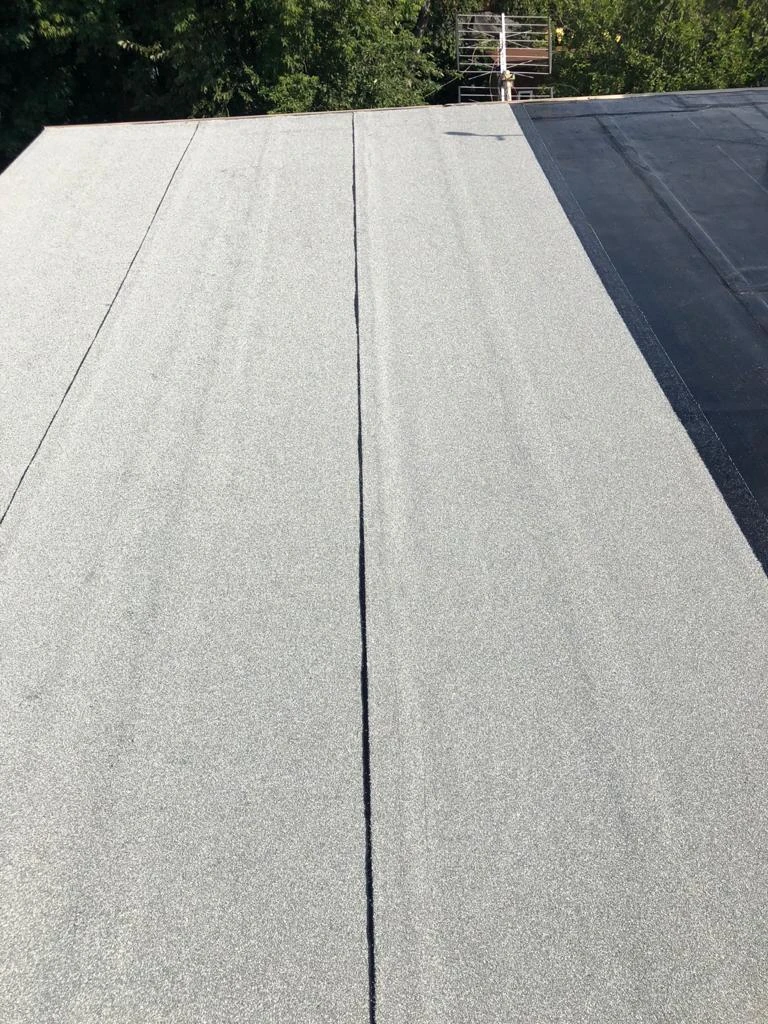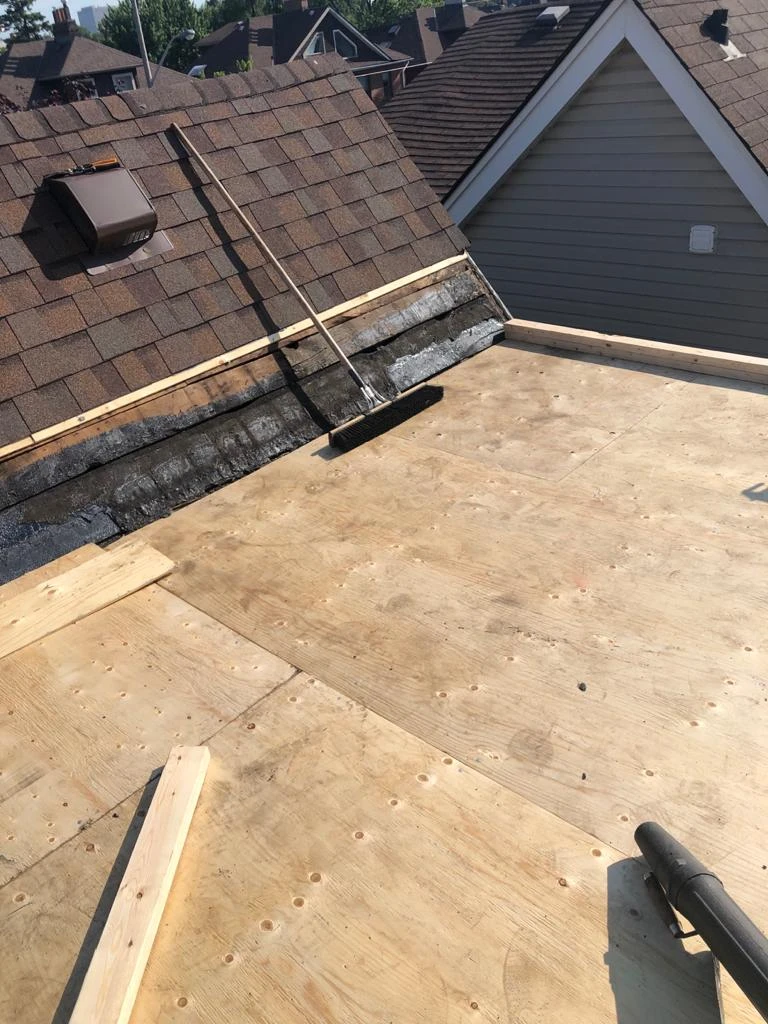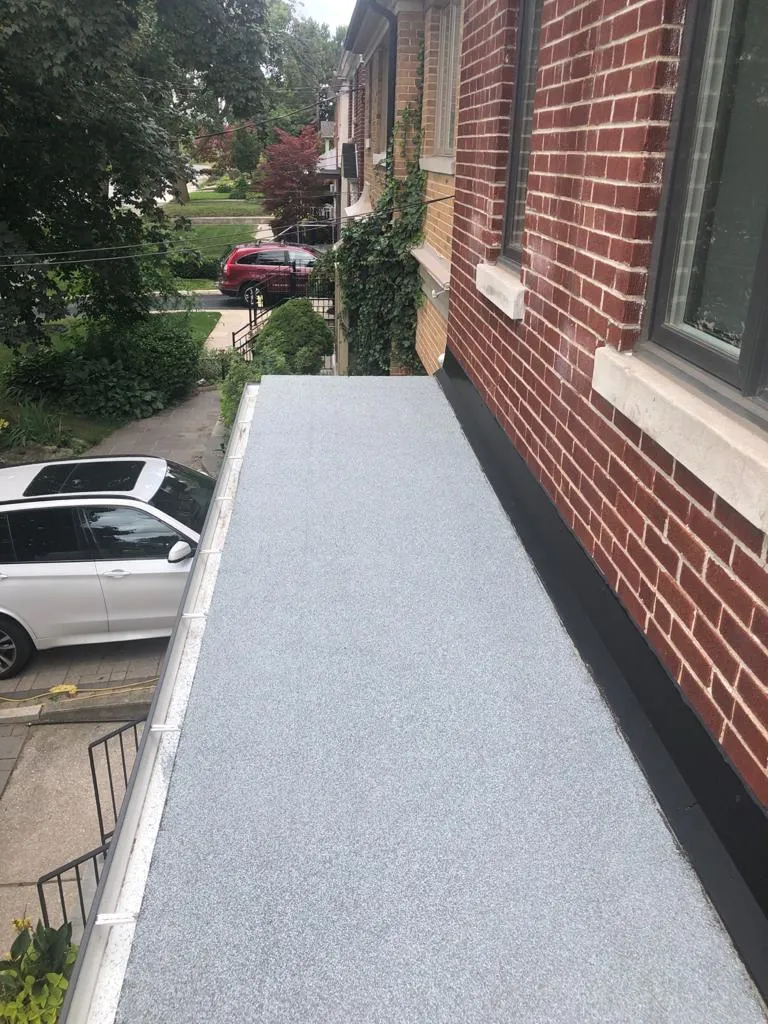

Ajax has a wider mix of low-slope roofing than most people expect, and flat roofing Ajax homeowners deal with rarely covers the whole house. It usually sits over a rear addition, a garage, a porch canopy, a second-storey dormer or a modern-build section that meets a sloped shingle roof. Those small, awkward areas are exactly where leaks start, and they are also where cut-rate work shows up fastest. This guide to flat roofing Ajax homeowners can actually use explains the systems available, what they realistically cost in 2026, how the Ontario Building Code affects the assembly, and how to judge a quote before you sign it.
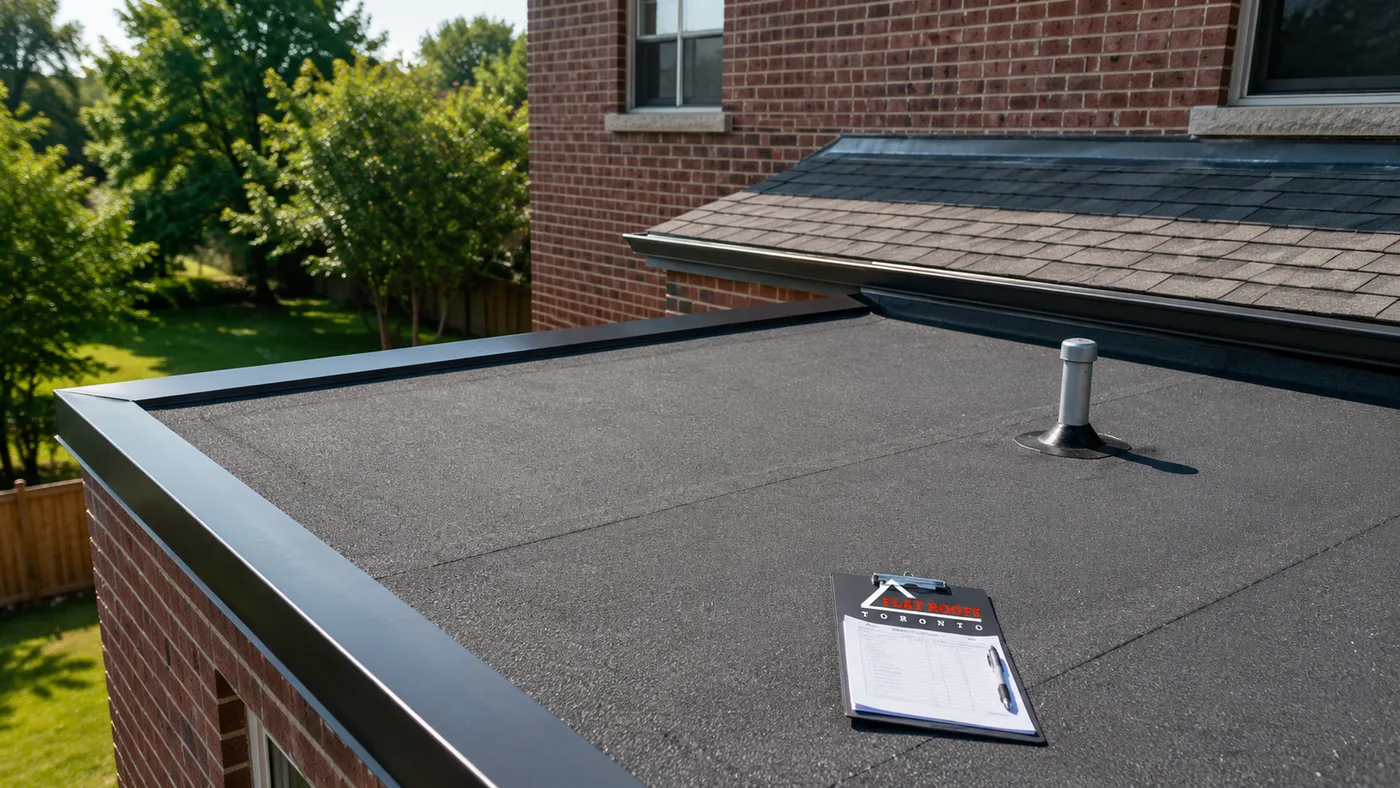
Why Flat Roofing Ajax Projects Behave Differently Than Shingle Work
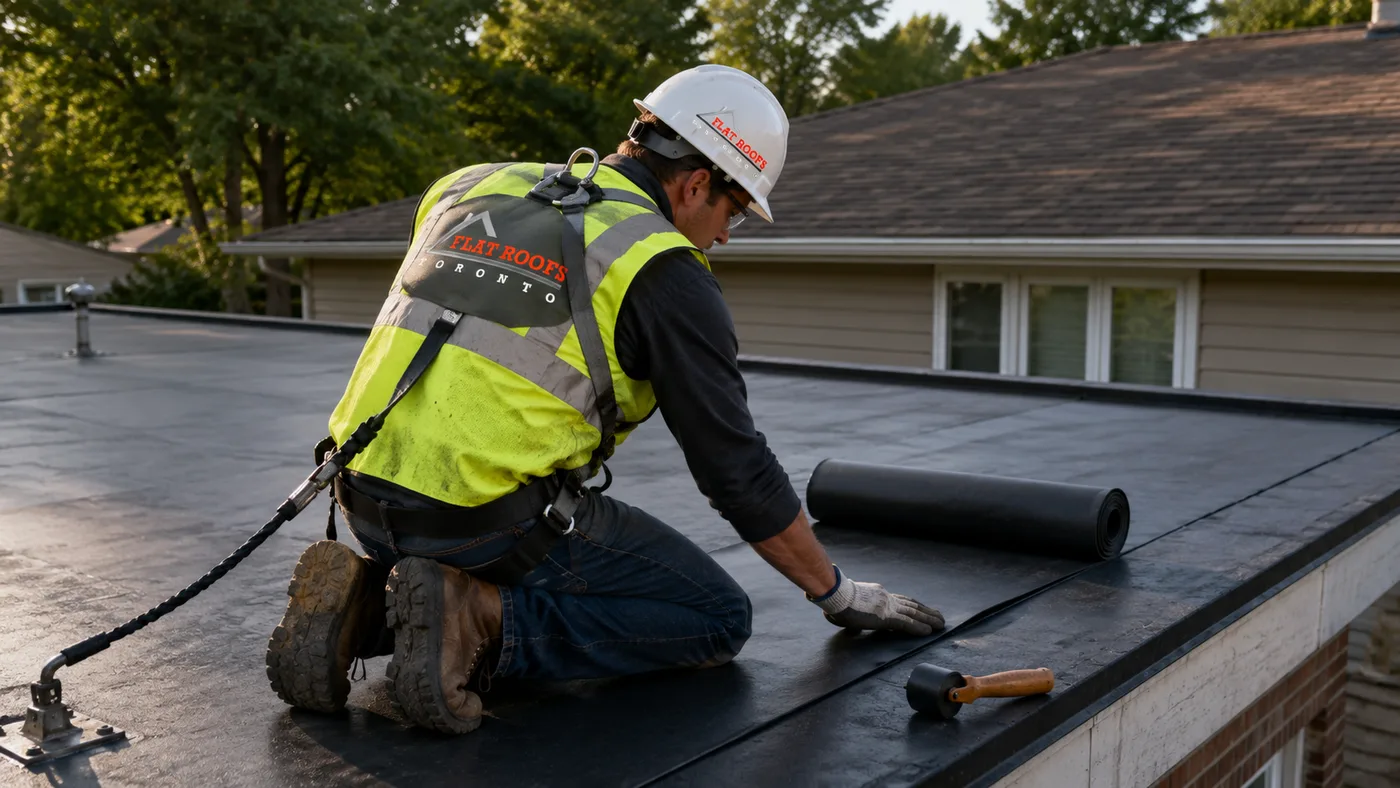
A sloped roof sheds water by gravity. A low-slope roof holds it, at least briefly, and relies entirely on a continuous waterproof membrane to keep it out. That single difference drives everything about flat roofing Ajax properties need: the materials, the seam detailing, the drainage design and the maintenance schedule are all different from asphalt shingle work.
The second difference is failure mode. A shingle roof usually tells you it is aging through curling, granule loss and visible wear. A flat roof often looks acceptable from the ground for years while water tracks sideways under the membrane, saturates the insulation and rots the deck. By the time a ceiling stain appears in the room below, the wet area is frequently several times larger than the stain suggests.
The third difference is the transition. Almost every flat roofing Ajax project involves a junction: flat to sloped, flat to brick wall, flat to parapet, flat to skylight curb. Those junctions are where most residential low-slope leaks originate, not out in the open field of the membrane. A quote that says nothing about flashing details is an incomplete quote.
Ajax Housing Stock and Where Low-Slope Roofs Show Up
Ajax grew in distinct waves, and the roofing character follows the same pattern. The older sections south of the 401 include postwar bungalows and modest brick homes, many of which have had rear additions, sunrooms or carports added over the decades. Those additions are frequently low-slope because a full pitched roof would have collided with existing second-storey windows or eaves.
North and east of the original core, the subdivisions built from the 1980s onward brought townhouse blocks, link homes and larger detached houses. Here the flat sections tend to be smaller: garage roofs tucked below a bedroom window, front porch canopies, and the occasional flat dormer. Newer estate and infill builds add another category, since contemporary architecture uses genuine low-slope roofs as a design feature over garages, entryways and rear wings. Those larger, purpose-built areas are the closest thing to commercial-style work that flat roofing Ajax contractors encounter on houses.
Wind exposure matters too. Ajax sits along the Lake Ontario shoreline, and southern parts of town see steadier wind loading than inland areas. Membrane attachment and perimeter fastening deserve real attention in exposed locations. Anyone comparing options for flat roofing services for Ajax homes should ask specifically how the perimeter and corners are secured, because that is where wind uplift concentrates.
Flat Roofing Systems Available to Ajax Homeowners
Five systems account for nearly all of the residential flat roofing Ajax and Durham Region homeowners are quoted on. Each has a legitimate use case, and the right answer depends on roof size, access, sun exposure, adjacent finishes and budget rather than on which product a salesperson prefers.
Two-ply modified bitumen (SBS) is the workhorse for residential flat roofing Ajax crews install most often. A base sheet is mechanically fastened or adhered, then a granulated cap sheet is torch-applied or self-adhered over it. Two independent layers of waterproofing give it real redundancy, and it handles the odd shapes and tight transitions of residential roofs well.
TPO is a single-ply thermoplastic sheet with heat-welded seams. The welds are strong and consistent, and the white surface reflects a substantial amount of summer heat, which helps on roofs sitting directly over living space. It performs best on larger, simpler rectangles where fewer seams and penetrations are involved.
EPDM is a synthetic rubber membrane, usually black, joined with seam tape or adhesive. It is flexible in cold weather, forgiving around irregular shapes, and generally the least expensive quality option. Its weakness is the seams, which depend more on workmanship and surface preparation than a welded system does.
PVC is the premium single-ply. It is heat-welded like TPO but has better resistance to grease, chemicals and ponding water, which is why it is common on restaurant and institutional buildings. On homes it makes sense where a roof drains slowly or sits near a kitchen exhaust.
Built-up roofing, the traditional multi-layer asphalt and felt assembly, still appears on older Ajax properties. It is durable but labour intensive, and most contractors now recommend replacing it with modified bitumen rather than rebuilding it in kind.
| System | Typical service life | Installed cost per sq ft (2026) | Best suited to |
|---|---|---|---|
| 2-ply modified bitumen (SBS) | 20 to 30 years | $11 to $17 | Most residential additions, garages, complex shapes |
| TPO single-ply | 20 to 30 years | $10 to $16 | Larger simple rectangles, roofs over living space |
| EPDM rubber | 18 to 25 years | $9 to $14 | Budget-sensitive projects, irregular small roofs |
| PVC single-ply | 25 to 35 years | $13 to $20 | Slow-draining roofs, exhaust or grease exposure |
| Built-up roofing (BUR) | 20 to 30 years | $13 to $19 | Matching existing assemblies, heavy traffic decks |
What Flat Roofing Costs in Ajax in 2026
Pricing for flat roofing Ajax projects is driven by four things: area, the number of penetrations and transitions, whether the old roof is torn off or covered, and how difficult the roof is to reach. A 300 square foot garage roof with straightforward ladder access and one vent costs far less per square foot than a 300 square foot section wedged between two walls with a skylight, a chimney and no place to stage materials.
Small roofs carry a minimum charge. Mobilising a crew, equipment and disposal for a 200 square foot porch costs nearly as much as for a 500 square foot addition, so per-square-foot maths breaks down at the low end. Expect most flat roofing Ajax replacements on a typical house to land somewhere between $4,500 and $18,000 depending on scope.
Tear-off versus recover is the other big variable. Ontario practice generally allows one recover layer over an existing sound membrane, but a recover hides whatever moisture is already trapped below. If a moisture probe or a core cut shows wet insulation, a tear-off is the only honest recommendation. Full residential flat roof installation with a complete tear-off costs more up front and consistently costs less over the life of the roof.
| Project scope | Typical area | 2026 price range | Notes |
|---|---|---|---|
| Porch or entry canopy | 100 to 250 sq ft | $2,800 to $5,500 | Minimum-charge territory; detailing drives cost |
| Attached garage roof | 300 to 500 sq ft | $4,500 to $9,000 | Wall flashing and counter-flashing usually required |
| Rear addition or sunroom | 400 to 800 sq ft | $6,000 to $13,500 | Often insulated; deck condition varies widely |
| Townhouse main flat roof | 700 to 1,100 sq ft | $9,000 to $17,000 | Access and staging can add cost in dense blocks |
| Large detached low-slope roof | 1,200 to 2,000 sq ft | $14,000 to $28,000 | Drainage design and insulation upgrade typical |
| Deck repair (extra) | Per sheet | $120 to $260 per 4×8 sheet | Only known once the old roof is removed |
Slope, Drainage and Insulation Requirements to Understand
A flat roof is never truly flat. Ontario practice calls for a minimum drainage slope in the range of 1:50, roughly two per cent, so water leaves the surface rather than sitting on it. On the older additions that make up much of the flat roofing Ajax repair volume, the original framing often falls short of that, and a competent installer will build the slope back with tapered insulation or sleepers instead of laying membrane over a dead-level deck and hoping.
Ponding is the practical test. If water is still standing on a roof more than about 48 hours after rain stops, the drainage design has a problem. Standing water accelerates membrane aging, magnifies freeze and thaw stress through an Ajax winter, and adds weight that the framing was not necessarily designed to carry.
Insulation is the other code-driven element. Low-slope assemblies over conditioned space have prescribed effective thermal resistance values under the Ontario Building Code supplementary standards, and those values are meaningfully lower than what a vented attic requires because the assembly depth is limited. In practice a residential flat roof over living space is typically rebuilt with rigid polyisocyanurate above the deck, a vapour control layer below it, and the membrane on top. Where the flat section connects to an attic space, upgrading the adjacent attic insulation at the same time avoids leaving a thermal weak point at the junction.
Compact assemblies of this type do not breathe. Any moisture that gets into them stays there, which is why the vapour control layer, the air sealing at the perimeter and the detailing around every penetration matter as much as the membrane itself.
Permits, Timelines and What Installation Actually Looks Like
Straight re-roofing that replaces a membrane without altering structure generally does not require a building permit in Ontario municipalities. A permit does come into play when framing is replaced or reinforced, when the roof structure is altered, when a new opening such as a skylight is created, or when the work is part of a larger addition. Confirm with the Town of Ajax building department before assuming either way, since interpretation of scope is a local decision.
Most residential flat roofing Ajax jobs are completed in one to three working days once the crew is on site. Weather governs the schedule more than crew size does. Adhesives, torch-applied caps and seam welds all have temperature and moisture limits, and a reputable contractor will postpone rather than install a membrane onto a damp deck.
| Stage | Typical duration | What happens |
|---|---|---|
| Inspection and quote | 45 to 90 minutes | Measure, probe for moisture, review drainage and flashing |
| Scheduling and materials | 1 to 3 weeks | Order membrane and insulation; confirm weather window |
| Tear-off and disposal | 2 to 6 hours | Remove old layers to the deck; bin on site |
| Deck inspection and repair | 1 to 4 hours | Replace rotted sheathing; verify fastening |
| Vapour control and insulation | 3 to 8 hours | Install vapour layer, rigid board, tapered slope if needed |
| Membrane and flashing | 1 to 2 days | Base and cap or single-ply; walls, curbs, drains, edges |
| Final review and cleanup | 1 to 2 hours | Seam check, magnet sweep, photo documentation |
Maintenance That Extends a Low-Slope Roof
Flat roofs reward attention and punish neglect more than sloped roofs do. A twice-yearly look at any flat roofing Ajax installation, ideally in spring and again in late autumn, catches nearly everything that turns into an expensive repair. Clear the drains and scuppers, remove leaves and seed pods, and check that nothing has punctured the surface.
Pay particular attention to the following:
- Seams and laps, especially anywhere the membrane changes direction or meets a vertical surface.
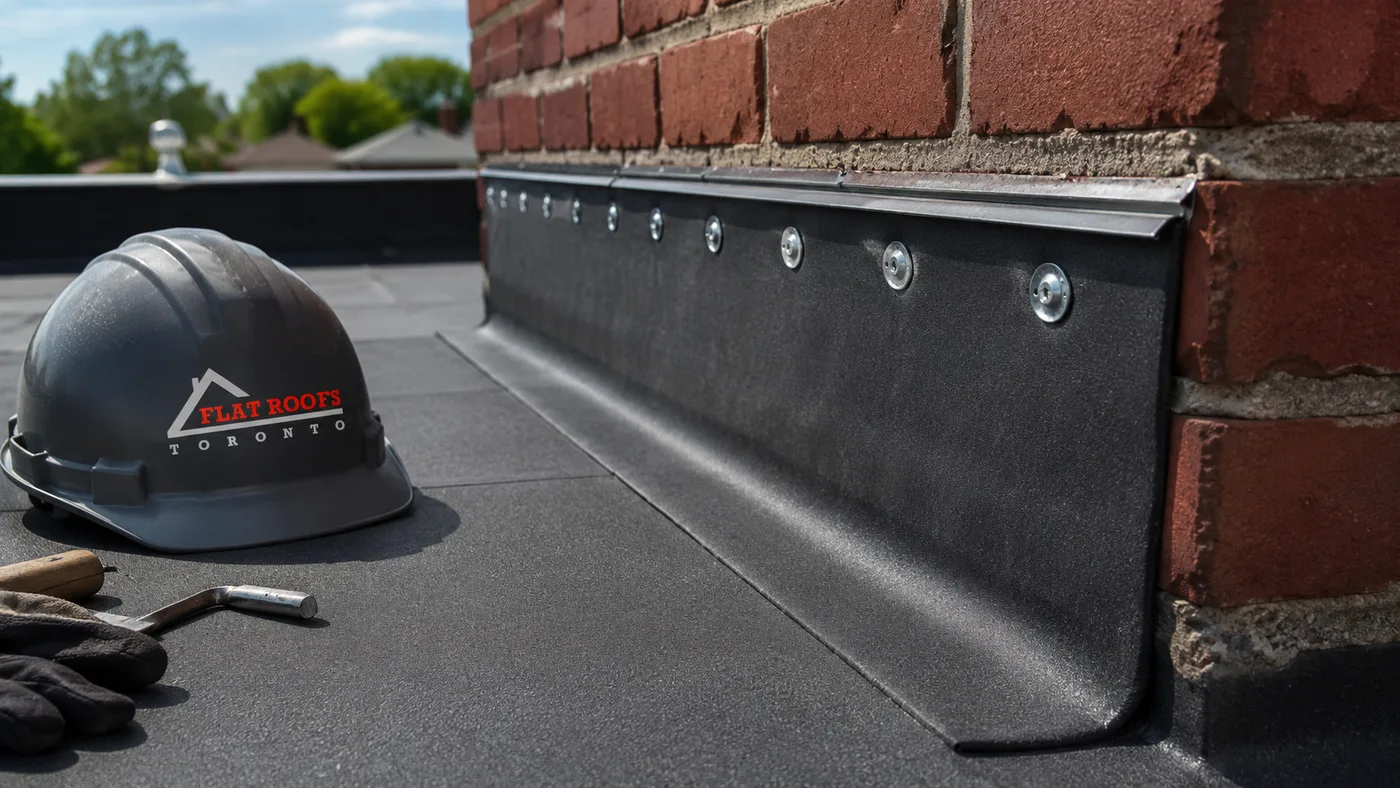
- Flashing terminations at brick walls, where the sealant at the counter-flashing reglet is usually the first thing to fail.
- Penetrations: plumbing stacks, exhaust vents, satellite mounts and skylight curbs.
- Ponding areas, marked by dirt rings or algae growth that outline where water sits.
- Blisters and ridges, which indicate trapped moisture or air between layers.
Small membrane repairs typically run $400 to $1,200. Flashing rebuilds at a wall or curb run $700 to $2,500. Those numbers are trivial next to a deck replacement caused by two years of ignored water entry, and that arithmetic is the entire argument for scheduled maintenance. If a leak appears during a storm or after wind damage, emergency roof repair can stabilise the roof before interior damage spreads.
Snow deserves a note. Ajax gets meaningful lake-influenced snowfall, and a flat roof holds it rather than shedding it. Uniform snow is normally fine on a properly framed roof, but drifting against a parapet or a taller adjacent wall can concentrate load. Ice damming at drains, where meltwater refreezes and backs up, causes more damage than the snow weight itself.
Choosing a Flat Roofing Contractor in Ajax
Low-slope roofing is a specialty. Plenty of competent shingle roofers are genuinely out of their depth on a torch-applied cap sheet or a heat-welded seam, and the results tend not to show up for two or three seasons. When you compare bids for flat roofing Ajax work, weigh the details rather than the bottom line.
Ask for these specifics:
- Named system and thickness, not just “rubber roof” or “flat roof membrane”.
- Tear-off or recover, stated explicitly, with the reasoning behind the choice.
- Insulation type and thickness, plus how slope will be achieved if the deck is level.
- Flashing scope: every wall, curb, drain and penetration listed individually.
- Deck repair allowance with a stated per-sheet rate so surprises are priced in advance.
- WSIB clearance and liability insurance, verified rather than mentioned.
- Warranty terms, separating the manufacturer’s material warranty from the contractor’s workmanship warranty.
Photo documentation is a fair request on any flat roofing Ajax contract as well. Once the membrane is down, nobody can see the deck condition, the vapour layer or the fastening pattern, so before-and-after photos of the concealed work are the only record you will have. Reviewing a contractor’s completed project gallery gives you a sense of the detailing standard before you commit.
Finally, be cautious about bids that come in far below the rest. On flat roofing Ajax projects the usual explanations are a thinner membrane, a recover where a tear-off was needed, or flashing work quietly excluded from the scope. All three cost more later than the savings were worth.
Common Flat Roof Problems on Ajax Homes
Certain failures repeat across Durham Region housing, and recognising them early keeps repairs small. Anyone maintaining flat roofing Ajax properties should know what these look like from a ladder. Blistering usually means moisture was trapped during installation or has entered through a seam since. Alligatoring, the cracked pattern on older asphalt surfaces, signals a membrane at the end of its service life. Splits along a straight line often trace a joint in the deck below, where seasonal movement has stressed the membrane.
At transitions, the classic problem is a flashing that was terminated with sealant alone instead of being tucked into a proper reglet or run behind the wall cladding. Sealant is a maintenance item, not a waterproofing system, and any detail that depends on it will need attention every few years.
Skylights on low-slope sections are their own category. The curb height, the flashing sequence and the membrane termination all have to be right, and a skylight installed by someone unfamiliar with low-slope detailing is one of the most reliable leak sources in flat roofing Ajax service calls. If a rebuild is on the table, integrating residential skylights during the membrane work is far cleaner than cutting one in afterward.
How much does flat roofing cost in Ajax?
How long does a flat roof last in the Ajax climate?
Do I need a permit for flat roofing Ajax work?
Can a new membrane go over the existing flat roof?
Which flat roofing system is best for a small Ajax garage roof?
How long does installation take?
Book Your Flat Roofing Ajax Assessment
A low-slope roof is a system, not a product, and the difference between a 12-year roof and a 30-year roof is almost entirely in the deck preparation, the drainage design and the flashing details. Flat Roofs Toronto is a Toronto-based low-slope specialist handling flat roofing Ajax homeowners need across Durham Region, and every assessment includes a moisture check, a drainage review and a written scope that spells out exactly what is being installed.
Call us today at (647) 333-3528 or request a free consultation.
Flat Roofs Toronto proudly serves Ajax, Pickering, Whitby, Oshawa, Scarborough and communities across the Greater Toronto Area.