
The architectural execution of a massive flat roof in the Greater Toronto Area is a highly complex engineering challenge that demands uncompromising material science. While traditional asphalt-based Tar and Gravel systems completely dominated the skyline for decades, the modern commercial and luxury residential markets have aggressively pivoted toward highly advanced, single-ply rubberized membranes. When an architect or facility manager is specifying a membrane for a massive, multi-million dollar property, they are immediately confronted with the two titans of the industry: TPO and PVC. While TPO frequently captures the mass-market residential sector due to its lower price point, the elite, uncompromising standard for incredibly demanding environments is the Polyvinyl Chloride (PVC) membrane. This incredibly tough, highly engineered plasticizer-infused sheet offers architectural and chemical resistances that are mathematically impossible to achieve with cheaper alternatives. Flat Roofs Toronto specializes in the flawless integration of these elite membrane systems. This exhaustive 2026 engineering guide dissects the precise mechanics of the PVC flat roof membrane Toronto standard, exploring its massive chemical immunity, the complex heat-welding installation process, and a brutal, line-by-line financial and structural comparison against TPO.
The Chemical Superiority of PVC
To understand why PVC commands a premium price tag and absolute respect in the commercial roofing sector, one must analyze the specific threats that destroy a flat roof. It is not just rain or snow; it is the brutal, invisible chemical assault that occurs on massive industrial and commercial properties.
Consider a massive, high-volume restaurant in downtown Toronto or a sprawling commercial food processing facility in Mississauga. These buildings generate thousands of gallons of airborne animal fats, aggressive vegetable oils, and heavy industrial grease. Massive commercial exhaust fans violently pump this toxic grease directly out onto the flat roof. If you have a traditional EPDM rubber roof or a standard TPO membrane, this grease is a catastrophic death sentence. The highly corrosive animal fats aggressively attack the molecular structure of the rubber, causing it to violently swell, blister, and completely dissolve into a useless, leaky sponge within months. This chemical failure instantly voids the manufacturer warranty and guarantees a catastrophic structural flood.
This is precisely where the commercial flat roof PVC membrane asserts its absolute dominance. PVC (Polyvinyl Chloride) is inherently and completely immune to aggressive animal fats, highly corrosive restaurant grease, and massive industrial chemical exposure. You can literally pour boiling restaurant grease directly onto a high-grade PVC membrane, and it will effortlessly repel the substance with absolutely zero structural degradation. For any commercial facility dealing with food production, heavy chemical manufacturing, or aviation fuel, installing anything other than PVC is a mathematically guaranteed, highly destructive financial error.
| Commercial Roof Threat | The Reaction of Standard Membranes (TPO/EPDM) | The Reaction of High-Grade PVC |
|---|---|---|
| Restaurant Exhaust Grease | Violently swells, completely dissolves the rubber, voids warranty. | Absolutely immune. Grease pools harmlessly on the surface with zero damage. |
| Aviation Fuel & Jet Exhaust | Aggressively breaks down molecular bonds, causing rapid, severe cracking. | Highly resistant. Frequently specified for massive airport hangars and helipads. |
| Heavy Industrial Chemicals | Causes rapid blistering and catastrophic membrane failure. | Maintains absolute structural integrity in highly volatile manufacturing environments. |
| Ponding (Standing) Water | EPDM seams frequently fail under constant hydrostatic pressure. | Heat-welded PVC seams are completely impervious to massive standing water pools. |
The Flawless Heat-Welding Installation Protocol
The absolute defining characteristic of an elite single-ply membrane is not just the material itself, but how the massive, 10-foot wide rolls are structurally joined together to cover a sprawling 50,000 square foot facility. Traditional EPDM rubber roofs rely entirely on highly vulnerable chemical adhesives and specialized tapes to bind the seams. Over 20 years of brutal Toronto thermal expansion and contraction, these tapes slowly dry out, fatigue, and violently rip apart, causing massive, catastrophic leaks.
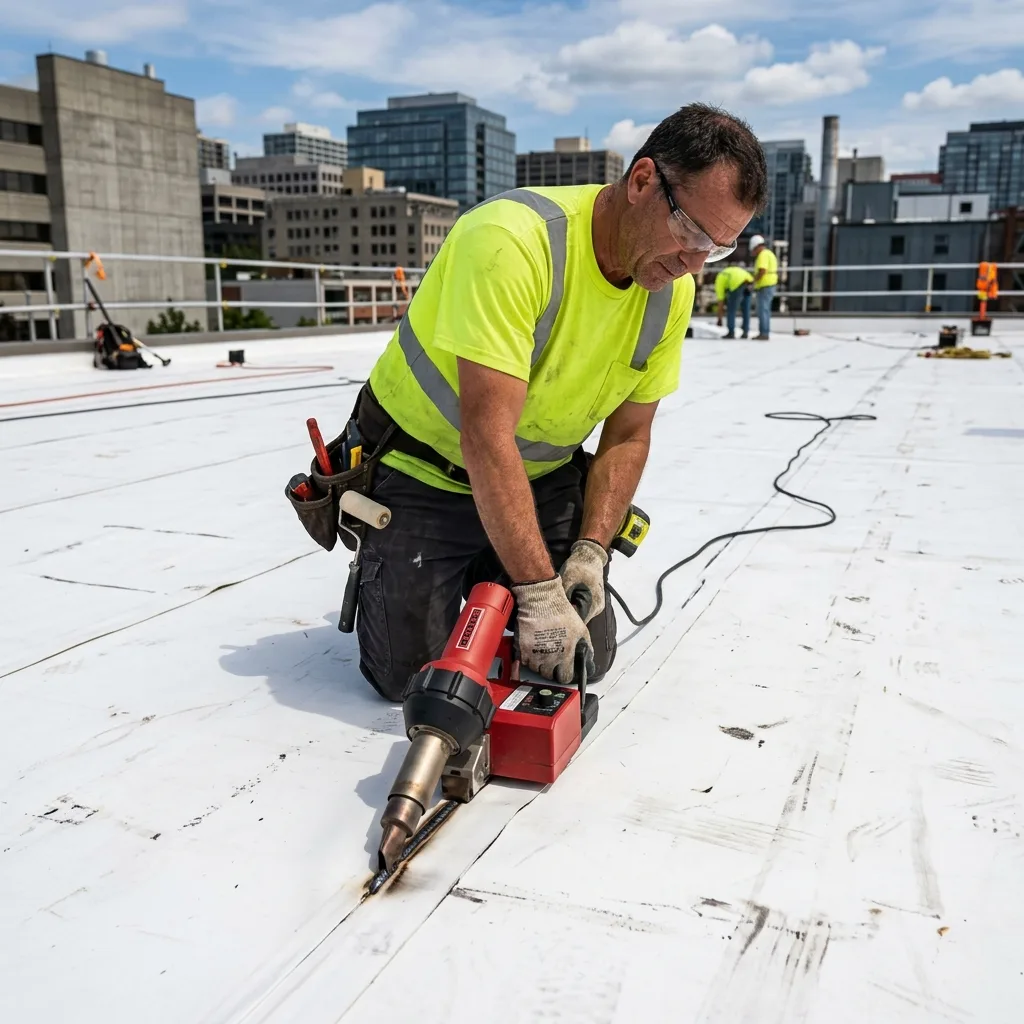
The PVC flat roof membrane Toronto installation protocol completely eradicates this failure point through the undeniable physics of thermoplastic heat welding. When our elite residential flat roof and commercial technicians roll out the massive sheets of PVC, they aggressively overlap the edges by several inches. They then deploy highly specialized, incredibly expensive robotic hot-air welding machines (frequently operating at 800°F to 1000°F). As the robotic welder slowly drives down the massive seam, it literally melts the top layer of the bottom sheet and the bottom layer of the top sheet together instantly.
As the molten plastic cools a few seconds later, it physically fuses into a single, massive, continuous sheet of rubber. The seam is not glued; it is permanently, molecularly bonded. In rigorous architectural pull-tests, the actual field membrane will violently tear before the heat-welded seam ever fails. This creates an absolutely flawless, monolithic, seamless “swimming pool liner” over the entire building that is completely impervious to massive ice dams and inches of standing water.
PVC vs. TPO: The Brutal Comparison
The most common debate in modern flat roofing is whether to deploy PVC or TPO (Thermoplastic Polyolefin). Both are brilliant white, highly reflective, heat-weldable single-ply membranes. However, their molecular structure and financial deployment are vastly different.
1. Flexibility and Winter Installation: PVC is heavily infused with specialized chemical plasticizers during the manufacturing process. These plasticizers make the massive membrane incredibly flexible and highly pliable. This is a massive architectural advantage in Toronto. If a catastrophic roof failure occurs in the dead of January at -15°C, attempting to unroll a massive sheet of TPO is like trying to unroll a sheet of solid plywood; it is incredibly stiff and incredibly difficult to maneuver and weld. PVC, conversely, retains its massive flexibility even in freezing temperatures, allowing our emergency roof repair crews to execute flawless, watertight installations in the middle of a brutal winter blizzard.
2. Puncture Resistance: While TPO is highly durable, premium PVC (especially fleece-backed variants) offers elite, unparalleled resistance to mechanical puncture. If an HVAC technician drops a massive steel wrench on a tight TPO membrane, it can occasionally pierce. PVC’s highly flexible nature allows it to absorb massive kinetic impacts without rupturing, providing absolute structural security for high-traffic commercial roofs.
3. The Financial Reality: The absolute undisputed advantage of TPO is its incredibly aggressive price point. Because it does not require complex plasticizers and utilizes a cheaper polymer base, a massive TPO installation is frequently 15% to 25% cheaper than a comparable PVC deployment. PVC is an elite, premium-priced product. It is an unapologetic luxury membrane designed for uncompromising commercial durability and ultra-high-end modern residential applications.
| Architectural Metric | Premium PVC Membrane | Standard TPO Membrane |
|---|---|---|
| Chemical/Grease Resistance | Absolute perfection. Immune to massive restaurant grease and animal fats. | Highly vulnerable. Will aggressively swell, blister, and fail if exposed to oils. |
| Cold Weather Flexibility | Incredibly pliable. Can be flawlessly installed and welded at -15°C in January. | Highly rigid in the cold. Extremely difficult to execute a flawless winter installation. |
| Puncture & Impact Resistance | Elite performance. Highly flexible plasticizers aggressively absorb heavy kinetic impacts. | Excellent, but slightly more rigid and prone to puncture from dropped heavy steel tools. |
| Initial Financial Capital Cost | Premium tier. Frequently costs 15% to 25% more than standard TPO per square foot. | Highly aggressive, cost-effective pricing. The dominant market leader for budget efficiency. |
The Thermodynamic Advantage: The “Cool Roof”
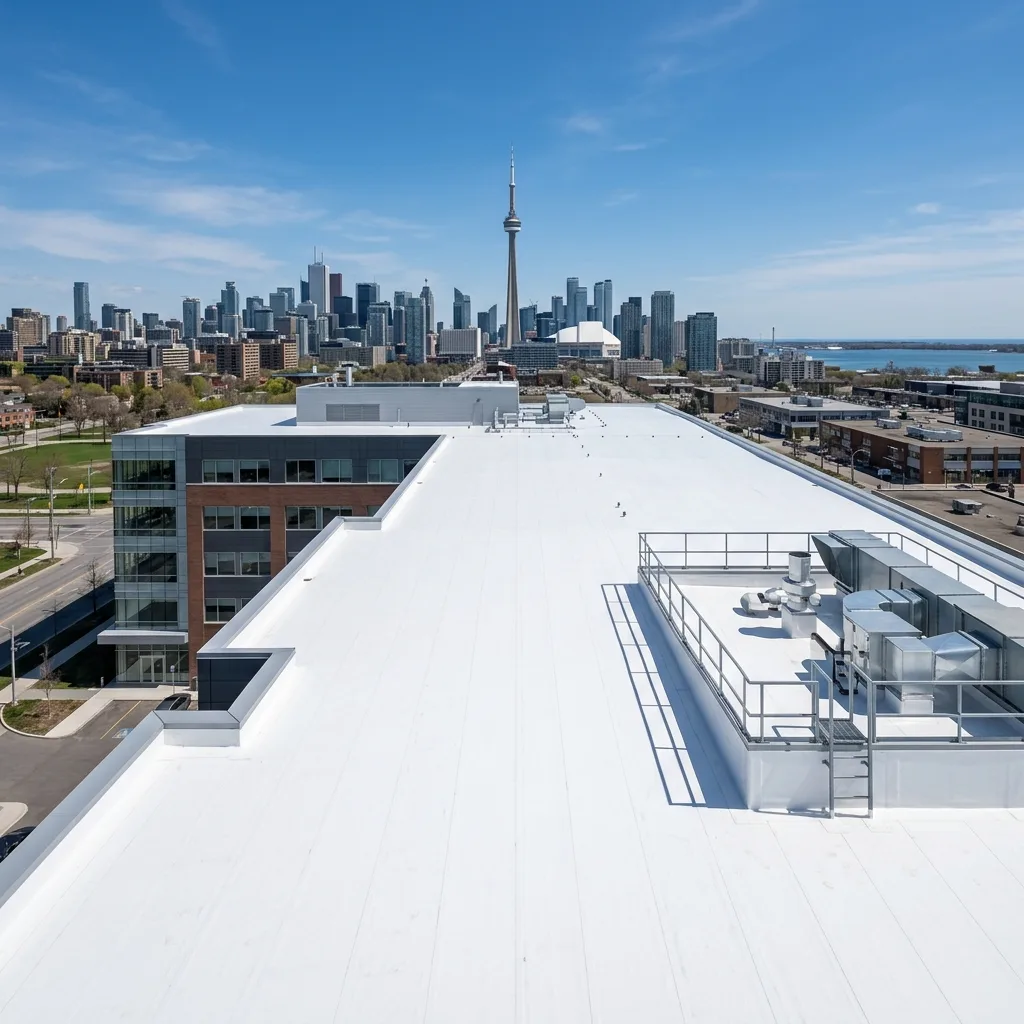
Beyond its massive structural and chemical durability, a brilliant white PVC membrane acts as a highly advanced thermodynamic engine for the building. Traditional black tar and gravel roofs aggressively absorb the searing July solar radiation. The surface temperature of a black tar roof can easily exceed 75°C (170°F) in the blazing Toronto summer. This massive heat violently transfers through the concrete deck, superheating the massive commercial facility below and forcing the incredibly expensive HVAC air conditioning units to run continuously at maximum capacity.
High-grade PVC membranes are engineered to be highly reflective “Cool Roofs.” They aggressively reflect up to 85% of the massive solar radiation straight back into the atmosphere. The surface of the white PVC roof remains incredibly cool to the touch, drastically lowering the ambient temperature of the massive warehouse or luxury modern home below. This intense thermal reflection frequently slashes massive commercial cooling bills by 20% to 30% annually, providing an incredible long-term financial ROI that rapidly offsets the premium initial capital cost of the PVC installation. Furthermore, when perfectly paired with massive commercial skylights, the white surface aggressively bounces indirect daylight into the massive light shafts, dramatically increasing the interior photometric brightness.
The Lifespan and Warranty Execution
When an elite architectural firm or commercial property manager authorizes a massive capital expenditure for a new roof, they demand absolute, undeniable longevity. A flawlessly executed PVC flat roof membrane Toronto installation, utilizing heavy 60-mil or 80-mil thick commercial-grade sheeting, guarantees a minimum functional lifespan of 25 to 30 years.
More importantly, the top-tier manufacturers (such as Carlisle, Sika Sarnafil, or IB Roof Systems) offer incredibly aggressive, ironclad “No Dollar Limit” (NDL) warranties for elite PVC installations. An NDL warranty means that if the massive membrane structurally fails due to a manufacturing defect within the 20 or 25-year warranty period, the manufacturer covers the absolute total cost of the massive multi-million dollar roof replacement, including all required materials and specialized labor, with absolutely zero financial cap. However, this elite warranty is only legally valid if the massive roof is installed by a heavily vetted, manufacturer-certified master contractor who flawlessly executes every single complex heat-welded seam according to exact engineering specifications.
| Membrane Thickness | Estimated Lifespan | Optimal Architectural Application |
|---|---|---|
| Standard 50-Mil PVC | 15 to 20 Years | Light commercial buildings, minimal foot traffic, aggressive budget constraints. |
| Heavy-Duty 60-Mil PVC | 20 to 25+ Years | The absolute industry standard. Excellent puncture resistance and deep, flawless welds. |
| Extreme 80-Mil PVC | 25 to 30+ Years | Massive commercial facilities with heavy daily HVAC foot traffic and extreme weather exposure. |
| Fleece-Backed PVC | 30+ Years | Applied directly over existing roofs or rough concrete decks. Offers elite, maximum puncture defense. |
Why does every major fast-food restaurant in Toronto absolutely mandate the installation of a PVC flat roof membrane?
How are the massive sheets of a PVC membrane physically attached together to prevent catastrophic leaks?
If my commercial flat roof completely fails during a brutal -15°C Toronto January blizzard, can you install a new PVC roof?
Does a brilliant white PVC roof actually lower the massive summer air conditioning bills of my sprawling commercial warehouse?
What is a “No Dollar Limit” (NDL) warranty, and why is it legally critical for my massive commercial property?
Can I safely install massive, heavy residential skylights directly onto a newly installed PVC flat roof?
Schedule Your Elite Flat Roof Diagnostic Today
Do not gamble the massive structural integrity of your multi-million dollar commercial facility or modern custom home on inferior, chemically vulnerable roofing membranes. Elite architectural engineering demands absolute material perfection and flawless thermal execution.
Call us today at (647) 333-3528 or request a comprehensive PVC flat roof consultation to discover how molecularly bonded, heat-welded plasticizer technology can permanently secure your massive property investment.
Flat Roofs Toronto has been the elite, highly technical authority for massive commercial membrane applications, precise TPO/PVC heat welding, and absolute structural waterproofing across the Greater Toronto Area for decades. From precision attic insulation to invincible “Cool Roof” technology, our master craftsmen deliver uncompromising durability and absolute engineering perfection.