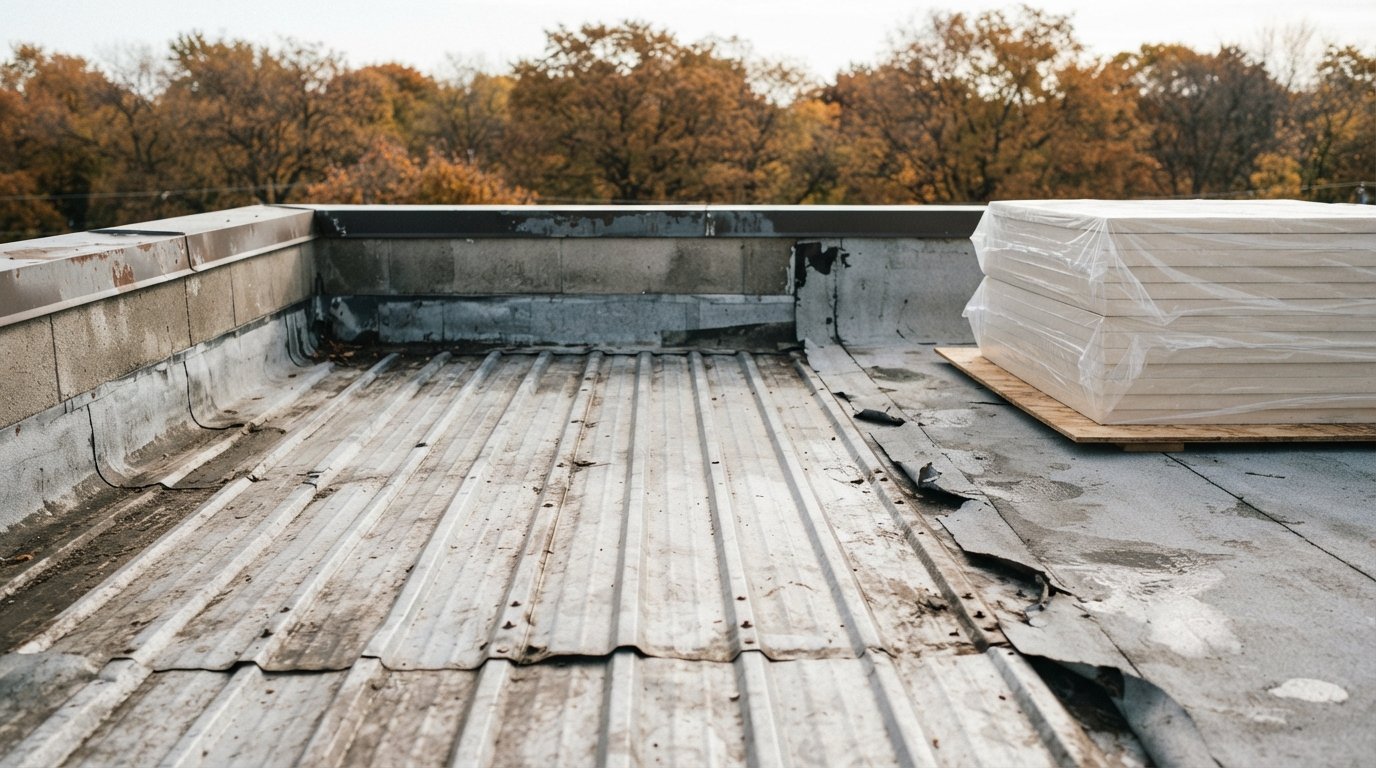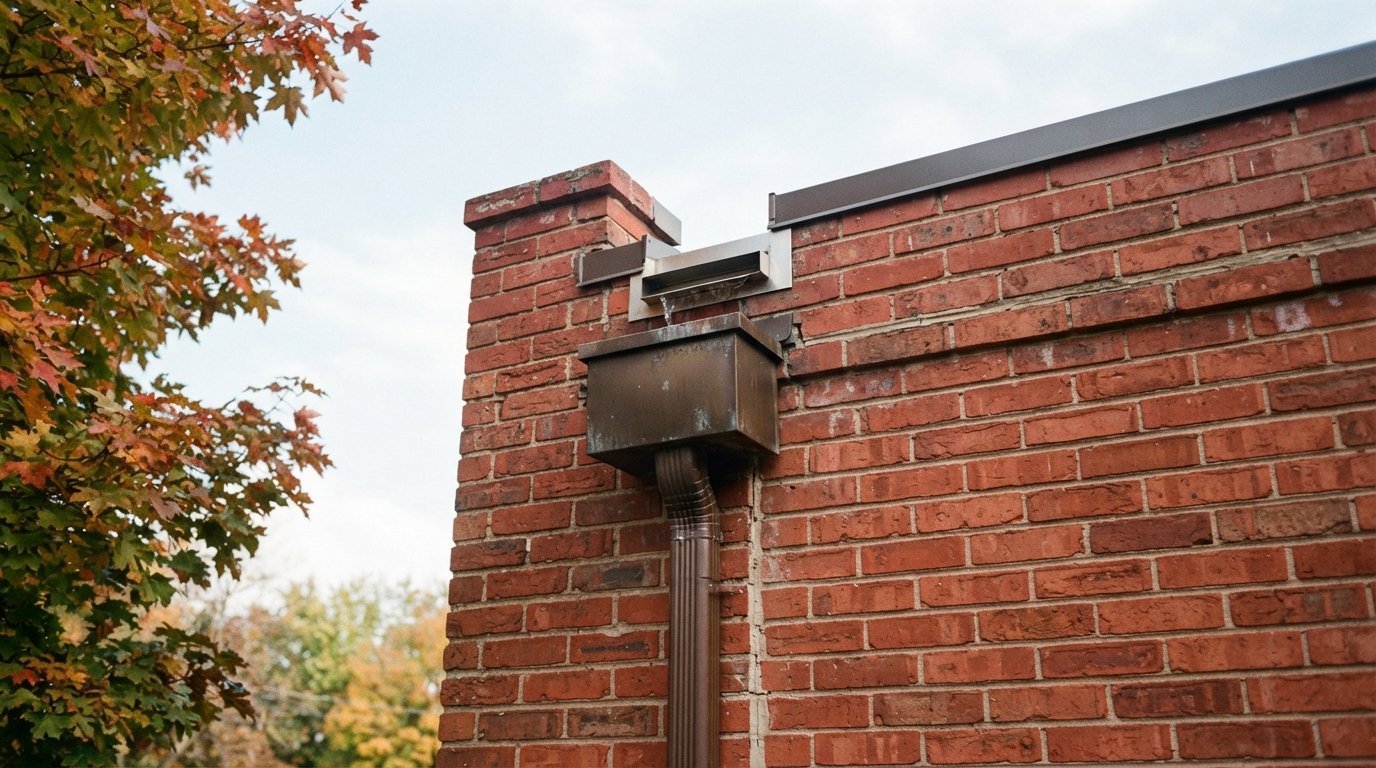

Trapped moisture is the silent killer of low-slope roofs across the GTA, and proper flat roof vents Toronto homeowners can rely on are the difference between a membrane that lasts 25 years and one that blisters, bubbles and rots from the inside within a decade. When warm, humid interior air migrates up through the deck and condenses against a cold membrane in a Toronto February, that moisture has nowhere to go on a sealed flat roof. The result is blistering, delamination, sagging insulation, and eventually leaks that show up far from their source. Breather vents, one-way pressure relief vents, and properly balanced ventilation systems give that moisture an escape path before it does damage.
This guide explains how flat roof ventilation actually works in Toronto, Mississauga, Markham, Vaughan and the wider GTA, what it costs in 2026, how building code applies, and how to tell whether your roof is venting properly or quietly trapping water vapour. Whether you have a TPO, EPDM, modified bitumen or PVC system, the physics are the same, and getting ventilation right is one of the cheapest forms of insurance you can buy for an expensive roof.
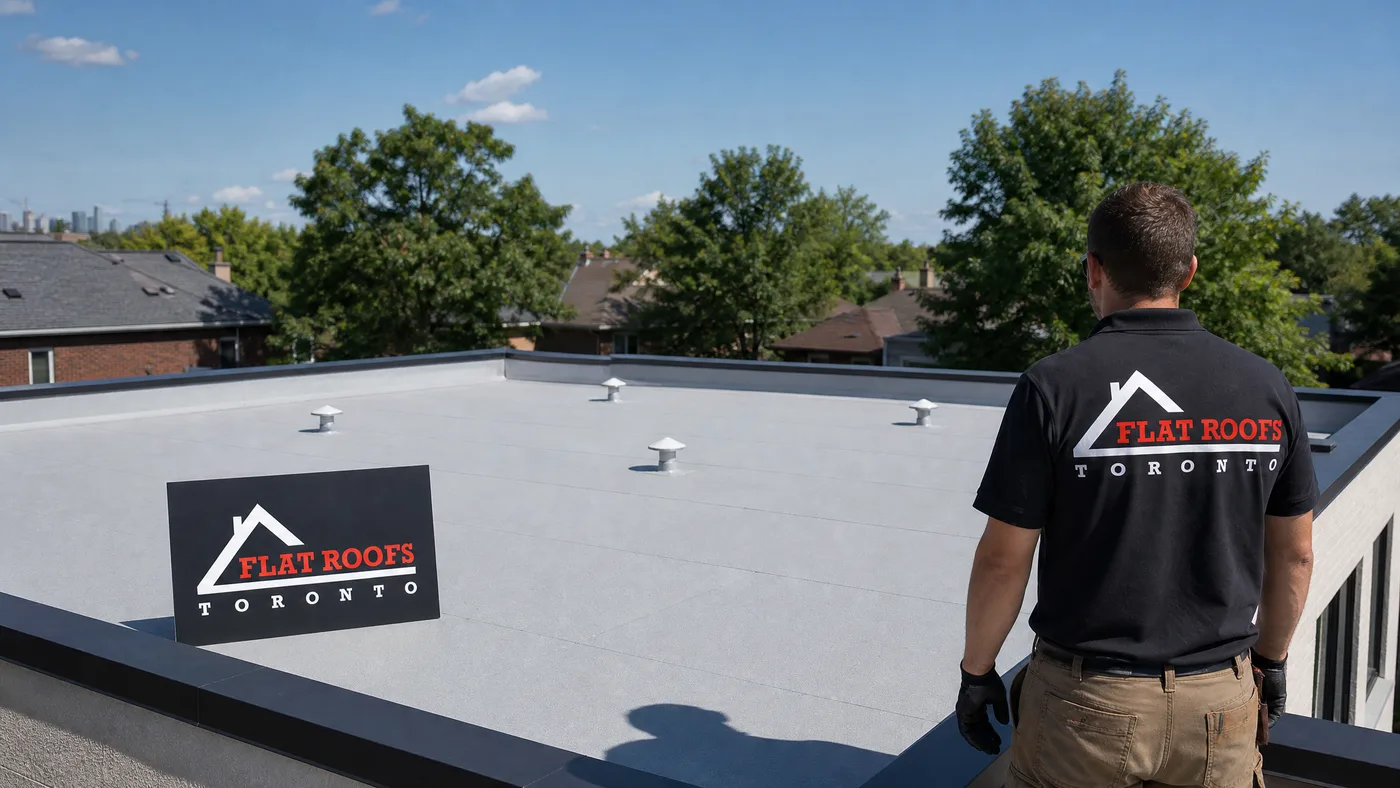
Why Flat Roof Vents Toronto Homes Need Them More Than Sloped Roofs
The case for flat roof vents Toronto properties depend on comes down to a simple problem: water vapour rises, and a flat roof gives it nowhere convenient to escape. In a pitched roof, soffit and ridge vents create a natural chimney effect that pulls moist air out continuously. A flat or low-slope roof has no ridge and often no soffit airflow at all. Moisture that diffuses up from the living space, the bathroom, the kitchen, or a poorly sealed attic hatch reaches the underside of the deck and stalls there.
Toronto’s climate makes this worse than almost anywhere in Canada. We swing from humid 30-degree summers to minus-20 cold snaps, sometimes within the same week in shoulder season. That temperature differential drives the dew point right into the roof assembly. When the membrane surface drops below the dew point of the air trapped beneath it, condensation forms. Over a winter, that becomes litres of water sitting in the insulation and against the deck.
The visible symptoms are blisters and bubbles in the membrane, caused by trapped moisture vaporising under summer sun and pushing the membrane up. The invisible damage is worse: saturated insulation loses its R-value, the deck begins to rot, and fasteners corrode. A roof that should perform for decades fails early. Proper ventilation, often combined with good attic insulation and a vapour barrier, breaks this cycle. The team at Flat Roofs Toronto sees this failure pattern constantly on roofs that were installed without any breather venting at all.
How Breather Vents and One-Way Pressure Vents Actually Work
There are two broad categories of flat roof ventilation, and understanding the difference prevents the most common mistakes. The first is the breather vent, also called a one-way or pressure-relief vent. The second is through-ventilation, where air physically moves across or through the assembly.
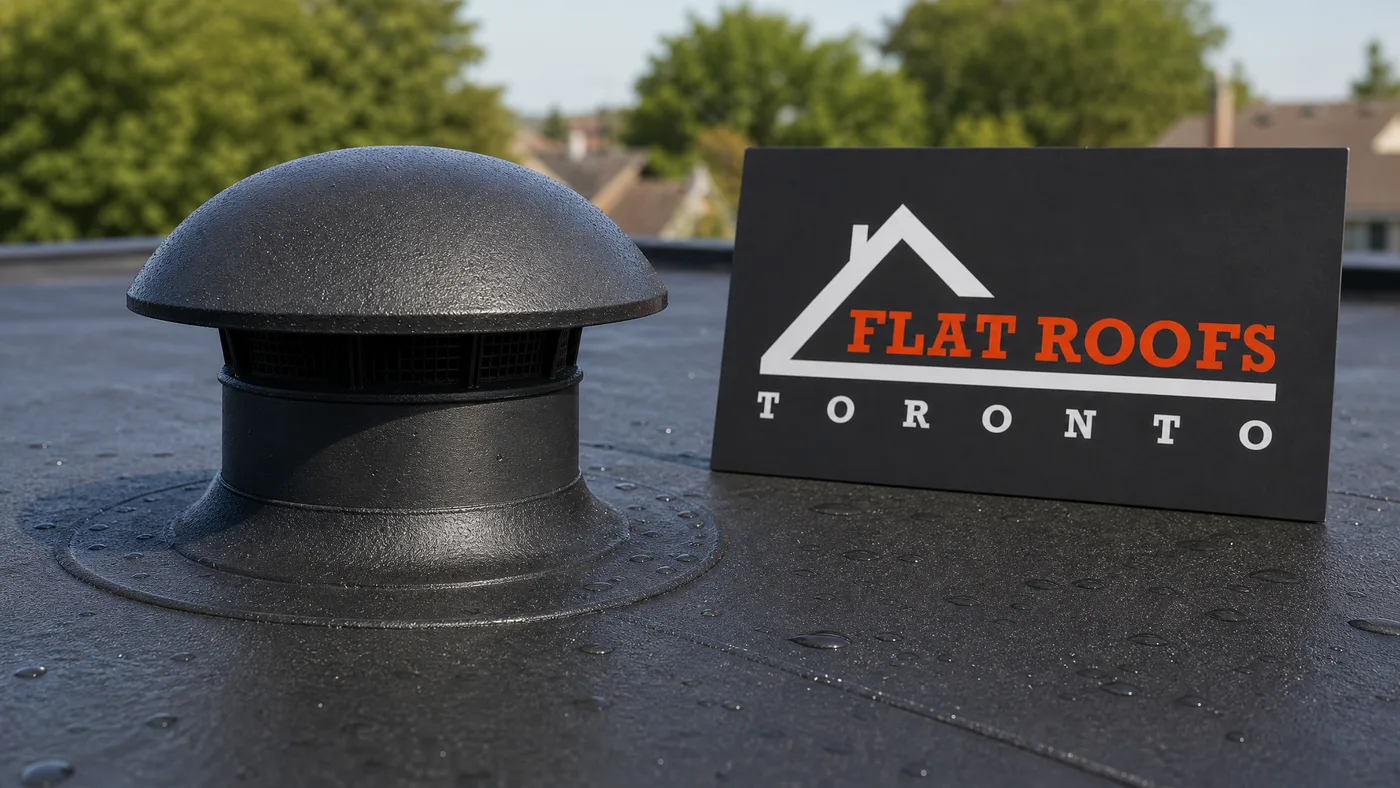
A breather vent is a small mushroom-shaped or low-profile unit installed through the membrane and into the insulation layer. It contains a one-way valve and a moisture-permeable membrane that lets water vapour escape upward and outward while preventing rain from getting in. As the roof heats in the day and cools at night, the air pressure inside the assembly rises and falls. The breather vent releases that pressurised, moisture-laden air. It does not create airflow on its own; it equalises pressure and lets accumulated vapour out.
Through-ventilation is used on assemblies with an air gap, such as a cold-roof design with a ventilated cavity between insulation and deck. Here, intake and exhaust vents allow air to flow across the gap and carry moisture away. This is less common on retrofit residential flat roofs in Toronto and more typical of purpose-built cold-roof or commercial assemblies.
The number of breather vents matters. A common industry guideline is one vent per 90 to 100 square metres of roof area, though saturated or problem roofs may need more. Placement at high points and away from drains ensures vapour escapes rather than pooling. For both residential and commercial flat roof installation, vent layout should be planned before the membrane goes down, not added as an afterthought.
| Vent Type | How It Works | Best Application | Typical GTA Cost (Supplied + Installed, 2026) |
|---|---|---|---|
| Breather / one-way pressure vent | Releases vapour and equalises assembly pressure via one-way valve | Most residential and commercial flat roofs | $120 – $220 each |
| Two-way / cap vent | Allows limited intake and exhaust airflow | Cold-roof assemblies with air gap | $150 – $260 each |
| Insulated curb vent | Larger thermally-broken vent for high-moisture buildings | Commercial, high-humidity interiors | $300 – $550 each |
| Edge / parapet vent strip | Continuous venting at roof perimeter | Parapet-walled flat roofs | $22 – $40 per linear metre |
Signs Your Flat Roof Has Trapped Moisture Right Now
Most GTA homeowners do not climb onto their flat roof, so trapped moisture often goes unnoticed until it leaks. There are earlier warning signs, both inside and out, that signal the ventilation is failing. Catching these early can save thousands in deck replacement.
From the inside, watch for staining on the top-floor ceiling that appears in cold weather and disappears in summer, peeling paint near the ceiling line, a musty smell in upper rooms, and condensation on the inside of skylights. If you have residential skylights that fog up or drip at the frame, that often points to high interior humidity that is also feeding the roof assembly.
From the roof itself, the classic signs are soft or spongy spots underfoot, blisters and bubbles in the membrane that grow in summer heat, ridging or wrinkling where insulation has shifted, and rust streaks at fastener locations. A professional moisture survey, sometimes using an infrared scan, can map saturated areas without tearing the roof apart.
| Symptom | Likely Cause | Urgency | Typical Fix |
|---|---|---|---|
| Blisters / bubbles in membrane | Trapped vapour expanding under heat | Moderate to high | Add breather vents, repair membrane |
| Spongy / soft deck underfoot | Saturated insulation, rotting deck | High | Replace wet insulation and deck section |
| Winter-only ceiling stains | Interior condensation in assembly | Moderate | Improve venting and vapour barrier |
| Rust streaks at fasteners | Persistent moisture corroding fasteners | High | Investigate, re-fasten, vent assembly |
| Fogged or dripping skylights | High interior humidity | Low to moderate | Reduce humidity, improve ventilation |
Toronto Building Code, Vapour Barriers and Ventilation Balance
Flat roof ventilation in the GTA is governed by the Ontario Building Code, which adopts the principles of the National Building Code for low-slope roofing. The code does not always prescribe a fixed number of vents, but it does require that roof assemblies control vapour diffusion and prevent moisture accumulation that could damage the structure. In practice, that means a properly placed vapour barrier on the warm side of the insulation, adequate insulation R-value, and a venting strategy appropriate to the assembly type.
The critical concept is balance. A vapour barrier on the warm side stops most interior moisture from entering the assembly in the first place. Ventilation handles the small amount that gets through. If you add vents but ignore a missing or torn vapour barrier, you are venting a flood. If you seal everything tight with no venting, trapped vapour has no exit. Both extremes fail.
For the Toronto climate zone, insulation targets have climbed in recent code cycles, with many low-slope assemblies now designed for R-30 or higher above the deck. Higher insulation keeps the deck warmer and reduces condensation risk, which is why insulation, vapour control and ventilation are best designed together. A qualified contractor will assess all three rather than selling vents in isolation.
| Assembly Element | 2026 GTA Best-Practice Target | Purpose | Common Mistake |
|---|---|---|---|
| Vapour barrier | Continuous, warm-side, sealed at penetrations | Block interior moisture entering assembly | Torn or discontinuous barrier |
| Insulation R-value (above deck) | R-30+ for low-slope residential | Keep deck above dew point | Under-insulating, cold deck |
| Breather vent density | 1 per 90-100 sq m of roof | Release residual vapour | Too few or poorly placed vents |
| Drainage slope | Minimum 1:50 (2%) to drains | Prevent ponding that drives moisture in | Flat dead spots that pond water |
Costs and Timelines for Flat Roof Ventilation in the GTA
Adding or upgrading flat roof ventilation is one of the more affordable roofing interventions, especially compared with a full tear-off. The exact cost depends on roof size, the membrane type, how many vents are needed, and whether wet insulation must be removed first. A simple retrofit of a handful of breather vents into a sound roof is a half-day job. A full system that involves removing saturated insulation, drying the deck and rebuilding the assembly is a multi-day project closer to a partial replacement.
For most Toronto, Mississauga, Markham and Vaughan homes, a straightforward breather-vent retrofit on a residential flat roof lands in the lower range below. When ventilation is designed into a new residential flat roof installation from the start, the marginal cost of the vents themselves is small relative to the membrane and insulation. If you already have active leaks or saturated insulation, you may need emergency roof repair first to stop water intrusion before the venting work begins.
| Project Scope | Typical GTA Price Range (2026) | Timeline | What’s Included |
|---|---|---|---|
| Breather vent retrofit (sound roof, 4-8 vents) | $700 – $1,800 | Half a day | Vent supply, install, membrane sealing |
| Vent upgrade + minor membrane repair | $1,500 – $3,500 | 1 day | Vents plus patching of blisters/seams |
| Wet insulation removal + re-vent | $5,000 – $12,000 | 2-4 days | Tear-out of wet section, new insulation, vents |
| New roof with engineered ventilation | $14,000 – $30,000+ | 3-6 days | Full membrane, insulation, vapour barrier, vents |
Choosing Vents for TPO, EPDM, Modified Bitumen and PVC Roofs
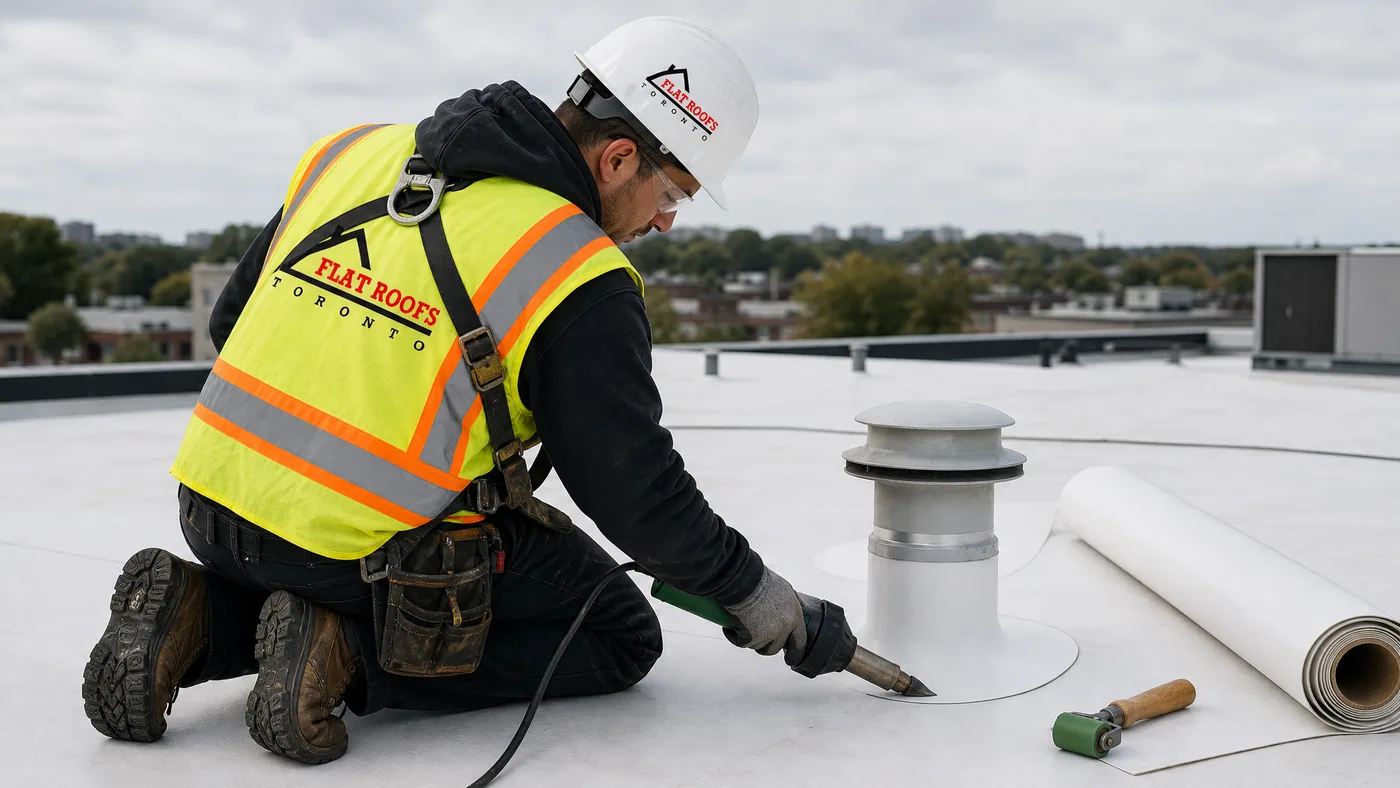
The membrane type affects how a vent is installed and sealed, even though the venting principle is identical. On a TPO or PVC roof, the vent flange is heat-welded directly to the membrane, creating a monolithic watertight bond. On an EPDM roof, the vent is bonded with compatible adhesives and seam tape. On a modified bitumen roof, the vent base is torched or cold-adhered into the plies. Using the wrong installation method for the membrane is a leading cause of vent-related leaks, so matching the detail to the system is essential.
Material durability also varies. TPO and PVC vents are typically welded and extremely watertight when done correctly. EPDM details rely on the quality of the adhesive bond and aging of the rubber. Modified bitumen offers a robust, thick base but requires careful flame or adhesive work around the flange. Whichever membrane you have, the seal between the vent and the field membrane is the most important workmanship detail on the entire vent.
If your project also involves commercial skylights or other rooftop penetrations, those should be detailed at the same time, since every penetration is a potential moisture entry and pressure point. You can see examples of completed flat roof and ventilation work in the project gallery to understand how clean detailing should look.
Maintenance: Keeping Your Flat Roof Vents Working Year After Year
Ventilation is not a set-and-forget feature. Vents can be blocked by debris, ice, leaves or even snow drifts in a hard Toronto winter, and a blocked vent is no vent at all. An annual inspection, ideally in spring after the snow clears and again in fall before winter, keeps the system working. Twice-yearly checks are especially worthwhile on roofs surrounded by trees in neighbourhoods across Markham and Vaughan where leaf debris accumulates fast.
During an inspection, a technician confirms each vent is clear, the membrane seal around the flange is intact, no new blisters have formed, drains are flowing, and there are no soft spots developing. Clearing debris and re-sealing a flange is cheap; replacing a rotted deck is not. Pairing vent maintenance with a general flat roof inspection gives you the full picture of your roof’s health.
| Maintenance Task | Frequency | Why It Matters | DIY or Pro |
|---|---|---|---|
| Clear debris from vent caps | Spring and fall | Blocked vents trap moisture | Pro recommended |
| Inspect vent flange seals | Annually | Failed seals leak at penetrations | Pro |
| Check for new blisters/bubbles | Annually | Early sign of trapped vapour | Pro |
| Confirm drains flow freely | Spring and fall | Ponding drives moisture into assembly | Pro |
| Infrared moisture survey | Every 3-5 years | Maps hidden saturation | Pro |
How many flat roof vents Toronto homes need per square metre?
Will adding breather vents fix existing blisters in my membrane?
Do flat roof vents Toronto installers add cause leaks?
Can I add vents to a TPO or EPDM roof that is already installed?
How is trapped moisture different from a roof leak?
How often should flat roof vents be inspected in the GTA?
Schedule Your Flat Roof Vents Toronto Assessment Today
Stopping trapped moisture starts with an honest assessment of your assembly, and that is what the team at Flat Roofs Toronto delivers. We evaluate your membrane, insulation, vapour barrier and existing ventilation together, then recommend the right number and type of vents for your roof rather than selling a generic package. Whether you need a simple breather-vent retrofit or a full assembly rebuild, we detail every penetration to match your TPO, EPDM, modified bitumen or PVC system.
Call us today at (647) 333-3528 or request a free flat roof quote to protect your roof from blisters, rot and trapped moisture before the next freeze-thaw cycle.
Flat Roofs Toronto proudly serves Toronto, Mississauga, Markham, Vaughan and the wider GTA with expert flat roof installation, repair and ventilation solutions.