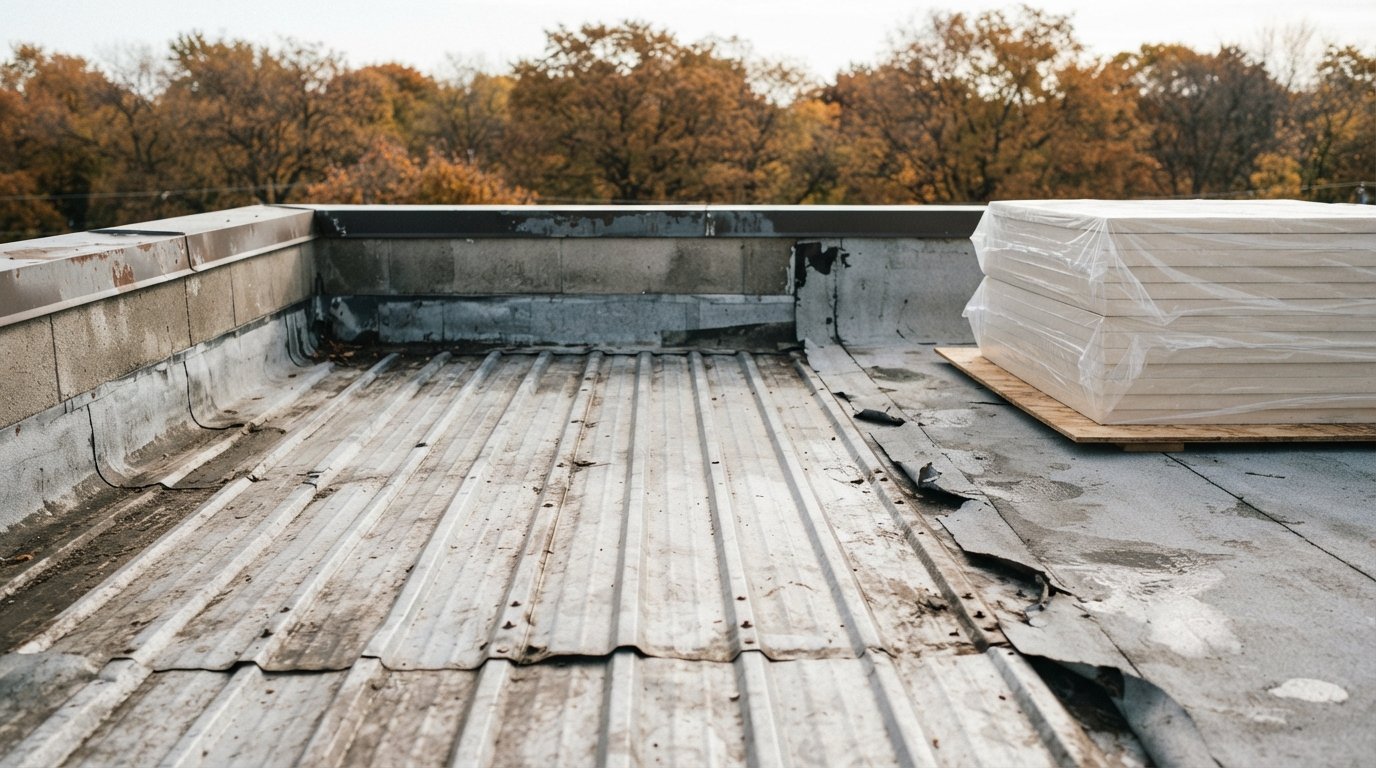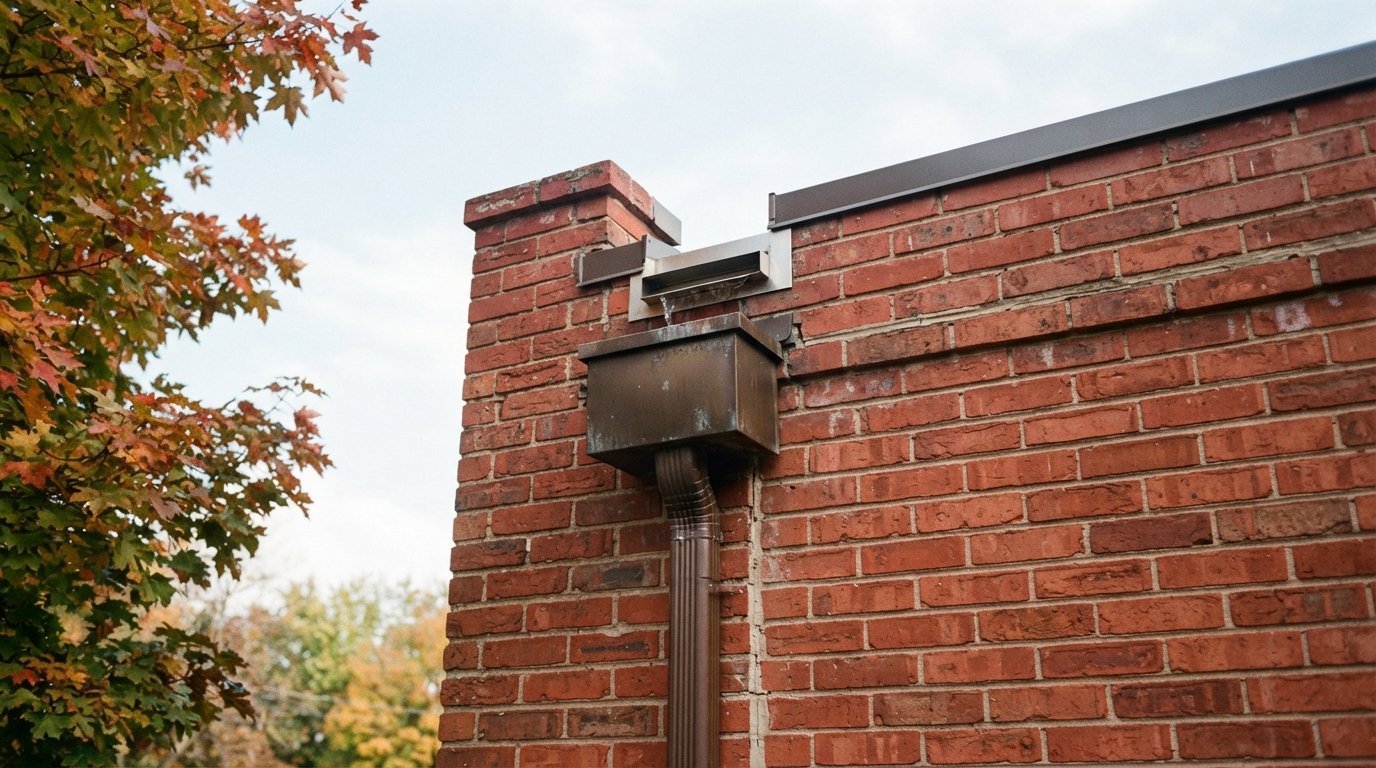

If your low-slope roof sits exposed to the full force of a Toronto summer, you are already dealing with flat roof UV heat damage Toronto homeowners rarely see coming until a leak appears. The summer sun is relentless on a flat surface that has nowhere to shed heat, and the membrane covering your roof absorbs that punishment hour after hour, day after day, from May through September. Unlike a steep-slope shingle roof where sunlight glances off at an angle, a flat or low-slope roof takes the sun head-on, baking the membrane to surface temperatures that can climb 30 to 50 degrees Celsius above the ambient air. Over years, this thermal and ultraviolet assault is the single biggest reason GTA flat roofs age, crack, blister and fail well before their warranty period ends.
This guide explains exactly how summer heat and ultraviolet radiation degrade TPO, EPDM, modified bitumen and PVC membranes, what the warning signs look like on a Toronto property, and the proven steps you can take to slow the ageing process and squeeze years of extra service life out of your investment. Whether you own a downtown row house, a Mississauga bungalow with a rear addition, or a commercial building in Markham or Vaughan, the physics are the same, and so are the solutions.
How Flat Roof UV Heat Damage Develops on Toronto Roofs
Flat roof UV heat damage in Toronto is a slow, cumulative process driven by two separate but related forces: ultraviolet radiation and thermal cycling. Understanding both helps you see why even a well-installed membrane eventually shows wear, and why a roof that looked perfect five summers ago can suddenly start leaking.
Ultraviolet radiation is the high-energy portion of sunlight that breaks chemical bonds in roofing polymers. Every membrane type relies on plasticizers, stabilizers and protective additives to stay flexible and watertight. UV slowly strips these compounds away in a process called photodegradation. As the protective chemistry burns off, the membrane becomes brittle, loses its ability to stretch, and develops fine surface crazing that eventually opens into cracks.
Thermal cycling is the second force. A black or dark membrane in direct Toronto sun can reach 70 to 80 degrees Celsius on a clear July afternoon, then cool to 18 or 20 degrees overnight. That daily swing of 50 degrees or more forces the membrane and the materials beneath it to expand and contract repeatedly. Over thousands of cycles, this fatigues seams, loosens fasteners, opens flashing joints and pulls membranes away from parapet walls and roof penetrations. The combination of UV embrittlement and thermal movement is far more destructive than either factor alone.
| Damage Mechanism | What Causes It | Visible Result on Roof | Typical Onset |
|---|---|---|---|
| Photodegradation (UV) | Ultraviolet breaking polymer bonds | Chalking, surface crazing, colour fade | 5 to 8 years |
| Thermal cycling | Daily 40 to 50 C temperature swings | Seam separation, fastener back-out | 7 to 12 years |
| Plasticizer migration | Heat drawing softeners out of membrane | Shrinkage, stiffening, edge lifting | 10 to 15 years |
| Ponding amplification | Standing water magnifying UV exposure | Blistering, accelerated wear zones | 3 to 6 years |
How Summer Sun Affects Each Membrane Type
Not all flat roofing materials respond to heat and UV the same way. The membrane on your Toronto roof has a specific weakness profile, and knowing it helps you anticipate problems before they become emergencies. If you are weighing a replacement, our team can walk you through the options during a residential flat roof installation assessment.
TPO (thermoplastic polyolefin) is naturally reflective in its white form, which is its greatest advantage in our climate. A white TPO roof stays dramatically cooler than a black membrane, reducing thermal stress. However, lower-grade TPO can suffer surface oxidation and seam weakness if the protective layer is too thin, so material quality matters enormously.
EPDM (rubber) is most commonly installed in black, which makes it a heat sponge. Black EPDM is extremely UV-stable at the chemical level and resists cracking better than almost any membrane, but its dark colour pushes surface temperatures and attic heat gain to the highest of any common system. Ballasted or white-coated EPDM offsets this.
Modified bitumen uses asphalt-based sheets, often with a granular surface that protects the underlying bitumen from UV much like asphalt shingles. When those granules wear away from foot traffic or weathering, the exposed bitumen oxidizes and hardens quickly under summer sun, leading to cracking and alligatoring.
PVC performs similarly to TPO with excellent reflectivity and strong heat-welded seams, but it relies heavily on plasticizers. Decades of intense heat can slowly draw those plasticizers out, leaving the sheet stiff and prone to shattering in later years, though premium formulations have largely solved this.
| Membrane | UV Resistance | Heat Absorption | Typical GTA Lifespan | Main Summer Weakness |
|---|---|---|---|---|
| White TPO | Good to excellent | Low (reflective) | 20 to 30 years | Seam quality on cheap grades |
| Black EPDM | Excellent | High (absorbs heat) | 20 to 30 years | Attic heat gain, surface temp |
| Modified bitumen | Good (with granules) | Moderate to high | 15 to 20 years | Granule loss then oxidation |
| PVC | Excellent | Low (reflective) | 20 to 30 years | Plasticizer loss over decades |
Warning Signs of Heat and UV Damage to Watch For
The earlier you catch heat and UV deterioration, the cheaper and simpler the fix. Many Toronto homeowners only discover problems after water has already entered the building, by which point the damage extends well beyond the membrane into insulation and decking. A summer inspection is the ideal time to look, because the membrane is fully expanded and stress points are most visible.
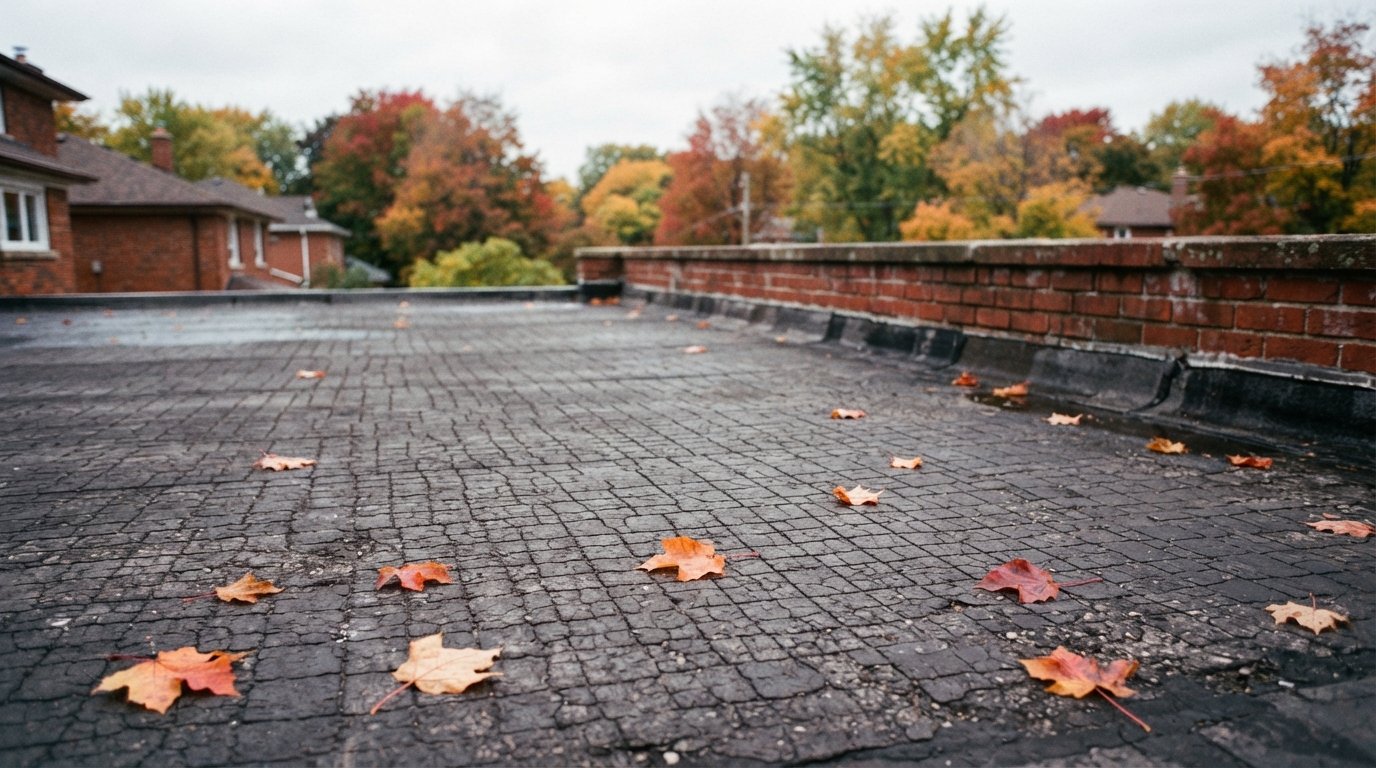
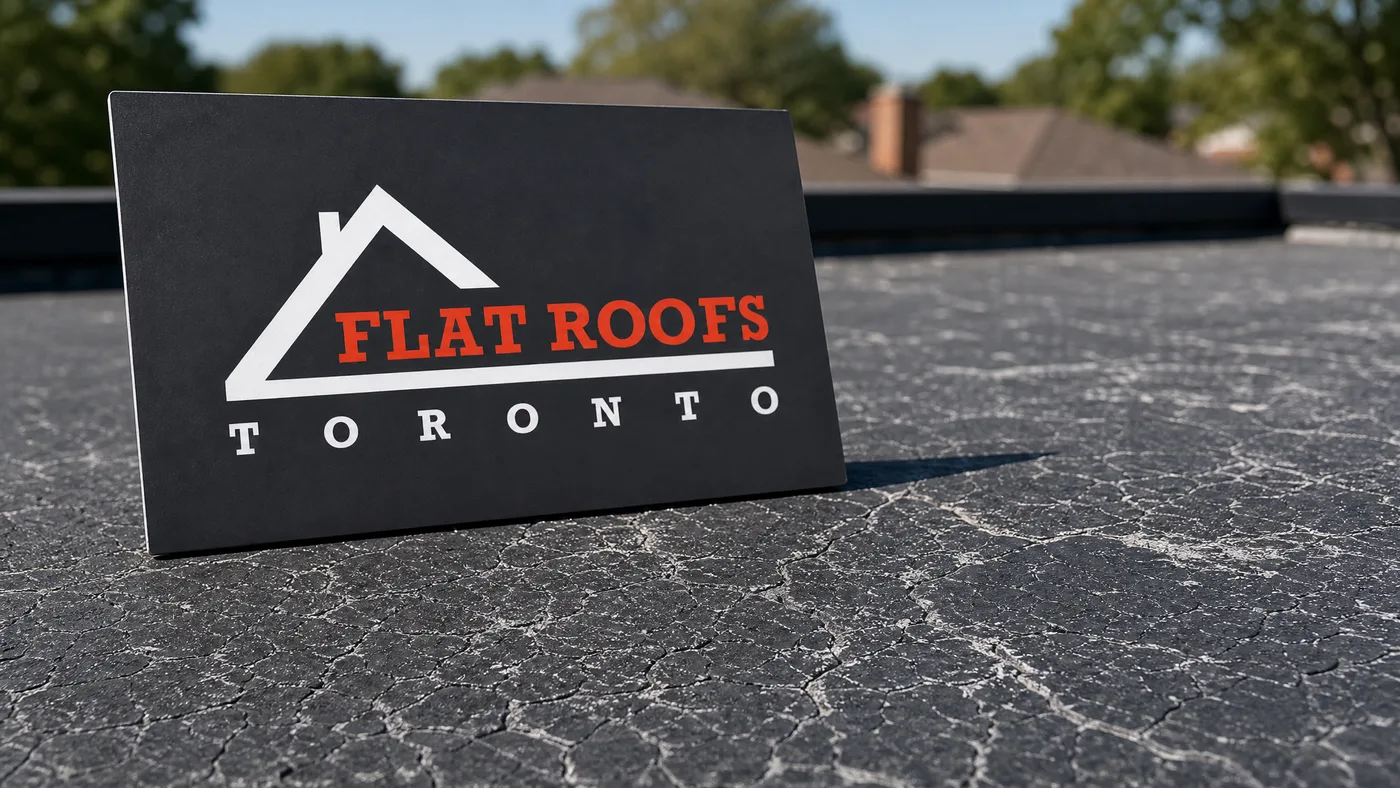
Walk your roof carefully, or have a professional do it, and look for the following indicators. Chalking is one of the earliest UV signs: rub the surface and if a white powdery residue comes off on your hand, the protective layer is breaking down. Surface crazing appears as a fine network of hairline cracks resembling cracked glaze on pottery. On modified bitumen, watch for alligatoring, where the surface splits into a scaly pattern like reptile skin.
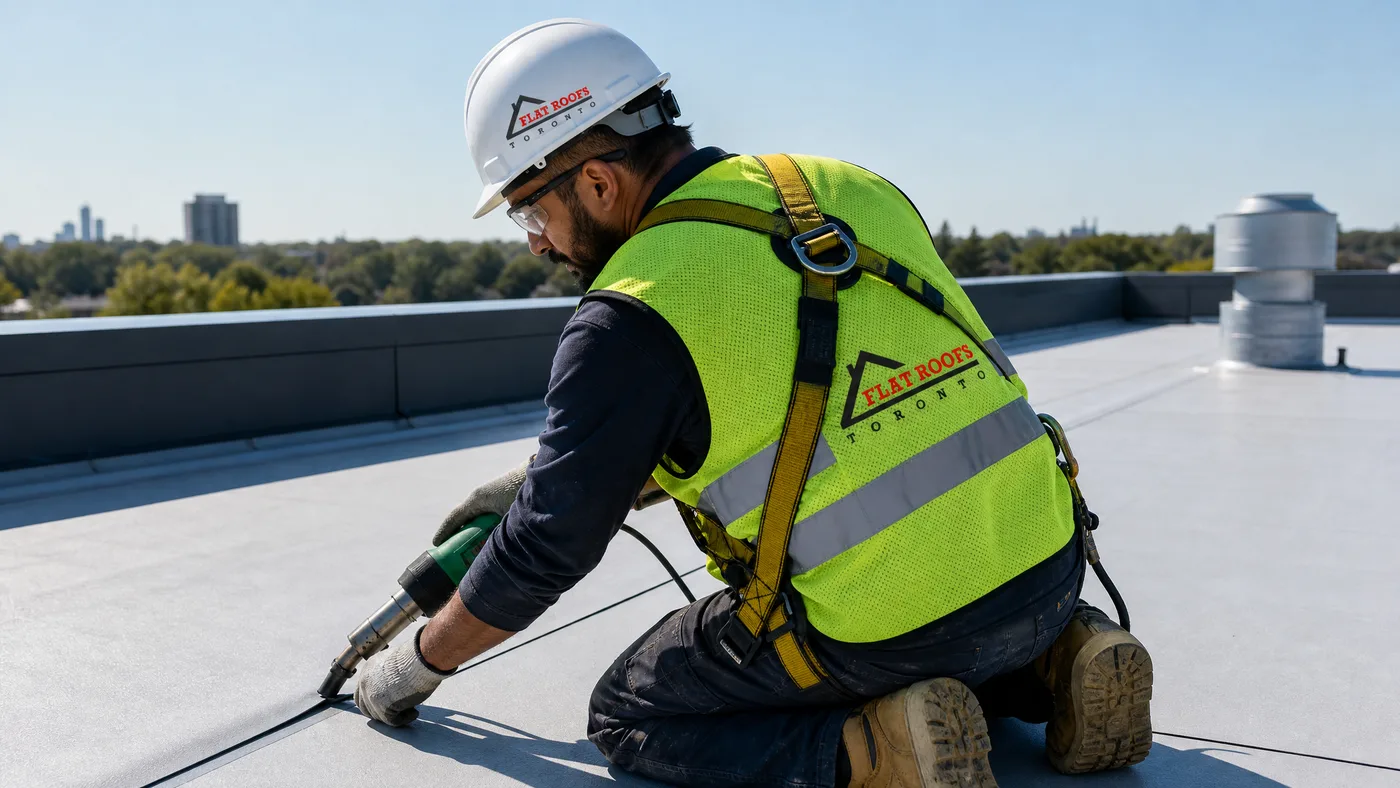
Blisters and bubbles signal that heat has driven trapped moisture or air to expand beneath the membrane. Seam separation, where the welded or adhered joints begin to lift, is a critical red flag because seams are the most common failure point. Around penetrations, skylights and parapet walls, check that flashing is still tight and the membrane has not shrunk and pulled away. If you have residential skylights set into your flat roof, the curb flashing around them deserves especially close attention, since these transitions concentrate thermal stress.
How Heat Drives Up Your Summer Energy Costs
Flat roof UV heat damage in Toronto is not just a durability problem; it is an energy problem that shows up on your hydro bill every summer. A dark, heat-absorbing membrane transfers that thermal load straight into the building below. On a hot Vaughan or Markham afternoon, the underside of a black flat roof can radiate heat into the top floor for hours after sunset, forcing air conditioning to run longer and harder.
The single most effective defence is a reflective membrane combined with adequate insulation. A white reflective roof can reflect 70 to 80 percent of incoming solar energy, while a black surface reflects only about 5 to 10 percent. That difference translates directly into lower attic temperatures, reduced cooling demand and a more comfortable top floor. Pairing a reflective membrane with upgraded attic insulation compounds the benefit, because the insulation slows whatever heat does get through.
| Roof Surface | Solar Reflectance | Peak Surface Temp (July) | Relative Cooling Cost |
|---|---|---|---|
| White TPO / PVC | 70 to 80 percent | 40 to 50 C | Lowest |
| Light grey membrane | 40 to 55 percent | 50 to 60 C | Moderate |
| Aged / chalked membrane | 25 to 40 percent | 60 to 70 C | Higher |
| Black EPDM / bitumen | 5 to 10 percent | 70 to 80 C | Highest |
Proven Ways to Extend Your Flat Roof’s Life
The good news is that heat and UV damage is highly manageable. With the right strategy, you can add five, ten or even fifteen years to a flat roof’s service life. The most cost-effective measures are preventive, applied while the membrane is still in good shape rather than after it has begun to fail.
Reflective coatings are the workhorse of life extension. A silicone or acrylic reflective coating applied over an ageing membrane restores reflectance, blocks UV, seals minor surface crazing and adds a renewable wear layer. Coatings typically need reapplication every 10 to 15 years and cost a fraction of replacement. Routine maintenance is equally important: clearing debris, keeping drains and scuppers flowing, and addressing ponding water all reduce the localized hot spots where damage accelerates fastest.
Proper drainage cannot be overstated. Standing water magnifies UV exposure, holds heat and breaks down membranes far faster than dry areas. If your roof ponds after summer storms, correcting the slope or adding drainage should be a priority. Annual professional inspections, ideally in late spring before peak summer heat, catch small issues while they are still inexpensive. For commercial properties, our commercial flat roof installation specialists build maintenance schedules around the larger surface areas that face even greater cumulative UV load.
| Life-Extension Measure | Typical GTA Cost (2026) | Years Added | Best For |
|---|---|---|---|
| Reflective coating (per sq ft) | $2.50 to $5.00 | 8 to 15 years | Sound but ageing membranes |
| Annual inspection | $200 to $450 | Ongoing protection | All flat roofs |
| Drainage correction | $800 to $3,500 | 5 to 10 years | Ponding-prone roofs |
| Seam and flashing repair | $400 to $1,800 | 3 to 8 years | Early-stage seam lift |
| Full membrane replacement | $9 to $16 per sq ft | 20 to 30 years | Failed or end-of-life roofs |
When Heat Damage Means It Is Time to Replace
Coatings and repairs are powerful tools, but every membrane reaches a point where replacement is the smarter investment. If the surface has cracked through to the reinforcement layer, if seams are failing across large areas, or if water has already saturated the insulation below, patching only delays an inevitable and more expensive failure. Wet insulation never dries out and continues to degrade the deck and rot fasteners regardless of what you do to the surface.
The decision usually comes down to the extent of damage and the age of the roof. A 22-year-old membrane with widespread crazing and two or three active leaks is rarely worth saving, while a 12-year-old roof with isolated seam issues is an excellent candidate for repair and coating. A professional moisture survey can map exactly how much of the substrate is wet, removing the guesswork. If you discover active leaks during a summer storm, our emergency roof repair team can stabilize the situation quickly while you plan the long-term fix, and you can review completed projects in our gallery to see the quality of finished work.
When replacement is the right call, choosing a reflective, UV-stable system the second time around pays dividends. A white TPO or PVC membrane installed over fresh insulation resets the clock and dramatically reduces future heat-driven ageing compared to the dark membrane it replaced. For buildings with rooftop glazing, coordinating membrane replacement with commercial skylights flashing ensures the most vulnerable transitions are sealed properly from the start.
Frequently Asked Questions
How much does flat roof UV heat damage in Toronto shorten a membrane’s life?
Does a white reflective roof really lower summer cooling bills in the GTA?
What is the earliest sign of UV damage I can spot myself?
Can a reflective coating fix existing flat roof UV heat damage in Toronto?
Which flat roof material handles Toronto summer heat best?
When should I inspect my flat roof for heat damage?
Protect Against Flat Roof UV Heat Damage in Toronto Today
Summer sun will keep working on your membrane every single day, but with the right reflective system, regular maintenance and timely repairs you can hold flat roof UV heat damage in Toronto at bay for decades. The team at Flat Roofs Toronto specializes in diagnosing heat and UV deterioration, applying life-extending coatings, and installing reflective TPO, EPDM, modified bitumen and PVC systems built to survive our intense GTA summers.
Call us today at (647) 333-3528 or request a free flat roof quote to have your membrane inspected before the next heat wave puts your roof and your energy bills under pressure.
Flat Roofs Toronto proudly serves Toronto, Mississauga, Markham, Vaughan and the GTA with expert flat roof installation, repair and protection.