
There are very few events in commercial or residential property ownership as intensely panic-inducing as staring at the ceiling and witnessing water aggressively pouring into your interior space. A flat roof failure does not politely announce itself; it typically triggers violently at 2:00 AM during a massive, howling November thunderstorm or a rapid February snowmelt. Every single minute that passes without intervention accelerates the catastrophic destruction of expensive electronics, luxury hardwood flooring, irreplaceable inventory, and eventually, the structural integrity of the drywall itself. When a flat roof fails, the crisis demands immediate, highly strategic, and heavily mechanized intervention. Flat Roofs Toronto operates an elite, rapid-deployment 24/7 emergency response division dedicated to aggressively stopping water ingress across the GTA. This intense, high-alert 2026 guide dictates the exact survival protocols you must execute while waiting for the professionals, exposing the brutal root causes of sudden failure.
The Golden Hour: Immediate Disaster Mitigation Protocols
While the emergency roofing team is aggressively dispatching trucks across the city toward your location, you must take command of the interior battlefield to minimize catastrophic financial loss:
- Aggressive Water Containment: Immediately deploy deep plastic bins, industrial garbage cans, and heavy waterproof tarps directly beneath the active leak matrix. Push all expensive leather furniture, sensitive servers, and irreplaceable retail inventory violently away from the splash zone.
- The Electrical Kill Protocol: Water tracking across live high-voltage wiring is an invisible death sentence. If water is aggressively pouring anywhere near a massive electrical sub-panel, expensive architectural lighting fixtures, or wall outlets, you must instantly flip the main breakers entirely shutting off grid power to that specific quadrant of the building. Do not gamble your life trying to save a television.
- Forensic Documentation: Your insurance adjuster will demand brutal proof. Use your smartphone to record high-resolution video of the water aggressively pouring in, highlighting the exact point of entry on the ceiling, and heavily documenting the immediate collateral damage to the flooring and assets.
- The Roof Access Warning: NEVER send an untrained employee or angry homeowner onto an icy, pitch-black flat roof in the middle of a violent thunderstorm. The black membrane is slicker than a skating rink, the powerful wind can blow you entirely off the parapet, and you lack the specialized infrared equipment to even locate the microscopic pinhole causing the leak. Remain inside.
The Economics of the Emergency Response
Emergency flat roof intervention commands a heavy premium. You are paying for immediate prioritization, massive, heavy-duty deployment logic, and highly skilled technicians willing to work in terrifying conditions.
| Emergency Intervention Matrix | Estimated Financial Range | Deployment Objective & Timeline |
|---|---|---|
| Immediate Tarping & Water Diversion | $600 to $1,800 | Deploy massive weighted tarps within 2-4 hours to halt incoming destruction. |
| Surgical Thermal Welding Patch (TPO/PVC) | $800 to $2,500 | Deploy robotic welders permanently fuse tears. Completed next day after dry-out. |
| Surgical Mastic Repair (Bitumen) | $600 to $1,500 | Cutting blisters and heavily troweling rubberized asphalt over massive cracks. |
| Emergency Deep Drain Unblocking | $400 to $1,200 | Extracting colossal frozen ice plugs allowing tens of thousands of gallons to drain. |
| Violent Membrane Blow-Off Re-Securement | $2,500 to $8,000+ | High wind aggressively rippes corners off. Requires heavy mechanical re-fastening over vast areas. |
Expect a heavy 30% to 50% “Emergency Premium” multiplier applied to standard labor rates for any highly specialized 3:00 AM dispatch requiring extreme danger-pay.
The 4 Catastrophic Causes of Sudden Flat Roof Failure
Why did a roof that survived three years suddenly rupture violently tonight? Heavy flat roof failures are rarely “accidents”; they are the inevitable physics of compounding neglected trauma.
1. The Clogged Scupper Apocalypse
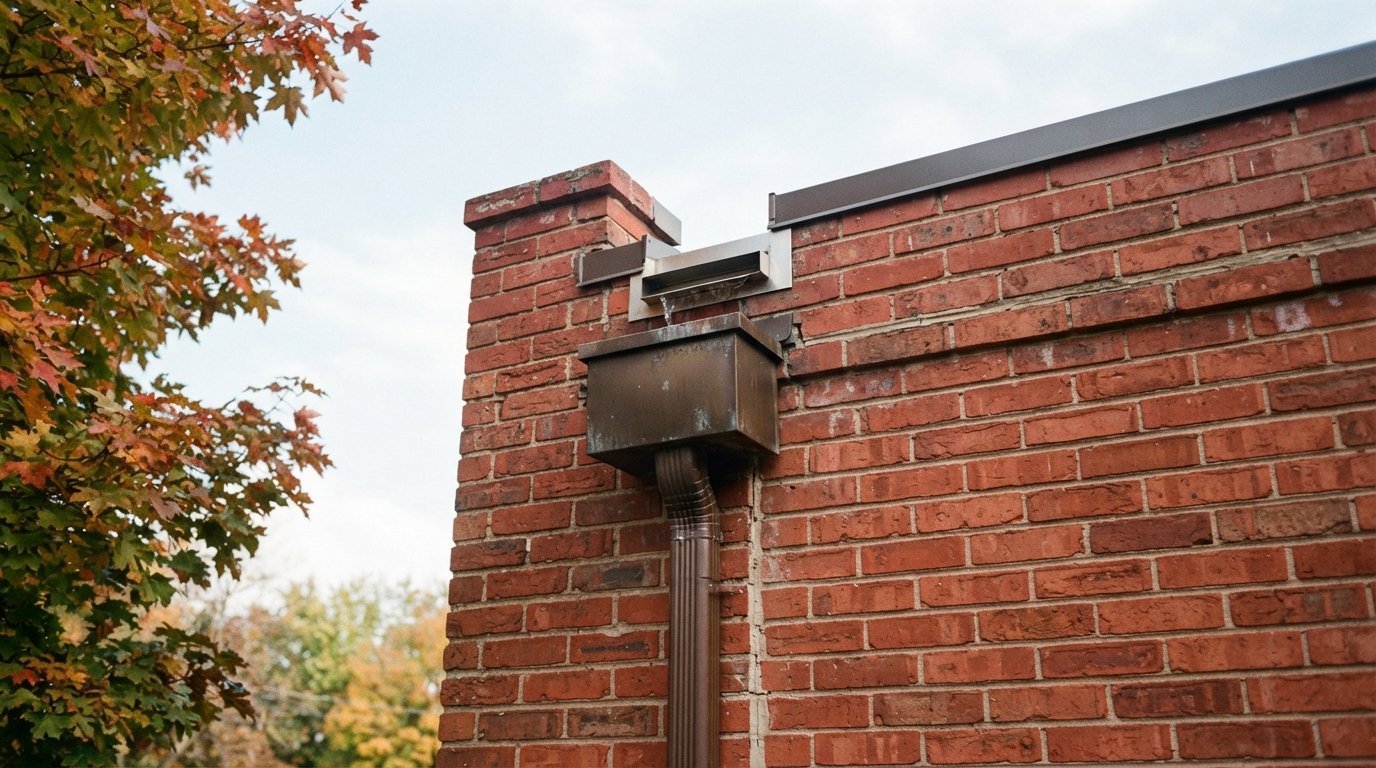
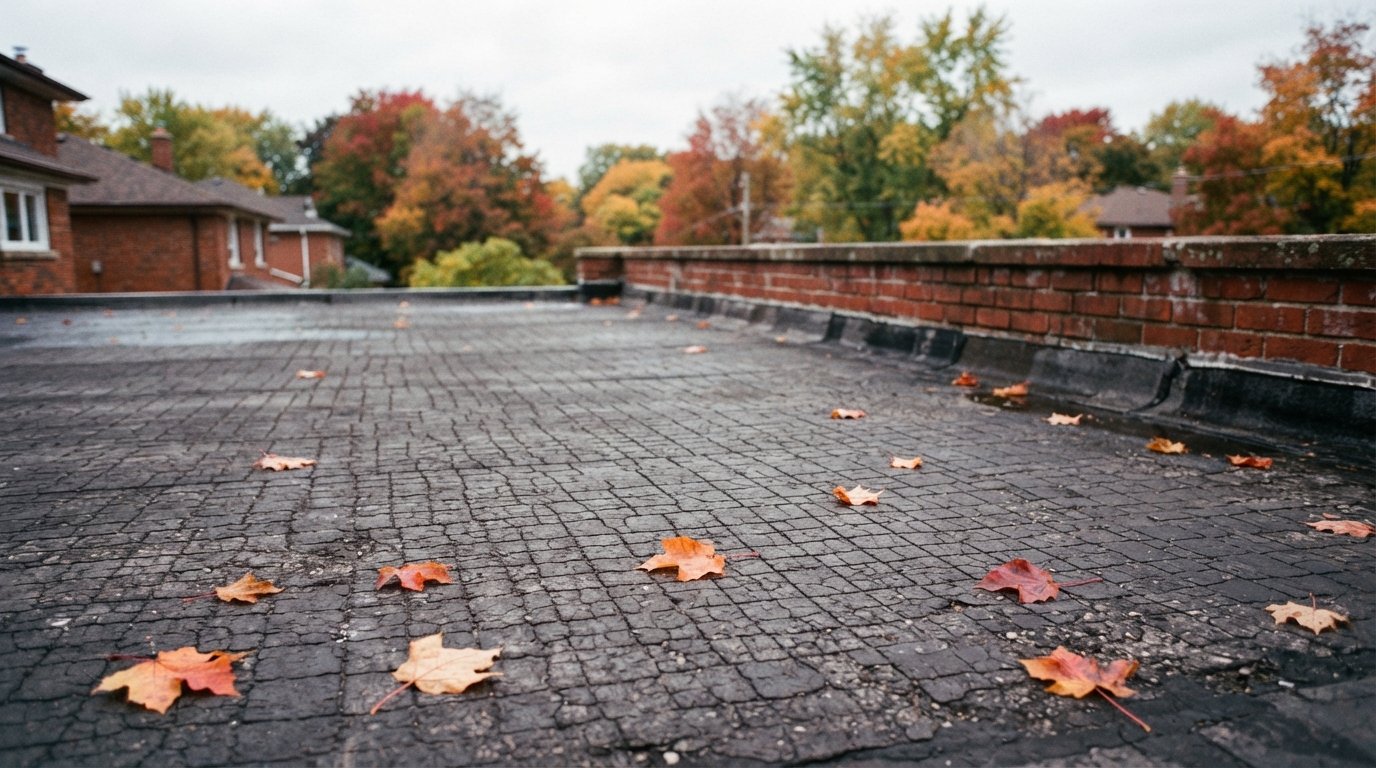
This is the undisputed #1 cause of catastrophic flat roof flooding. Because flat roofs fundamentally resemble massive swimming pools with high walls (parapets), they rely entirely on 3-inch internal drain pipes (scuppers) to empty. If organic debris (like a heavy mat of rotting maple leaves or a dead bird) blocks the tiny drain grid, the roof rapidly fills with 5 inches of water. The insane, massive hydrostatic pressure of 20,000 pounds of standing water violently searches for the weakest microscopic flaw in a seam, ultimately blasting through it like a fire hose.
2. High-Wind Membrane Blow-Off
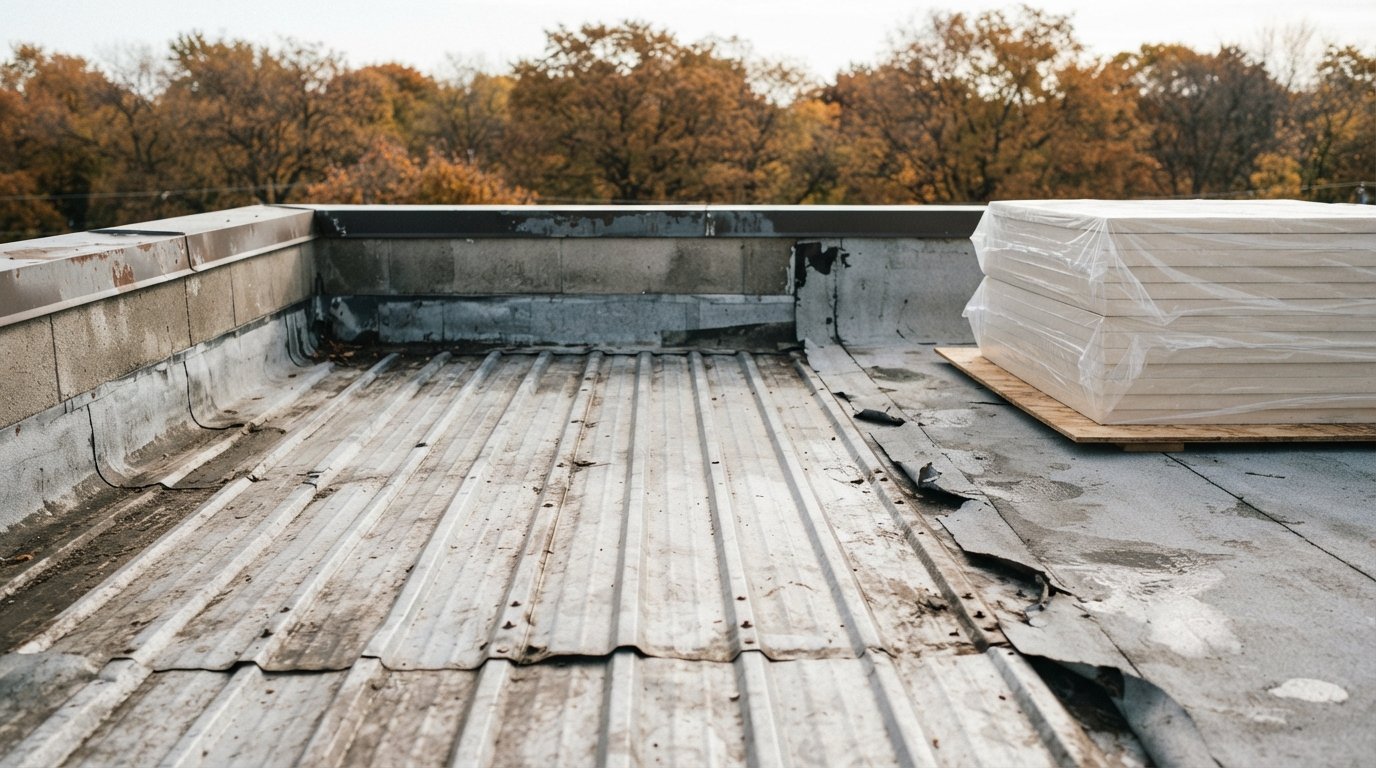
When wind violently slams into the side of a massive warehouse or tall home, it creates an aggressive negative pressure vacuum on the top corner edges of the roof. If the metal perimeter flashing has slightly loosened, the 100 km/h wind hooks the edge of the rubber TPO membrane and violently acts like a parachute, aggressively lifting it and physically ripping the incredibly heavy membrane completely off the underlying insulation board, instantly exposing the entire building to the driving rain.
3. Deep Ice Dam Lacerations
Extreme cold triggers disaster. Improperly insulated flat roofs leak interior heat, slowly melting snow into unseen pools. As it flows to the freezing exterior edges, it instantly freezes solid into a massive, heavy Ice Dam. As this ice expands violently by 9%, it dynamically crushes the rubber seals around skylights, dramatically rips heavy metal flashings right off the walls, and forces freezing water backward, directly underneath the heavy waterproof layers of the roof.
4. Blunt Force Puncture Trauma
Frequently, the emergency leak happens in perfectly sunny weather during a summer thaw. Why? Because three months prior, an HVAC technician dropped a heavy steel wrench violently onto the freezing, brittle membrane, slicing a massive three-inch gash. The gash was entirely hidden by winter snow. The moment the massive spring snowmelt occurs in March, the water aggressively pours straight through the unhealed laceration.
The Permanent Defensive Posture
The deepest, most profound truth in the roofing industry is that 85% of aggressive “emergency calls” could have been entirely prevented by a minor, inexpensive $500 maintenance inspection performed six months prior.
You must aggressively engage an elite contractor to execute bi-annual (Spring and Fall) thermal inspections to locate microscopic, invisible thermal leaks and ensure the critical drainage arteries are heavily purged of debris. If water is violently pouring into your structure right now, cease panic. Contact Flat Roofs Toronto immediately. We will heavily mobilize our rapid-response emergency command units, deploying massive mechanical pumps, weighted containment tarps, and robotic welders to aggressively halt the destruction across Toronto, Mississauga, Vaughan, and the entire GTA.