If you own or manage a low-slope building north of Highway 401, budgeting for a commercial flat roof replacement in North York is one of the larger capital decisions you will make this decade. A properly specified system lasts 20 to 30 years, protects everything under it, and quietly lowers heating and cooling costs. A rushed one leaks within five winters and costs you twice. This guide lays out realistic 2026 pricing, the material options that actually perform in Ontario’s climate, the permit and code requirements that apply, and the questions worth asking before you sign anything.
North York is not a single building type. It spans strip plazas along arterial roads, mid-century industrial bays, low-rise office buildings, multi-unit residential blocks, places of worship, and small warehouse condominiums. Each of those has a different deck, a different drainage layout, and a different tolerance for downtime. The cost of a commercial flat roof replacement in North York reflects that variety, so any contractor quoting from a phone call alone is guessing.
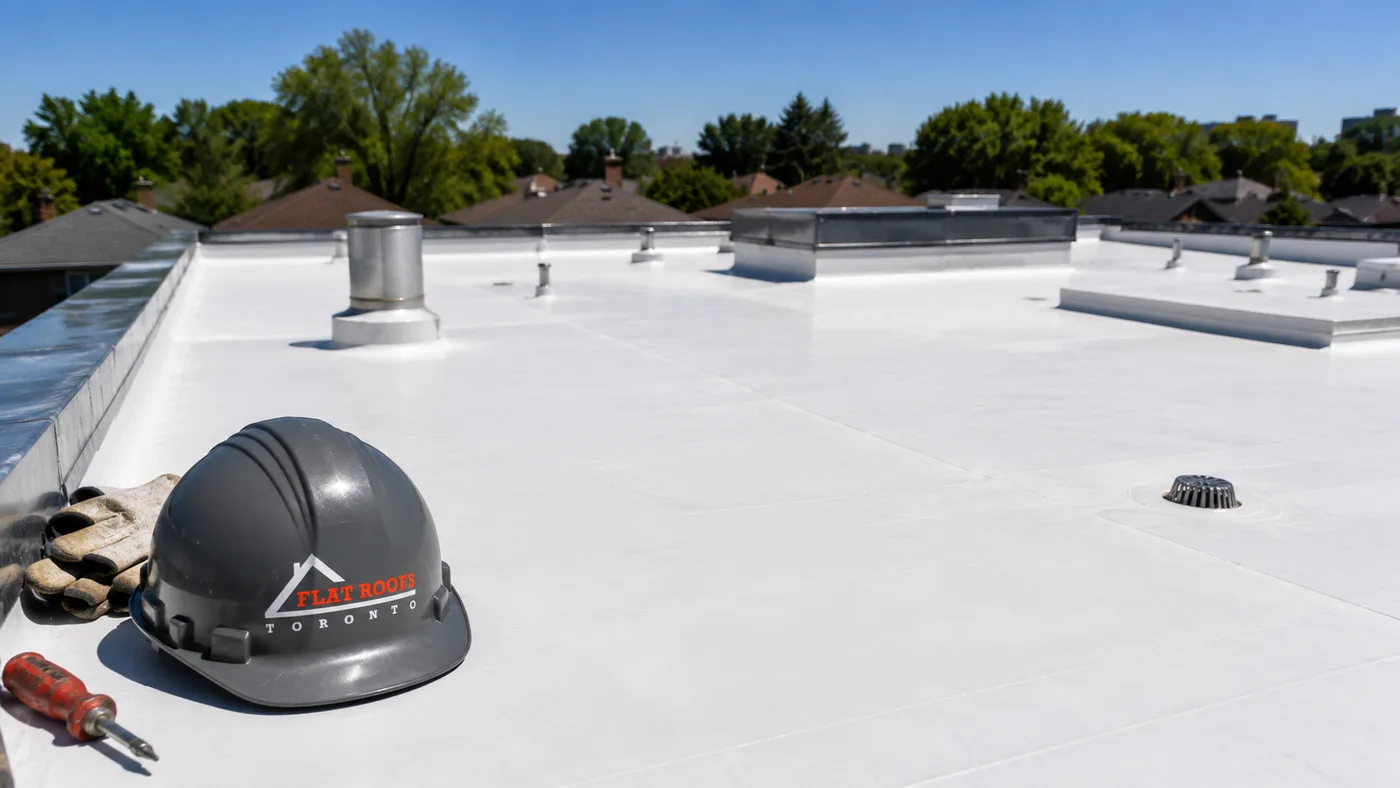
What a Commercial Flat Roof Replacement in North York Actually Involves
Replacement is not the same as recovering or repairing. A true commercial flat roof replacement in North York means removing the existing roofing assembly down to a sound structural deck, correcting any deck damage, installing new insulation to current code values, rebuilding the drainage slope where needed, and installing a new waterproofing membrane with all associated flashings, terminations, and edge metal.
A complete scope typically includes the following stages:
- Site setup and protection: hoarding, debris chutes or a crane pick zone, protection of entrances, and a safe route for material staging.
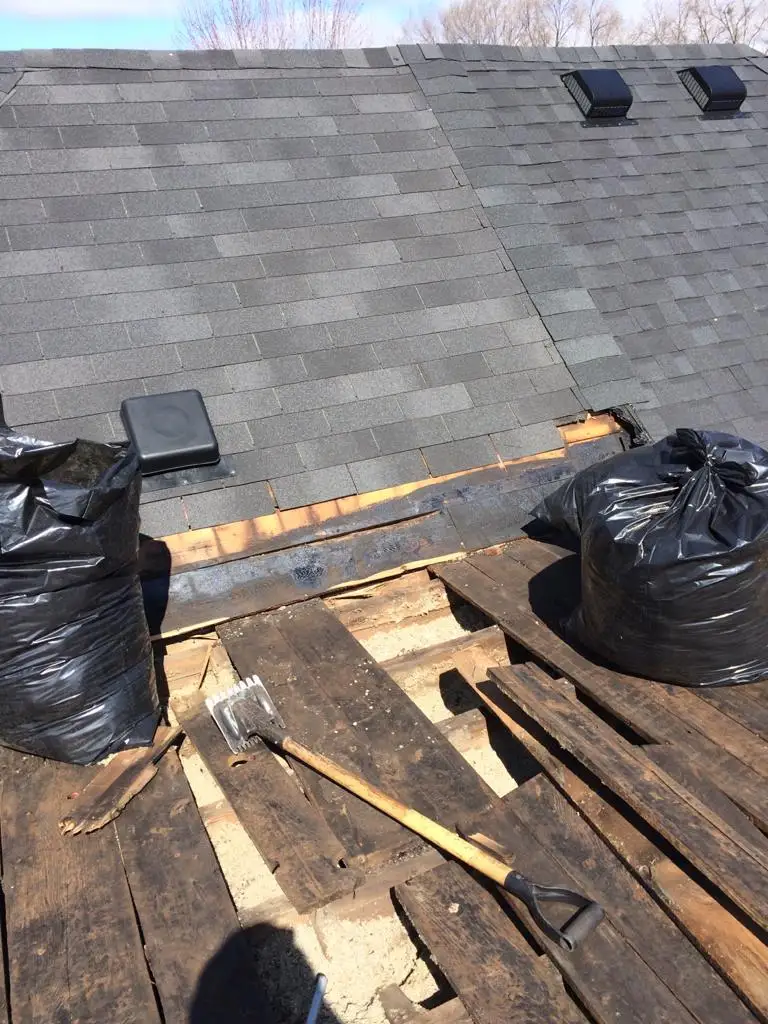
- Tear-off: removal of the old membrane, insulation, and any saturated material down to steel, concrete, or wood deck.
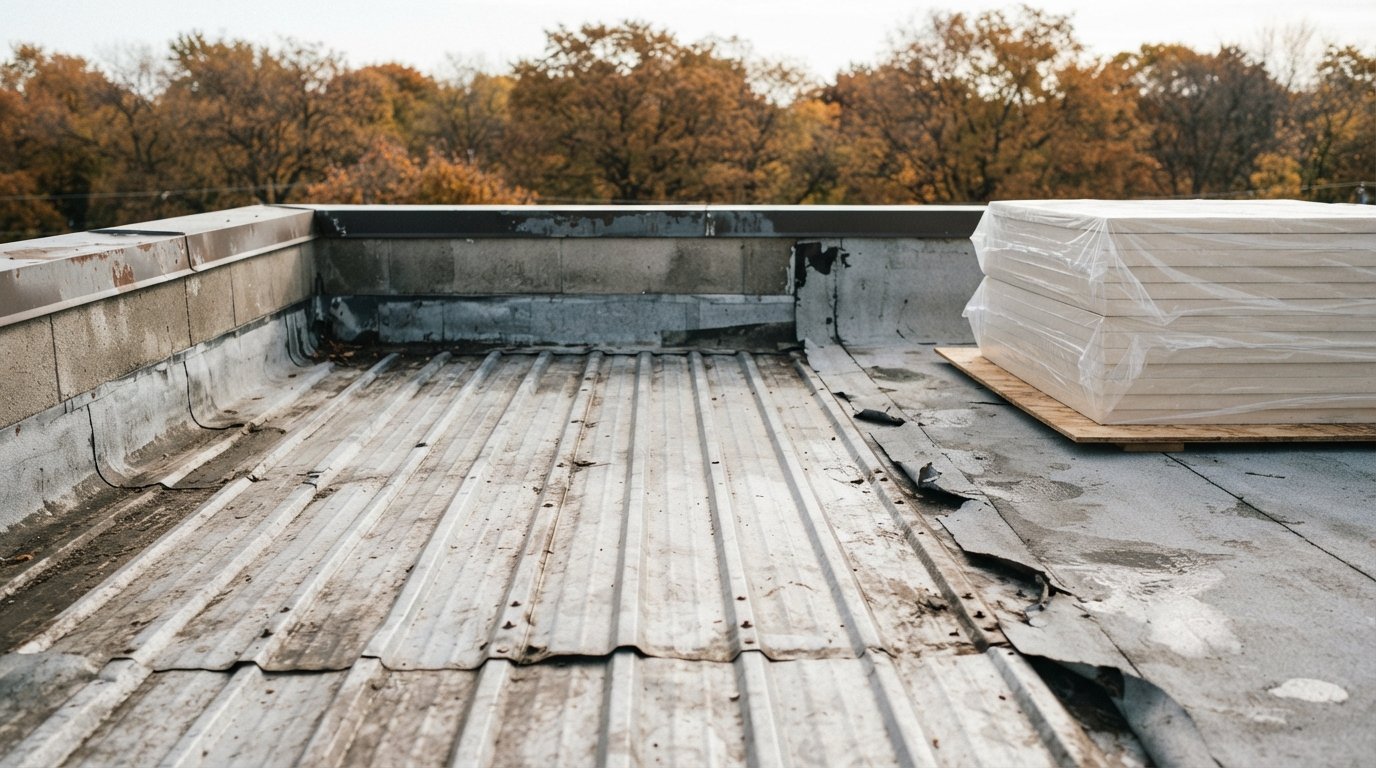
- Deck repair: replacing rusted steel flutes, rotted plywood, or spalled concrete before anything new goes down.
- Vapour control and insulation: a vapour retarder where the building type calls for one, followed by rigid insulation in two staggered layers to break thermal bridging.
- Slope and drainage: tapered insulation packages, new drain bowls, scuppers, and overflow provisions so water leaves the roof within 48 hours of rainfall.
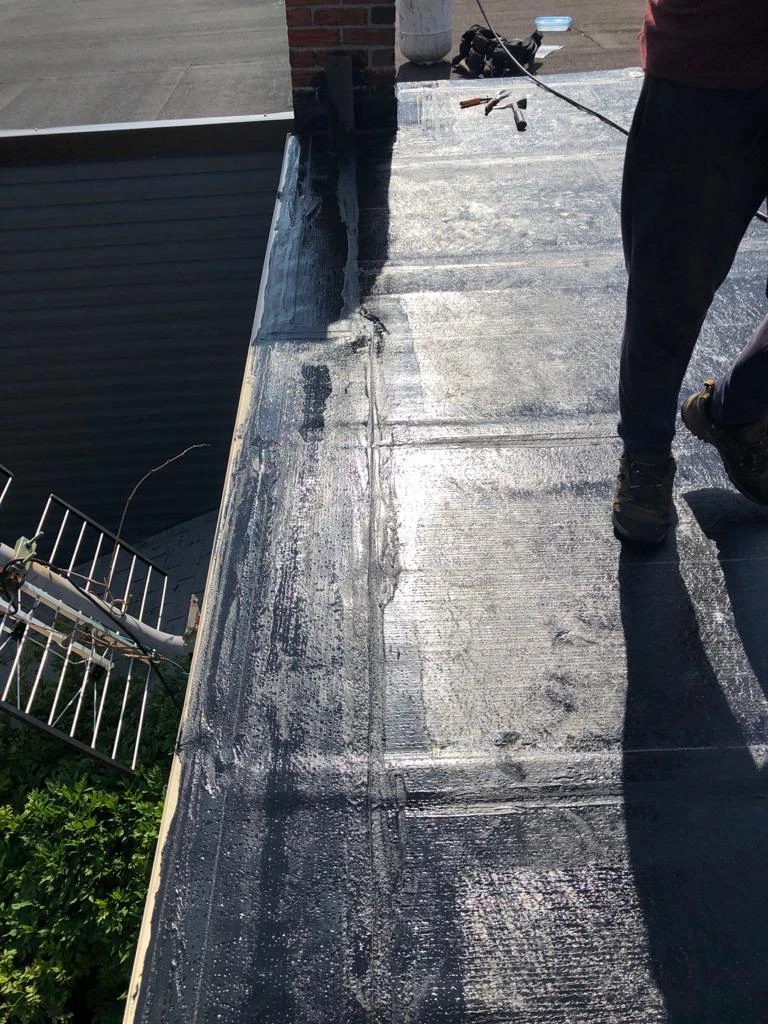
- Membrane installation: mechanically fastened, fully adhered, or torch applied depending on the system selected.
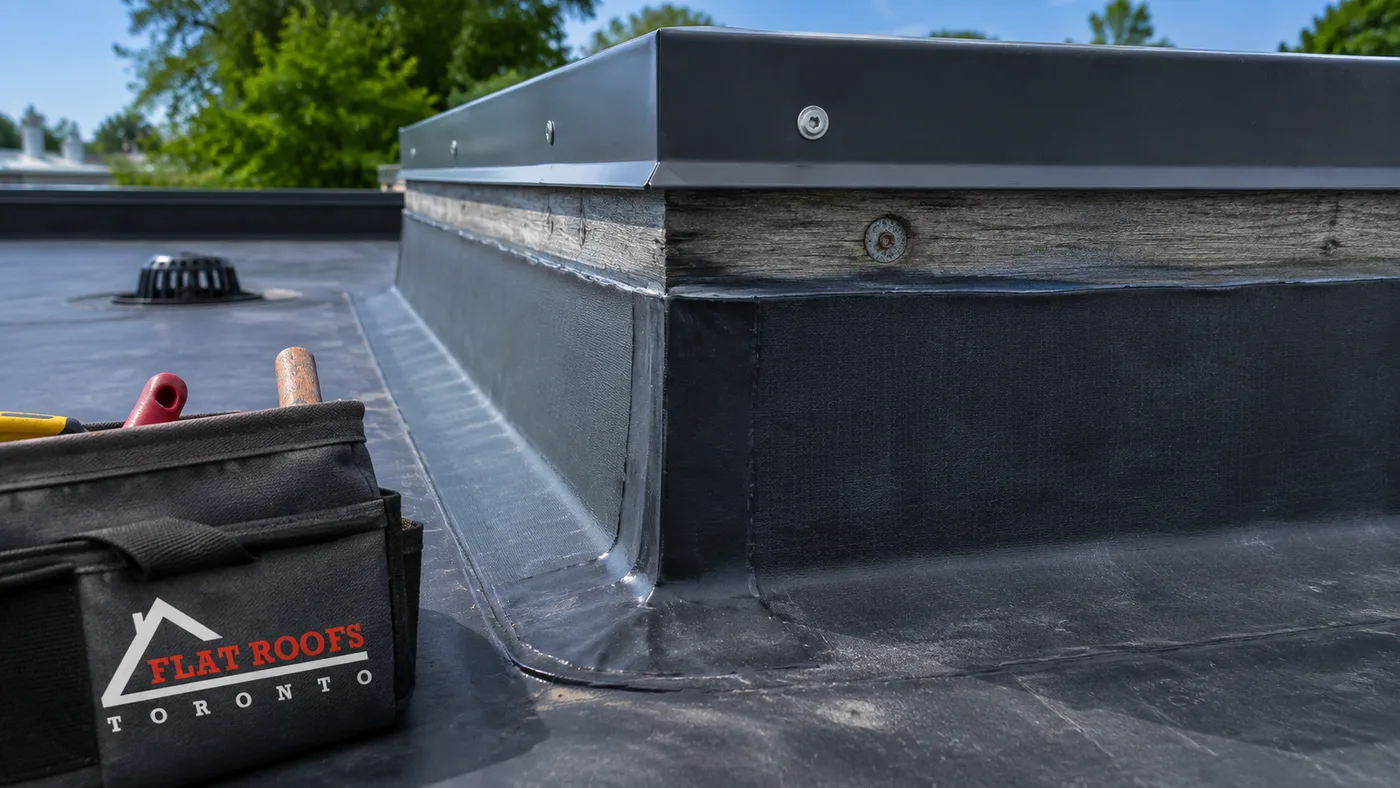
- Details and terminations: parapet flashings, curb wraps, pipe boots, expansion joints, and new perimeter edge metal.
- Final inspection and documentation: manufacturer field review, warranty registration, and as-built photos for your records.
Skipping any one of those stages is the most common way a commercial flat roof replacement in North York goes wrong. Insulation laid in a single layer, drains reused past their service life, and edge metal fastened into soft blocking are the three shortcuts that show up in premature failures.
North York’s Building Stock and How It Shapes the Job
North York grew in waves, and its commercial buildings reflect that. Much of the low-rise commercial and light industrial inventory dates from the 1960s through the 1980s, built on steel deck with built-up asphalt roofing and modest insulation values by today’s standards. Newer subdivisions and infill developments brought mixed-use podiums and small-bay commercial condominiums with concrete decks and single-ply membranes. Older brick storefronts and converted buildings on established commercial strips often have wood plank decks with layers of roofing added over decades.
That history matters for three practical reasons. First, older assemblies frequently hold more than the two roofing layers the Ontario Building Code permits before a full tear-off becomes mandatory. Second, buildings from that era were insulated to roughly R-12 to R-20, well below the effective values expected on a modern re-roof, so a replacement usually means adding thickness and adjusting flashing heights. Third, many of these roofs were built dead flat with internal drains, so tapered insulation is almost always part of a proper commercial flat roof replacement in North York rather than an optional upgrade.
Residential character shapes the work too. Postwar bungalows, estate lots, and newer subdivisions sit close to many commercial strips, which means noise windows, dust control, and crane placement all need planning. Torch applied systems near residential property lines call for extra fire watch discipline. These are logistics questions, not technical ones, but they influence schedule and price on nearly every commercial flat roof replacement in North York we price.
2026 Cost Ranges for Commercial Flat Roof Replacement in North York
Pricing for a commercial flat roof replacement in North York is quoted per square foot of roof area, with everything above the deck included. The ranges below reflect 2026 Greater Toronto Area pricing for full tear-off and replacement including insulation to current code, new flashings, and a manufacturer warranty. Very small roofs sit at the high end of each range because mobilization costs spread across less area.
| Membrane system | Installed cost per sq ft (2026) | Typical service life | Best suited to |
|---|---|---|---|
| Modified bitumen, two ply torch applied | $12 to $18 | 20 to 30 years | Small to mid roofs, heavy foot traffic, complex details |
| TPO single ply, mechanically fastened | $10 to $16 | 20 to 25 years | Large open roofs, cooling load reduction |
| TPO or PVC, fully adhered | $14 to $21 | 25 to 30 years | Wind exposed sites, concrete decks, restaurant exhaust |
| EPDM rubber, fully adhered | $11 to $17 | 25 to 30 years | Simple layouts, shaded roofs, budget conscious owners |
| Inverted or protected membrane with ballast | $18 to $28 | 30 years or more | Podium decks, plaza levels, occupied roof areas |
To turn those numbers into a budget, multiply by your roof area and add the site specific items that follow. A 6,000 square foot strip plaza roof replaced in mechanically fastened TPO lands roughly between $60,000 and $96,000 before extras. The same roof rebuilt in two ply modified bitumen with tapered insulation can reach $110,000 or more. Both are legitimate answers to a commercial flat roof replacement in North York; the right one depends on the deck, the drainage, and how long you plan to hold the building.
Line Items That Move the Price
Two buildings with identical square footage can differ by 40 percent in final cost. The table below covers the add-ons that appear most often in a commercial flat roof replacement in North York, with typical 2026 allowances.
| Scope item | Typical 2026 allowance | When it applies |
|---|---|---|
| Tear-off and disposal of existing layers | $1.75 to $3.50 per sq ft | Every full replacement; higher with three or more layers |
| Tapered insulation package | $3.00 to $6.50 per sq ft | Dead flat decks, ponding areas, new drain sumps |
| Steel deck repair or replacement | $14 to $28 per sq ft of affected area | Corroded flutes found after tear-off |
| New roof drains, sumps and overflow scuppers | $900 to $2,400 each | Original drains past service life or undersized |
| Parapet and wall flashing rebuild | $45 to $95 per linear foot | Cracked masonry, failed cap metal, low flashing height |
| Crane or hoist and traffic control | $2,500 to $9,000 per project | Tight sites, arterial road frontage, limited lay-down space |
| Roof hatch, guardrail or anchor points | $2,200 to $8,000 | Bringing roof access up to current safety requirements |
Fall protection deserves a note of its own. Ontario regulations require workers exposed to a fall of three metres or more to be protected, and on a permanent basis many owners choose to install engineered anchor points or a guardrail during the replacement while the deck is exposed. Doing it later costs considerably more. If you are already committing to a commercial flat roof replacement in North York, this is the cheapest moment to solve roof access safety permanently.
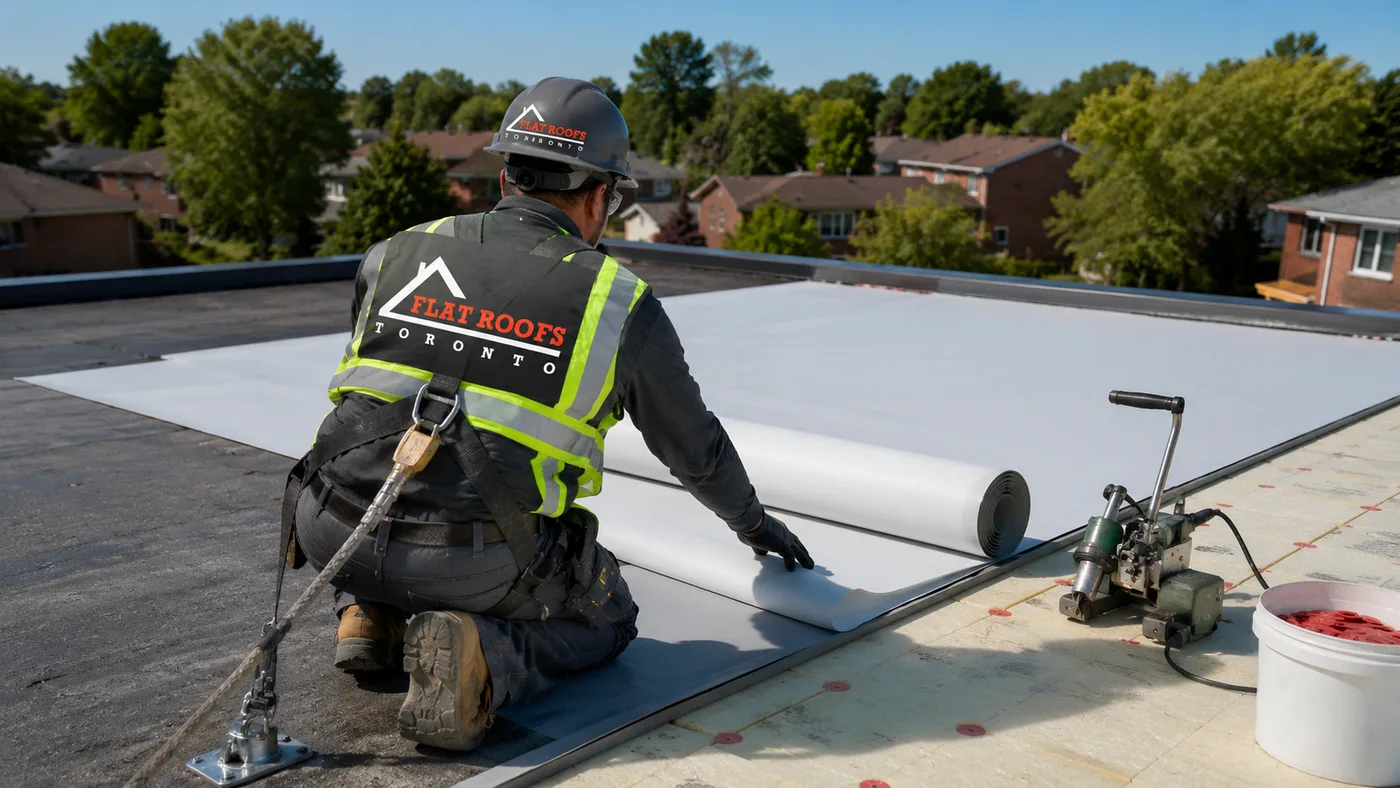
Choosing Between Tear-Off, Recover and Repair
Not every aging roof needs replacing this year. Before recommending a full commercial flat roof replacement in North York, a competent contractor should cut test areas, take core samples, and check moisture content in the insulation. Core cuts tell you how many layers exist, whether the insulation is wet, and what condition the deck is in. That information decides the path.
- Repair makes sense when the membrane is generally sound, the insulation is dry, and failures are limited to specific details such as a curb, a drain, or a section of flashing.
- Recover, meaning a new membrane installed over the existing one with a cover board, is permitted when only one roofing layer exists, the substrate is dry, and the deck can carry the added load. It saves roughly 20 to 30 percent versus full replacement.
- Full replacement is the correct call when moisture is trapped in the insulation, the deck is deteriorating, two or more layers already exist, or the drainage design needs rebuilding.
Wet insulation is the deciding factor more often than membrane age. Saturated insulation loses most of its thermal value, corrodes steel deck from below, and will destroy any new membrane laid over it. If moisture scanning shows widespread saturation, recovering is throwing money away and a commercial flat roof replacement in North York is the only responsible option. Our team explains those findings plainly, and the same diagnostic approach applies whether the building needs a full commercial flat roof installation or a targeted section rebuild.
Permits, Ontario Building Code and Compliance
Most straightforward roof replacements that do not alter the structure fall under maintenance and do not require a building permit from the City of Toronto. A permit is generally required when the work involves structural changes to the deck or framing, changes in occupancy or use, additions of rooftop equipment that add load, or alterations to fire separations. Because North York is part of the City of Toronto, applications go through the city’s building division rather than a separate municipal office.
Code obligations apply whether or not a permit is pulled. The Ontario Building Code sets minimum effective insulation values for roof assemblies in retrofit work, requires roof drainage designed for the applicable rainfall intensity with secondary overflow protection, and limits roofing to two layers before removal is mandatory. Wind uplift resistance must be calculated for the building height, exposure, and zone, which is why perimeter and corner areas receive tighter fastening patterns than the field of the roof.
There is also the paperwork side. Before work begins, confirm your contractor carries current WSIB clearance and at least two million dollars in liability coverage, and ask for the manufacturer’s approval that the crew is certified to install the specified system. Manufacturer warranties on a commercial flat roof replacement in North York are only valid when an approved applicator does the work and the field inspection is completed. If a bidder cannot produce those documents, the warranty you are being promised does not exist.
Project Timeline and Business Disruption
Owners consistently underestimate scheduling and overestimate disruption. Most commercial flat roof replacement projects in North York proceed in phased sections so that the building stays occupied and no area is ever left open overnight. Crews tear off only what they can make watertight before the end of the day.
| Roof area | Typical crew size | Working days on site | Common phasing approach |
|---|---|---|---|
| Under 3,000 sq ft | 4 to 5 | 3 to 5 days | Single phase, one tear-off zone |
| 3,000 to 8,000 sq ft | 5 to 7 | 5 to 10 days | Two or three sections, drain by drain |
| 8,000 to 20,000 sq ft | 7 to 10 | 2 to 4 weeks | Sectional phasing around tenant units |
| Over 20,000 sq ft | 10 or more | 4 to 8 weeks | Multi phase with staged crane picks |
Weather governs everything. Adhesives and self-adhered membranes have minimum application temperatures, and no membrane should be installed onto a damp substrate. The practical installation season in the Greater Toronto Area runs from April through November, with the busiest booking window falling between June and September. Scheduling a commercial flat roof replacement in North York in early spring usually gets you better crew availability and a firmer price than calling in late August after the first storm exposes a leak.
Tenants should be given written notice covering work hours, noise expectations, parking changes, and any brief interruptions to rooftop equipment. Restaurant and food service tenants need particular attention because exhaust fans and make-up air units often have to be lifted and reset while the deck around them is rebuilt.
Energy Performance and Long Term Value
A replacement is your one opportunity in 25 years to improve the thermal performance of the building envelope. Increasing insulation from the R-12 typical of a 1970s assembly to the R-30 or higher expected today reduces heating demand measurably, and a reflective white membrane lowers summer rooftop surface temperature significantly compared with dark asphalt, which eases the load on rooftop cooling units. Owners who track utility bills often see the difference within the first full season.
The building envelope works as a system. Roof insulation performs poorly if the attic or ceiling plenum below it leaks conditioned air, so it is worth reviewing insulation and air sealing below the roof deck at the same time. If the building has interior spaces that need daylight, the moment the membrane is off is also the moment to add or replace curbs and units without cutting into a brand new roof later.
Document everything. Keep the core sample report, the shop drawings, the warranty registration, and dated photos of the completed details. When the building is refinanced, insured, or sold, a documented commercial flat roof replacement in North York with transferable warranty coverage is a genuine asset in the file rather than a question mark for a purchaser’s inspector.
How to Compare Quotes Without Getting Burned
The lowest number on a page is rarely the lowest cost over 20 years. When you receive competing prices for a commercial flat roof replacement in North York, put them side by side on the details that actually vary:
- Insulation thickness and layers: is the R-value stated, and is it installed in two staggered layers?
- Tapered package: is slope built into the price, or listed as an exclusion?
- Deck repair allowance: is there a stated unit rate, or will it become an open-ended change order?
- Fastening pattern: are perimeter and corner enhancements shown, and is a wind uplift calculation referenced?
- Warranty type: is it a contractor labour warranty only, or a manufacturer system warranty covering materials and workmanship?
- Drains, edge metal and flashings: new, or reused?
- Disposal, permits and safety: included, or billed separately?
Bids that differ by more than 25 percent almost always differ in scope, not in profit margin. Ask each bidder to price the same specification so you are comparing equivalent work. It also helps to review completed projects; our project gallery shows the level of detailing to expect, and for buildings with active leaks, emergency roof repair can stabilise the situation while a full replacement is planned properly rather than rushed.
Maintenance After the New Roof Goes On
Warranty coverage depends on maintenance, and most manufacturer documents state that clearly. Plan on two inspections a year, typically spring and autumn, plus a check after any severe wind or hail event. The inspection should cover drain strainers, seams, flashing terminations, membrane punctures from service technicians, and any new penetrations added by other trades.
Rooftop equipment servicing is the leading cause of avoidable damage on a new membrane. Require any contractor working on the roof to notify you, use walkway pads, and report damage the same day. Keeping a simple roof log with dates, photos, and who was on the roof protects your warranty claim if a defect ever surfaces, and it preserves the full value of the commercial flat roof replacement in North York you paid for.
For owners who also manage residential or mixed-use property in the area, the same standards apply on smaller assemblies. Our North York flat roofing services cover both commercial and residential low-slope work, and the diagnostic process is identical: core samples first, opinions second.
How much does a commercial flat roof replacement in North York cost in 2026?
Do I need a permit for a commercial flat roof replacement in North York?
How long does a commercial flat roof last in the Toronto climate?
Can my business stay open during the work?
Is recovering cheaper than a full replacement?
What is the best time of year to schedule the work?
Book Your Commercial Flat Roof Replacement in North York Consultation
Getting the specification right matters more than getting the lowest number. Flat Roofs Toronto is a Toronto-based low-slope roofing contractor serving North York and the surrounding city, and every quote starts with core samples, moisture scanning, and a drainage review so you know exactly what you are buying before any work begins.
Call us today at (647) 333-3528 or request a free consultation to have your building assessed and receive a detailed, line-by-line proposal.
Flat Roofs Toronto proudly serves North York and communities across the Greater Toronto Area with commercial and residential flat roofing.