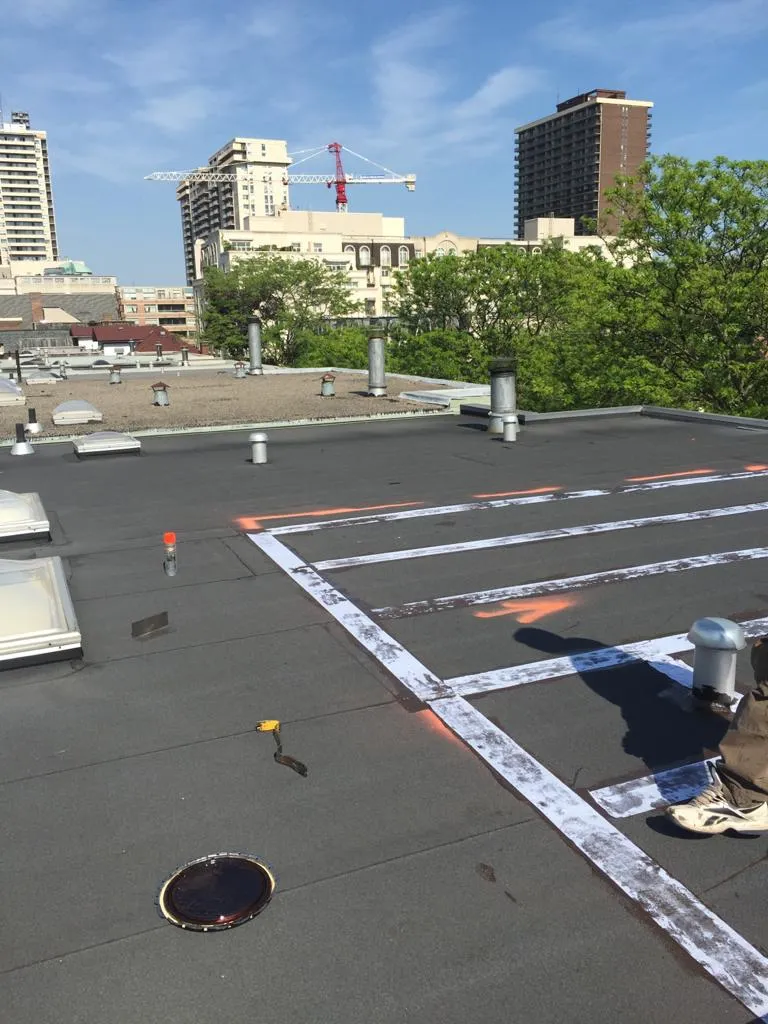

Flat roofs behave differently from sloped shingle roofs, and homeowners searching for flat roof repair Vaughan usually discover that the hard way: a ceiling stain appears after a heavy summer downpour, or a bedroom smells damp for a week with no obvious source. Vaughan‘s housing stock makes this a common call. The city mixes postwar bungalows with rear additions, 1980s and 1990s subdivisions with flat-roofed garages and porch canopies, larger estate lots with modern low-slope sections, and newer infill builds where the entire top storey is a membrane roof rather than shingles.
This guide to flat roof repair in Vaughan covers what actually goes wrong on low-slope roofs in the area, what repairs cost in 2026, how to tell a patch from a full replacement, and what to ask before you hire anyone. The numbers below are ranges rather than quotes, because real pricing depends on access, roof size, deck condition and how long the leak has been running.
Why Flat Roof Repair in Vaughan Has Its Own Rules
A pitched roof sheds water by geometry. A flat roof does not. What people call a flat roof is really a low-slope roof, typically built at a fall of about 2 per cent, which is roughly 1 centimetre of drop for every half metre of run. That small slope is enough to move water toward a drain or scupper when everything is clean and level, and not nearly enough once a deck sags, a drain clogs or an addition settles. This is the single biggest reason flat roof repair Vaughan work tends to concentrate around drains, parapets and the joints where a flat section meets a wall.
Southern Ontario’s climate adds a second layer of stress. Vaughan sees hot, humid summers with sudden convective downpours, then a winter with dozens of freeze and thaw cycles. Water that sits in a low spot in August becomes ice that lifts a seam in January. Membranes expand and contract across a temperature swing of more than 60 degrees over the course of a year, and every fastener, seam and flashing detail has to absorb that movement. A roof that was installed well handles it for decades. A roof with a rushed detail at a wall junction starts leaking in year three.
The third factor is age clustering. A large share of Vaughan’s subdivision housing went up in a relatively narrow window, which means whole streets reach the same roofing milestone at roughly the same time. Modified bitumen laid in the late 1990s and early 2000s is now at or past its expected service life, and that is where a lot of current repair demand comes from. If you are weighing options across the region, our overview of flat roofing services for Vaughan homeowners explains how repair, restoration and replacement decisions differ by membrane type.
The Most Common Flat Roof Problems on Vaughan Homes
Leaks almost never start in the middle of a roof. Across the GTA, the overwhelming majority of flat roof repair Vaughan calls trace back to one of the following six conditions.
Ponding water
Any water still standing 48 hours after rain counts as ponding. It shows up as a dark ring or a chalky tide mark on the membrane. Ponding accelerates UV breakdown, adds dead load, and in winter turns into an ice lens that pries at seams. Causes include a clogged drain, an undersized drain, insulation that has compressed under foot traffic, or a deck that has deflected between joists.
Seam and lap failure
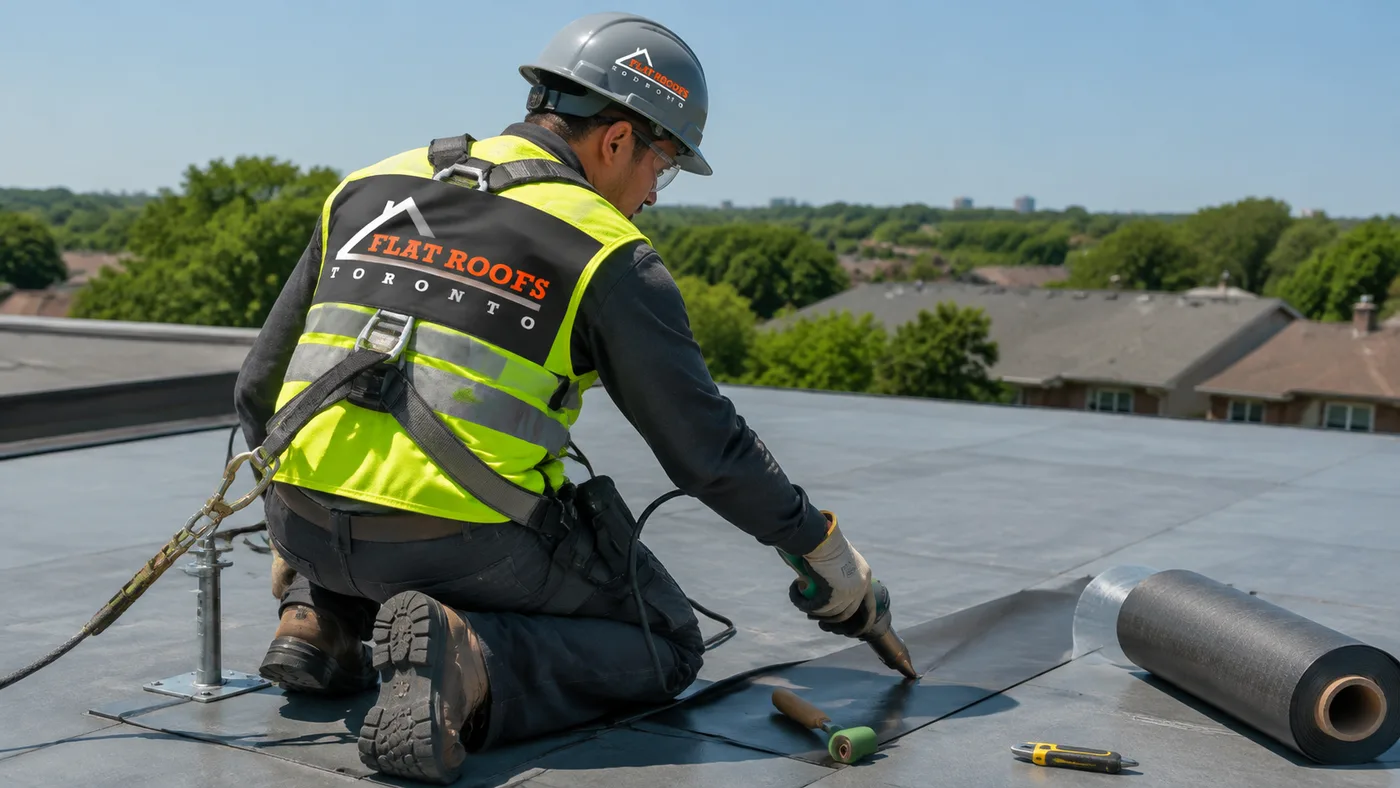
Modified bitumen sheets are torched or self-adhered in overlapping laps. EPDM is glued or taped. TPO and PVC are heat welded. Every one of those joints is a candidate for failure once the adhesive ages or a weld was run slightly cold on installation day. Open laps are the classic cause of a leak that appears years after the roof went on.
Flashing and wall junctions
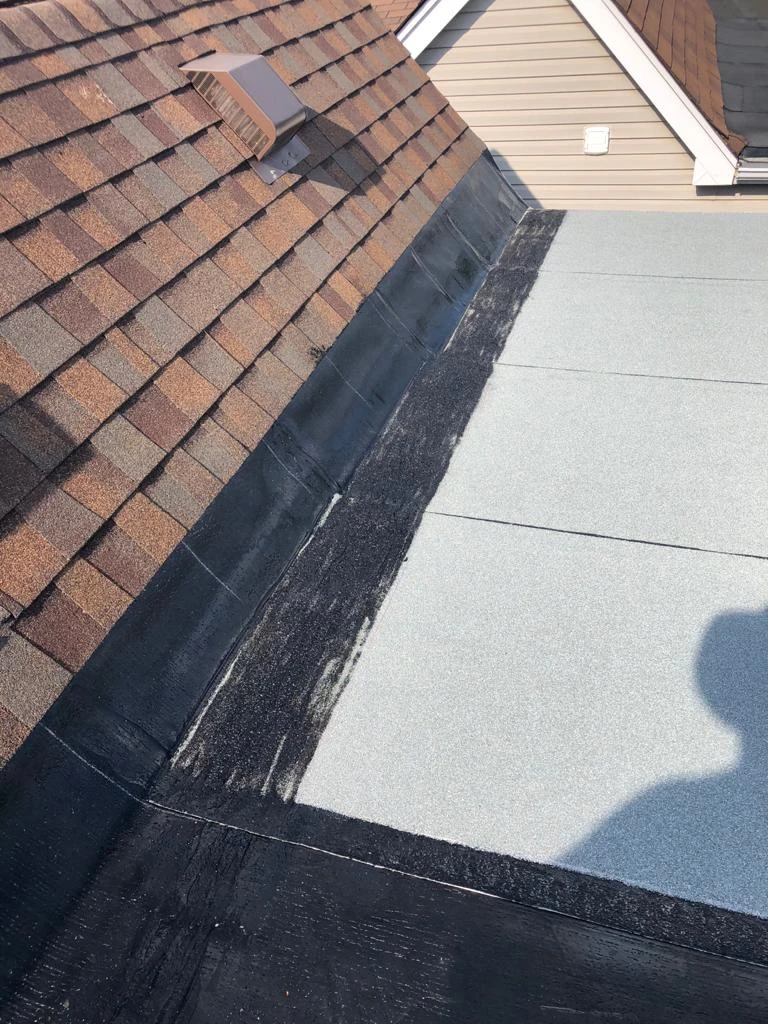
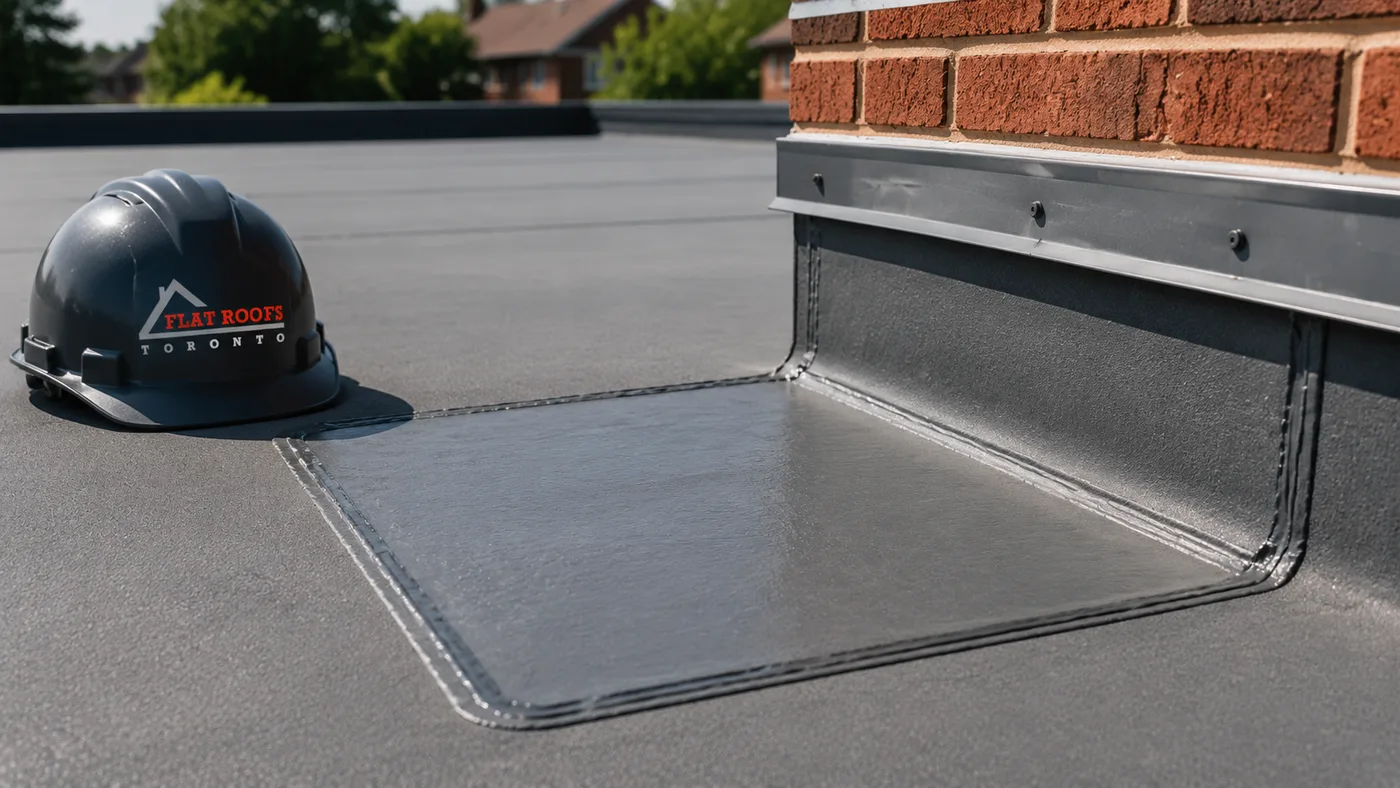
Where a flat roof meets a brick wall, a parapet, a chimney or a taller section of the house, the membrane has to turn up the vertical surface and be capped. On many Vaughan homes with rear additions or flat-roofed garages, that junction is the weakest point on the whole assembly. Failed counter flashing, missing termination bar sealant and deteriorated mortar joints let water in behind the membrane, where it can travel several metres before it shows on a ceiling.
Punctures and mechanical damage
Rooftop equipment, satellite dish anchors, dropped tools and foot traffic from other trades all puncture membranes. So does hail, which the GTA gets often enough to matter. A puncture the size of a pencil tip can soak an entire insulation bay over one season, and it is one of the most common reasons a homeowner books flat roof repair in Vaughan after an otherwise ordinary storm.
Blistering and ridging
Blisters form when moisture or solvent vapour is trapped between plies and expands in the heat. Small blisters are monitored. Large ones that have split are an entry point. Ridging along a pattern of straight lines usually means the insulation boards below have moved or the deck is telegraphing through.
Failed penetrations
Plumbing stacks, exhaust vents, skylight curbs and electrical masts all break the plane of the roof. Each one relies on a boot, collar or curb flashing that ages faster than the field membrane. Replacing a stack boot is inexpensive. Ignoring one for five years is not. If the penetration is a skylight, the curb flashing and the unit itself have to be assessed together, since a failed residential skylight seal produces exactly the same ceiling stain as a membrane leak.
What Flat Roof Repair Costs in Vaughan in 2026
Pricing for flat roof repair Vaughan work depends on four things: how much membrane has to come up, whether the insulation and deck below are wet, how the crew gets material onto the roof, and whether the repair is scheduled or an emergency. The table below reflects typical 2026 residential pricing in the Greater Toronto Area, including labour, materials and disposal, before HST.
| Repair type | Typical 2026 cost range | Usual time on site |
|---|---|---|
| Leak diagnosis and written inspection report | $150 to $400, often credited to the repair | 1 to 2 hours |
| Seam or lap re-weld, single area | $450 to $900 | Half day |
| Plumbing stack or vent boot replacement | $300 to $700 per penetration | 2 to 4 hours |
| Wall or parapet flashing rebuild | $90 to $180 per linear metre | 1 to 2 days |
| Patch with wet insulation cut out and replaced | $800 to $2,200 per section | 1 day |
| Drain replacement or new overflow scupper | $900 to $2,000 | 1 day |
| Tapered insulation infill to correct ponding | $1,500 to $4,500 per low area | 1 to 2 days |
| Emergency after-hours leak containment | $500 to $1,200 call-out plus repair | 2 to 5 hours |
Two things push a quote toward the high end. The first is wet insulation. Once water has tracked into the insulation layer, a surface patch simply traps it, and the trapped moisture will rot the deck and drive up heating and cooling costs. The second is access. A second or third storey flat section over a rear addition with no clear ladder position takes longer to stage than a garage roof you can reach from a driveway.
For comparison, a full residential flat roof replacement in the Vaughan area in 2026 generally lands between $16 and $28 per square foot installed, depending on membrane, insulation thickness and deck repairs. That gap is why a well executed repair is usually worth doing when the roof still has service life left.
Membrane Types on Vaughan Roofs and How Each One Fails
Knowing what is on your roof changes the repair strategy, because the materials are not cross compatible. You cannot torch modified bitumen onto EPDM, and you cannot patch TPO with roofing cement and expect it to hold. Matching the patch to the membrane is the first technical decision in any flat roof repair in Vaughan.
| Membrane | Typical service life | Most common failure | Typical repair approach |
|---|---|---|---|
| Two-ply modified bitumen (SBS) | 20 to 30 years | Open laps, granule loss, blistering | Torch or self-adhered patch over primed area |
| EPDM rubber | 20 to 30 years | Shrinkage pulling at flashings, seam adhesive failure | Cover tape or new seam with primer and lap sealant |
| TPO | 20 to 30 years | Cold welds, cracking at fasteners, corner failures | Hot-air welded patch of matching thickness |
| PVC | 25 to 35 years | Plasticiser loss and brittleness in older sheets | Welded patch, or spot replacement if brittle |
| Built-up tar and gravel | 20 to 30 years | Alligatoring, gravel displacement, hidden leaks | Spud gravel back, rebuild plies locally |
| Liquid applied or foam with coating | 10 to 20 years with recoats | Thin spots, pinholes, coating chalk-out | Clean, prime and recoat the affected zone |
Older Vaughan bungalows with flat rear additions often carry built-up or early modified bitumen assemblies. Homes built in the last fifteen years, and most recent infill construction, are far more likely to have TPO or a two-ply SBS system. Any honest quote for flat roof repair Vaughan work should name the membrane on your roof and the exact product being used to repair it.
Repair or Replace: How to Decide Without Guessing
The most expensive mistake in flat roof repair Vaughan projects is repeatedly patching a roof that has already failed as a system. The opposite mistake, replacing a roof that needed two days of flashing work, is almost as costly. A competent contractor will run a moisture scan or at minimum take core cuts before recommending replacement, so the decision rests on evidence rather than a sales pitch.
| What the inspection finds | Reasonable action | Rough cost implication |
|---|---|---|
| Single leak, membrane under 12 years old, dry insulation | Targeted repair | Low, usually under $1,200 |
| Two or three isolated failures, membrane 12 to 18 years old | Repair plus a maintenance plan | Moderate, $1,200 to $3,500 |
| Wet insulation across more than about 25 per cent of the area | Sectional tear-off or full replacement | High, replacement territory |
| Widespread alligatoring, shrinkage or brittleness | Full replacement | High, based on square footage |
| Deck deflection, soft sheathing or rotted joists | Structural repair before any roofing | Variable, add $2,000 and up |
| Sound membrane, chronic ponding only | Tapered insulation or added drainage | Moderate, one-time fix |
A useful rule of thumb: if annual repair spending is climbing past roughly 20 per cent of a replacement cost, and the membrane is beyond two thirds of its service life, replacement is usually the better investment. Below that threshold, repair almost always wins.
Active Leaks: What to Do in the First Hour
When water is actively coming through a ceiling, the goal is to limit interior damage while you wait for a crew. Move furniture and electronics clear, put down a container, and if the ceiling is bulging, puncture the low point deliberately with a small hole so the water drains in one controlled spot rather than bringing down a whole section of drywall. Shut off power to any circuit near the water. Do not climb onto a wet membrane during a storm, and never in the dark: low-slope roofs get extremely slippery and edge protection is rarely obvious from above.
Photograph everything before cleanup, including the ceiling, the wall staining and any damaged contents. Insurers in Ontario generally cover sudden water damage from a storm event but not damage from long-term wear or deferred maintenance, and dated photos plus a contractor’s written report are what separate the two in a claim file. If the leak cannot wait for a scheduled appointment, emergency roof repair service can stabilise the roof with a temporary patch or membrane cover, then return for the permanent repair once the surface is dry enough to bond properly.
One caution about temporary fixes: roofing cement smeared over a wet seam holds for a few weeks at best, and it contaminates the surface so a proper patch will not adhere later. If it is used as an emergency measure, that area should be cut out and rebuilt on the return visit. Most urgent flat roof repair Vaughan calls arrive during or immediately after a summer storm, so expect a two-stage process: stabilise now, repair properly once the roof dries.
Permits, Building Code and Insurance in Vaughan
Most flat roof repair Vaughan work does not require a permit. Replacing a section of membrane, rebuilding flashing, or swapping a drain is maintenance. Permits generally become relevant when structural elements change: replacing roof sheathing over a large area, altering or repairing joists, changing the roof structure, or adding a rooftop deck or a new skylight opening. Vaughan’s building department is the authority to confirm with, and a legitimate contractor will tell you when a permit applies rather than working around it.
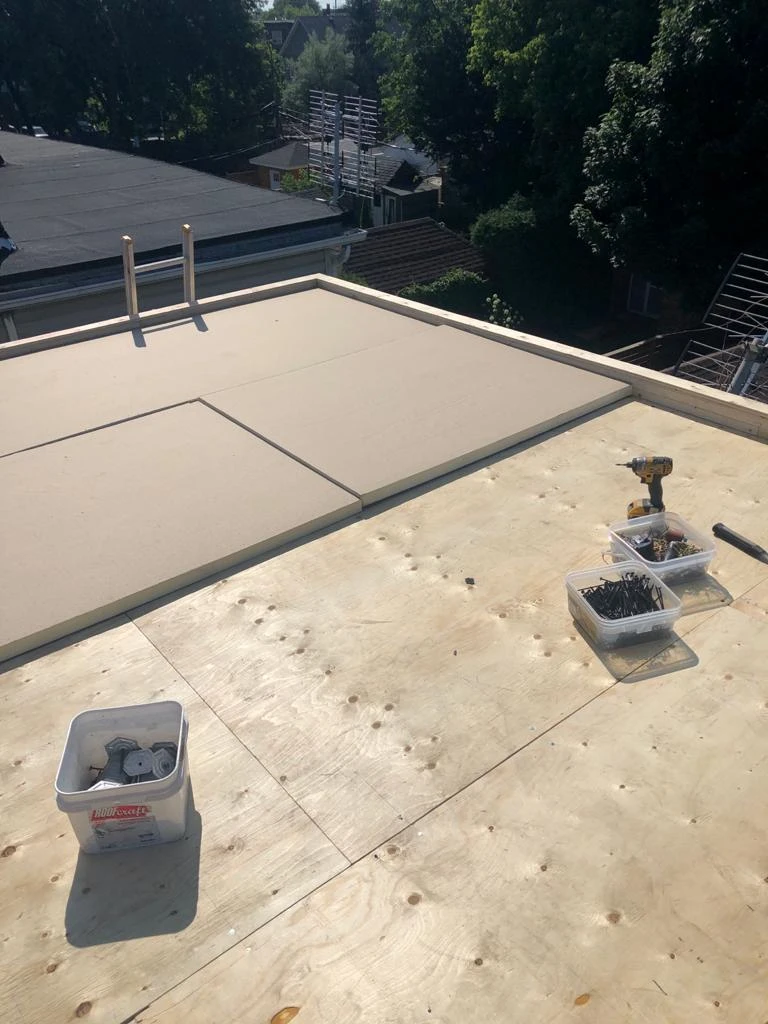
Ontario Building Code requirements that touch low-slope work include minimum slope to drain, secondary drainage such as overflow scuppers so that a blocked drain cannot pond water to a dangerous load, and insulation values under the energy efficiency provisions when a roof is rebuilt down to the deck. That last point matters financially: if a repair turns into a sectional tear-off, current insulation minimums apply to the rebuilt area, which is why replacement quotes often include more insulation than the roof originally had.
On the insurance side, keep three things: the written inspection report, dated photos, and an invoice describing exactly what was done. Insurers increasingly ask for proof of maintenance before paying a water damage claim, and a documented annual inspection is inexpensive protection. Ask any contractor for a certificate of WSIB clearance and proof of liability coverage before work starts. If someone is injured on your property without coverage in place, the exposure can land on the homeowner.
Choosing a Contractor for Flat Roof Repair in Vaughan
Low-slope roofing is a specialty. A crew that installs shingles beautifully may never have run a hot-air welder. When you are comparing quotes for flat roof repair Vaughan work, the following questions separate specialists from generalists quickly.
- What membrane is on my roof, and what product will you patch it with? A vague answer here is a red flag.
- How did you find the leak? Look for a described method: water testing, infrared or moisture meter readings, core cuts. Not a guess based on where the stain appeared.
- Is the insulation wet, and how do you know? If nobody checked, the patch is a gamble.
- What is the warranty, and does it cover only the patch or the surrounding area? Repair warranties commonly run one to five years.
- Do you carry WSIB clearance and liability insurance? Ask for current documents, not a verbal yes.
- Will the same crew do the work? Subcontracted labour is not automatically bad, but you should know who is on your roof.
Get the scope in writing, including the size of the repair area in square feet or metres, the products by name, disposal, and what happens if the crew opens the roof and finds worse conditions underneath. That last clause prevents the most common billing dispute in the trade. You can also look at examples of completed low-slope work in our project gallery to see what a properly detailed flat roof should look like.
Maintenance That Cuts Future Repair Bills
Most of the money spent on flat roof repair Vaughan homeowners face could have been avoided with two visits a year and a clear drain. Low-slope roofs are the most maintenance sensitive assembly on a house, and they are also the easiest to ignore because you cannot see them from the street.
- Clear drains and scuppers each spring and autumn. Maple keys, needles and shingle granules washed down from an upper roof are the usual culprits in Vaughan’s mature tree neighbourhoods.
- Walk the roof twice a year and look at every penetration, every wall junction and every corner. Corners fail first.
- Trim overhanging branches so limbs cannot scour the membrane in wind.
- Check the ceiling below after the first heavy rain of each season, particularly along exterior walls.
- Keep foot traffic off the membrane or install walkway pads where equipment needs servicing.
- Watch the ceiling cavity for condensation, which is often mistaken for a leak. Poor ventilation and thin insulation can produce moisture that mimics roof failure, and improving attic insulation sometimes solves what looked like a roofing problem.
An annual inspection typically costs less than a single emergency call-out, and it catches small problems while they are still small: a lifted lap, a cracked boot, a bit of sealant that has let go at a termination bar. Homeowners who book one every spring rarely need urgent flat roof repair in Vaughan at all.
How much does flat roof repair in Vaughan cost?
How long does a flat roof repair take?
Can a flat roof be repaired in winter?
Why does my flat roof leak only during heavy rain?
Is it worth repairing a flat roof that is 20 years old?
Does home insurance cover flat roof leaks in Ontario?
Book Your Flat Roof Repair in Vaughan Today
Flat Roofs Toronto is a Toronto based low-slope roofing specialist serving Vaughan and the surrounding GTA. Our crews work on modified bitumen, EPDM, TPO, PVC and built-up assemblies every week, and every flat roof repair Vaughan project starts with finding the actual source of the water rather than patching the nearest stain. If your roof is closer to replacement than repair, we will say so and show you the moisture readings behind the recommendation, and we handle residential flat roof installation when a full rebuild is the right call.
Call us today at (647) 333-3528 or request a free consultation. We will inspect the roof, document what we find, and give you a written scope with a fixed price before any work begins.
Flat Roofs Toronto serves Vaughan, Woodbridge, Maple, Concord, Thornhill and communities across the Greater Toronto Area with flat roof repair, maintenance and replacement.