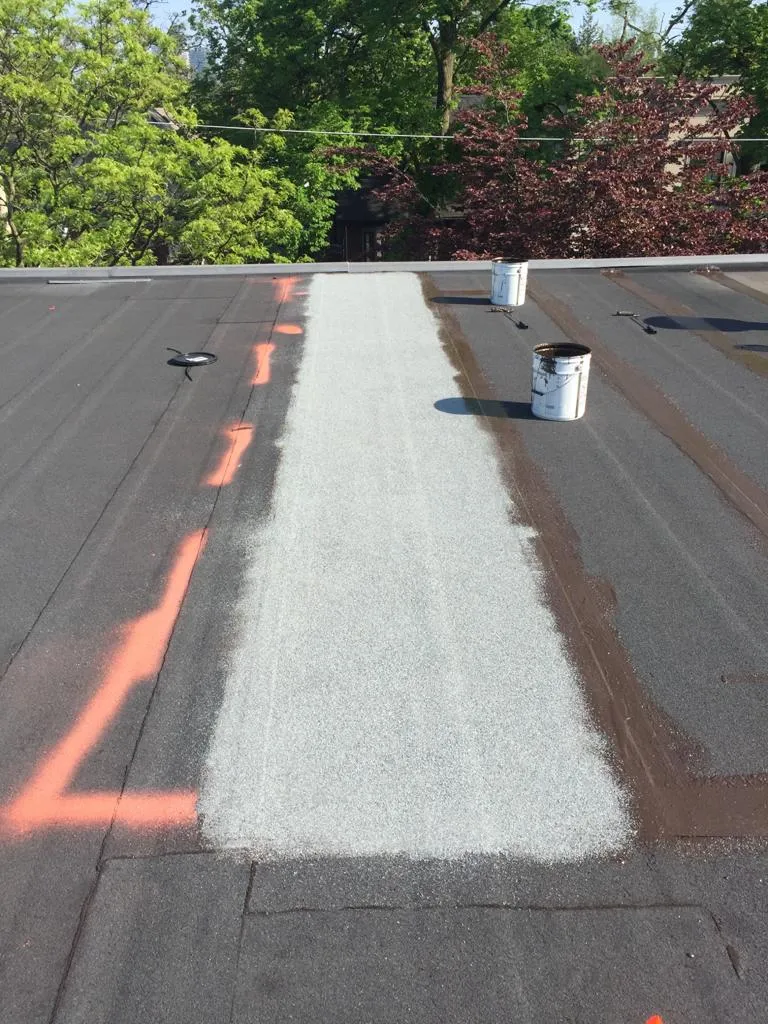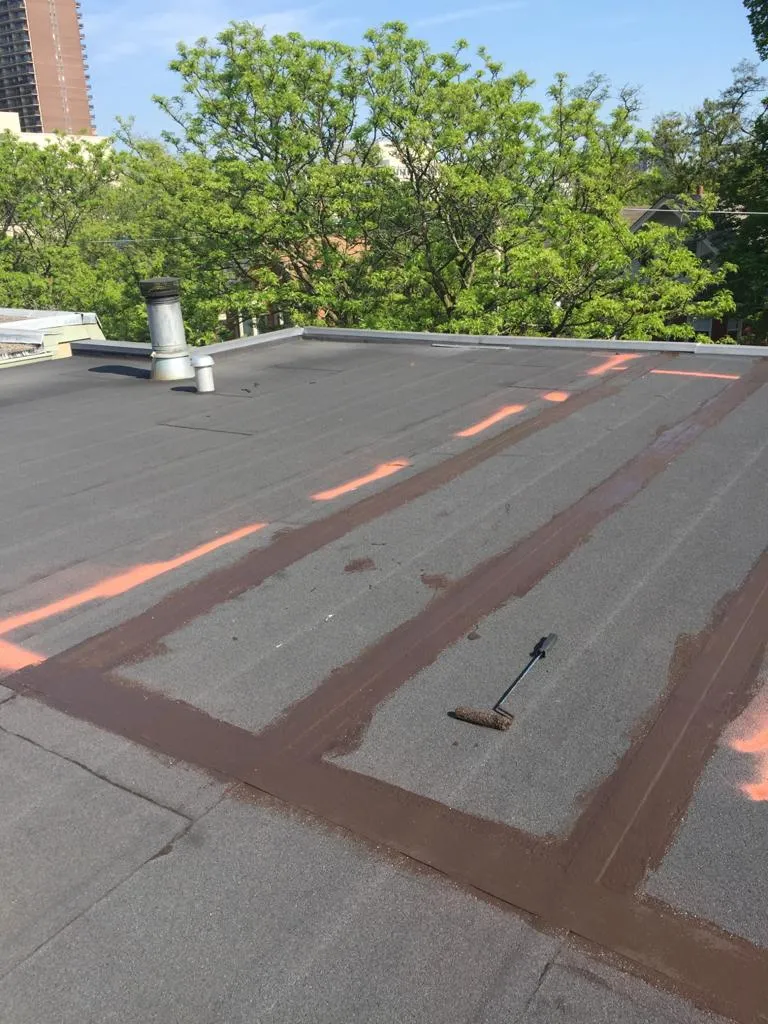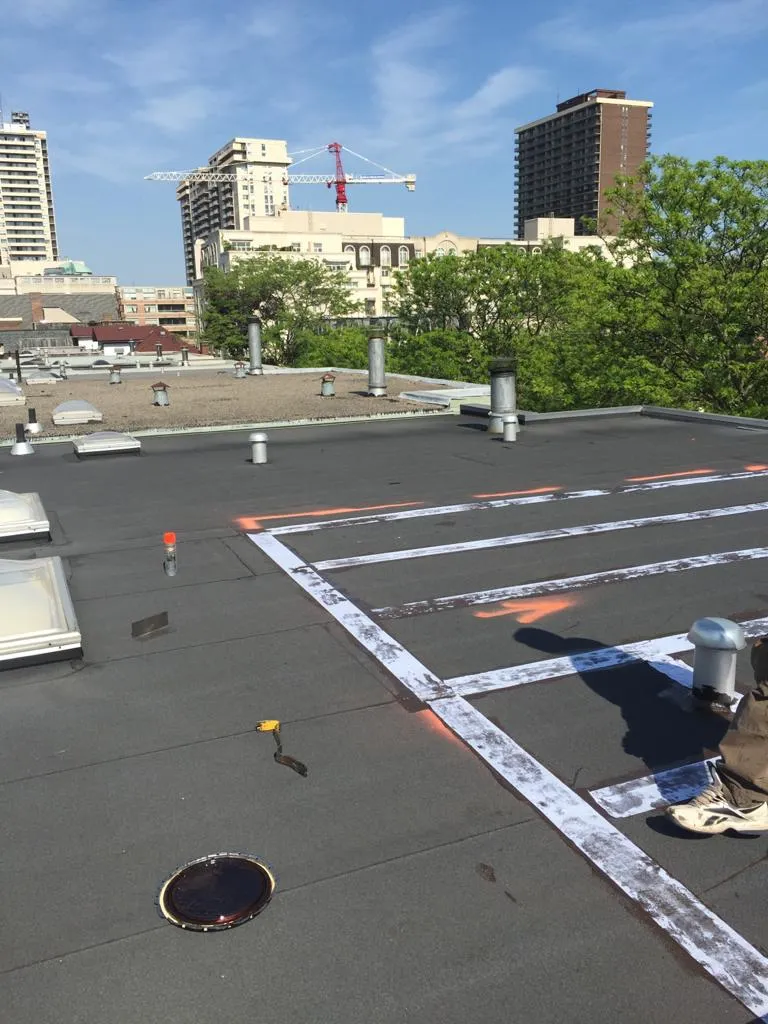

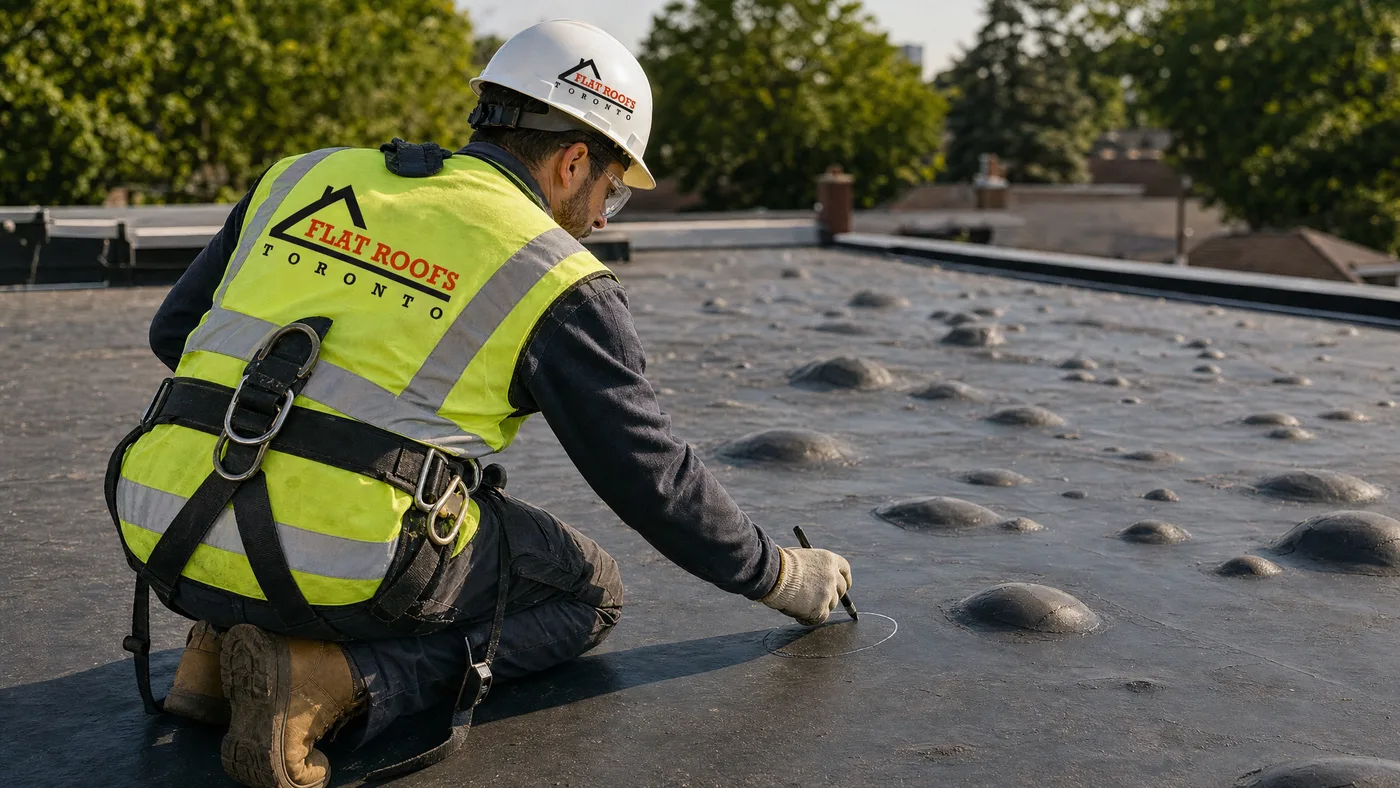
If you have noticed raised pockets, soft domes, or air-filled pimples forming across the surface of your low-slope roof this summer, you are dealing with one of the most common warm-weather problems in the city: flat roof blistering bubbling Toronto property owners report every June and July. As temperatures climb across the Greater Toronto Area and rooftop membrane surfaces reach scorching levels under the afternoon sun, trapped air and moisture expand and push the waterproofing layer upward, creating those tell-tale bumps. Left alone, these blisters eventually crack, split, and open the door to leaks that can damage insulation, ceilings, and structural decking.
Understanding flat roof blistering bubbling Toronto summers produce is the first step toward protecting your investment. The good news is that nearly every case can be diagnosed and permanently corrected when you catch it early. At Flat Roofs Toronto, our crews have spent years repairing heat-related membrane failures across residential and commercial buildings from downtown to the suburbs, and we know exactly what summer conditions do to a flat roof.
This comprehensive 2026 guide explains why flat roof blistering bubbling Toronto homeowners encounter happens during the hottest months, how to tell the difference between cosmetic bumps and serious structural failures, what permanent repairs cost, and how to prevent the problem from returning. Whether your building is in Toronto, Mississauga, Markham, Vaughan, or Brampton, the principles are the same, and the summer window is the perfect time to act.
What Causes Flat Roof Blistering Bubbling Toronto Summers Produce?
Flat roof blistering bubbling Toronto buildings suffer is almost always driven by one of two forces: trapped air or trapped moisture expanding under intense solar heat. During a typical July afternoon in the GTA, a dark membrane surface can reach 70 to 80 degrees Celsius even when the air temperature is only 30. That heat causes any pocket of gas or water vapour beneath the membrane to expand dramatically. Because the waterproofing layer is flexible, it stretches upward to form a dome rather than allowing the pressure to escape.
There are several specific reasons these pockets form in the first place. Poor adhesion during the original installation leaves voids between the membrane and the substrate. Moisture that became trapped during a humid installation day later turns to vapour. Damaged or missing vapour barriers allow interior humidity to migrate up into the roofing assembly. And aging adhesives simply lose their grip over a decade of thermal cycling. When you combine any of these conditions with the relentless summer sun, flat roof blistering bubbling Toronto roofs display becomes almost inevitable.
Different membrane types blister in different ways. Built-up roofing (BUR) tends to form blisters between asphalt plies. Modified bitumen can bubble when the torch-applied layers were not fully bonded. Single-ply membranes such as EPDM, TPO, and PVC blister when the adhesive fails or when moisture migrates from below. Our team explains the full range of causes during every inspection, and you can see examples of repaired membranes on our project gallery.
| Cause of Blistering | How Summer Heat Triggers It | Severity | Typical Membrane Affected |
|---|---|---|---|
| Trapped installation moisture | Vapour expands under solar heat | Moderate to high | BUR, modified bitumen |
| Poor adhesive bonding | Air pockets balloon when heated | Moderate | EPDM, TPO, PVC |
| Failed vapour barrier | Interior humidity migrates upward | High | All membrane types |
| Aging adhesives | Bond weakens after thermal cycling | High | BUR, single-ply |
| Inadequate ventilation | Heat and moisture build beneath deck | Moderate to high | All membrane types |
How to Tell If Flat Roof Blistering Is Serious
Not every bubble on your roof demands emergency intervention, but knowing how to read the warning signs protects you from both overreacting and ignoring a real threat. The most important distinction is whether a blister has broken the watertight seal of your membrane. A small, intact blister that does not contain water is often cosmetic and stable, while a large or open blister is an active leak risk that requires prompt attention.
When our technicians evaluate flat roof blistering bubbling Toronto clients call about, we assess several factors. Size matters: blisters smaller than a hand are usually monitored, while those larger than a dinner plate are typically repaired. We check whether the blister is soft and fluid-filled, which signals trapped water, or firm and air-filled. We look for cracking or splitting at the crown of the blister, because once the membrane fractures, moisture penetrates the assembly. And we note clustering, since many blisters across a wide area suggest a systemic adhesion or moisture problem rather than an isolated defect.
If you spot a blister that has already cracked open, or if you see water staining on interior ceilings beneath the affected area, do not wait. That is the point at which a manageable repair can escalate into deck rot and insulation saturation. Our emergency roof repair team responds quickly across the GTA to seal active failures before the next summer storm arrives.
| Blister Characteristic | What It Means | Recommended Action | Urgency |
|---|---|---|---|
| Small, firm, air-filled | Cosmetic, stable | Monitor at next inspection | Low |
| Large, soft, water-filled | Trapped moisture, active risk | Schedule professional repair | Medium |
| Cracked or split crown | Membrane breach, leak path | Seal immediately | High |
| Clustered across surface | Systemic adhesion failure | Full assessment, possible recover | High |
| With interior ceiling stains | Water already penetrating | Emergency repair | Critical |
Why Summer Is the Worst Season for Membrane Blisters
Summer in the Greater Toronto Area creates a perfect storm of conditions for flat roof blistering bubbling Toronto buildings to develop. The combination of high ambient temperatures, intense ultraviolet radiation, and elevated humidity puts more stress on a low-slope membrane than any other time of year. On a clear July day in Toronto or Mississauga, a roof surface can swing more than 40 degrees between dawn and mid-afternoon, and that repeated thermal cycling exhausts adhesives and expands trapped pockets.
Ultraviolet exposure is particularly damaging. UV rays break down the surface oils and plasticizers in asphalt-based and single-ply membranes, making them more brittle and less able to flex without forming blisters. Darker membranes absorb more heat and reach higher surface temperatures, which is why reflective coatings and light-coloured membranes are increasingly popular across Vaughan, Markham, and Oakville rooftops.
Humidity adds the moisture component. The GTA experiences muggy stretches throughout July and August, and any humidity that has worked its way into the roofing assembly turns to expanding vapour under the sun. This is exactly why flat roof blistering bubbling Toronto homeowners notice tends to appear and worsen during heat waves. The same heat that drives the problem, however, also makes summer the ideal repair window, because adhesives cure faster and membranes seal more reliably in warm, dry conditions.
Permanent Repair Methods for Flat Roof Blistering Bubbling Toronto Roofs
Once we have diagnosed the cause and severity, we recommend a permanent repair tailored to your specific membrane and the extent of the damage. There is no single fix for every situation, and a reputable contractor will never push a full replacement when a targeted repair will solve the problem. The right approach depends on how widespread the flat roof blistering bubbling Toronto inspection reveals and what is happening beneath the surface.
For isolated blisters, we cut out the affected section, dry the substrate, re-adhere or replace the membrane, and seal the patch with compatible materials. For clusters of blisters caused by adhesion failure, a membrane recover or restoration system may be appropriate, where a new layer is installed over the prepared existing roof. For widespread moisture intrusion or a failed vapour barrier, full replacement of the affected area becomes the only lasting solution, because patching over saturated insulation simply delays a larger failure.
Reflective coatings deserve special mention as both a repair enhancement and a prevention strategy. A high-quality reflective coating lowers surface temperatures dramatically, reducing the thermal stress that drives blistering in the first place. Whether your project is a home or a commercial building, our crews handle the full range of solutions, from residential flat roof installation to large-scale commercial flat roof installation across the GTA.
| Repair Method | Best For | Estimated Cost Range | Typical Lifespan |
|---|---|---|---|
| Targeted blister patch | Isolated blisters | $350 to $900 | 8 to 12 years |
| Membrane recover system | Clustered blisters | $4,500 to $9,000 | 15 to 20 years |
| Reflective coating application | Prevention and minor repair | $2,500 to $6,000 | 10 to 15 years |
| Section replacement | Moisture-saturated areas | $3,000 to $7,500 | 20+ years |
| Full membrane replacement | Widespread failure | $9,000 to $18,000 | 25+ years |
The Repair Process Step by Step
When you book a summer assessment with our team, the process is straightforward and transparent from start to finish. We begin with a thorough rooftop inspection, mapping every instance of flat roof blistering bubbling Toronto heat has produced and probing for soft, moisture-filled areas using both visual examination and, where needed, moisture meters. This diagnostic stage is critical, because treating the symptom without understanding the cause leads to repeat failures.
Next, we prepare the work area. For each blister we plan to repair, we cut and remove the failed membrane, allow trapped moisture to evaporate fully in the dry summer air, and clean the substrate so the new material bonds properly. Warm summer days actually accelerate this drying stage, which is one of the reasons we encourage homeowners across Burlington, Oakville, and Brampton to schedule membrane work during the warm season rather than waiting.
Finally, we install the repair, whether that is a patch, a recover system, or a reflective coating, and we inspect every seam and edge to confirm a watertight result. We also address the underlying drivers of blistering, which often means improving rooftop ventilation or upgrading the assembly. Proper attic insulation and ventilation reduce the interior humidity that migrates into the roof, helping prevent flat roof blistering bubbling Toronto summers would otherwise cause again next year.
Preventing Flat Roof Blistering Before It Starts
The most cost-effective way to deal with flat roof blistering bubbling Toronto buildings face is to prevent it from forming in the first place. Prevention begins with quality installation. A membrane that is fully adhered to a clean, dry substrate by an experienced crew is far less likely to blister than one installed in a rush or during damp conditions. This is why choosing the right contractor matters more than almost any other factor.
Regular maintenance is the second pillar of prevention. A twice-yearly inspection, ideally once in spring and once in late summer, catches small blisters and adhesion issues before the peak heat amplifies them. During these visits, our crews clear debris, check drains and flashings, and verify that the membrane is sealed and seated. Keeping drains clear is especially important in summer, because ponding water heats up and accelerates membrane breakdown.
Reflective coatings and proper ventilation round out a strong prevention programme. By lowering surface temperatures and reducing the humidity that builds beneath the deck, these measures directly attack the conditions that drive flat roof blistering bubbling Toronto roofs experience. Many homeowners pair their membrane work with skylight upgrades to improve daylight and airflow, and we offer both residential skylights and commercial skylights as part of a complete rooftop solution.
| Prevention Measure | How It Helps | Best Timing | Relative Cost |
|---|---|---|---|
| Twice-yearly inspections | Catches blisters early | Spring and late summer | Low |
| Reflective coating | Lowers surface temperature | Warm, dry season | Medium |
| Drain and debris clearing | Prevents ponding heat damage | Throughout summer | Low |
| Improved ventilation | Reduces trapped humidity | Any season | Medium |
| Professional installation | Eliminates adhesion voids | Warm-weather window | Higher upfront |
Why Choose a Local GTA Flat Roofing Specialist
Flat roof blistering bubbling Toronto conditions create is best handled by a contractor who understands the specific climate challenges of the Greater Toronto Area. A local specialist knows how our summer heat waves, humidity, and UV exposure interact with the membrane systems common on GTA homes and commercial buildings. That local knowledge translates into repairs that actually last, rather than quick patches that fail by the following July.
When you work with our team, you get crews who repair these exact problems every week across Toronto, Mississauga, Markham, Vaughan, Brampton, Oakville, and Burlington. We use materials matched to your existing membrane, we stand behind our workmanship, and we explain every recommendation in plain language so you understand what you are paying for and why. We never invent problems, and we never push a replacement when a repair will do.
Summer is the ideal season to address flat roof blistering bubbling Toronto homeowners notice, both because the warm, dry weather produces stronger, faster-curing repairs and because catching the problem now prevents the cascade of leaks that arrives with autumn rains. Booking an assessment during the warm months means your roof is fully protected long before the weather turns.
What causes flat roof blistering bubbling Toronto homes see in summer?
Is flat roof blistering bubbling Toronto roofs show always a serious problem?
How much does it cost to repair a blistered flat roof in Toronto?
Can I repair flat roof blisters myself?
Why is summer the best time to fix membrane blisters?
How can I prevent flat roof blistering from coming back?
Schedule Your flat roof blistering Consultation Today
Don’t let summer heat turn a few harmless-looking bumps into a costly leak. The experienced crews at Flat Roofs Toronto diagnose the true cause of every blister, recommend only the repairs you actually need, and deliver permanent, warranty-backed results that hold up through GTA heat waves and autumn storms alike. With the warm-weather repair window open right now, this is the perfect time to protect your roof.
Call us today at (647) 333-3528 or request a free consultation to get started.
Flat Roofs Toronto proudly serves Toronto, Mississauga, Markham, Vaughan, Brampton, and Oakville.