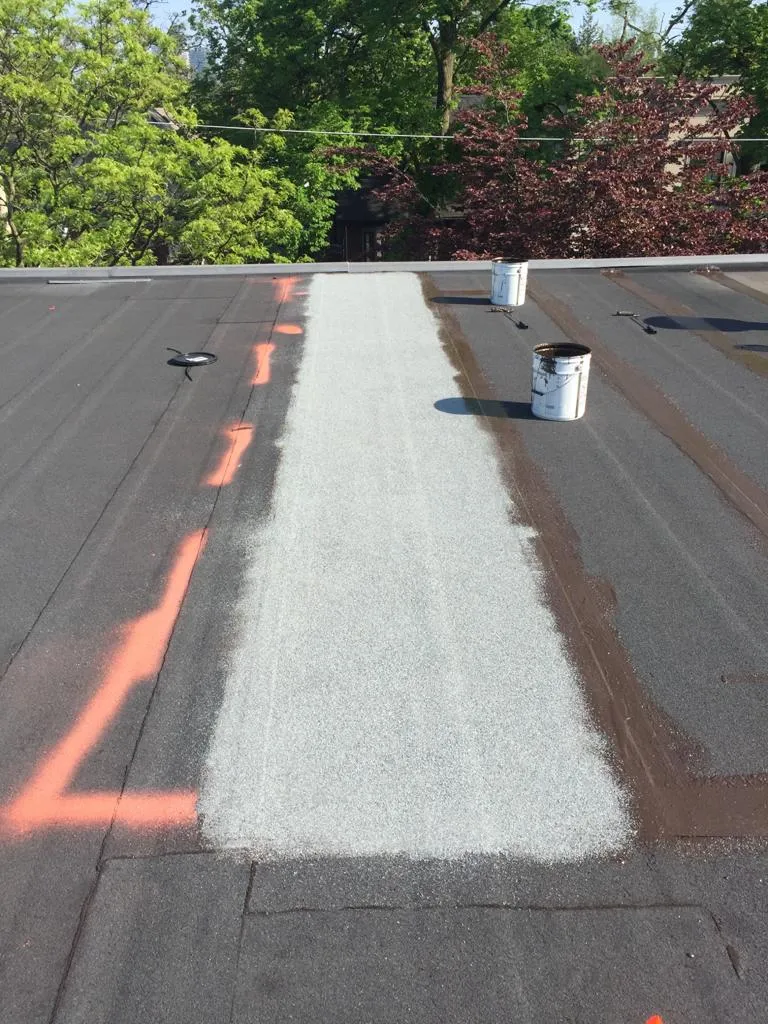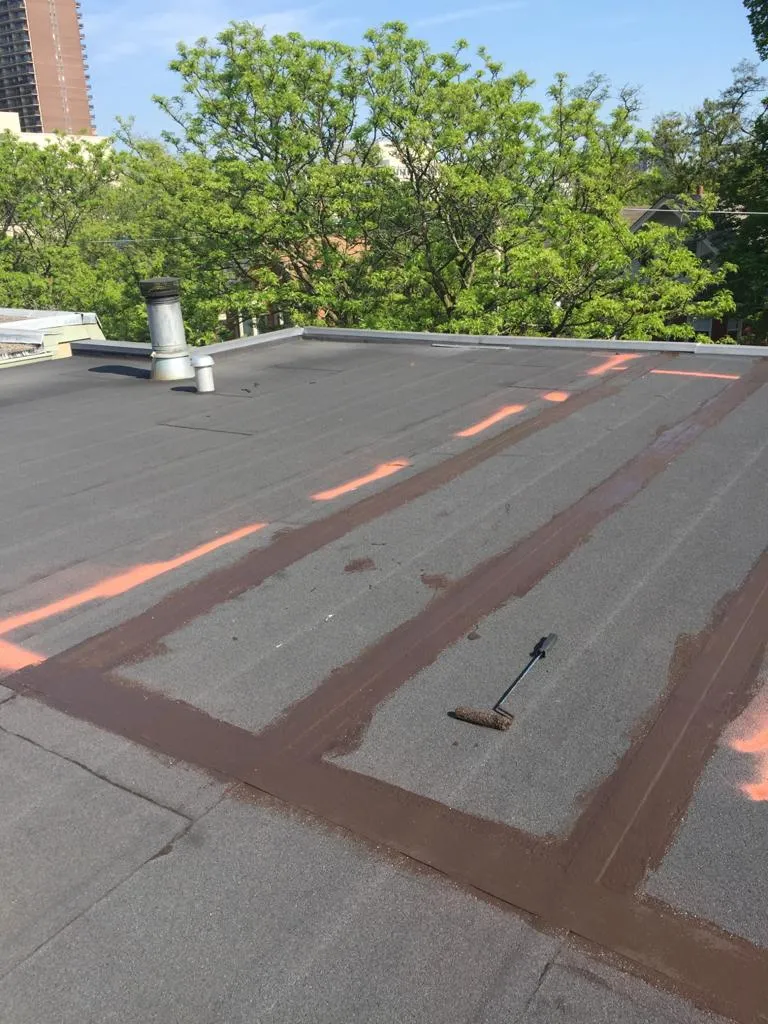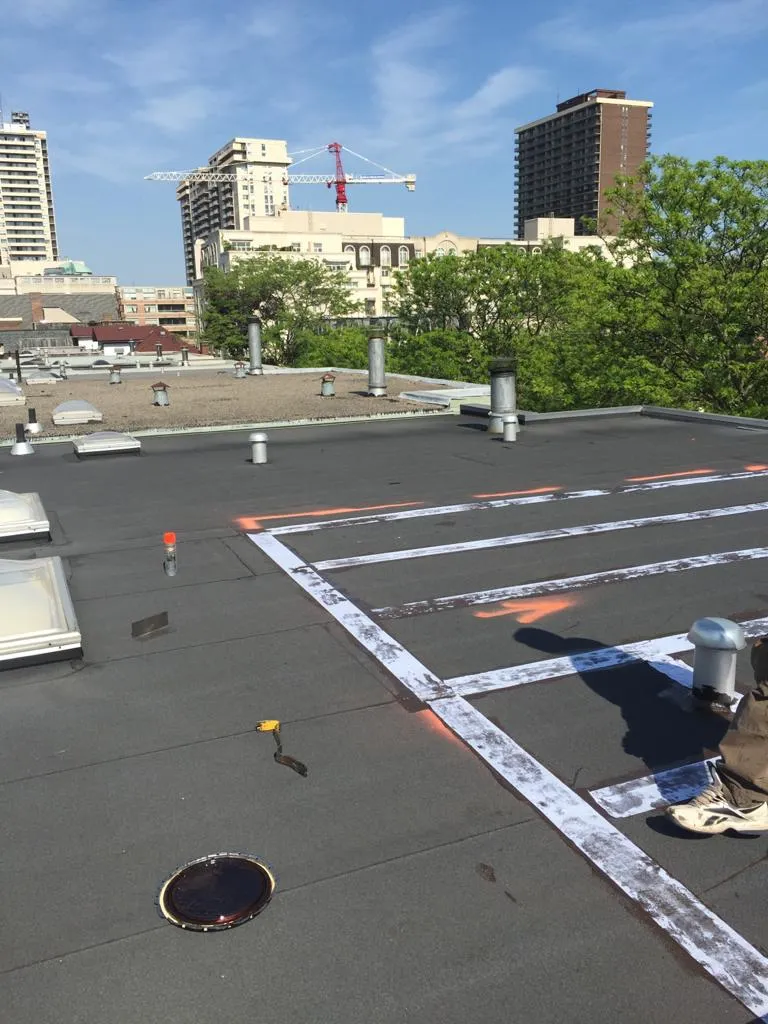
If you own or manage a building in Toronto, the toronto green standard reflective roof coating requirement is no longer a future consideration, it is the current standard against which new construction and major renovations are measured. The Toronto Green Standard (TGS) Version 4, now fully in effect for 2026 building permits, mandates solar-reflective roofing across a wide range of building types, and flat roofs are squarely in scope. For property owners and facility managers, this summer is the ideal time to assess your roof’s compliance status, plan an application window during the dry season, and avoid the costly consequences of a non-compliant roof at your next permit renewal or sale.
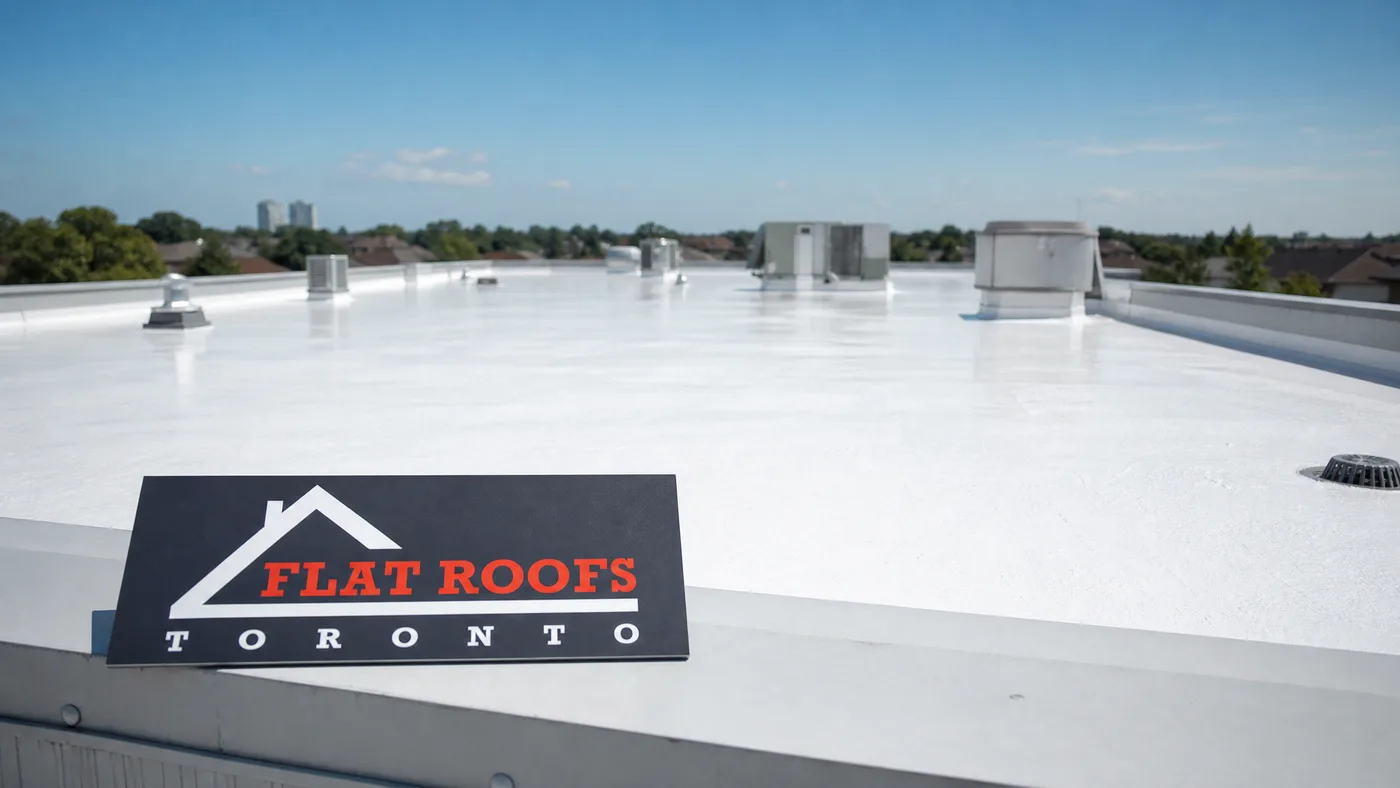
A toronto green standard reflective roof coating works by reflecting solar radiation away from the building envelope rather than absorbing it. Standard dark-membrane flat roofs can reach surface temperatures exceeding 80°C on a Toronto summer afternoon. A properly specified cool-roof coating can reduce that surface temperature by 25°C to 40°C, directly translating into lower air-conditioning loads, reduced urban heat-island effect, and a measurable improvement in roofing membrane longevity. The City of Toronto has embedded these benefits into its TGS framework because the science is unambiguous: reflective roof surfaces benefit individual buildings, adjacent properties, and the broader urban environment simultaneously.
At Flat Roofs Toronto, we have been installing and specifying compliant reflective coatings across the GTA since TGS requirements first appeared in the Green Building Standard. This guide walks through everything building owners need to understand: what TGS actually requires, which coating systems qualify, cost benchmarks, and the installation process from substrate assessment through final inspection.
What the Toronto Green Standard Requires for Reflective Roof Coatings
The Toronto Green Standard is a two-tier sustainability framework applied to new buildings and additions requiring a site plan approval or rezoning. Tier 1 is mandatory for all applicable projects; Tier 2 is the aspirational target that unlocks development charge incentives. For roofing, TGS Version 4 references the Cool Roof Rating Council (CRRC) standards as the measurement baseline, meaning the performance metrics are internationally recognised and verifiable through third-party testing.
For a toronto green standard reflective roof coating to satisfy Tier 1 requirements on a low-slope (flat) roof, the coating system must achieve a minimum Solar Reflectance Index (SRI) of 82 when tested on a new or aged basis per ASTM standards. The SRI combines solar reflectance and thermal emittance into a single number where a perfectly reflective and emissive surface scores 100 and a standard black surface scores 0. An SRI of 82 is achievable with most premium elastomeric acrylic or silicone white coatings currently on the market, provided they are applied at the manufacturer’s minimum specified dry film thickness.
Tier 2 compliance pushes the SRI requirement higher, to 96 or above, which typically requires a two-coat white silicone system or a specifically formulated high-performance acrylic. The development charge rebate available for Tier 2 compliance in Toronto can reach tens of thousands of dollars for mid-size commercial projects, making the premium coating specification economically rational rather than merely aspirational.
Beyond new construction, the toronto green standard reflective roof coating requirement also applies when a building undergoes a major roof replacement that triggers a site plan amendment. For existing buildings not under a permit trigger, the City’s Green Building Challenge and various commercial retrofit incentive programmes provide pathways to voluntary compliance with financial support. The Canada Greener Homes for Commercial Properties programme, active in 2026, also recognises compliant cool-roof installations as an eligible energy-efficiency measure for grant purposes.
Coating System Options That Meet TGS Specifications
Not every white roof coating qualifies under TGS. The system must have documented CRRC-rated performance data, and the contractor must apply it at the rated coverage rate to ensure the tested performance is replicated in the field. The three primary coating chemistries used for toronto green standard reflective roof coating compliance in the GTA are elastomeric acrylic, silicone, and polyurethane-hybrid systems. Each has distinct advantages depending on the underlying membrane, roof slope, ponding-water risk, and budget.
Elastomeric acrylic coatings are the most widely specified option for Toronto flat roofs. They bond well to TPO, modified bitumen, and EPDM membranes, are water-borne (low VOC, safe for urban application), and are available from multiple manufacturers with CRRC ratings well above the Tier 1 threshold. Their limitation is sensitivity to ponding water: if your flat roof retains standing water for more than 48 hours after rain, an acrylic coating will soften and lose adhesion over time.
Silicone coatings address the ponding-water limitation directly. Silicone is inherently hydrophobic and maintains its adhesion and reflectance performance even in areas of chronic ponding. Premium silicone systems from manufacturers such as Tremco, GE Enduris, and Sherwin-Williams Loxon achieve aged SRI values above 100, comfortably meeting both TGS Tier 1 and Tier 2 thresholds. The trade-off is cost, silicone materials run approximately 20 to 35% higher per litre than comparable acrylic products, and the need for precise application equipment and weather conditions.
Polyurethane-hybrid and aluminized systems occupy a niche for roofs with significant foot-traffic exposure, such as mechanical penthouses or rooftop terrace areas. These systems offer excellent abrasion resistance and can be specified with aggregate broadcast for slip resistance while still achieving an SRI sufficient for Tier 1 compliance. For commercial flat roof installations with intensive rooftop use, a polyurethane system is often the most appropriate specification.
| Coating Chemistry | Typical SRI (Aged) | Ponding-Water Resistance | Approx. Installed Cost/m² | TGS Tier Achievable |
|---|---|---|---|---|
| Elastomeric Acrylic (single coat) | 82 to 90 | Low, avoid ponding zones | $12 to $18 | Tier 1 |
| Elastomeric Acrylic (two coat) | 88 to 96 | Moderate, limit ponding to 24h | $18 to $26 | Tier 1 & Tier 2 |
| Premium Silicone (single coat) | 96 to 108 | Excellent, fully ponding-tolerant | $24 to $34 | Tier 1 & Tier 2 |
| Polyurethane Hybrid | 80 to 88 | Good, rated for standing water | $28 to $40 | Tier 1 (aggregate finish reduces SRI) |
| Aluminized Fibrated Coating | 40 to 55 | Good | $10 to $15 | Does NOT meet TGS threshold |
Substrate Assessment and Preparation Before Coating
A toronto green standard reflective roof coating is only as durable as the substrate beneath it. One of the most common errors we encounter on GTA roofs, particularly on aging modified bitumen and built-up roofing systems, is the application of a reflective coating over a substrate that was never properly assessed for moisture intrusion, delamination, or membrane failure. When moisture is trapped under a coating, thermal cycling causes blistering, coating delamination, and accelerated membrane degradation. The coating fails in months rather than years, and the underlying membrane problem is worse than before.
The correct sequence before any toronto green standard reflective roof coating application begins with a thorough substrate inspection. At Flat Roofs Toronto, our process includes:
- Visual survey, identifying blisters, open laps, ponding patterns, and flashing conditions
- Electronic leak detection (ELD), low-voltage scan to locate active moisture entry points invisible to the eye
- Core sampling, removing small plugs of the membrane assembly to assess insulation saturation levels
- Infrared thermography, aerial or walking survey after sunset to identify wet insulation by its retained heat signature
Where moisture-saturated insulation is found, the affected sections must be replaced before coating proceeds. Attempting to coat over wet insulation is a warranty-voiding condition for every major coating manufacturer. Similarly, loose or open membrane laps must be re-adhered, blisters must be cut, dried, and patched, and all penetrations must be re-flashed before the coating crew mobilises.
Surface cleanliness is equally critical. Toronto roofs accumulate significant biological growth, algae, moss, and lichen, over their service life, as well as oil deposits from HVAC equipment exhaust. All of these contaminants must be pressure-washed and chemically treated before coating. A primer coat is required on most substrates, particularly EPDM rubber membranes, to ensure chemical bonding between the elastomeric coating and the substrate. Skipping primer is the single most common cause of coating delamination failures in the field.
The Installation Process During Toronto’s Summer Window
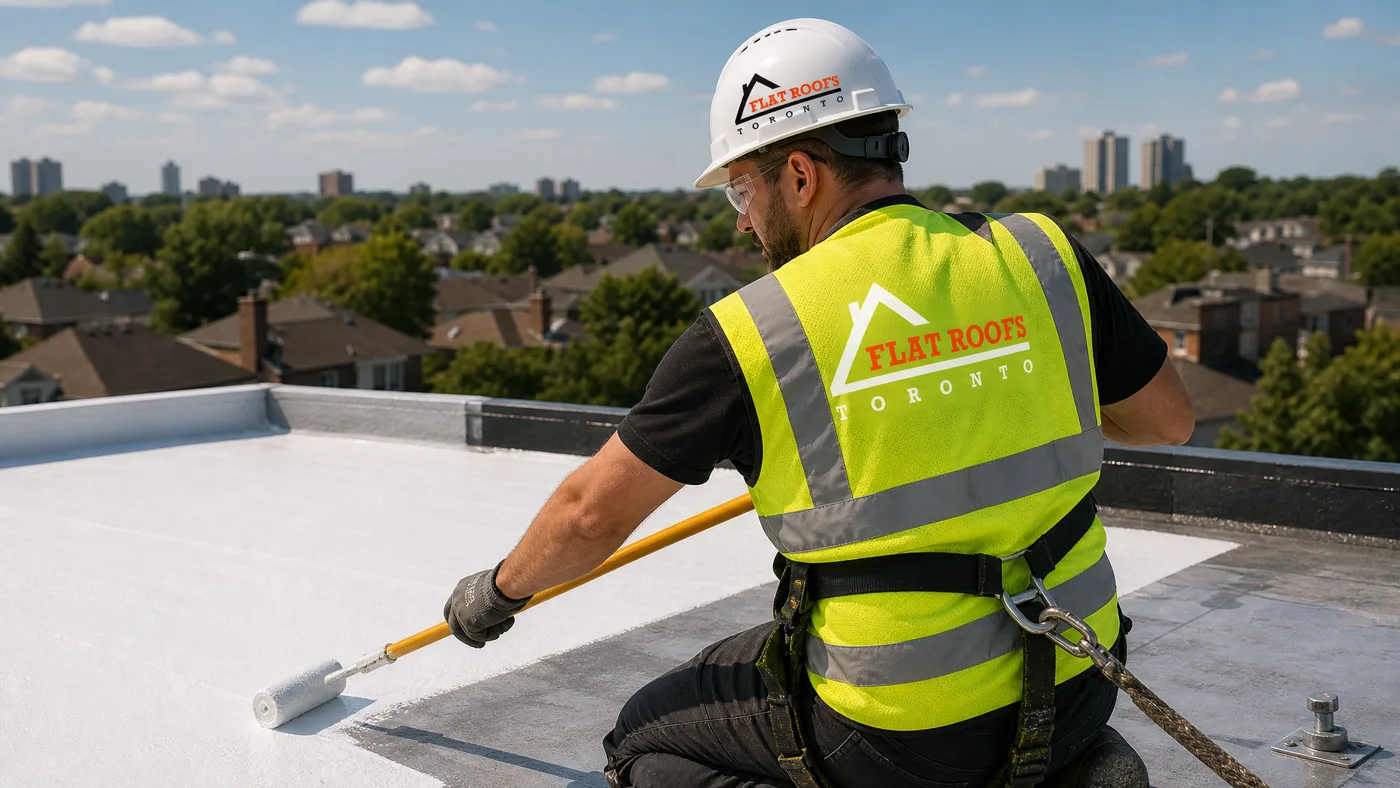
June through September represents the optimal installation window for toronto green standard reflective roof coating projects in the GTA. Acrylic coatings require ambient temperatures above 10°C during application and for a minimum of 24 hours during cure; silicone systems are slightly more tolerant but still perform best when applied in warm, dry conditions. The extended daylight hours of a Toronto summer also allow crews to cover larger roof areas in a single day, reducing both labour costs and the number of joint seams created by multi-day work stoppages.
The installation sequence for a compliant coating system typically runs as follows:
Day 1, Surface preparation: Power washing at a minimum 3,500 PSI to remove dirt, algae, and loose material. Application of a biocidal wash where significant biological growth is present. Allow to dry fully, typically 4 to 6 hours in Toronto summer conditions.
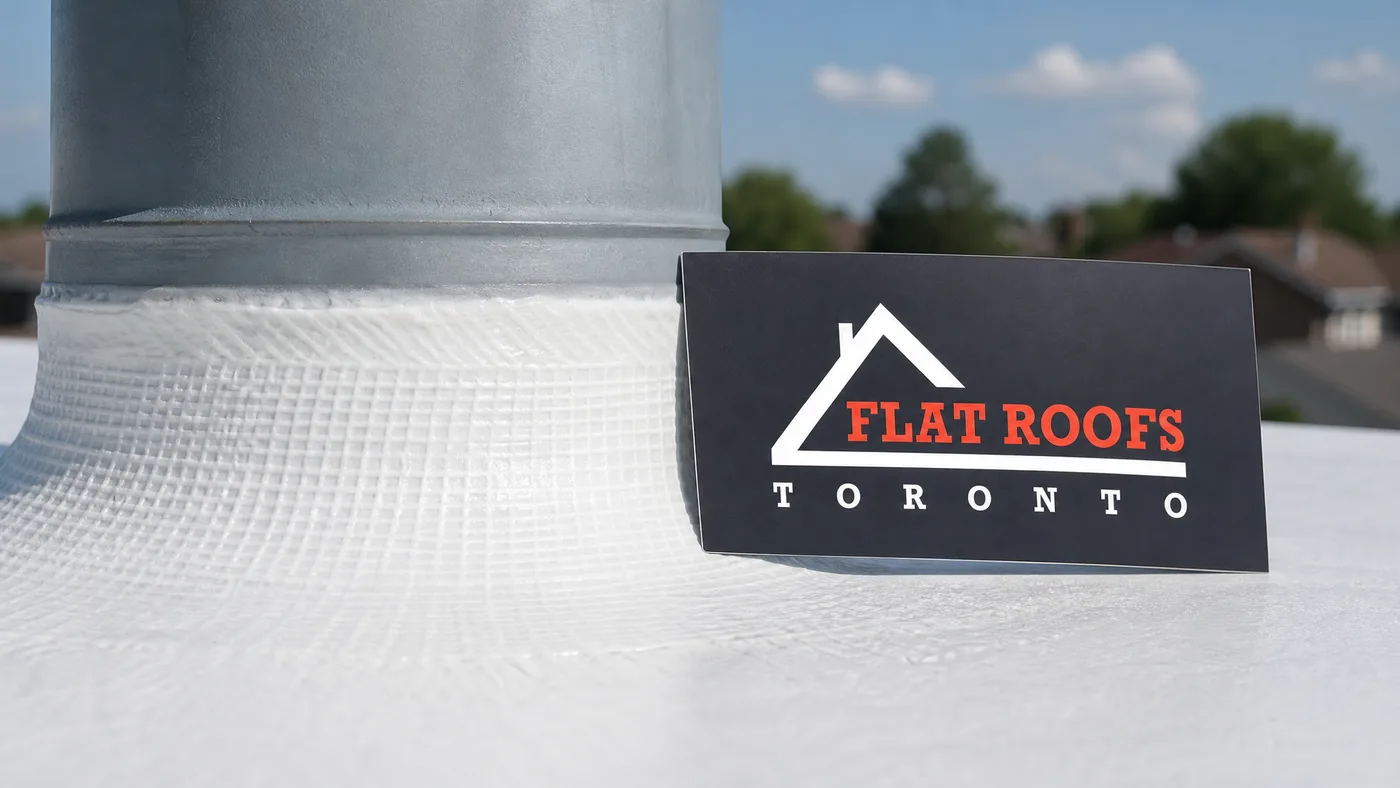
Day 2, Primer and detail work: Primer application to the full field area, followed by fabric reinforcement at all laps, penetrations, and flashings using polyester mesh embedded in the base coat. This reinforcement layer is mandatory for a TGS-compliant system and is frequently omitted in lower-cost applications.
Day 3, First field coat: Application of the base coating at the manufacturer’s specified coverage rate, typically 0.25 to 0.40 litres per square metre for acrylic systems. Coverage rate monitoring is essential, under-applied coatings will not achieve the rated SRI.
Day 4, Second coat (Tier 2 systems) or final inspection: Second application after adequate cure time. Final inspection of coverage uniformity, edge termination, and flashing integration. Documentation package prepared for building permit or incentive programme submission.
Cost and ROI for GTA Flat Roof Owners
The investment in a toronto green standard reflective roof coating is best evaluated against a multi-year benefit horizon rather than as a simple upfront cost. The three primary financial returns, energy savings, membrane life extension, and incentive programme recovery, combine to produce a payback period of 3 to 7 years for most GTA commercial and multi-residential properties.
Energy savings are the most quantifiable benefit. Studies of comparable Toronto-climate buildings consistently show HVAC cooling load reductions of 15 to 30% following cool-roof coating installation on buildings where the roof represents a significant portion of the thermal envelope, typically low-rise commercial buildings, industrial warehouses, and condominium townhouse complexes. For a 1,000 m² retail property spending $18,000 per year on summer cooling, a 20% reduction is worth $3,600 annually.
Membrane life extension occurs because UV degradation, the primary cause of membrane aging on Toronto flat roofs, is dramatically reduced when 80 to 90% of solar radiation is reflected away. Field studies report a 25 to 40% increase in membrane service life following coating installation. For a roof with 8 years of remaining service life, a 35% extension represents approximately 3 additional years before replacement is required. Given typical flat roof replacement costs of $25 to $45 per square metre in the GTA, deferring replacement on a 500 m² roof saves $12,500 to $22,500 in today’s dollars.
| Building Type | Roof Area | Coating System | Installed Cost Est. | Annual Energy Saving Est. | Estimated Payback |
|---|---|---|---|---|---|
| Single-storey retail / warehouse | 500 m² | Single-coat acrylic | $7,000 to $9,000 | $1,800 to $3,200 | 3 to 5 years |
| Low-rise multi-residential (6 units) | 350 m² | Two-coat acrylic | $7,000 to $10,000 | $1,200 to $2,400 | 4 to 6 years |
| Mid-size commercial (office / medical) | 1,000 m² | Single-coat silicone | $26,000 to $36,000 | $4,000 to $7,000 | 4 to 7 years |
| Industrial / light manufacturing | 2,000 m² | Single-coat acrylic | $26,000 to $38,000 | $6,000 to $12,000 | 3 to 5 years |
| Townhouse complex (stacked) | 800 m² | Two-coat silicone | $22,000 to $30,000 | $3,000 to $5,500 | 5 to 7 years |
Available financial incentives in 2026 further improve these returns. The City of Toronto’s density bonus programme offers development charge rebates for Tier 2 TGS compliance. The Canada Greener Buildings Grant for commercial properties provides up to $200,000 per project for qualifying energy-efficiency measures, and cool-roof coatings are an eligible measure when paired with an EnerGuide energy audit. Toronto Hydro’s Conservation Incentive Programme also provides rebates per kWh saved for qualifying demand-reduction projects. Navigating these stacking incentives requires documentation of pre- and post-installation energy performance, which a properly specified and documented toronto green standard reflective roof coating project provides.
For property owners in Mississauga, Markham, Vaughan, Brampton, Oakville, and Burlington, the provincial and federal incentive programmes apply equally, only the City of Toronto’s municipal development charge rebate is geographically restricted to projects within city limits. Regional municipality grant programmes often have their own supplementary incentives that our estimating team can identify during the project scoping process.
Maintenance and Long-Term Performance of Reflective Coatings
A toronto green standard reflective roof coating is not a set-and-forget installation. Maintaining the coating’s reflectance performance, and therefore its TGS compliance, requires periodic inspection and targeted maintenance. The CRRC testing protocols that establish a coating’s aged SRI values assume routine maintenance; a coating that accumulates heavy soiling from urban air pollution and biological growth will underperform its rated values until cleaned.
For GTA buildings, we recommend the following maintenance schedule:
Annual inspection (spring or early summer): Walk the full roof surface, clear drain sumps and scuppers of debris, and inspect for any coating damage caused by winter freeze-thaw cycling, foot traffic from HVAC maintenance, or hail impact from summer thunderstorms. Early identification of minor damage allows spot repair before water infiltration occurs.
Biennial cleaning: A low-pressure wash, typically 1,200 to 1,500 PSI with a biodegradable cleaner, removes accumulated airborne grime, bird droppings, and early-stage biological growth. Field measurements consistently show that a properly cleaned white coating recovers SRI values within 5 points of the as-installed measurement. For TGS compliance purposes, a clean roof is a compliant roof.
Recoat cycle (typically 10 to 15 years): Elastomeric acrylic coatings have an effective performance life of 10 to 12 years in the Toronto climate. Silicone systems typically extend to 15 to 18 years. Recoating over a sound existing coating, rather than full membrane replacement, is significantly more economical and is specifically recognised as an eligible measure under the Canada Greener Buildings programme.
Our residential flat roof installation and maintenance clients in Toronto and the surrounding GTA receive annual inspection reminders and can bundle their maintenance visits with our commercial inspection schedule to reduce mobilisation costs.
If you notice blistering, peeling, or discolouration developing on your reflective coating between scheduled inspections, do not delay, moisture under a coating accelerates membrane damage rapidly during Toronto’s hot, humid summers. Our emergency roof repair team is available to assess and stabilise any coating failures before they progress to full membrane breaches.
Owners of buildings with rooftop amenities, skylights, garden terraces, or mechanical penthouses, should also coordinate reflective coating maintenance with their skylight servicing. Our residential skylights team can inspect curb flashings and glazing seals at the same time as roof coating inspections, eliminating duplicate mobilisation costs and ensuring the flashing detail between the coating and the skylight curb remains watertight.
Common Compliance Mistakes and How to Avoid Them
The toronto green standard reflective roof coating requirement generates a predictable set of compliance errors that we encounter repeatedly when called to assess buildings that have already had coating work performed. Understanding these errors upfront saves significant rework cost.
Error 1, Using a non-CRRC-rated product. Many contractors offer “cool roof coatings” or “white elastomeric coatings” without providing CRRC product listing documentation. If the product does not appear in the CRRC Rated Products Directory with an SRI value above the TGS threshold, it cannot demonstrate compliance regardless of how white it appears visually. Always request the CRRC Product ID and verify it in the directory before contracting.
Error 2, Under-application. The SRI listed in the CRRC directory is achieved at the product’s rated coverage. A coating applied at half the specified coverage rate will produce a thinner film with lower reflectance and significantly reduced durability. Reputable contractors document coverage rates through material usage logs tied to the measured roof area.
Error 3, Omitting reinforcement at details. The field area of a flat roof rarely leaks, most water infiltration occurs at penetrations, laps, and flashings. TGS-compliant installations must include fabric reinforcement at all detail areas. Without this reinforcement, coatings crack at movement joints and allow water infiltration that voids both the coating warranty and the compliance documentation.
Error 4, Applying over a failing substrate. As discussed in the substrate assessment section, coating over wet insulation or delaminating membrane is both a warranty-voiding condition and a compliance risk. If the substrate fails within the warranty period, the installed coating performance cannot be certified.
Error 5, Missing the documentation package. TGS compliance is not self-certifying. Building owners need a documented record of the product CRRC listing, application coverage rates, and contractor declaration to submit with permit applications, incentive programme claims, or in response to a City of Toronto green building audit. A reputable contractor provides this documentation as a standard project deliverable.
Working with an experienced toronto green standard reflective roof coating contractor who understands the full TGS framework, not just the coating product itself, is the most reliable way to avoid these pitfalls. Flat Roofs Toronto provides complete compliance documentation on every TGS-specification project, including CRRC product data sheets, application coverage logs, and a signed contractor compliance declaration suitable for permit submission.
| Reflective Coating Type | Solar Reflectance (SRI) | Toronto Green Standard Compliant | Best Membrane Pairing | Typical Lifespan |
|---|---|---|---|---|
| White elastomeric acrylic | SRI 78 to 100+ | Yes | EPDM, modified bitumen, aged TPO | 5 to 10 years per coat |
| Silicone roof coating | SRI 80 to 110 | Yes | Modified bitumen, aged membranes | 10 to 15 years |
| Aluminised asphalt coating | SRI 25 to 45 | Marginal, may not meet threshold | Modified bitumen, BUR | 3 to 7 years |
| White TPO membrane (new install) | SRI 104 to 110 | Yes (inherent reflectance) | N/A, membrane itself | 20 to 30 years |
| Cool-roof polyurethane foam (SPF) | SRI 80 to 100 (with coating) | Yes when topcoated white | Applied as complete system | 20+ years |
What is a toronto green standard reflective roof coating and is it mandatory for my building?
Which coating chemistry should I choose for a toronto green standard reflective roof coating project?
How much does a toronto green standard reflective roof coating cost in 2026?
Are there financial incentives for installing a toronto green standard reflective roof coating?
How do I know if a product qualifies as a toronto green standard reflective roof coating?
How long does a toronto green standard reflective roof coating last and when does it need maintenance?
Schedule Your Toronto Green Standard Consultation Today
Meeting TGS compliance does not have to be complicated when you work with a contractor who has documented experience specifying, installing, and certifying toronto green standard reflective roof coating systems across the Greater Toronto Area. Flat Roofs Toronto provides substrate assessments, CRRC-verified product specifications, complete installation documentation, and incentive programme support under one roof, so your project delivers compliance, warranty protection, and measurable energy savings from day one.
Call us today at (647) 333-3528 or request a free consultation to get started.
Flat Roofs Toronto proudly serves Toronto, Mississauga, Markham, Vaughan, Brampton, and Oakville with expert flat roof installations, reflective coating systems, and full TGS compliance documentation.