
When a GTA homeowner notices ponding water or a stained ceiling below a low-slope roof, the conversation almost always turns to drainage. Understanding flat roof internal drains vs scuppers is the single most important decision you will make for the long-term health of a TPO, EPDM, modified bitumen or PVC roof in Toronto, Mississauga, Markham or Vaughan. The right drainage system moves water off the membrane quickly, protects the structure beneath it, and keeps your warranty intact. The wrong one invites ponding, accelerated membrane aging, and interior leaks that cost far more to repair than the original install.
This 2026 guide breaks down both systems in plain language: how each works, what they cost in the current GTA market, how they perform through a hot, storm-heavy summer, and how Ontario code shapes your options. By the end you will know which drainage approach fits your roof, your budget, and your building.
Flat Roof Internal Drains vs Scuppers: The Core Difference
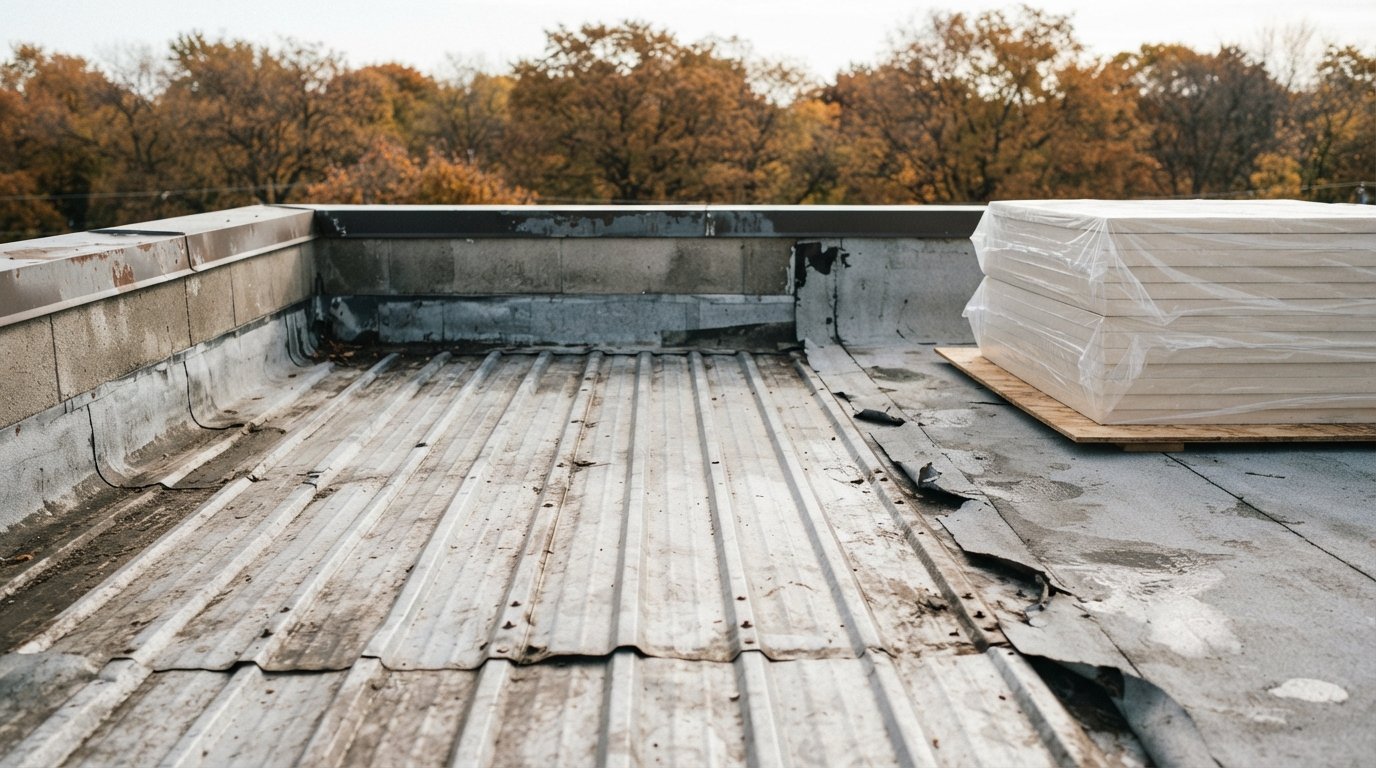
The debate over flat roof internal drains vs scuppers comes down to where the water goes. A flat roof is never perfectly flat. It is built with a slight slope, usually between one and two per cent, that directs water toward designated low points. The drainage system you choose determines where those low points are and how water exits the roof.
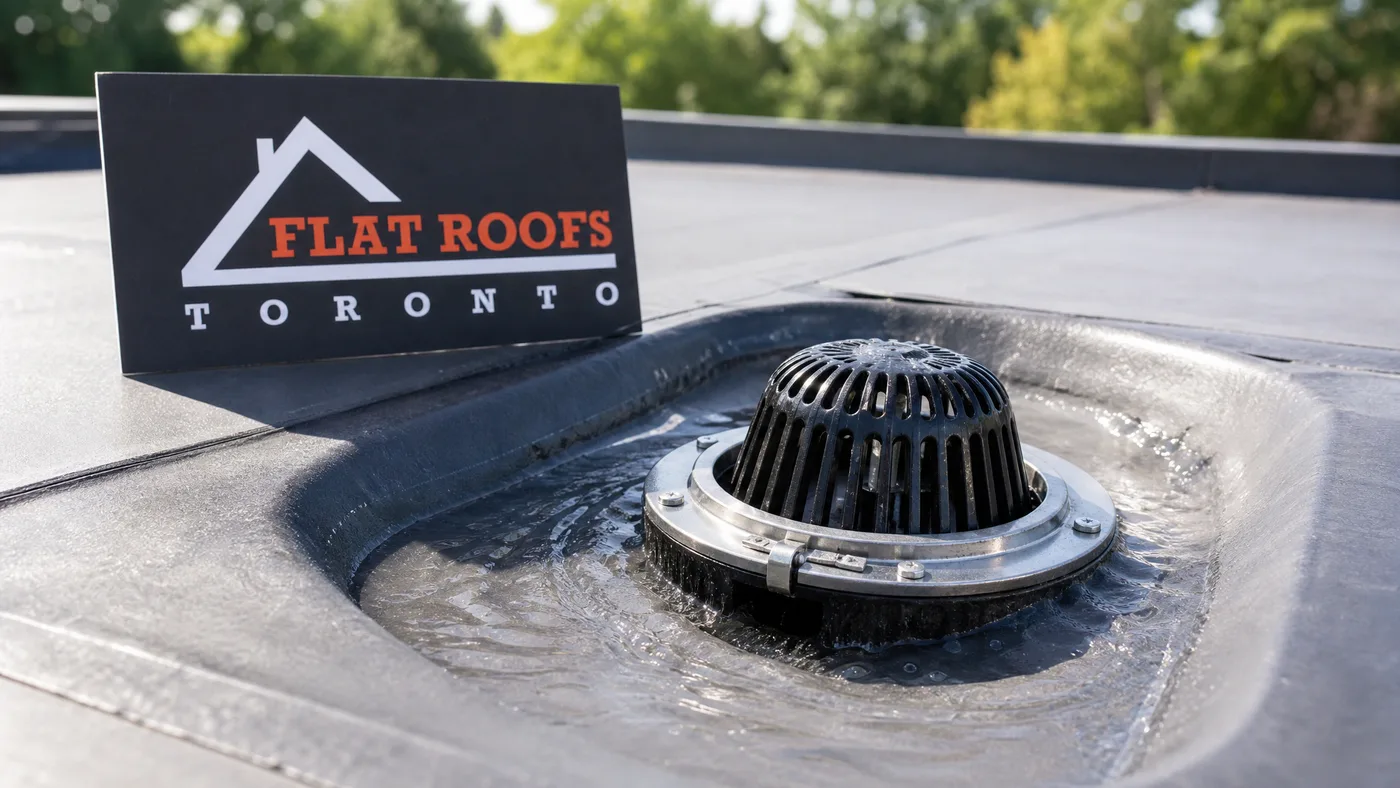
Internal roof drains sit at the lowest interior points of the roof field. Water flows into a drain bowl, passes through a strainer dome, and travels down vertical leader pipes routed inside the building to the storm or sewer system. Because the plumbing runs inside heated space, the water path stays protected from the elements year-round.
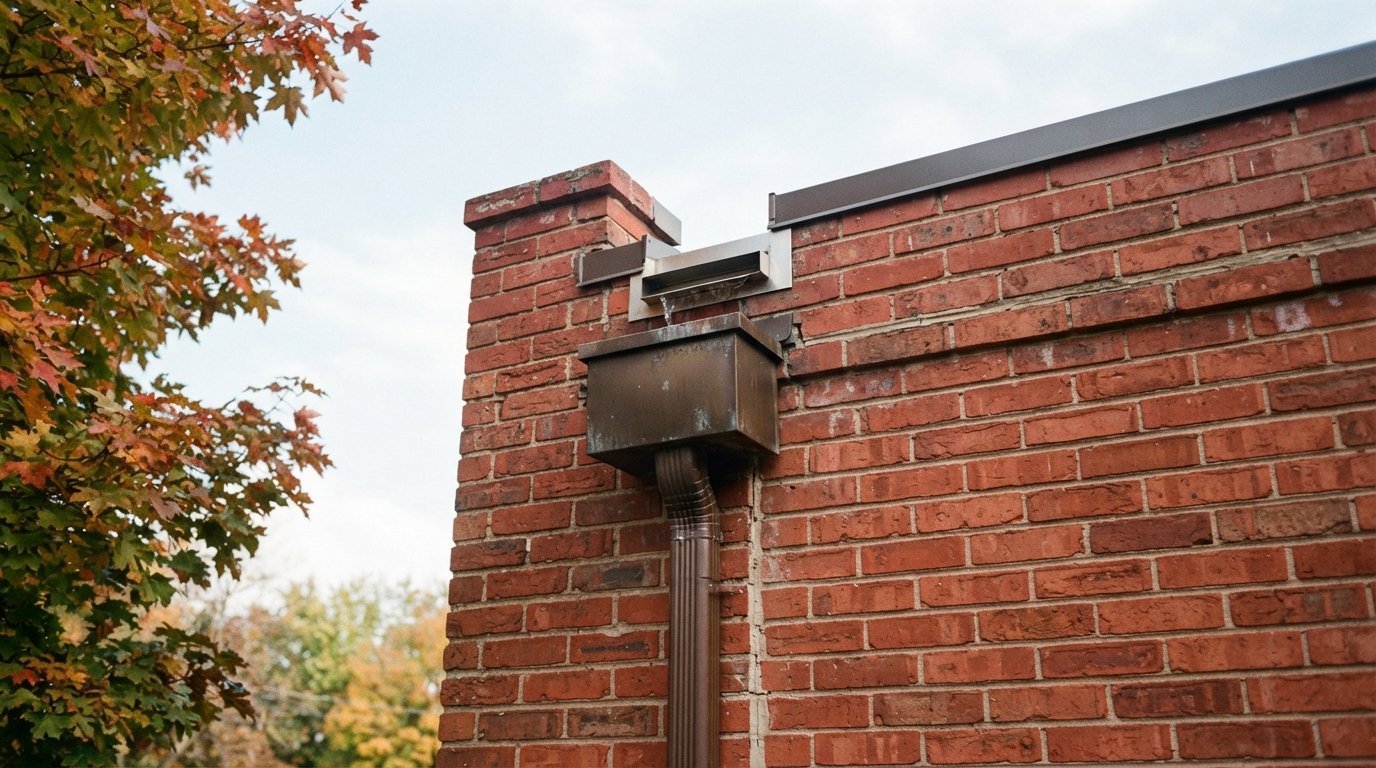
Scuppers are openings cut through the parapet wall at the roof edge. Water flows horizontally across the membrane, exits through the scupper opening, and is typically caught by a collector box and conductor head before dropping into an exterior downspout. Scuppers rely on gravity and a clear path to the edge, with no interior plumbing.
Many GTA buildings use a combination of both: primary internal drains for everyday flow, plus scuppers as overflow protection in case a drain clogs. That redundancy is often the smartest specification, and a qualified team at Flat Roofs Toronto will frequently recommend pairing the two rather than relying on a single system.
| Feature | Internal Drains | Scuppers |
|---|---|---|
| Water path | Interior leader pipes to storm/sewer | Through parapet to exterior downspout |
| Best roof type | Large fields, multiple low points | Smaller roofs with parapet walls |
| Clog visibility | Hidden inside building | Visible at roof edge |
| Summer storm capacity | High, predictable flow | Depends on opening size |
| Freeze risk in winter | Low (interior, heated) | Moderate (exterior exposure) |
How Internal Roof Drains Work on GTA Low-Slope Roofs
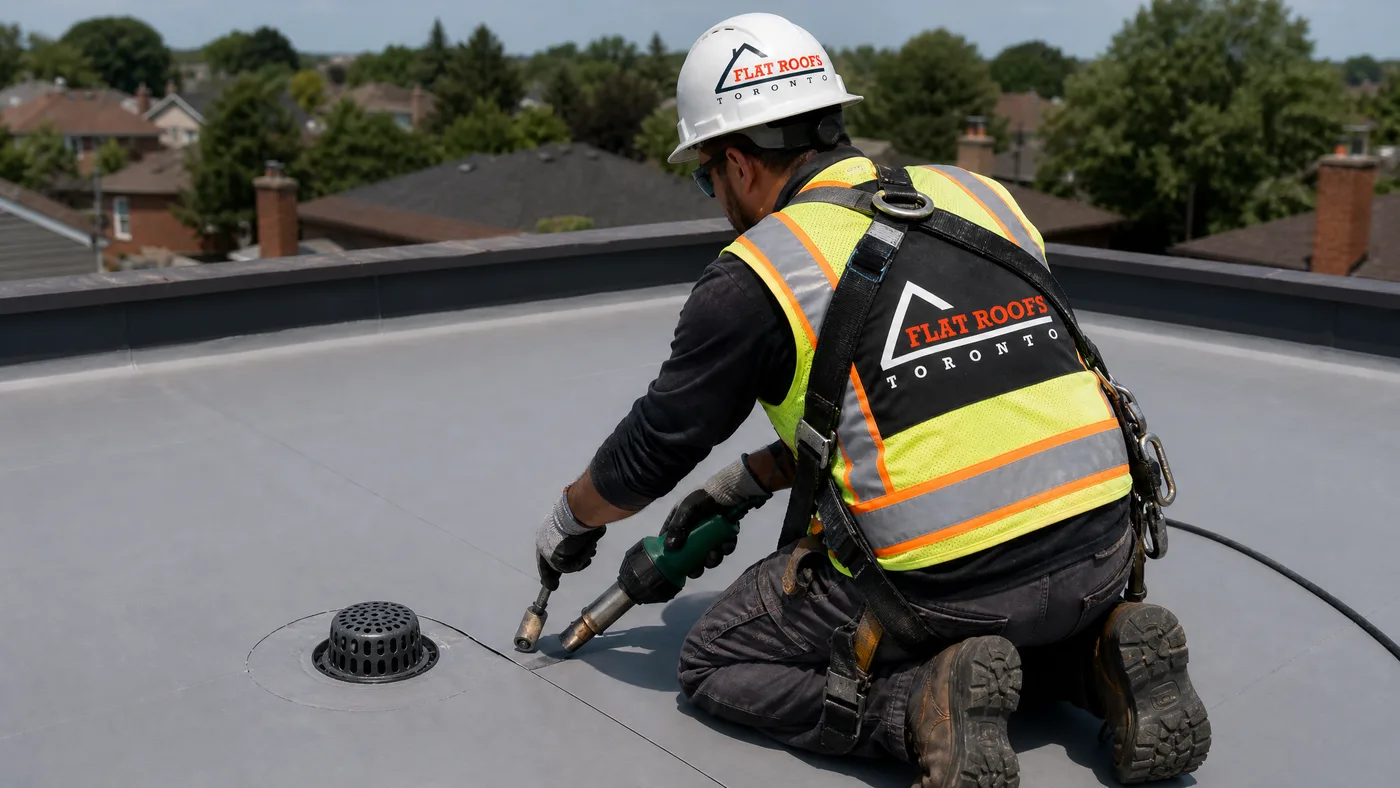
Internal drains are the workhorse of larger residential and commercial flat roofs across Toronto. A typical assembly includes a cast-iron or ABS drain body, a clamping ring that seals the membrane to the drain flange, a gravel guard or strainer dome that blocks debris, and a sump area where the deck is tapered down to draw water in.
The membrane, whether TPO, PVC, EPDM or modified bitumen, is wrapped into the drain and locked under the clamping ring to create a watertight transition. This connection is the most failure-prone point on the entire roof, which is why professional residential flat roof installation pays close attention to drain flashing detail. A poorly sealed clamping ring is one of the most common causes of slow, hard-to-find leaks.
Internal drains shine on roofs with no parapet access to the edge, on broad roof fields where water would otherwise have to travel too far, and on multi-level structures. Because the leader pipes run inside conditioned space, they resist freezing during shoulder-season cold snaps and keep performing through summer downpours when flow demand peaks.
The main drawbacks are cost and clog management. Routing interior plumbing is labour-intensive, and a blockage deep in a leader pipe is invisible until water backs up onto the roof or appears as an interior stain. Twice-yearly strainer cleaning, ideally each spring and again in late summer, is essential.
| Internal Drain Component | Function | Common GTA Material | Maintenance Need |
|---|---|---|---|
| Drain bowl/body | Collects water at low point | Cast iron or ABS | Inspect seal yearly |
| Clamping ring | Locks membrane watertight | Coated metal | Check tightness yearly |
| Strainer dome | Blocks leaves and debris | Polyethylene or cast iron | Clean twice yearly |
| Leader pipe | Carries water to sewer | ABS or cast iron | Snake if slow drainage |
| Tapered sump | Draws water toward drain | Tapered insulation | Inspect for ponding |
How Scuppers Work and When They Win
Scuppers are the simpler, more transparent option. An opening is framed and flashed through the parapet wall at the roof’s low edge, lined with metal, and tied into the membrane. Water reaches the opening, exits the wall, and drops into a conductor head or collector box that feeds an exterior downspout running down the building face.
The biggest advantage of scuppers is visibility. If a scupper clogs with leaves or debris, you can usually see the problem from the ground or a ladder, and clearing it is straightforward. There is no hidden interior pipe to snake. Scuppers also add no interior plumbing, which simplifies construction and reduces the number of roof penetrations, every one of which is a potential leak point.
Scuppers perform best on smaller residential roofs, garage and addition roofs, and any building with a continuous parapet wall and a reliable slope toward the edge. They are also the standard overflow safeguard: building practice across the GTA pairs internal drains with overflow scuppers set slightly above the membrane so that, if the primary drain backs up during a heavy summer cloudburst, excess water spills outside instead of pooling and overloading the deck.
The limitations are real, though. Scuppers depend entirely on adequate slope and a clear edge path; on a large roof, water may have to travel too far to reach the wall, leading to ponding. Sizing matters enormously, an undersized opening can be overwhelmed during an intense Toronto summer storm. For complex or larger projects, a commercial flat roof installation team will calculate scupper dimensions against expected rainfall intensity rather than guessing.
Cost Comparison: Internal Drains vs Scuppers in the 2026 GTA Market
Pricing in the Greater Toronto Area depends on roof size, membrane type, the number of drainage points, parapet condition, and whether you are retrofitting or building new. The figures below reflect typical 2026 installed costs for residential and small commercial flat roofs in Toronto, Mississauga, Markham and Vaughan. Always confirm with a site-specific quote, as access, deck repairs and code upgrades shift the numbers.
| Drainage Item (2026 GTA) | Typical Installed Cost | Notes |
|---|---|---|
| New internal drain (per drain) | $900 to $1,800 | Includes bowl, clamping ring, strainer |
| Interior leader pipe routing | $1,200 to $3,500 | Varies with run length and access |
| Through-wall scupper (per opening) | $450 to $1,100 | Includes metal liner and flashing |
| Conductor head + downspout | $350 to $900 | Per exterior drop |
| Overflow scupper (code add-on) | $400 to $850 | Secondary safeguard above primary drain |
| Drain retrofit on existing roof | $1,500 to $4,000 | Includes membrane reflashing |
Scuppers usually carry a lower upfront cost because they avoid interior plumbing. Internal drains cost more to install but can be more economical on large roofs where running multiple scuppers to a distant edge is impractical. The cheapest system on paper is not always the cheapest over a 20-year membrane lifespan, ponding from undersized drainage shortens roof life and triggers premature repairs.
Ontario Code, Slope and Sizing Rules That Shape Your Choice
Drainage on GTA flat roofs is governed by the Ontario Building Code and municipal plumbing requirements. Roofs must be designed to drain, and most low-slope assemblies are built to a minimum slope of roughly two per cent (about a 6 mm rise per 300 mm of run) toward drainage points. Tapered insulation is the most common way to achieve and fine-tune that slope across a GTA roof field.
Code also requires secondary, or overflow, drainage. If the primary system, whether internal drains or scuppers, becomes blocked, an independent overflow path must prevent water from accumulating beyond the structural capacity of the deck. This is why overflow scuppers are so common even on roofs that drain primarily through internal drains: they are the code-mandated backup.
Sizing is driven by rainfall intensity. Drainage components must handle the peak flow from a design storm, and Toronto-area summer thunderstorms can dump intense, short-duration rain that tests undersized systems. An experienced installer calculates the required drain or scupper capacity against the roof’s catchment area and local rainfall data rather than copying a generic detail.
| Design Factor | Typical GTA Requirement | Why It Matters |
|---|---|---|
| Minimum slope | ~2% (1/4″ per foot) | Prevents ponding and membrane fatigue |
| Primary drainage | Sized to design rainfall | Handles peak summer storm flow |
| Secondary/overflow | Required, independent path | Backup if primary clogs |
| Overflow inlet height | Set above membrane | Holds water only during failure |
| Strainer/guard | Required on internal drains | Keeps debris out of leaders |
Summer Performance, Maintenance and Ponding Control
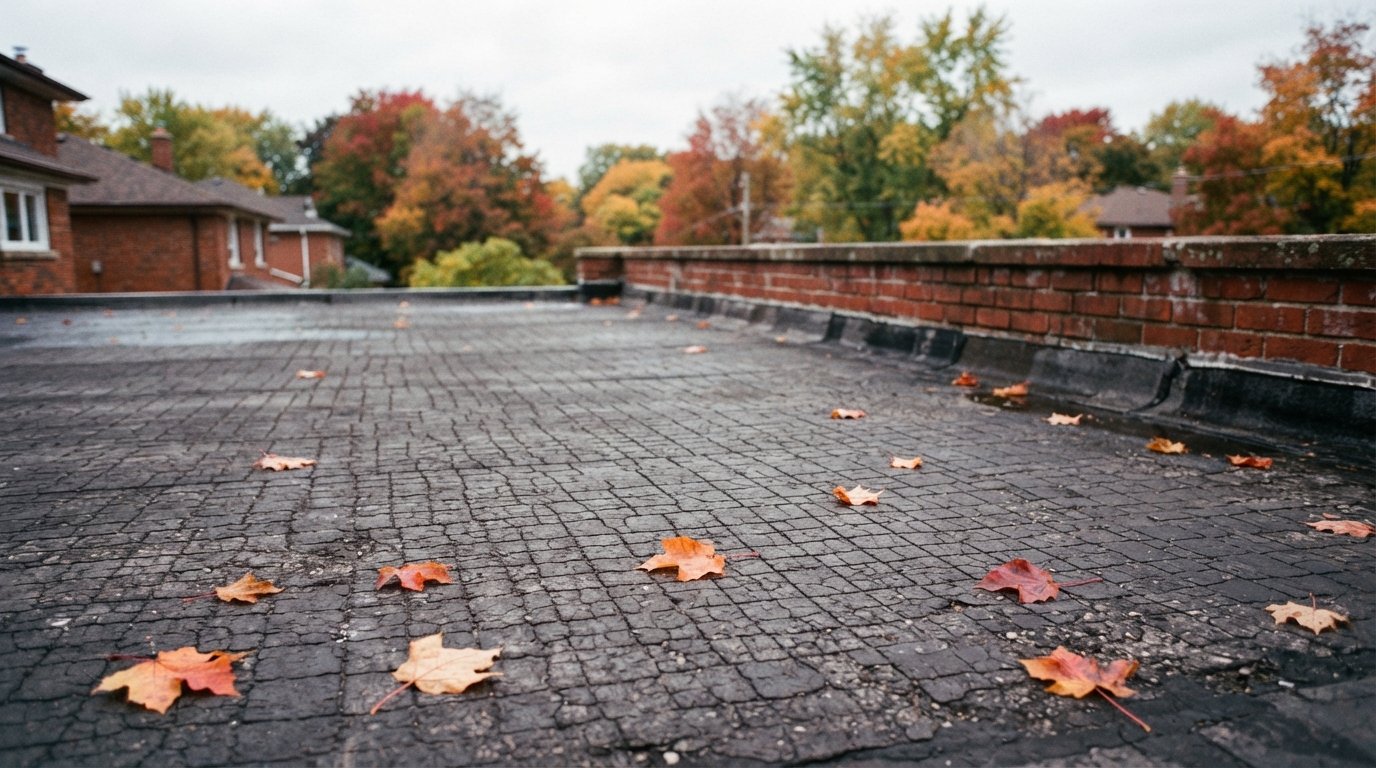
A Toronto summer is a stress test for flat roof drainage. Long stretches of UV exposure heat the membrane and accelerate aging anywhere water sits, while sudden thunderstorms deliver high-volume flow that drainage must clear fast. Ponding water that lingers more than 48 hours after rain is the warning sign that your drainage is undersized, sloped incorrectly, or clogged.
Internal drains and scuppers each demand seasonal attention. Clear strainer domes and scupper openings of pollen, seed pods, and the windblown debris that accumulates through spring and summer. Inspect the membrane around every drainage point for blistering, open seams, or lifting flashing. Confirm that overflow scuppers are clear and at the correct height. Catching a small drainage fault early is the difference between a quick fix and an interior leak that calls for emergency roof repair.
Good drainage also protects the rest of the building envelope. Standing water near a roof edge can find its way into walls, and excess moisture migrating downward stresses your attic insulation and ceiling assemblies. If your roof includes residential skylights, the curb flashing around those units must coordinate with the drainage layout so water never backs up against a skylight curb. You can see examples of properly detailed drainage and flashing work in the Flat Roofs Toronto project gallery.
Which Drainage System Is Right for Your GTA Roof?
There is no universal winner in the flat roof internal drains vs scuppers question, only the right fit for a specific roof. Use these guidelines as a starting point, then confirm with a professional assessment.
Choose internal drains when you have a large roof field, no parapet edge close to every low point, a multi-level structure, or a building where exterior downspouts are impractical or undesirable. Internal drains offer high, predictable capacity and strong freeze resistance because the plumbing stays inside.
Choose scuppers when you have a smaller roof with a continuous parapet, a reliable slope toward the edge, and a preference for visible, easily cleaned drainage with minimal roof penetrations. Scuppers are cost-effective and transparent, ideal for garages, additions, and compact residential flat roofs.
For most GTA buildings, the best answer combines both: internal drains as the primary system, with overflow scuppers as the code-required safeguard. This redundancy delivers the capacity of internal drains with the fail-safe visibility of scuppers, the configuration many experienced Toronto roofers recommend.
| Roof Scenario | Recommended Drainage | Reason |
|---|---|---|
| Large residential flat roof | Internal drains + overflow scuppers | Capacity plus code backup |
| Small garage or addition | Scuppers | Lower cost, easy to clean |
| Multi-level building | Internal drains | No edge path at every level |
| Parapet roof, good slope | Scuppers | Fewer penetrations, visible |
| Retrofit over ponding roof | Drains + tapered insulation | Re-establishes proper slope |
What is the main difference between flat roof internal drains vs scuppers?
Which is cheaper to install in the GTA, drains or scuppers?
Do I need overflow drainage on a Toronto flat roof?
How often should drainage be cleaned on a flat roof?
What causes ponding water on a flat roof?
Can I add scuppers to a roof that already has internal drains?
Get Expert Help Choosing Flat Roof Internal Drains vs Scuppers Today
Deciding between flat roof internal drains vs scuppers is too important to leave to guesswork. The right drainage protects your membrane, your structure, and your budget through every hot, storm-heavy GTA summer. Flat Roofs Toronto assesses your roof’s slope, size, and parapet condition, calculates proper sizing against local rainfall, and recommends the drainage configuration that keeps water moving and your interior dry.
Call us today at (647) 333-3528 or request a free flat roof quote to have your drainage evaluated by a specialist who works on TPO, EPDM, modified bitumen and PVC roofs every day.
Flat Roofs Toronto proudly serves Toronto, Mississauga, Markham, Vaughan and the GTA with expert flat roofing installation, repair, and drainage solutions.