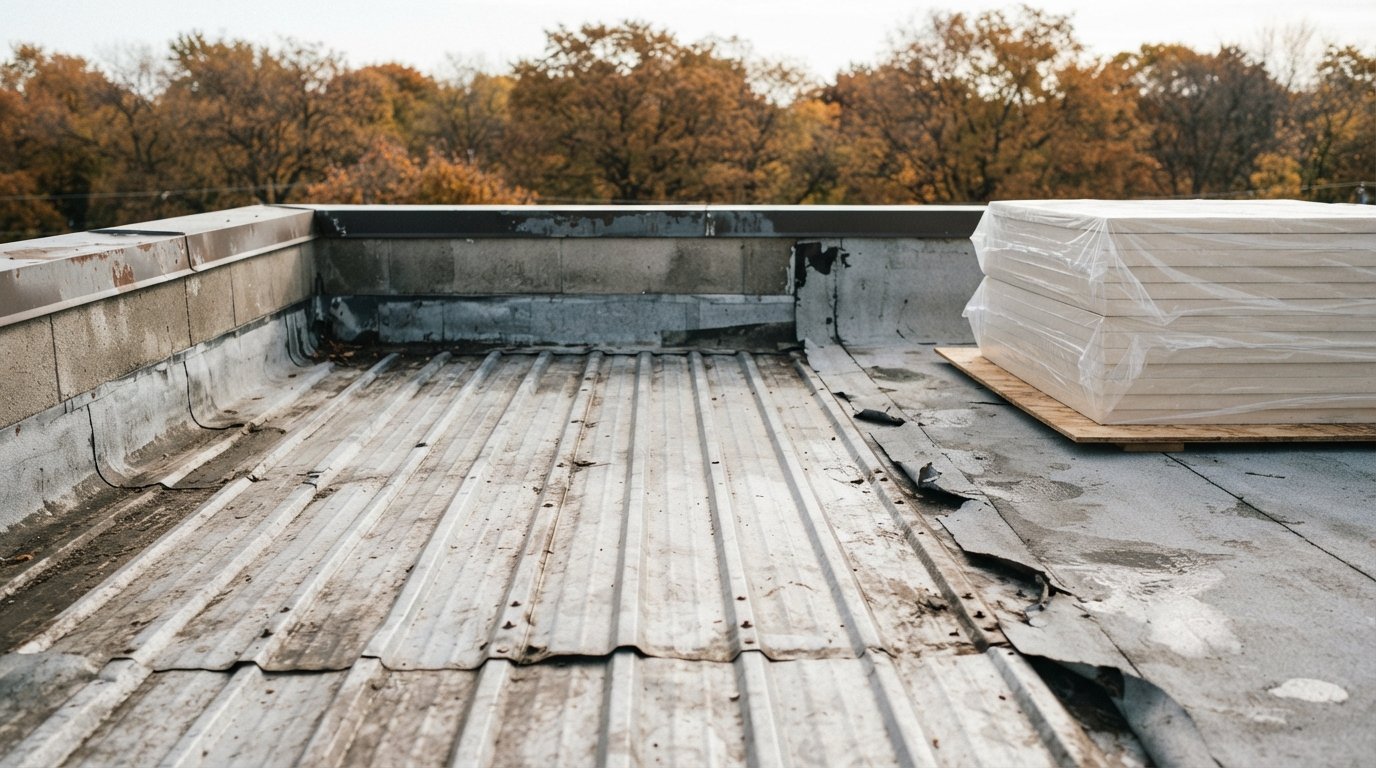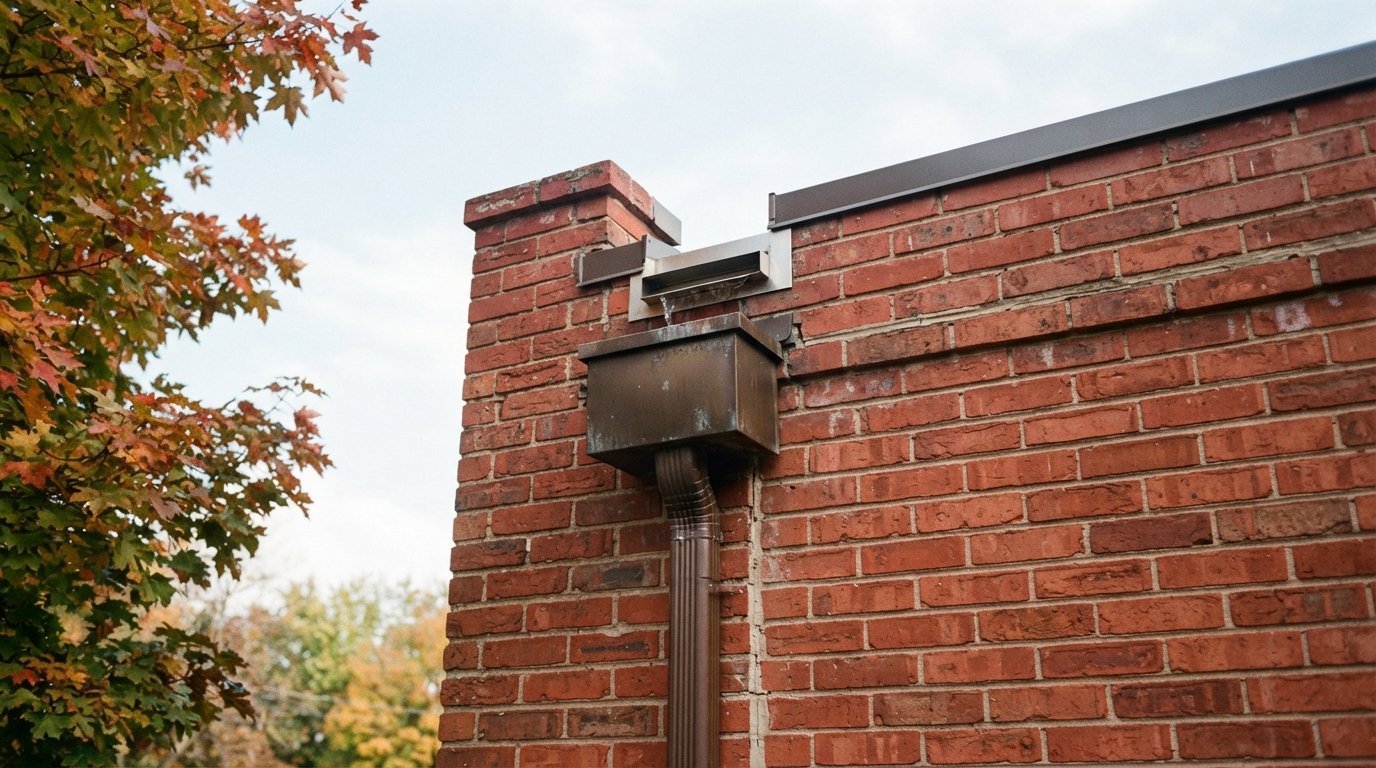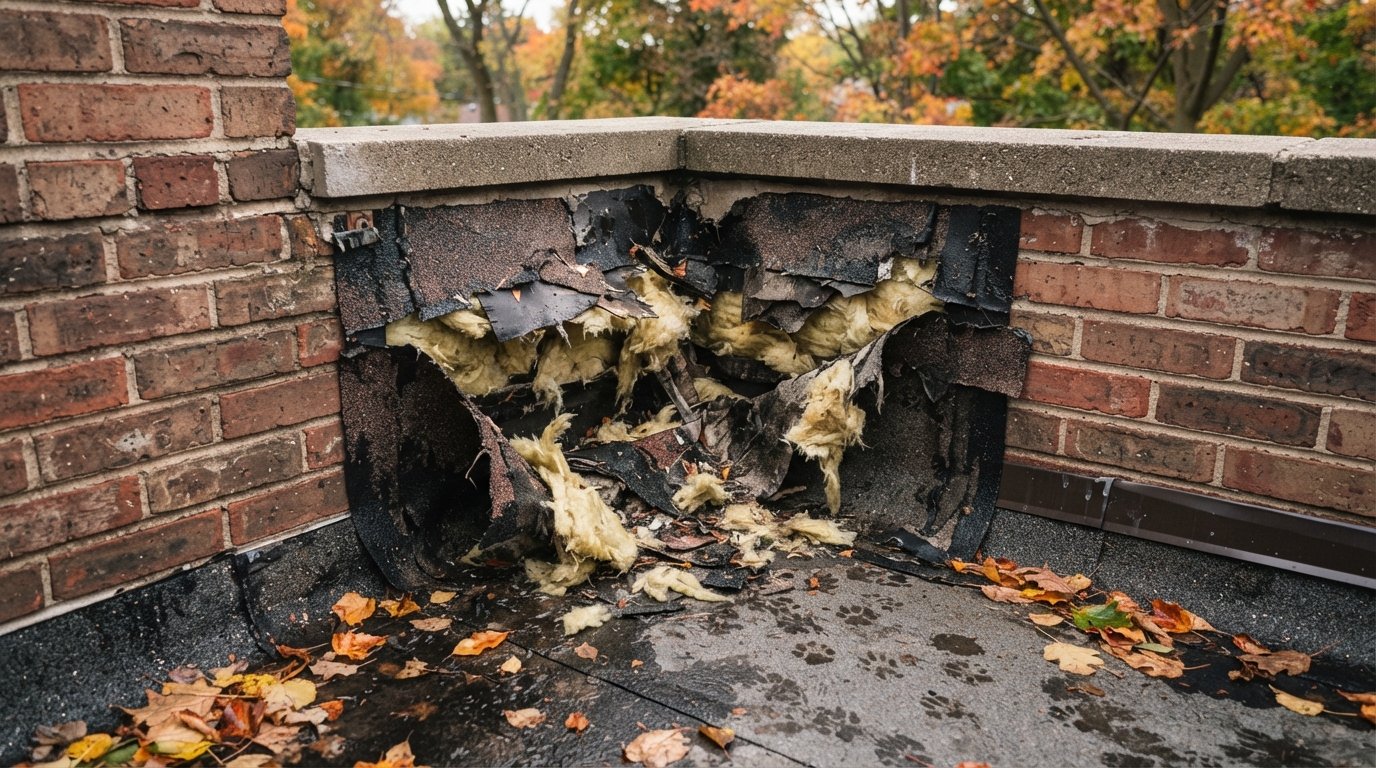
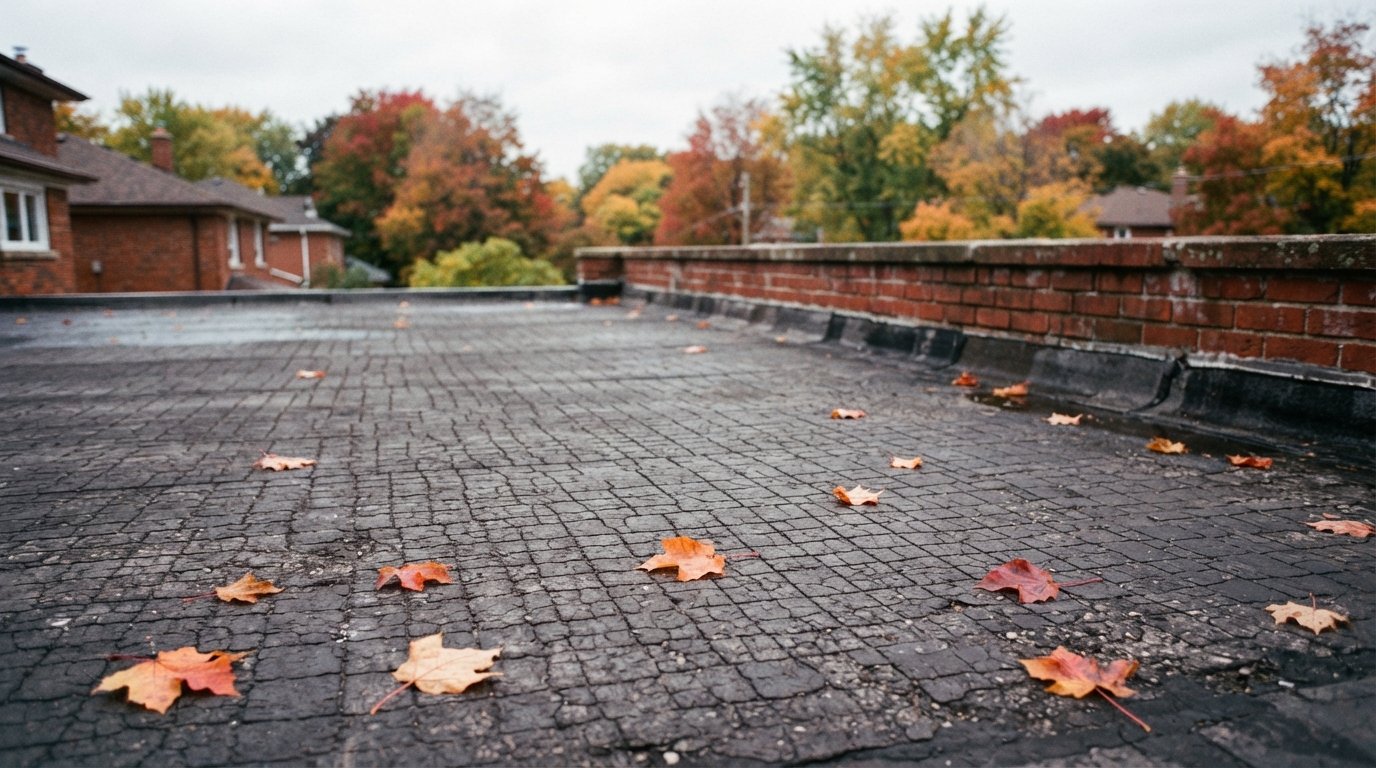
If you have ever looked down at an older flat roof and seen a surface that resembles cracked mud or the hide of an alligator, you have seen roof alligatoring. It turns up on a great many aging asphalt roofs on Toronto-area homes and small commercial buildings, and it is widely misunderstood.
We will go through what causes the pattern, how a roofer judges its depth, when a recoat makes sense and when it does not, and how to tell it apart from blistering and other surface defects. Autumn is a good time to look closely, because the leaves are coming down, the rain is steady, and any crack that reaches the felts will start taking on water before the freeze and thaw cycles of winter arrive.
What Roof Alligatoring Actually Is
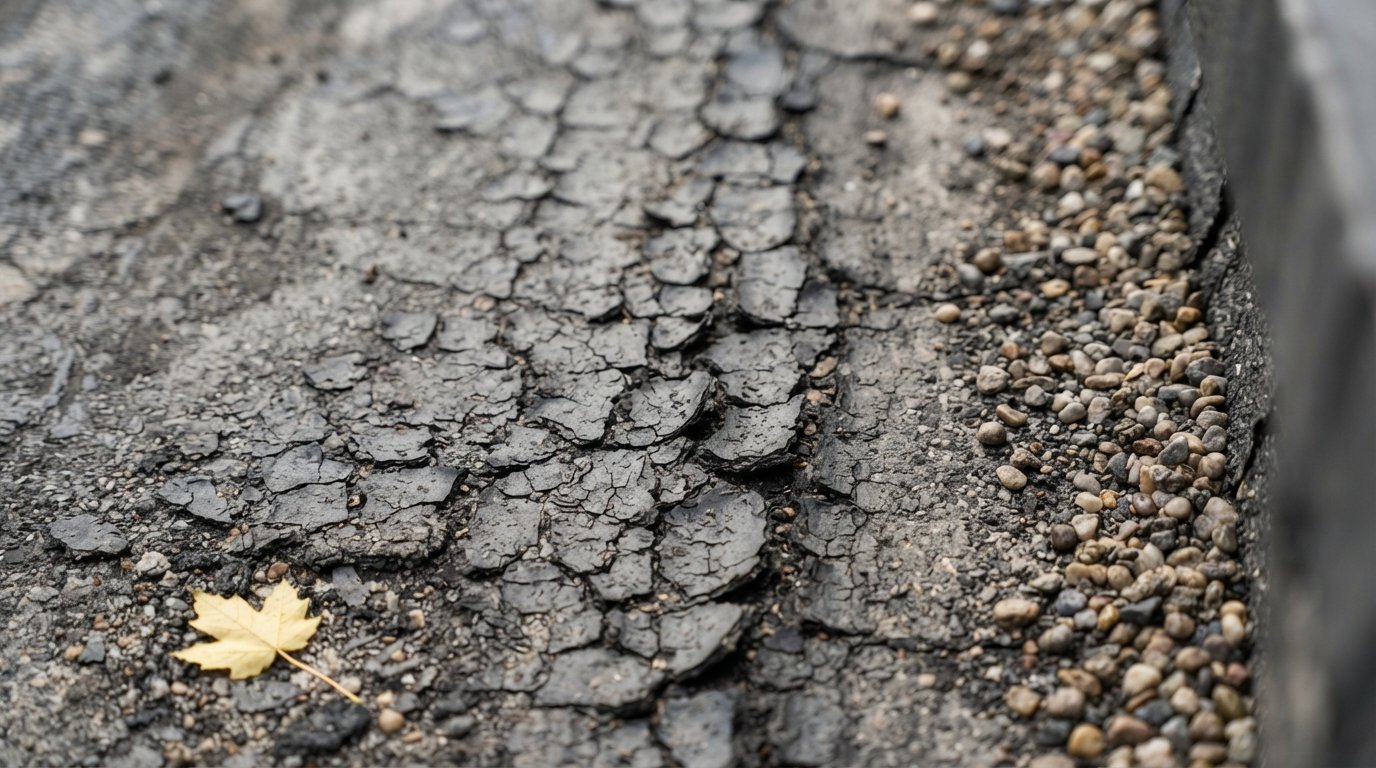
Roof alligatoring is a network of interconnected cracks that divides an asphalt surface into small, roughly rectangular or polygon-shaped plates. The cracks range from hairline to wide enough to slip a fingernail into, and plate edges often curl slightly.
The pattern forms on surfaces where asphalt is the top, exposed layer. On flat roofs in Ontario that usually means one of these:
- The flood coat on a built-up roof (BUR). A tar and gravel roof has a heavy pour of hot asphalt on top with aggregate embedded in it. Where the gravel has scoured away, usually near drains, scuppers, corners and walkways, the flood coat is left bare and starts to crack.
- Smooth-surfaced built-up roofs. Some older roofs were finished with a glaze coat and never had gravel at all, or were coated with an asphalt emulsion.
- Asphalt-based and aluminium roof coatings. Fibre-reinforced aluminium coatings, asphalt emulsions and cutback coatings applied as maintenance coats can alligator as they age, especially if they were put on too thick.
- Smooth modified bitumen. A smooth cap sheet that was meant to be coated but never was, or whose coating has worn off, will eventually oxidize and check.
Granulated modified bitumen and single-ply membranes such as EPDM and TPO do not alligator this way. If you are not sure which system you have, our overview of common flat roofing systems walks through how to tell them apart.
Why Asphalt Surfaces Crack Into A Pattern
Asphalt stays flexible because it contains lighter oils. Sunlight, heat and oxygen slowly drive those oils off, a process roofers call oxidation or weathering. The top layer turns hard and brittle while the asphalt beneath stays relatively soft.
Every day a dark roof heats in the sun and cools at night, and the brittle skin cannot stretch with the softer material under it, so it splits. Over a few seasons the cracks join into the familiar grid. Toronto’s climate speeds this along: hot summer sun on a dark surface, sharp temperature drops on autumn and spring nights, then freeze and thaw cycles that work water into any opening.
Several other factors make roof alligatoring appear sooner than it should:
- Lost gravel. Aggregate is the UV shield on a BUR. Where it is missing, the flood coat ages quickly.
- Coatings applied too heavily. A thick coat skins over on top while the bottom stays soft, and the skin cracks as it cures and shrinks.
- Coating over fresh asphalt. Some coatings applied before new asphalt has had time to weather can crack because the two layers shrink at different rates. Manufacturers usually specify a waiting period, so check the product data sheet.
- Ponding areas. Water that sits for days and then evaporates repeatedly can accelerate surface breakdown, and debris such as wet leaves holds moisture against the surface.
If you are seeing cracks that already let water through, or there is staining on a ceiling below, do not wait for a scheduled maintenance visit. We handle flat roof repair for active leaks and cracked surfaces, and a temporary seal before winter usually costs far less than drying out a wet ceiling later.
How Deep Does The Damage Go?
This is the question that decides everything. Two roofs can look identical from above, yet one has cracking only in a coating while the other has cracks running into felts that have been soaking up water for seasons.
A roofer will usually judge depth in a few ways. First, by looking at the width and edges of the cracks: fine, shallow checking with tight edges is different from wide cracks with curled, lifting plates. Second, by pressing on the surface: sound roofing feels firm, while roofing with wet felts or insulation below can feel spongy or crunchy. Third, by cutting a small test sample or core where needed, which shows how many plies there are, whether the felts are dry and whether the insulation is wet. That cut is then patched properly. On larger roofs an infrared or capacitance moisture survey maps wet areas without cutting everywhere.
| Stage | What you see | How deep it usually goes | What it usually means |
|---|---|---|---|
| Surface checking | Fine hairline cracks, plates flat, surface still sound underfoot | Top skin of the coating or flood coat only | Early aging; a good candidate for cleaning and a compatible recoat |
| Open alligatoring | Cracks you can see clearly from standing height, plate edges starting to curl | Through most of the coating or flood coat | UV protection is largely gone; repair cracks and restore the surface soon |
| Deep alligatoring | Wide cracks, plates loose or flaking, dark felt visible in the gaps | Into the top ply of felt | Water can reach the plies; test cuts needed before deciding on restoration |
| Failed membrane | Cracks with soft or spongy areas, interior stains, felts fraying or brittle | Through several plies, often into insulation | Restoration is rarely sensible; local replacement or full replacement |
Roof Alligatoring Compared With Blistering And Other Defects
Owners often use “alligatoring” and “blistering” interchangeably. They are different problems, and the fix for one can make the other worse.
Blisters are raised, dome-shaped pockets. They form when air or moisture is trapped between plies or between the membrane and the deck during installation, then expands when the sun heats it. A blister feels soft or hollow when pressed. Roof alligatoring, by contrast, is flat: the surface stays at the same level, it is simply broken into plates.
The two often show up together on an old BUR. In that case the blisters are usually cut, dried, re-adhered and patched before any surface restoration.
| Defect | How it looks | Usual cause | Typical response |
|---|---|---|---|
| Alligatoring | Flat surface broken into a grid of small plates | UV oxidation and thermal cycling of exposed asphalt or coating | Recoat, restore or replace depending on depth |
| Blistering | Raised, soft domes of varying size | Trapped air or moisture expanding under heat | Leave small stable ones under watch; cut, dry and patch larger or broken ones |
| Splitting | Long straight cracks, often running in one direction | Movement in the deck or insulation joints pulling the membrane apart | Investigate the substrate; reinforced repair or replacement |
| Ridging | Long raised ridges, often following insulation board edges | Moisture or movement at board joints under the membrane | Monitor or repair; often a sign of a bigger installation issue |
Diagnosis matters: a heavy coating over an active blister or split can trap moisture and hide a growing problem.
Recoat, Repair Or Replace: How The Decision Gets Made
When roof alligatoring is confined to the surface, the roof below is dry, and the membrane still has reasonable life in it, restoring the surface is often the most economical choice. When the cracking has reached the felts, or the roof is already near the end of a normal service life, putting money into coatings tends to buy only a short reprieve.
When a recoat is a reasonable choice
A recoat suits a roof where the cracks are in the coating or the top of the flood coat, test cuts show dry plies and dry insulation, there are no widespread blisters or splits, and the flashings and drains are in serviceable condition. On a house it is often a way to get several more seasons out of a roof that was installed reasonably well.
When targeted repair is the right call
Repair suits roofs where deep cracking is localized, for example around a drain or where gravel was scoured off along one edge, while the rest of the roof is in good shape. The damaged area is cut out and rebuilt, or overlaid with a reinforced patch, and the surface protection is put back. On a gravel roof that means a new flood coat with fresh aggregate embedded in it. This is also the moment to deal with roof alligatoring near seams, curbs and wall flashings, the details that leak most.
When replacement is the honest answer
Replacement is usually the better path when cracks have opened into the felts across large areas, moisture surveys show wet insulation in multiple zones, the felts are brittle or fraying, the roof has already been coated several times, or there are existing layers that would need to be removed anyway. If that is where your roof stands, our flat roof replacement page explains what a tear-off and new membrane involve.
| Option | Best suited to | What is involved | Typical cost range (estimate only) |
|---|---|---|---|
| Clean and recoat | Surface checking, dry roof, sound membrane | Cleaning, crack sealing with mastic and fabric where needed, primer if required, compatible coating | Often roughly $2 to $5 per square foot, varying by product, access and prep |
| Local repair | Deep cracking in one or two areas | Cut out damaged plies, rebuild or patch, restore flood coat and gravel or coating | Commonly in the range of $500 to $2,500 per area, depending on size and access |
| BUR restoration | Gravel roof with widespread surface aging but dry plies | Remove loose gravel, repair, new flood coat, new aggregate | Often roughly $4 to $8 per square foot, highly dependent on roof size |
| Full replacement | Cracking into felts, wet insulation, end of service life | Tear-off, deck check, new insulation where needed, new membrane system and flashings | Commonly around $12 to $22 per square foot for residential work, depending on system and details |
All four rows are broad GTA ranges that move with roof size, access, existing layers, insulation and flashing work. Use them to budget, then compare written quotes from contractors who have actually been on the roof.
How A Proper Recoat Is Done On An Alligatored Surface
Most coating failures on alligatored roofs are preparation failures, not product failures. A coating laid over dirt, loose plates and open cracks copies the cracked pattern within a season or two. Done properly, the sequence usually looks like this:
- Inspection and test cuts. Confirm the roof is dry and worth restoring.
- Repairs before coating. Repair blisters, splits, failed seams, wet sections, flashings and drains so the coating is not covering a known leak.
- Cleaning. Remove leaves, dirt, loose granules and any flaking coating. Then let the surface dry fully.
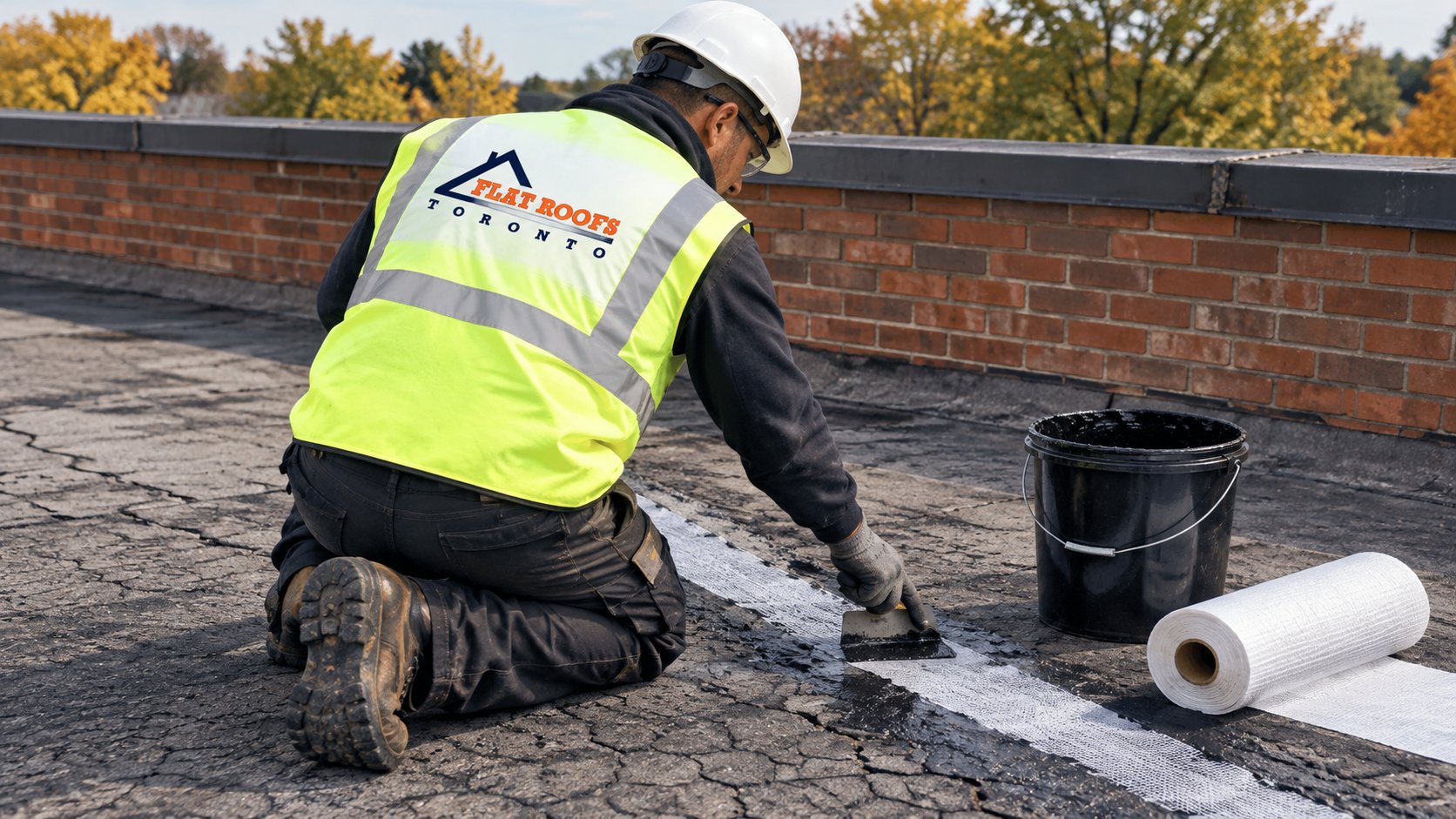
- Crack treatment. Wider cracks are filled with a compatible mastic, and where needed a reinforcing fabric is embedded so the crack cannot simply reopen through the new coat.
- Primer where the system calls for it. Some coatings need a primer or base coat on oxidized asphalt to bond and to stop the asphalt from bleeding through and staining.
- Coating at the specified rate. Applied evenly at the thickness the manufacturer specifies. Thicker is not better if it causes the same skinning and cracking.
- Curing and inspection. A final walk-through catches thin spots and missed laps.
Matching the coating to the roof
Asphalt-based roofs are commonly restored with asphalt-compatible products such as fibre-reinforced aluminium coatings or asphalt emulsions, and some acrylic, silicone and other elastomeric systems can be used over asphalt when the right primer or base coat is part of the system. A contractor should be able to name the specific product, explain why it suits your surface and show you the manufacturer’s application instructions. If a manufacturer’s warranty is involved, its terms depend on the product, the contractor’s qualifications and the preparation done, so ask to see the warranty document itself before work starts.
Why autumn timing is tight
Most liquid coatings specify a minimum air and surface temperature and a period without rain or heavy dew after application. In October the days can still be workable, but nights get cold, mornings bring dew, and rainy spells can last several days. A coating rained on before it cures may wash off or never bond. Reputable contractors will book coating work around the forecast and may recommend sealing cracks now and doing the full recoat in late spring if the weather window closes.
Residential And Commercial Roofs Show It Differently
On houses, roof alligatoring tends to show up on rear additions, garages, porches and older tar and gravel roofs over kitchen extensions. Because residential flat roofs are small, a localized repair or a well-prepared recoat is often affordable, but the details around walls, chimneys and skylights matter just as much as the open field. Our residential flat roofing work covers these smaller roofs.
On commercial buildings, plazas and low-rise apartments, alligatoring is often widespread on large BUR or coated roofs and may appear in bands where foot traffic to rooftop units has worn off the gravel. Here a moisture survey is worth the cost, because it tells you how much of the roof is still dry and restorable versus how much needs to be cut out. For larger buildings, see our commercial flat roofing services.
Questions To Ask A Contractor About Your Cracked Roof
A good contractor will answer these plainly:
- How deep do you think the cracking goes, and how did you determine that?
- Did you do any test cuts or a moisture survey, and what did you find?
- Which specific product would you use, and is it compatible with my existing surface?
- What preparation is included: cleaning, crack sealing, fabric reinforcement, primer?
- What are the temperature and weather limits for this product, and how will you handle the autumn forecast?
If the answers are vague, or the quote is for “coating the whole roof” without any mention of moisture testing or preparation, get a second opinion. More common questions are collected on our flat roofing FAQ page.
Is roof alligatoring an emergency?
Can I just paint over the cracks with a roof coating?
How is roof alligatoring different from blistering?
Does alligatoring mean I need a new roof?
Can a recoat be done in October?
How can I slow down alligatoring on my flat roof?
Get Roof Alligatoring Assessed Before Winter
Cracked asphalt surfaces are easier and less costly to deal with when the damage is still in the coating or flood coat. Flat Roofs Toronto checks how deep the cracking runs and lays out recoating, repair and replacement side by side, so you can decide with real information before the cold sets in.
Call us today at (647) 333-3528 or request a free estimate.
Assessing and restoring aged asphalt flat roofs for property owners in Toronto and the GTA.