
A roof condition assessment is a structured, documented review of a roof that tells an owner what the roof is made of, what condition each part is in, where moisture has got in, what needs doing and roughly when. For a plaza, a low-rise apartment building, an industrial unit or a condominium, it turns “the roof seems fine” into something you can budget around. Autumn is a practical time to commission one: the summer has shown how the roof copes with heat, the first cold rains are revealing leaks, and next year’s capital budget is being drafted.
Here is what a good report should contain, how moisture testing works, how the findings feed capital planning and reserve budgets, why an assessment matters before you buy or lease, and how often to repeat one.
What A Roof Condition Assessment Is, And What It Is Not
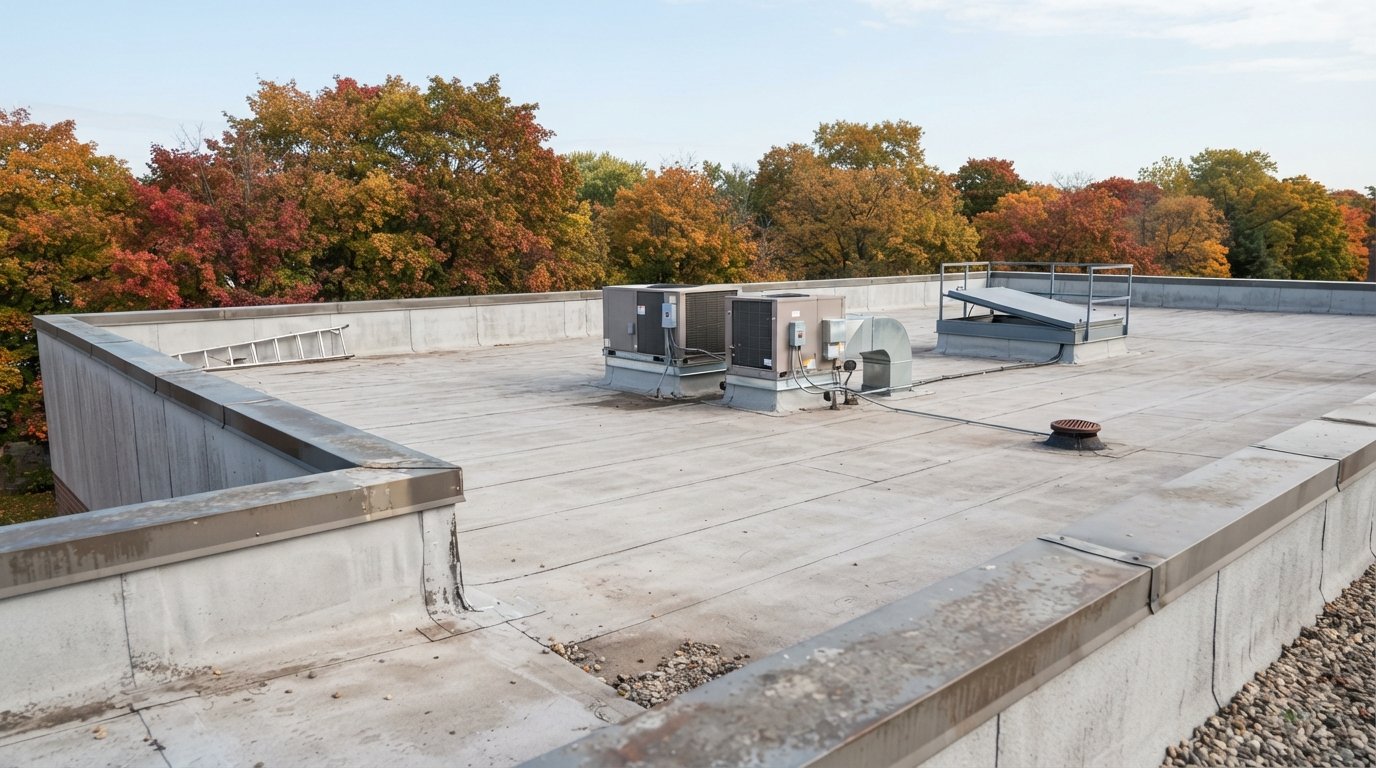
A routine inspection answers one question: is anything wrong right now? A roof condition assessment answers several: what is this roof, how long is it likely to last, what will it cost to keep it working, and when should it be replaced? The difference shows up in the deliverable. An inspection might be a short list of repairs. An assessment is a report with a roof plan, photos keyed to locations, condition ratings by section, moisture findings, prioritised recommendations and budget ranges.
It is also not a warranty, a promise of remaining life or a substitute for an engineer’s structural review. A careful report states its limitations: areas that could not be accessed, equipment that was not moved, and the fact that a roof can look sound on top while the insulation beneath is wet.
Owners and managers often come to us after a leak, wanting to know whether the problem is a single repair or a sign of a roof near the end of its life. Our commercial flat roofing services include repairs, assessments and planned replacement, so findings can be acted on in whichever order makes sense for the building.
What The Report Should Contain
Formats vary, but a useful report covers the same core sections. If a report you have been given leaves one of these out, ask why.
| Report section | What it includes | Why it matters |
|---|---|---|
| Roof plan | Sketch or drawing of each roof area, drains, curbs, hatches, units and test locations | Lets anyone find a deficiency on the roof years later |
| System description | Membrane type, surfacing, insulation, deck, number of existing roofs, approximate age | Determines repair methods and whether a recover is even possible |
| Membrane condition | Blisters, splits, open laps, surface wear, ponding areas, previous patches | Shows whether problems are isolated or widespread |
| Flashings and penetrations | Base flashings, counterflashings, metal coping, curbs, pipe and conduit penetrations, pitch pockets | Most commercial leaks start at edges and penetrations, not in the field |
| Drainage | Drains, strainers, scuppers, overflow paths, slope and ponding | Standing water accelerates wear and adds load |
| Moisture findings | Survey method, wet areas mapped, core results | Wet insulation changes the repair or replacement plan |
| Recommendations and budget | Prioritised actions with timing and estimated cost ranges | Turns observations into a plan you can fund |
Photos should be numbered and tied to the roof plan. A folder of unlabelled photos is of limited value to the next person who has to find that split seam near the third rooftop unit.
Membrane, Flashings And Drainage: What The Assessor Looks At
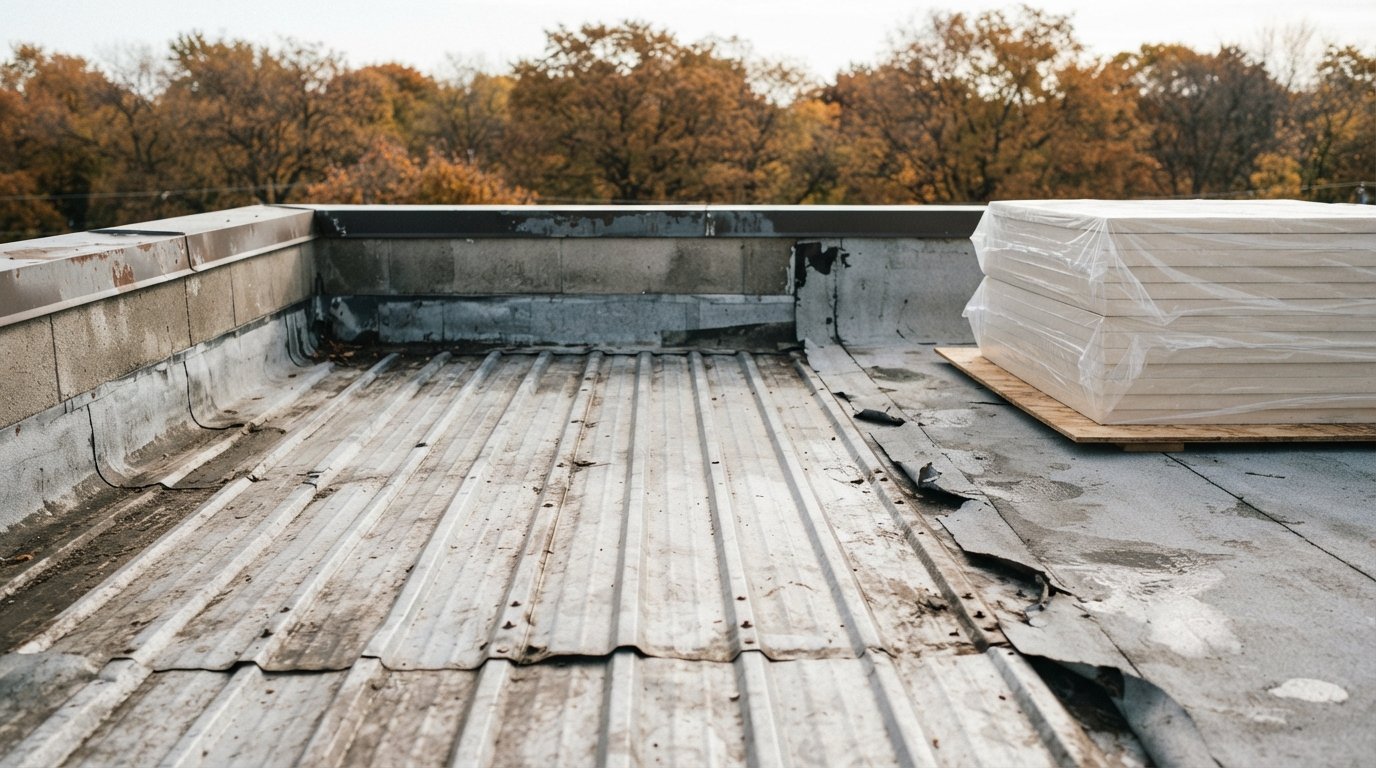
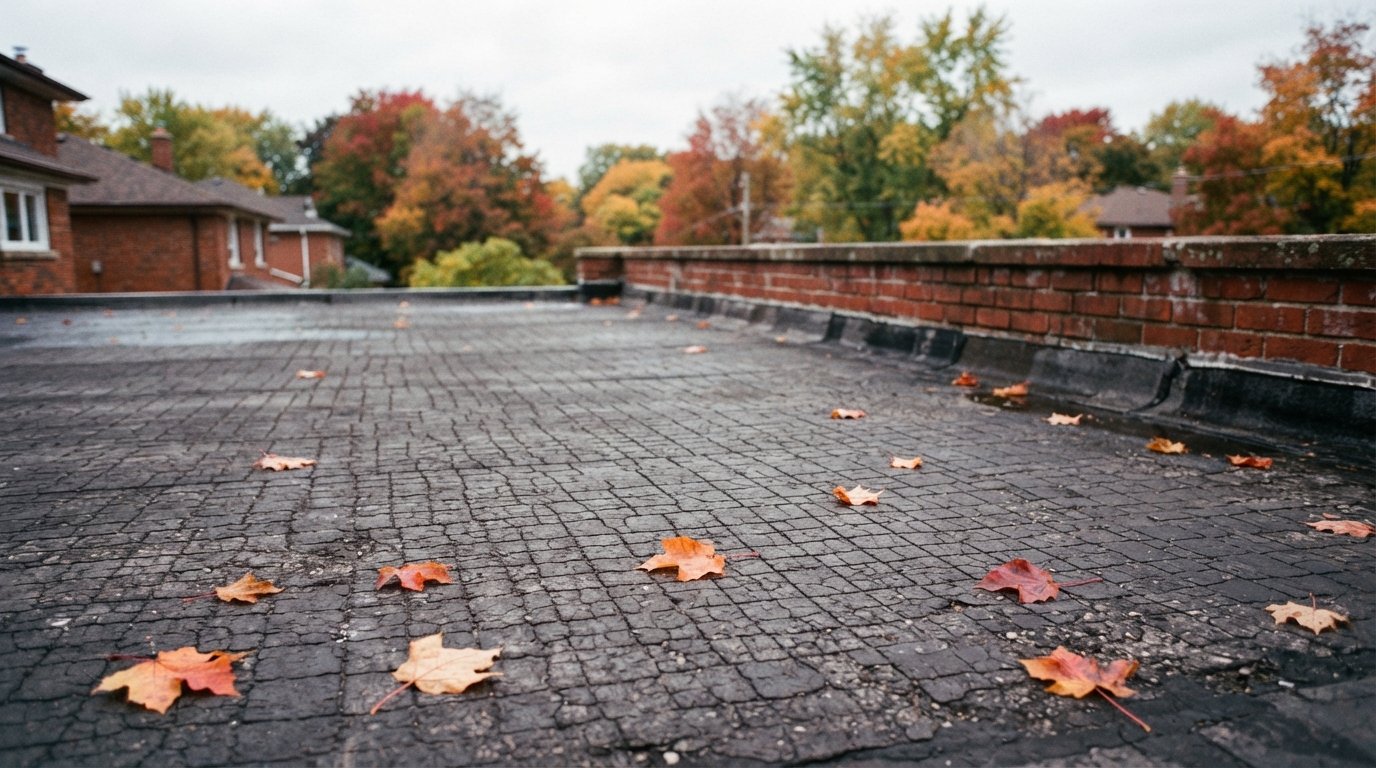
The membrane is assessed area by area. On modified bitumen roofs, assessors look for open laps, granule loss exposing the bitumen, blisters and cracking around curbs. On built-up gravel roofs, they look for bare spots where the gravel has migrated, alligatored bitumen and blisters under the stone. On EPDM, the focus is seam adhesion, shrinkage pulling at edges and corners, and punctures. On TPO and PVC, it is welded seam integrity, surface crazing and damage around equipment.
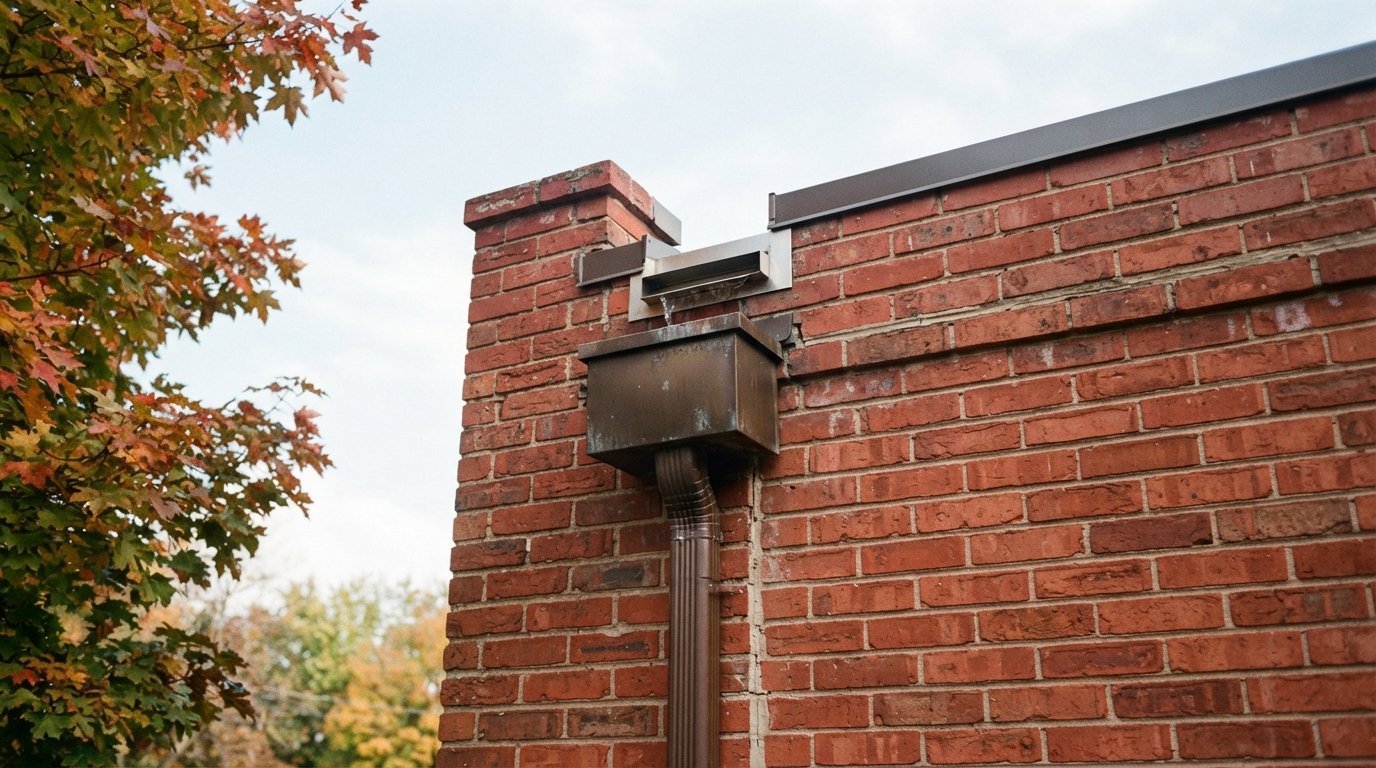
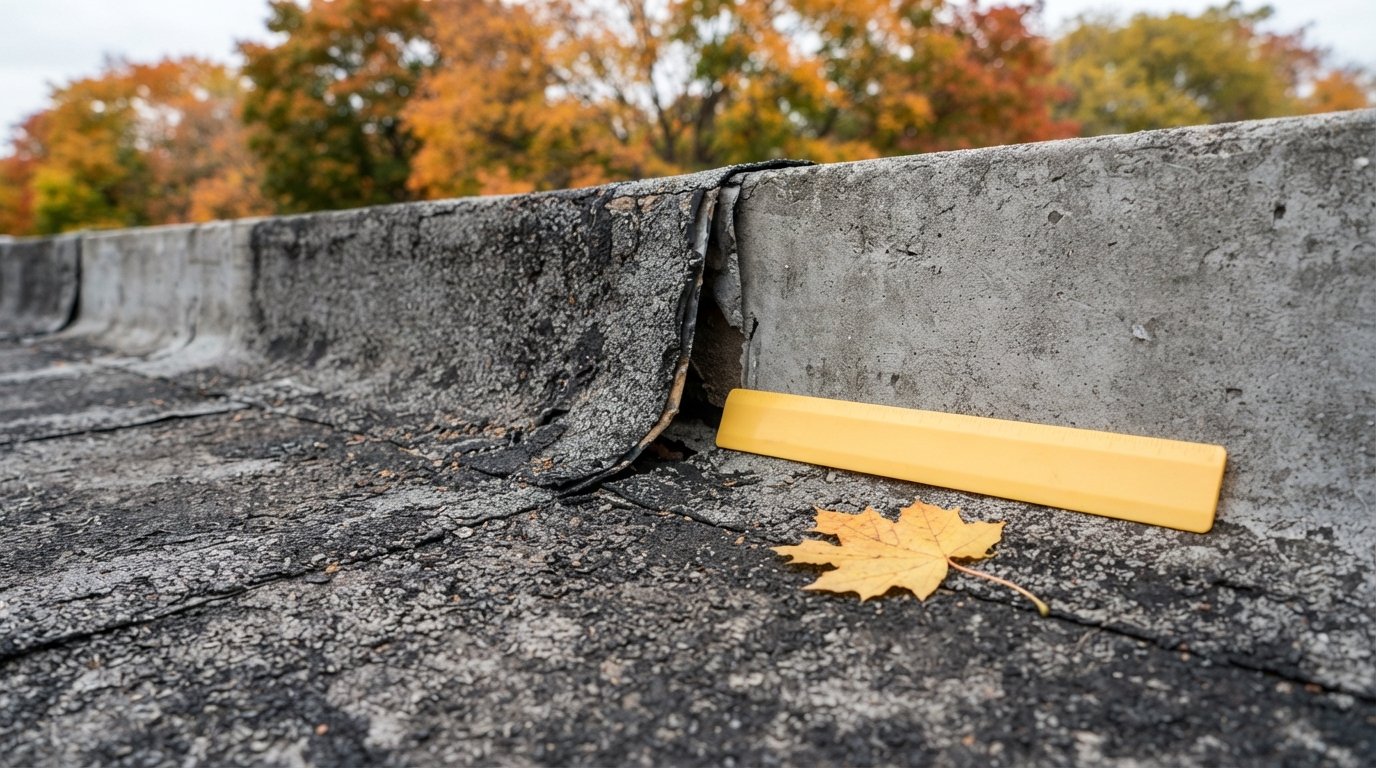
Flashings get the closest look because that is where water usually enters. Base flashings at parapets can slip or split along the top edge. Metal counterflashing and coping joints open as sealant ages. Rooftop unit curbs are often patched repeatedly as service technicians come and go, and old pitch pockets around steel supports frequently dry out and crack.
Drainage is judged both by what is there and by the evidence left behind. Dirt rings and algae lines show where water sits after rain. Missing strainers, debris at scuppers and drains set above the surrounding roof surface all go in the report, along with a note on whether the roof has a safe overflow path if a drain blocks.
Inside the building, the assessor should also look at top-floor ceilings, stairwell walls under roof hatches, and any staining near interior drain leaders, because interior evidence helps locate problems the roof surface hides.
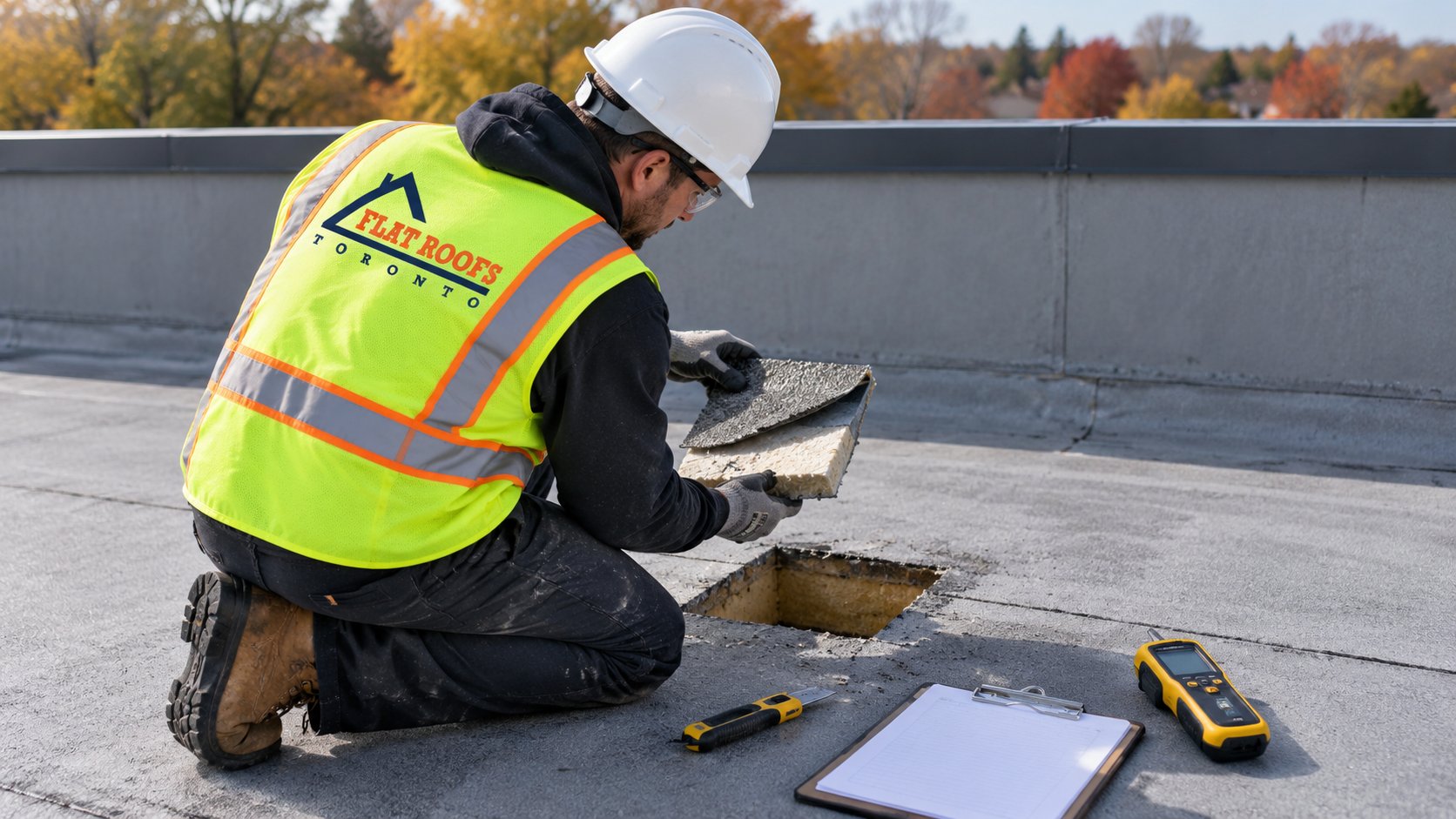
Moisture Testing: Finding Water You Cannot See
A flat roof can leak into its insulation for a long time before water reaches a ceiling. Wet insulation loses much of its insulating value, adds weight, can damage the deck and, critically, usually rules out simply installing a new roof over the old one. That is why moisture testing is the part of a roof condition assessment that most changes the budget.
| Method | How it works | Strengths | Limitations |
|---|---|---|---|
| Infrared thermography | Thermal camera scan after a sunny day, as wet insulation holds heat longer into the evening | Covers large areas quickly and maps suspect zones | Needs the right weather; surface water, gravel and some insulation types confuse readings; must be confirmed with cores |
| Capacitance or impedance scanning | Hand-held or wheeled scanner reads changes in electrical properties of the roof assembly | Works in daylight, good for grid surveys | Reads only the upper layers; affected by surface moisture and some materials |
| Core cuts | Small sample cut through the roof to the deck, then patched | Shows actual layers, insulation type, number of roofs and whether it is wet | Only tells you about that spot; each cut must be properly repaired |
| Electronic leak detection | Low or high voltage testing that finds breaches in the membrane | Pinpoints holes in certain membranes | Depends on deck and membrane type; not suited to every roof |
Autumn can be good infrared weather when a clear, sunny day is followed by a clear, cool evening, but dew, recent rain or leaves on the surface spoil the scan. Most reliable reports combine a scanning method with a few cores to confirm what the scan suggested.
Remaining Life Estimates And Capital Planning
Every report should include an estimate of remaining service life, and every owner should read it as a range, not a date. A roof described as having “three to six years remaining, with repairs” is being assessed honestly. The estimate depends on age, membrane type, how much of the roof is wet, the condition of flashings and how well the roof will be maintained from here.
Good recommendations are grouped by urgency, for example:
- Immediate: active leaks, open flashings, blocked drains, anything that will let water in this season.
- Short term: repairs that will extend life, such as resealing coping joints, reflashing curbs and adding walkway pads.
- Planned: partial or full replacement, with a target window and a budget range.
That structure is what lets an owner plan. A building with a roof that has a few years left can spend modestly on repairs, set money aside and choose its replacement season, instead of paying for an emergency tear-off in poor weather. When replacement is the recommendation, our flat roof replacement page explains how a planned project usually runs.
How To Read A Report Critically
Reports vary a great deal in quality, and owners are often handed one with little explanation. A few checks help you judge whether the document will actually support a decision.
- Are recommendations specific? “Reflash curb at RTU 3, north side, approximately 4 metres” is actionable. “Repair flashings as needed” is not, and it cannot be priced or checked afterwards.
- Do the findings agree with each other? A roof described as being in good condition with a long remaining life should not also show large wet areas on the moisture map. If they conflict, ask the author to explain.
- Is replacement recommended without testing? A full tear-off recommendation with no cores or moisture survey may be right, but you have no evidence either way.
- What is in the budget figure? Replacement estimates should say whether they include insulation, drains, metal flashings, curb raising for rooftop units, hoisting and permits where needed. Two figures that look similar can cover very different scopes.
- Is there a limitations section? Honest reports list what was not seen, such as areas under equipment, roofs that were wet on the day, or sections that could not be reached.
If you are comparing a contractor’s report with a consultant’s, put the deficiency lists side by side. Agreement on the main issues is reassuring; large differences are worth a site meeting.
Reserve Budgets For Condominiums And Multi-Unit Buildings
For condominium corporations in Ontario, the roof is one of the major components covered by the reserve fund study, which corporations are required to carry out and update periodically under provincial condominium rules. A reserve fund planner estimates when components will need replacing and what they will cost. A current roof condition assessment gives that planner real information instead of an assumed life based on the roof’s age.
Co-operatives, rental apartment owners and commercial landlords are not working under the same reserve fund rules, but they face the same question: how much should be set aside, and when will it be spent? An assessment with section-by-section condition ratings lets a board or owner phase work, for example replacing the worst area first and the rest a few years later, which can spread the cost.
Boards should confirm current legal requirements with their condominium manager, lawyer or reserve fund planner. The roofing report supports those decisions; it does not replace professional advice on them.
Before You Buy Or Lease A Building
A general property condition report in a commercial purchase often includes a walk of the roof, but it may be visual only. A separate roof condition assessment adds moisture testing, cores and a closer look at flashings, which can uncover a wet roof that looks fine from the surface. That information belongs in the negotiation, not in the first year of ownership.
Leasing deserves the same care. Under many commercial leases, especially net leases, tenants can be responsible for some or all roof repairs. Before signing, a tenant should know the roof’s condition and age, and the lease should be clear about who pays for repairs and replacement. Have a lawyer review those clauses; a roof report gives them facts to work with.
Useful documents to request from a seller or landlord include past repair invoices, the original installation date, any manufacturer warranty paperwork and previous reports. Warranty terms vary widely, so read the manufacturer’s current documents rather than relying on a summary.
How Often To Have A Roof Condition Assessment Done
There is no single schedule that fits every building, but common practice looks like this:
| Trigger | Suggested scope | Notes |
|---|---|---|
| Routine maintenance | Visual inspection, spring and autumn | Clears drains, catches flashing and sealant issues early |
| Every few years, or before a reserve fund update | Full assessment with roof plan and moisture survey | Gives planners current data |
| Before buying or leasing | Full assessment with cores | Allow time before conditions are waived |
| After a severe storm or repeated leaks | Targeted assessment of affected areas | Document damage for insurers where relevant |
| Before a recover or replacement decision | Moisture survey and cores across all areas | Determines what can stay and what must come off |
Cost depends on roof size, the number of separate areas, access and whether moisture testing is included. As a rough guide only, a visual assessment of a smaller building may fall somewhere between several hundred and a couple of thousand dollars, with infrared surveys, cores and large or complex roofs costing more.
Ask who will do the work. Some owners use a roofing contractor; others hire an independent roofing consultant or engineer, especially when the report will guide a large tender. Either can be appropriate, as long as the method and the separation between assessment and sales are clear. You can see the kind of work we do on our projects page.
How is a roof condition assessment different from a roof inspection?
Does every assessment need core cuts?
How long does a roof condition assessment take?
Can a roof condition assessment support our reserve fund study?
Should I get an assessment before buying a commercial building?
How often should a commercial roof be assessed?
Book A Roof Condition Assessment Before Next Year’s Budget Is Set
Knowing what your roof needs, and when, is far cheaper than finding out from a tenant’s ceiling. Flat Roofs Toronto assesses flat roofs on plazas, apartment and condominium buildings and commercial units, with clear photos, keyed roof plans and practical recommendations.
Call us today at (647) 333-3528 or request a free estimate.
Roof condition assessments for plazas, apartment buildings and condominiums in Toronto and throughout the GTA.