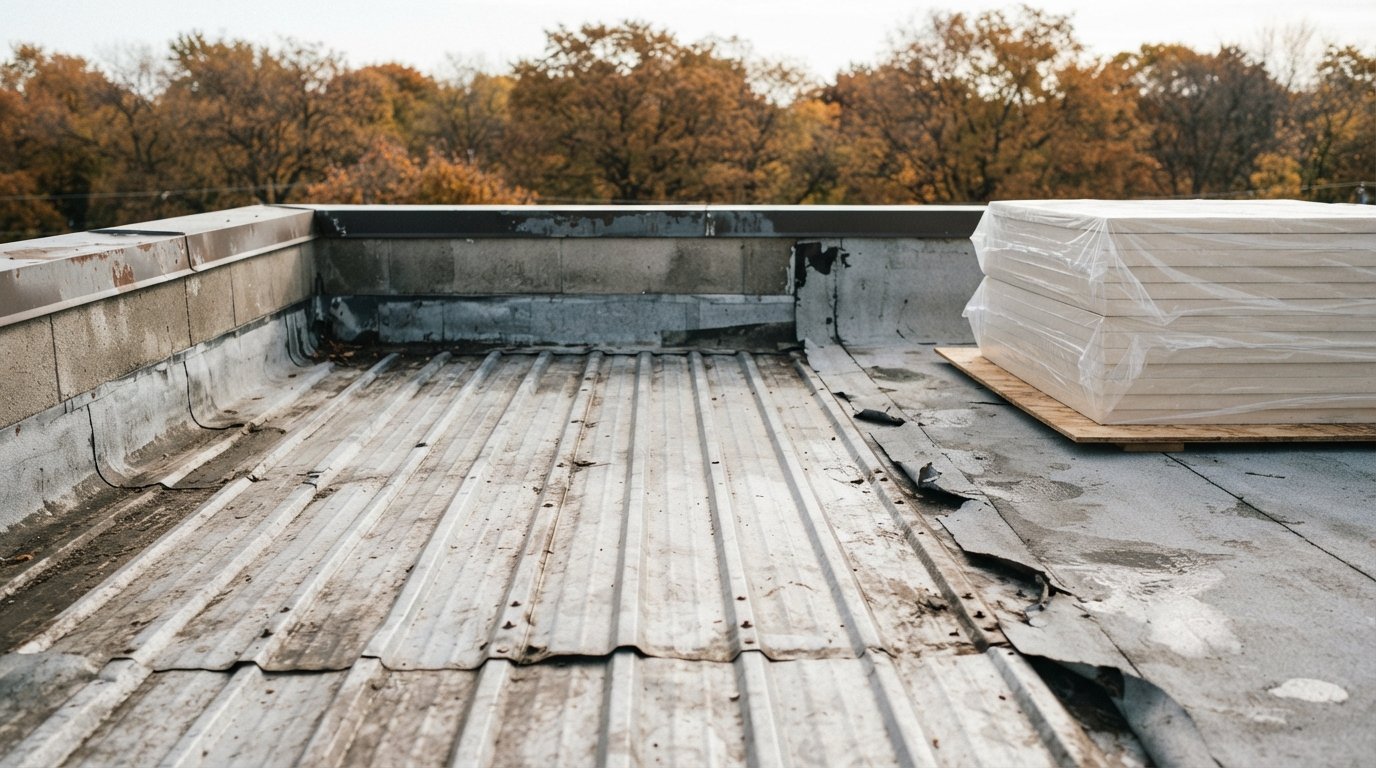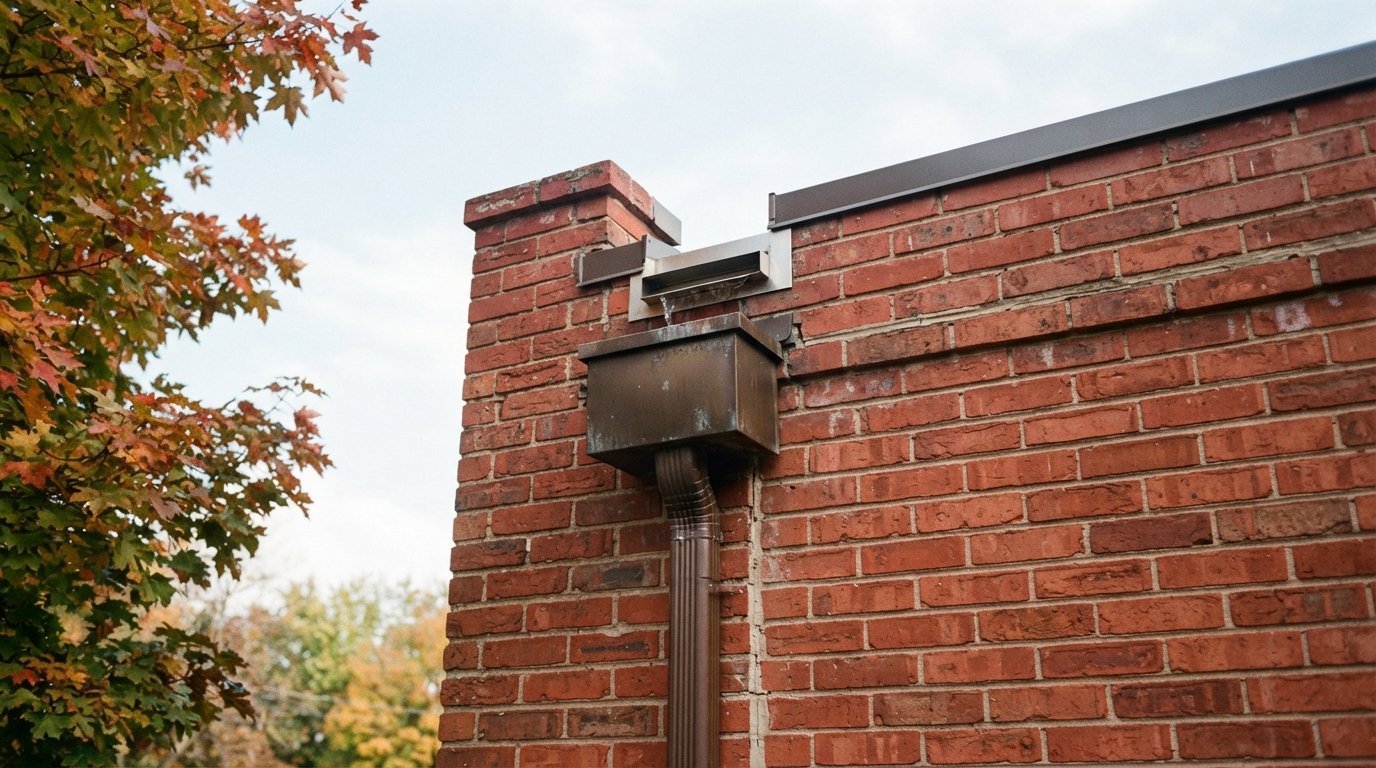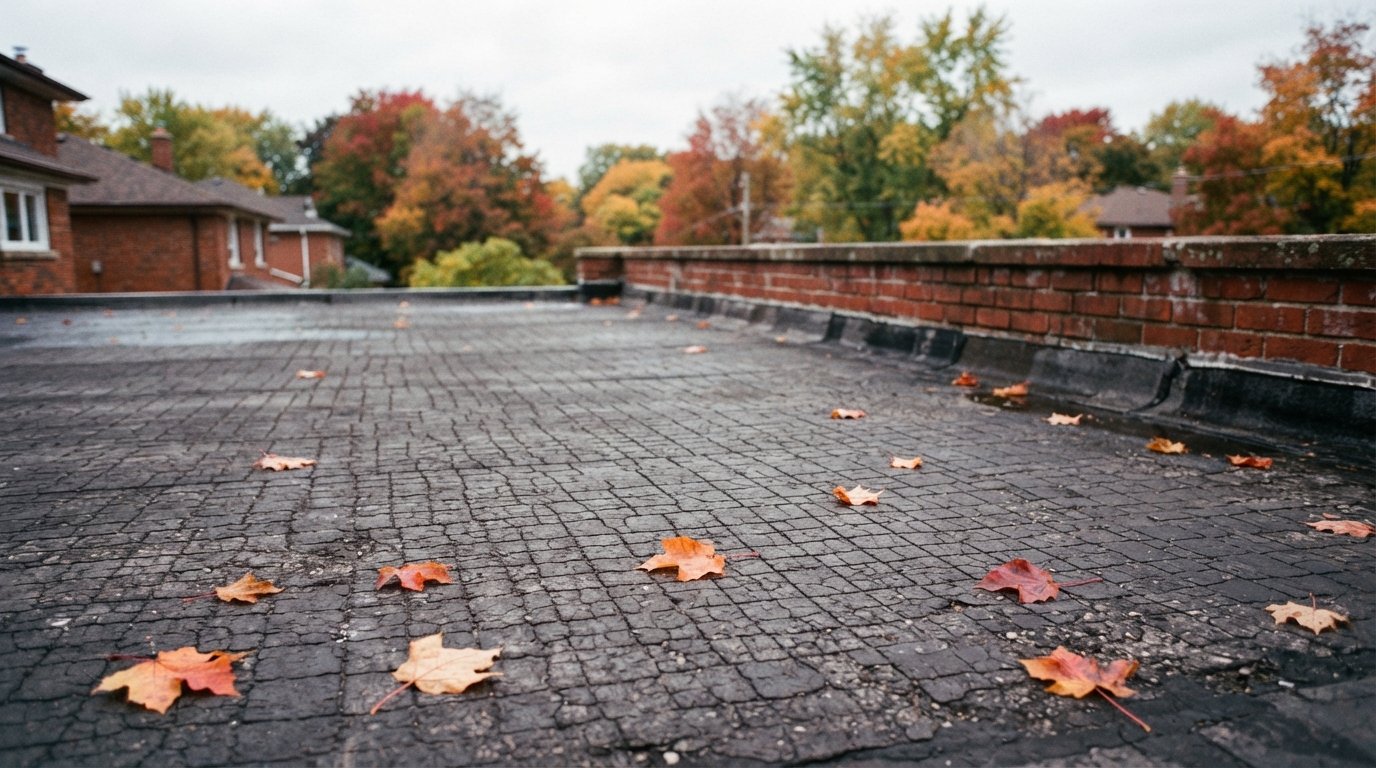

Every flat roof with an internal drain depends on one small, inexpensive part sitting on top of it: the roof drain strainer. When the maples and oaks across the GTA start dropping leaves, that dome of cast iron, aluminium or plastic is the only thing standing between a wet mat of debris and the pipe that runs down through your building. If the strainer is missing, cracked or the wrong type, leaves go into the drain instead of piling up beside it, and a clog you could have cleared by hand becomes a blockage inside a wall.
The sections below cover how a flat roof drain is put together, which strainers suit which roofs, why drain bowls leak at the clamping ring, when a retrofit drain insert makes sense, how overflow paths protect the building, and what to check after a heavy autumn rain.
How A Flat Roof Drain Works, And Where The Roof Drain Strainer Fits
A typical internal roof drain has four parts:
- The drain body or bowl. A cast iron, PVC, ABS or spun metal fitting set into the roof deck, with a wide flange at the top where the membrane is sealed and an outlet below that connects to the leader pipe.
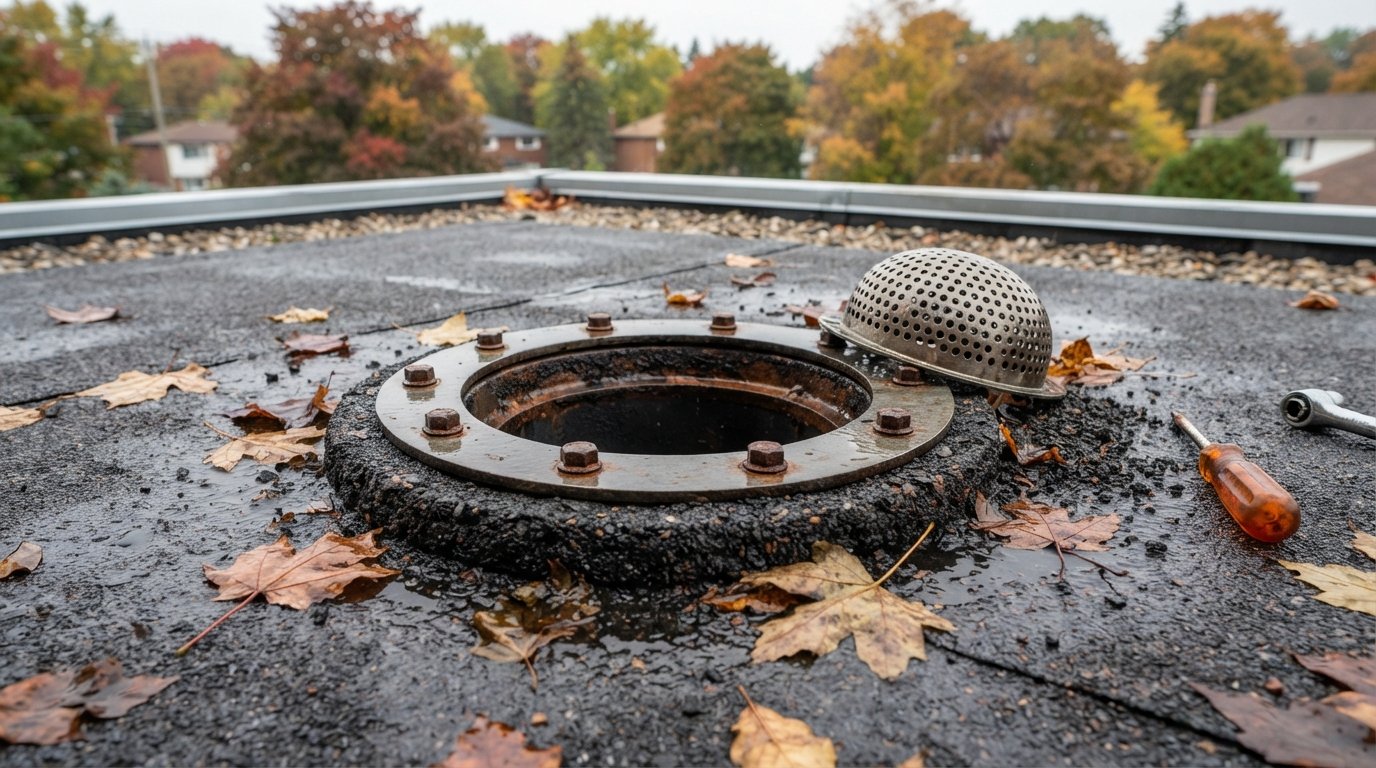
- The clamping ring. A heavy ring bolted onto the bowl flange. The membrane, or a lead or membrane flashing sheet, is sandwiched between ring and flange, and that clamp is what makes the joint watertight.
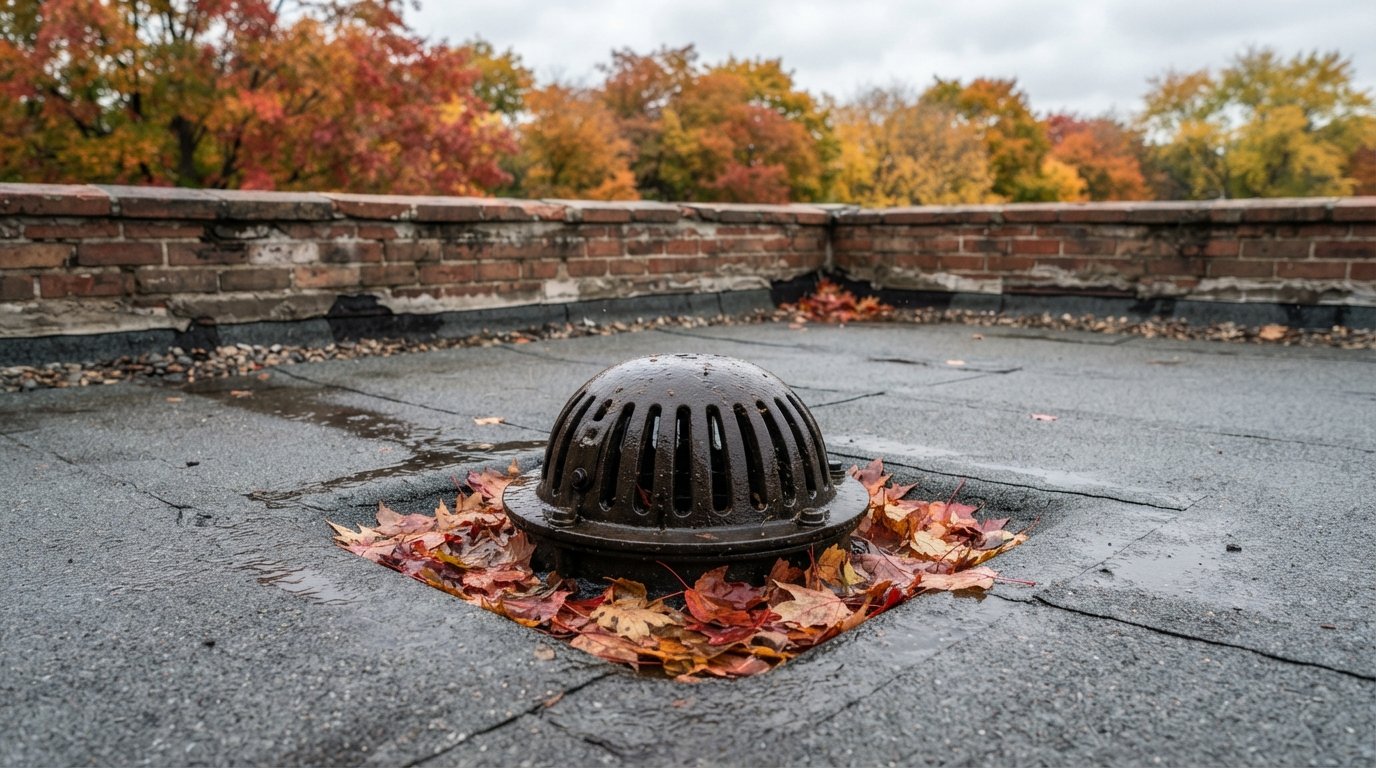
- The roof drain strainer. The dome or grate on top of the ring. It lets water through while keeping leaves, gravel and roofing scraps out of the pipe.
- The leader. The pipe carrying water down to the storm connection or an exterior outlet. In many older Toronto homes it passes through a closet, a bathroom wall or the basement on the way.
The drain should be the lowest point in its area, reached by sloped framing, tapered insulation or a shallow sump. When it sits slightly high, which is common after a roof has been re-covered more than once, water ponds in a ring around the strainer and only drains once the puddle spills over the flange.
If water is already coming inside, do not wait for a maintenance visit. Our emergency flat roof repair service handles active drain leaks, overflowing roofs and blocked leaders, which tend to show up together on the first heavy rain after leaf drop.
Roof Drain Strainer Types And Which One Suits Your Roof
Strainers are not interchangeable. Drains from different manufacturers and decades use different ring diameters, bolt patterns and threads, so a good roofer measures the ring, notes how the old strainer was held (screws, a threaded collar or a friction fit) and brings the matching part, not a one-size-fits-all plastic dome that rattles loose in the first windstorm.
| Strainer style | Where it is used | Strengths | Weak points |
|---|---|---|---|
| Cast iron dome | Older built-up and modified bitumen roofs | Heavy, stays put, tall dome keeps flowing when leaves mat at the base | Rusts, bolts seize, can crack from impact or freezing |
| Aluminium dome | Retrofit drains and newer installations | Light and corrosion resistant | Must be positively fastened or it can be knocked off |
| Plastic dome | Residential PVC and ABS drain bodies | Inexpensive, will not rust | Turns brittle in sun, clips snap, may not fit older iron rings |
| Flat grate | Roof terraces and paver decks | Sits flush, no trip hazard | One wet leaf mat can seal it |
| Wire basket | Scuppers and downspout heads | Cheap and easy to inspect | Thin wire crushes or blows out |
For a residential roof under trees, the best choice is usually a tall, fastened dome matched to the drain body. Height matters: leaves collect around the base in a soggy collar, but the upper slots stay open. A flat grate has no such reserve, which is why terrace drains under a big tree need clearing several times each autumn.
Never leave a stuck strainer off “so it drains faster”. It does, for a week or two, until the first heavy leaf fall washes straight into the pipe.
Why A Missing Strainer Turns Leaves Into A Blocked Leader
Leaves on a roof are a nuisance. Leaves inside a leader are a repair. Dry leaves and maple keys float into an open bowl with the first rain and travel down the vertical pipe easily. The trouble starts at the first change in direction: the elbow at the base of the drop, an offset around a joist, or a long horizontal run in a basement ceiling. Leaves settle there and compact, gravel and granules from older roofs lodge with them, and within a few storms you have a plug with the consistency of papier-mâché.
- It has to be cleared with a drain auger or water jetter from the roof or a cleanout, and some older leaders have no usable cleanout.
- Water backs up to the bowl and sits on the roof, sometimes for days, adding weight and soaking every seam it reaches.
- Backed-up water finds any weak joint in the leader, which is when stains appear on a closet ceiling or basement wall far from the roof.
- Later in the season, water standing in a blocked cast iron pipe can freeze and split the pipe or the bowl.
Replacing a missing roof drain strainer is one of the cheapest repairs on a flat roof, and it prevents one of the more expensive ones. If you can see straight into a drain, fix it before the main leaf drop.
Clamping Ring And Drain Bowl Leaks: What Actually Fails
Not every leak near a drain is a drain leak, so it pays to separate the possibilities before anyone cuts membrane.
| What you notice | Likely cause | How it is confirmed |
|---|---|---|
| Ceiling stain directly under the drain, worse in long rains | Loose or rusted ring bolts, membrane not fully clamped | Lift the strainer, check bolts and whether membrane runs under the ring |
| Puddle around the strainer that never drains | Drain set high after re-covers, or partial blockage | Observe after rain, probe the leader, compare drain height to the roof |
| Moisture along the leader inside a wall | Failed pipe joint or condensation on a cold leader | Inspect in dry weather and in rain; condensation wets the whole pipe, not one drip point |
| Leak only when the roof ponds deeply | Weak seam or blister near the drain | Check laps within a metre or two of the bowl |
| Broken piece of bowl flange | Freeze damage, impact or an old bowl at end of life | Remove the ring and inspect the flange |
The clamping ring is where most true drain leaks begin. Bolts loosen as the roof moves through hot and cold cycles, or rust until they snap when someone tries to tighten them. On roofs patched many times, the membrane is often cut short at the edge of the flange, with a thick bead of roof cement doing the job the clamp should be doing. Cement can look fine for a season or two, then it hardens, cracks and lets water run down the outside of the bowl.
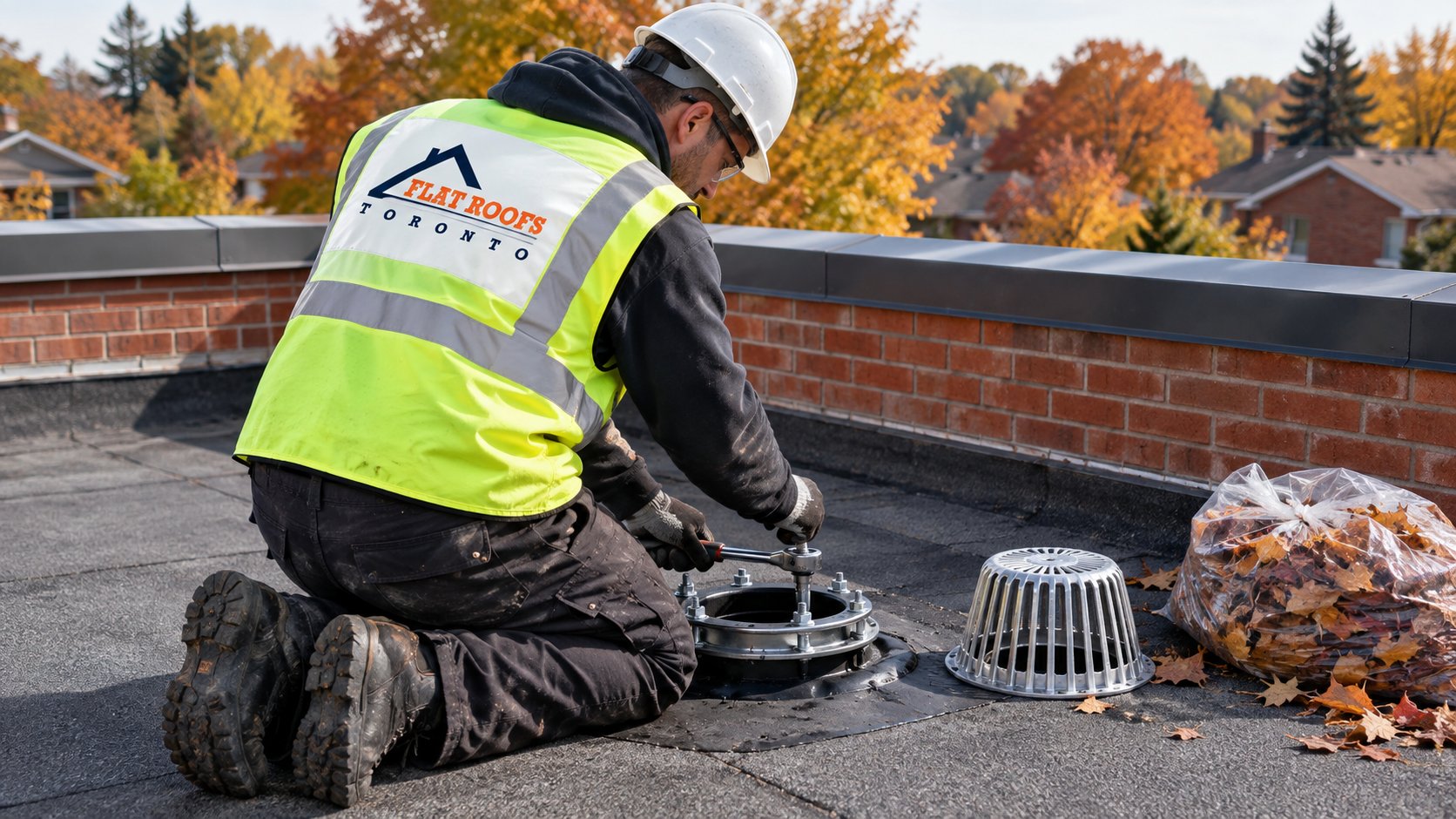
A proper repair means removing the strainer and ring, cleaning the flange to sound material, installing a new flashing ply or target sheet that extends into the bowl, bedding it as the membrane manufacturer specifies, and re-clamping with new bolts tightened evenly. Seized bolts may need drilling and re-tapping. If the bowl itself is cracked, the choice becomes a retrofit insert or a new drain body.
Retrofit Drain Inserts During Re-Roofing
When a roof is replaced, old cast iron bowls may be cracked, corroded at the flange or set at the wrong height for the new build-up. Removing one usually means opening the ceiling below and cutting into the leader. A retrofit drain insert avoids most of that: a new drain body with a wide flange that sits on the new roof and a tube that slides into the old leader, sealed inside the pipe by a compression or mechanical seal. The new membrane is flashed to the insert, so the worn bowl is bypassed. Inserts come in spun aluminium, copper, cast metal and PVC, including units with factory membrane flanges for PVC or TPO roofs.
- Flow. The insert tube sits inside the old pipe, so the opening is a little smaller. On a small house roof that rarely matters; on a larger roof served by one or two drains it should be checked against the area drained.
- Leader condition. The seal grips the pipe, so the pipe must be sound at that depth. A camera inspection can reveal cracks or a collapsed section an insert will not fix.
- Drain height. Re-roofing is the moment to make the drain the true low point, using tapered insulation and a recessed sump.
- Compatibility. The flange must suit the new membrane. Our overview of flat roofing systems explains how modified bitumen, EPDM and thermoplastic roofs are flashed differently.
A new bowl is the better answer when the drain must move to the low point, when the leader is undersized, or when the ceiling is already open. If you are planning a flat roof replacement, ask for the drain plan to be written into the quote.
Overflow Paths: What Happens When The Main Drain Stops
Every drain clogs eventually. A roof with one internal drain and a parapet all the way around has no other exit, so when that drain blocks, water rises until it finds the lowest gap in the flashing, the top of a curb or a terrace door threshold, and enters the building there.
- Overflow scuppers pass through the parapet slightly above the primary drain level, carrying water only when the main drain cannot keep up.
- Overflow drains have a raised dam or standpipe and separate piping that discharges where you can see it, so water coming out tells you the main drain is blocked.
On commercial and multi-unit buildings, secondary drainage is a design matter and requirements vary by building, so confirm current rules with your municipality and a designer before changing drains. Our commercial flat roofing team reviews drainage with property managers. On a house, picture the main drain fully blocked and ask where the water would leave. If the answer is “under the terrace door”, talk to a roofer about a scupper.
Inspecting A Roof Drain Strainer After Heavy Autumn Rain
The day after a heavy rain is when drains tell you the most. From a safe vantage point, such as a guarded terrace or an upper window, you can see a lot without stepping onto the open roof; leave anything more to a roofer. What a roofer checks:
- Standing water. A film that disappears within a day is normal on many flat roofs; a deep, defined puddle at the drain is not.
- Debris pattern. A collar of leaves around the strainer means it did its job. Debris that vanished from around an open bowl went down the pipe.
- Strainer and ring. Cracked domes, broken clips, missing bolts, open cement joints.
- Flow. A controlled hose test with someone watching inside, never a flood test on an old roof.
- Interior. The ceiling below the drain, exposed leader pipe and any basement cleanout.
Leaf fall in the GTA stretches over several weeks, so a roof under mature maples or oaks usually needs one visit after the main drop and a second once the branches are bare, ideally before nights start freezing. Routine care for house roofs is covered on our residential flat roofing page.
What Drain Work Typically Costs
Drain work is usually a small job, but the price moves with access, the type of drain body, whether a matching part can be found and what turns up under the ring. Treat the figures below as rough GTA planning numbers, not quotes.
| Work | What is involved | Typical estimate range (CAD) |
|---|---|---|
| Replace a roof drain strainer | Identify drain, fit and fasten matching dome | Often $150 to $450 |
| Clear a blocked leader | Auger or jet, confirm flow | Often $250 to $800, more if a plumber is needed |
| Re-flash and re-clamp a drain | New flashing ply, new bolts, re-clamp | Commonly $500 to $1,500 |
| Retrofit drain insert | Cut back membrane, install insert, flash in | Often $800 to $2,200 per drain |
| New drain body during re-roofing | Deck cut, bowl, leader connection, sump | Often $1,200 to $3,500 or more, plus interior work |
What To Ask Before Anyone Touches The Drain
- What drain body do I have, and is a matching roof drain strainer available?
- Does the membrane run under the clamping ring, or is the joint relying on cement?
- Is the drain the lowest point, and if not, can that be corrected?
- Where is the leader cleanout, and has the pipe been checked?
- If the main drain blocks, where does the water go?
- Will you photograph the ring and flange before the strainer goes back on?
Photos matter because the parts that count disappear under the strainer once the job is done. You can see finished work on our projects page.
Can I just remove the strainer so my roof drains faster?
How often should flat roof drains be cleared in autumn?
Will any roof drain strainer fit my drain?
Why does my ceiling leak under the drain when the roof looks fine?
What is a retrofit drain insert?
Does my flat roof need an overflow scupper?
Book A Roof Drain Strainer And Drain Check Before Leaf Drop Ends
A missing strainer, a loose clamping ring or a drain sitting above the surrounding roof are easier to fix now, while the weather is workable, than after a blocked leader turns into an interior leak. Flat Roofs Toronto inspects drains, fits matching strainers, re-flashes leaking drain bowls and plans retrofit inserts or new drains during re-roofing.
Call us today at (647) 333-3528 or request a free estimate.
Drain checks, matched strainers and drain bowl repairs for flat roofs across Toronto and the GTA.