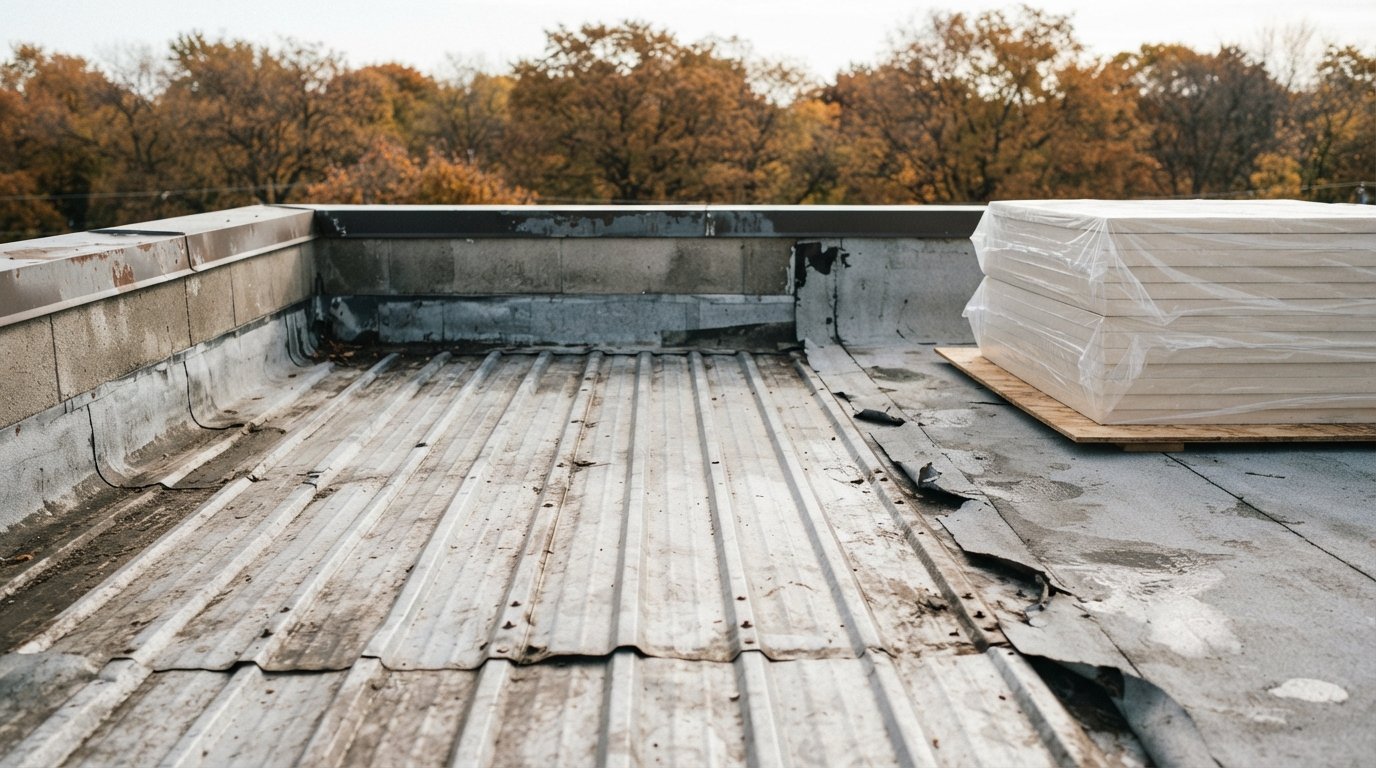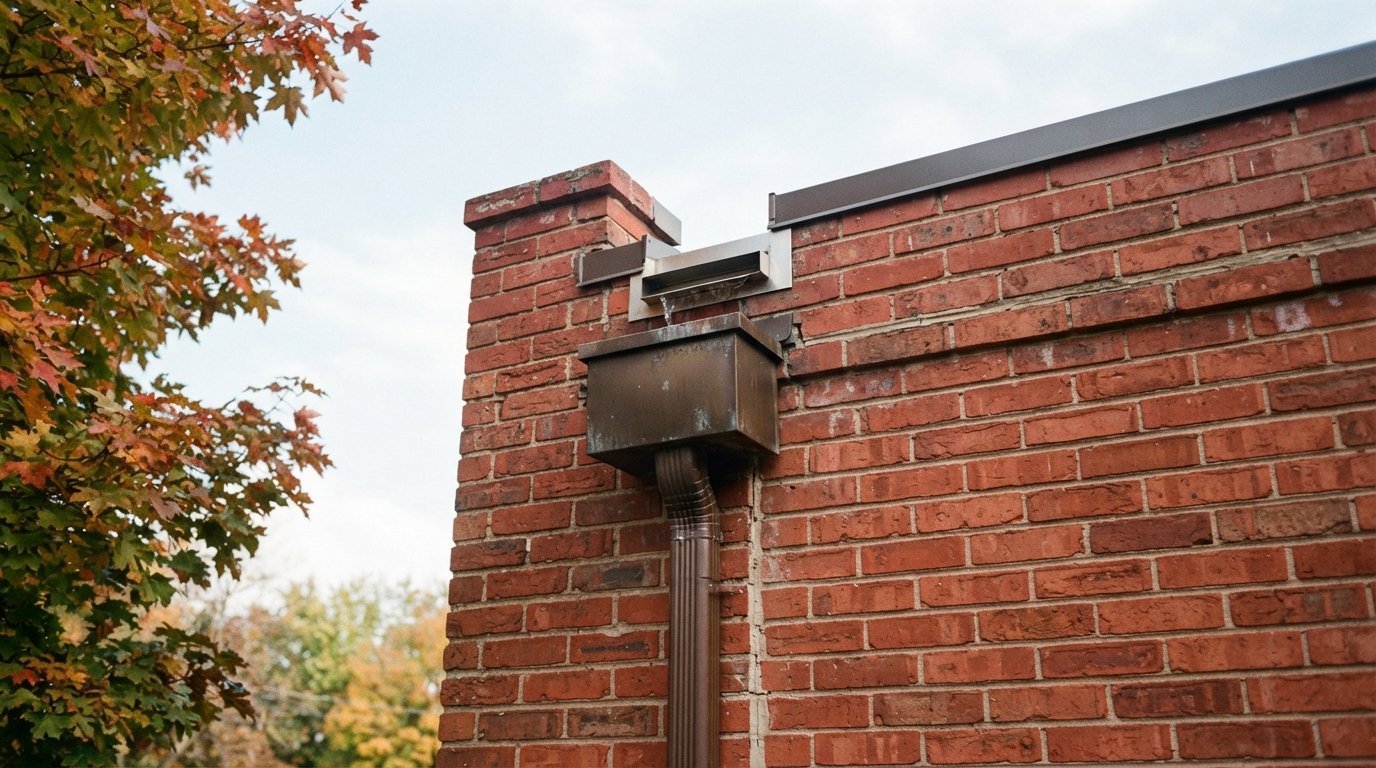

A flat roof drain that freezes solid in January turns every thaw into a flood risk. Meltwater has nowhere to go, it spreads across the roof, finds the weakest seam or flashing, and eventually shows up on a ceiling. A roof drain heat trace system, a heating cable run into the drain, scupper or downspout, can keep that outlet open through the cold months. Used in the right places it is a very effective tool. Used as a substitute for proper drainage, it is an expensive way to hide a design problem.
This guide explains how self-regulating heating cables work, where they actually help on flat roofs, what the electrical side involves, why installation should happen before the first freeze, and why no cable can make up for a roof that does not slope toward its drains.
How Roof Drain Heat Trace Works
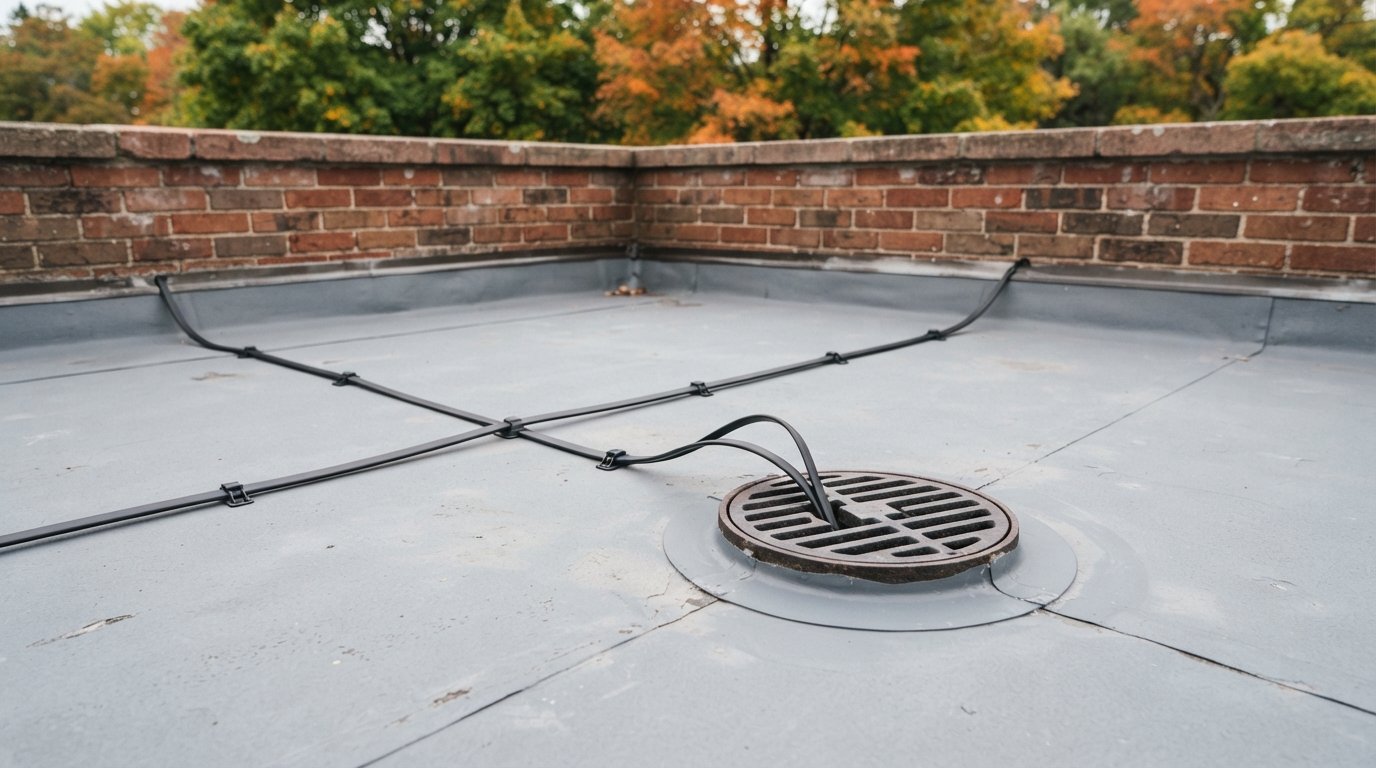
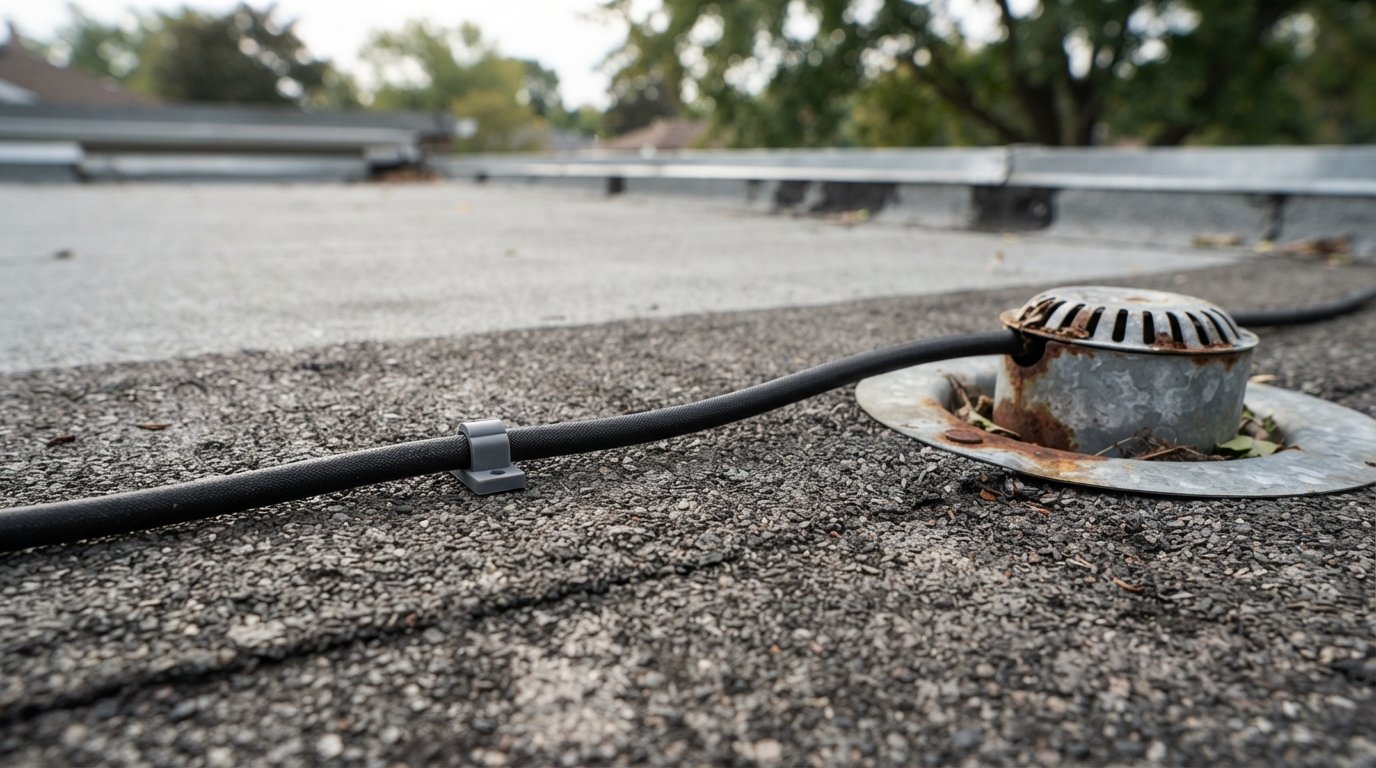
A heat trace cable is an electric heating element in a flexible, insulated jacket. It is laid along the path water needs to take off the roof, typically into the drain body and down the drain pipe, or into a scupper and down the downspout. When powered, it warms that path enough to keep ice from sealing it closed, so meltwater from the roof surface can keep draining away.
The goal is modest. Roof drain heat trace is not meant to melt snow off the roof. It keeps a narrow channel open. That distinction matters for how much cable is used, how it is controlled and what you should expect from it.
Self-regulating cable
Most roof and drain applications today use self-regulating cable. Its core is a conductive polymer between two bus wires. As the cable gets colder, the polymer conducts more and the cable produces more heat; as it warms, output drops. That behaviour means sections sitting in cold, exposed downspouts give off more heat than sections in a warmer drain pipe inside the building. It also means the cable can generally be cut to length in the field, and many self-regulating products tolerate overlapping in a way that fixed-output cables do not. Always check the specific product’s installation instructions on these points.
Constant-wattage cable
Constant-wattage cable produces the same heat along its length regardless of temperature. It is simpler and sometimes cheaper, but it can overheat if crossed over itself or buried in debris, and it usually cannot be cut to custom lengths. For roof drains, it is used less often than self-regulating cable.
| Feature | Self-regulating cable | Constant-wattage cable |
|---|---|---|
| Heat output | Adjusts with temperature along its length | Fixed along its length |
| Cut to length on site | Usually yes, with proper end seals | Usually no, supplied in set lengths |
| Overlapping | Often tolerated per manufacturer instructions | Generally not allowed, overheating risk |
| Energy use | Lower in milder conditions | Constant whenever powered |
| Typical use on roofs | Drains, scuppers, downspouts, gutters | Simple, short runs where length is known |
On larger buildings, drain heating is often specified during design as part of commercial flat roofing projects, especially where drains discharge through unheated spaces. On houses and small buildings, it is more often added to fix a specific trouble spot.
Where Roof Drain Heat Trace Helps Most
Not every drain needs heating. An interior drain that runs straight down through a heated building usually stays open on its own, because the warm pipe keeps the outlet from freezing. Problems tend to appear where water has to pass through cold spaces or exposed locations.
| Location | Why it freezes | How the cable is run |
|---|---|---|
| Drain over an unheated space (garage, porch, canopy) | Drain pipe passes through cold space before reaching heated area | Into the drain body and down the pipe through the cold zone |
| Scupper through a parapet | Exposed on both sides, shaded walls stay cold | Through the scupper into the collector box and down the downspout |
| Exterior downspout on a shaded wall | Sits in the cold all day, ice builds from the bottom up | Full length of the downspout to the discharge point |
| Downspout discharging onto a cold surface | Water refreezes at the outlet and backs up the pipe | To the end of the downspout; the discharge path may need changing |
| Drain in a shaded corner of the roof | No sun, ice forms around the strainer | A loop around the drain and down into the drain body |
| Low-slope roof edges with gutters | Gutter and outlet freeze, meltwater backs up | Along the gutter and into the downspout |
The key principle is that the heated path must be continuous all the way to a place where water can safely leave or stay liquid. A heated drain that feeds into an unheated section of pipe just moves the ice blockage further down. The same goes for a downspout heated to within a few feet of the bottom.
Electrical Considerations
Heat trace is an electrical installation, and it needs to be treated like one. We state these points generally; the specific requirements come from the electrical code, the product manufacturer and the Electrical Safety Authority (ESA).
- Licensed electrical work. In Ontario, electrical installations generally need to be done by a Licensed Electrical Contractor, who handles the required notification with the ESA. Confirm the current rules with the ESA before starting.
- Ground-fault protection. Heating cables are normally required to have ground-fault protection. Manufacturers typically specify the type of protection needed for their cable, and it is not always the same as a standard bathroom-style GFCI outlet.
- A suitable circuit. The total cable length determines the load. Long runs may need a dedicated circuit, and the electrician sizes it according to the cable manufacturer’s tables.
- Weatherproof connections. Power connections, splices and end seals must use the manufacturer’s approved kits and be kept out of standing water.
- Controls. A simple switch works but relies on someone remembering to turn it on and off. Ambient thermostats and snow or moisture sensors run the cable only when conditions call for it, which saves energy.
Plugging a cable into an outdoor outlet with an extension cord is not a proper installation. It is a common sight on older roofs, and it is a fire and shock risk.
Installing Before the First Freeze
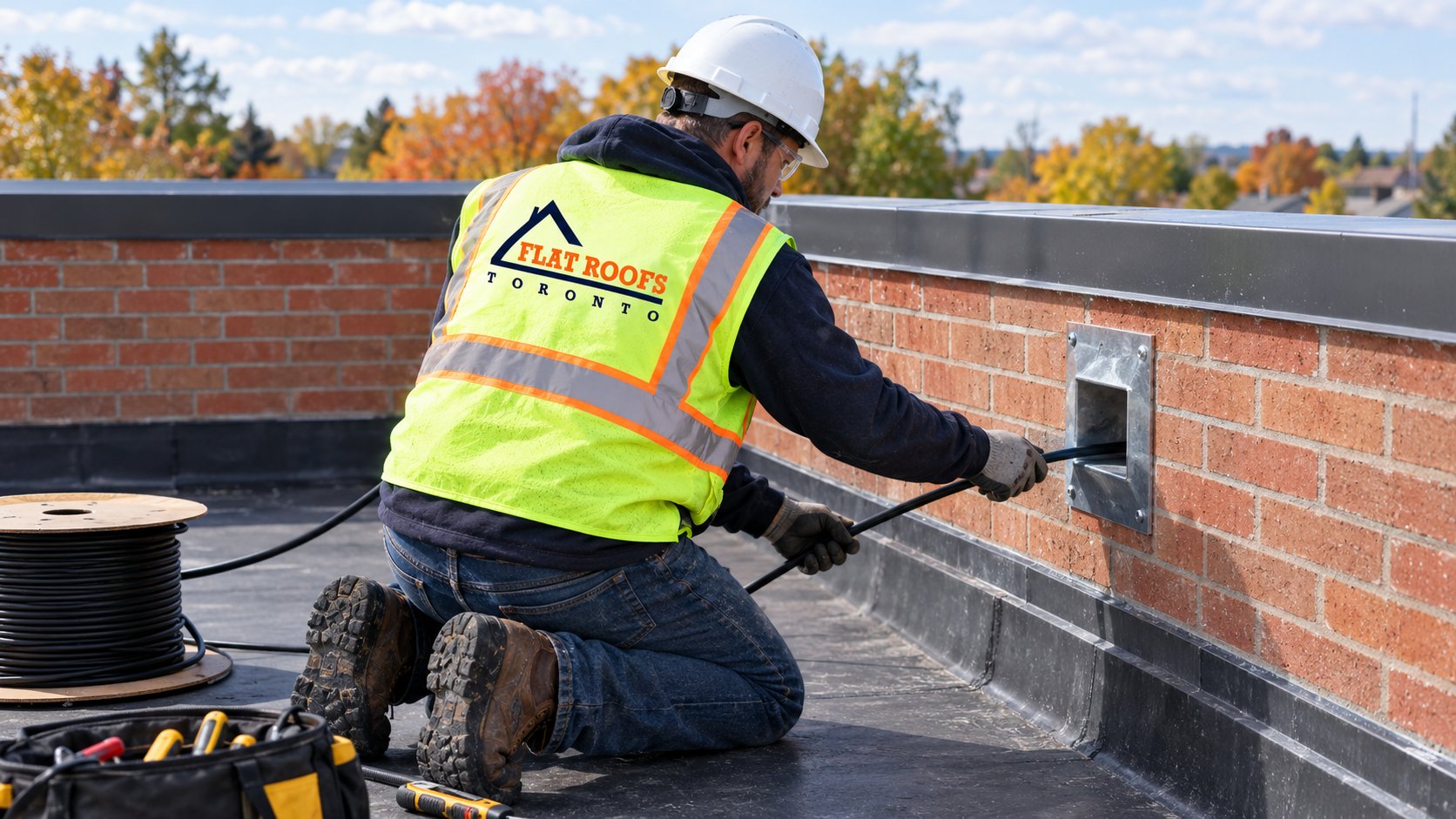
Early autumn is the time to plan and install a roof drain heat trace system. The roof is dry, the drains can be cleaned properly, and any flashing or membrane work needed at the drain can be done while temperatures still suit roofing materials. Trying to install heat trace after a drain has already frozen solid is slow, messy and often leaves the cable poorly placed.
A proper installation usually follows this sequence:
- Clean and inspect the drain. Remove leaves and debris, check the drain body, clamping ring and strainer, and repair any flashing problems first.
- Plan the path. Measure from the power source across the roof, into the drain, down through the cold zone and to the discharge point.
- Route the cable across the roof without damaging the membrane. Use the clips or supports approved by the cable manufacturer and compatible with the roof membrane. Screwing or nailing through the membrane to hold a cable creates new leak points.
- Enter the drain properly. Many manufacturers offer drain entry kits or hangers that hold the cable in position without blocking the strainer.
- Run the cable to the end. Carry it through all cold sections of pipe or downspout.
- Connect and test. The electrician makes the power connection, installs ground-fault protection and controls, and tests insulation resistance and operation according to the manufacturer’s procedures.
- Label and document. Circuit, controller location and cable route are recorded so future roof work does not cut through the cable.
Roofers and electricians often work together on this. The roofer handles anything that touches the membrane and the drain; the electrician handles power, protection and controls.
Why Heat Trace Does Not Replace Proper Slope
This is the most important point in the article. Roof drain heat trace keeps an outlet open, but it cannot move water across the roof toward that outlet. If the roof has low spots, sags or areas that slope away from the drains, water will pond there no matter how warm the drain is. In cold weather, those ponds freeze into sheets of ice, and the melt and refreeze cycle works on the seams underneath them.
Signs that the real problem is drainage rather than a frozen outlet include:
- Standing water that remains 48 hours after rain in mild weather.
- Dirt rings or stained patches on the membrane away from the drains.
- Drains sitting higher than the surrounding roof surface.
- Large roof areas served by a single drain or scupper.
- Leaks that occur during thaws even when the drain is clearly flowing.
These problems are fixed with roofing, not wiring: tapered insulation to create slope, crickets that direct water toward drains, lowering drain sumps, or adding outlets. They are often best addressed during a flat roof replacement, when the insulation can be redesigned. Heat trace can then be added at the outlets that still need it, rather than trying to compensate for poor drainage across the whole roof.
Questions to Ask Before You Approve a Quote
Quotes for roof drain heat trace vary a great deal in what they include. These questions help you compare them fairly and spot a proposal that is treating the symptom rather than the cause:
- Why is this drain freezing? A good contractor should be able to explain whether it is a cold pipe run, a shaded location, a poor discharge point or ponding around the outlet.
- How far will the cable run? Ask them to show the full route from the power source to the discharge point, including every cold section of pipe.
- How will the cable be attached to the roof? The answer should name clips or supports compatible with your membrane, not fasteners through it.
- Who is doing the electrical work? The quote should name a licensed electrician for the connection, protection and controls.
- What controls are included? A thermostat or sensor controller costs more upfront but usually pays back in lower running costs.
- Does anything at the drain need repair first? Installing a roof drain heat trace cable into a drain with a loose clamping ring or failed flashing only locks in a leak.
If the honest answer to the first question is poor slope, ask for a separate price on fixing the drainage so you can weigh the two options side by side.
Costs and Running Considerations
Pricing depends on cable length, access, how far the power supply is, and whether any roofing work is needed at the drains. These are broad estimates only and vary widely:
| Scope | What it usually includes | Estimated range |
|---|---|---|
| Single drain or scupper with a short downspout | Cable, clips, drain entry, basic control | Often $600 to $1,500 before electrical connection |
| Electrical connection and protection | Circuit, ground-fault protection, controller, ESA notification | Commonly $500 to $2,000 depending on distance to the panel |
| Several drains and downspouts on one building | Multiple runs, sensor-based control | Usually quoted after a site review |
| Drain repair or flashing work before installation | Clamping ring, strainer, membrane at the drain | Varies with condition; often a few hundred dollars and up |
| Correcting slope with tapered insulation | Roofing work to move water to drains | Typically done with replacement; priced per project |
Running costs for roof drain heat trace depend on cable length, weather and how the system is controlled. A cable left on all winter uses far more electricity than one controlled by a thermostat or moisture sensor. Ask your electrician for an estimate based on the specific cable and control you choose.
Maintaining a Heat Trace System
- Test before each winter. Switch the system on in autumn, confirm the ground-fault protection works, and check that the cable warms.
- Keep drains clear. Leaves packed around a cable reduce its effectiveness. Drain clearing is part of any good autumn maintenance visit.
- Check the cable jacket. Cuts, crushing or UV damage can expose the heating element. Damaged sections must be repaired with approved kits or replaced.
- Protect it during roof work. Anyone working on the roof needs to know where the cable runs.
- Watch performance. If ice still forms at a heated outlet, the cable may be too short, poorly positioned or not switched on when needed.
Do I need roof drain heat trace on my flat roof?
Can heat trace fix ponding on my roof?
Does heat trace need an electrician?
When should heat trace be installed?
Is self-regulating cable better than constant-wattage cable?
How much electricity does heat trace use?
Plan Your Roof Drain Heat Trace Before Winter
If you have a drain or downspout that freezes every year, now is the time to fix it properly. Flat Roofs Toronto inspects the drainage, repairs flashings at the outlets, and works with licensed electricians so heat trace goes where it helps, while any slope problems are dealt with at the roof itself.
Call us today at (647) 333-3528 or request a free estimate.
Serving homeowners and property owners across Toronto and the GTA.